
Principles of the Dvorak Method Andrew Burton Severe

Principles of the Dvorak Method Andrew Burton, Severe Weather WA
Principles of the Dvorak Method • Overview • Origins • Measurements • Expectations • Pattern matching APSATS 2002 Melbourne, Australia

Principles of the Dvorak Method • Overview • Origins • Measurements • Expectations • Pattern matching APSATS 2002 Melbourne, Australia

APSATS 2002 Melbourne, Australia
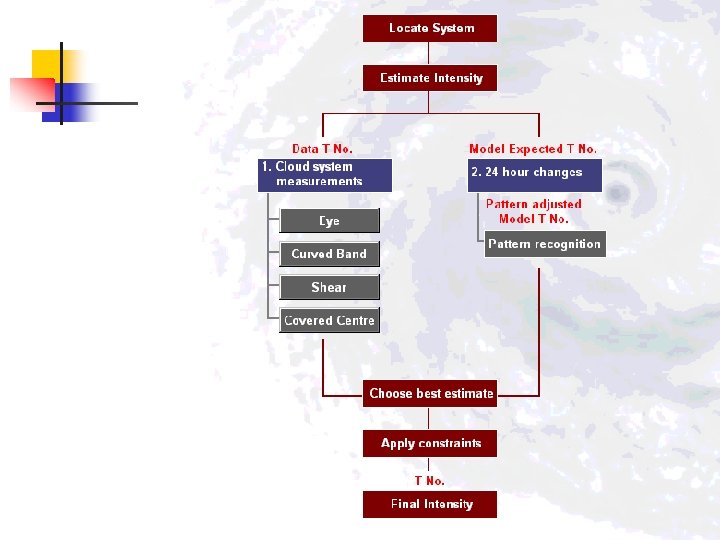
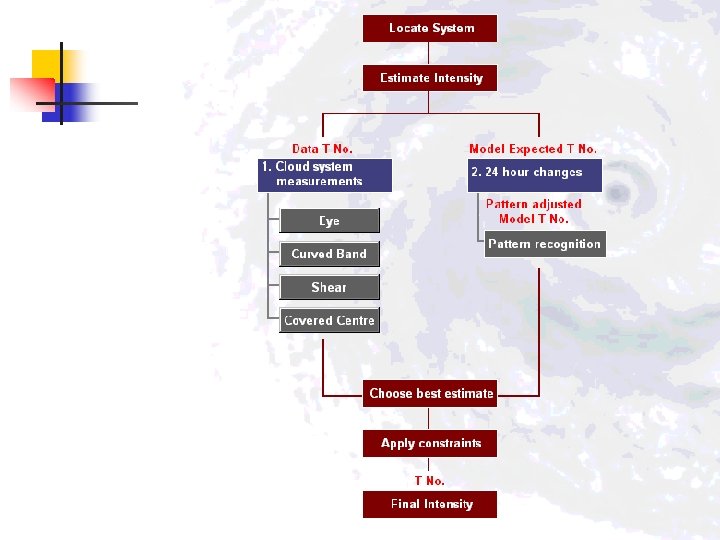
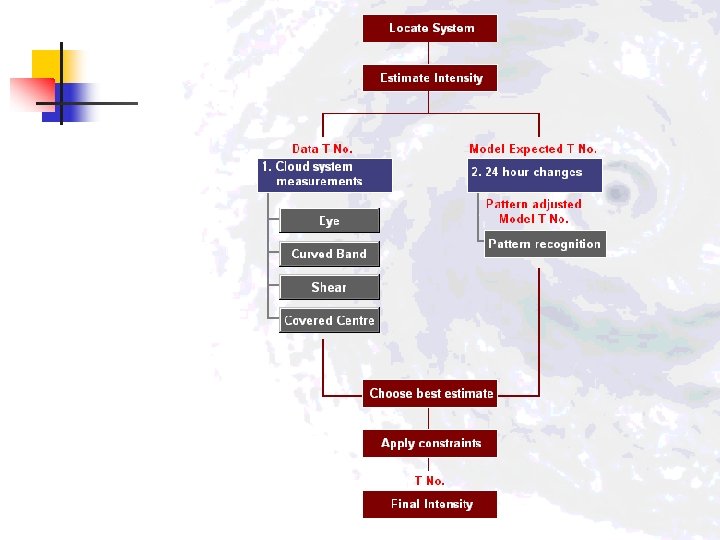
Principles of the Dvorak Method Some Terminology The (only) Boring slide T Numbers for every occasion T = Tropical DT = Data T Number MET = Model Expected T No PT = Pattern T No FT = Final T No APSATS 2002 Melbourne, Australia
Principles of the Dvorak Method Origins Operational use since 1973 Developed with North West Pacific and Atlantic data. Enhanced infrared technique 1978/1984 Ongoing development over 15 years. Probably the single most important tool in tropical cyclone analysis to date. APSATS 2002 Melbourne, Australia
Principles of the Dvorak Method Locating the centre From Dvorak (1985): “The cloud system center is defined as the focal point of all the curved lines or bands of the cloud system. It can also be thought of as the point toward which the curved lines merge or spiral. ” Centre not always obvious, especially at night. APSATS 2002 Melbourne, Australia
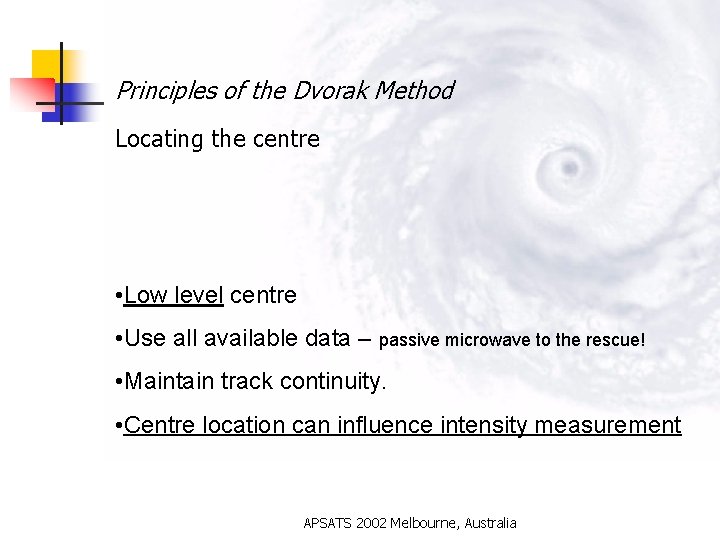
Principles of the Dvorak Method Locating the centre • Low level centre • Use all available data – passive microwave to the rescue! • Maintain track continuity. • Centre location can influence intensity measurement APSATS 2002 Melbourne, Australia
APSATS 2002 Melbourne, Australia
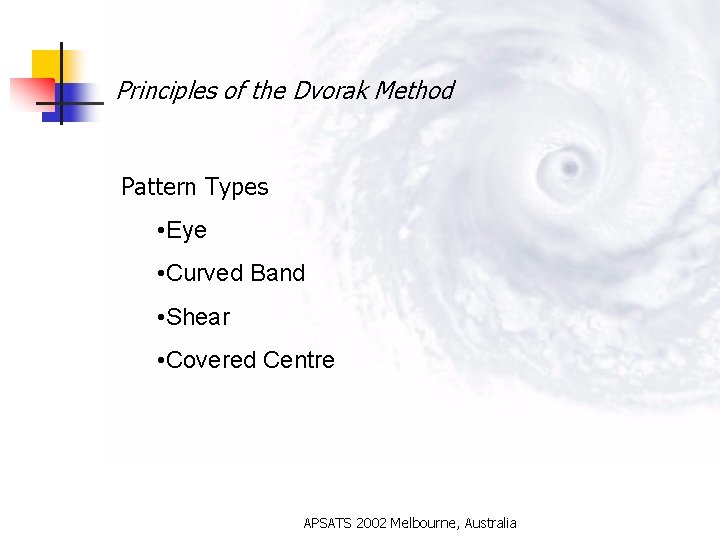
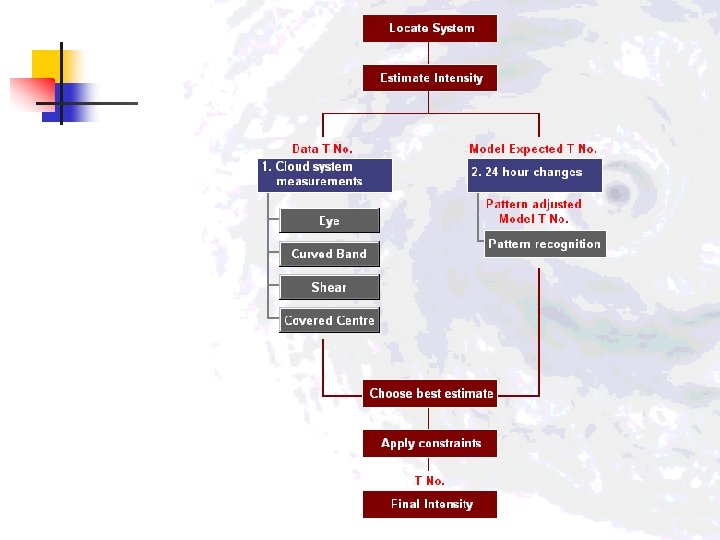
Principles of the Dvorak Method Pattern Types • Eye • Curved Band • Shear • Covered Centre APSATS 2002 Melbourne, Australia
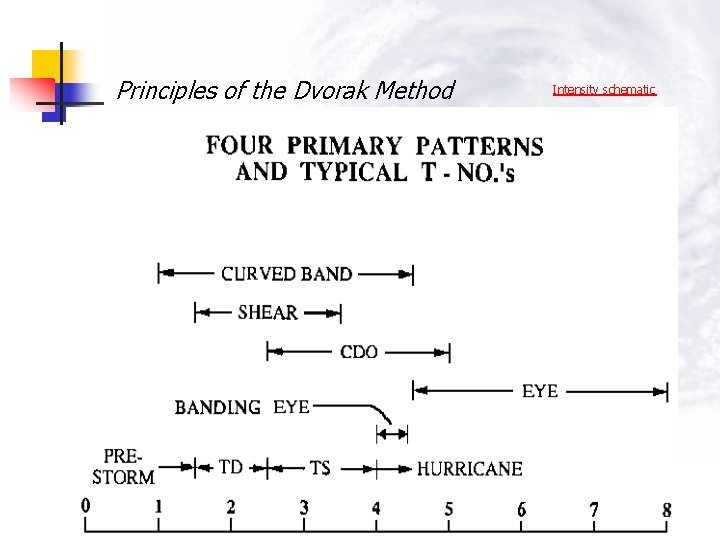
Principles of the Dvorak Method APSATS 2002 Melbourne, Australia Intensity schematic
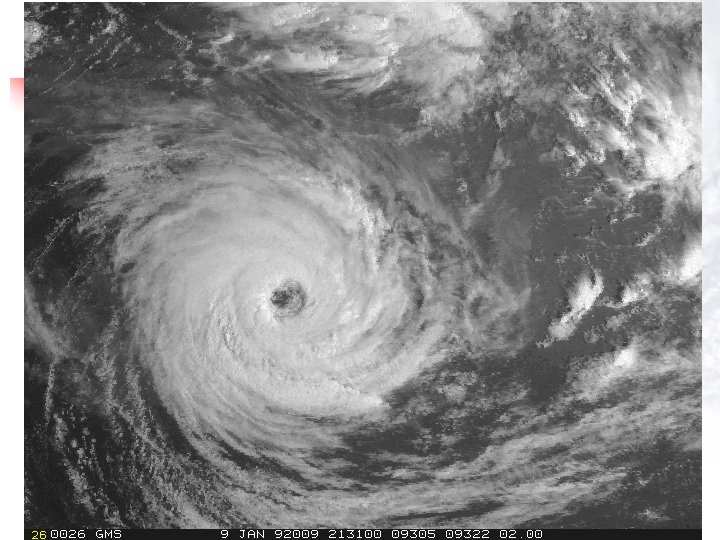
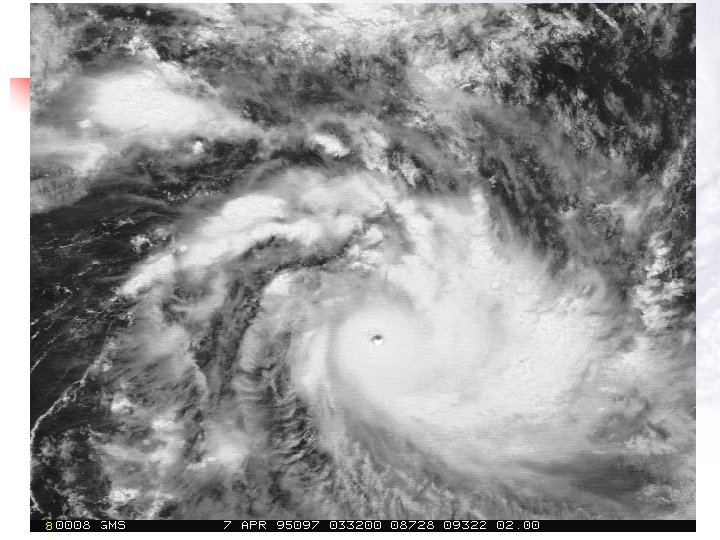
Principles of the Dvorak Method Eye patterns Method: Measure the warmest brightness temperature in the eye and the coldest surrounding temperature in the deep convection. Physical principle: strength of thermal contrast between the eye and the surrounding convection indicates strength of the system APSATS 2002 Melbourne, Australia

Principles of the Dvorak Method APSATS 2002 Melbourne, Australia
Principles of the Dvorak Method APSATS 2002 Melbourne, Australia
Principles of the Dvorak Method APSATS 2002 Melbourne, Australia
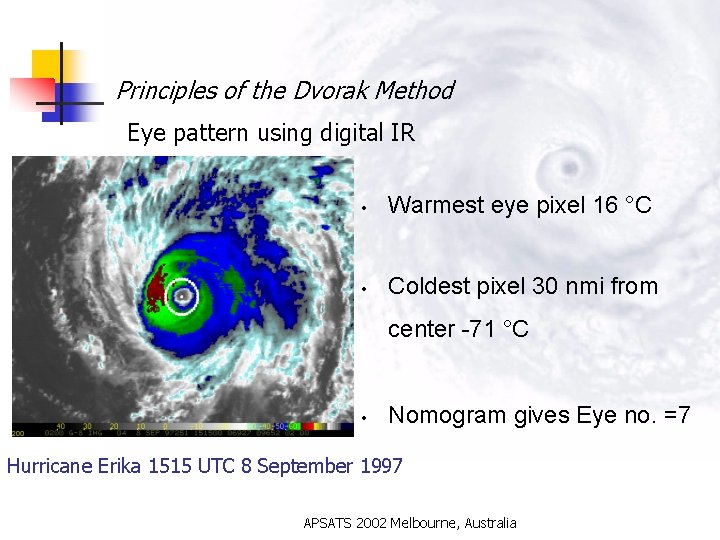
Principles of the Dvorak Method Eye pattern using digital IR • Warmest eye pixel 16 °C • Coldest pixel 30 nmi from center -71 °C • Nomogram gives Eye no. =7 Hurricane Erika 1515 UTC 8 September 1997 APSATS 2002 Melbourne, Australia
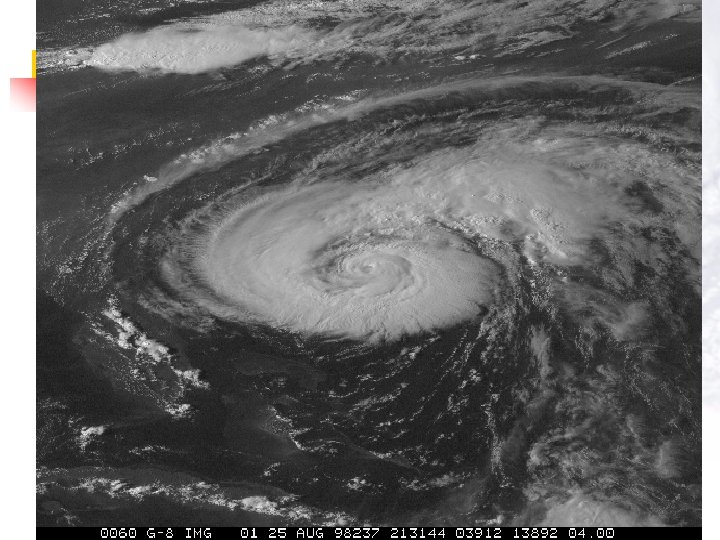
Principles of the Dvorak Method APSATS 2002 Melbourne, Australia
APSATS 2002 Melbourne, Australia
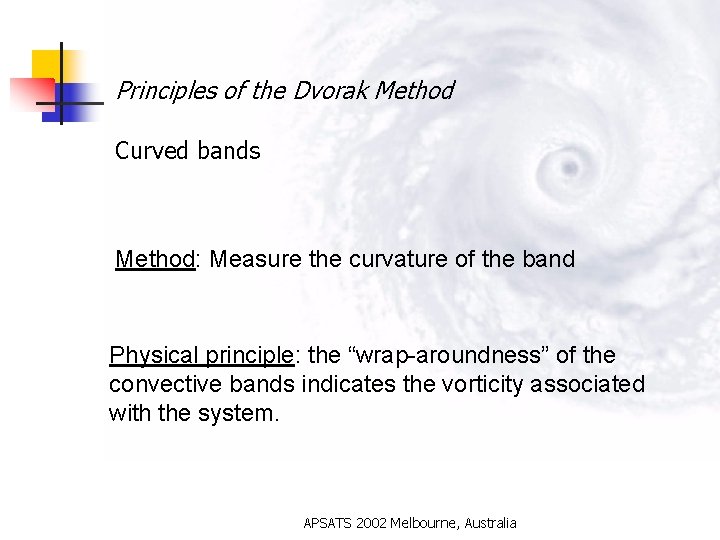
Principles of the Dvorak Method Curved bands Method: Measure the curvature of the band Physical principle: the “wrap-aroundness” of the convective bands indicates the vorticity associated with the system. APSATS 2002 Melbourne, Australia
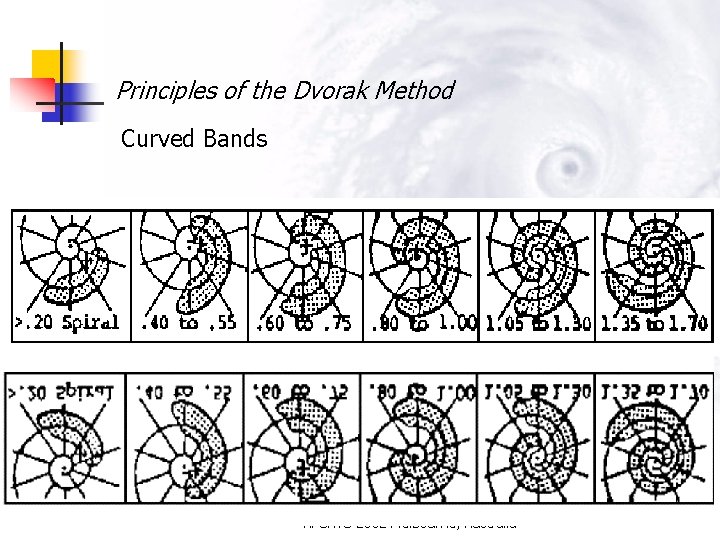
Principles of the Dvorak Method Curved Bands APSATS 2002 Melbourne, Australia
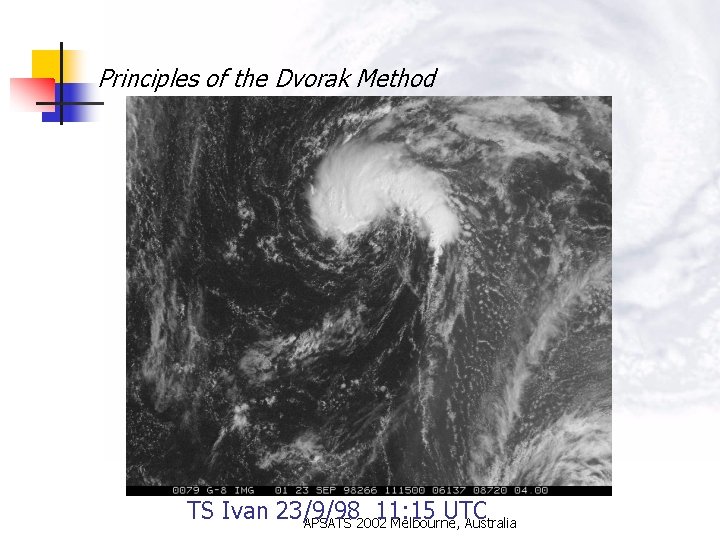
Principles of the Dvorak Method TS Ivan 23/9/98 11: 15 UTC APSATS 2002 Melbourne, Australia
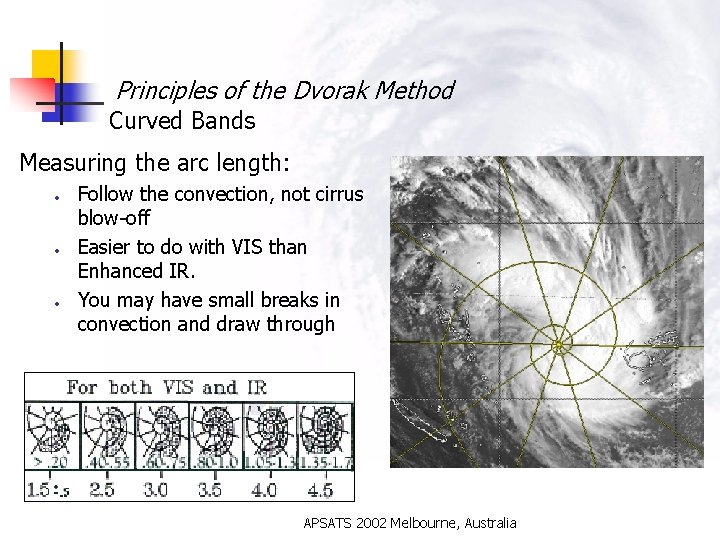
Principles of the Dvorak Method Curved Bands Measuring the arc length: • • • Follow the convection, not cirrus blow-off Easier to do with VIS than Enhanced IR. You may have small breaks in convection and draw through APSATS 2002 Melbourne, Australia
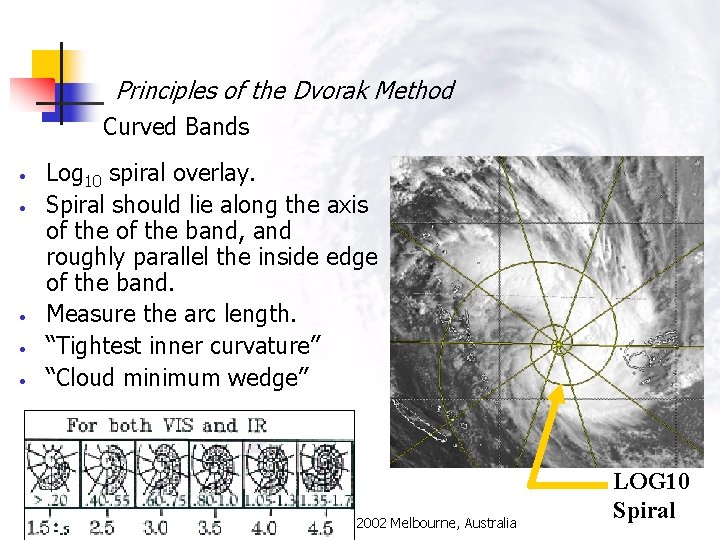
Principles of the Dvorak Method Curved Bands • • • Log 10 spiral overlay. Spiral should lie along the axis of the band, and roughly parallel the inside edge of the band. Measure the arc length. “Tightest inner curvature” “Cloud minimum wedge” APSATS 2002 Melbourne, Australia LOG 10 Spiral
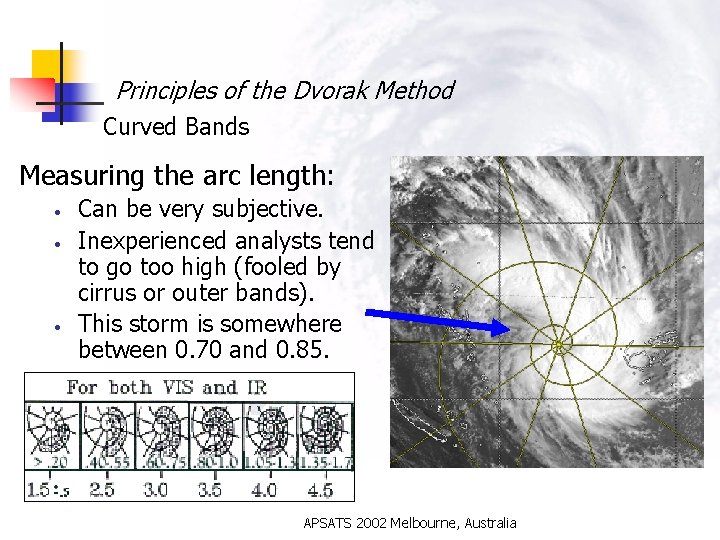
Principles of the Dvorak Method Curved Bands Measuring the arc length: • • • Can be very subjective. Inexperienced analysts tend to go too high (fooled by cirrus or outer bands). This storm is somewhere between 0. 70 and 0. 85. APSATS 2002 Melbourne, Australia
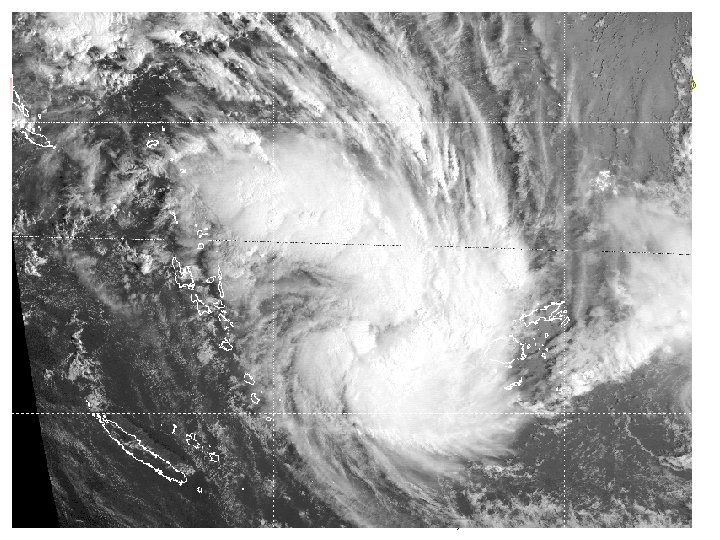
Step 2 A, Curved Band Note: Southern Hemisphere Example APSATS 2002 Melbourne, Australia
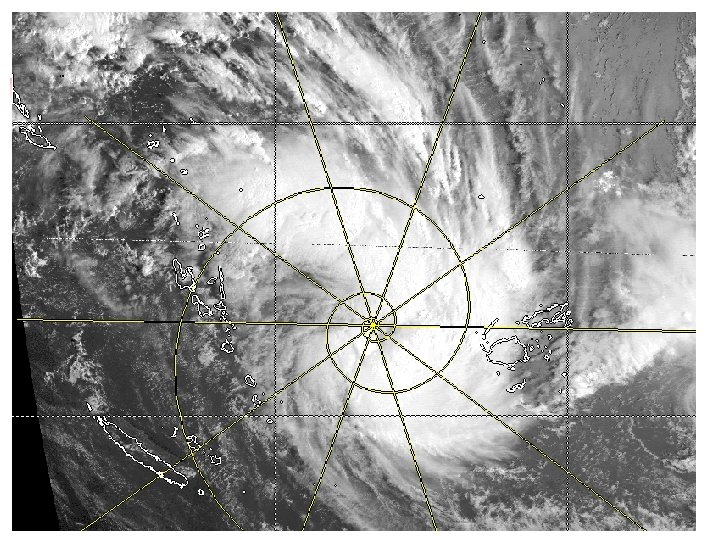
Step 2 A, Curved Band APSATS 2002 Melbourne, Australia
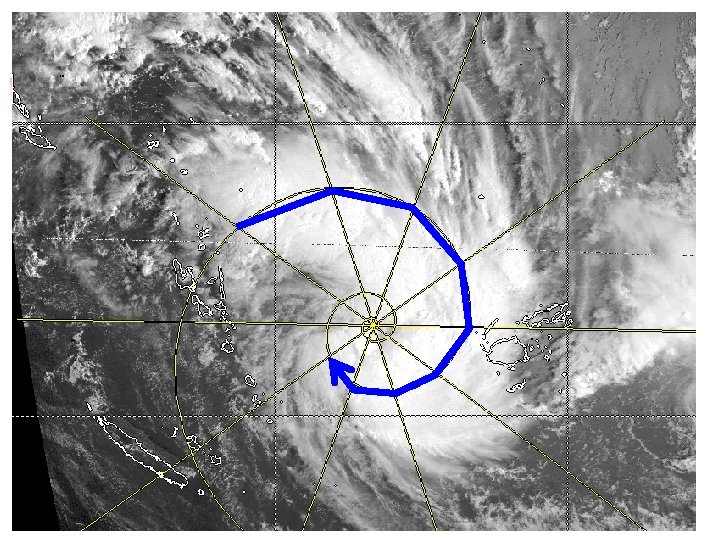
Step 2 A, Curved Band APSATS 2002 Melbourne, Australia
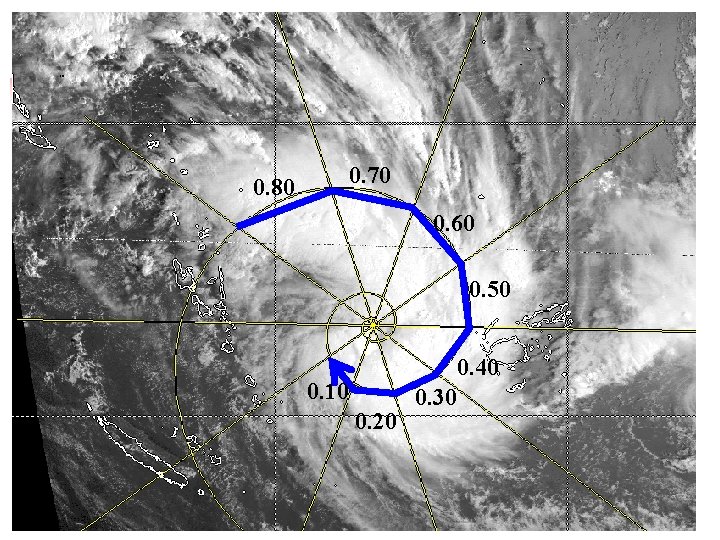
Step 2 A, Curved Band 0. 70 0. 80 0. 60 0. 50 0. 40 0. 10 0. 20 0. 30 APSATS 2002 Melbourne, Australia
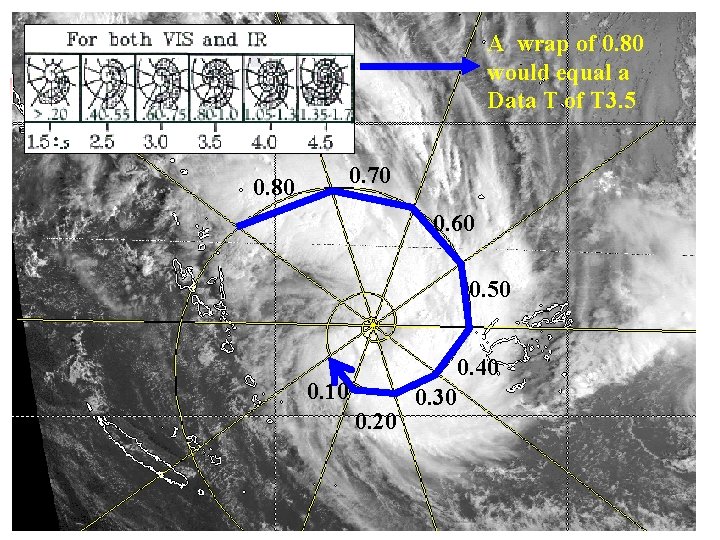
A wrap of 0. 80 would equal a Data T of T 3. 5 Step 2 A, Curved Band 0. 70 0. 80 0. 60 0. 50 0. 40 0. 10 0. 20 0. 30 APSATS 2002 Melbourne, Australia
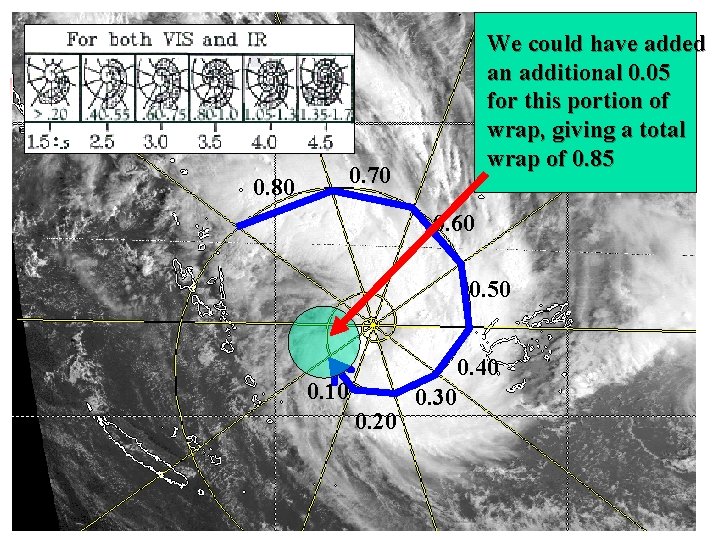
We could have added an additional 0. 05 for this portion of wrap, giving a total wrap of 0. 85 0. 70 0. 80 0. 60 0. 50 0. 40 0. 10 0. 20 0. 30 APSATS 2002 Melbourne, Australia
APSATS 2002 Melbourne, Australia
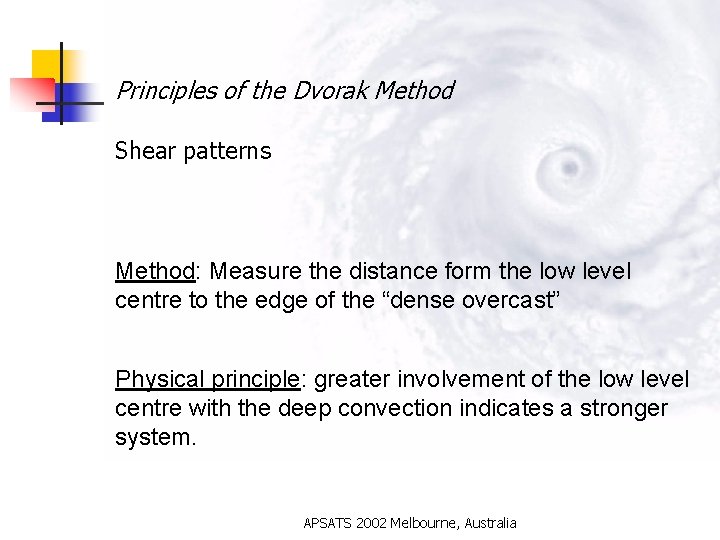
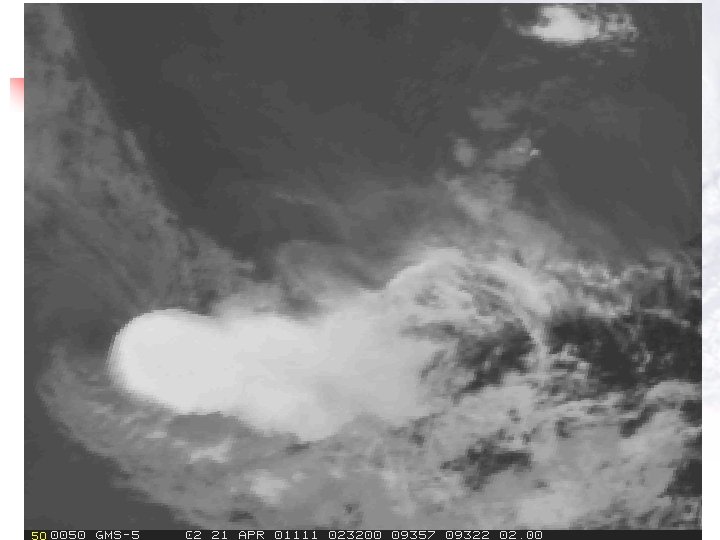
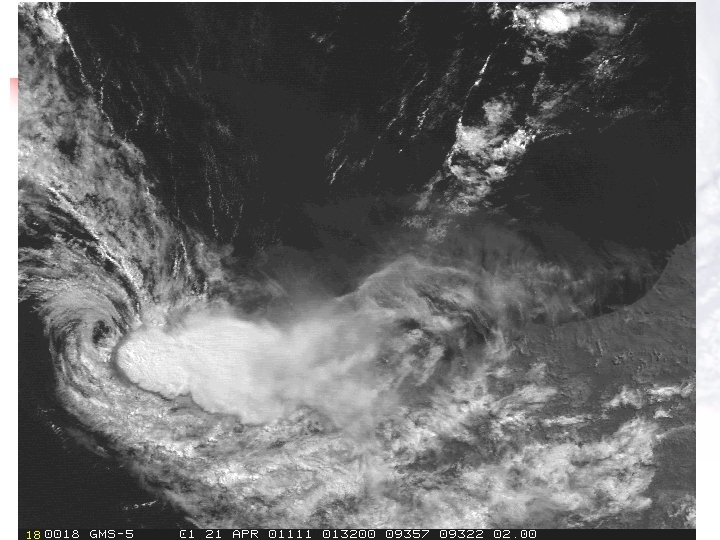
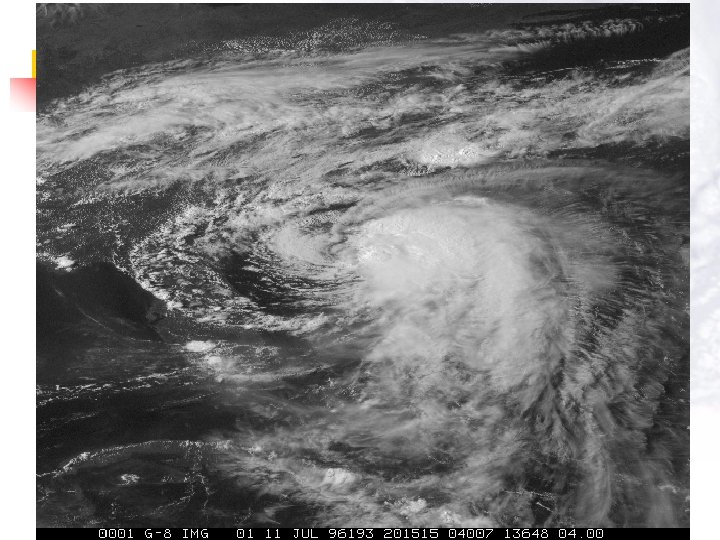
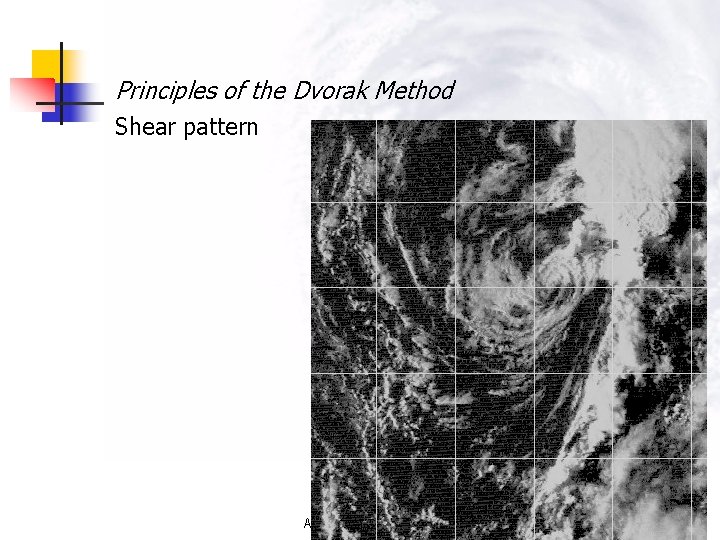
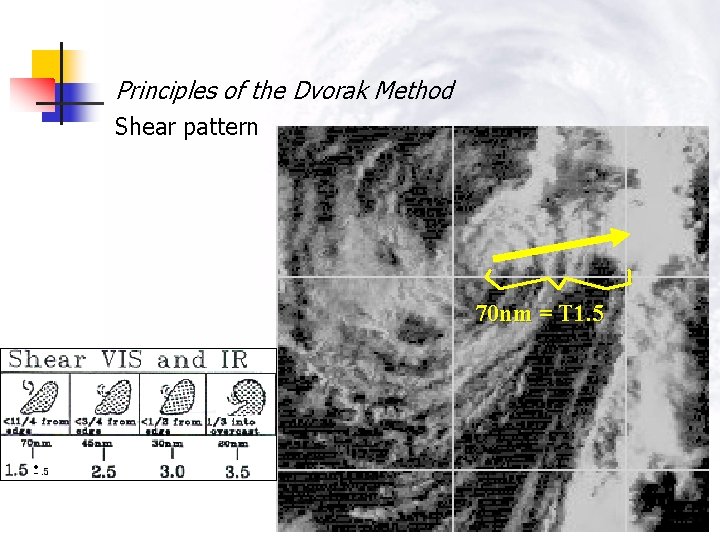
Principles of the Dvorak Method Shear patterns Method: Measure the distance form the low level centre to the edge of the “dense overcast” Physical principle: greater involvement of the low level centre with the deep convection indicates a stronger system. APSATS 2002 Melbourne, Australia
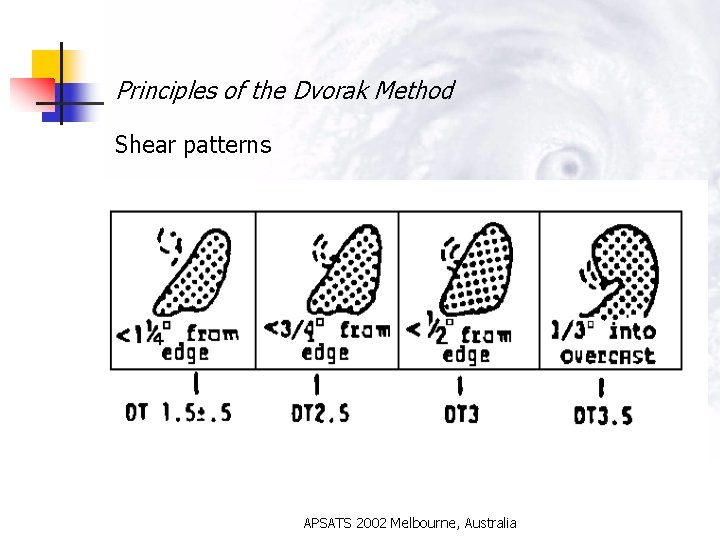
Principles of the Dvorak Method Shear patterns APSATS 2002 Melbourne, Australia
Principles of the Dvorak Method APSATS 2002 Melbourne, Australia
Principles of the Dvorak Method APSATS 2002 Melbourne, Australia
Principles of the Dvorak Method APSATS 2002 Melbourne, Australia
Principles of the Dvorak Method Shear pattern APSATS 2002 Melbourne, Australia
Principles of the Dvorak Method Shear pattern 70 nm = T 1. 5 APSATS 2002 Melbourne, Australia
APSATS 2002 Melbourne, Australia
Principles of the Dvorak Method Covered Centre Patterns IR=Embedded Centre (EC) VIS=Central Dense Overcast (CDO) APSATS 2002 Melbourne, Australia
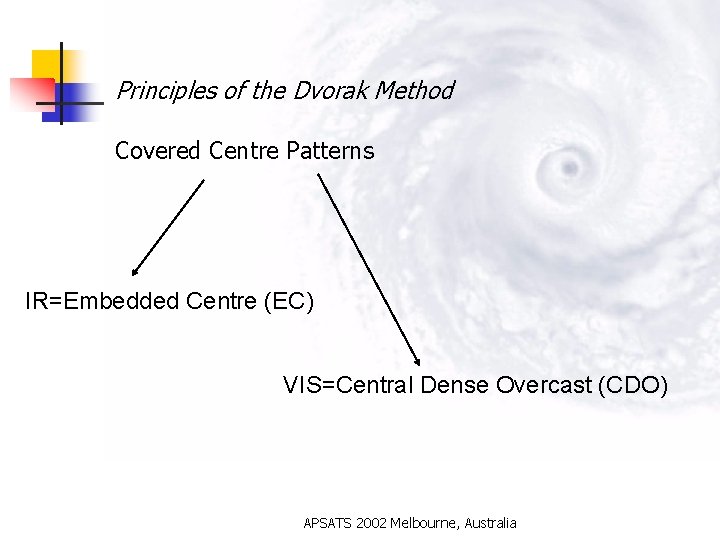
Principles of the Dvorak Method Central Dense Overcast Method: Appearance and size of the overcast + degree of banding. Physical principle? : The weakest link? Does size matter? “It is the pattern formed by the clouds of a tropical cyclone that is related to the cyclone’s intensity and not the amount of clouds in the pattern” - Dvorak 1984 Intensity measurement not dependent on centre location APSATS 2002 Melbourne, Australia
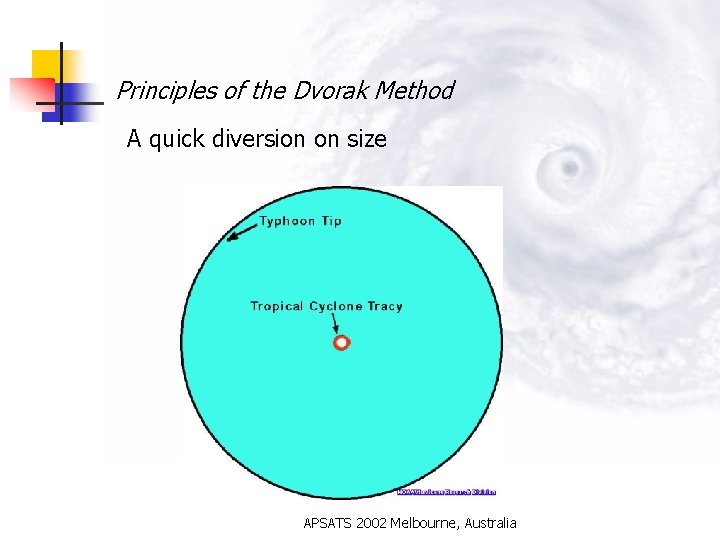
Principles of the Dvorak Method A quick diversion on size APSATS 2002 Melbourne, Australia
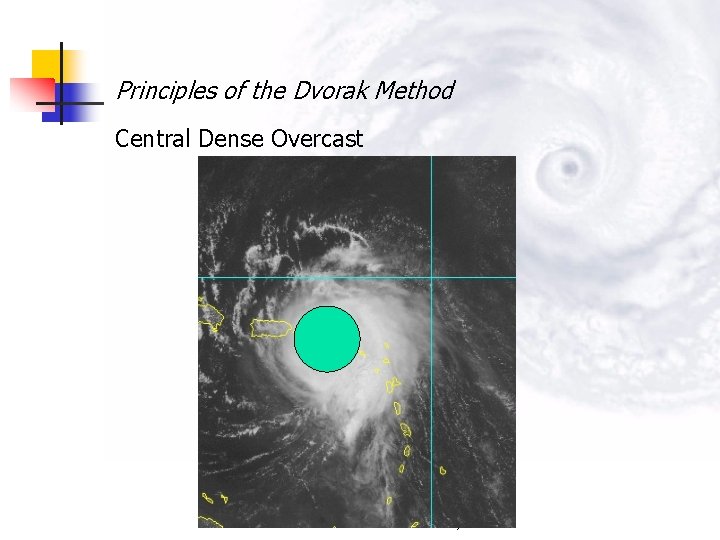
Principles of the Dvorak Method Central Dense Overcast APSATS 2002 Melbourne, Australia
Principles of the Dvorak Method Embedded Centre Method: Measure coldest surrounding temperature. Physical principle: Greater involvement of low level centre with deep convection indicates a stronger system. APSATS 2002 Melbourne, Australia
Principles of the Dvorak Method Embedded Centre • Restrictions on use. • Sensitive to centre location. • Methodology similar to eye patterns • Best used after disappearance of an eye. APSATS 2002 Melbourne, Australia
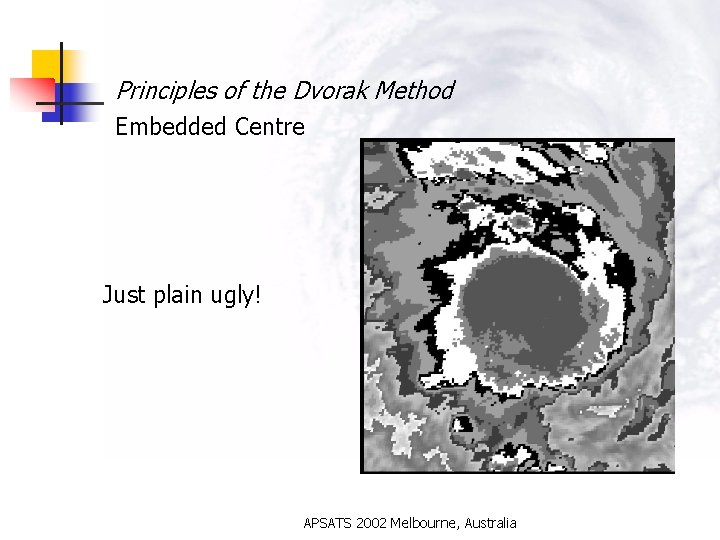
Principles of the Dvorak Method Embedded Centre Just plain ugly! APSATS 2002 Melbourne, Australia
Principles of the Dvorak Method Embedded Centre pattern – problematic Dependent on a temperature measurement related to a centre you can’t see. Dvorak temperature enhancement calibrated to North West Pacific. Cyclones occur at higher latitudes in NH. What might that mean for “southerners”? APSATS 2002 Melbourne, Australia
APSATS 2002 Melbourne, Australia
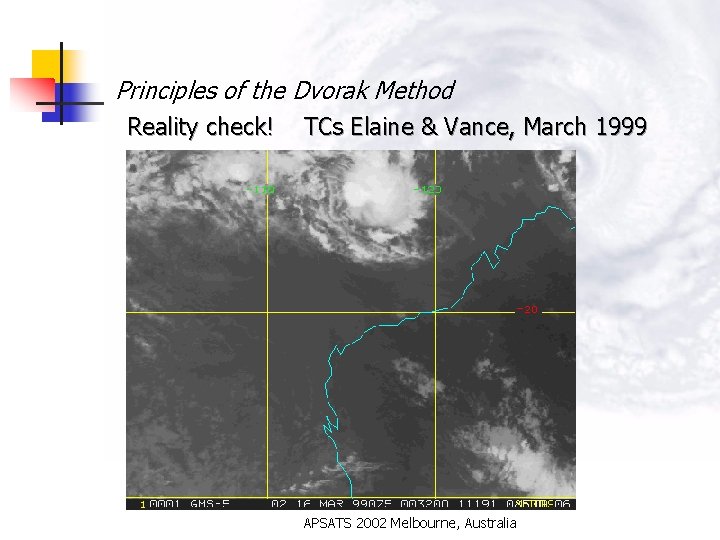
Principles of the Dvorak Method Reality check! TCs Elaine & Vance, March 1999 APSATS 2002 Melbourne, Australia
APSATS 2002 Melbourne, Australia
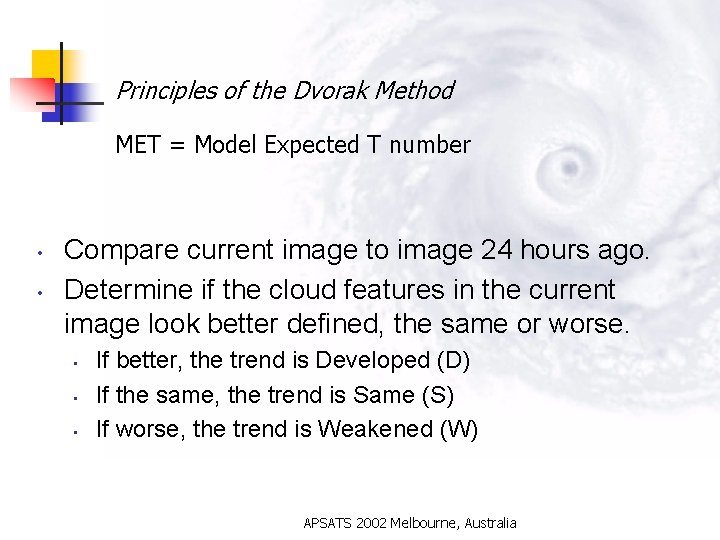
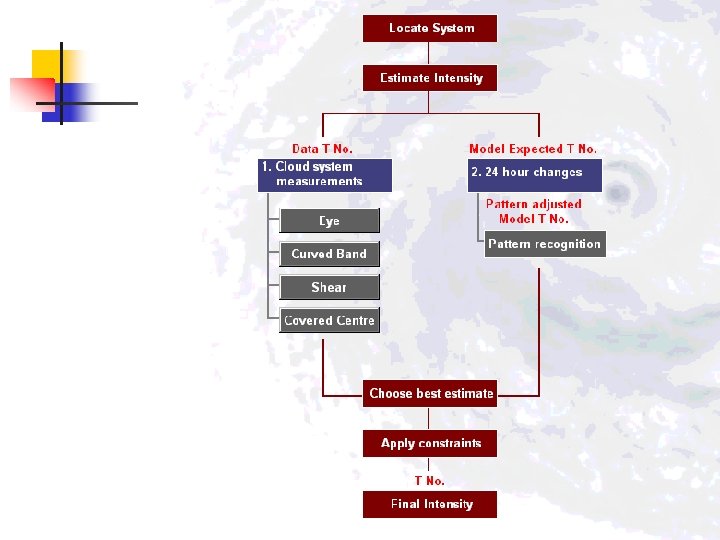
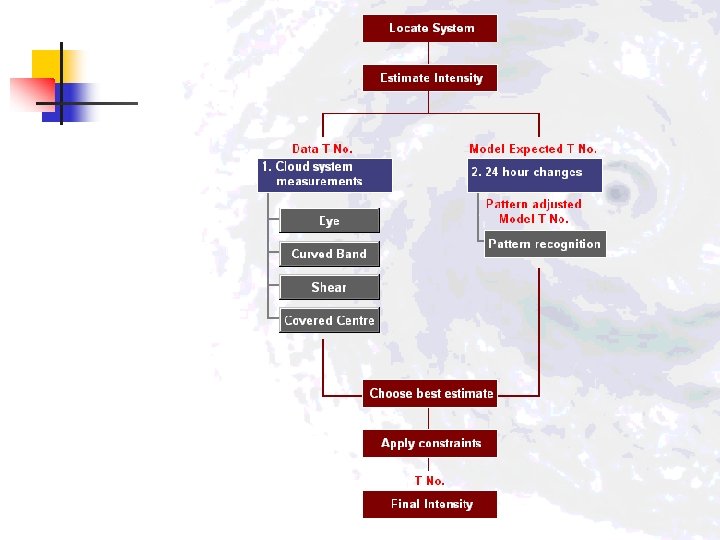
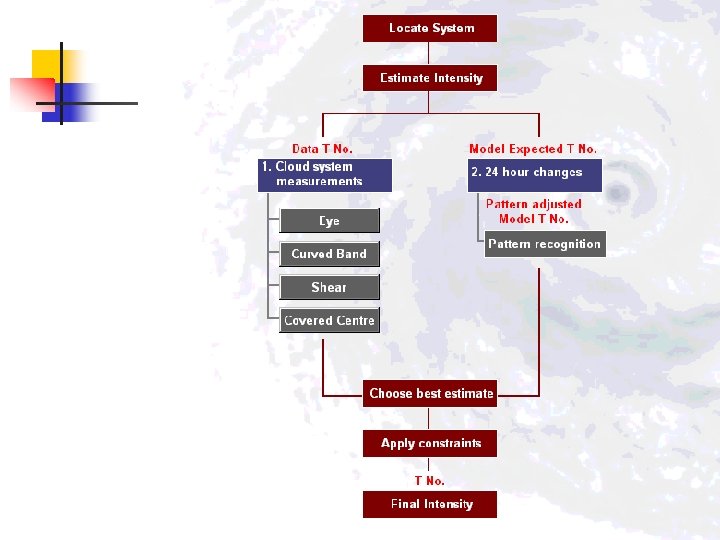
Principles of the Dvorak Method MET = Model Expected T number • • Compare current image to image 24 hours ago. Determine if the cloud features in the current image look better defined, the same or worse. • • • If better, the trend is Developed (D) If the same, the trend is Same (S) If worse, the trend is Weakened (W) APSATS 2002 Melbourne, Australia
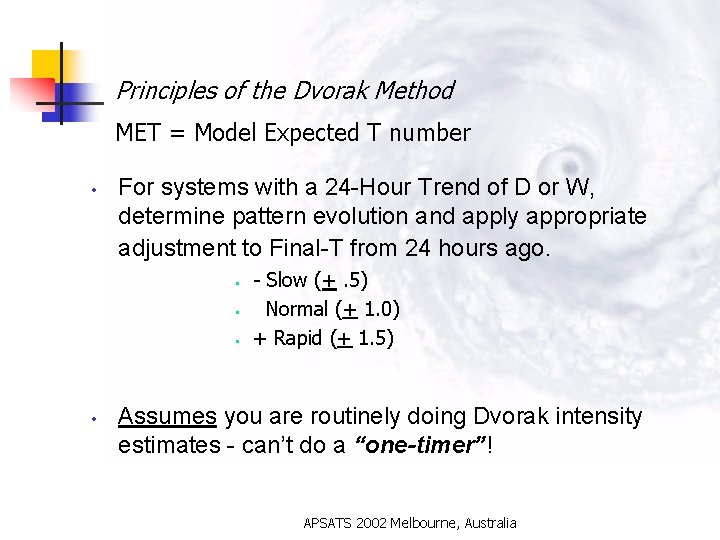
Principles of the Dvorak Method MET = Model Expected T number • For systems with a 24 -Hour Trend of D or W, determine pattern evolution and apply appropriate adjustment to Final-T from 24 hours ago. • • - Slow (+. 5) Normal (+ 1. 0) + Rapid (+ 1. 5) Assumes you are routinely doing Dvorak intensity estimates - can’t do a “one-timer”! APSATS 2002 Melbourne, Australia
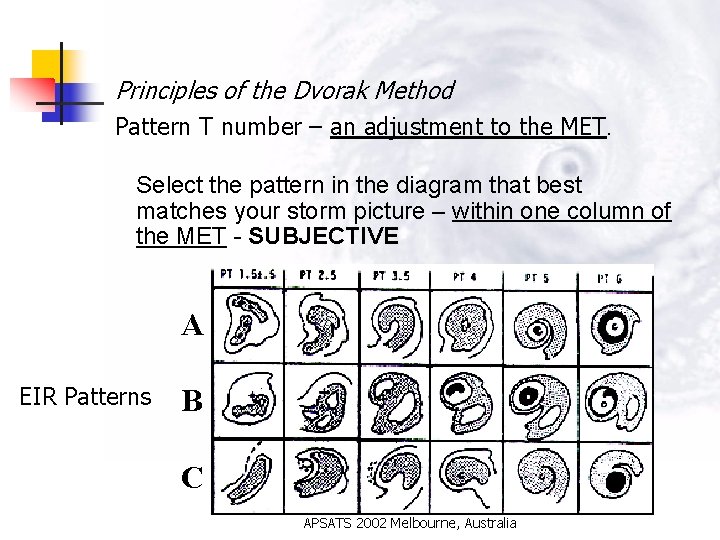
Principles of the Dvorak Method Pattern T number – an adjustment to the MET. Select the pattern in the diagram that best matches your storm picture – within one column of the MET - SUBJECTIVE A EIR Patterns B C APSATS 2002 Melbourne, Australia
APSATS 2002 Melbourne, Australia
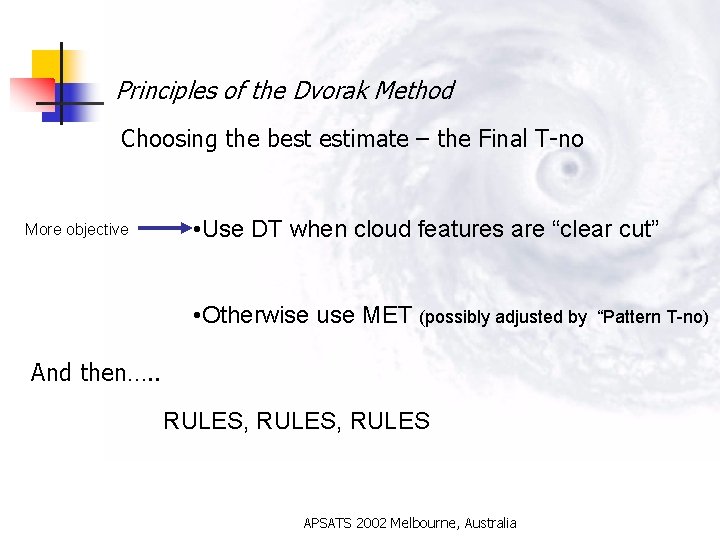
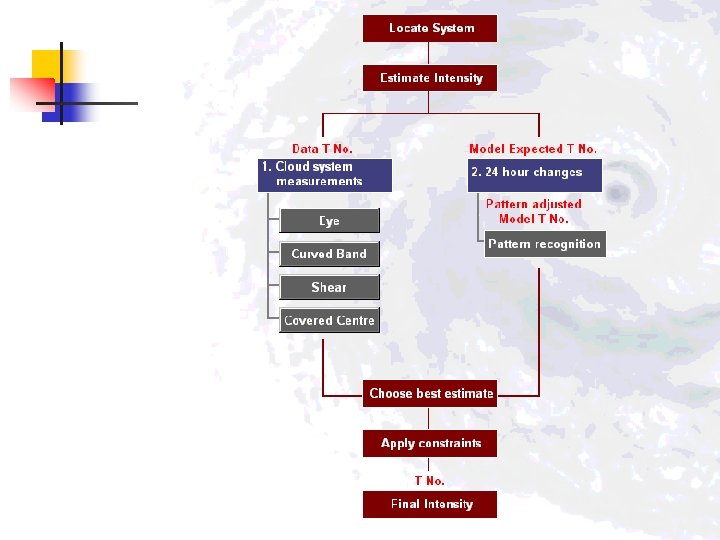
Principles of the Dvorak Method Choosing the best estimate – the Final T-no More objective • Use DT when cloud features are “clear cut” • Otherwise use MET (possibly adjusted by And then…. . RULES, RULES APSATS 2002 Melbourne, Australia “Pattern T-no)
APSATS 2002 Melbourne, Australia
Principles of the Dvorak Method Acknowledgements: Paul J. Mc. Crone Chief Forecaster HQ Air Force Weather Agency (AFWA) Meteorological Satellite Applications Mark De. Maria Regional and Mesoscale Meteorology Team NESDIS/CIRA Colorado State University, Ft. Collins CO APSATS 2002 Melbourne, Australia
- Slides: 57