
Principles of Surgical Oncology Salah R Elfaqih Pathological


- Slides: 54
Principles of Surgical Oncology Salah R. Elfaqih
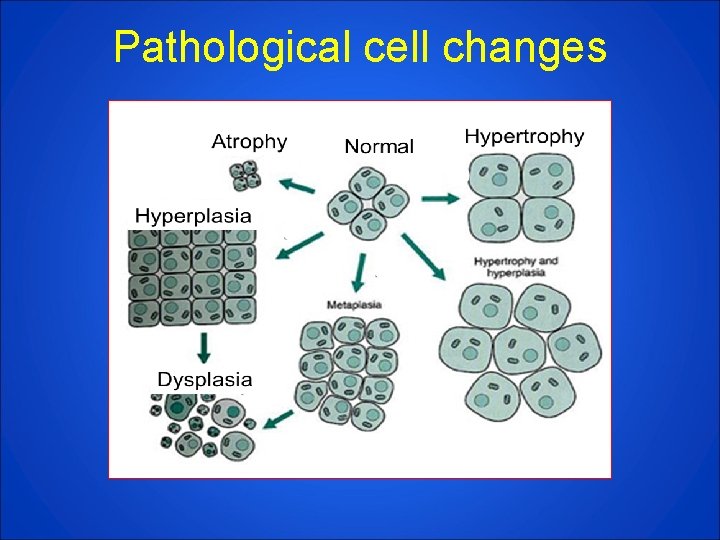
Pathological cell changes
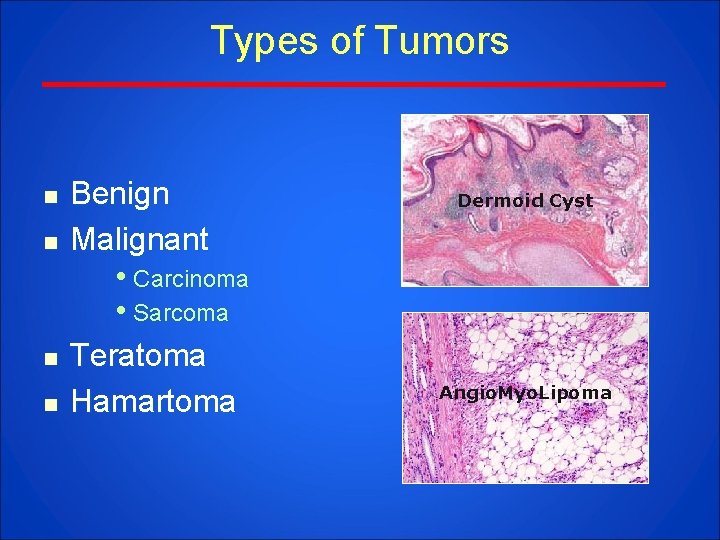
Types of Tumors n n Benign Malignant • Carcinoma • Sarcoma Teratoma Hamartoma Dermoid Cyst Angio. Myo. Lipoma
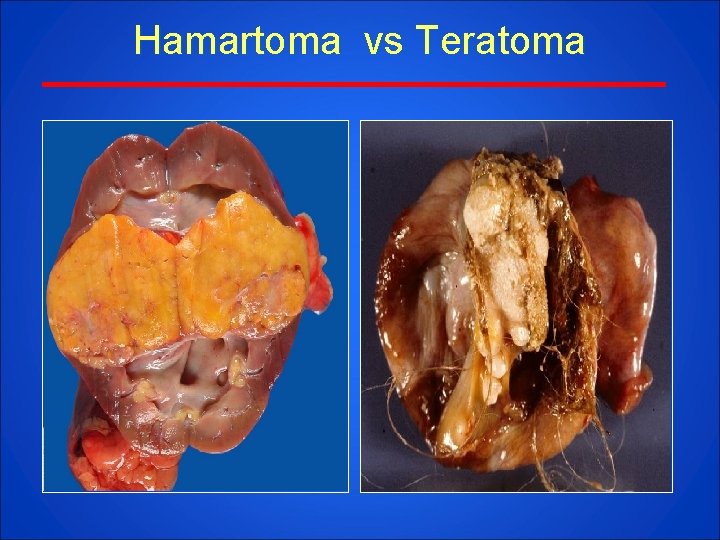
Hamartoma vs Teratoma
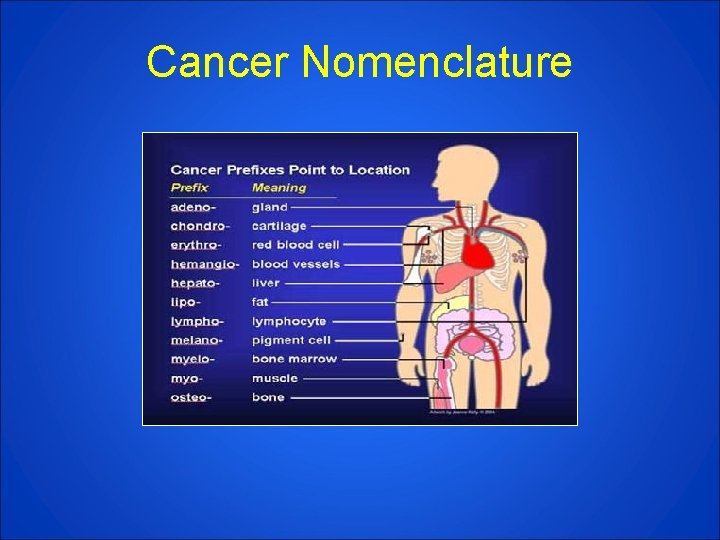
Cancer Nomenclature
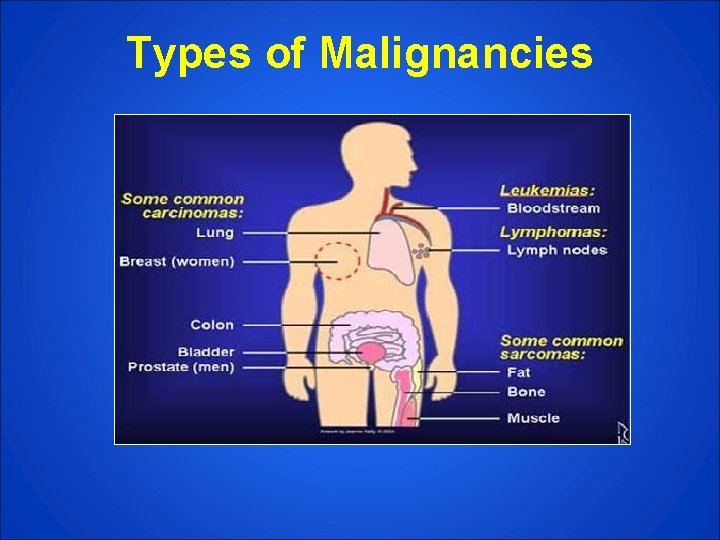
Types of Malignancies
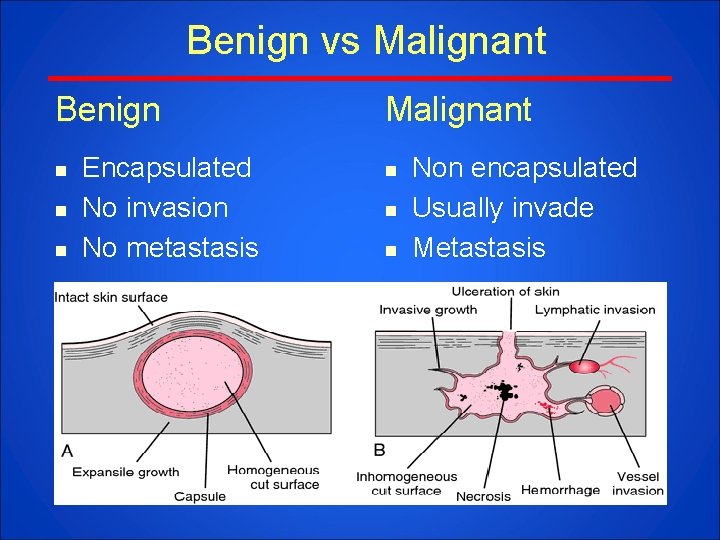
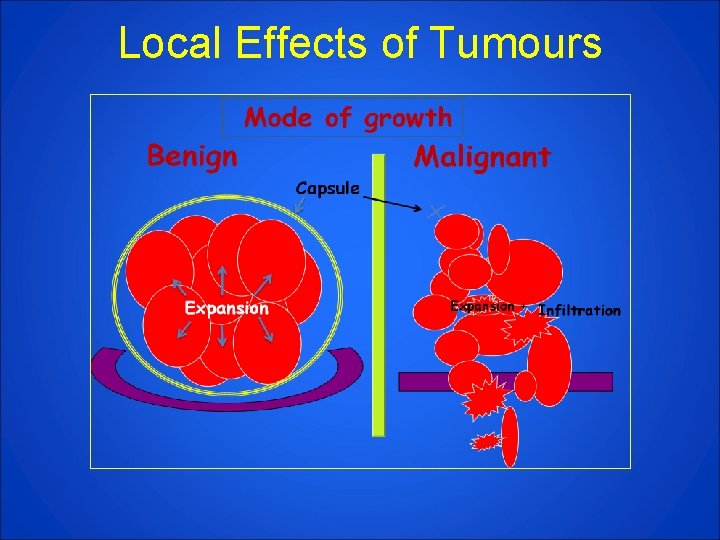
Benign vs Malignant Benign n Encapsulated No invasion No metastasis Malignant n n n Non encapsulated Usually invade Metastasis
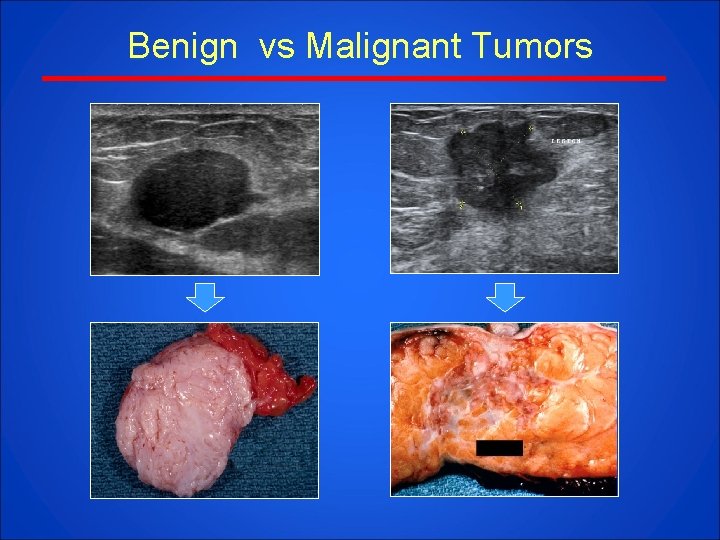
Benign vs Malignant Tumors
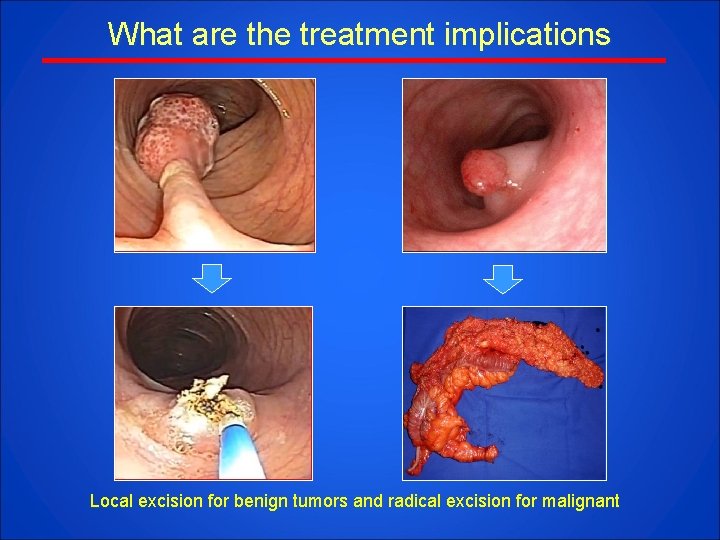
What are the treatment implications Local excision for benign tumors and radical excision for malignant
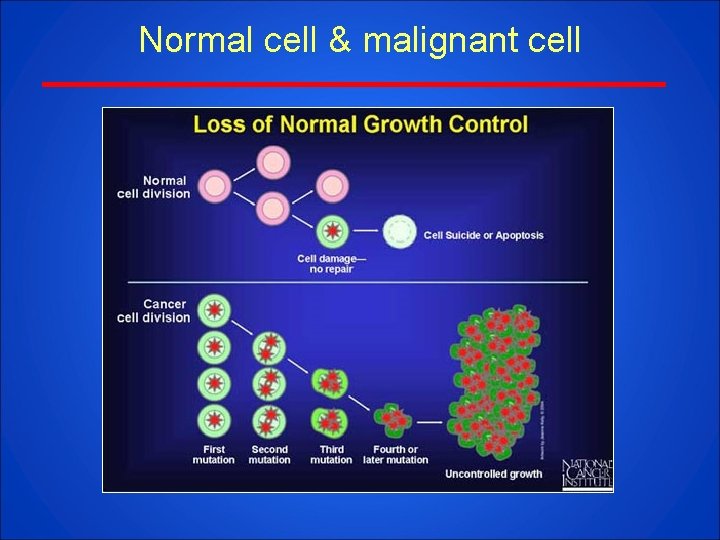
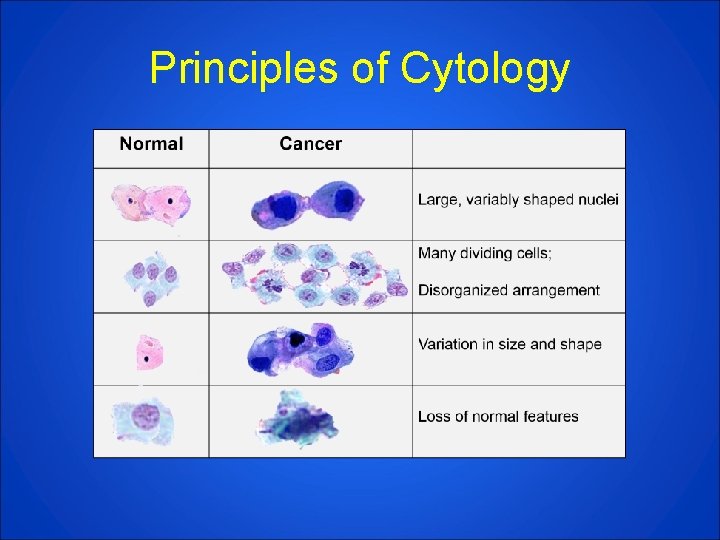
Normal cell & malignant cell
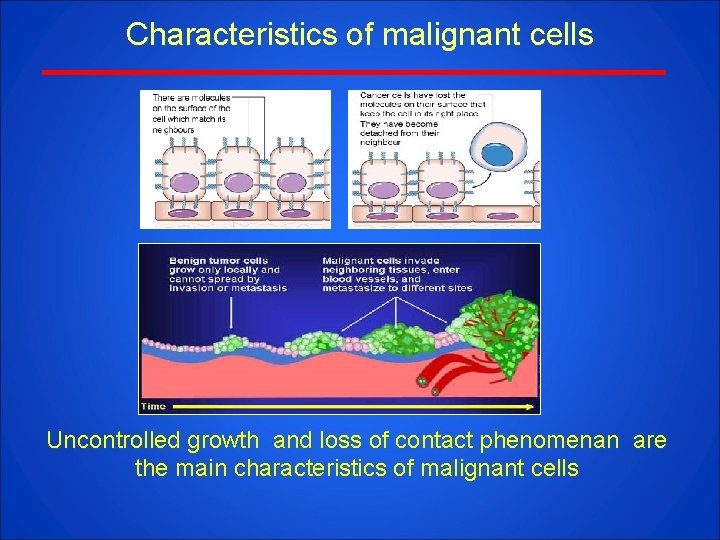
Characteristics of malignant cells Uncontrolled growth and loss of contact phenomenan are the main characteristics of malignant cells
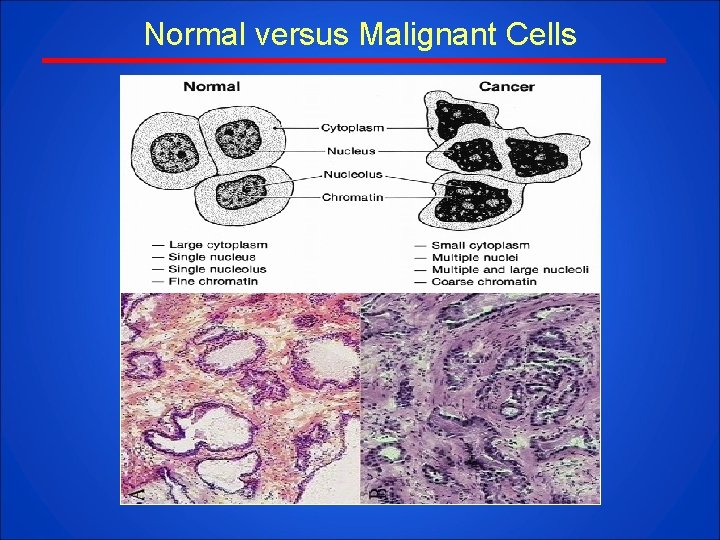
Normal versus Malignant Cells
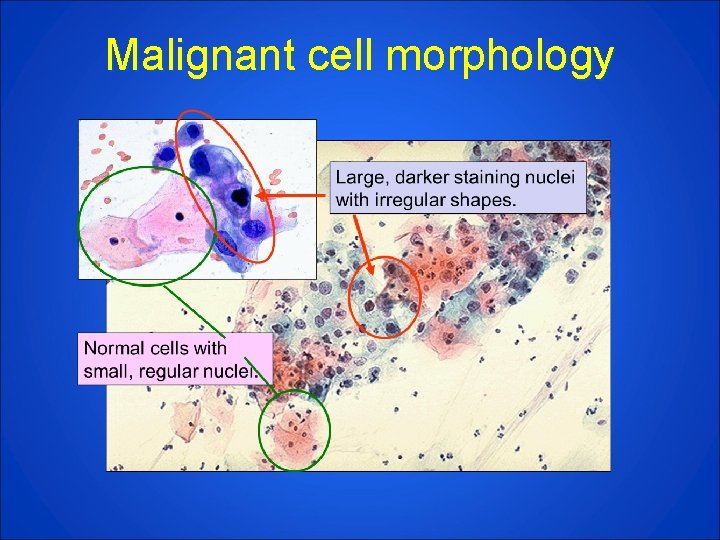
Malignant cell morphology
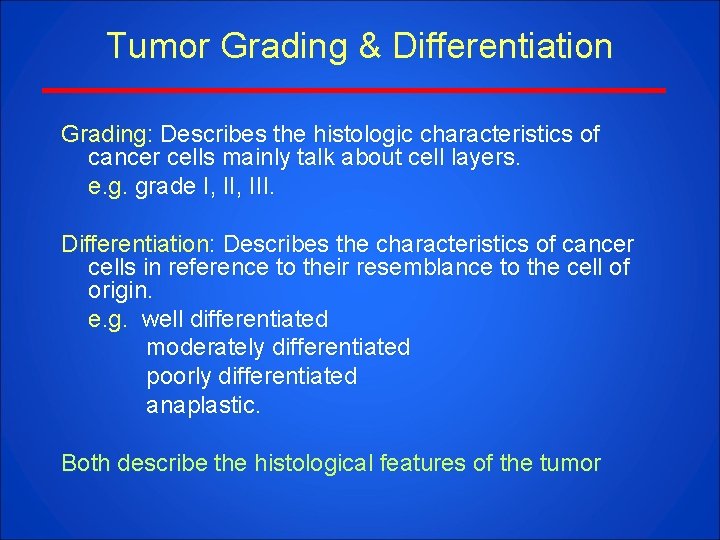
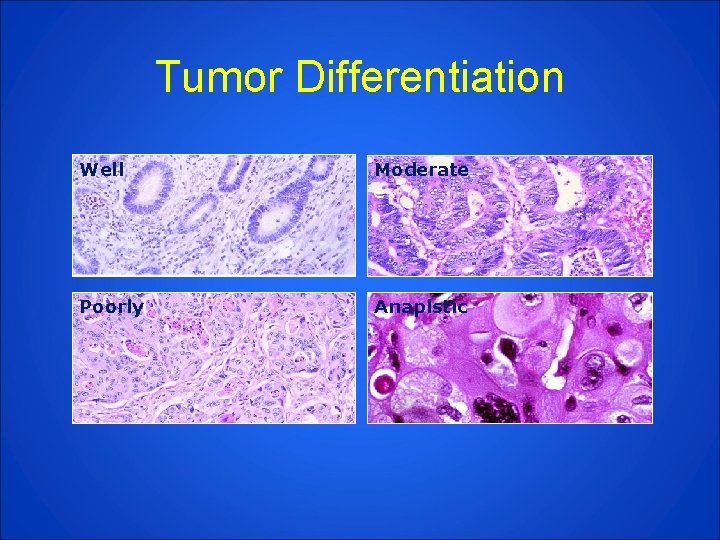
Tumor Grading & Differentiation Grading: Describes the histologic characteristics of cancer cells mainly talk about cell layers. e. g. grade I, III. Differentiation: Describes the characteristics of cancer cells in reference to their resemblance to the cell of origin. e. g. well differentiated moderately differentiated poorly differentiated anaplastic. Both describe the histological features of the tumor
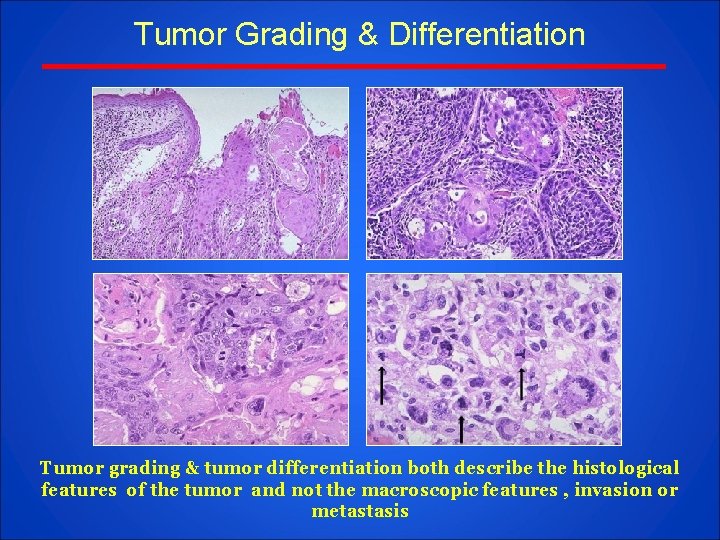
Tumor Grading & Differentiation Tumor grading & tumor differentiation both describe the histological features of the tumor and not the macroscopic features , invasion or metastasis
Tumor Differentiation Well Moderate e Poorly Anaplstic
Local Effects of Tumours
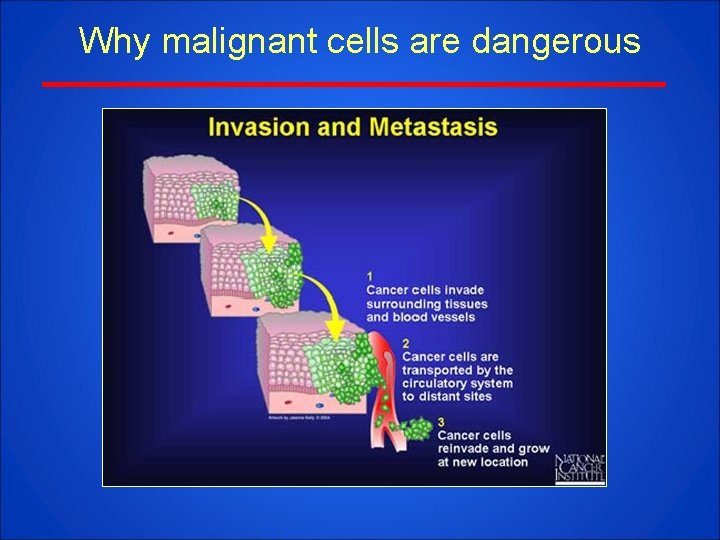
Why malignant cells are dangerous
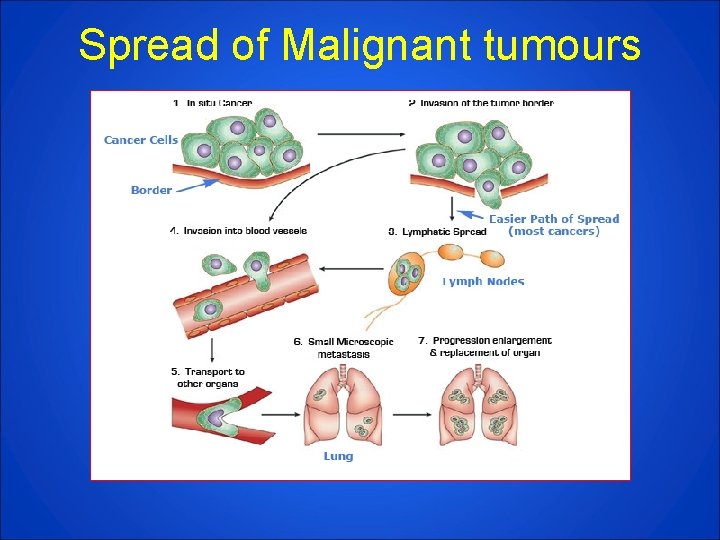
Spread of Malignant tumours
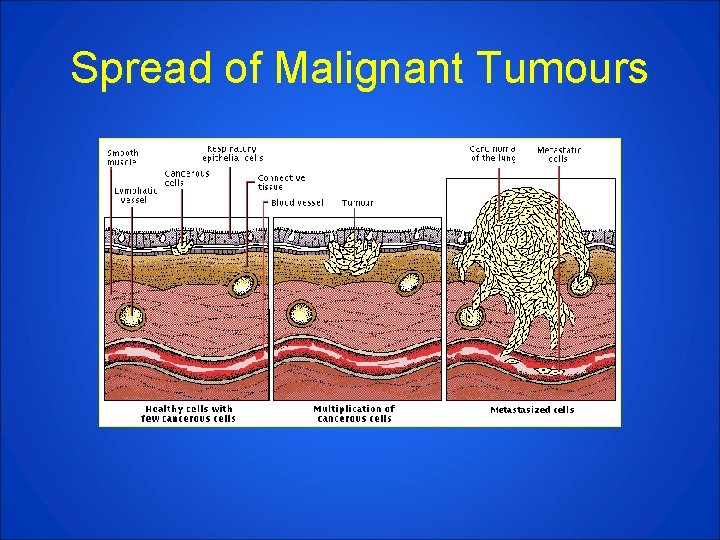
Spread of Malignant Tumours
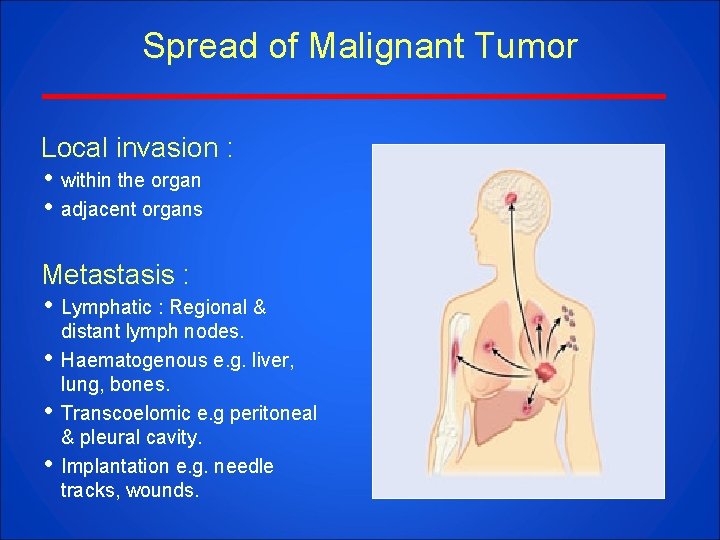
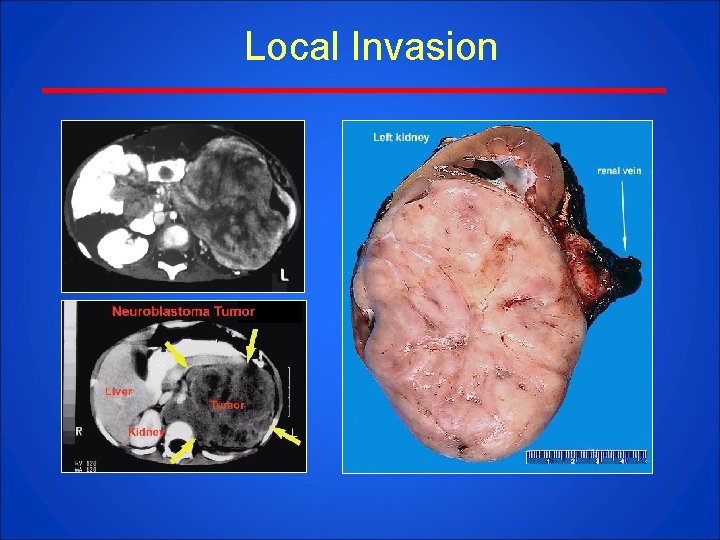
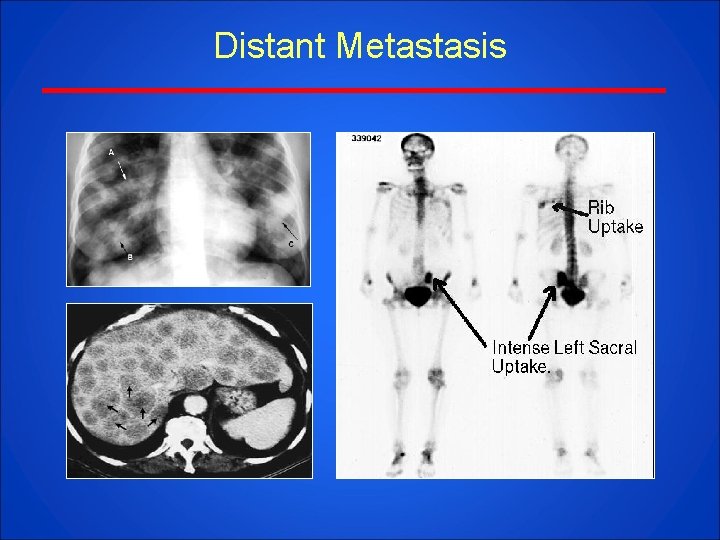
Spread of Malignant Tumor Local invasion : • within the organ • adjacent organs Metastasis : • Lymphatic : Regional & • • • distant lymph nodes. Haematogenous e. g. liver, lung, bones. Transcoelomic e. g peritoneal & pleural cavity. Implantation e. g. needle tracks, wounds.
Local Invasion
Distant Metastasis
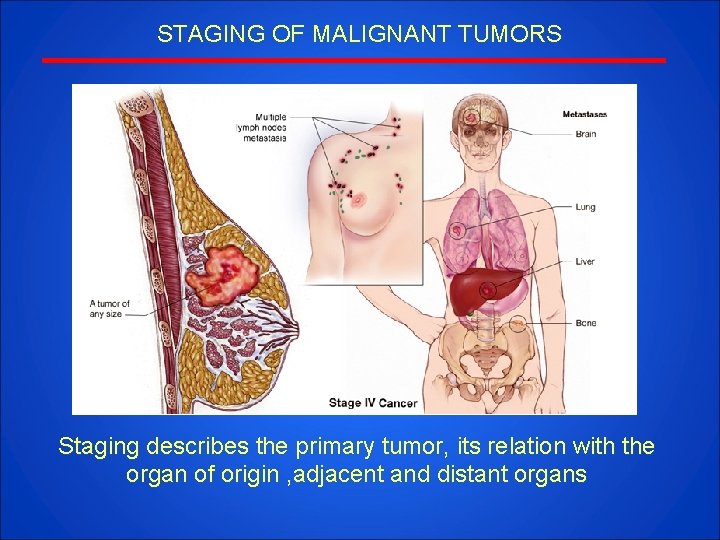
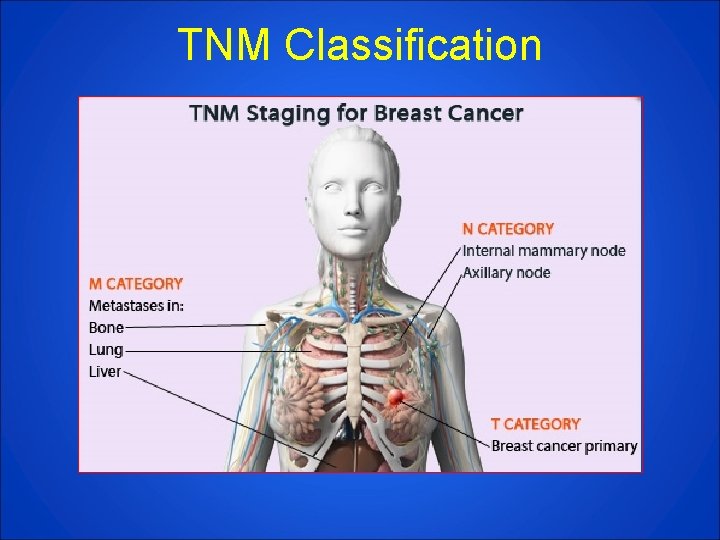
STAGING OF MALIGNANT TUMORS Staging describes the primary tumor, its relation with the organ of origin , adjacent and distant organs
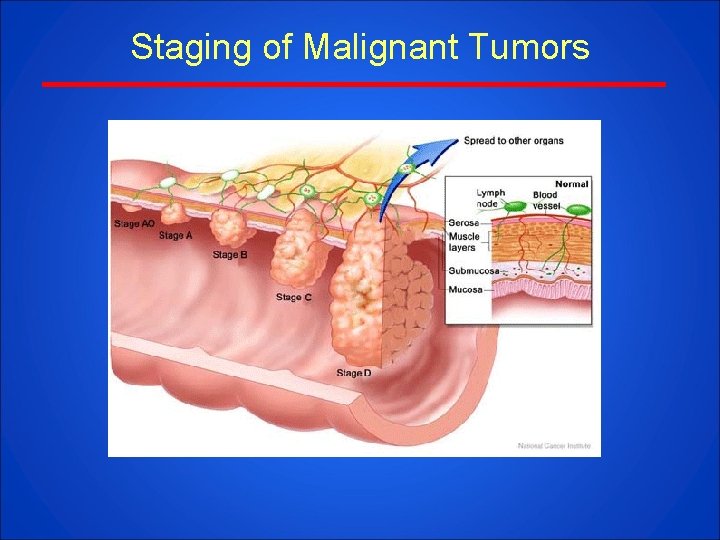
Staging of Malignant Tumors
TNM Classification
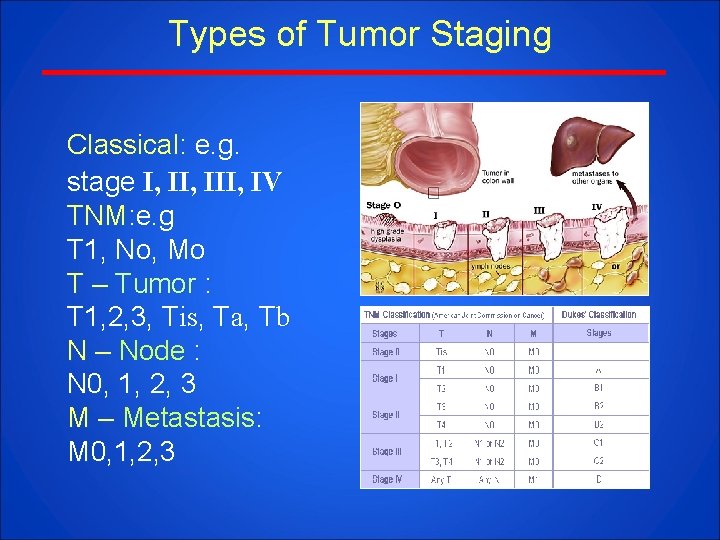
Types of Tumor Staging Classical: e. g. stage I, III, IV TNM: e. g T 1, No, Mo T – Tumor : T 1, 2, 3, Tis, Ta, Tb N – Node : N 0, 1, 2, 3 M – Metastasis: M 0, 1, 2, 3
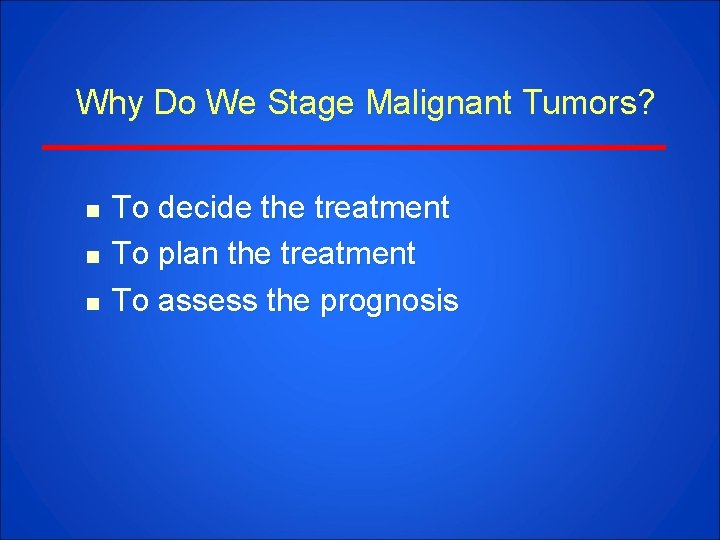
Why Do We Stage Malignant Tumors? n n n To decide the treatment To plan the treatment To assess the prognosis
Whenever you deal with malignant tumor, always remember that there is primary tumor & there may be secondaries.
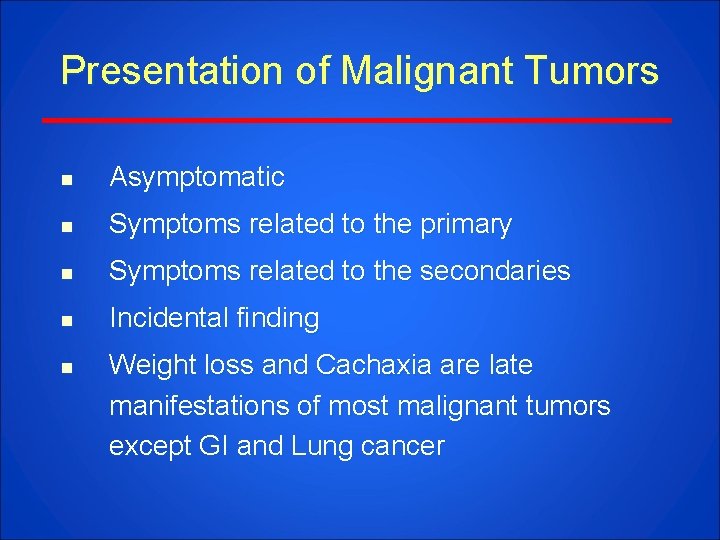
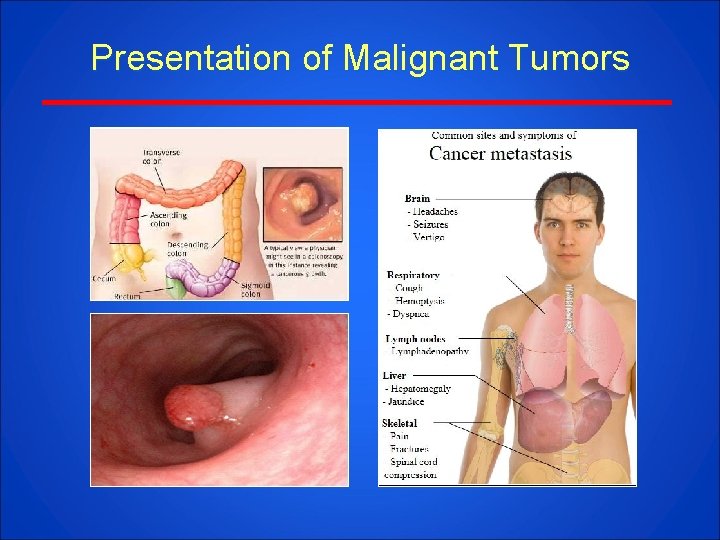
Presentation of Malignant Tumors n Asymptomatic n Symptoms related to the primary n Symptoms related to the secondaries n Incidental finding n Weight loss and Cachaxia are late manifestations of most malignant tumors except GI and Lung cancer
Presentation of Malignant Tumors
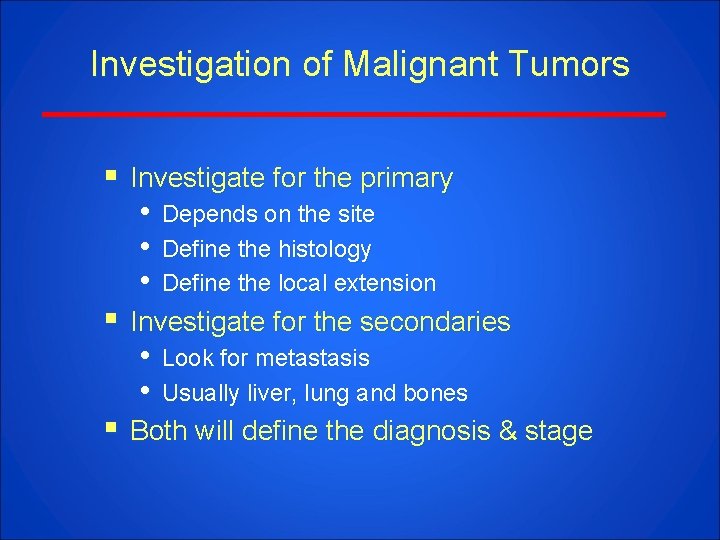
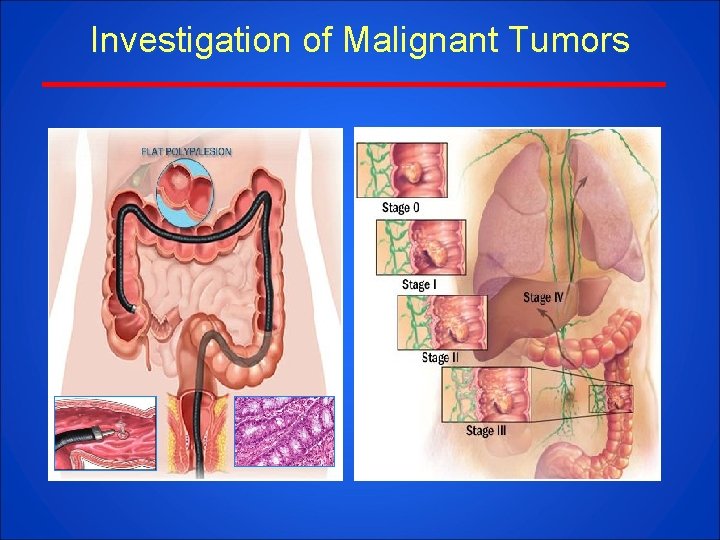
Investigation of Malignant Tumors § Investigate for the primary • Depends on the site • Define the histology • Define the local extension § Investigate for the secondaries • Look for metastasis • Usually liver, lung and bones § Both will define the diagnosis & stage
Investigation of Malignant Tumors
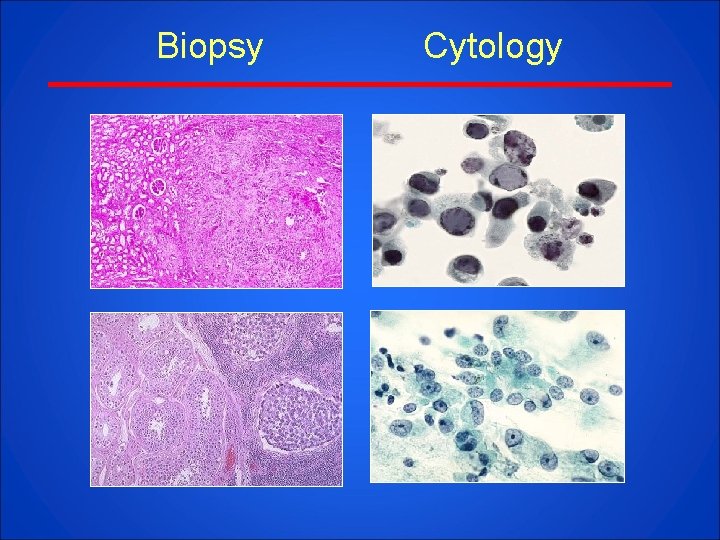
Biopsy Cytology
Principles of Cytology
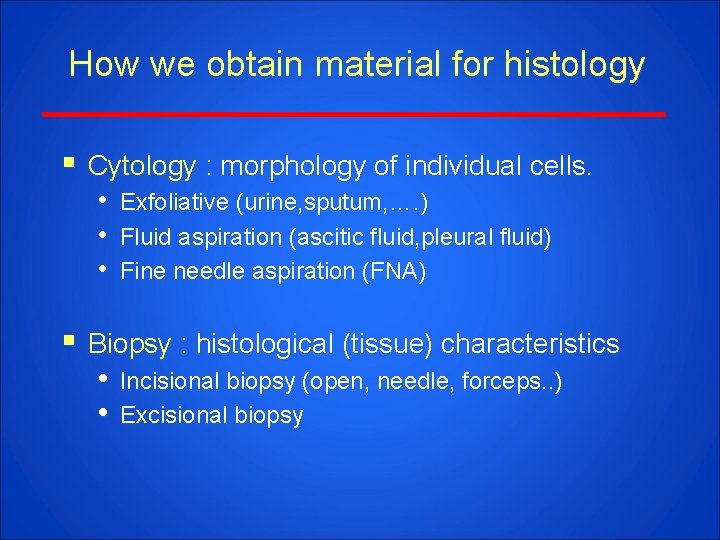
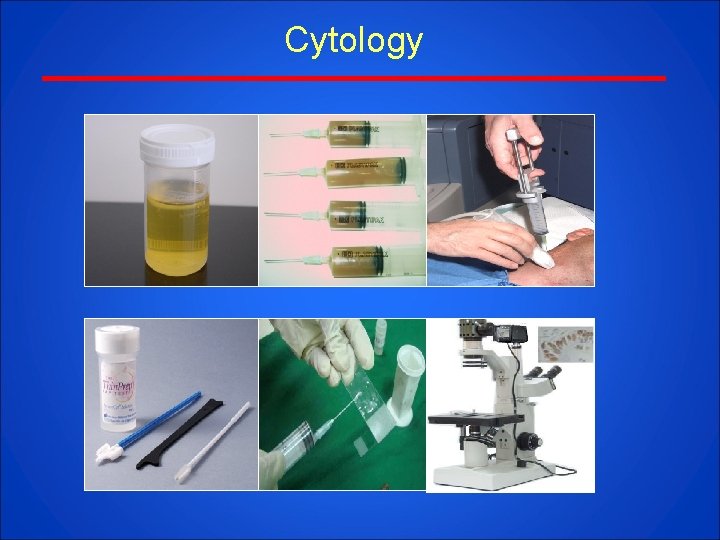
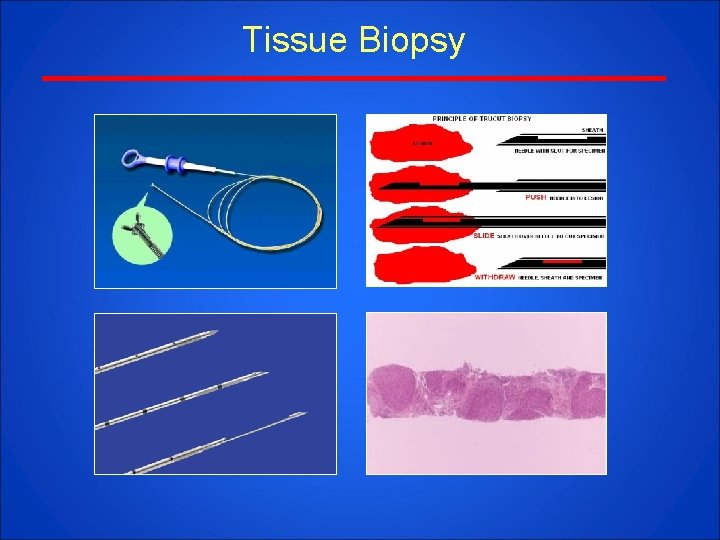
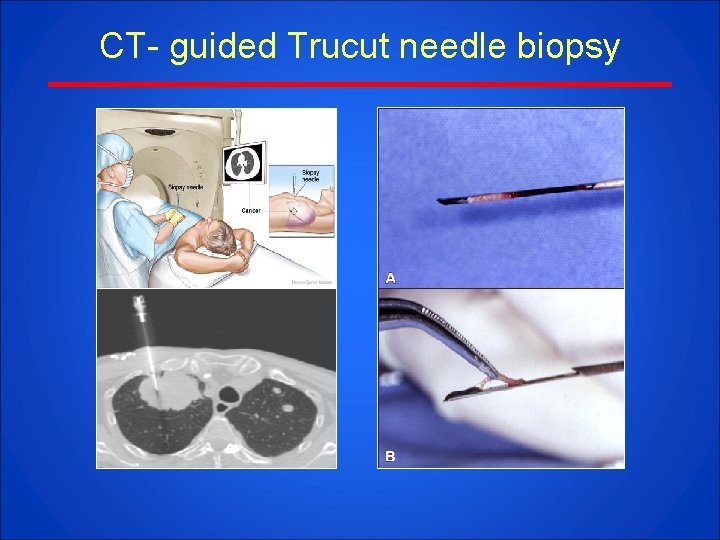
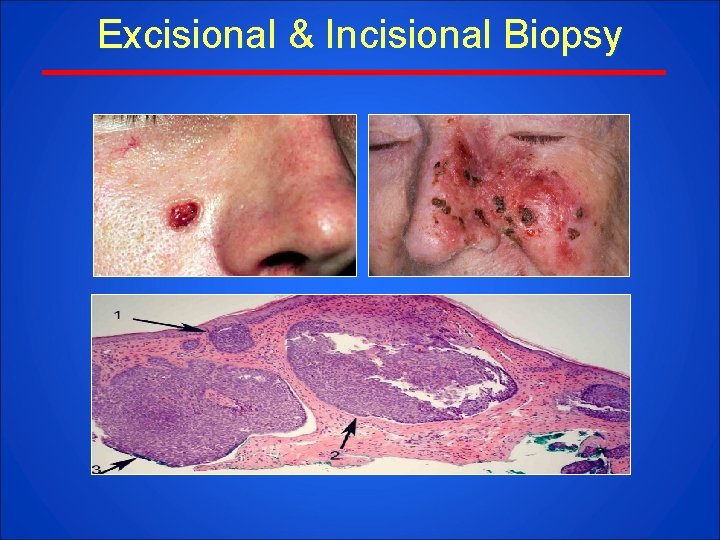
How we obtain material for histology § Cytology : morphology of individual cells. • • • Exfoliative (urine, sputum, …. ) Fluid aspiration (ascitic fluid, pleural fluid) Fine needle aspiration (FNA) § Biopsy : histological (tissue) characteristics • • Incisional biopsy (open, needle, forceps. . ) Excisional biopsy
Cytology
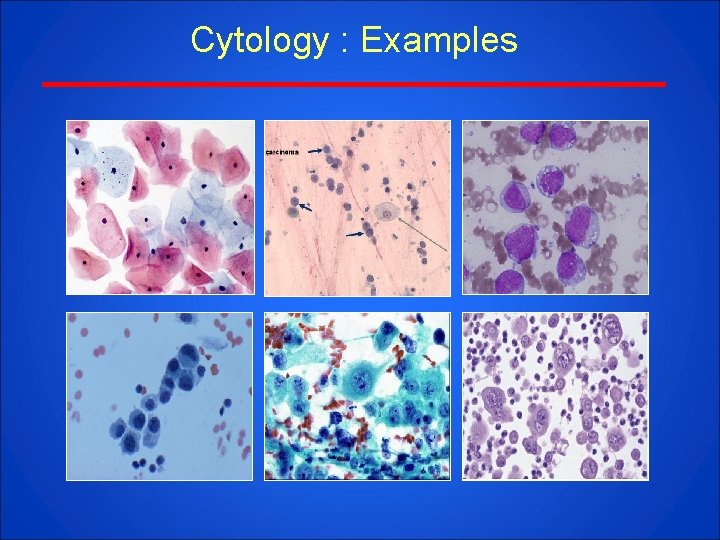
Cytology : Examples
Tissue Biopsy
CT- guided Trucut needle biopsy
Excisional & Incisional Biopsy
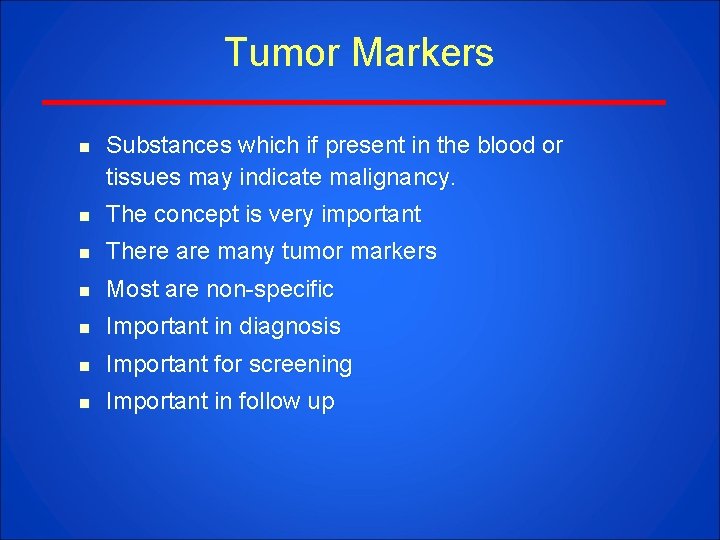
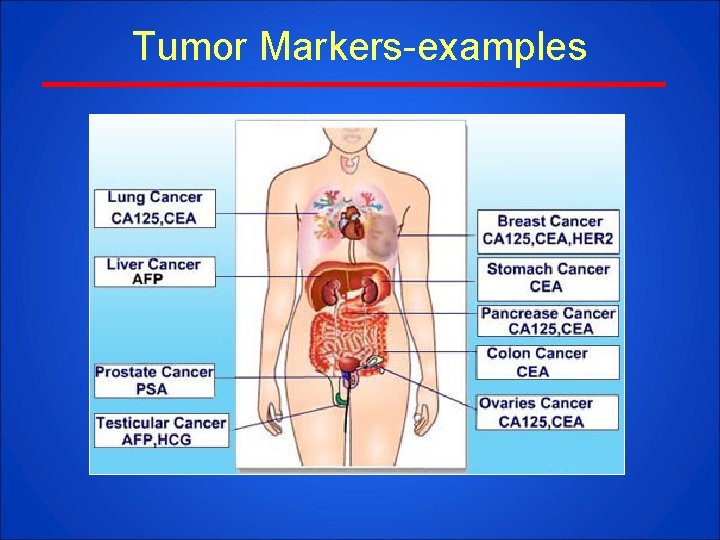
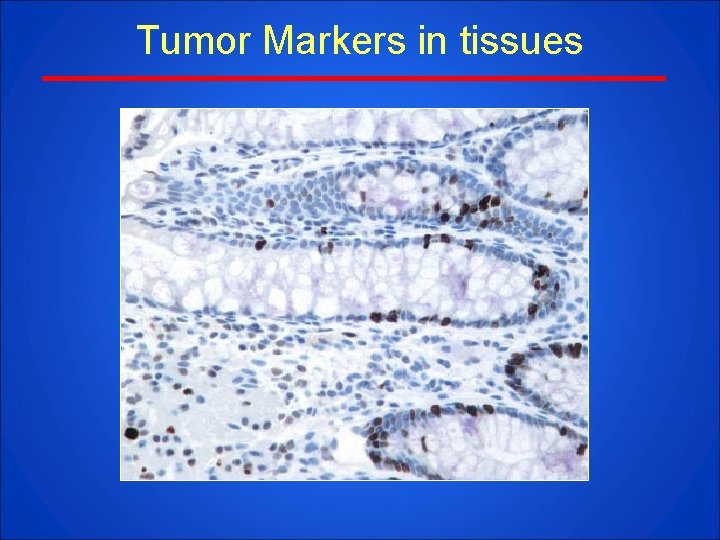
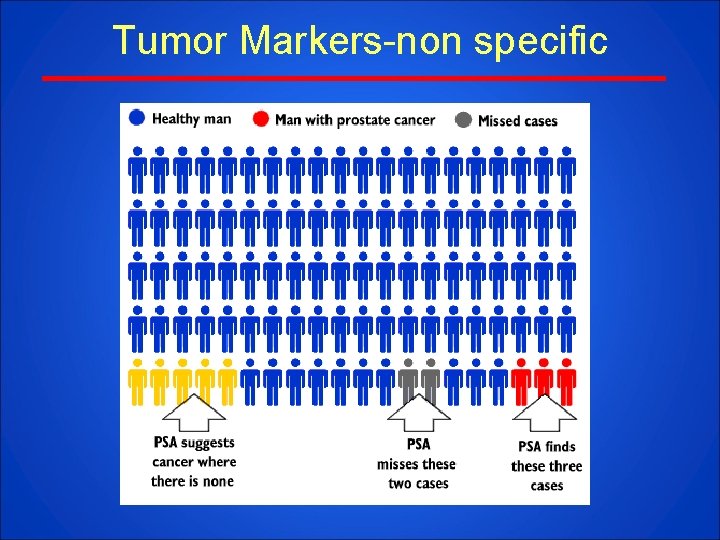
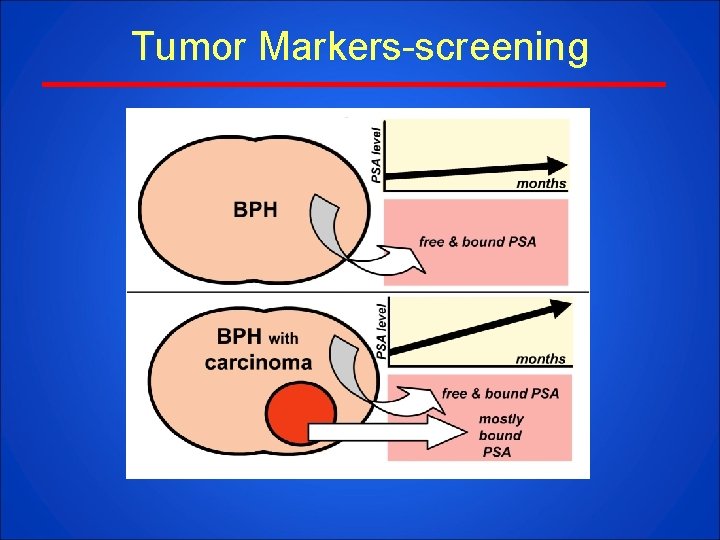
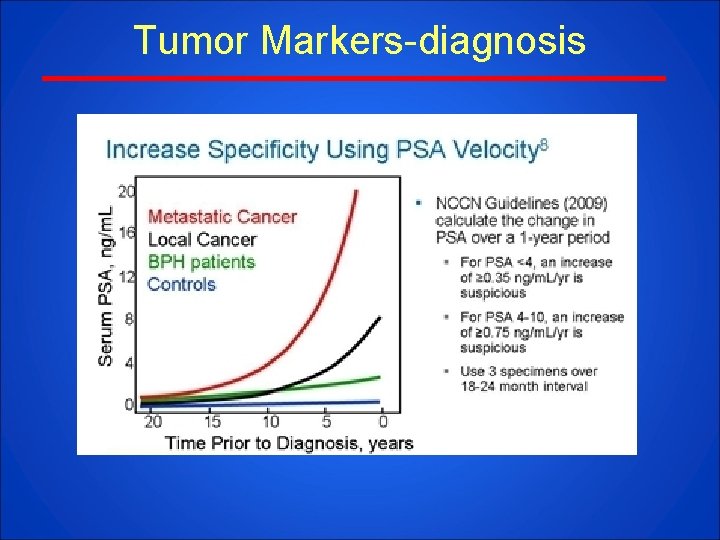
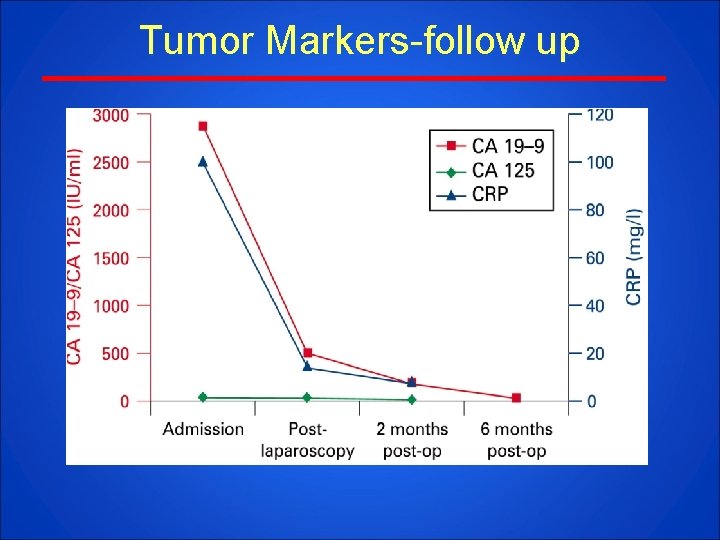
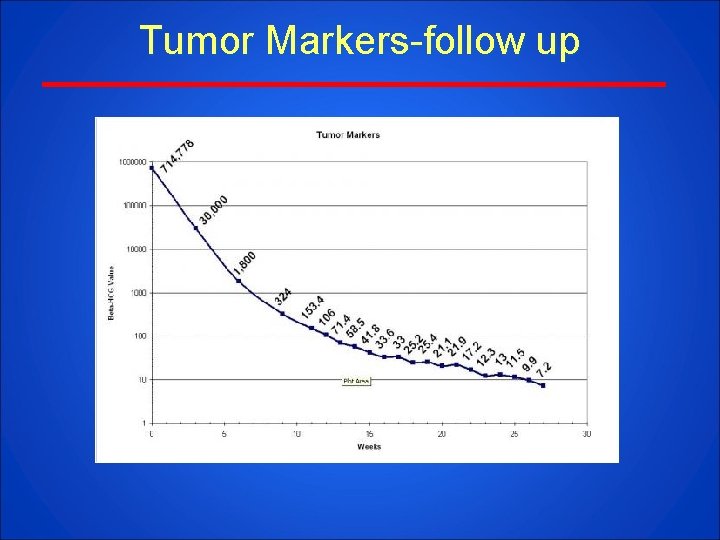
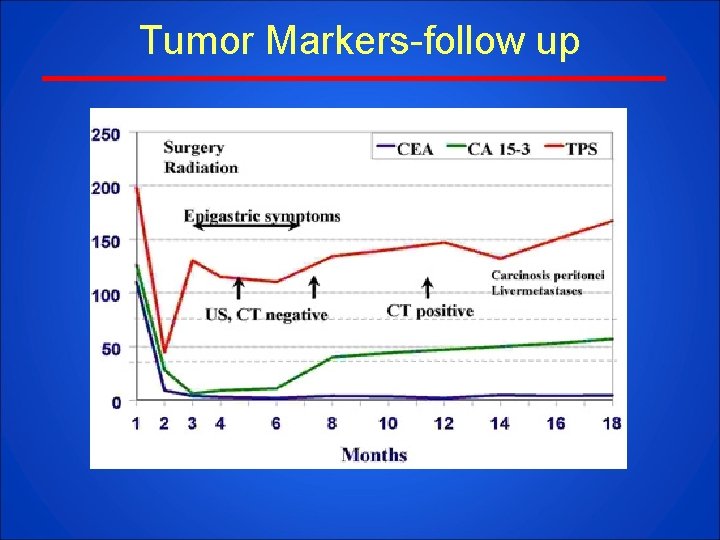
Tumor Markers n Substances which if present in the blood or tissues may indicate malignancy. n The concept is very important n There are many tumor markers n Most are non-specific n Important in diagnosis n Important for screening n Important in follow up
Tumor Markers-examples
Tumor Markers in tissues
Tumor Markers-non specific
Tumor Markers-screening
Tumor Markers-diagnosis
Tumor Markers-follow up
Tumor Markers-follow up
Tumor Markers-follow up
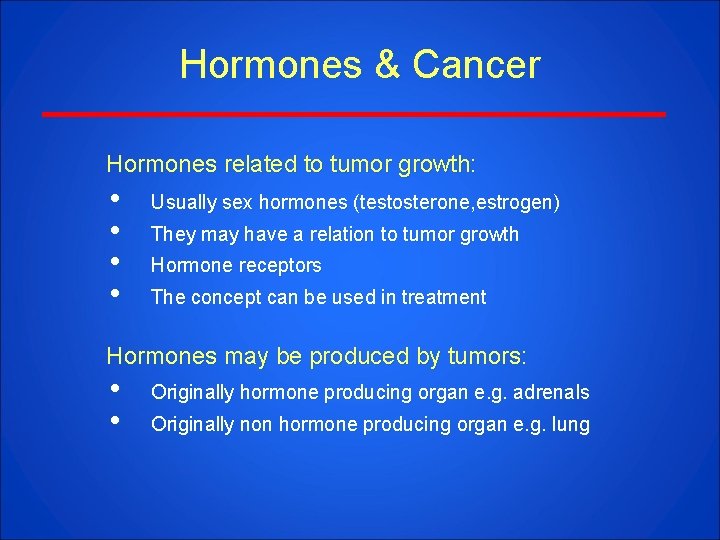
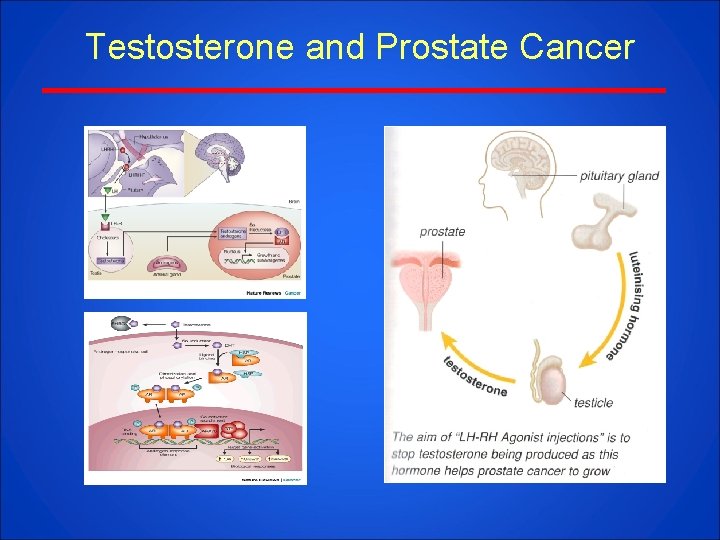
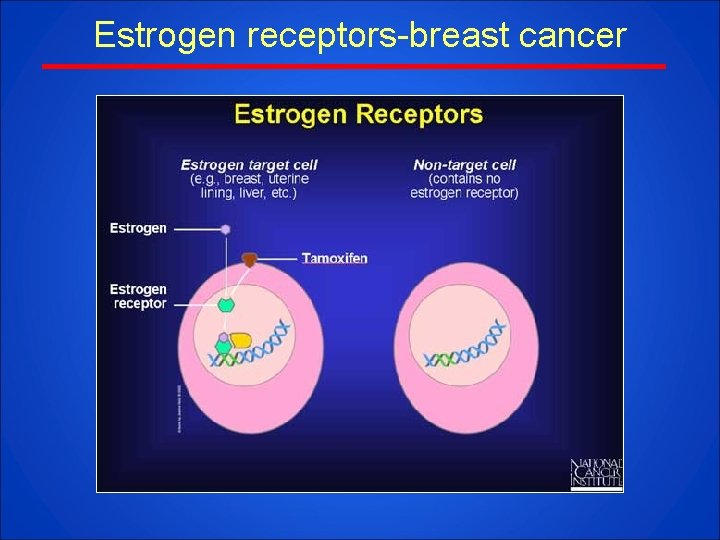
Hormones & Cancer Hormones related to tumor growth: • • Usually sex hormones (testosterone, estrogen) They may have a relation to tumor growth Hormone receptors The concept can be used in treatment Hormones may be produced by tumors: • • Originally hormone producing organ e. g. adrenals Originally non hormone producing organ e. g. lung
Testosterone and Prostate Cancer
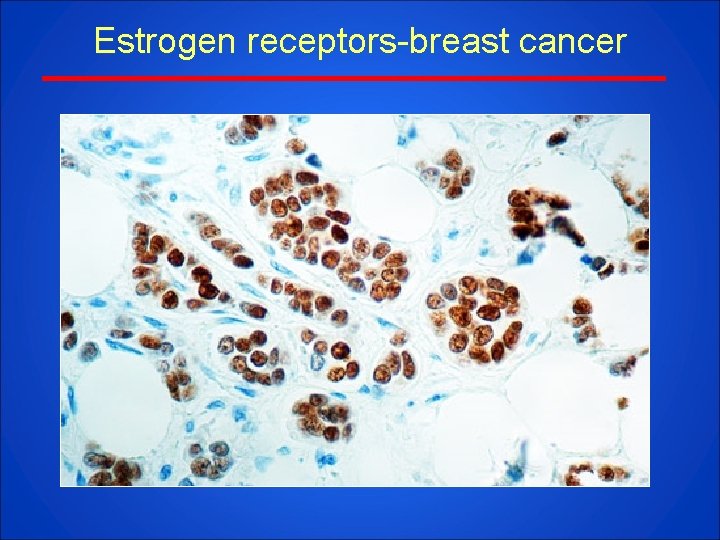
Estrogen receptors-breast cancer
Estrogen receptors-breast cancer