
Principles of Supervision I II Beginning to Understand

Principles of Supervision I & II Beginning to Understand Leadership

Names of Leaders n n n n n Leader Superintendent Administrator Foreman CEO Boss Supervisor Manager Commander President n n n n n Organizer Chief Ruler Coordinator Director Executive Overseer Proprietor Commissioner Superior
Names of Leaders n n n n n Controller Principal Captain Skipper Planner Representative Regulator Ambassador Diplomat Agent n n n n n Spokesperson Chairperson Attache’ OIC CQ The man Head Cheese Top Dog Head Honcho Ringleader
Names of Leaders n n n n n Shepard Pilot Pacesetter Governor Guide Number one Master Kingpin Dignitary Dean n n Harbinger Eminence Doyen Rector Noble Forerunner Bigwig Brother Bureaucrat Judge Premier
Responsibilities of a Leader The Law of the Big Picture “The Goal is More Important than the Role”
“Who are our Stakeholders” n n n Stakeholder: Any person or group who is either affected by what you do or able to influence what you do Customer: A stakeholder who is primarily affected by what you do…………………. . examples Authority: A stakeholder who is primarily able to influence what you do…………………. examples Direct customer: A customer who receives services directly from you………………examples Indirect customer: A customer who receives services from you through another party………. examples
Exercise 1 Create a diagram showing you (or your supervisor) in the middle. n Show all of your/your supervisor’s major stakeholders n
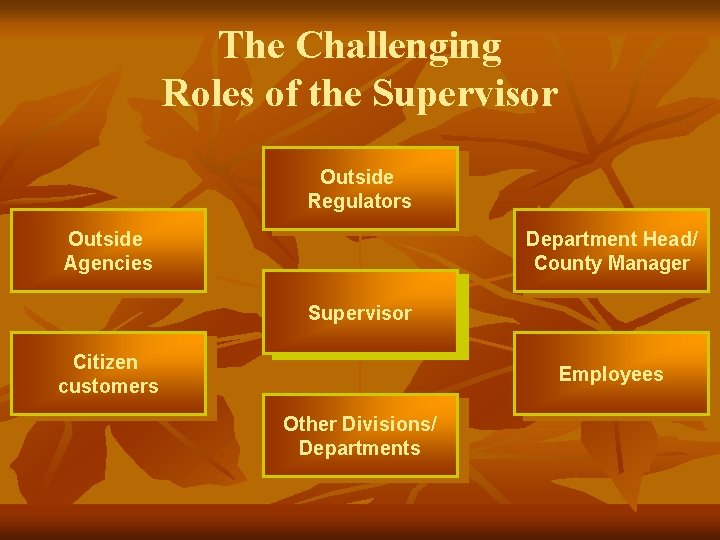
The Challenging Roles of the Supervisor Outside Regulators Outside Agencies Department Head/ County Manager Supervisor Citizen customers Employees Other Divisions/ Departments
Job is to Meet Needs of All Customers
Exercise 2 In your groups, develop a list of the 5 most important duties of a supervisor based on the needs of his/her customers n Develop a list of the qualities that a good supervisor needs to have n
The Top Possible Answers 1. 2. 3. 4. 5. 6. Lead themselves well. Ensure the right job gets done right with the right people…Pursuit to Excellence!! Keep the work area safe, healthy and current. Encourage teamwork, cooperation and collaboration. Understand develop employees. Keep record, make reports and track progress.
Leading Yourself Well “The key to leading yourself well is to learn self-management” Manage emotions n Manage your time n Manage your priorities n Manage your energy n Manage your thinking n Manage your words n Manage your personal life n
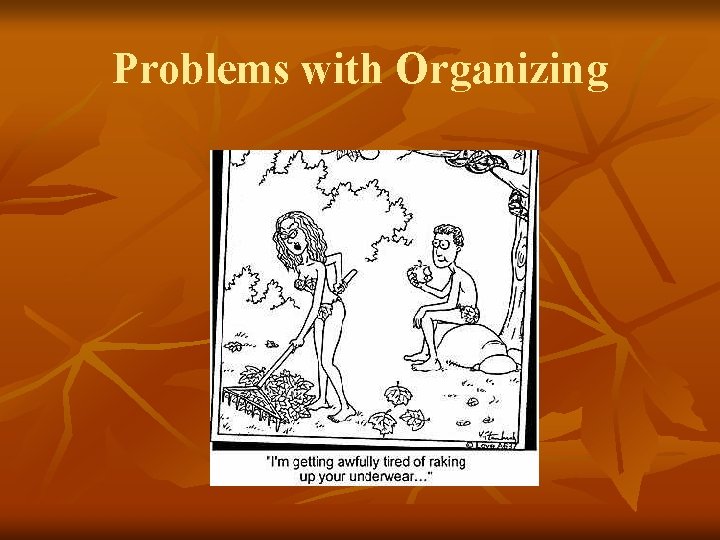
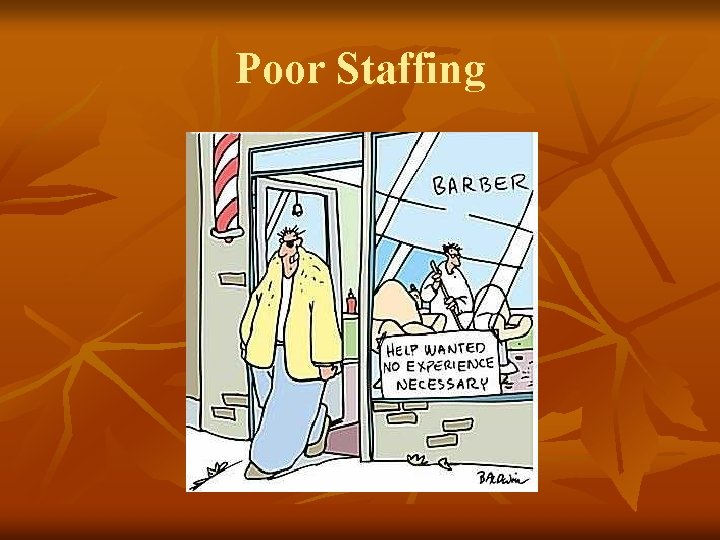
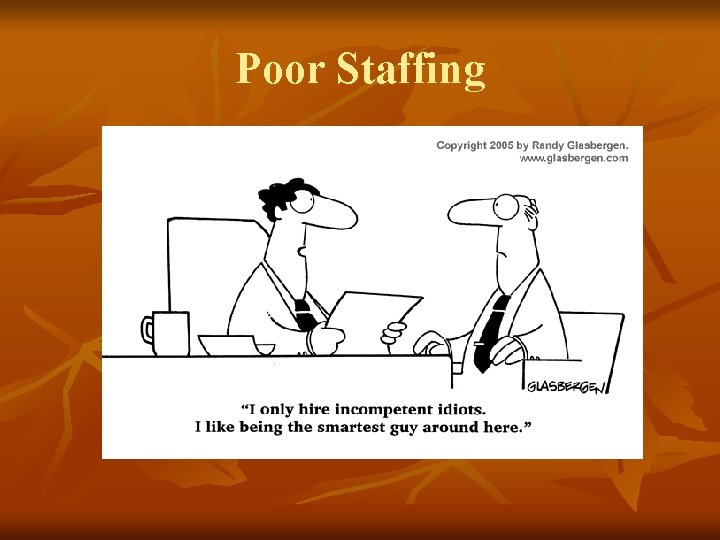
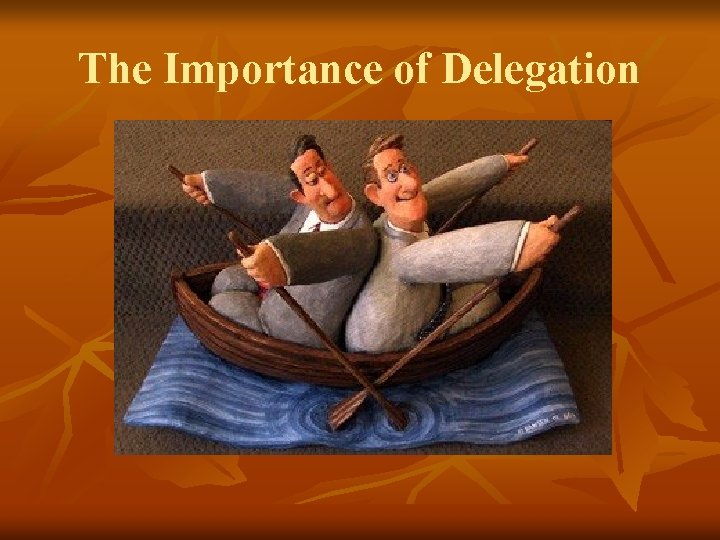
Skills for Getting the Right Job Done…Right!! n n n n Planning Organizing Staffing Delegating Coordinating Reporting Budgeting
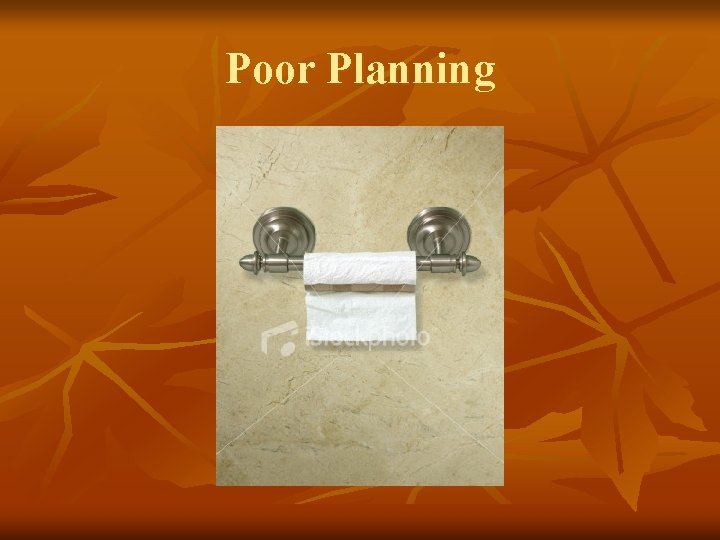
Poor Planning
Problems with Organizing
Poor Staffing
Poor Staffing
The Importance of Delegation
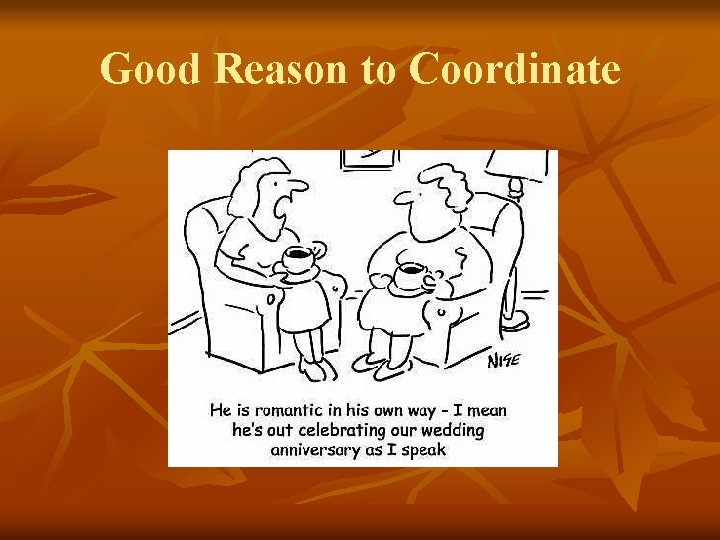
Good Reason to Coordinate
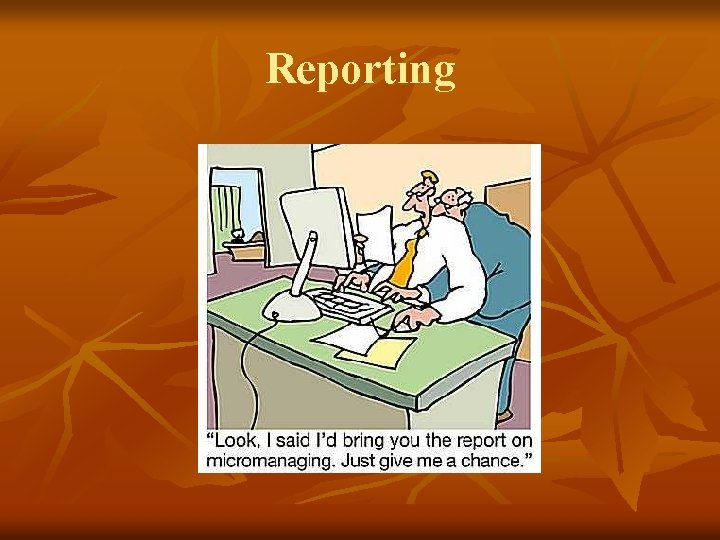
Reporting
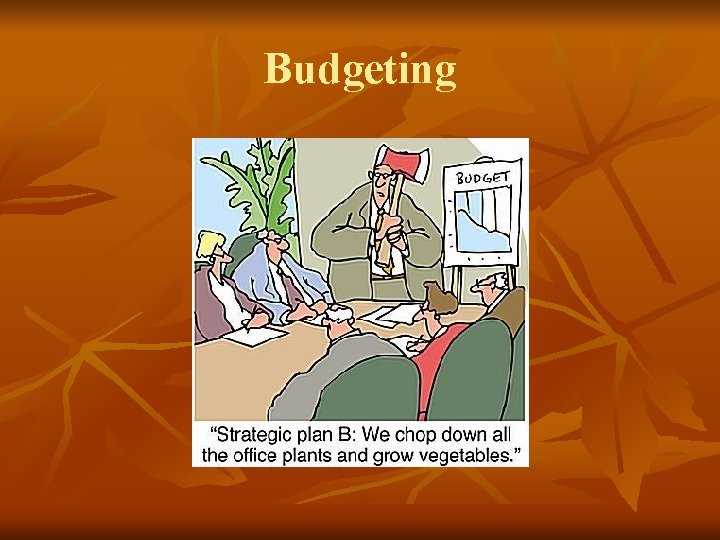
Budgeting
Skills for Keeping the Work Area Safe & Healthy Enforcing accountability n Teaching safety n Providing the right resources n
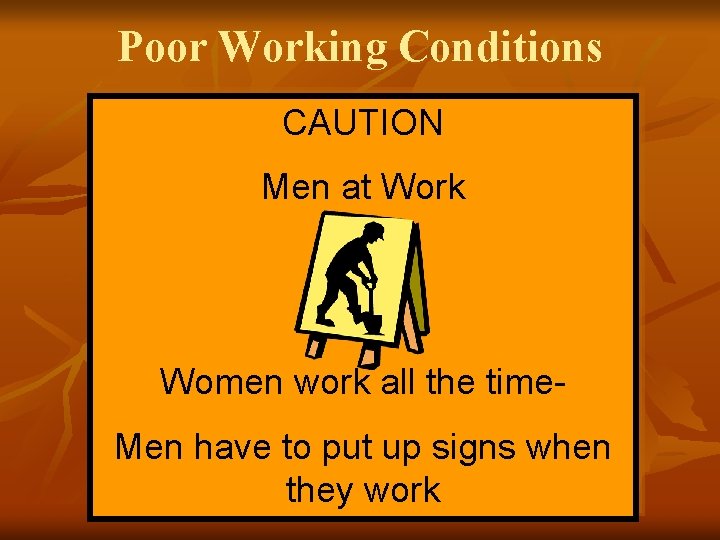
Poor Working Conditions CAUTION Men at Work Women work all the time. Men have to put up signs when they work
Skills for Encouraging Teamwork, Cooperation and Collaboration Building morale by knowing the vision of the organization n Articulating team goals; aligning employee goals; aligning with organizational goals n Developing trust and cooperation n Conflict management n Effective meetings n
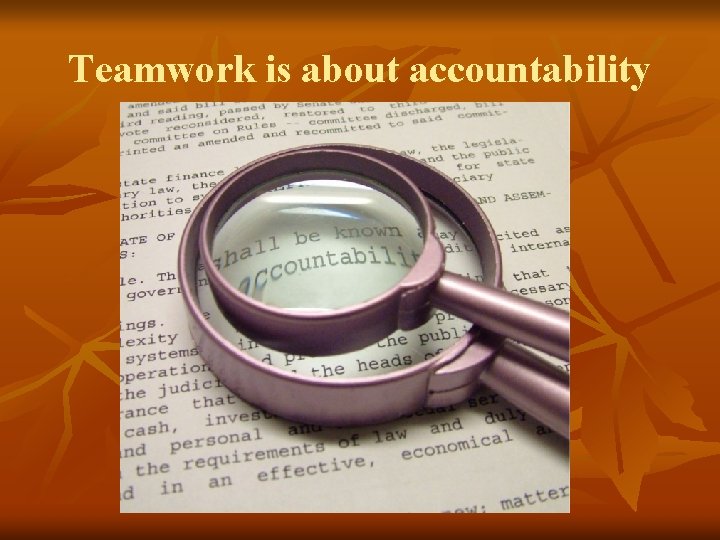
Teamwork is about accountability
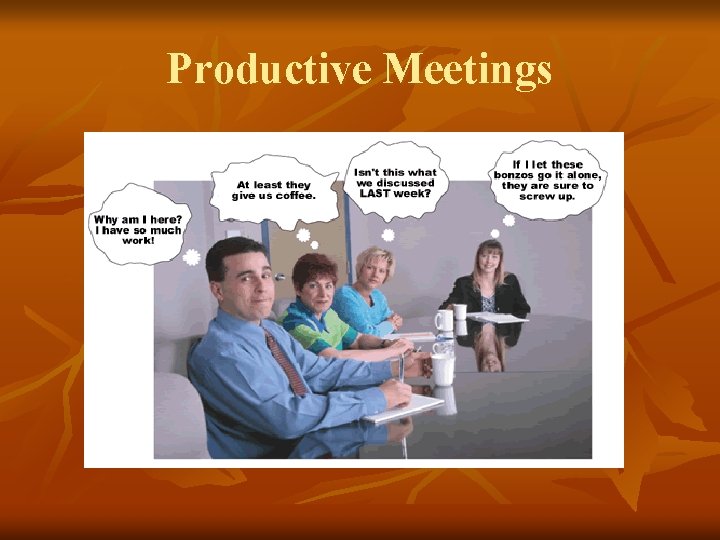
Productive Meetings
Skills for Developing Employees Teaching and training. n Coaching employees to take on more responsibility and to find their strengths. n Evaluating employees to correct problems and mistakes and recognize accomplishments. n Mentoring those employees who show the motivation to improve their performance. n

Develop Employees to their Full Potential
Skills for Keeping Records and Making Reports Writing n Math n Presentation skills n Computer skills n
Results of Supervisory Skills Survey: What We Do Well 1. Persists—does not give up easily 2. Protects information considered to be personal or confidential 3. Acts decisively in emergencies 3. Treats fellow employees (including subordinates) with respect 5. Takes appropriate risks when necessary
Results of Supervisory Skills Survey: What We Do Well 6. Appears at ease when speaking before a group 7. Makes decisions that support the organization’s long -range goals 7. Supports a positive customer service environment in the workplace 8. Makes realistic, practical decisions based on facts 8. Considers organization/departmental priorities before individual goals 8. Encourages team members to work together as a team 8. Establishes and maintains good working relationships with key people outside our unit/division/department
Results of Supervisory Skills Survey: What We Need to Improve 1. After meetings, follows through to ensure actions are accomplished 2. When employees are in conflict, helps them listen to each other 3. Prepares for potential problems before they occur 4. Is able to receive constructive criticism without reacting defensively 5. When in conflict with another person, listens carefully to the other person’s wants and needs
Results of Supervisory Skills Survey: What We Need to Improve 6. When employees are in conflict, encourages them to consider new opinions 7. Focuses on important issues rather than trivial ones 7. When employees are in conflict, helps them identify areas of agreement 9. Listens to others’ ideas completely and openly before expressing his/her own viewpoint 9. Clearly states expectations for employees he/she supervises 9. Encourages others to look at problems in new ways, asks “why? ”, and questions the status quo
Exercise 3
Exercise 3 In your small groups, rank each of the candidates and answer: – Which one would you hire and why? Why would you not hire the other candidates? – What unknown factors would have an impact on your decision? – What major problems will your candidate of choice face? – If you were an employee, how would you feel working for each candidate?
Exercise 3 Scenarios Would you change your candidate of choice in the following situations? – Morale in the parks division is at an all-time low. The division has the highest turnover rate in the county. – The division has received numerous complaints about employees goofing off, wasting money, and generally doing poor quality work. – Several new responsibilities have recently been added to the division, including parks maintenance. No new staff was added. – The department head is known for micro-managing. The County Manager has told him: either delegate authority to your supervisors or move on.
Managing vs. Leading • “Managing is doing things right; Leadership is • • • doing the right things. ”…. Peter Drucker “Management is about arranging and telling; Leadership is about nurturing and enhancing. ”…Thomas J. Peters “The manager has his eye on the bottom line; the leader has his eye on the horizon. ”…Warren Bennis “Managers know how…Leaders know why. ”…John C. Maxwell
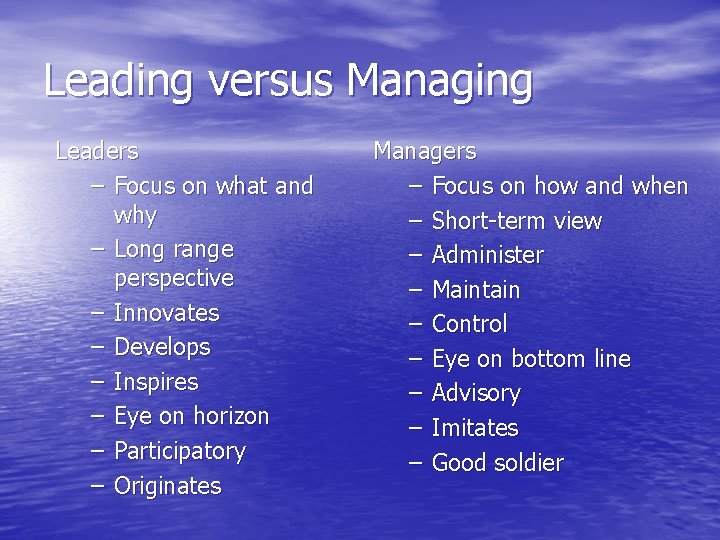
Leading versus Managing Leaders – Focus on what and why – Long range perspective – Innovates – Develops – Inspires – Eye on horizon – Participatory – Originates Managers – Focus on how and when – Short-term view – Administer – Maintain – Control – Eye on bottom line – Advisory – Imitates – Good soldier
Which Characteristics Are Important for Supervisors? • Both • Note the conflict and tension inherent between the two roles • Why!!! • Leading is about people and managing is about the work • Both are extremely important in accomplishing the mission of the organization
Leadership Styles • Task Manager • Country Club • Impoverished Manager • Middle of the Road • Team Management
Task Manager • • Primary concern is for output Views people as contributors to production Employees are not expected to understand why or contribute ideas of their own Heavy emphasis on quantifying efforts, procedures, simplifying jobs, and measuring performance Strict concept of authority and obedience Conflicts are not allowed Discounts abilities of employees Underlying belief: People and work are in conflict
Country Club Manager • Focuses on people and their relationships • Pays little attention to production needs • Sees people as fragile; sees themselves as the • • • protector or barrier between their employees and the organization Conflicts are smoothed over Discounts abilities of employees Underlying belief: People and work are in conflict
Impoverished Manager • Concerned neither with production or • • • relationships Major goal is to stay out of trouble and avoid risks Focus is on meeting minimum requirements for production and relationships Let seniority decide promotions Many times this is a “learned behavior” Avoids conflict by not becoming involved Underlying belief: People and work are in conflict
Middle of the Road Manager • Focus is on compromising between conflicting • • elements of work and people Balances need to push for production between need for building relationships Effort to achieve this balance is often manipulative (make others believe your way is the right way) Maintains tight control; encourages initiative Cannot truly delegate but complains about subordinates failure to take initiative
Win-Lose • All four of these styles see a conflict between work and people • All four are attempting for one to “win” at the expense of the other
Team Manager • A different philosophy: Work is healthy for people; • • • people must achieve in their work to feel good about themselves; the organization is its employees—that’s the only way the work can be achieved People and work are not in conflict, they depend on each other Uses motivation techniques instead of manipulation Not a social management; not an attempt to tolerate poor performance
Team Manager • Sees employee involvement in work planning as essential (who understands the job better? ) • Sees the importance of relationships in the context of production • Sees conflict as natural, even healthy; it must be confronted and worked through
Exercise 4 Your Supervisory Skills Assessment • What areas did your own skills assessment point to? • How are these similar/unlike the areas of the organization?
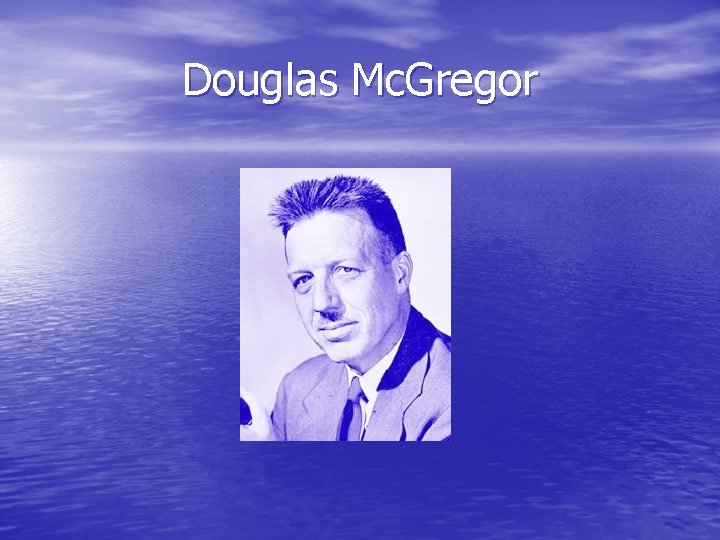
Douglas Mc. Gregor

Theory X and Theory Y • Exercise 5
Theory X and Theory Y • Two views of how people view human behavior and organizational life • Theory X: 1, 4, 6, and 7 • Theory Y: 2, 3, 5, 8, 9, and 10

Exercise 6
Which Management Style is Best? • Exercise 7
Frederick Herzberg
Herzberg’s Hygiene & Motivational Factors • Factors that affect job attitudes • Built on Maslow’s theory • Work involves hygiene factors; if they aren’t present, they DEMOTIVATE the employee; must be present before motivational factors can be used
Hygiene Factors • • Working conditions Policies and administrative practices Salary and Benefits Supervision Job security Fellow workers Personal life
Motivational Factors • • • Recognition Achievement Advancement Growth Responsibility Job challenge
Employees and Motivation • Remember the number one motivational principle, “People do what people see”!! • Exercise 8: At your tables, identify the top five things which you believe motivates employees
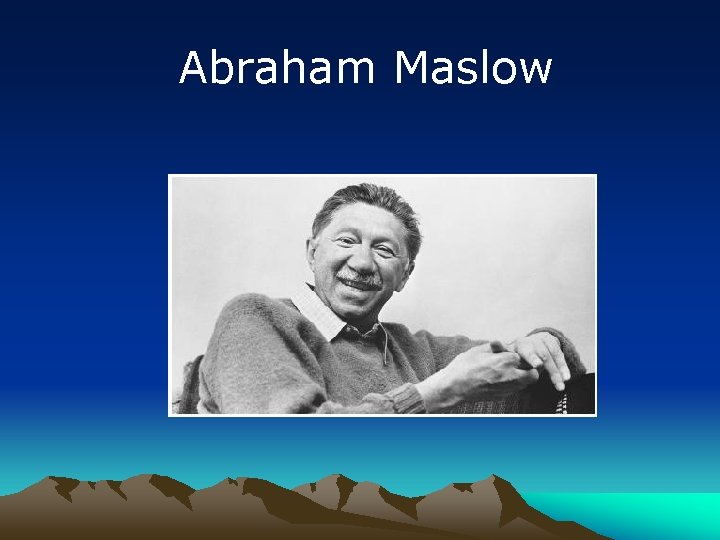
Abraham Maslow
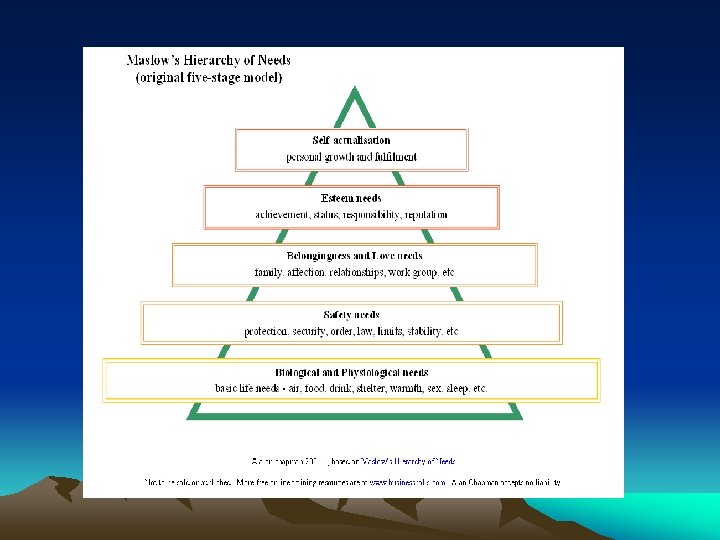
Maslow’s Hierarchy • All humans have the same basic needs • Those needs are ordered and the lower needs must be achieved before the higher needs are met • Once we meet one of the needs, we strive for the one above it • As a supervisor, you need to identify where your employees are in order to develop them successfully • Two types of needs: – Basic – Meta
Basic Needs • Physiological, such as food, water, and sleep • Psychological, such as affection, security, and self esteem. • Also called deficiency needs because if they are not met by an individual, then that person will strive to make up the deficiency.
Meta Needs • Growth needs • Include justice, goodness, beauty, order, unity, etc. • Basic needs take priority over these growth needs. People who lack food or water cannot attend to justice or beauty.

Exercise 9
Power, Authority and Leadership § Are they the same thing? § Power: Getting people to accomplish the goals § Leadership: Getting people to want to accomplish the goals
Outcomes of Influence Attempts §Commitment §Compliance §Resistance
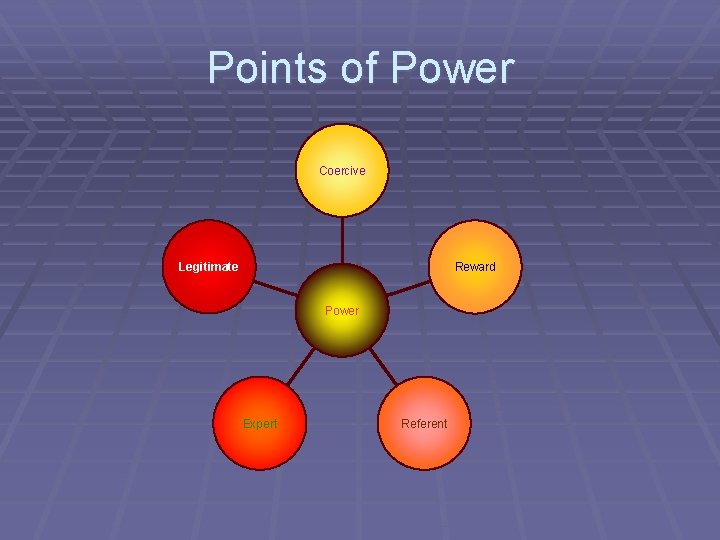
Points of Power Coercive Legitimate Reward Power Expert Referent
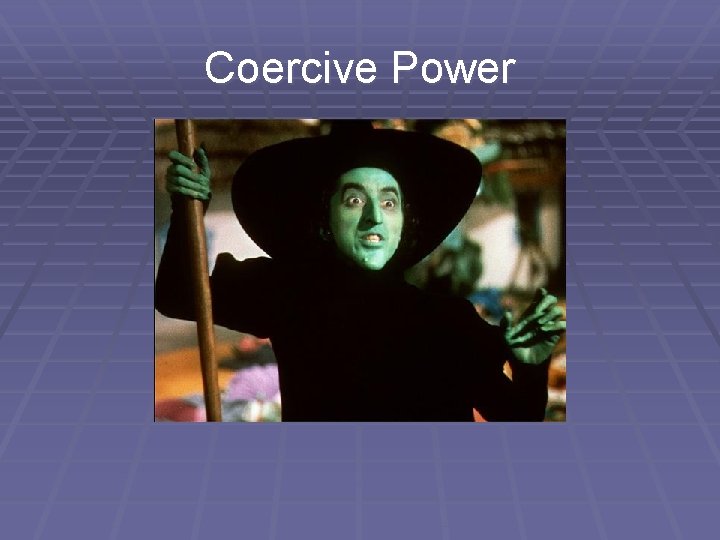
Coercive Power § Based on fear. § A person with coercive power can make things difficult for people. § These are the persons that you want to avoid getting angry. § Employees working under coercive managers are unlikely to be committed.
Coercive Power
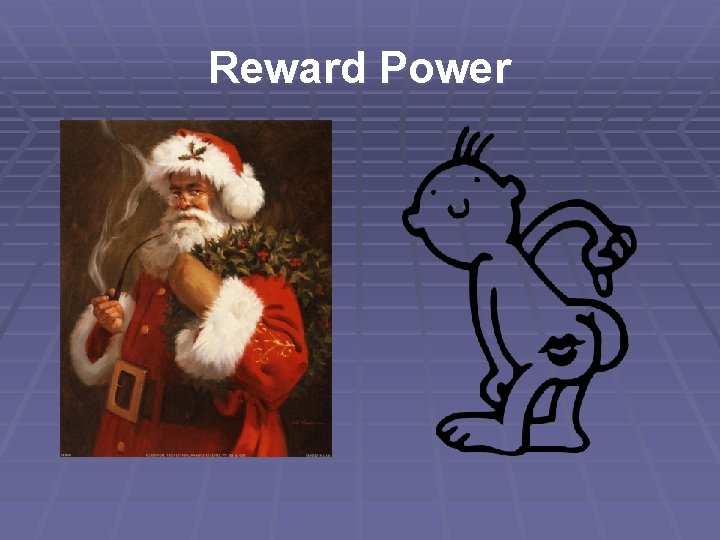
Reward Power § Compliance achieved based on the ability to distribute rewards that others view as valuable. § Able to give special benefits or rewards to people. § You might find it advantageous to trade favors with him or her.
Reward Power
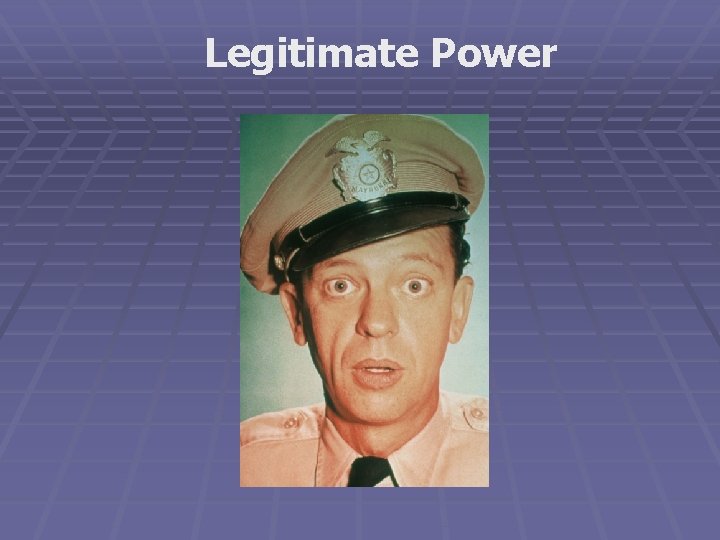
Legitimate Power § The power a person receives as a result of his or her position in the formal hierarchy of an organization. § The person has the right, considering his or her position and your job responsibilities, to expect you to comply with legitimate requests.
Legitimate Power
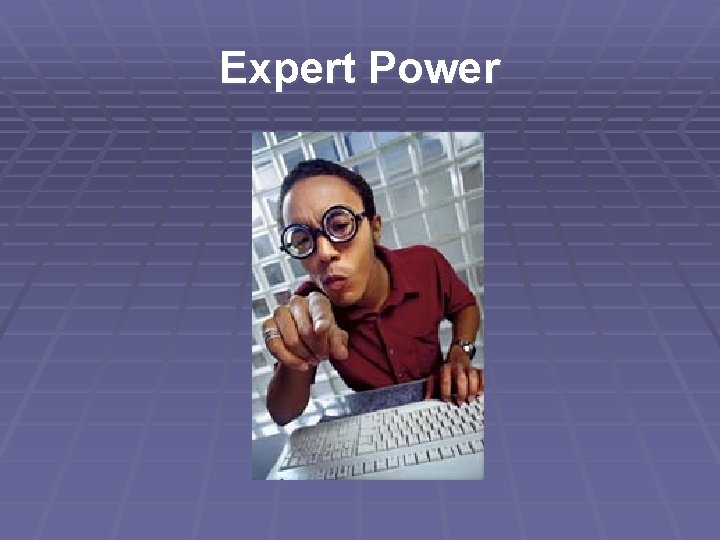
Expert Power § Influence based on special skills or knowledge. § This person earns respect by experience and knowledge. § Expert power is the most strongly and consistently related to effective employee performance.
Expert Power
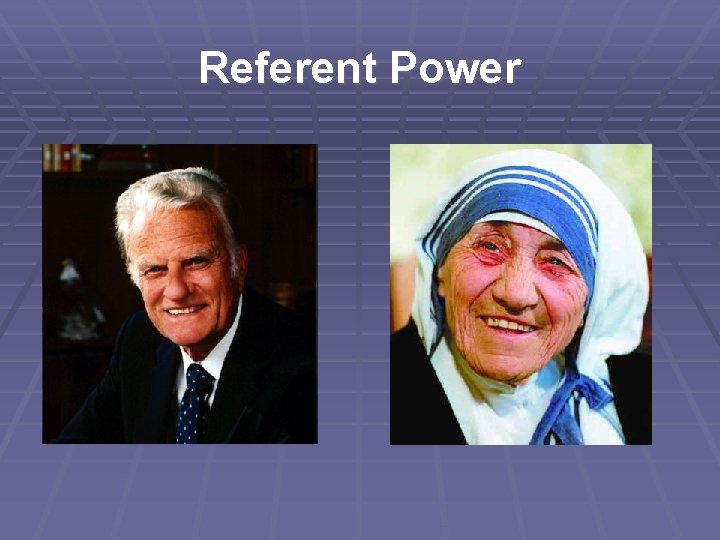
Referent Power § Influence based on possession by an individual or desirable resources or personal traits. § You like the person and enjoy doing things for him or her.
Referent Power
Exercise 10
Situational Leadership § The stage of development of the employee determines the style of leadership to be used § Two types of leadership behavior: § Task: telling people what to do, how to do it, when to do it, where to do it, and who will do it § Relationship: listening, facilitating, supporting, and two-way or group communication
Situational Leadership § Four types of leadership: § Directing/structuring § Coaching/selling § Supporting/consulting § Delegating/sharing § Hersey & Blanchard Leadership Model
Directing/Structuring § Definition: Provide specific instructions and closely supervise performance § High task/low relationship orientation § Appropriate for people who are unable or unwilling to do the tasks § Behavior: § § Telling Guiding Directing Establishing timeframes, etc.
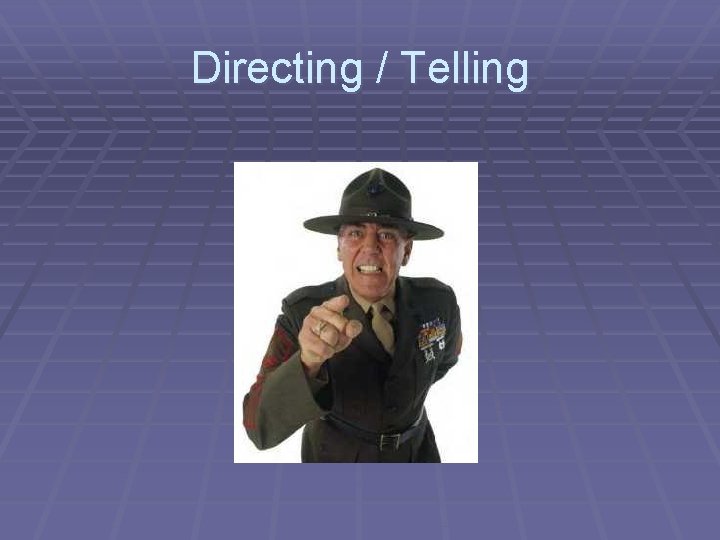
Directing / Telling
Coaching/Selling § Definition: Explain decisions and provide opportunity for clarification § High task, high relationship orientation § Appropriate for people who are unable, but are willing or confident § Behavior: § § Selling Explaining Clarifying Demonstrating
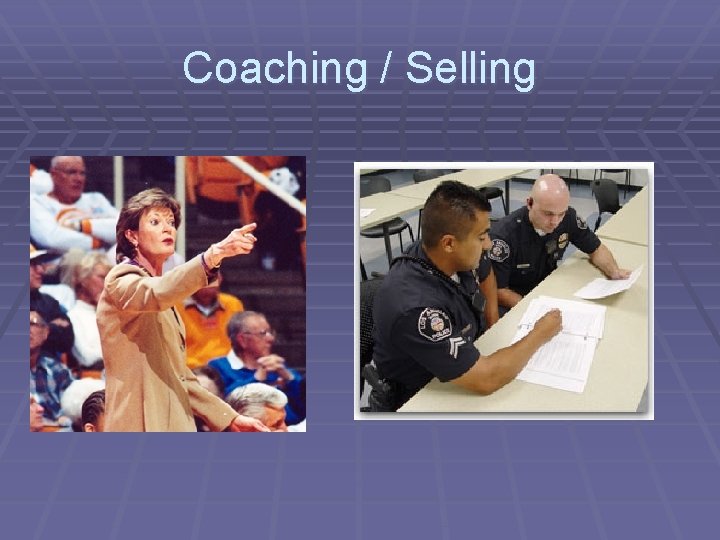
Coaching / Selling
Supporting/Consulting § Definition: Share ideas and facilitate decision§ § § making High relationship, low task orientation Appropriate for people who are able but unwilling or insecure Behavior: § Participating § Encouraging § Collaborating
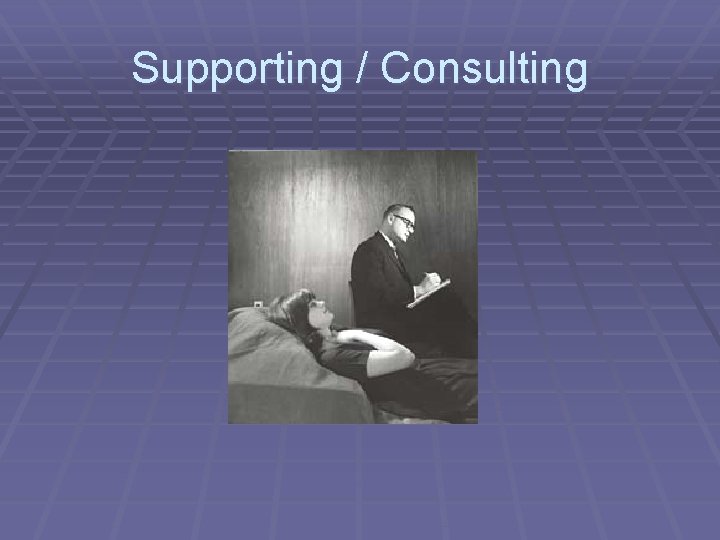
Supporting / Consulting
Delegating/Sharing § Definition: Turn over responsibility for decisions § § § and implementation Low task, low relationship orientation Appropriate for people who are able, willing, and confident Behavior: § Delegating § Observing § Monitoring
Delegating / Sharing
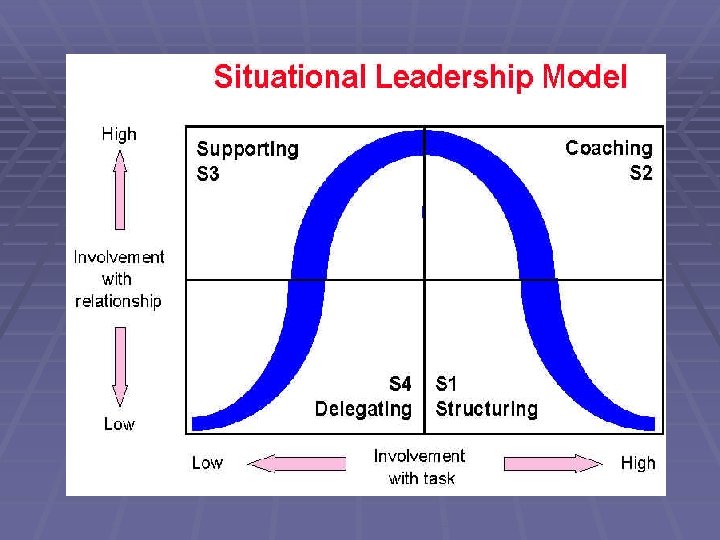
Diagnosing Your Staff § First, ask can he/she do the job independently? If no, directing and coaching are more appropriate § Second, ask will he/she do the job independently (self-motivation)? If no, coaching is probably appropriate. If yes, supporting and delegating are appropriate.
Exercise 11 § Based on YOUR experience, each table should identify situations where each type of leadership style was appropriate. § Prepare to share.
So What? Guidelines for Effective Leadership § Ask your staff what they need from you to function § § § § effectively; this will give you some indication of where they are on the maturity scale Allow the needs of the organization to coincide with the needs of your employees Reward good behavior Set the example Develop morale Let employees be part of the planning and problem-solving process Show concern Keep them informed Make their jobs exciting, challenging, and meaningful

Go out and Get em!
- Slides: 94