
PRINCIPLES OF SAFE FOOD STORAGE PRESENTED BY DR

PRINCIPLES OF SAFE FOOD STORAGE PRESENTED BY DR. GABRIEL I. OKAFOR DEPT. OF FOOD SCIENCE AND TECHNOLOGY, UNIVERSITY OF NIGERIA, NSUKKA, ENUGU STATE, NIGERIA. gabriel. okafor@unn. edu. ng 08023423908 FOOD SAFETY MANAGEMENT TRAINING WORKSHOP, OWERRI, OCT. 2015

Salutation …Warm greetings from the University of Nigeria. The cradle of university education in Nigeria FOOD SAFETY MANAGEMENT TRAINING WORKSHOP, OWERRI, OCT. 2015.
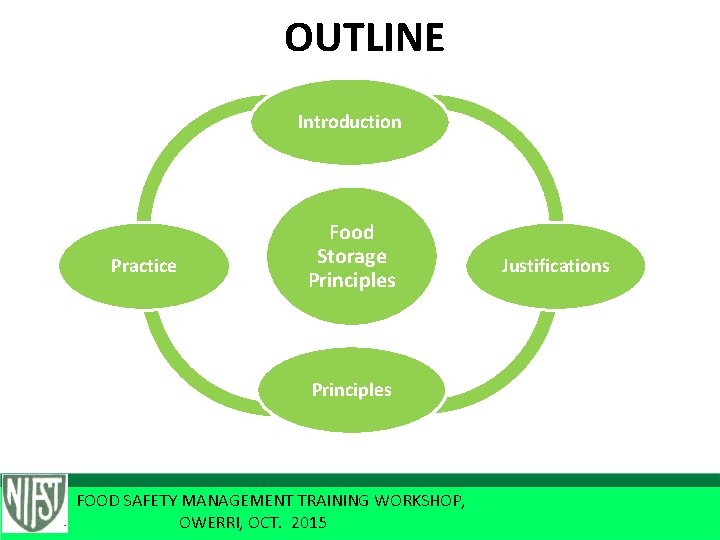
OUTLINE Introduction Practice Food Storage Principles FOOD SAFETY MANAGEMENT TRAINING WORKSHOP, OWERRI, OCT. 2015 Justifications
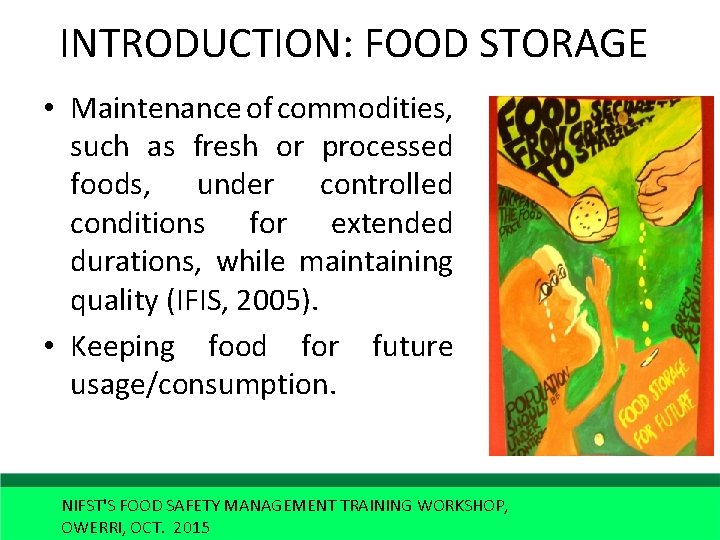
INTRODUCTION: FOOD STORAGE • Maintenance of commodities, such as fresh or processed foods, under controlled conditions for extended durations, while maintaining quality (IFIS, 2005). • Keeping food for future usage/consumption. NIFST'S FOOD SAFETY MANAGEMENT TRAINING WORKSHOP, OWERRI, OCT. 2015

NIFST'S FOOD SAFETY MANAGEMENT TRAINING WORKSHOP, OWERRI, OCT. 2015
FRESH PRODUCE • Undesirable quality changes such as changes in nutrient levels, colour, development of off-flavor or loss of texture may occur. Therefore, careful control of atmospheric gases, such as oxygen, carbon dioxide and ethylene (controlled atmosphere storage), is important in extending the storage life of many products, such as fruits and vegetables. NIFST'S FOOD SAFETY MANAGEMENT TRAINING WORKSHOP, OWERRI, OCT. 2015
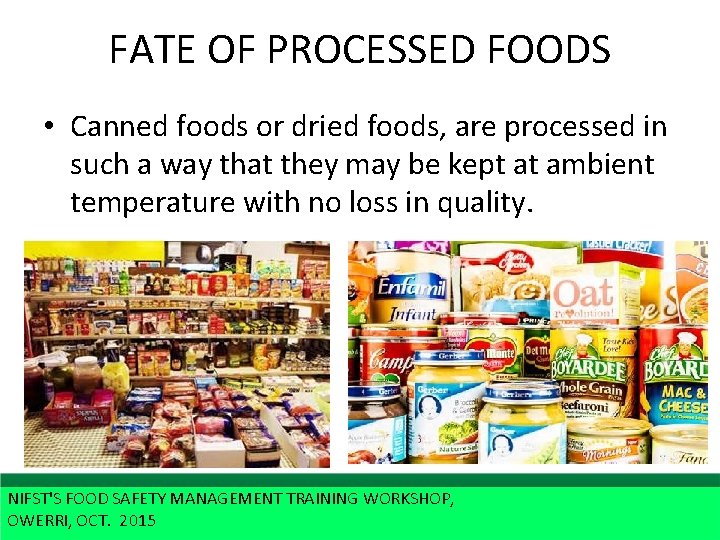
FATE OF PROCESSED FOODS • Canned foods or dried foods, are processed in such a way that they may be kept at ambient temperature with no loss in quality. NIFST'S FOOD SAFETY MANAGEMENT TRAINING WORKSHOP, OWERRI, OCT. 2015
PRINCIPLE Means: Ø a basic idea or rule that explains or controls how something happens or works (Cambridge Dictionary) Ø a general scientific theorem or law that has numerous special applications across a wide field. Ø a fundamental truth or proposition that serves as the foundation for a system of belief or behaviour or for a chain of reasoning. NIFST'S FOOD SAFETY MANAGEMENT TRAINING WORKSHOP, OWERRI, OCT. 2015
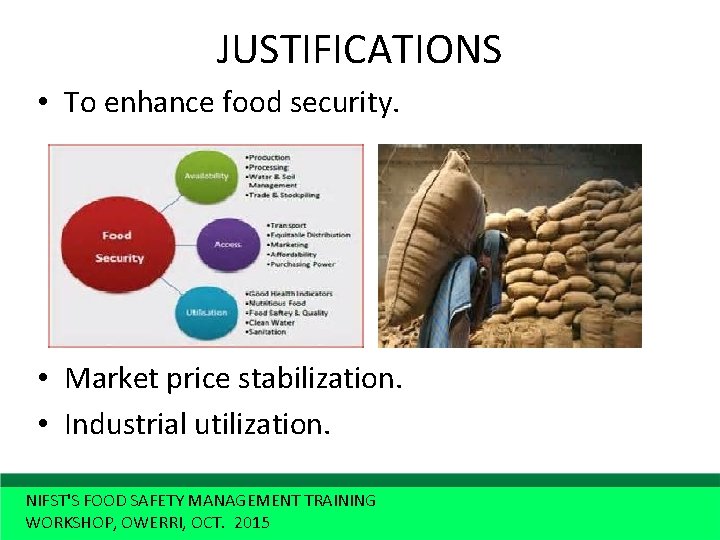
JUSTIFICATIONS • To enhance food security. • Market price stabilization. • Industrial utilization. NIFST'S FOOD SAFETY MANAGEMENT TRAINING WORKSHOP, OWERRI, OCT. 2015
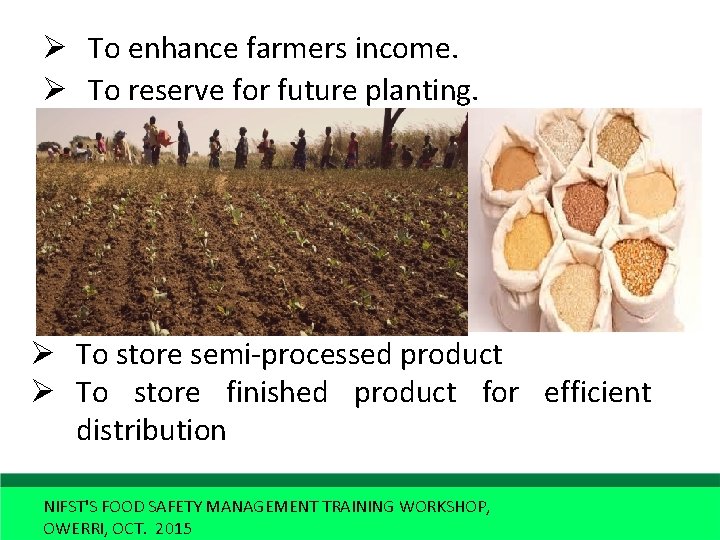
Ø To enhance farmers income. Ø To reserve for future planting. Ø To store semi-processed product Ø To store finished product for efficient distribution NIFST'S FOOD SAFETY MANAGEMENT TRAINING WORKSHOP, OWERRI, OCT. 2015
Food deteriorates soon after harvest Causes Ø Biological interactions Ø Post harvest losses Ø Chemical breakdown of food components catalyzed by energies, light or water. Ø Presence of enzymes which catalyze reactions that may be detrimental to product quality such as: i. flavor production by lipoxygenase, lipases and proteinases, ii. textural changes due to pectic enzymes and cellulases. iii. colour changes due to polyphenol oxidase, chlorophyllase and peroxidase. iv. Nutritional Changes due to ascorbic acid oxidase or thiaminase NIFST'S FOOD SAFETY MANAGEMENT TRAINING WORKSHOP, OWERRI, OCT. 2015
Insect and Rodent Attacks • Insect and rodent infestations and associated losses occurs readily in open fields, during growth and production, in bulk stores of food exposed or partially exposed to the environment. • Rodents damages far more food than they consume through adulteration with droppings, filth, hair and potential transmission of diseases. NIFST'S FOOD SAFETY MANAGEMENT TRAINING WORKSHOP, OWERRI, OCT. 2015
Varying Temperature Conditions Uncontrolled heat or cold causes detrimental reactions in foods. 30 -400 C Accelerates rate of reactions i. e oxidation producing offflavours, colour changes, nutrient loss, decreased generation times of microorganisms leading to enhanced population. 0 -150 C Ø Can lead to detrimental physiological reactions in certain susceptible produce; i. e. chill injury (tomatos or bananas) Ø Cold shortening in meat (toughens carcass after slaughter. Ø Chill sweetening in potatoes increasing glucose content, causing enhanced browning during frying. Ø Staling of bread NIFST'S FOOD SAFETY MANAGEMENT TRAINING WORKSHOP, OWERRI, OCT. 2015
Moisture Content • Plays critical role in microbial growth and chemical reactions. • Water activity (a measure of free water in food) has been used widely as a measure of food stability. Gain or loss of H 2 O from a food due to its condition of storage may influence the water activity and solute diffusion rates – microbial and chemical stability. • Changes in relative humidity (RH) of storage affects structure and texture of food. i. High RH increases splitting or cracking of skins of fruits. ii. Reduced RH – drives wilting and shriveling of fruits and vegetables leading to a loss of weight and economics value. NIFST'S FOOD SAFETY MANAGEMENT TRAINING WORKSHOP, OWERRI, OCT. 2015
Oxygen Ø Microbial activities are O 2 driven (aerobic, anaerobic or facultative organisms with wider tolerances). Ø O 2 is an initiator of chemical reactions detrimental to various food constituents (lipids, vitamins, pigments, and some amino acids). Ø Reduced O 2 can impair physiological functions of food tissues such as fruits, vegetables or meat. Therefore, control of O 2 contents in food storage through modified atmosphere and protective packaging helps. NIFST'S FOOD SAFETY MANAGEMENT TRAINING WORKSHOP, OWERRI, OCT. 2015
Light • Exposure to light is detrimental to some food products. • Light can promote oxidative rancidity of lipids i. e oxidation of milk leading to breakdown of proteins and formation of unpleasant volatiles. • Changes in pigments (myogbin in red meats) • Breakdown of vitamins (A, C and riboflavin) • Development of potentially toxic light induced glycol alkaloids such as solanine in potatoes (turning green due to increased chlorophyll content from light exposure). NIFST'S FOOD SAFETY MANAGEMENT TRAINING WORKSHOP, OWERRI, OCT. 2015
Time Ø Plays a great role in food spoilage/deterioration. Ø All foods will become unconsummable over time. – Canned foods could last for several years. – Pasteurized/refrigerated foods could last for days/weeks/months. NIFST'S FOOD SAFETY MANAGEMENT TRAINING WORKSHOP, OWERRI, OCT. 2015
Food materials are stored that: • Quality will not deteriorate from loading time to as long as required. • Quantity is not unintentionally lost. • Secured against pests, diseases and physical loss. • It is accessible at the time and in the quality required NIFST'S FOOD SAFETY MANAGEMENT TRAINING WORKSHOP, OWERRI, OCT. 2015
Primary target Protection of stored commodities against external elements : • Temperature and humidity, • Pests and theft • Product of respiration • Heat, moisture, gases (CO 2 + ethylene). NIFST'S FOOD SAFETY MANAGEMENT TRAINING WORKSHOP, OWERRI, OCT. 2015
Traditional storage methods • Inefficient, causes high loss, insecure, inflexible • Still used, serves farmers well especially small scale farms • Rely on basic good storage management and use of traditional methods of pest control to minimize losses. NIFST'S FOOD SAFETY MANAGEMENT TRAINING WORKSHOP, OWERRI, OCT. 2015
BASIC CONSIDERATIONS FOR EFFICIENT STORAGE A good store must be selected and prepared. Commodities must be received in good condition. Intake must be orderly and recorded. Quality maintenance must be assured. Security against theft and loss must be provided Any loss incurred must be identifiable and accountable. • The end use requirement must be met. • • • NIFST'S FOOD SAFETY MANAGEMENT TRAINING WORKSHOP, OWERRI, OCT. 2015
SAFE FOOD STORAGE PRINCIPLES Storage structure ØMust be suitably located üConducive climate üAdequate load bearing capacity (soil tests needed) üDry land (all seasons) üFlat sites better üOrientation of building using wind direction and sunrise/sunset. üAvoid natural wind tunnel between two hills (dust, sand etc). NIFST'S FOOD SAFETY MANAGEMENT TRAINING WORKSHOP, OWERRI, OCT. 2015
Design Consideration ØMust be properly designed to offer protection against rain, ground water, adverse temperature, pests and thefts. üShould facilitate its management i. e loading/ unloading, maintenance, access to roof and drains, general working conditions for safety, comfort and efficiency. ülighting should be adequate. üShould facilitate efficient stock control (First In First Out - FIFO) and commodity inspection, üShould facilitate pest control, cleaning. üMust enhance air flow NIFST'S FOOD SAFETY MANAGEMENT TRAINING WORKSHOP, OWERRI, OCT. 2015
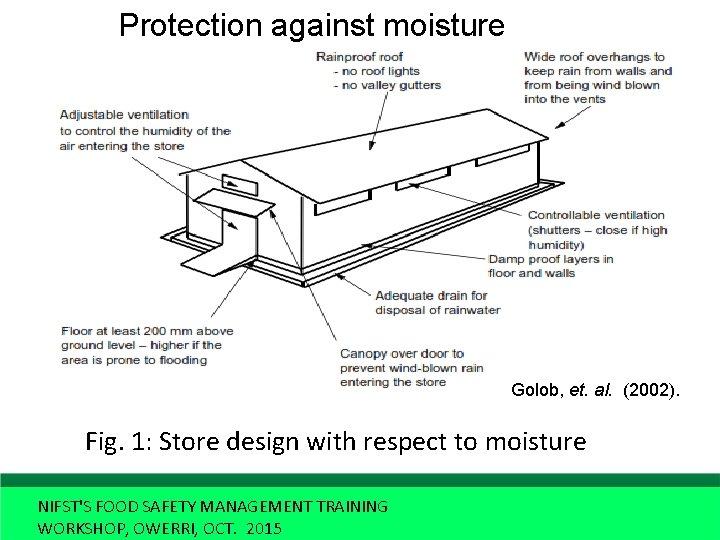
Protection against moisture Golob, et. al. (2002). Fig. 1: Store design with respect to moisture NIFST'S FOOD SAFETY MANAGEMENT TRAINING WORKSHOP, OWERRI, OCT. 2015
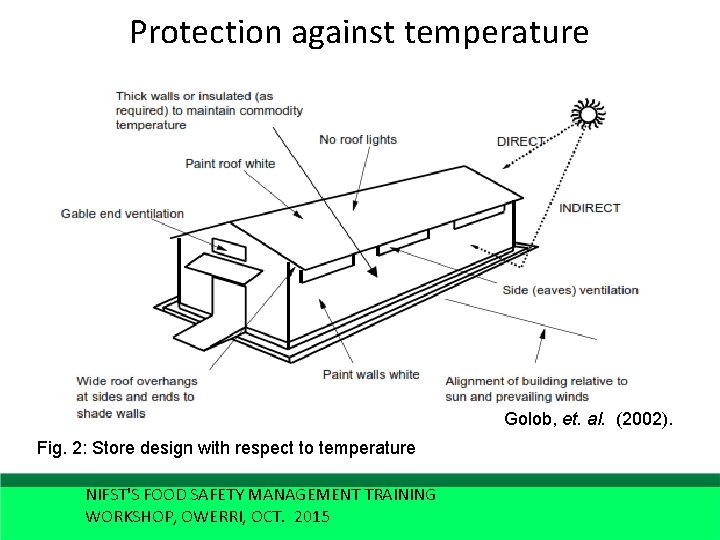
Protection against temperature Golob, et. al. (2002). Fig. 2: Store design with respect to temperature NIFST'S FOOD SAFETY MANAGEMENT TRAINING WORKSHOP, OWERRI, OCT. 2015
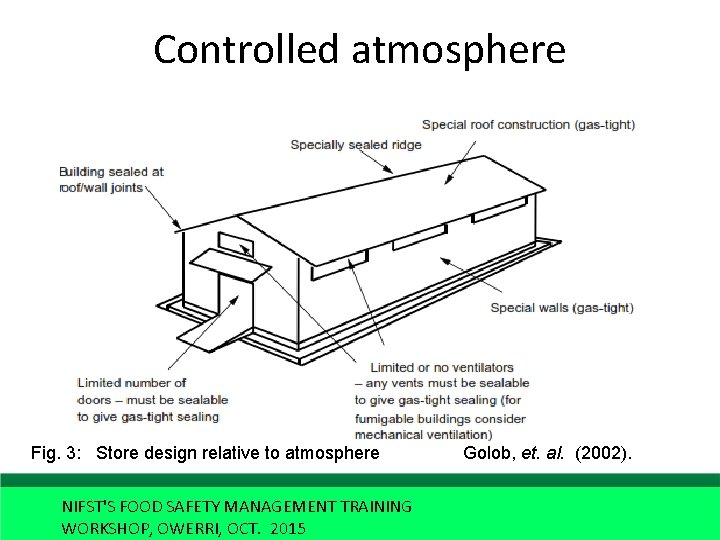
Controlled atmosphere Fig. 3: Store design relative to atmosphere NIFST'S FOOD SAFETY MANAGEMENT TRAINING WORKSHOP, OWERRI, OCT. 2015 Golob, et. al. (2002).
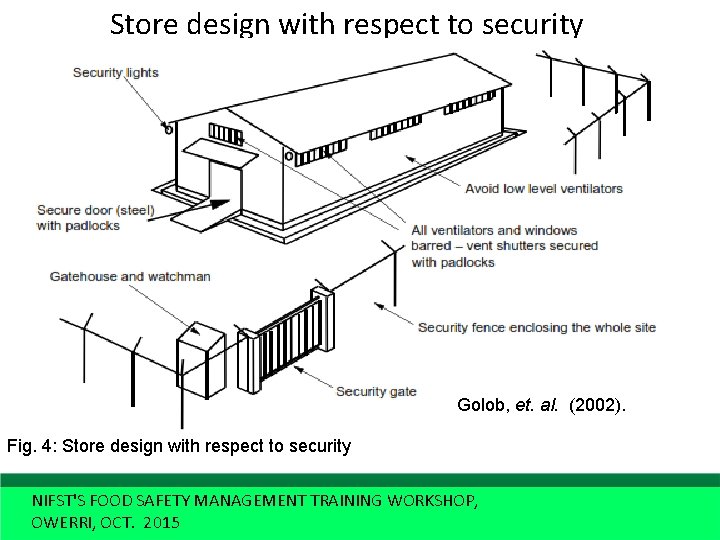
Store design with respect to security Golob, et. al. (2002). Fig. 4: Store design with respect to security NIFST'S FOOD SAFETY MANAGEMENT TRAINING WORKSHOP, OWERRI, OCT. 2015
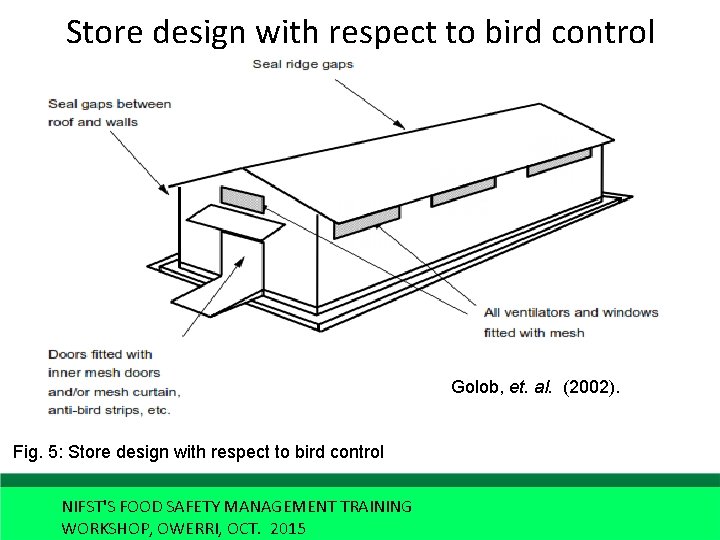
Store design with respect to bird control Golob, et. al. (2002). Fig. 5: Store design with respect to bird control NIFST'S FOOD SAFETY MANAGEMENT TRAINING WORKSHOP, OWERRI, OCT. 2015
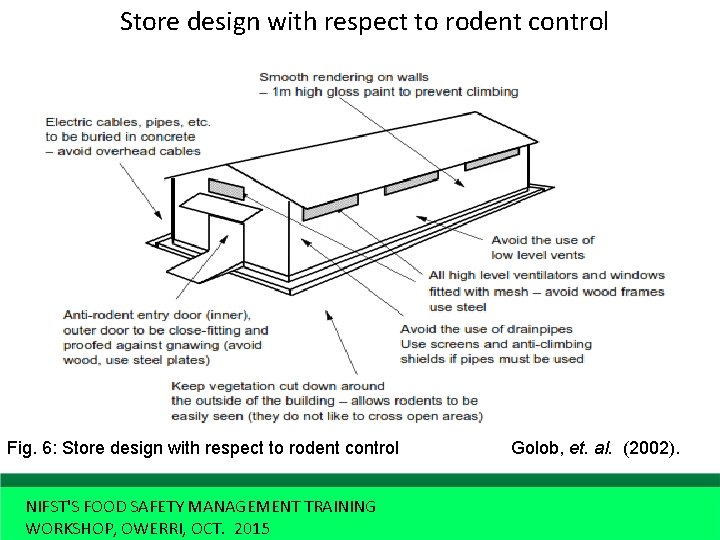
Store design with respect to rodent control. Fig. 6: Store design with respect to rodent control NIFST'S FOOD SAFETY MANAGEMENT TRAINING WORKSHOP, OWERRI, OCT. 2015 Golob, et. al. (2002).
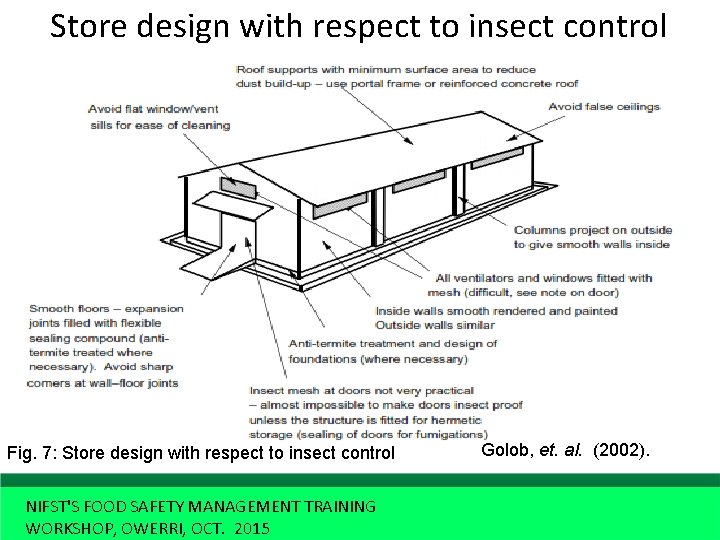
Store design with respect to insect control Fig. 7: Store design with respect to insect control NIFST'S FOOD SAFETY MANAGEMENT TRAINING WORKSHOP, OWERRI, OCT. 2015 Golob, et. al. (2002).
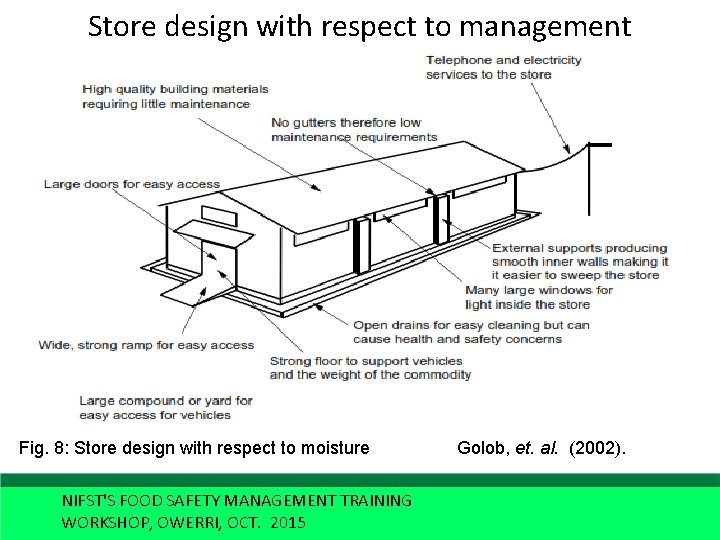
Store design with respect to management Fig. 8: Store design with respect to moisture NIFST'S FOOD SAFETY MANAGEMENT TRAINING WORKSHOP, OWERRI, OCT. 2015 Golob, et. al. (2002).
Storage of horticultural produce From simple rooms, containers to refrigerators Product requirements Ø Temperature sensitive crops should be held above 10 -12 OC or chilling injury may occur. Ø Crops not sensitive to chilling injury be may be stored at temperature as low as 0 OC. Principle of cold storage Ø Reduction of respiration rate, browning reaction, sprouting, softening and decay of vegetables and fruits. NIFST'S FOOD SAFETY MANAGEMENT TRAINING WORKSHOP, OWERRI, OCT. 2015
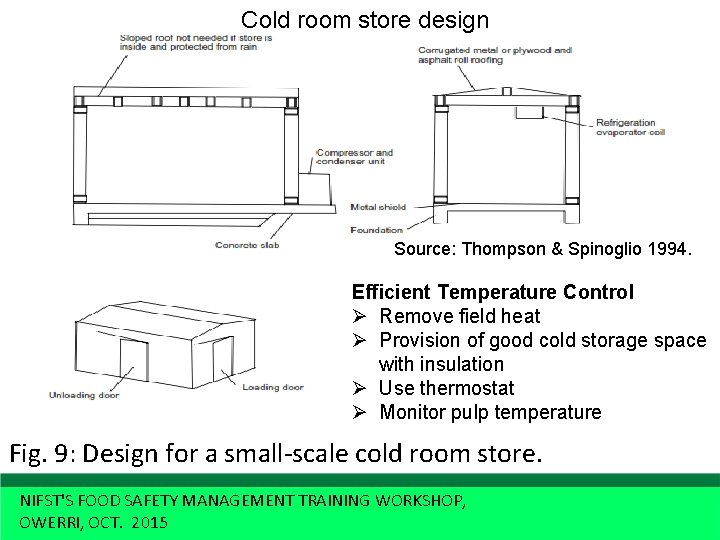
Cold room store design Source: Thompson & Spinoglio 1994. Efficient Temperature Control Ø Remove field heat Ø Provision of good cold storage space with insulation Ø Use thermostat Ø Monitor pulp temperature Fig. 9: Design for a small-scale cold room store. NIFST'S FOOD SAFETY MANAGEMENT TRAINING WORKSHOP, OWERRI, OCT. 2015
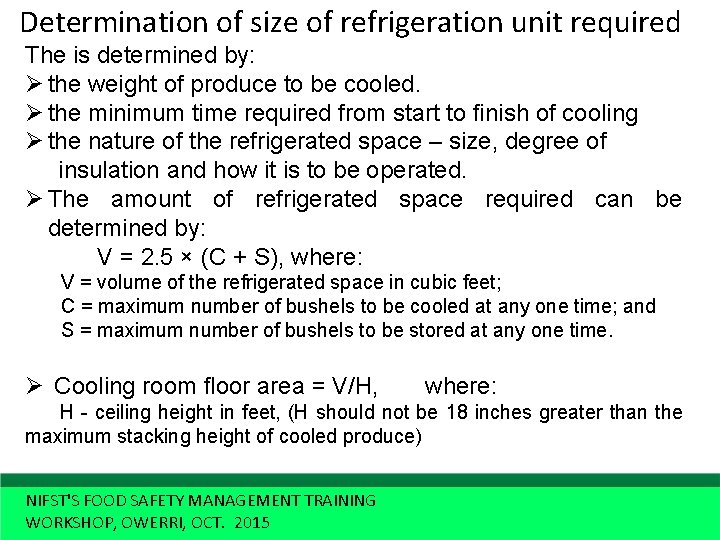
Determination of size of refrigeration unit required The is determined by: Ø the weight of produce to be cooled. Ø the minimum time required from start to finish of cooling Ø the nature of the refrigerated space – size, degree of insulation and how it is to be operated. Ø The amount of refrigerated space required can be determined by: V = 2. 5 × (C + S), where: V = volume of the refrigerated space in cubic feet; C = maximum number of bushels to be cooled at any one time; and S = maximum number of bushels to be stored at any one time. Ø Cooling room floor area = V/H, where: H - ceiling height in feet, (H should not be 18 inches greater than the maximum stacking height of cooled produce) NIFST'S FOOD SAFETY MANAGEMENT TRAINING WORKSHOP, OWERRI, OCT. 2015
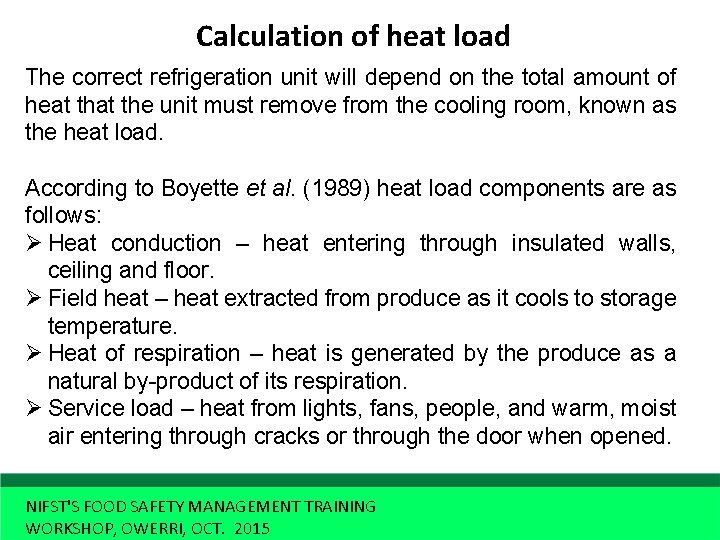
Calculation of heat load The correct refrigeration unit will depend on the total amount of heat the unit must remove from the cooling room, known as the heat load. According to Boyette et al. (1989) heat load components are as follows: Ø Heat conduction – heat entering through insulated walls, ceiling and floor. Ø Field heat – heat extracted from produce as it cools to storage temperature. Ø Heat of respiration – heat is generated by the produce as a natural by-product of its respiration. Ø Service load – heat from lights, fans, people, and warm, moist air entering through cracks or through the door when opened. NIFST'S FOOD SAFETY MANAGEMENT TRAINING WORKSHOP, OWERRI, OCT. 2015
Relative Humidity Reduction of Moisture Loss ØWeight loss of produce occurs due to moisture loss (invokes impaired visual appearance and consumer acceptability). ØProduce stored at 25 OC and 30% relative humidity will lose moisture 36 times faster than those stored at 0 OC and 90% RH. ØOptimum relative humidity for fruits = 90 -95%. ØHumidifier should be used if RH inside the refrigerated storage is less than 90% Ø Monitor RH of the storage with a hygrometer. NIFST'S FOOD SAFETY MANAGEMENT TRAINING WORKSHOP, OWERRI, OCT. 2015
Controlled atmosphere storage (CA) Control of the levels of certain gases around and therefore within fruits and vegetables. Requires consistent monitoring of CO 2 and O 2 levels, and gas leakages through doors and walls. Ø Metabolic activity changes composition of gases in store. Ø Fresh air or nitrogen may be introduced or storage atmosphere passed through a chemical. TYPES OF CA Static CA Storage – Product generates the atmosphere. Flushed CA storage – Atmosphere made from constantly supplied gas. Ø Initial flushing to reduce O 2 content Ø Injecting CO 2 or building it up Ø Maintenance of atmosphere by ventilation and scrubbing i. e selective removal Optimum storage condition for CA Apples – 1. 5% O 2 + 1% CO 2 t=OC in Australia 3% O 2 + 2 -4% CO 2 t = 0. 5 OC in Spain Ø Variation of condition = soil and climate types, post harvest treatment etc. NIFST'S FOOD SAFETY MANAGEMENT TRAINING WORKSHOP, OWERRI, OCT. 2015
Gas control Central to the design of a CA storage system is the selection of the most appropriate equipment for creating and maintaining the selected gas concentrations in the store, by: Ø removal of ambient oxygen (by nitrogen flushing) Ø removal of carbon dioxide by respiration v Ca(OH)2 scrubber that absorbs CO 2 to produce Ca. CO 3, H 2 O and heat; v Use of renewable scrubbers – Activated charcoal (active carbon) Molecular sieve (aluminium calcium silicate) Ø addition of air to replace oxygen consumed by respiration; Ø removal of ethylene using KMn. O 4 crystals or metal catalysts at high temperature; and Ø addition of carbon dioxide. NIFST'S FOOD SAFETY MANAGEMENT TRAINING WORKSHOP, OWERRI, OCT. 2015
Modified Atmosphere (MA) Packaging of fruits of vegetables in a plastic film that slowly allows passage of respiratory gases i. e Increased CO 2 and reduced O 2 than exist in air (Thomson, 1998). An action of required composition created by respiration or mixed and flushed into the product enclosure (Bishop, 1996). Three main gases used commercially in MAP are • oxygen, carbon dioxide, nitrogen (nitrogen is used as a filler gas to prevent pack collapse, which may occur in atmospheres containing high carbon dioxide) and novel gas mixtures (e. g. argon and nitrous oxide). NIFST'S FOOD SAFETY MANAGEMENT TRAINING WORKSHOP, OWERRI, OCT. 2015
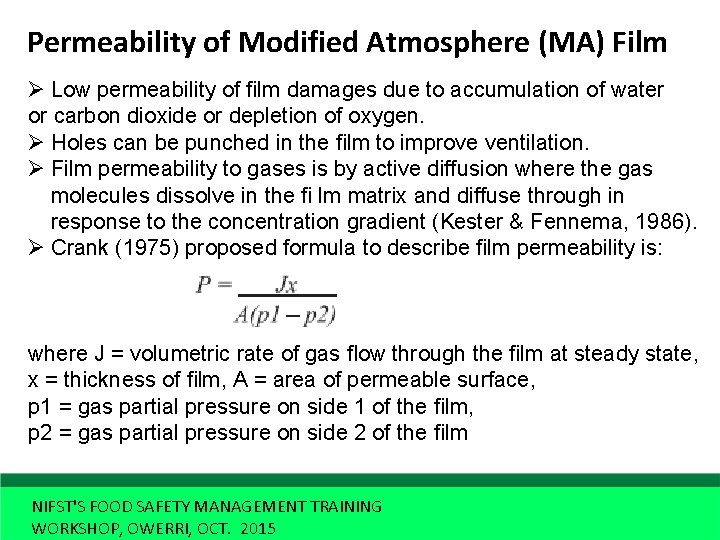
Permeability of Modified Atmosphere (MA) Film Ø Low permeability of film damages due to accumulation of water or carbon dioxide or depletion of oxygen. Ø Holes can be punched in the film to improve ventilation. Ø Film permeability to gases is by active diffusion where the gas molecules dissolve in the fi lm matrix and diffuse through in response to the concentration gradient (Kester & Fennema, 1986). Ø Crank (1975) proposed formula to describe film permeability is: where J = volumetric rate of gas flow through the film at steady state, x = thickness of film, A = area of permeable surface, p 1 = gas partial pressure on side 1 of the film, p 2 = gas partial pressure on side 2 of the film NIFST'S FOOD SAFETY MANAGEMENT TRAINING WORKSHOP, OWERRI, OCT. 2015
Interrupted controlled atmosphere storage Controlled atmosphere storage have detrimental side-effects on fruits and vegetables, and the possibility of alternating controlled atmosphere storage with air storage has been studied. Results revealed that Ø Banana cultivar Poyo (from Cameroon) stored at 30– 40°C and interrupted by one to three cooling periods (20°C) of 12 hours either in air or in atmospheres with 50% oxygen or 5% oxygen. Cooling periods were found to reduce high temperature damage, especially when fruits stored at 30°C received three cooling periods in 50% oxygen (Dick & Marcellin, 1985). Ø Intermittent exposure of avocado cultivar Haas to 20% carbon dioxide increased storage life at 12°C and reduced chilling injury during storage at 4°C compared to those stored in air at the same temperatures (Marcellin & Chaves, 1983). NIFST'S FOOD SAFETY MANAGEMENT TRAINING WORKSHOP, OWERRI, OCT. 2015
Controlled atmosphere transport Large quantities of fresh fruit and vegetables are transported by sea -freight refrigerated (reefer) containers. It was estimated that the world fleet increased four-fold from 1993 to 1997 when there were around 38000 reefer containers (Dohring 1997). Relatively small but increasing numbers of containers (approximately 1000 containers) are being used for the CA transportation of fresh fruit and vegetables. Such as apples, apricots, asparagus, avocados, bananas, broccoli, mangoes, peaches, nectarines, pears, pineapples, plums, sweetcorn and tomatoes. A number of technical problems hindering the use of CA transportation in the past (the lack of gas-tight containers, suitable systems for gas control and analysis, and adequate CA-generating systems) have now largely been overcome. A common problem was the maintenance of gas-tight conditions. NIFST'S FOOD SAFETY MANAGEMENT TRAINING WORKSHOP, OWERRI, OCT. 2015
Hypobaric (low pressure) storage Involves cold storage of fruits under partial vacuum. Ø Typical storage condition includes pressure as low as 80 and 40 millimeters as mercury and temperature 5 OC. Ø Hypobaric conditions reduce ethylene production and respiration rates. The result is an extra ordinarily high quality fruit even after months of storage. NIFST'S FOOD SAFETY MANAGEMENT TRAINING WORKSHOP, OWERRI, OCT. 2015
Total nitrogen or high nitrogen storage The storage of some fruits in total nitrogen or nitrogen-rich atmospheres can be beneficial (Thompson 1998). Ø Ripening of plums stored in total nitrogen has been reported to be almost completely inhibited (Anon. 1920). Ø Plums were able to tolerate, for a considerable period, an almost complete absence of oxygen without being killed or developing an alcoholic or unpleasant flavour. Ø Strawberries, 100% and 99% nitrogen atmospheres reduce mould growth during 10 days of storage at 1. 1°C with little or no effect on flavour (Parsons et al. 1964). Ø Decay of peaches, was reduced during storage in either 100% or 99% nitrogen at 60°F; Ø Off-flavours were detected in fruit after 4 days in 100% nitrogen, but none in those stored in 99% nitrogen. NIFST'S FOOD SAFETY MANAGEMENT TRAINING WORKSHOP, OWERRI, OCT. 2015
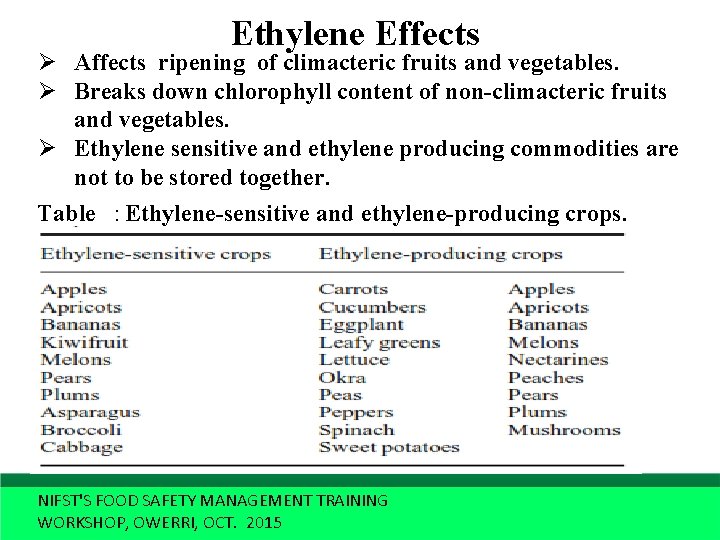
Ethylene Effects Ø Affects ripening of climacteric fruits and vegetables. Ø Breaks down chlorophyll content of non-climacteric fruits and vegetables. Ø Ethylene sensitive and ethylene producing commodities are not to be stored together. Table : Ethylene-sensitive and ethylene-producing crops. NIFST'S FOOD SAFETY MANAGEMENT TRAINING WORKSHOP, OWERRI, OCT. 2015
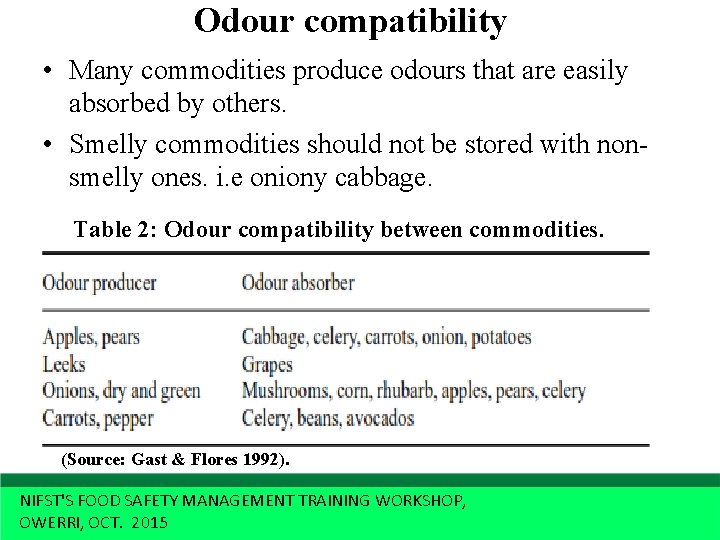
Odour compatibility • Many commodities produce odours that are easily absorbed by others. • Smelly commodities should not be stored with nonsmelly ones. i. e oniony cabbage. Table 2: Odour compatibility between commodities. (Source: Gast & Flores 1992). NIFST'S FOOD SAFETY MANAGEMENT TRAINING WORKSHOP, OWERRI, OCT. 2015
REFERENCES Anon. (1920) Food Investigation Board. Department of Scientific and Industrial Research Report for the Year 1920. pp 16– 25. Bishop, D. J. (1996) Controlled Atmosphere Storage. A Practical Guide. David Bishop Design Consultants, Sussex, UK. Boyette, M. D. , Wilson, L. G. & Estes, E. A. (1989) Design of room cooling facilities: Structural and energy requirements. AG-414– 2. North Carolina Cooperative Extension Service, USA. Crank, J. (1975) The Mathematics of Diffusion. Second Edition. Oxford University Press, New York NY, USA. Dick, E. & Marcellin, P. (1985) Effect of high temperatures on banana development after harvest. Prophylactic tests. Fruits, 40, 781– 784. Dohring, S. (1997). Over sea and over land: Putting CA research and technology to work for international shipments of fresh produce. In: Seventh International Controlled Atmosphere Research Conference, 13– 18 July 1997. University of California, Davis CA, USA. Gast, K. L. & Flores, R. A. (1992) MF-1033. Storage operations. Fruit and vegetables. Postharvest management of commercial horticultural crops. Cooperative Extension Service, Kansas, USA. NIFST'S FOOD SAFETY MANAGEMENT TRAINING WORKSHOP, OWERRI, OCT. 2015
REFERENCES Contd…. . Kester, J. J. & Fennema, O. R. (1986) Edible fi lms and fi lm coatings: a review. Food Technology, 40, 47– 59. Golob, P. , Farrell, G. and Orchard, J. E. (2002). Crop Post-Harvest: Science & Tech. V. 1. Principles and Practice. Blackwell Sci. Ltd, Gosport, UK. Marcellin, P. & Chaves, A. (1983) Effects of intermittent high carbon dioxide treatment on storage life of avocado fruits in relation to respiration and ethylene production. Acta Horticulturae, 138, 155– 163. Parsons, C. S. , Gates, J. E. & Spalding, D. H. (1964) Quality of some fruits and vegetables after holding in nitrogen atmospheres. American Society for Horticultural Science, 84, 549– 556. Thompson, A. K. (1998). Controlled Atmosphere Storage of Fruits and Vegetables. CAB International, Wallingford, UK. Thompson, J. F & Spinoglio, M. (1994) Small-scale cold rooms for perishable commodities. Family Farm Series. Small Farm Centre, University of California, Davis CA, USA. NIFST'S FOOD SAFETY MANAGEMENT TRAINING WORKSHOP, OWERRI, OCT. 2015

THANK YOU FOR LISTENING NIFST'S FOOD SAFETY MANAGEMENT TRAINING WORKSHOP, OWERRI, OCT. 2015
- Slides: 49