
Principles of RPD Design Dr Rola Shadid Differentiation



- Slides: 44
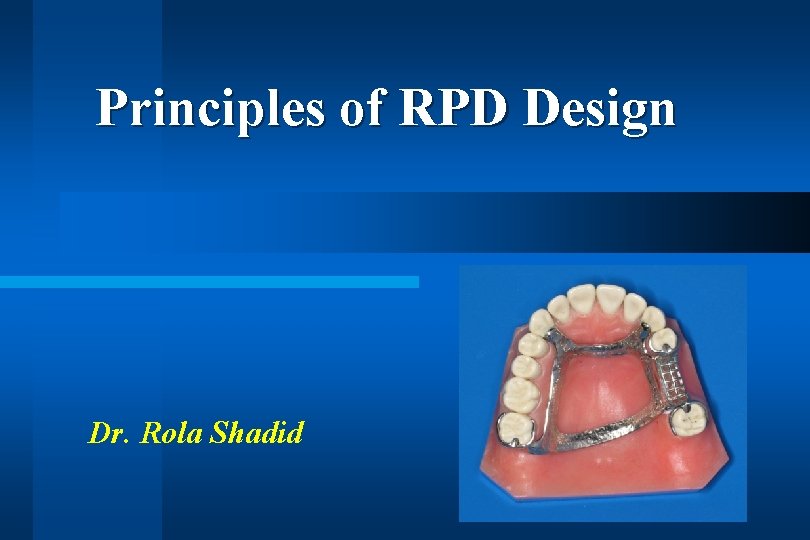
Principles of RPD Design Dr. Rola Shadid
Differentiation between tooth-supported and tooth-tissue supported partial denture 1. The manner in which each is supported 2. The method of impression registration and jaw record required for each 3. The need for some kind of indirect retention 4. The denture base material 5. Differences in Clasp Design
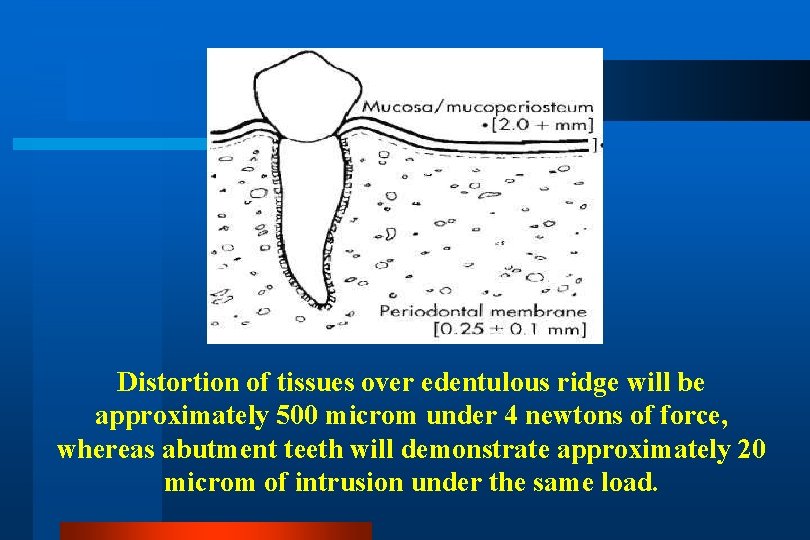
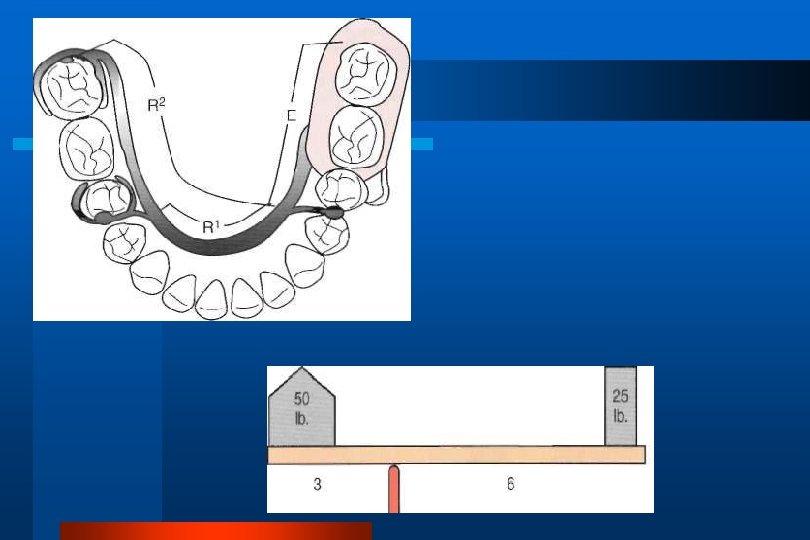
Distortion of tissues over edentulous ridge will be approximately 500 microm under 4 newtons of force, whereas abutment teeth will demonstrate approximately 20 microm of intrusion under the same load.
Components of Partial Denture Design 1. 2. 3. 4. 5. 6. Tooth support & ridge support Major & minor connectors Direct retainers Stabilizing components Guiding planes Indirect retainers
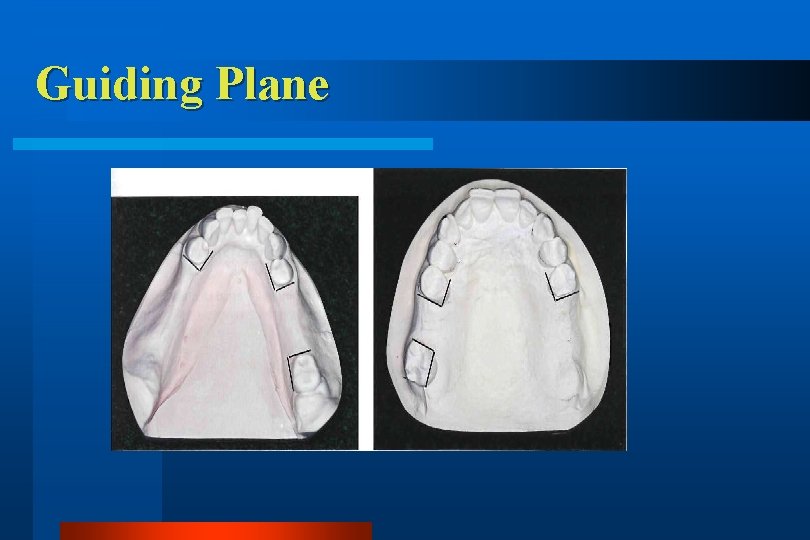
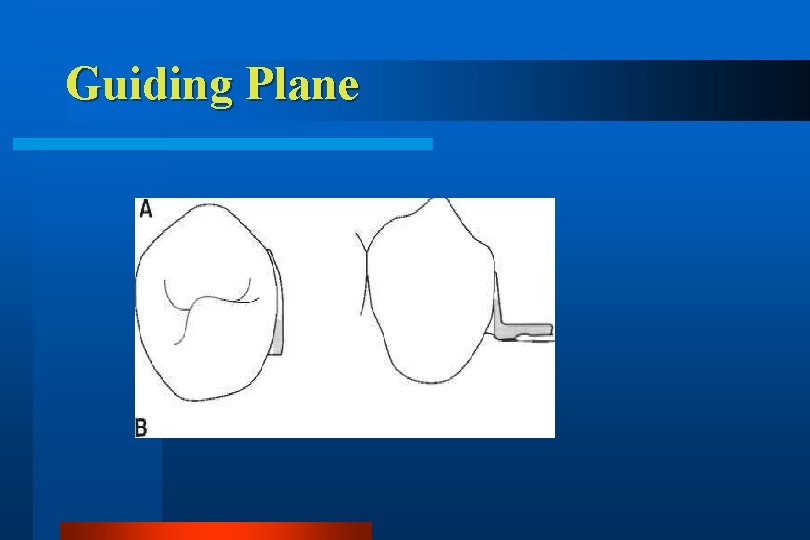
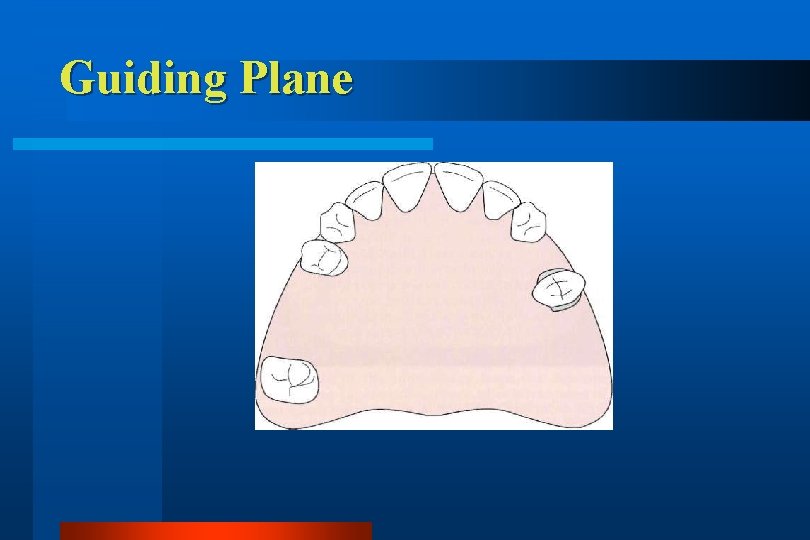
Guiding Plane the body of an extracoronal direct retainer, the stabilizing arm of a direct retainer the minor connector portion of an indirect retainer or by a minor connector specifically designed to contact the guiding plane surface.
Guiding Plane
Guiding Plane
Guiding Plane
Direct Retainer Selection Class I & II (Tooth & Tissue-Borne) – Stress releasing direct retainers Class III & IV (Tooth-Borne) – Non-stress releasing direct retainers
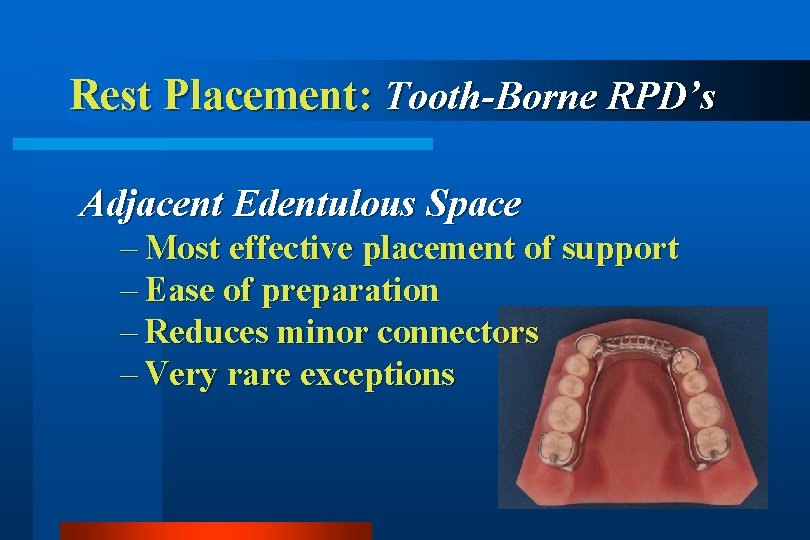
Rest Placement: Tooth-Borne RPD’s Adjacent Edentulous Space – Most effective placement of support – Ease of preparation – Reduces minor connectors – Very rare exceptions
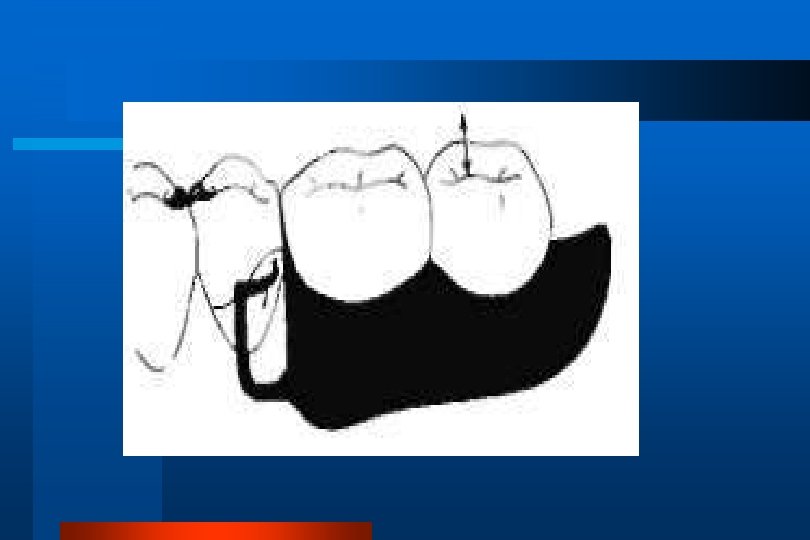
Retainer Selection: Tooth-Borne RPD’s Minimal rotation Stress release usually unnecessary Choose non-stress releasing retainers: –Cast Circumferential * –Ring Clasp –Embrasure Clasp (Double Akers) –Reverse Action (‘C’) Clasp
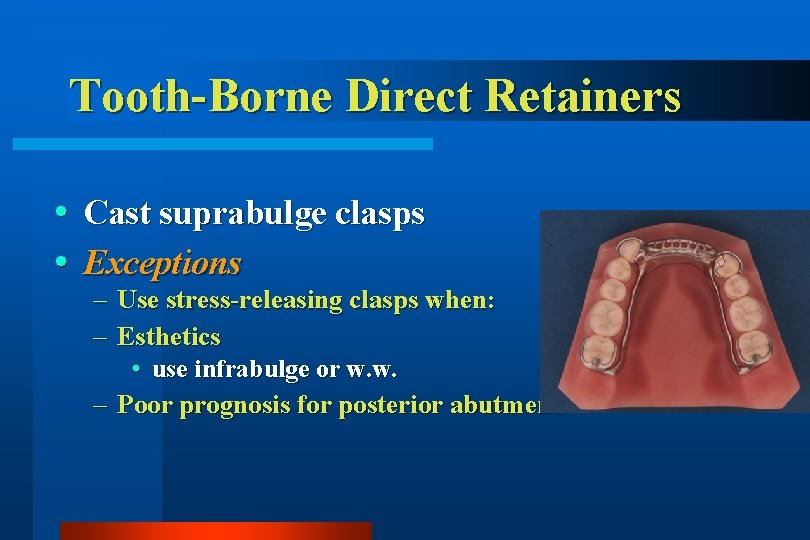
Tooth-Borne Direct Retainers Cast suprabulge clasps Exceptions – Use stress-releasing clasps when: – Esthetics • use infrabulge or w. w. – Poor prognosis for posterior abutment
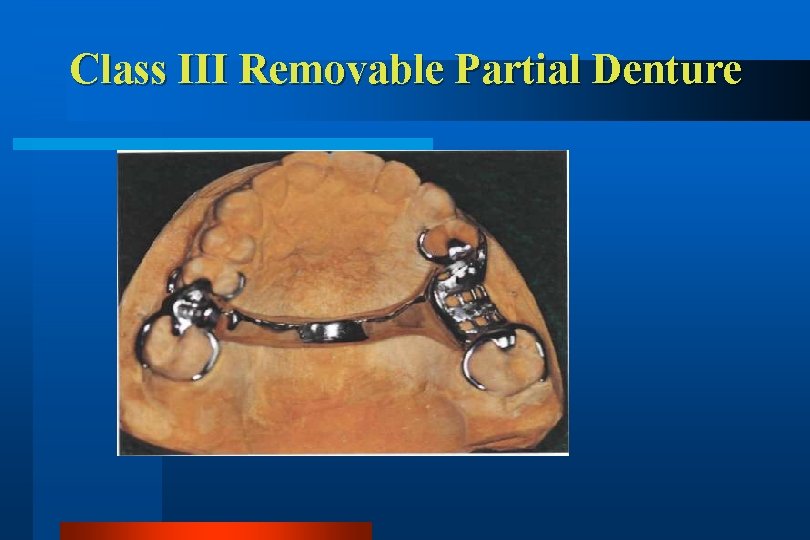
Class III Removable Partial Denture
Tooth- Tissue Borne Cases
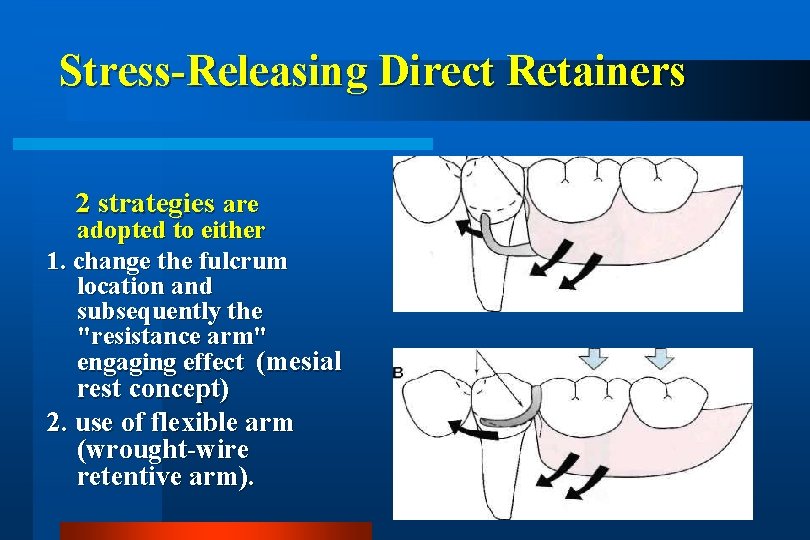
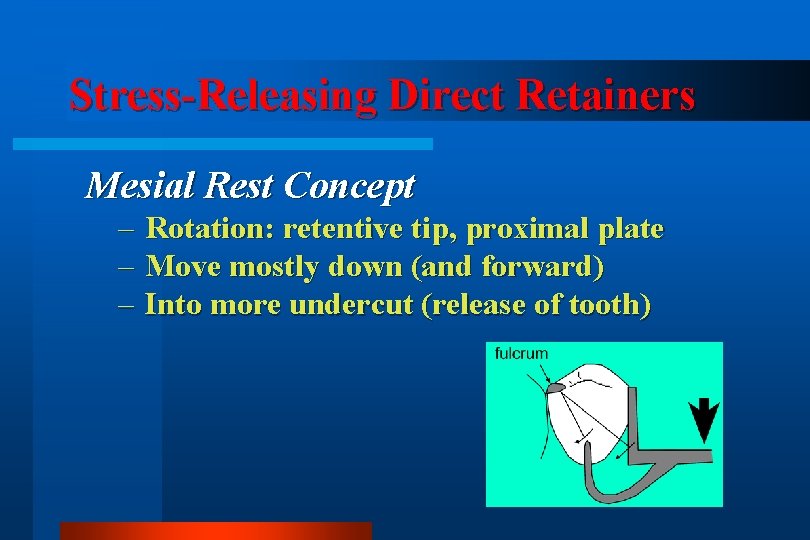
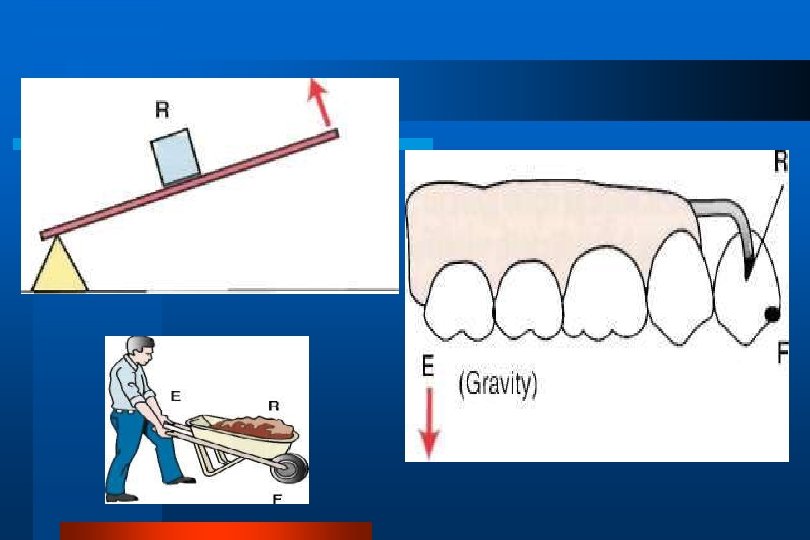
Stress-Releasing Direct Retainers 2 strategies are adopted to either 1. change the fulcrum location and subsequently the "resistance arm" engaging effect (mesial rest concept) 2. use of flexible arm (wrought-wire retentive arm).
Stress-Releasing Direct Retainers Mesial Rest Concept – Rotation: retentive tip, proximal plate – Move mostly down (and forward) – Into more undercut (release of tooth)
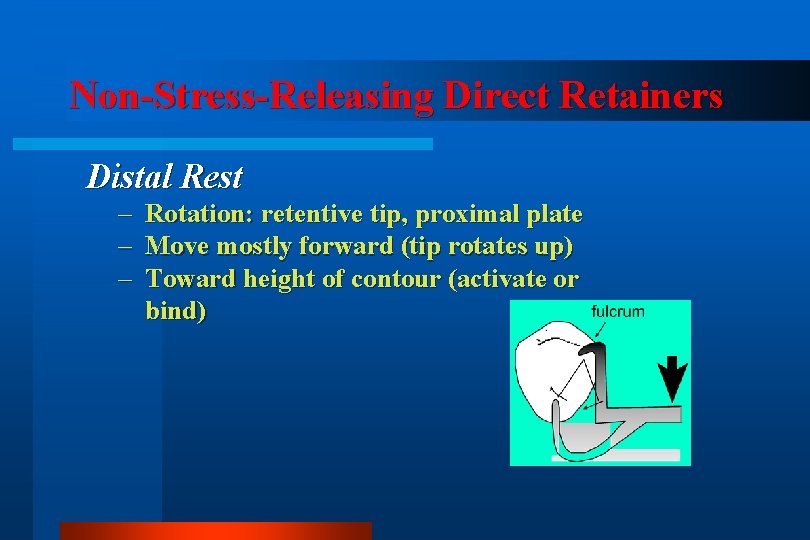
Non-Stress-Releasing Direct Retainers Distal Rest – Rotation: retentive tip, proximal plate – Move mostly forward (tip rotates up) – Toward height of contour (activate or bind)
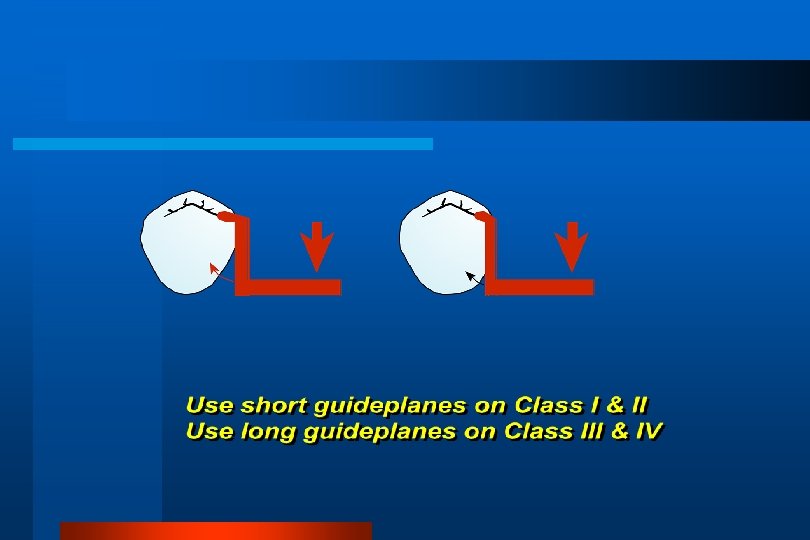
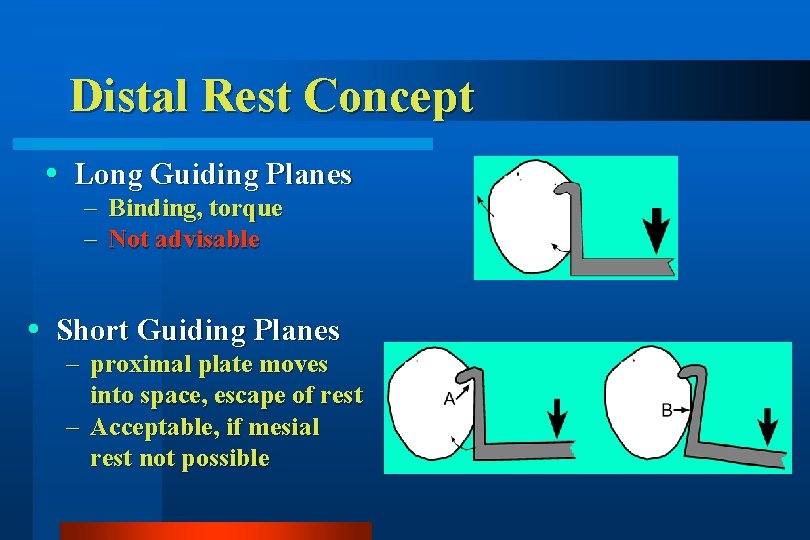
Distal Rest Concept Long Guiding Planes – Binding, torque – Not advisable Short Guiding Planes – proximal plate moves into space, escape of rest – Acceptable, if mesial rest not possible
Retainer Selection: Tooth-Tissue Borne RPD’s Stress-releasing Clasps – RPI Clasp * – RPA Clasp – Combination Clasp
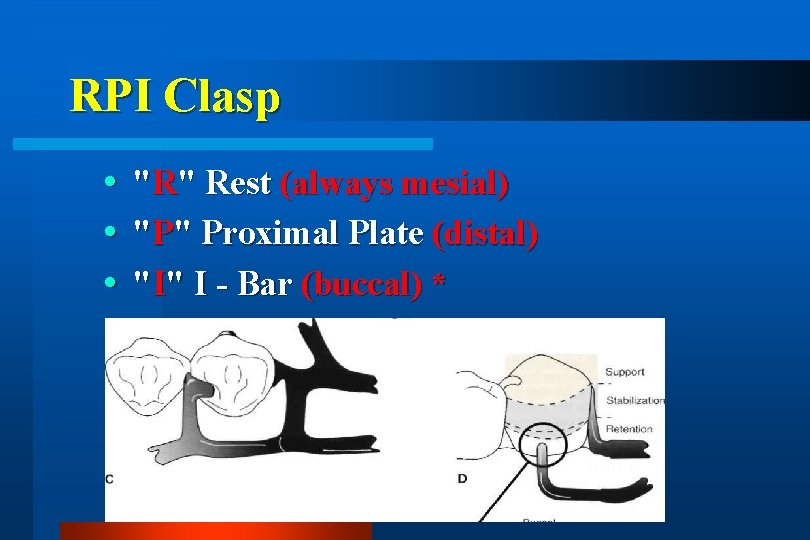
RPI Clasp "R" Rest (always mesial) "P" Proximal Plate (distal) "I" I - Bar (buccal) *
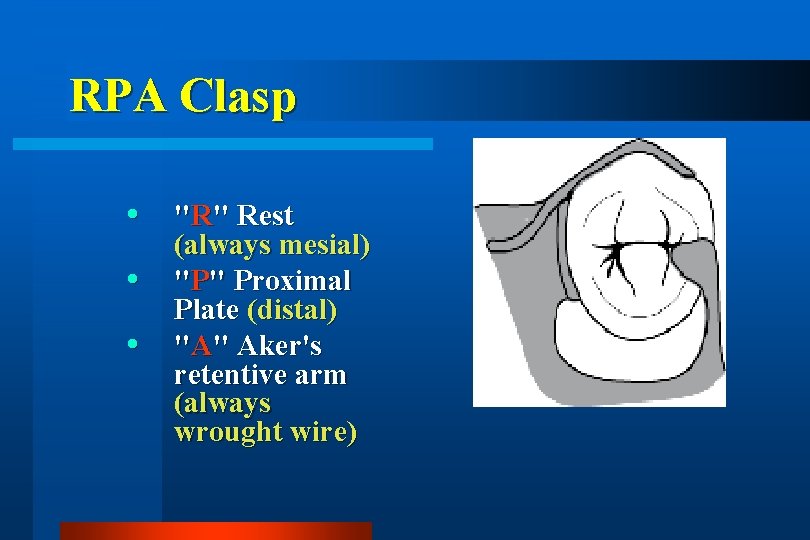
RPA Clasp "R" Rest (always mesial) "P" Proximal Plate (distal) "A" Aker's retentive arm (always wrought wire)
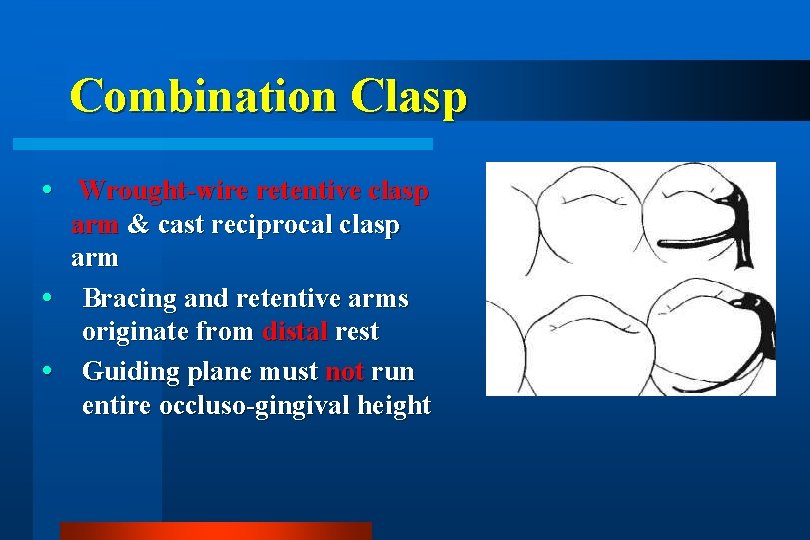
Combination Clasp Wrought-wire retentive clasp arm & cast reciprocal clasp arm Bracing and retentive arms originate from distal rest Guiding plane must not run entire occluso-gingival height
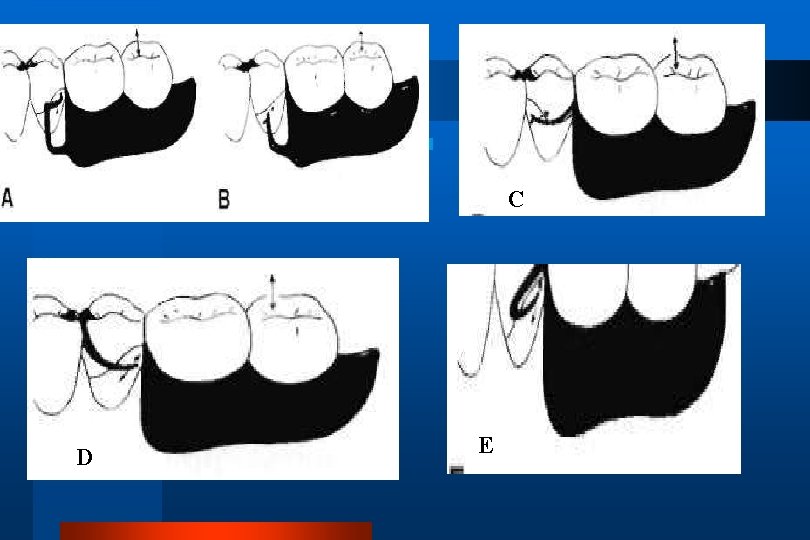
C D E
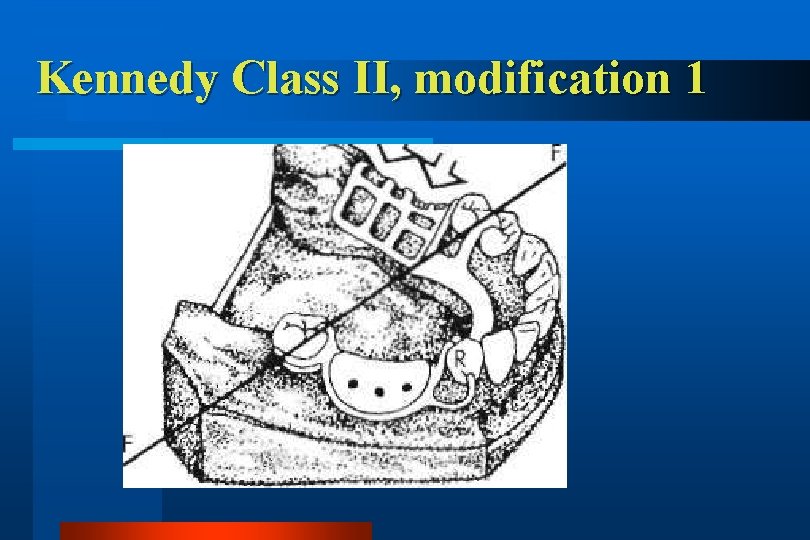
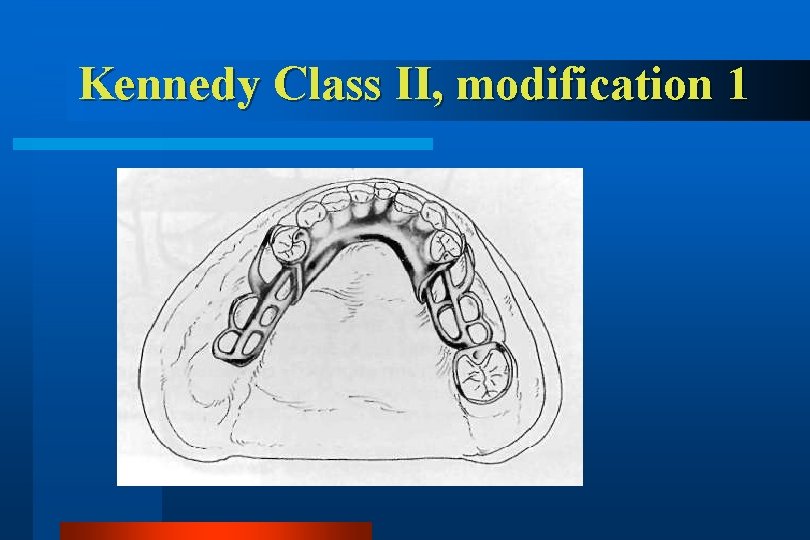
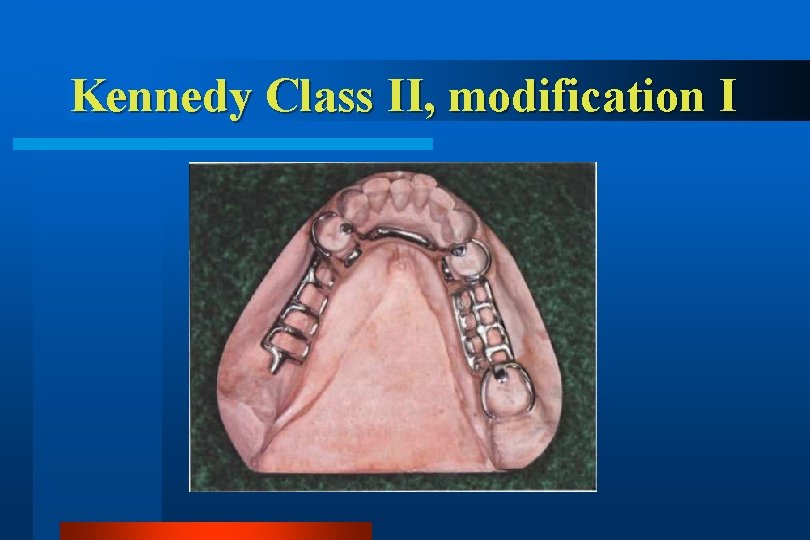
Kennedy Class II, modification 1
Kennedy Class II, modification 1
Kennedy Class II, modification I
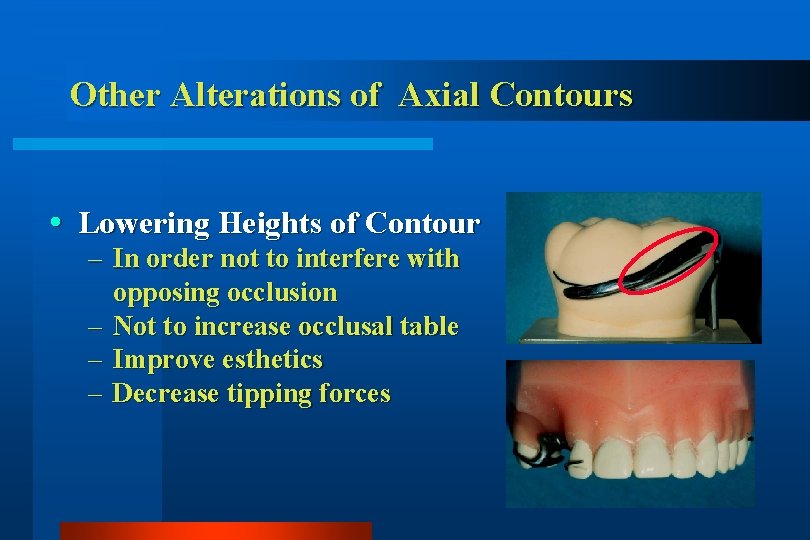
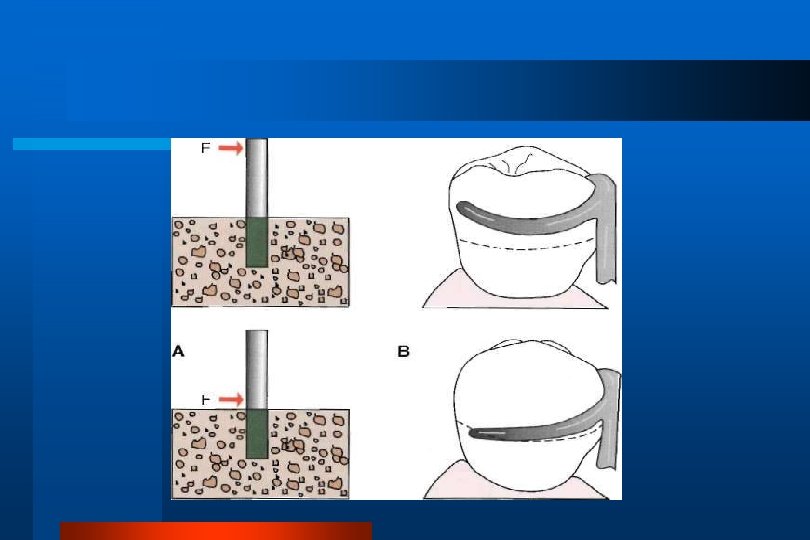
Other Alterations of Axial Contours Lowering Heights of Contour – In order not to interfere with opposing occlusion – Not to increase occlusal table – Improve esthetics – Decrease tipping forces
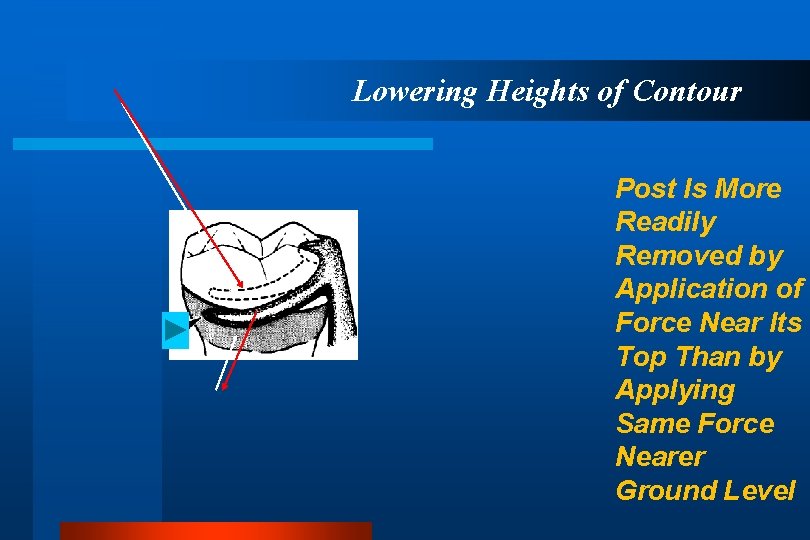
Lowering Heights of Contour Post Is More Readily Removed by Application of Force Near Its Top Than by Applying Same Force Nearer Ground Level
Other Alterations of Axial Contours Raising Heights of Contour – Insufficient retention in gingival 1/3 (at least 1 mm from gingiva) – Prepare undercut – Add resin above to create undercut
Preparing Retention Axial surface must be close to parallel the path of insertion
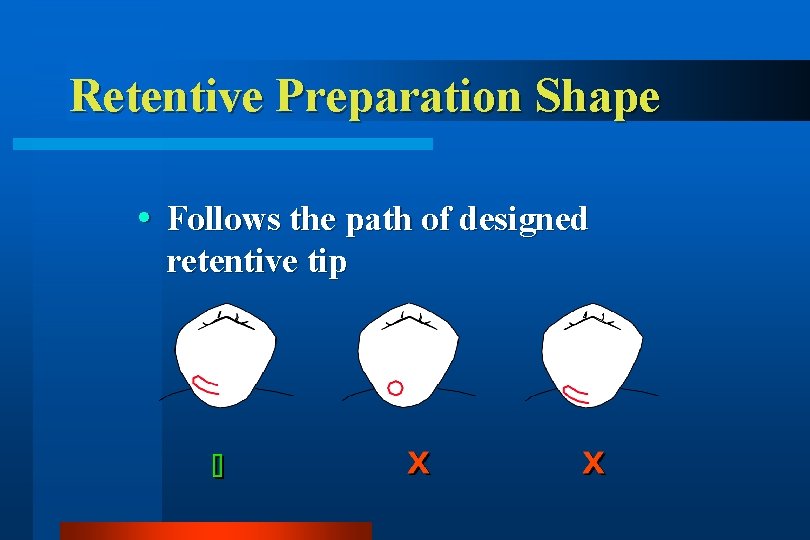
Retentive Preparation Shape Follows the path of designed retentive tip
Creating Undercuts with Bonded Resins Axial surface must be close to parallel the path of insertion
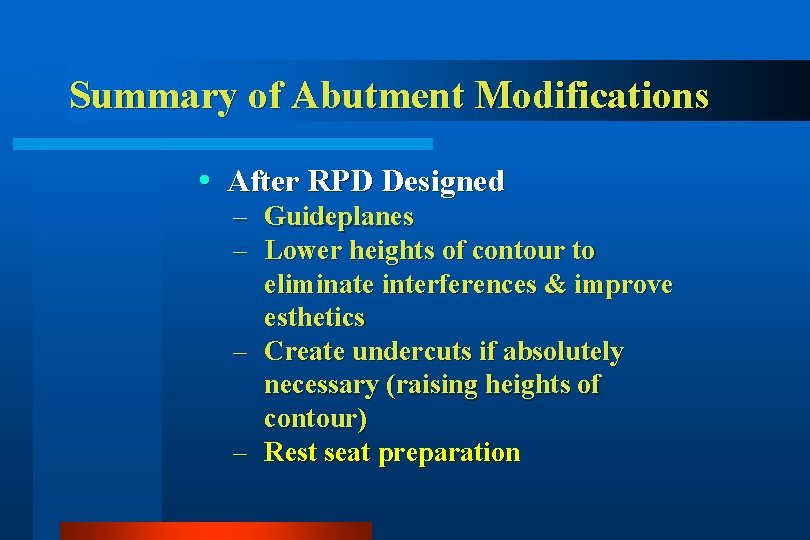
Summary of Abutment Modifications After RPD Designed – Guideplanes – Lower heights of contour to eliminate interferences & improve esthetics – Create undercuts if absolutely necessary (raising heights of contour) – Rest seat preparation
Mc. Cracken’s Removable Prosthodontics, 11 th Edition 2005 by Mc. Givney GP, Carr AB. Chapter 10 Dalhousie continual education