
Principles of Radiation Principles of Radiation n 1
- Slides: 24
Principles of Radiation
Principles of Radiation n 1. All object possesses (sensible) heat and emit radiation energy as long as their temperatures is above absolute zero ( 0 o K). (Kelvin Scale: 0 o K = - 273 o C )
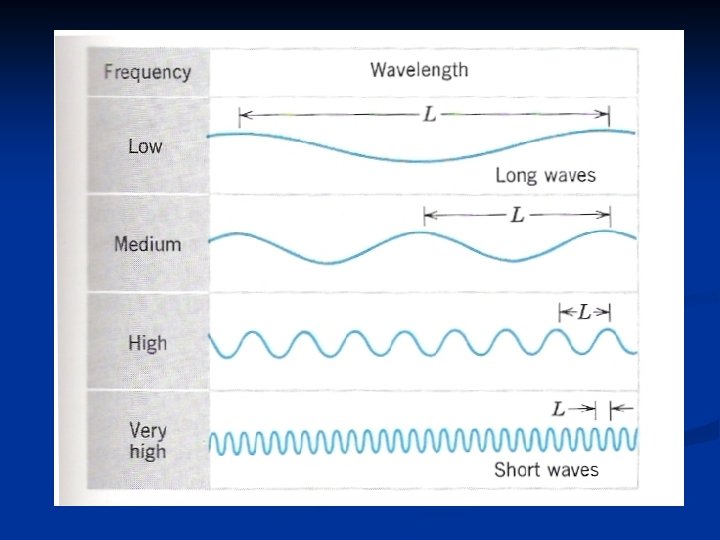
Principles of Radiation n n 2. The character of radiant energy sent out depends on the temperature of the emitting object. a. The radiant energy emitted is directly proportional to the absolute temperature. b. The lower the temperature of the radiating object, the longer is the wavelength of the radiant energy emitted.
Principles of Radiation Wavelength: the actual distance between two successive wave crests / troughs. n Frequency : the number of waves passing a fixed point in a period of time. (1 hertz = one cycle per second) n
Principles of Radiation
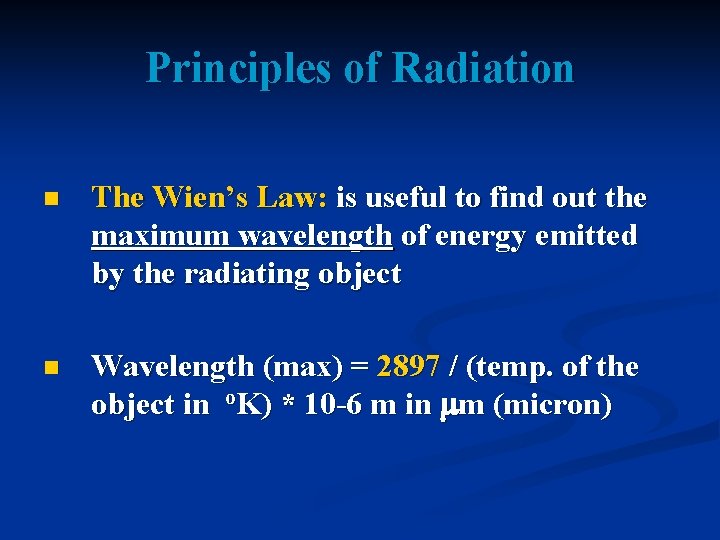
Principles of Radiation n The Wien’s Law: is useful to find out the maximum wavelength of energy emitted by the radiating object n Wavelength (max) = 2897 / (temp. of the object in o. K) * 10 -6 m in m (micron)
Principles of Radiation 旋轉星圖 http: //www. lcsd. gov. hk/CE/Museum/Space/Whats. New/c_index. htm
Principles of Radiation n 4. When an object absorbs radiant energy, its surface temperature is raised. This represents a process of transformation of radiant energy to sensible heat.
Solar Radiation / Insolation n The difference between the two terms?
Solar Radiation / Insolation n 1. The surface temperature of the sun is about 6000 o. K. Its surface emits a spectrum of electro-magnetic radiation of various wavelengths.
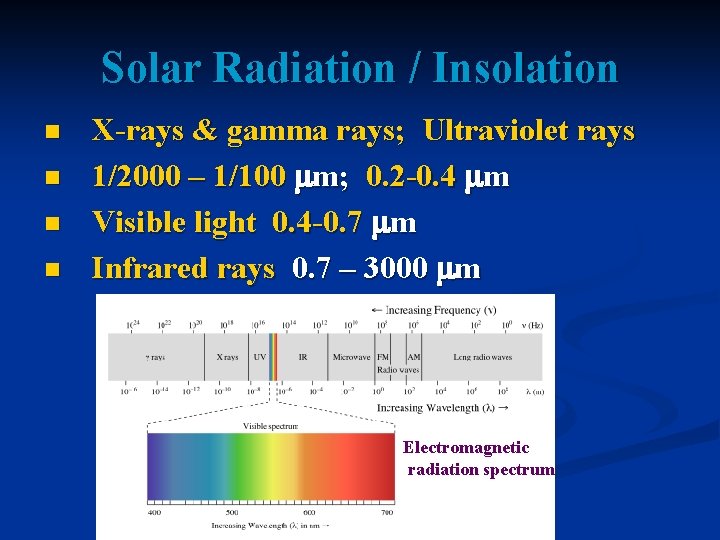
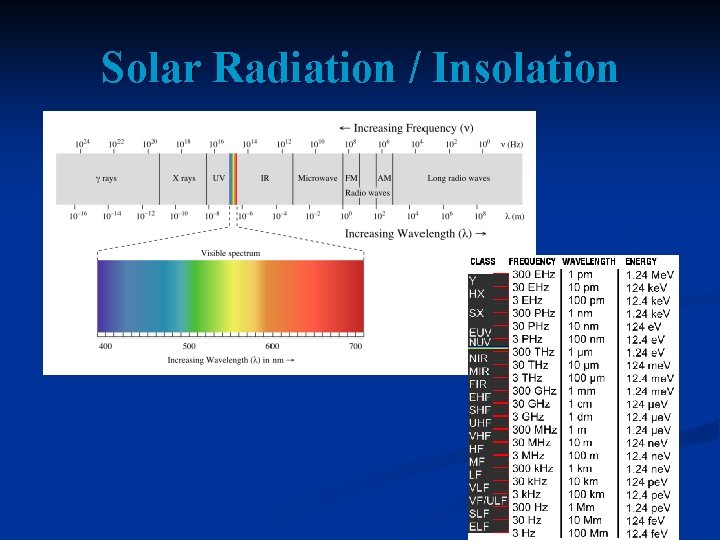
Solar Radiation / Insolation n n X-rays & gamma rays; Ultraviolet rays 1/2000 – 1/100 m; 0. 2 -0. 4 m Visible light 0. 4 -0. 7 m Infrared rays 0. 7 – 3000 m Electromagnetic radiation spectrum
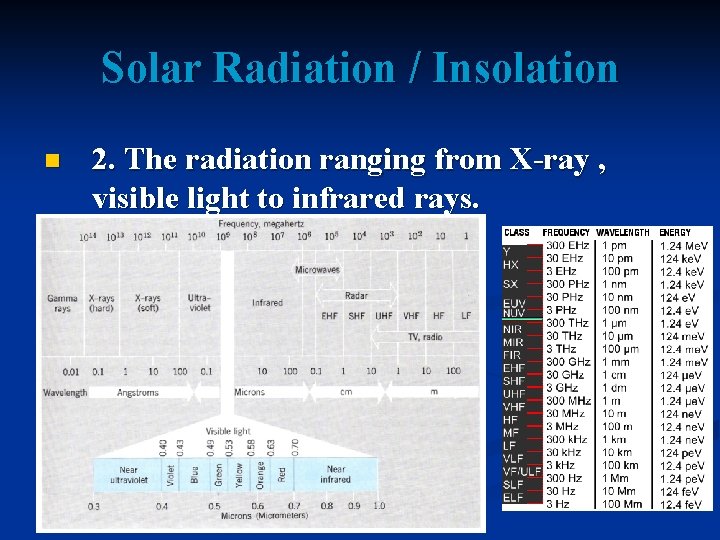
Solar Radiation / Insolation n 2. The radiation ranging from X-ray , visible light to infrared rays.
Solar Radiation / Insolation n 3. It takes about _ minutes for the solar radiation to travel from the sun to the earth. radiation of various wavelengths.
Solar Radiation / Insolation n 3. It takes about 8 minutes for the solar radiation to travel from the sun to the earth. radiation of various wavelengths.
Solar Radiation / Insolation n 4. Since the intensity of radiation decreases with distance, the earth intercepts only about 1 / 2 000 M of the sun's total energy output.
Solar Radiation / Insolation n 5. On average, the earth intercepts solar energy of about 2 gm-cal/ cm 2/ min, i. e. about 2 langleys/min above the atmosphere. This figure is known as the solar constant.
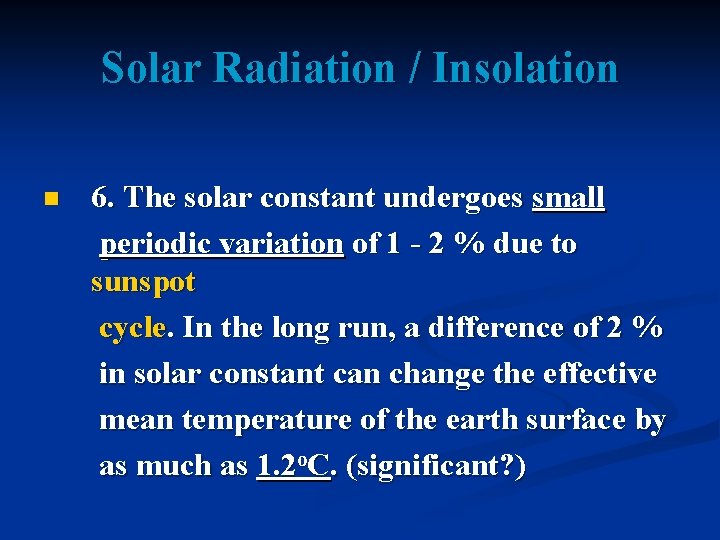
Solar Radiation / Insolation n 6. The solar constant undergoes small periodic variation of 1 - 2 % due to sunspot cycle. In the long run, a difference of 2 % in solar constant can change the effective mean temperature of the earth surface by as much as 1. 2 o. C. (significant? )
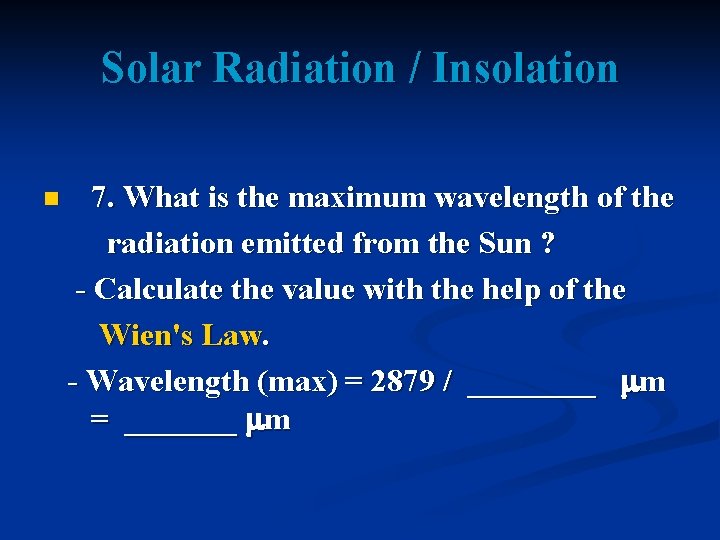
Solar Radiation / Insolation n 7. What is the maximum wavelength of the radiation emitted from the Sun ? - Calculate the value with the help of the Wien's Law. - Wavelength (max) = 2879 / ____ m = _______ m
Solar Radiation / Insolation
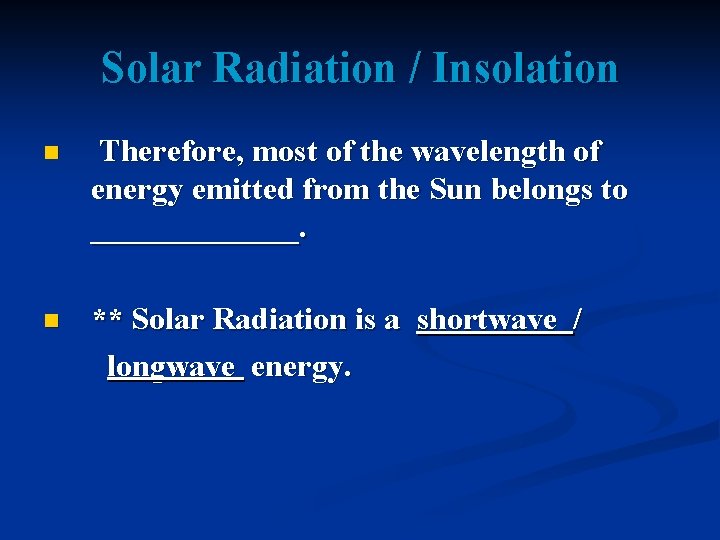
Solar Radiation / Insolation n Therefore, most of the wavelength of energy emitted from the Sun belongs to _______. n ** Solar Radiation is a shortwave / longwave energy.
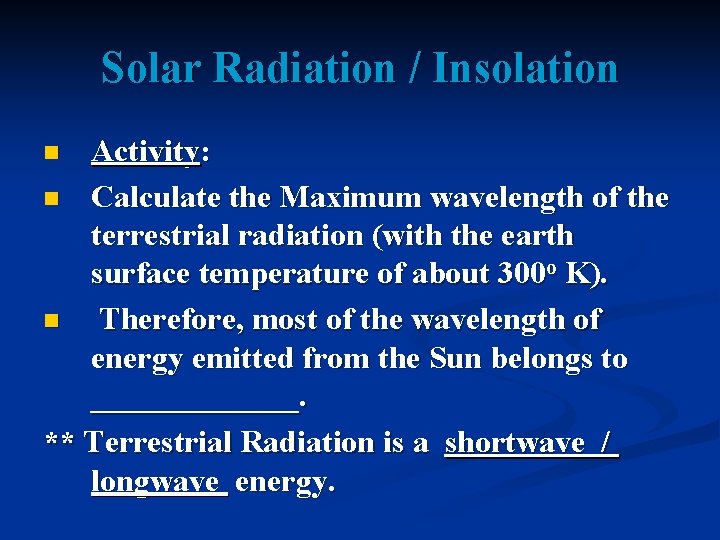
Solar Radiation / Insolation Activity: n Calculate the Maximum wavelength of the terrestrial radiation (with the earth surface temperature of about 300 o K). n Therefore, most of the wavelength of energy emitted from the Sun belongs to _______. ** Terrestrial Radiation is a shortwave / longwave energy. n
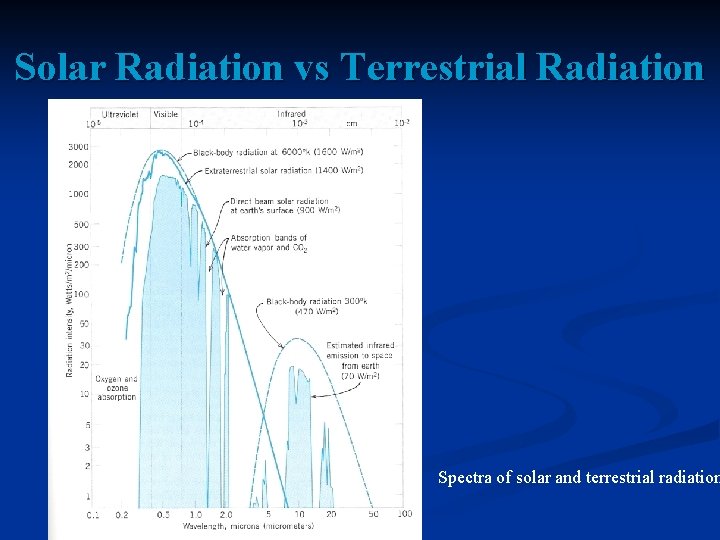
Solar Radiation / Insolation n In what ways does terrestrial radiation different from solar radiation ?
Solar Radiation vs Terrestrial Radiation Spectra of solar and terrestrial radiation
The Incoming & Outgoing of Energy of the Earth