
Principles of population ecology Title Layout Subtitle Name
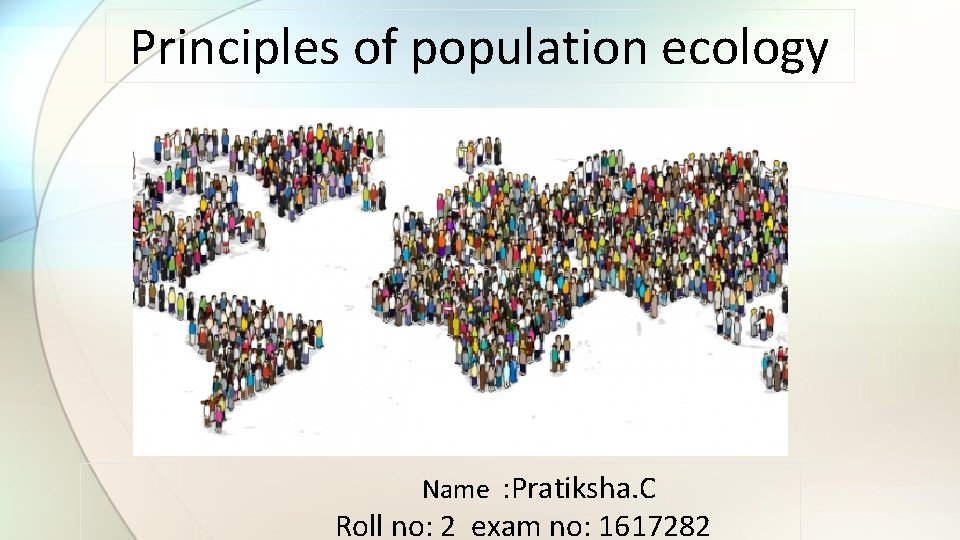
Principles of population ecology Title Layout Subtitle Name : Pratiksha. C Roll no: 2 exam no: 1617282
What is population ecology ØPopulation ecology is a sub-field of ecology that deals with the dynamics of species populations and how these populations interact with the environment ØWhy to study population ecology: -Scientific goal: understanding the factors influencing size of populations -Practical goal: management of populations
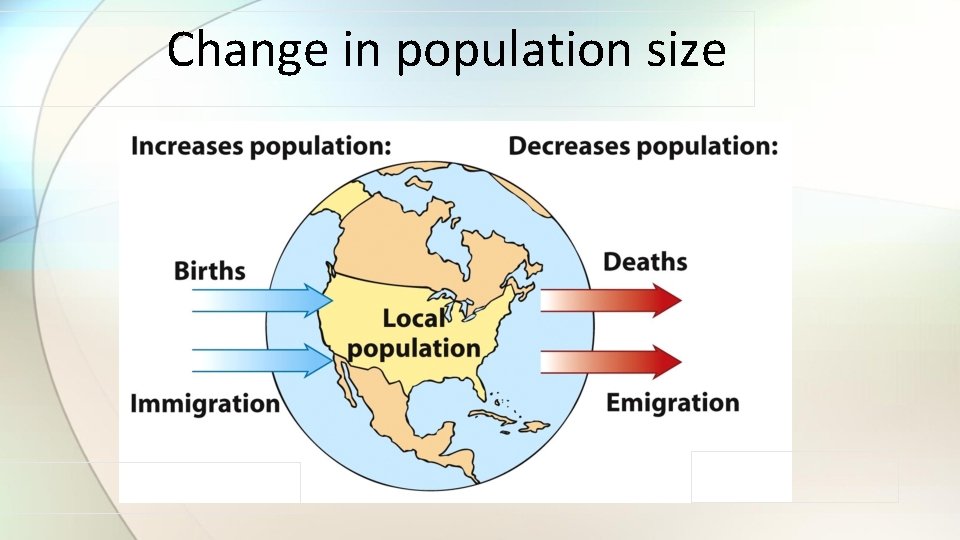
Change in population size
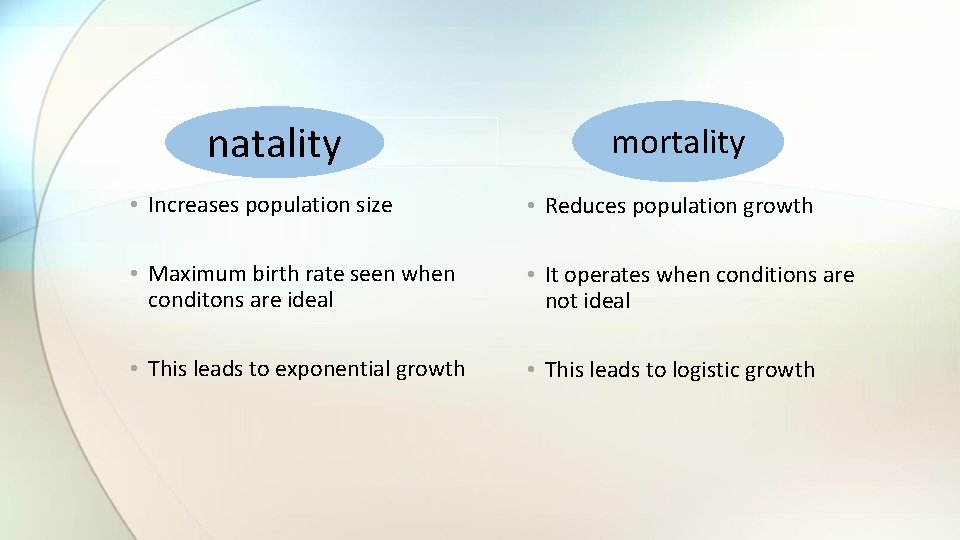
natality mortality • Increases population size • Reduces population growth • Maximum birth rate seen when conditons are ideal • It operates when conditions are not ideal • This leads to exponential growth • This leads to logistic growth
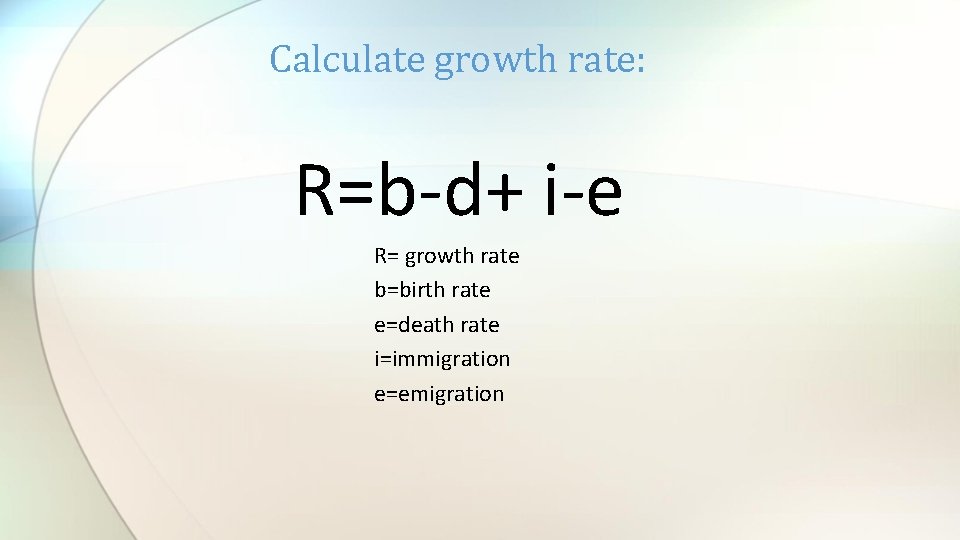
Calculate growth rate: R=b-d+ i-e R= growth rate b=birth rate e=death rate i=immigration e=emigration
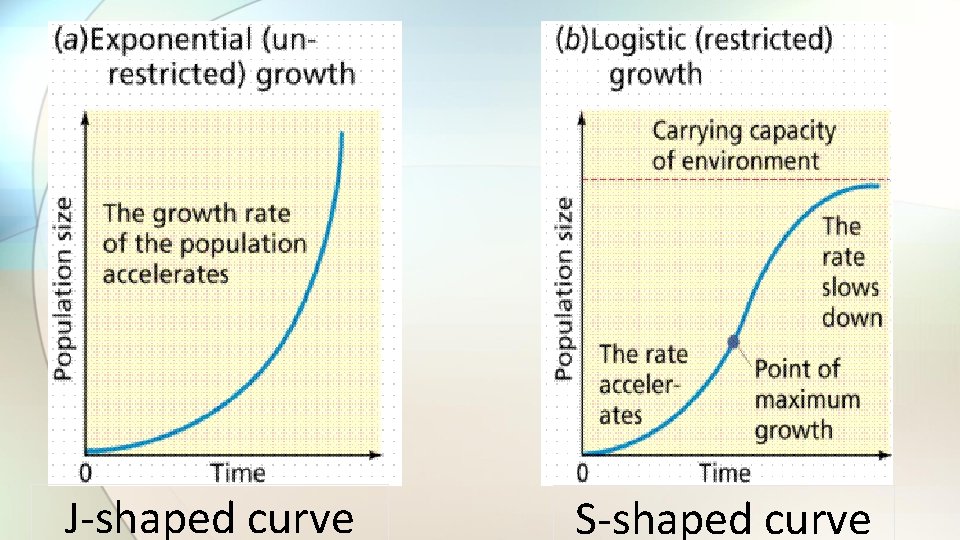
J-shaped curve S-shaped curve
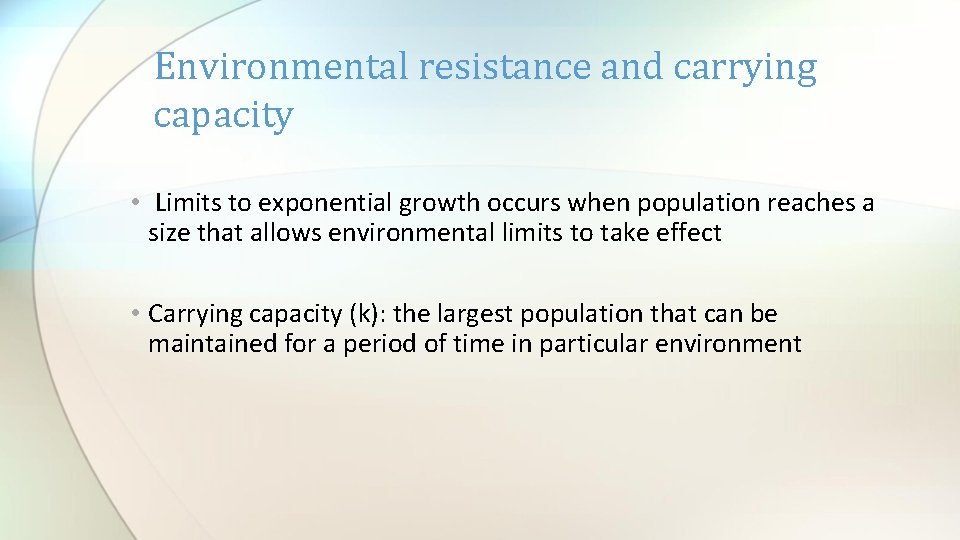
Environmental resistance and carrying capacity • Limits to exponential growth occurs when population reaches a size that allows environmental limits to take effect • Carrying capacity (k): the largest population that can be maintained for a period of time in particular environment
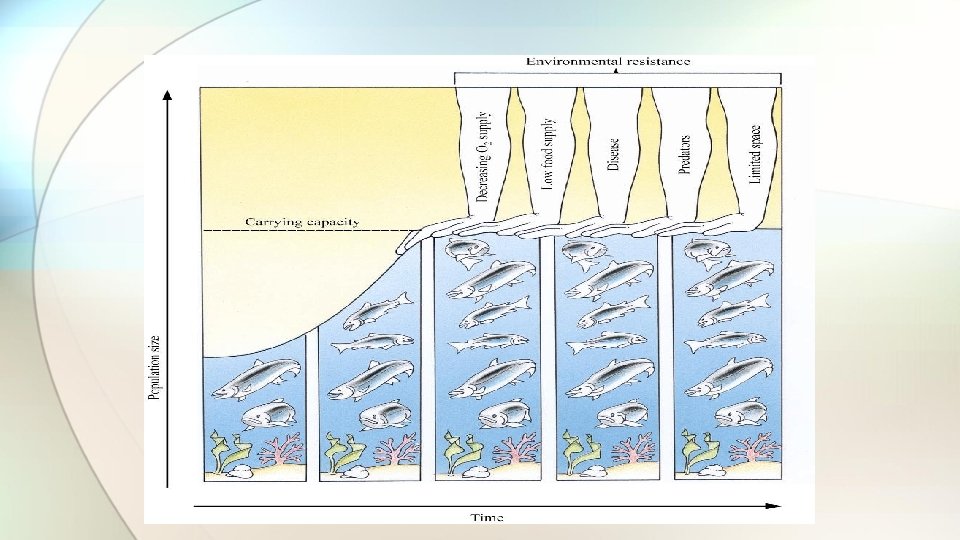
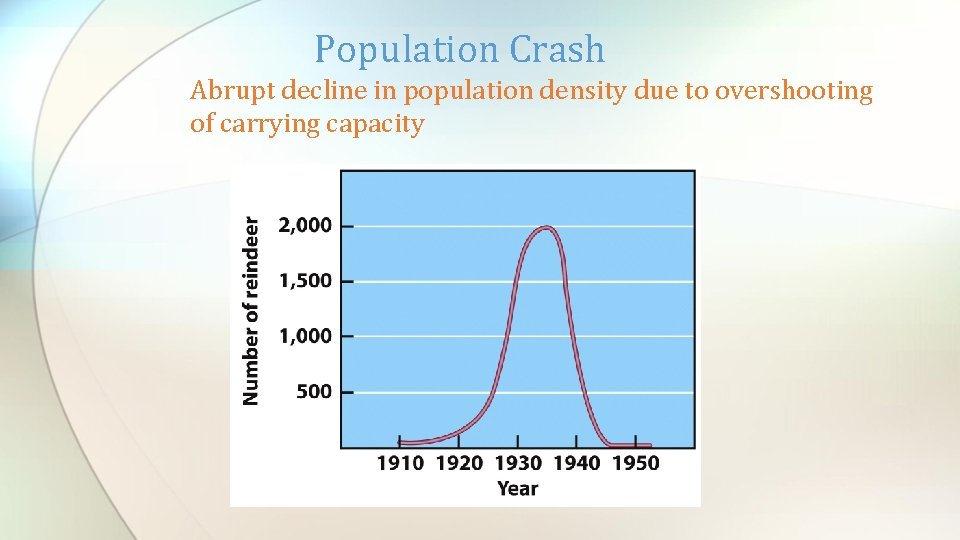
Population Crash Abrupt decline in population density due to overshooting of carrying capacity
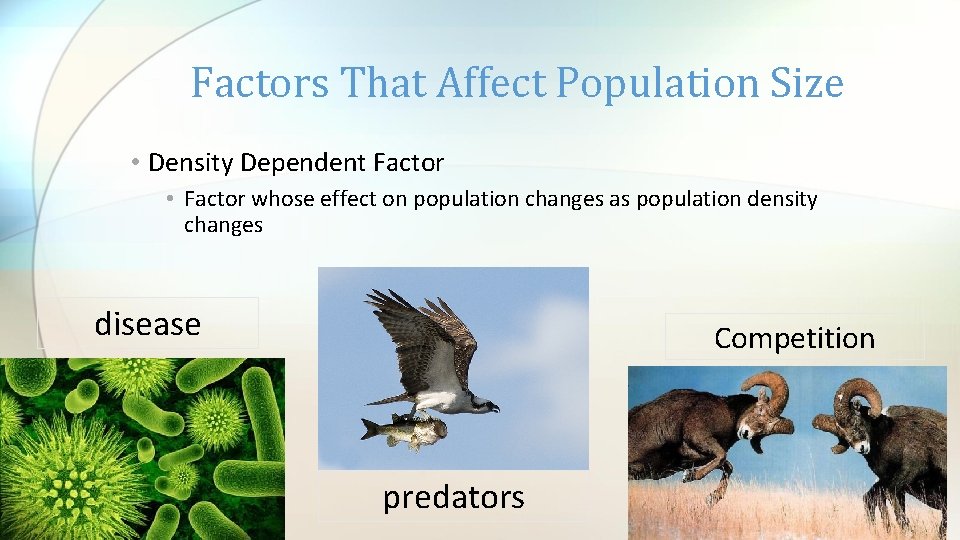
Factors That Affect Population Size • Density Dependent Factor • Factor whose effect on population changes as population density changes disease Competition predators
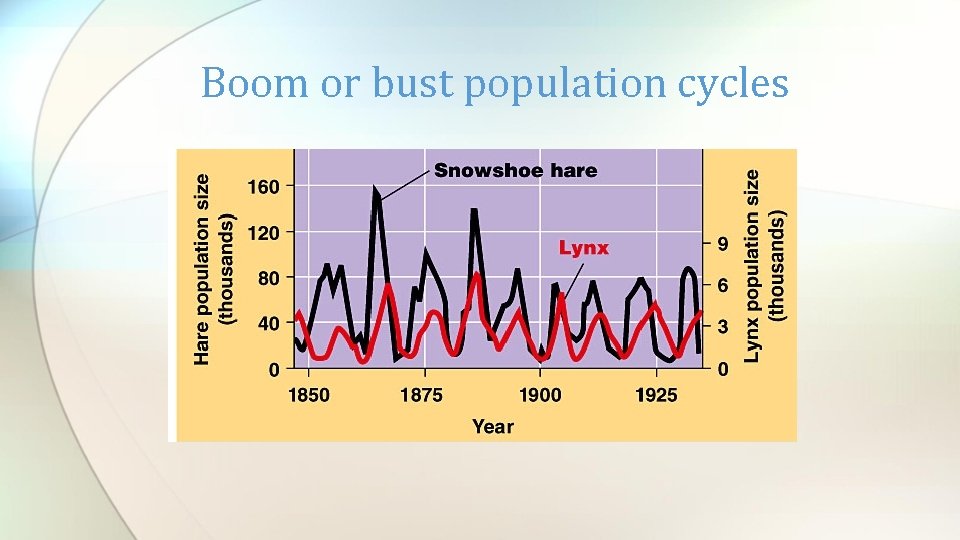
Boom or bust population cycles
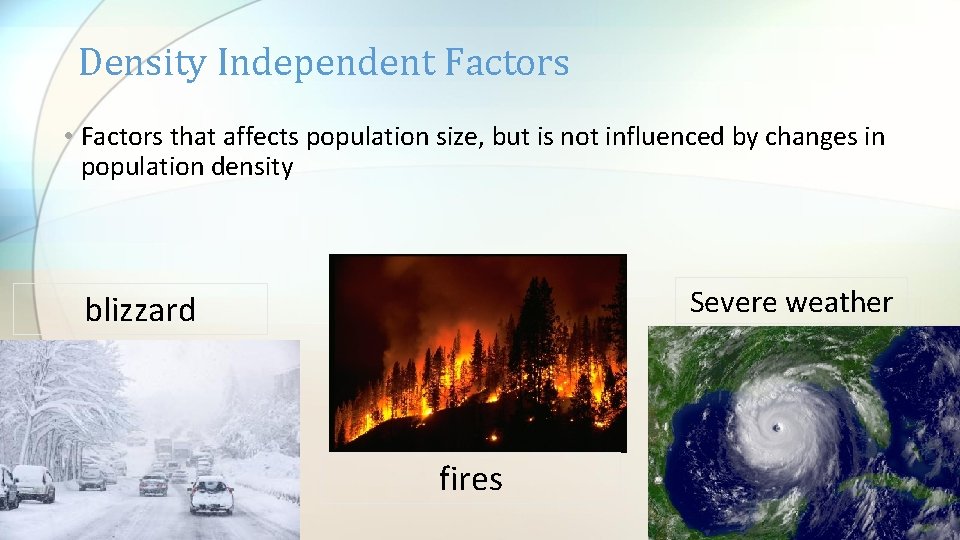
Density Independent Factors • Factors that affects population size, but is not influenced by changes in population density Severe weather blizzard fires
Reproductive strategies: r/k selection • r/k selection theory relates to selection of combination of traits in an organism that trade off between quantity and quality • R selection : increase quantity of offspring at expense of individual parental investment • K selection: reduced quantity corresponding to increased parental investment
• R selection: density dependent • Small body size • Early maturity • Short life span • Large broods • Minimal required parental care • Live in unpredictable or temporary environments • Opportunists (like mosquitos, insects, weeds, etc. )
• K selection: density independent • Long life span, slow development • Late reproduction • Large body size • Low reproductive rate • Examples: redwood trees, animals requiring long parental care (Tawny owls pair for life!)
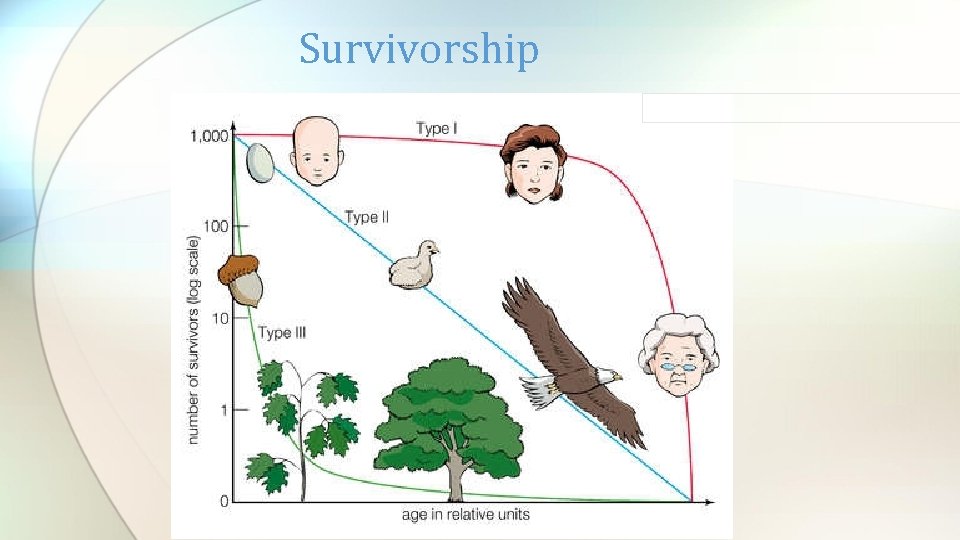
Survivorship
• Type I survivorship curves are characterized by high age-specific survival probability in early and middle life, followed by a rapid decline in survival in later life. Eg: humans • Type II curves are an intermediate between Types I and III, where roughly constant mortality/survival probability is experienced regardless of age. Eg: lizards and birds Type III curves, the greatest mortality (lowest age-specific survival) is experienced early in life, with relatively low rates of death (high probability of survival) for those surviving this bottleneck. Eg: oysters
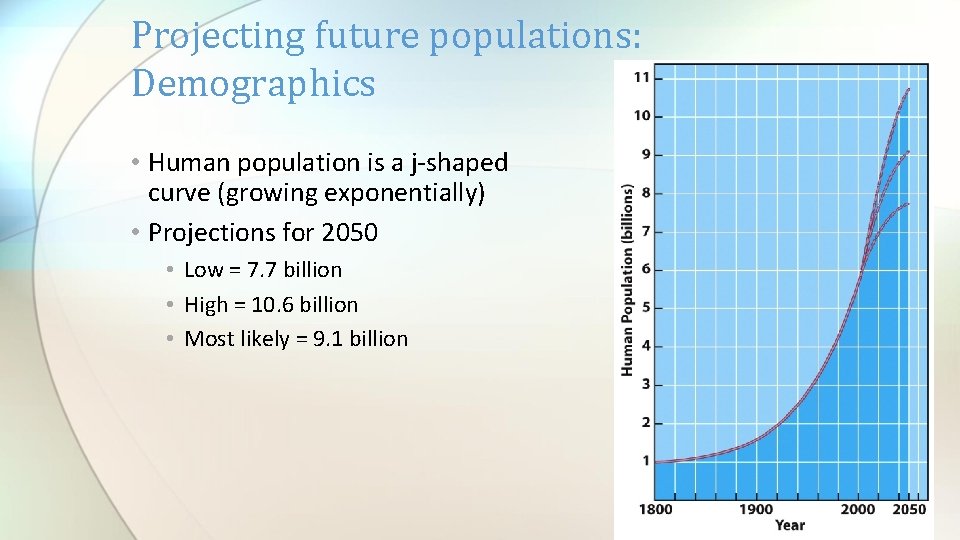
Projecting future populations: Demographics • Human population is a j-shaped curve (growing exponentially) • Projections for 2050 • Low = 7. 7 billion • High = 10. 6 billion • Most likely = 9. 1 billion
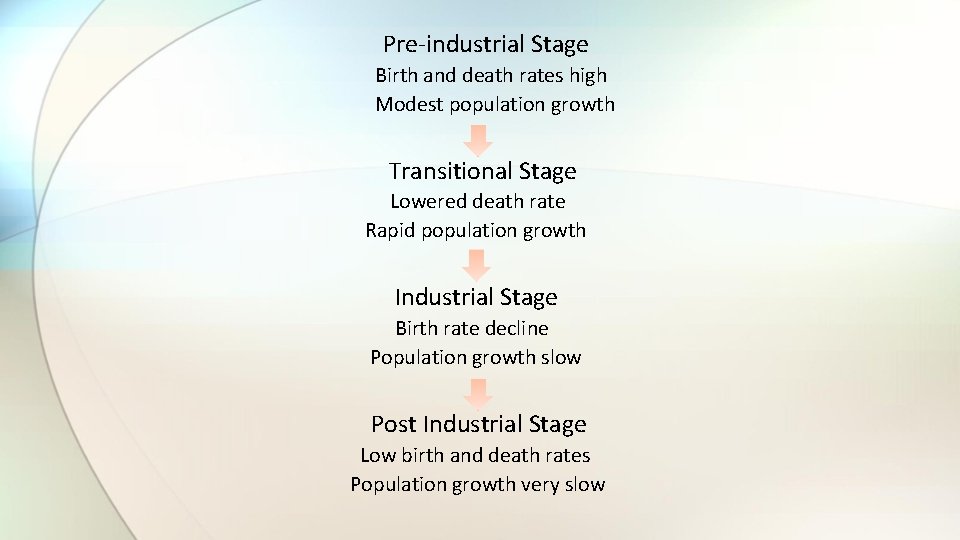
Pre-industrial Stage Birth and death rates high Modest population growth Transitional Stage Lowered death rate Rapid population growth Industrial Stage Birth rate decline Population growth slow Post Industrial Stage Low birth and death rates Population growth very slow
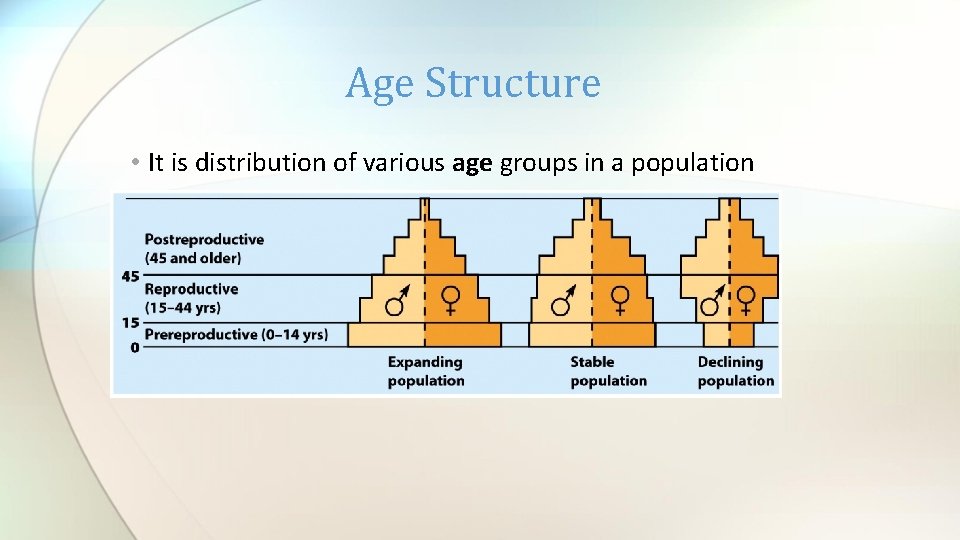
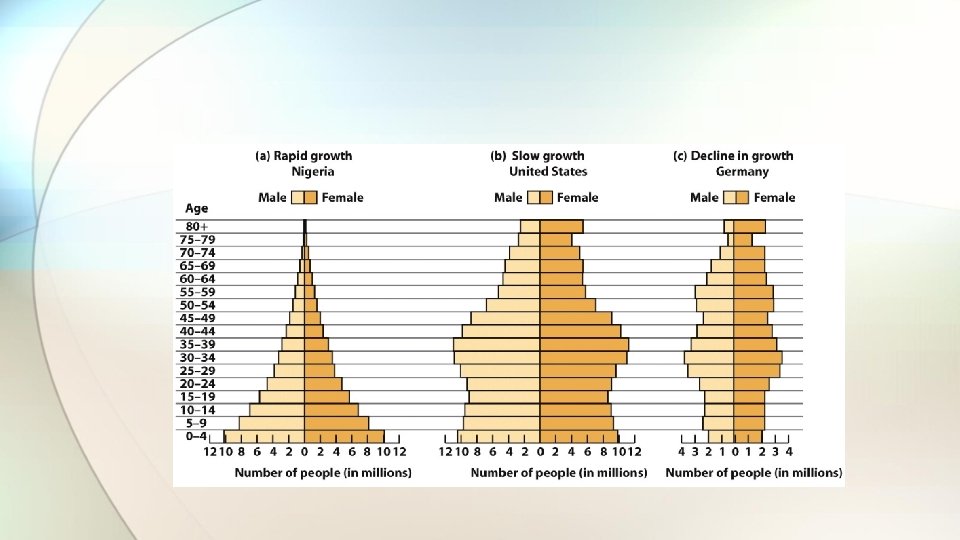
Age Structure • It is distribution of various age groups in a population

• References: • www. napavalley. edu/. . . Ecology/. . . /rav 8 e_ch 089_lecture_population_urban_growth • https: //en. wikipedia. org/wiki/Population_ecology • bio 1510. biology. gatech. edu/module-2 -ecology/populationecology/
- Slides: 23