
Principles of Physical Development Cephalocaudal development from head

- Slides: 28
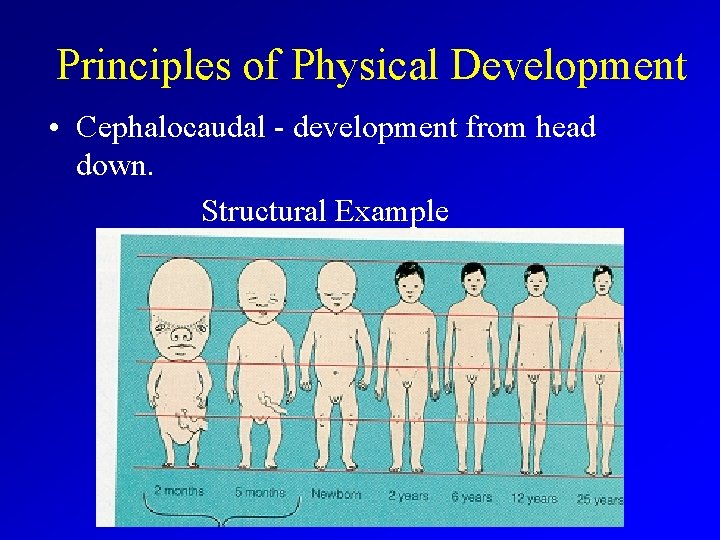
Principles of Physical Development • Cephalocaudal - development from head down. Structural Example
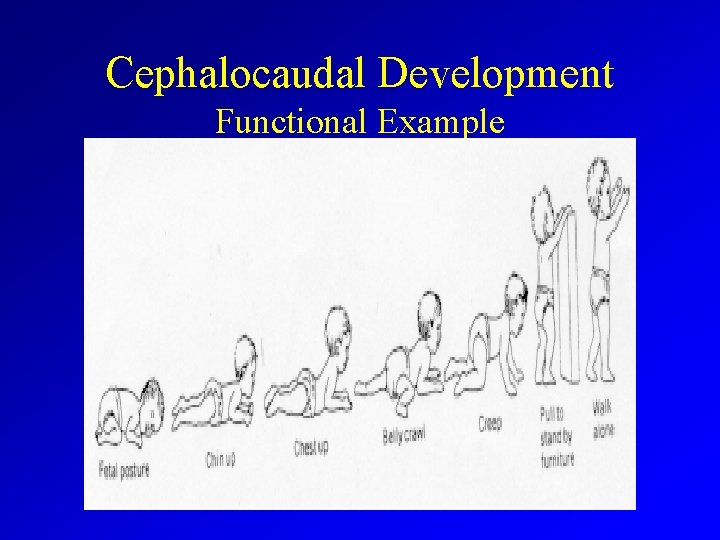
Cephalocaudal Development Functional Example
Principles of Physical Development • Proximodistal: development from inside out • Mass-to-specific: gross motor skills (large muscles) develops first followed by fine motor (small muscles) skills
Growth • • Newborn: 20 inches long; 7 1/2 pounds 1 inch per month ½ adult height by age 2 double weight by 4 months, triple by 12 months • Head Circumference • Fontanels – Ossification
Growth • Adolescence – Puberty growth spurt - age 9 for girls, 11 for boys – Sexual maturation
Stages of Puberty • Prepubescent Stage: no longer a child but not yet an adolescent. Secondary sex characteristics begin to appear, but the reproductive organs are not yet fully developed. • Pubescent Stage : dividing line between childhood and adolescence. Signs of sexual maturity appear - the menstrual cycle in girls and the first nocturnal emissions in boys. Secondary sex characteristics continue to develop. Gametes are produced (not in the quantity/regularity of Fully mature sex organs). • Postpubescent Stage: Secondary sex characteristics become well developed and sex organs begin to function in a mature manner.
Male Secondary Sex Characteristics • Pubic hair: appears about one year after the testes and the penis have started to increase in size • Facial/body hair appear when the pubic hair has almost completed its growth. • Muscles: increase markedly in size and strength. • Voice: changes begin after some pubic hair has appeared. Voice breaks are common when maturing is rapid. • Heightened Emotions: Moodiness, sulkiness, temper outbursts, anxiety and irritability. Testosterone can also trigger a marked increase in aggressive behavior.
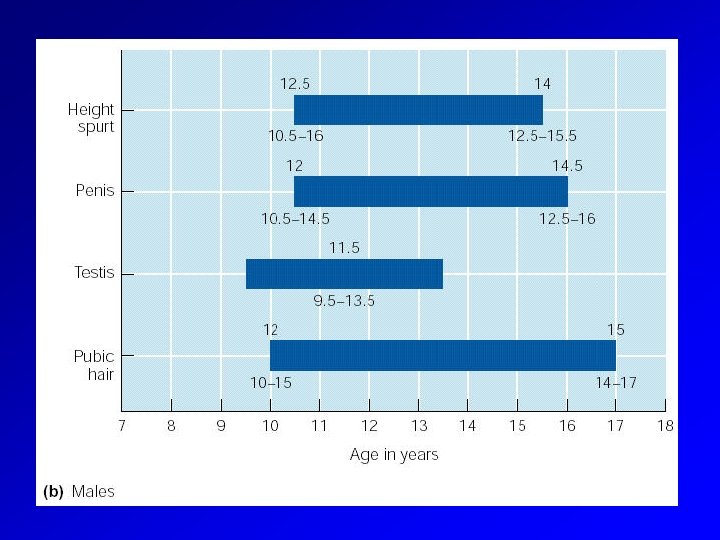
Developmental Order - Males
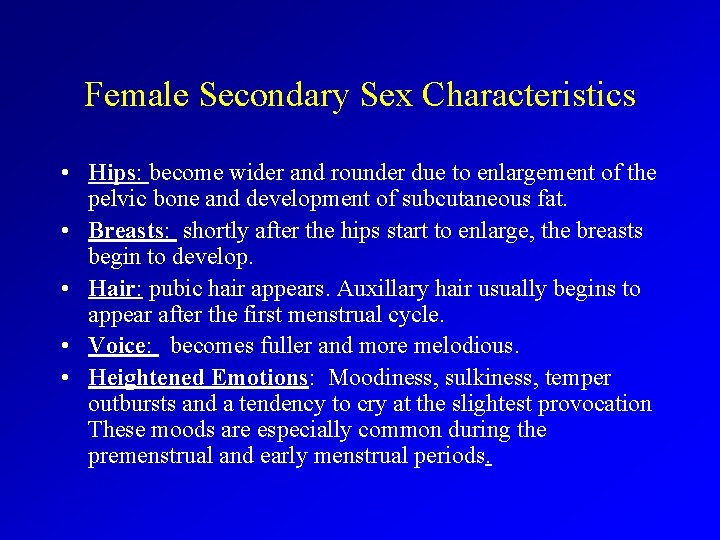
Female Secondary Sex Characteristics • Hips: become wider and rounder due to enlargement of the pelvic bone and development of subcutaneous fat. • Breasts: shortly after the hips start to enlarge, the breasts begin to develop. • Hair: pubic hair appears. Auxillary hair usually begins to appear after the first menstrual cycle. • Voice: becomes fuller and more melodious. • Heightened Emotions: Moodiness, sulkiness, temper outbursts and a tendency to cry at the slightest provocation These moods are especially common during the premenstrual and early menstrual periods.
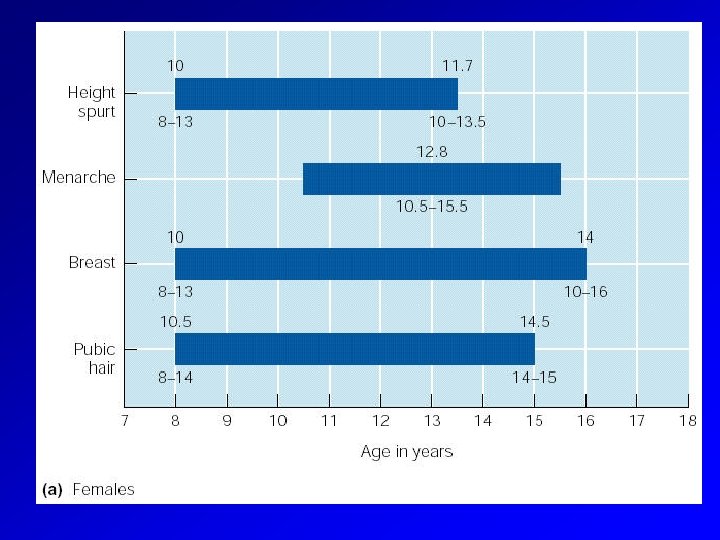
Developmental Order - Females
Growth • Early Adulthood – height remains constant – muscle tone/strength peaks in late teens/20 s
Growth • Middle Adulthood – loss of fat and collagen in skin tissues – aging spots – thinner, graying hair – lose 1/2 inch per decade in height, gain weight – bone density begins decreasing
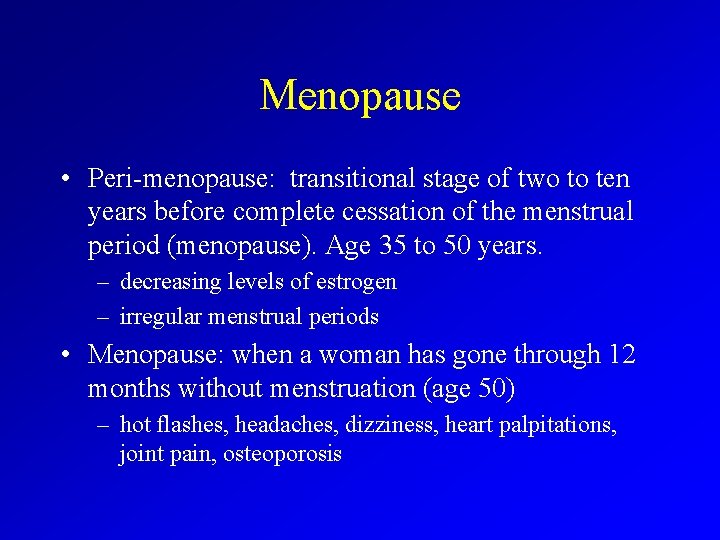
Menopause • Peri-menopause: transitional stage of two to ten years before complete cessation of the menstrual period (menopause). Age 35 to 50 years. – decreasing levels of estrogen – irregular menstrual periods • Menopause: when a woman has gone through 12 months without menstruation (age 50) – hot flashes, headaches, dizziness, heart palpitations, joint pain, osteoporosis
Growth • Later Adulthood – weight loss – osteoporosis – osteoarthritis
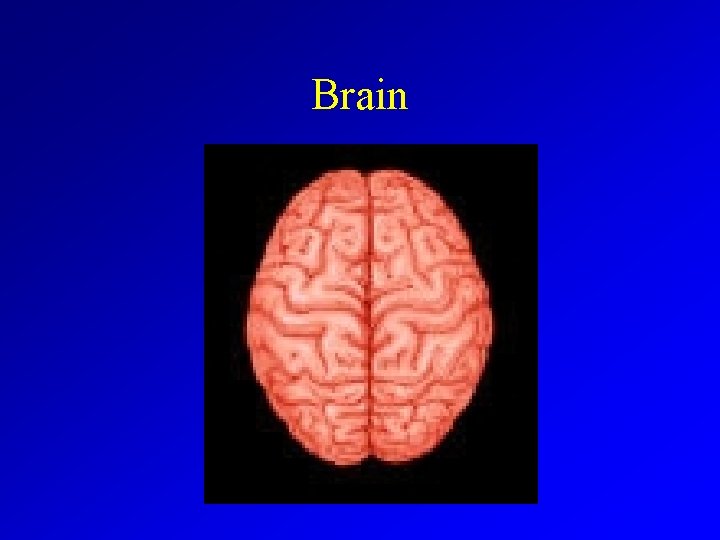
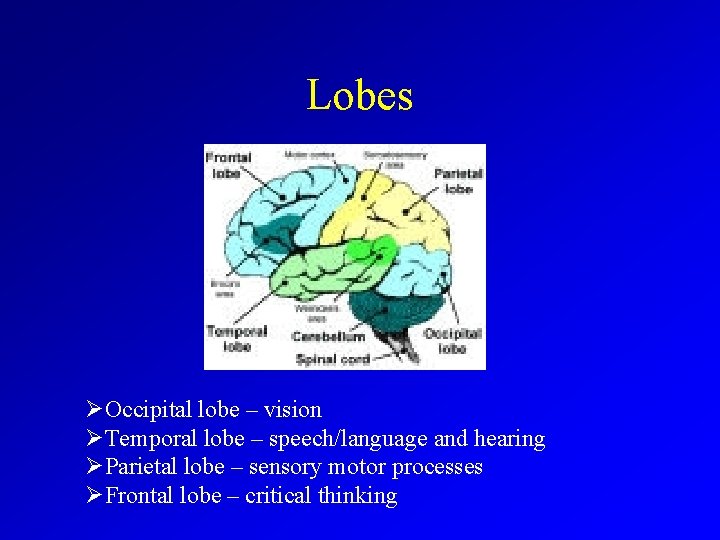
Brain Development • Human brain – most functional and bestorganized 3 pounds of matter in universe. • Part of Central Nervous System • Controls voluntary and involuntary activities • 2 Hemispheres with 4 lobes
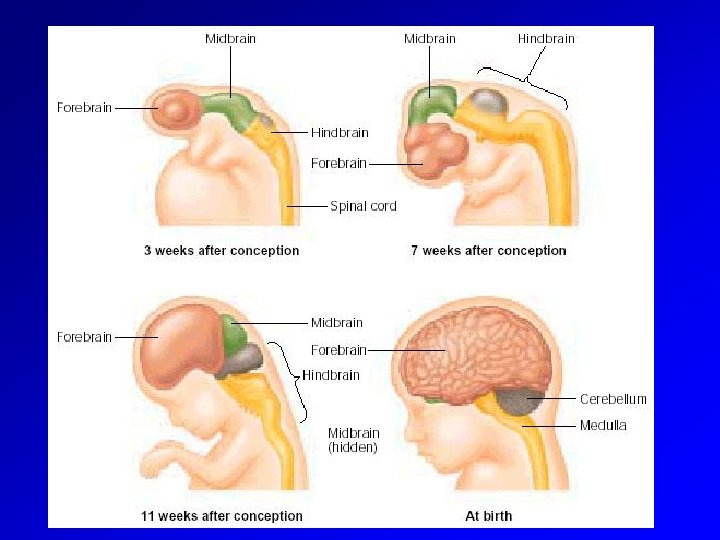
Development of Brain
Brain
Lobes ØOccipital lobe – vision ØTemporal lobe – speech/language and hearing ØParietal lobe – sensory motor processes ØFrontal lobe – critical thinking
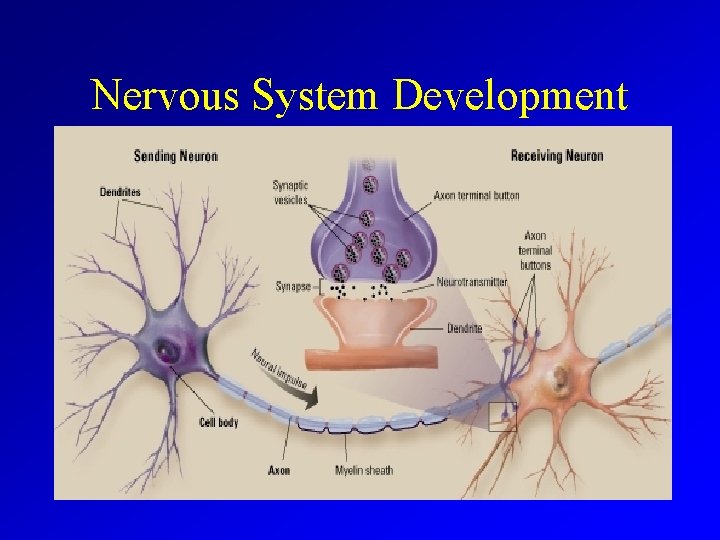
Nervous System Development
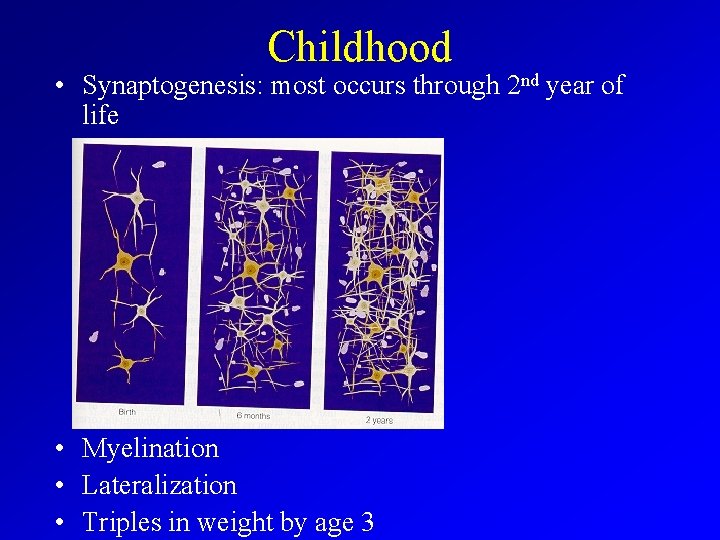
The Birth and Growth of Neurons • Most neurons formed halfway through gestation • Virtually no synaptic connections – it is experience and interaction with the environment that forms the synaptic connections • 83% of dendritic growth (connections between synapses) occurs after birth
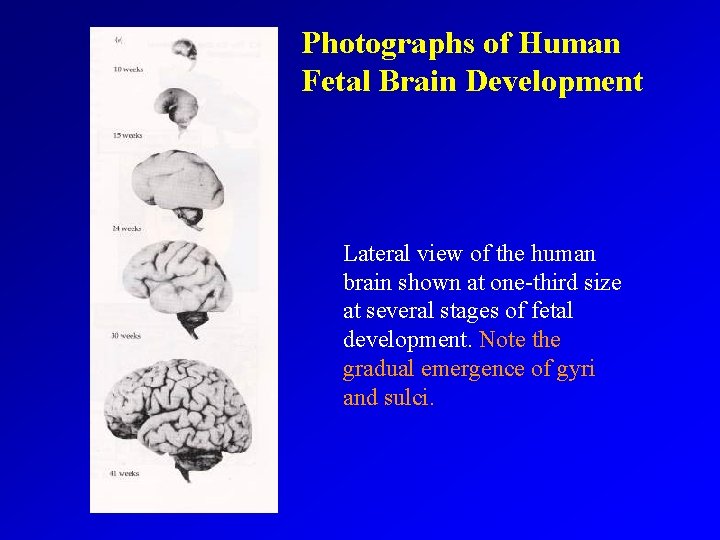
Photographs of Human Fetal Brain Development Lateral view of the human brain shown at one-third size at several stages of fetal development. Note the gradual emergence of gyri and sulci.
Childhood • Synaptogenesis: most occurs through 2 nd year of life • Myelination • Lateralization • Triples in weight by age 3
Use it or lose it – Natural Selection of Brain Wiring • Exposure to enriched environments with extra sensory and social stimulation enhances the connectivity of the synapses • However, children and adolescents can lose up to 20 million per day when not stimulated
Adolescence • Brain is full adult weight by age 16 • Continued myelination
Aging Brain • Loss of neurons • Diminished functioning in remaining neurons • Changes in tissue surrounding neurons • Declining levels of neurotransmitters • Senile plaques
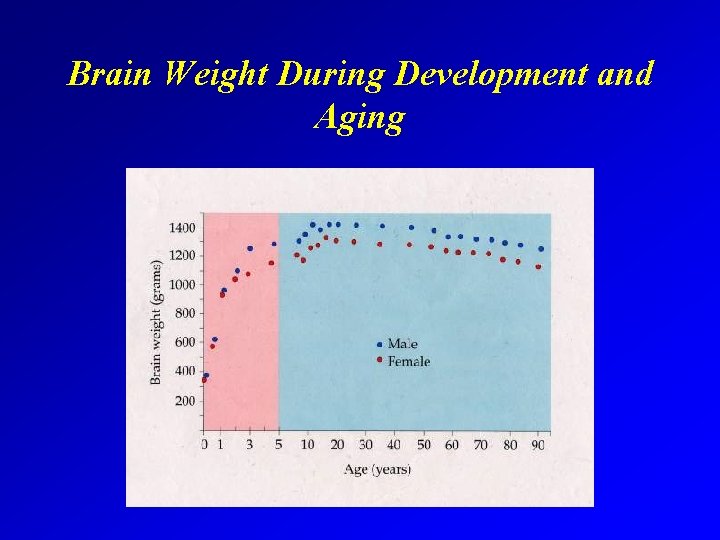
Brain Weight During Development and Aging
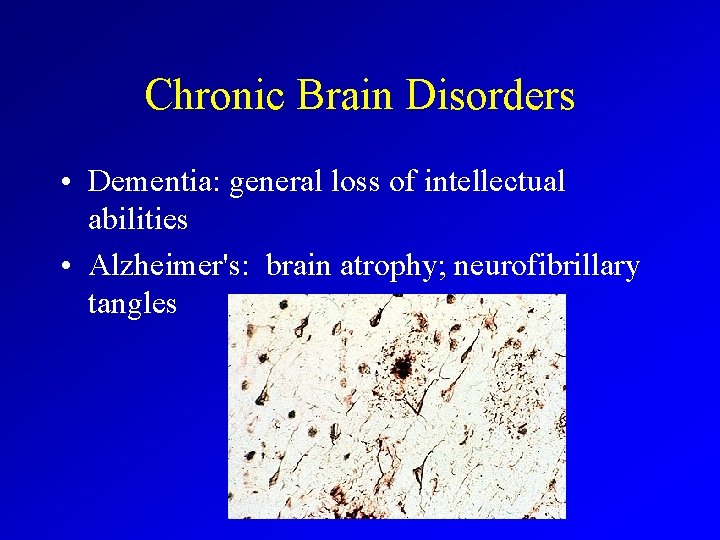
Chronic Brain Disorders • Dementia: general loss of intellectual abilities • Alzheimer's: brain atrophy; neurofibrillary tangles
Themes of Development • • Continuity vs. Discontinuity Early vs. Later Experiences Nature vs. Nurture Critical Periods