
Principles of Paving rev 8 2009 Paver System


- Slides: 44
Principles of Paving rev 8 -2009
Paver System Five Grade Control Systems Tremendous benefits to the paving contractor: ü Increase efficiency and productivity ü Control Material Quantities ü Improve smoothness and rideability ü Increase jobsite safety = The answer for perfect, smooth paving? Principles of Paving rev 8 -2009
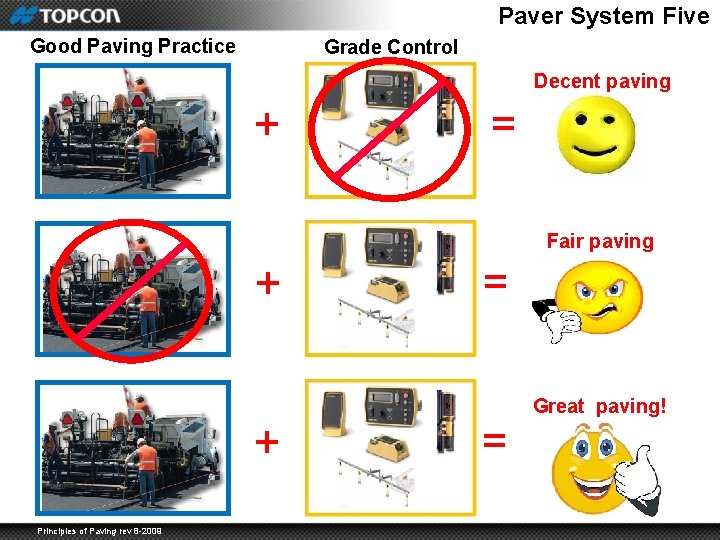
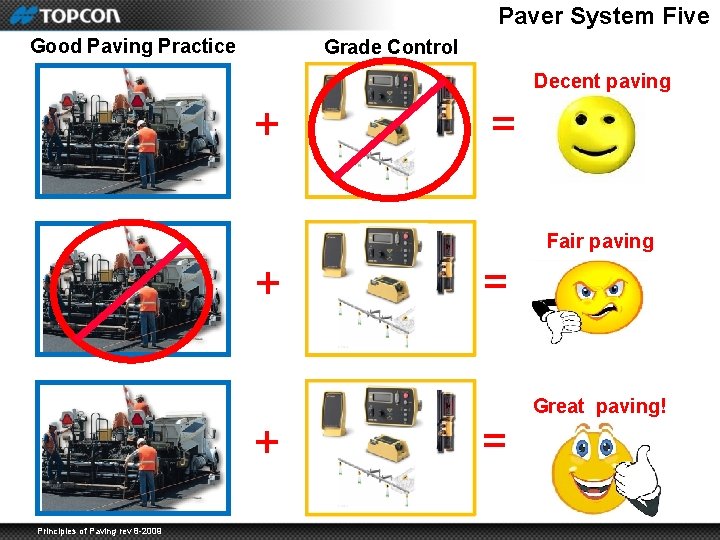
Paver System Five Good Paving Practice Grade Control Decent paving + = Fair paving + + Principles of Paving rev 8 -2009 = = Great paving!
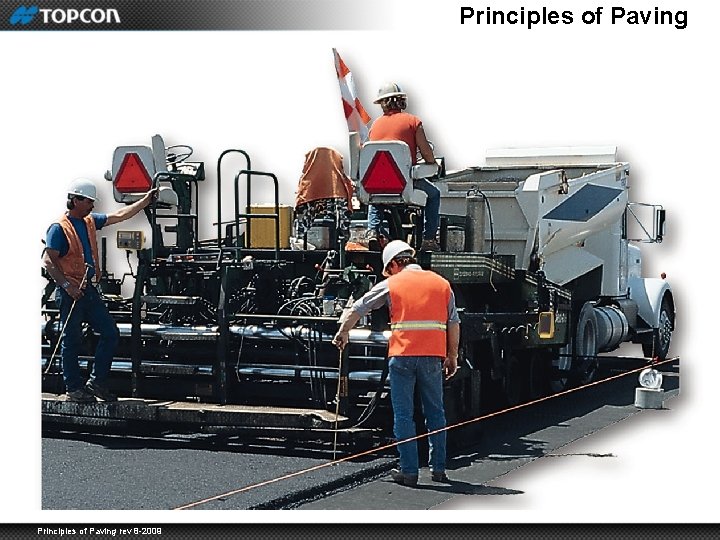
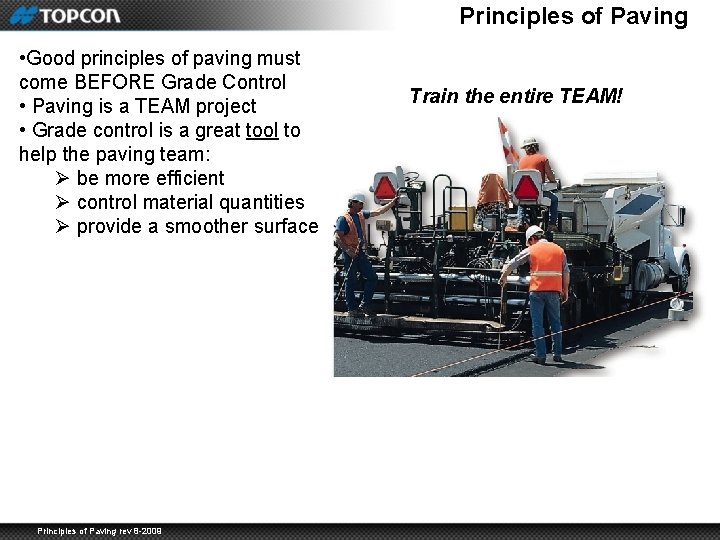
Principles of Paving • Good principles of paving must come BEFORE Grade Control • Paving is a TEAM project • Grade control is a great tool to help the paving team: Ø be more efficient Ø control material quantities Ø provide a smoother surface Principles of Paving rev 8 -2009 Train the entire TEAM!
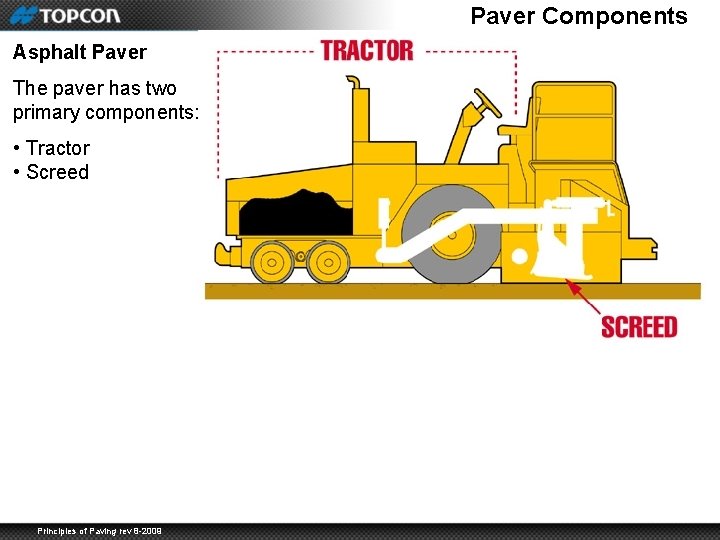
Paver Components Asphalt Paver The paver has two primary components: • Tractor • Screed Principles of Paving rev 8 -2009
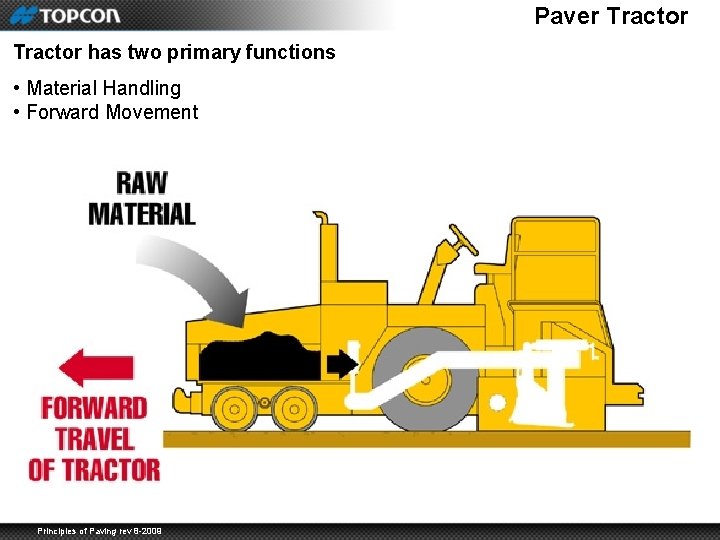
Paver Tractor has two primary functions • Material Handling • Forward Movement Principles of Paving rev 8 -2009
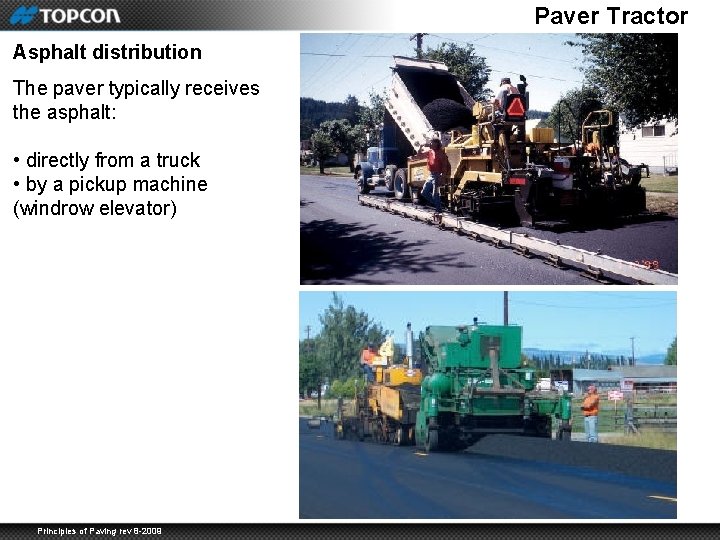
Paver Tractor Asphalt distribution The paver typically receives the asphalt: • directly from a truck • by a pickup machine (windrow elevator) Principles of Paving rev 8 -2009
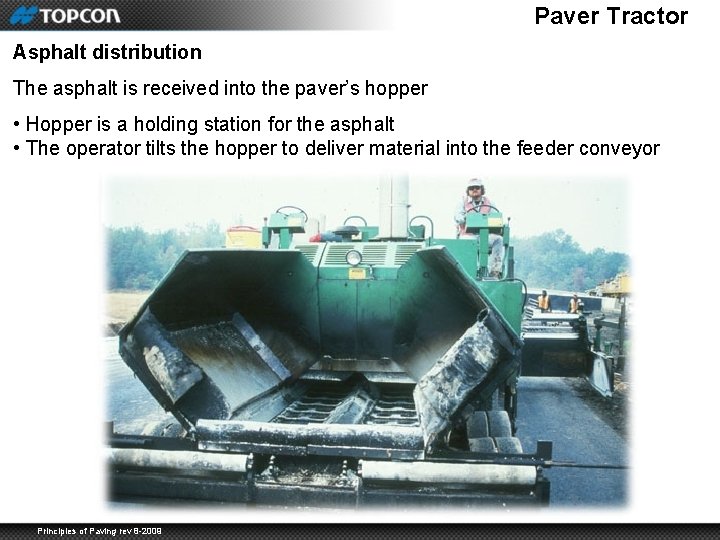
Paver Tractor Asphalt distribution The asphalt is received into the paver’s hopper • Hopper is a holding station for the asphalt • The operator tilts the hopper to deliver material into the feeder conveyor Principles of Paving rev 8 -2009
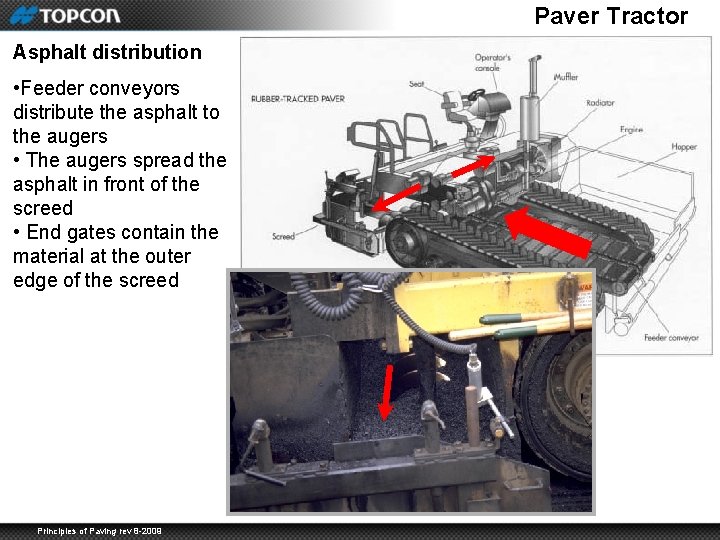
Paver Tractor Asphalt distribution • Feeder conveyors distribute the asphalt to the augers • The augers spread the asphalt in front of the screed • End gates contain the material at the outer edge of the screed Principles of Paving rev 8 -2009
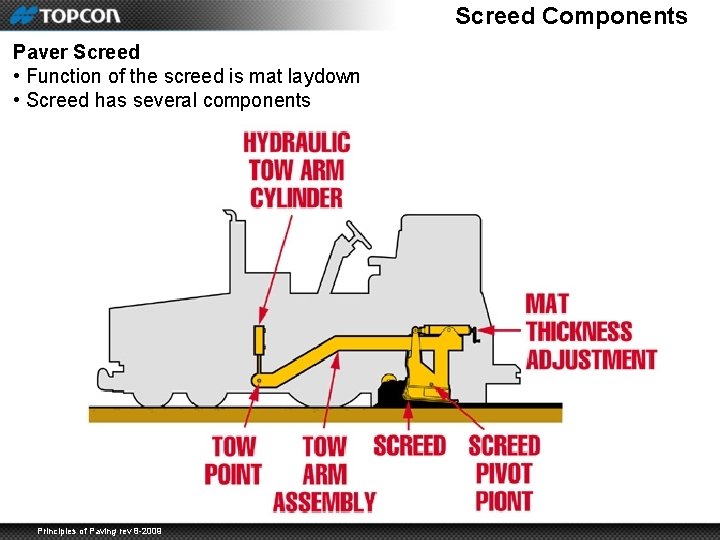
Screed Components Paver Screed • Function of the screed is mat laydown • Screed has several components Principles of Paving rev 8 -2009
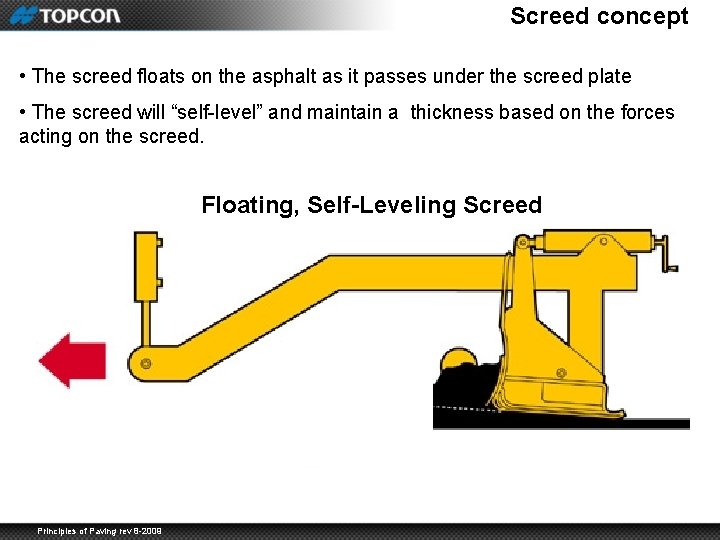
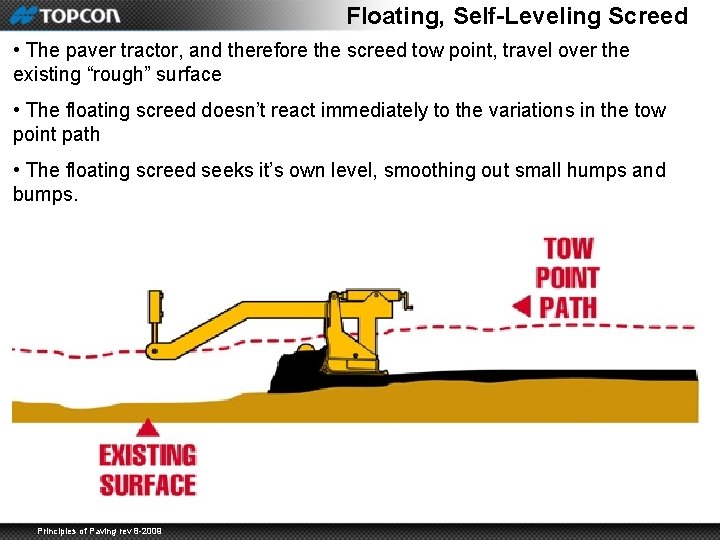
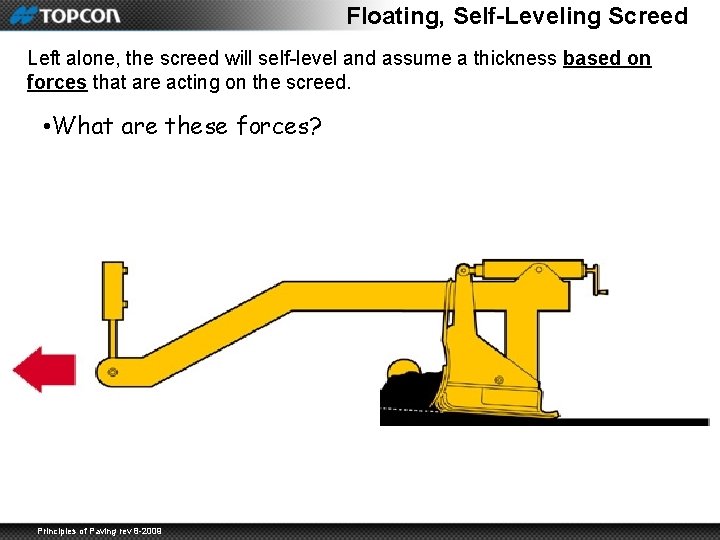
Screed concept • The screed floats on the asphalt as it passes under the screed plate • The screed will “self-level” and maintain a thickness based on the forces acting on the screed. Floating, Self-Leveling Screed Principles of Paving rev 8 -2009
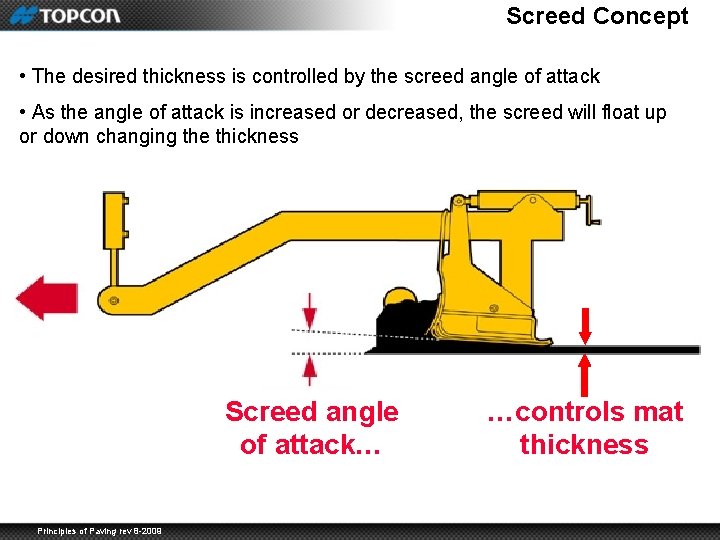
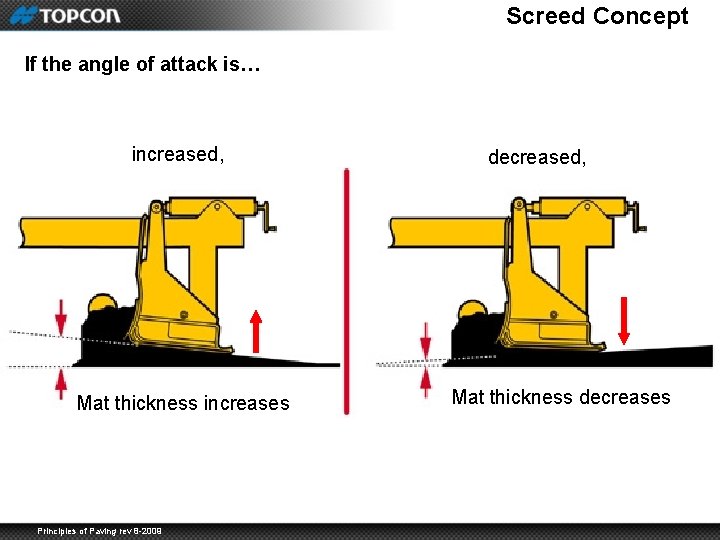
Screed Concept • The desired thickness is controlled by the screed angle of attack • As the angle of attack is increased or decreased, the screed will float up or down changing the thickness Screed angle of attack… … Principles of Paving rev 8 -2009 …controls mat thickness
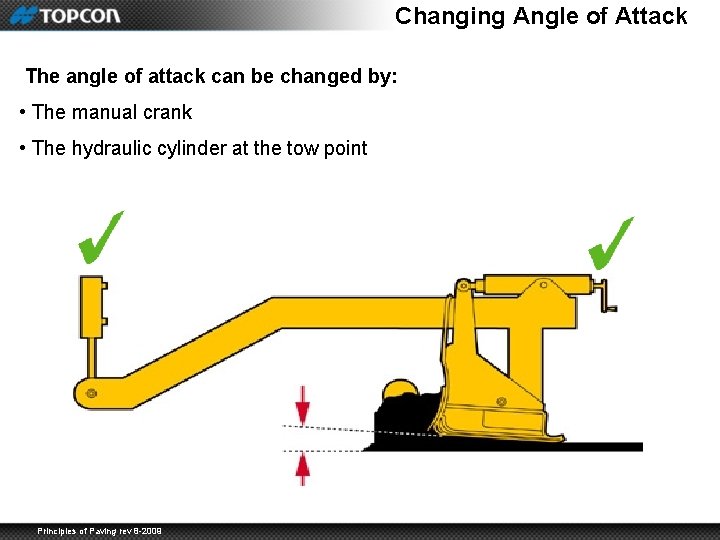
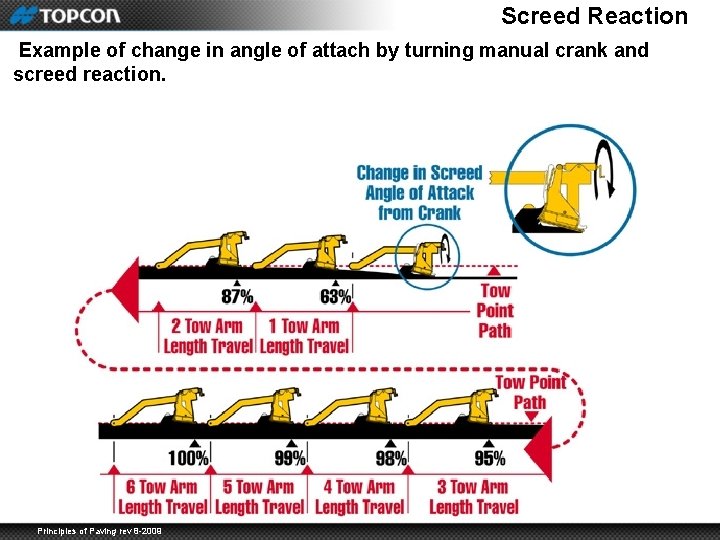
Changing Angle of Attack The angle of attack can be changed by: • The manual crank • The hydraulic cylinder at the tow point Principles of Paving rev 8 -2009
Screed Concept If the angle of attack is… increased, Mat thickness increases Principles of Paving rev 8 -2009 decreased, Mat thickness decreases
Floating, Self-Leveling Screed • The paver tractor, and therefore the screed tow point, travel over the existing “rough” surface • The floating screed doesn’t react immediately to the variations in the tow point path • The floating screed seeks it’s own level, smoothing out small humps and bumps. Principles of Paving rev 8 -2009
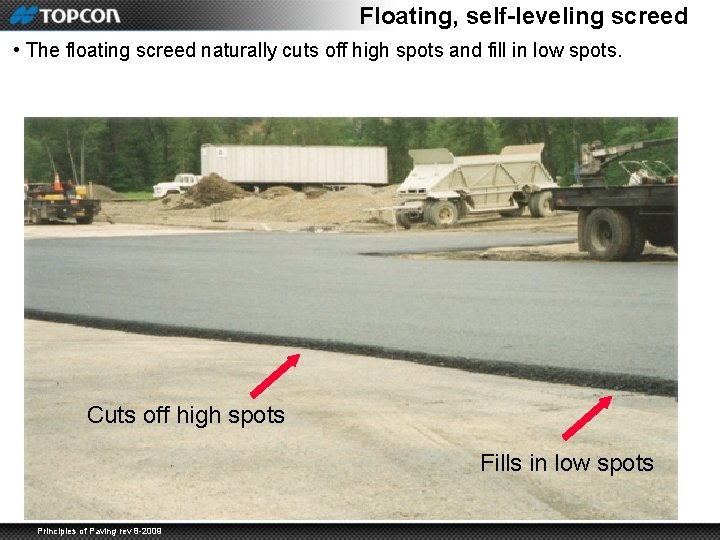
Floating, self-leveling screed • The floating screed naturally cuts off high spots and fill in low spots. Cuts off high spots Fills in low spots Principles of Paving rev 8 -2009
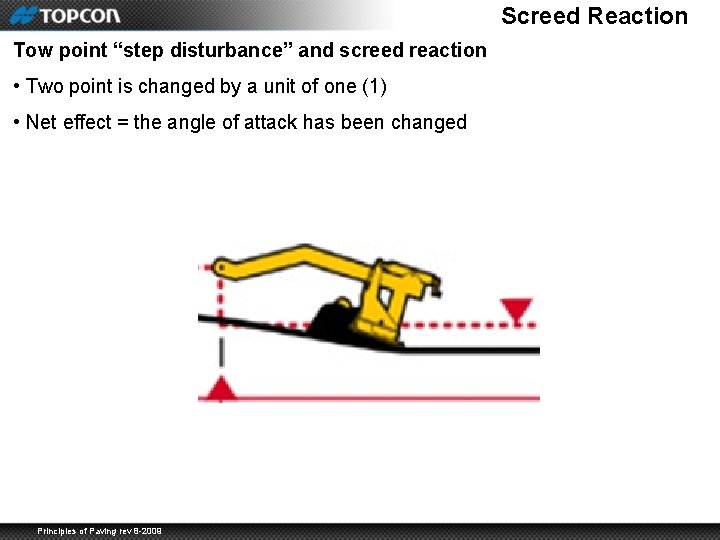
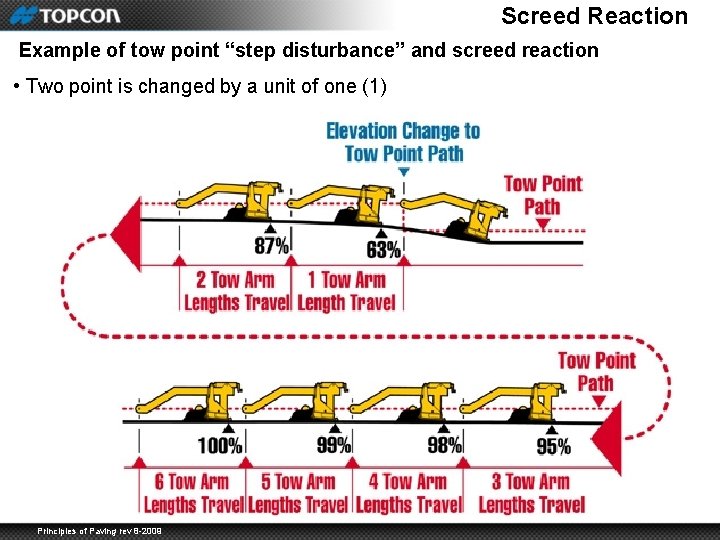
Screed Reaction Tow point “step disturbance” and screed reaction • Two point is changed by a unit of one (1) • Net effect = the angle of attack has been changed Principles of Paving rev 8 -2009
Screed Reaction Example of tow point “step disturbance” and screed reaction • Two point is changed by a unit of one (1) Principles of Paving rev 8 -2009
Screed Reaction Example of change in angle of attach by turning manual crank and screed reaction. Principles of Paving rev 8 -2009
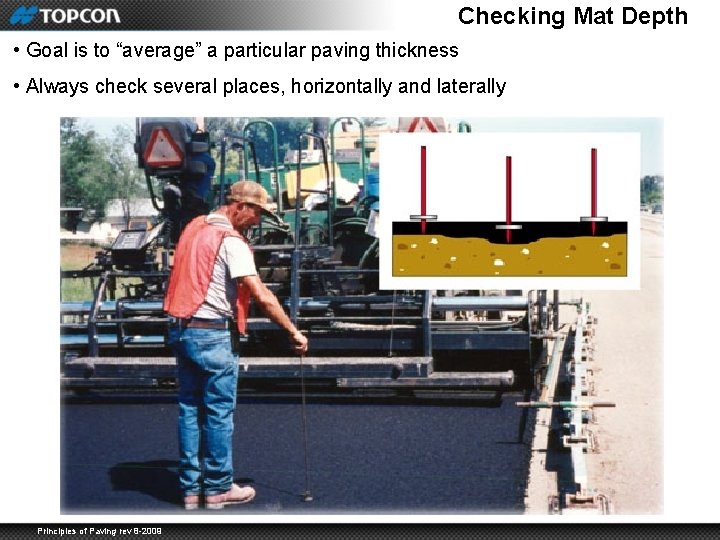
Checking Mat Depth • Goal is to “average” a particular paving thickness • Always check several places, horizontally and laterally Principles of Paving rev 8 -2009
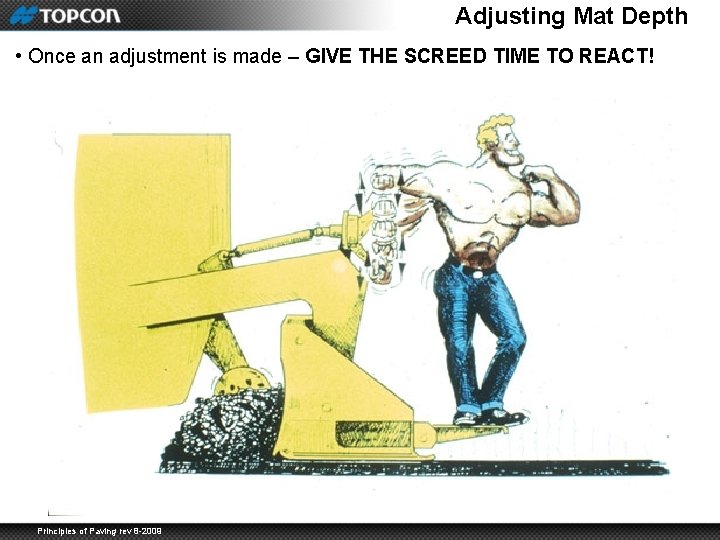
Adjusting Mat Depth • Once an adjustment is made – GIVE THE SCREED TIME TO REACT! Principles of Paving rev 8 -2009
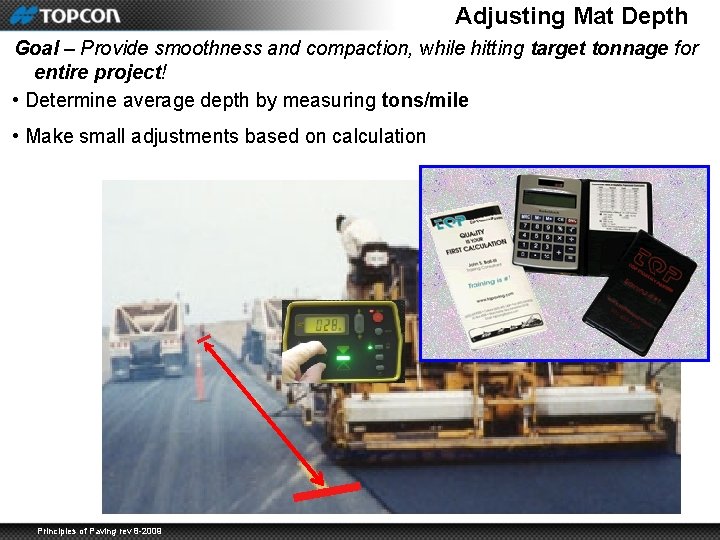
Adjusting Mat Depth Goal – Provide smoothness and compaction, while hitting target tonnage for entire project! • Determine average depth by measuring tons/mile • Make small adjustments based on calculation Principles of Paving rev 8 -2009
Floating, Self-Leveling Screed Left alone, the screed will self-level and assume a thickness based on forces that are acting on the screed. • What are these forces? Principles of Paving rev 8 -2009
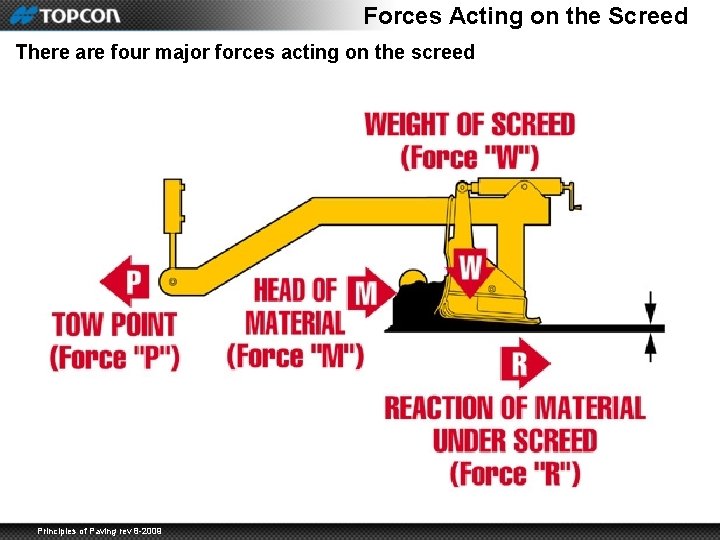
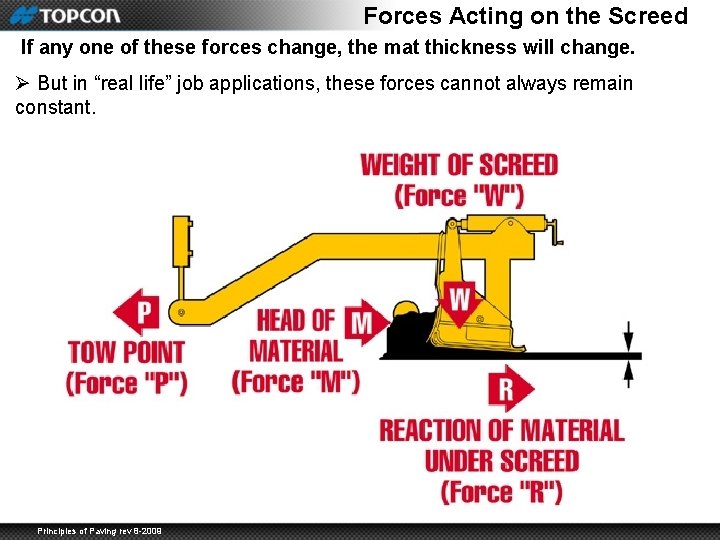
Forces Acting on the Screed There are four major forces acting on the screed Principles of Paving rev 8 -2009
Forces Acting on the Screed If any one of these forces change, the mat thickness will change. Ø But in “real life” job applications, these forces cannot always remain constant. Principles of Paving rev 8 -2009
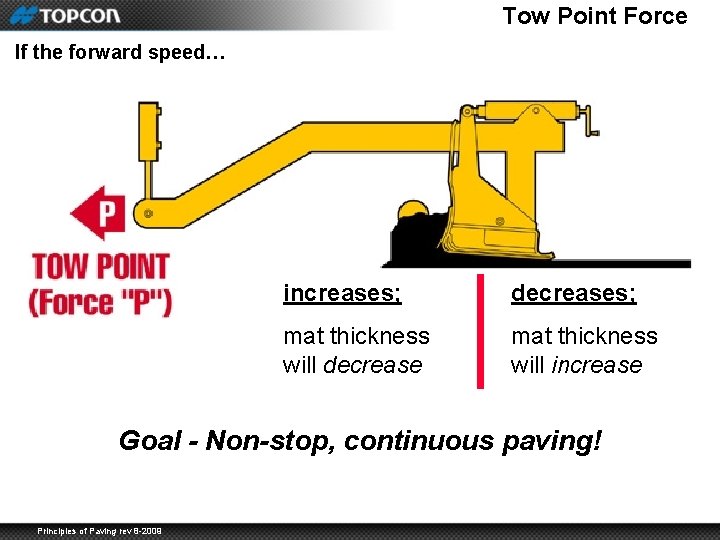
Tow Point Force If the forward speed… increases; decreases; mat thickness will decrease mat thickness will increase Goal - Non-stop, continuous paving! Principles of Paving rev 8 -2009
Tow Point Force Goal - Non-stop, continuous paving! • Determine paving speed based on plant supply in tons/hour • Regulate trucks to the paving supply and operation, not the paving operation to the trucks Plant supply = 210 tons/hour Paving speed = 25’/minute Principles of Paving rev 8 -2009
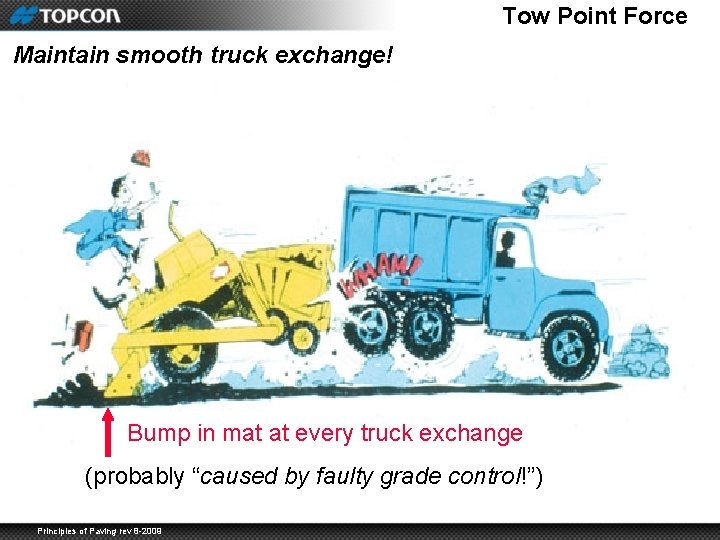
Tow Point Force Maintain smooth truck exchange! Bump in mat at every truck exchange (probably “caused by faulty grade control!”) Principles of Paving rev 8 -2009
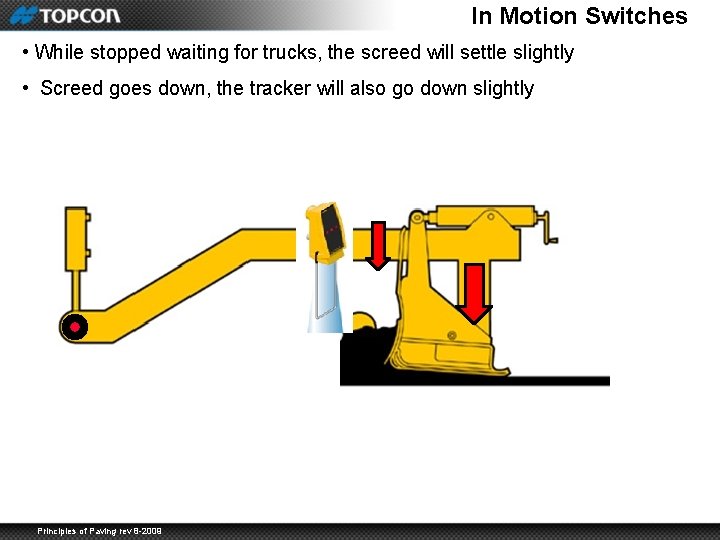
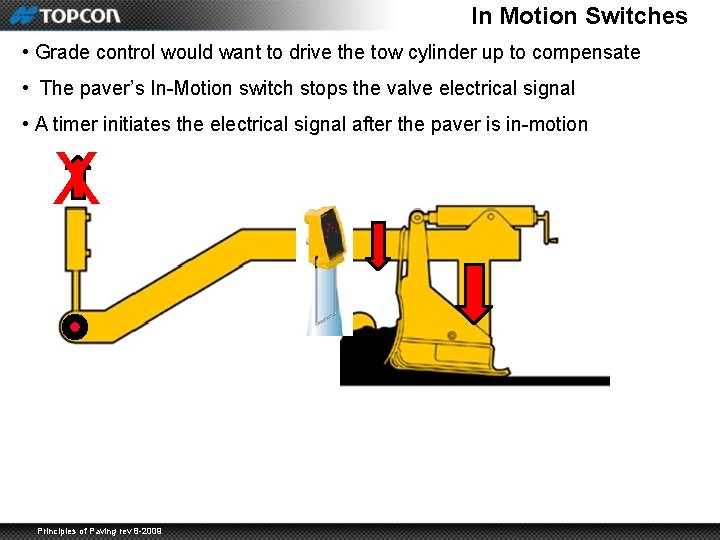
In Motion Switches • While stopped waiting for trucks, the screed will settle slightly • Screed goes down, the tracker will also go down slightly Principles of Paving rev 8 -2009
In Motion Switches • Grade control would want to drive the tow cylinder up to compensate • The paver’s In-Motion switch stops the valve electrical signal • A timer initiates the electrical signal after the paver is in-motion X Principles of Paving rev 8 -2009
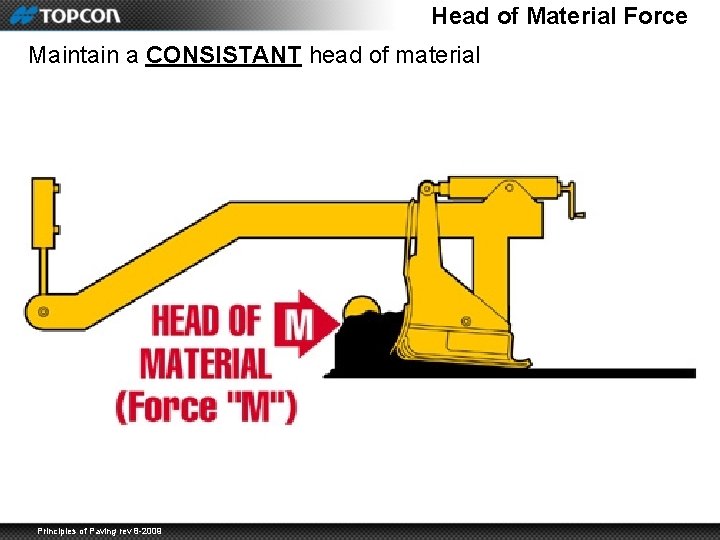
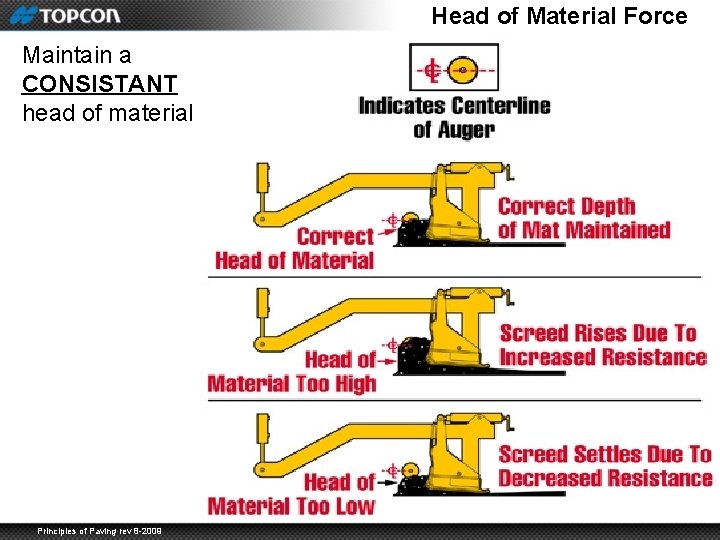
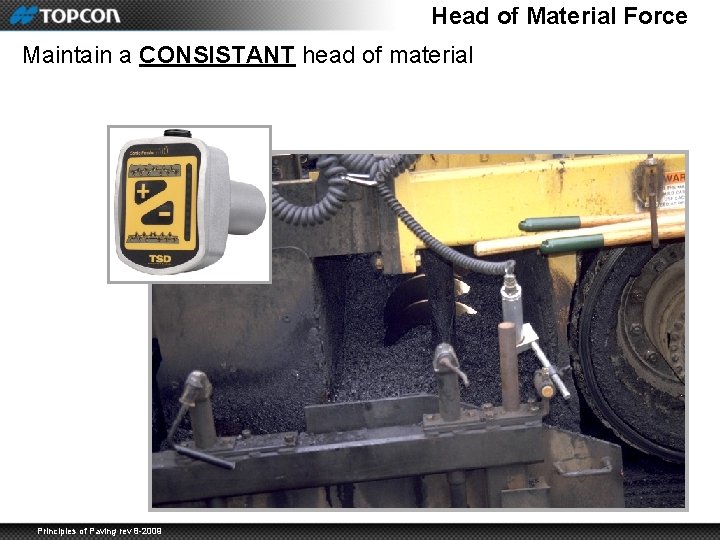
Head of Material Force Maintain a CONSISTANT head of material Principles of Paving rev 8 -2009
Head of Material Force Maintain a CONSISTANT head of material Principles of Paving rev 8 -2009
Head of Material Force Maintain a CONSISTANT head of material Principles of Paving rev 8 -2009
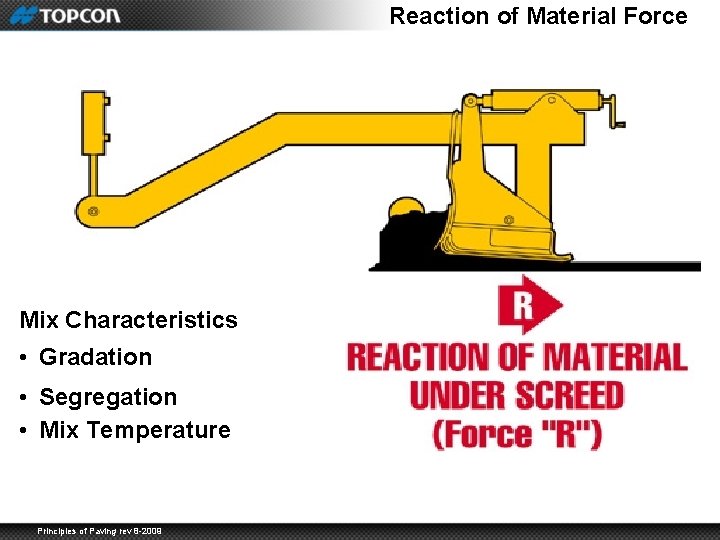
Reaction of Material Force Mix Characteristics • Gradation • Segregation • Mix Temperature Principles of Paving rev 8 -2009
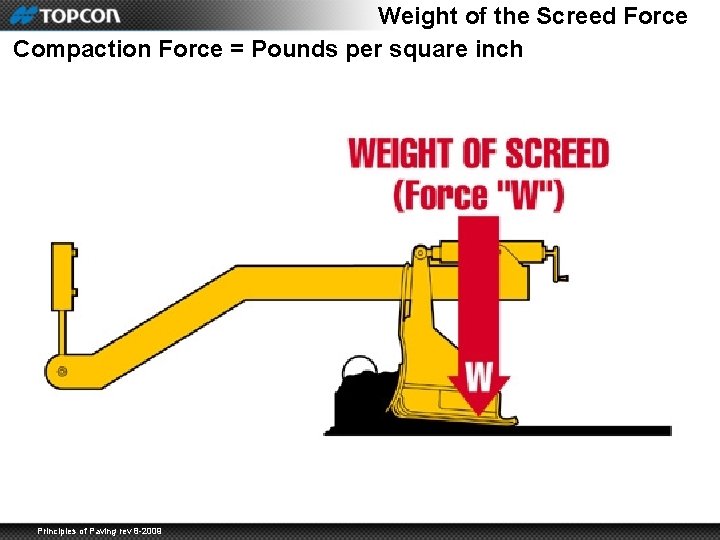
Weight of the Screed Force Compaction Force = Pounds per square inch Principles of Paving rev 8 -2009
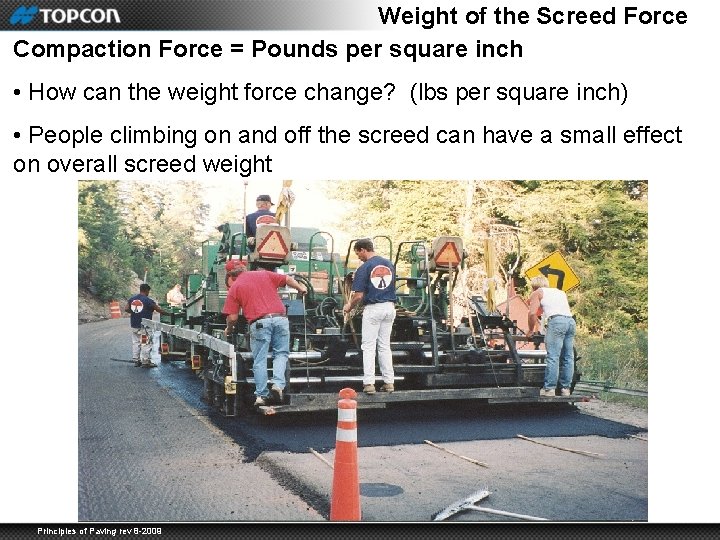
Weight of the Screed Force Compaction Force = Pounds per square inch • How can the weight force change? (lbs per square inch) • People climbing on and off the screed can have a small effect on overall screed weight Principles of Paving rev 8 -2009
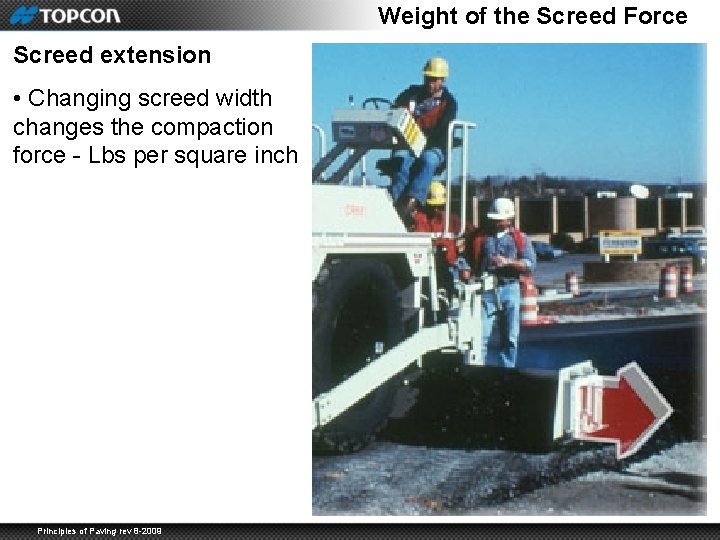
Weight of the Screed Force Screed extension • Changing screed width changes the compaction force - Lbs per square inch Principles of Paving rev 8 -2009
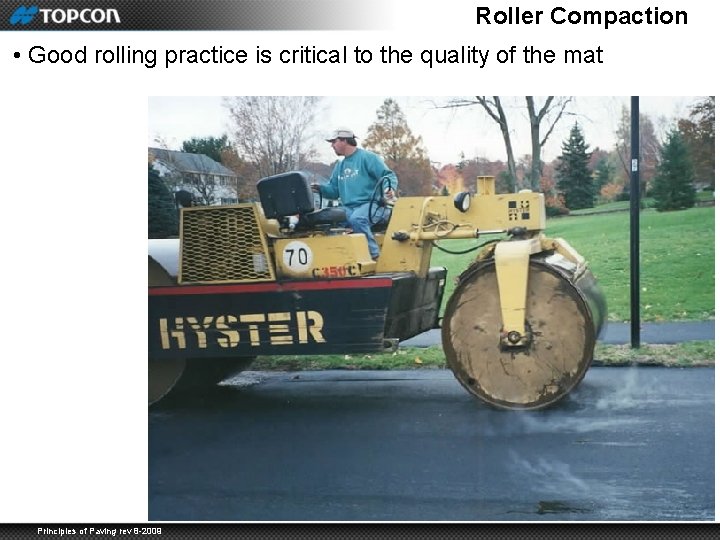
Roller Compaction • Good rolling practice is critical to the quality of the mat Principles of Paving rev 8 -2009
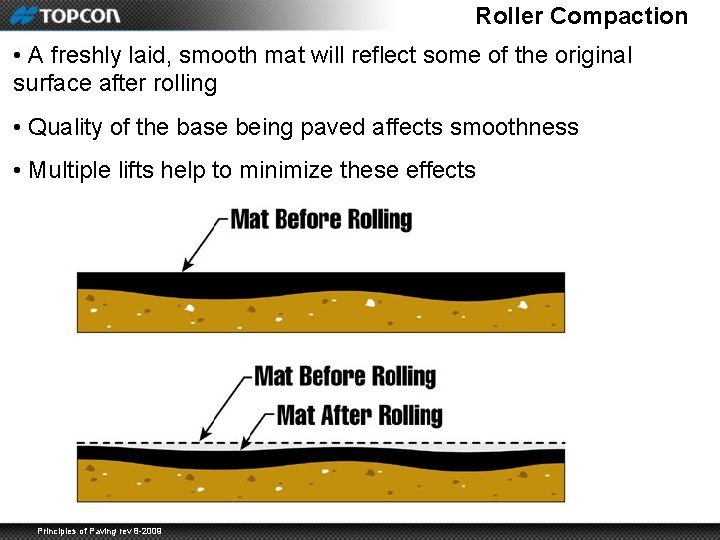
Roller Compaction • A freshly laid, smooth mat will reflect some of the original surface after rolling • Quality of the base being paved affects smoothness • Multiple lifts help to minimize these effects Principles of Paving rev 8 -2009
Mechanical condition of the Paver The paving machine itself needs to be in good shape and adjusted correctly • Feeder system • Hopper, flight chain operation and adjustment, augers, etc. • Operation and adjustment of feeder controls • No excessive wear on screed components • Screed plates • Thickness control screws, bearings, and bushings • Screed pivot point bushings • Screed adjustment • Strike off plates • Screed flatness • Screed extensions adjusted properly, elevation and slope Principles of Paving rev 8 -2009
Paver System Five Good Paving Practice Grade Control Decent paving + = Fair paving + + Principles of Paving rev 8 -2009 = = Great paving!
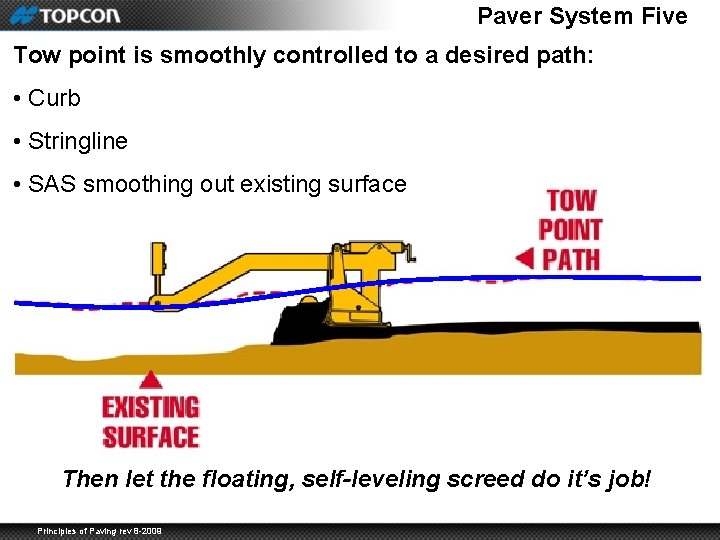
Paver System Five Tow point is smoothly controlled to a desired path: • Curb • Stringline • SAS smoothing out existing surface Then let the floating, self-leveling screed do it’s job! Principles of Paving rev 8 -2009
Best Paving Practices ü Good mechanical condition of the paver üMinimize changes in the natural forces on the screed ü Non-stop, continuous paving ü Good, smooth truck exchange ü Constant paving speed ü Constant head of material ü Consistent mix characteristics ü Good rolling techniques ü Good quality of sub-base q. Understand proper setup and operation of Grade Control Principles of Paving rev 8 -2009
Principles of Paving rev 8 -2009