
Principles of Network Analysis An Introduction Adapted from




- Slides: 19
Principles of Network Analysis An Introduction Adapted from slides by: Thomas G. Padilla Digital Humanities Librarian @thomasgpadilla Brandon Locke Director, LEADR Lab @brandontlocke
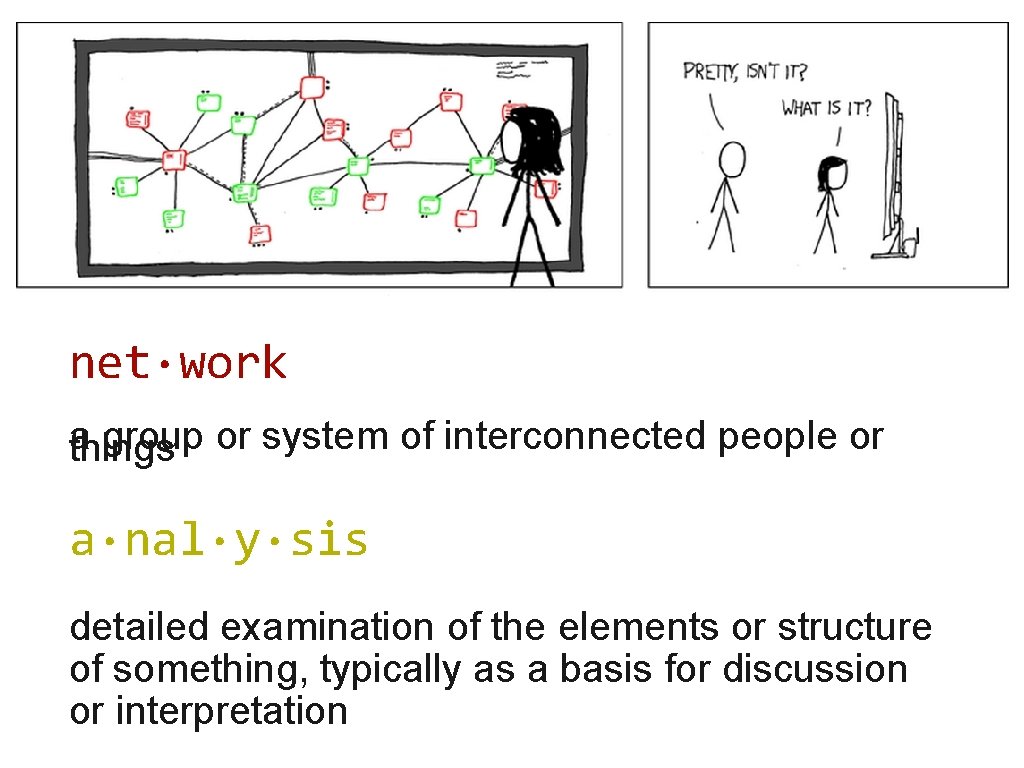
net·work a group or system of interconnected people or things a·nal·y·sis detailed examination of the elements or structure of something, typically as a basis for discussion or interpretation
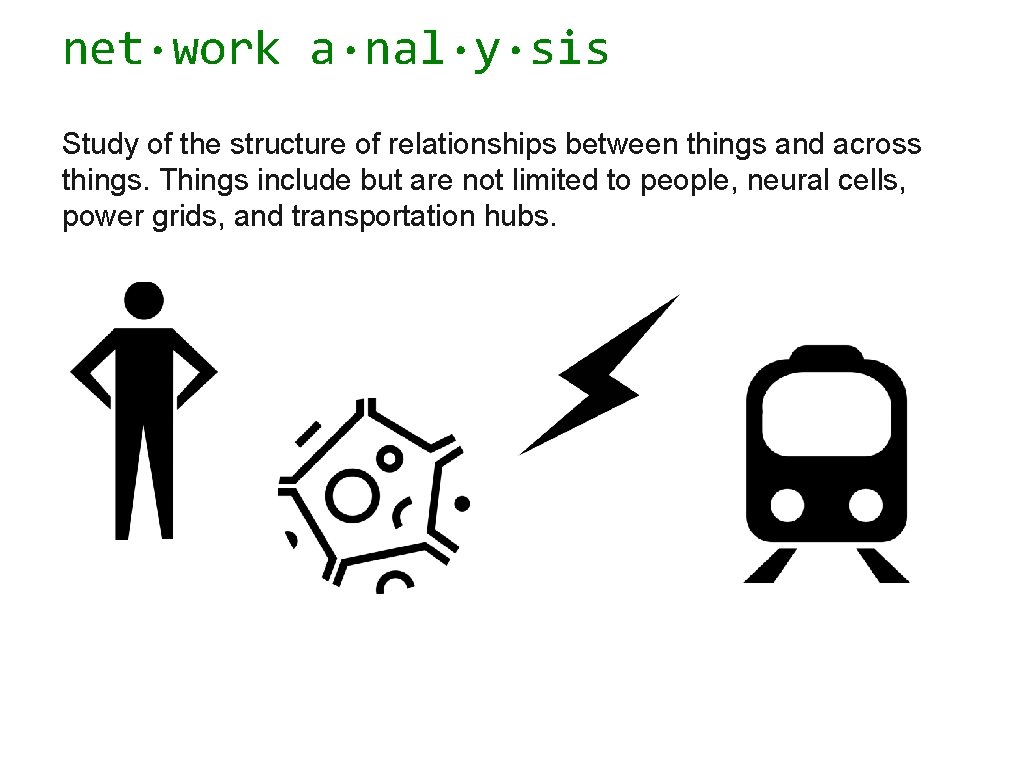
net·work a·nal·y·sis Study of the structure of relationships between things and across things. Things include but are not limited to people, neural cells, power grids, and transportation hubs.
questions What does the network look like? How connected is the network? Which are the key entities? Which are key subgroups? How does network structure affect function?
immersion. media. mit. e du
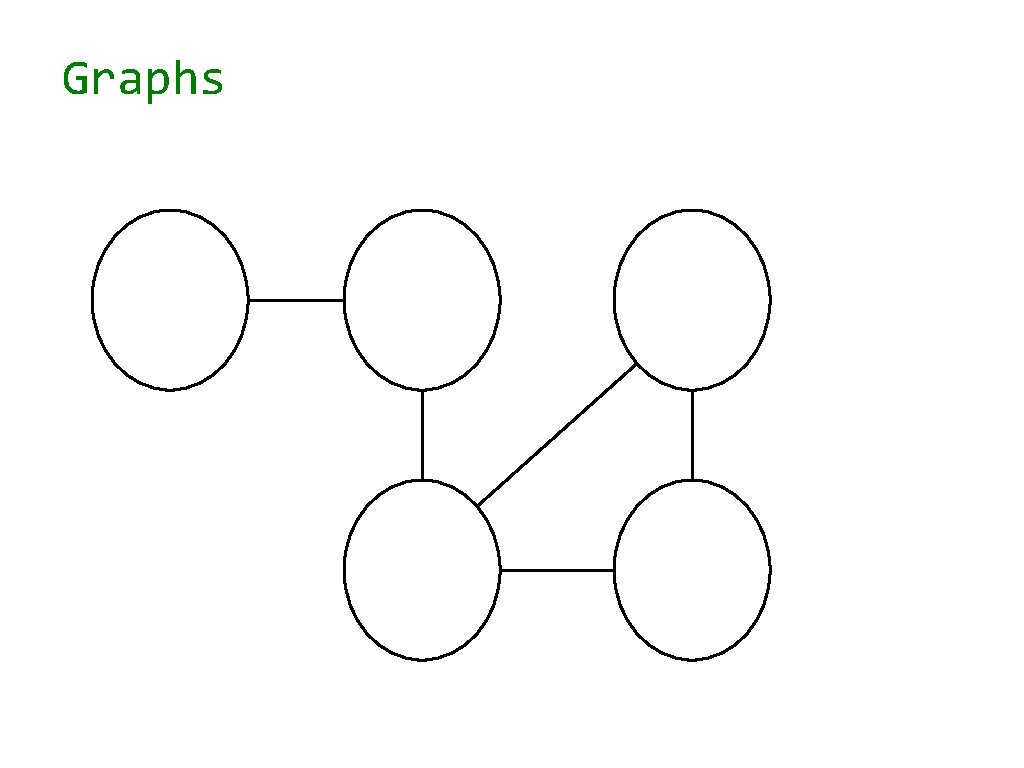
Graphs
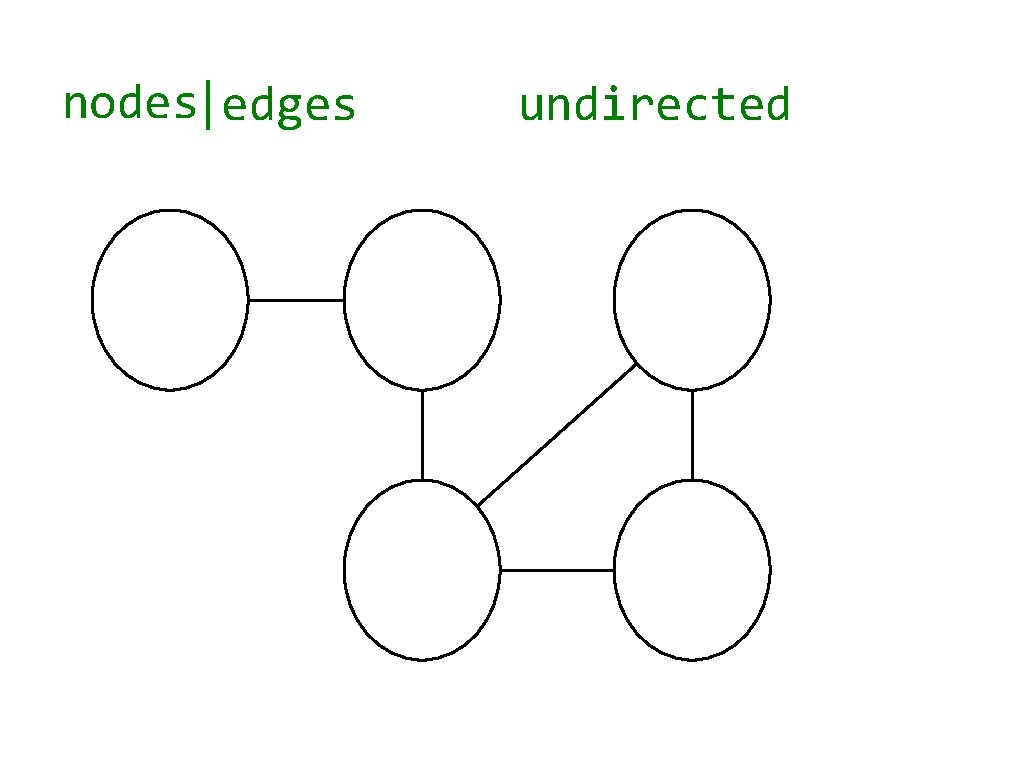
nodes|edges undirected
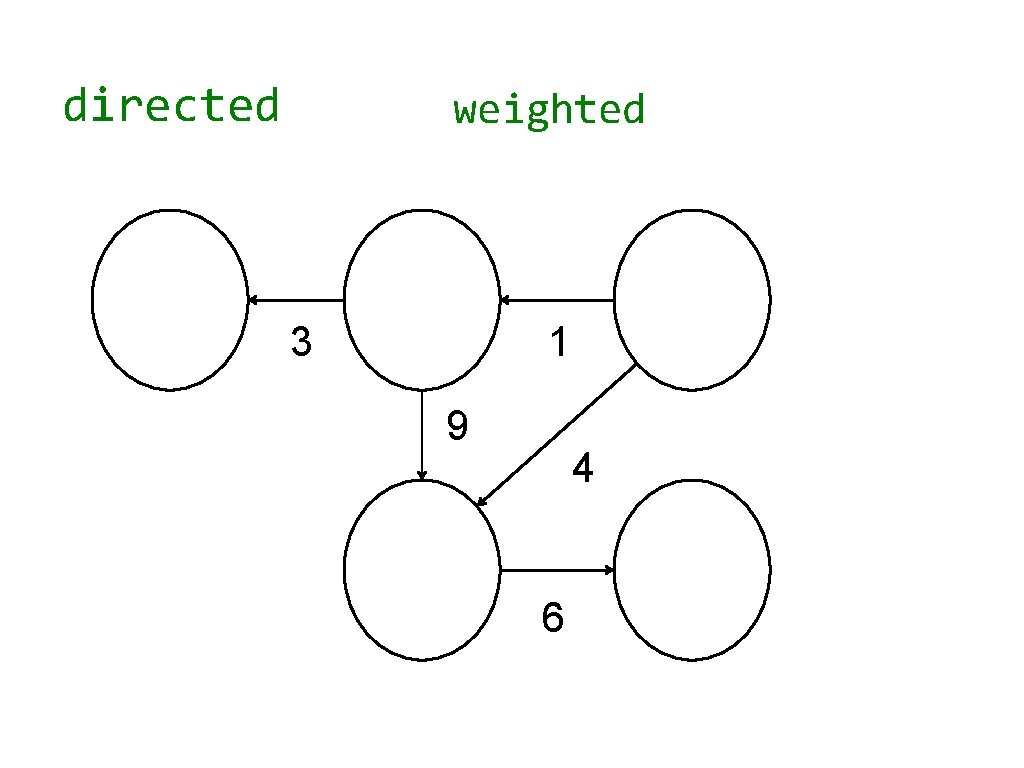
directed weighted 3 1 9 4 6
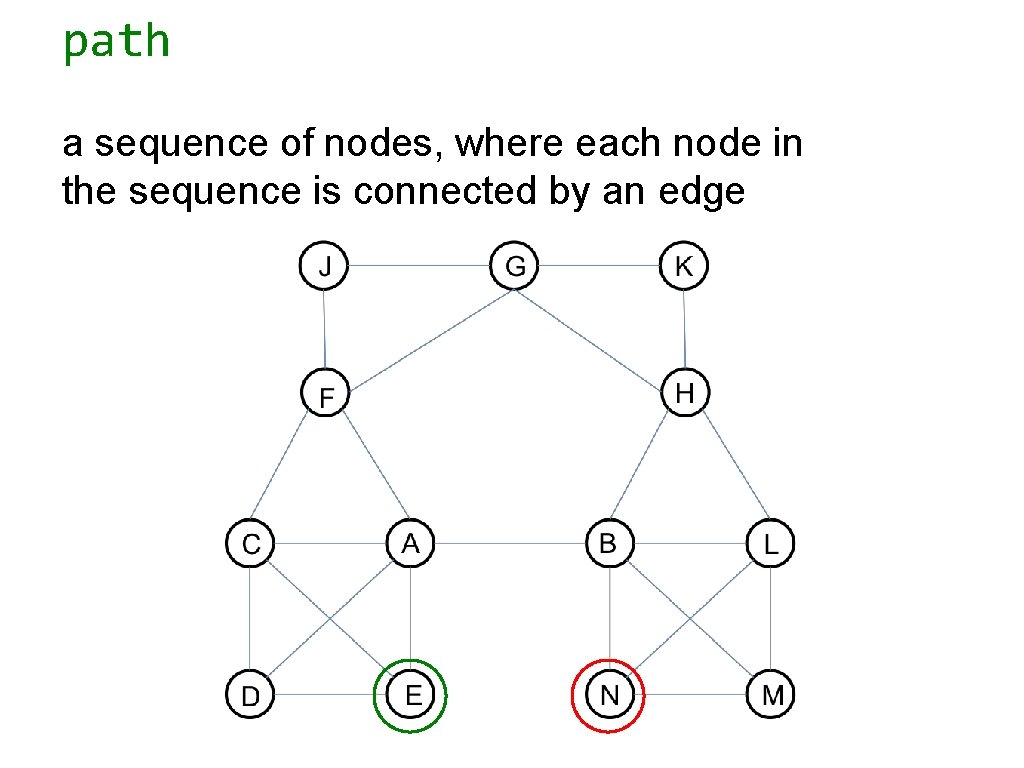
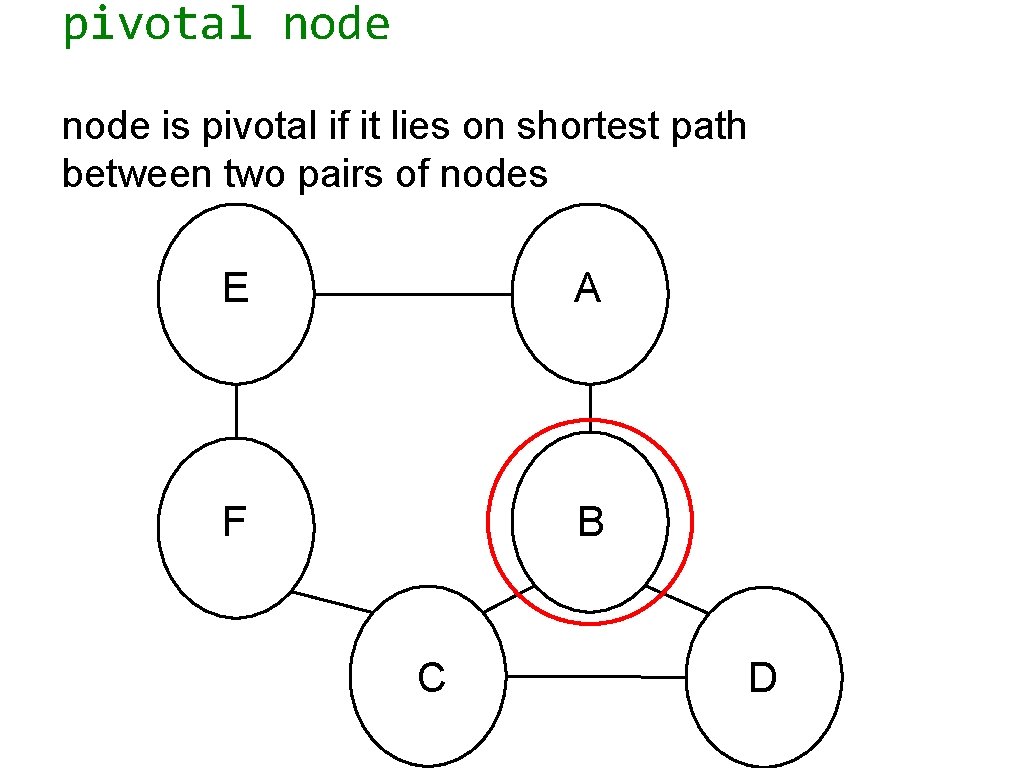
path a sequence of nodes, where each node in the sequence is connected by an edge
pivotal node is pivotal if it lies on shortest path between two pairs of nodes E A F B C D
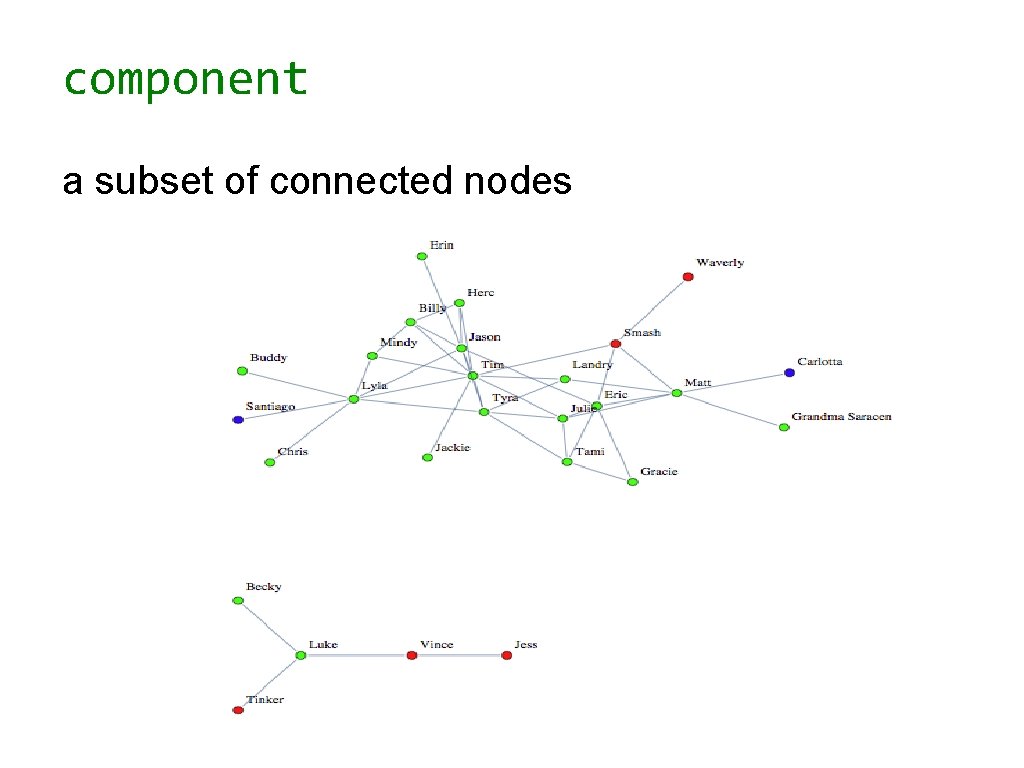
component a subset of connected nodes
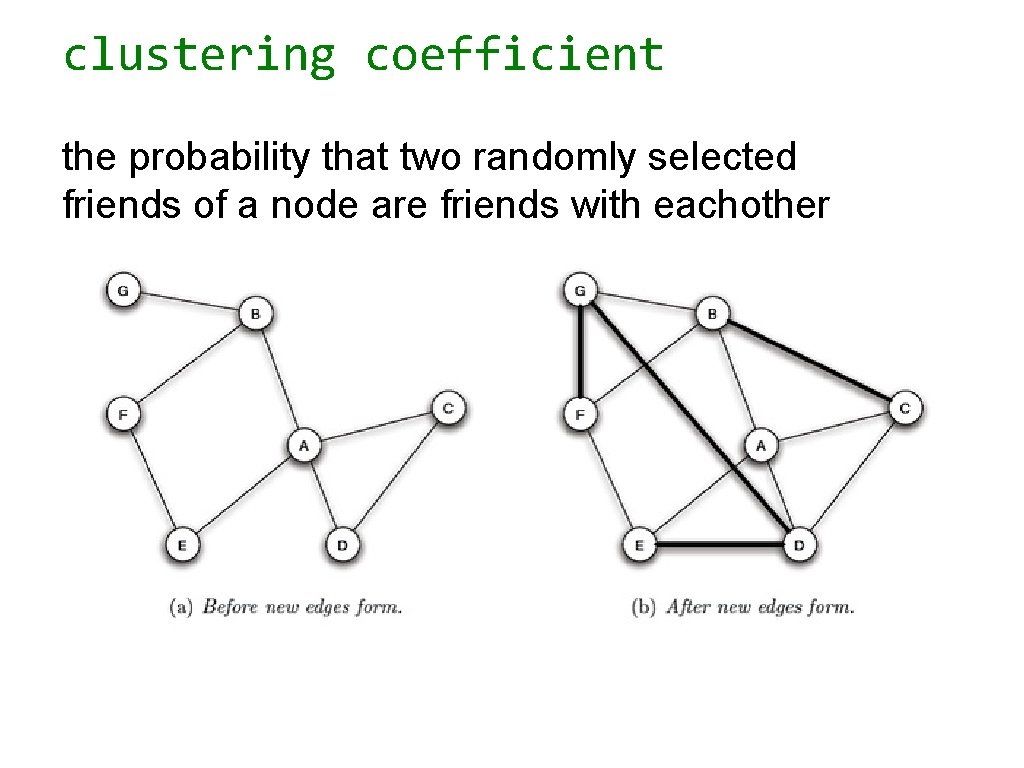
clustering coefficient the probability that two randomly selected friends of a node are friends with eachother
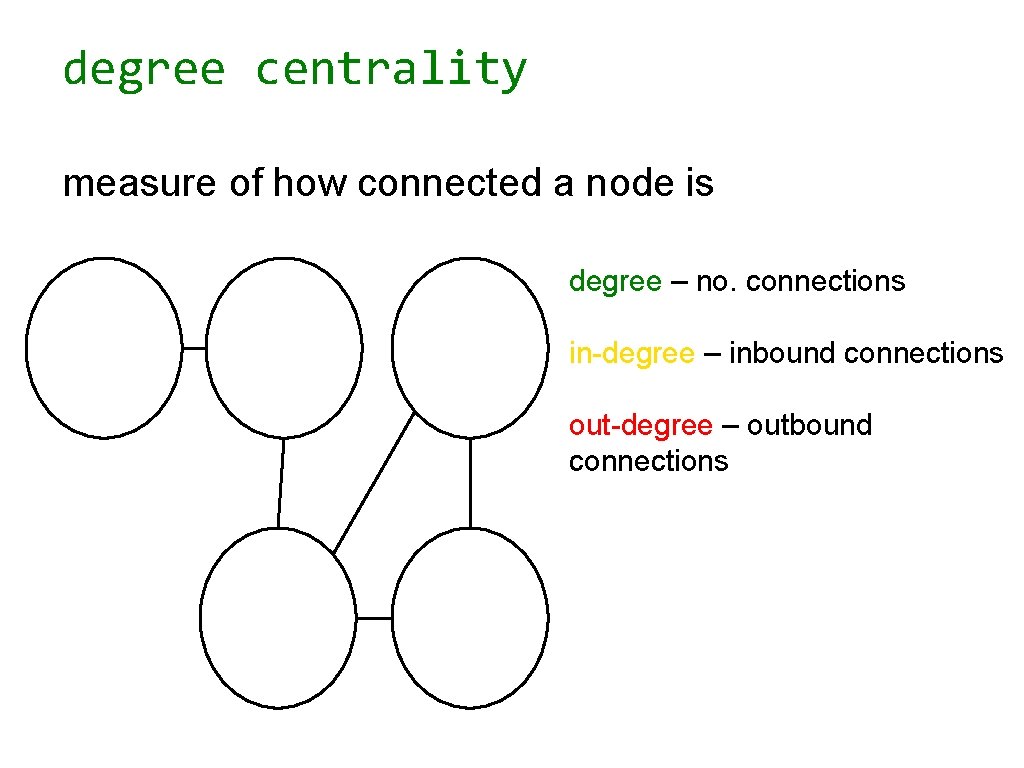
degree centrality measure of how connected a node is degree – no. connections in-degree – inbound connections out-degree – outbound connections
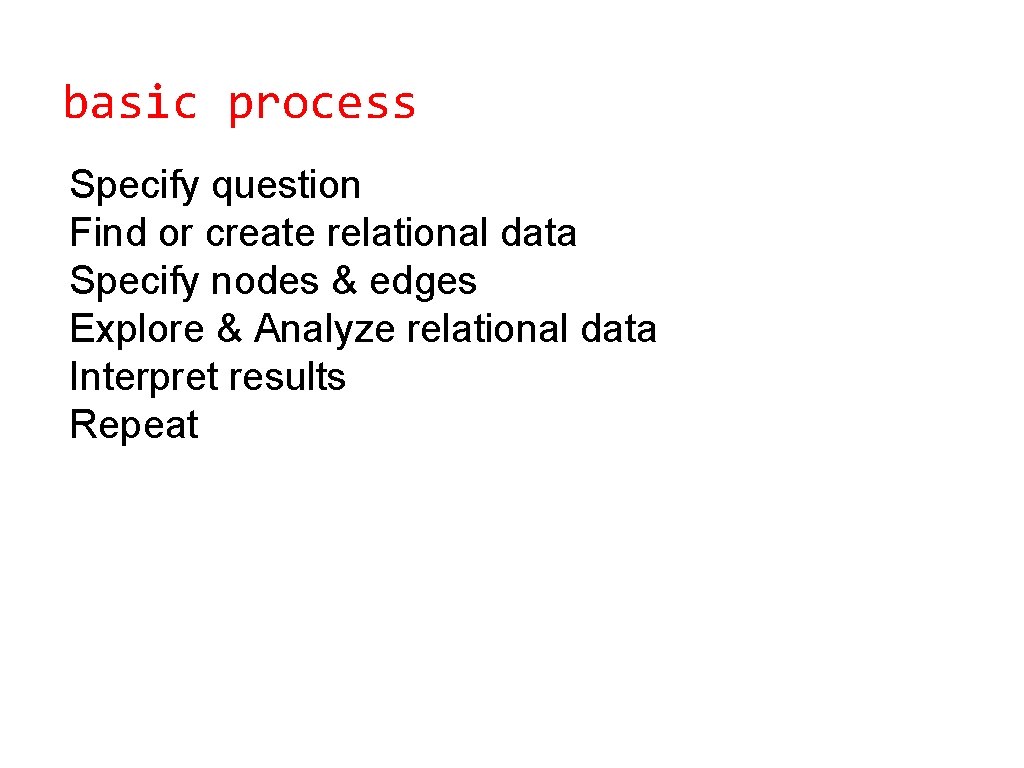
basic process Specify question Find or create relational data Specify nodes & edges Explore & Analyze relational data Interpret results Repeat
Try it! bit. ly/dh 1016 b Start by downloading the first dataset.
(I lied, we’re detouring. ) http: //raw. densitydesign. org/
(OK, now back to network analysis!) bit. ly/dh 1016 b This time download the node list and the edge list for dataset two and REMEMBER WHERE YOU PUT THEM.
Anatomy of an edge list
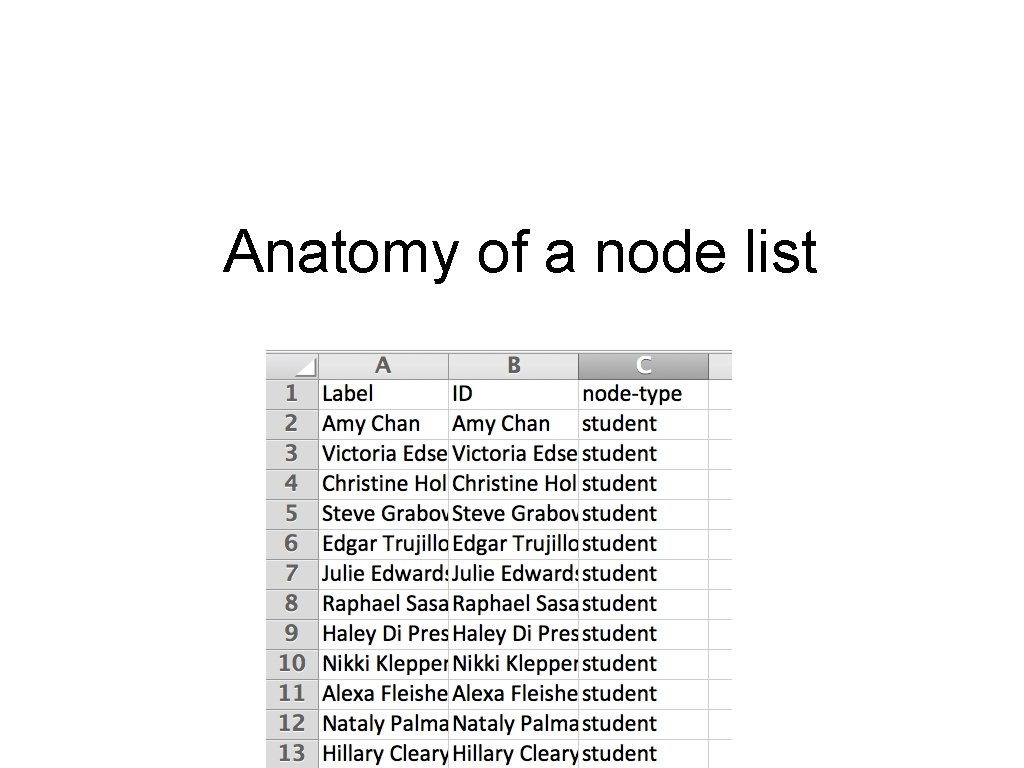
Anatomy of a node list