
PRINCIPLES OF MICROECONOMICS Chapter 10 Monopolistic Competition and
- Slides: 7
PRINCIPLES OF MICROECONOMICS Chapter 10 Monopolistic Competition and Oligopoly Power. Point Image Slideshow This Open. Stax ancillary resource is © Rice University under a CC-BY 4. 0 International license; it may be reproduced or modified but must be attributed to Open. Stax, Rice University and any changes must be noted. Any images credited to other sources are similarly available for reproduction, but must be attributed to their sources.
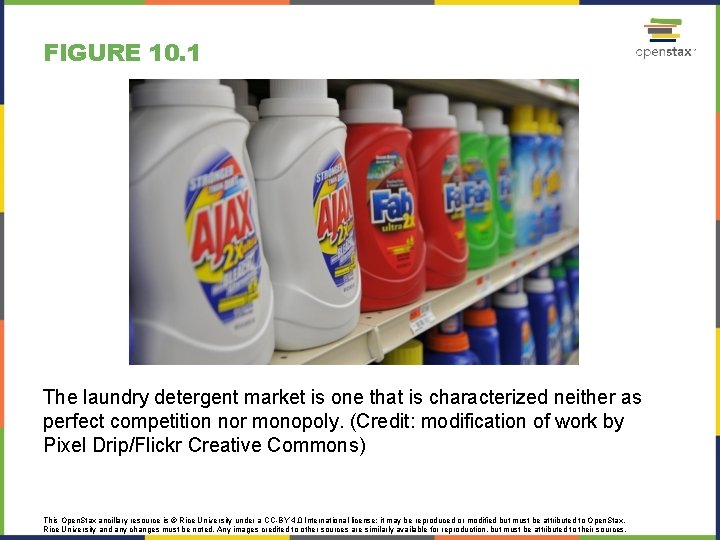
FIGURE 10. 1 The laundry detergent market is one that is characterized neither as perfect competition nor monopoly. (Credit: modification of work by Pixel Drip/Flickr Creative Commons) This Open. Stax ancillary resource is © Rice University under a CC-BY 4. 0 International license; it may be reproduced or modified but must be attributed to Open. Stax, Rice University and any changes must be noted. Any images credited to other sources are similarly available for reproduction, but must be attributed to their sources.
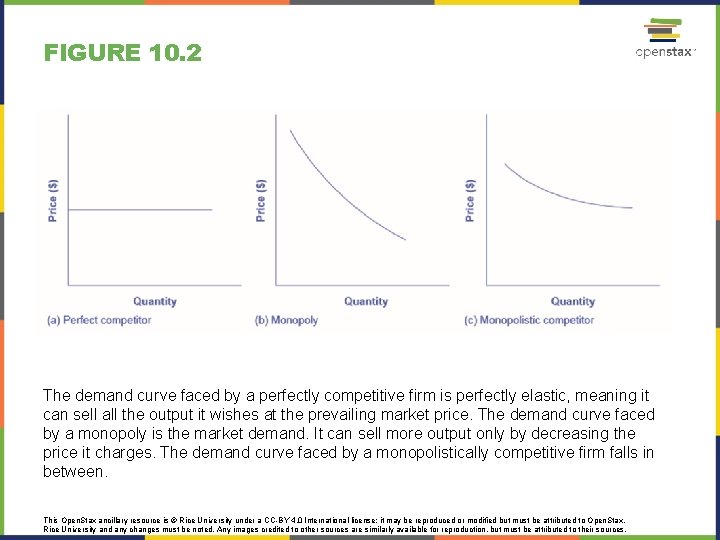
FIGURE 10. 2 The demand curve faced by a perfectly competitive firm is perfectly elastic, meaning it can sell all the output it wishes at the prevailing market price. The demand curve faced by a monopoly is the market demand. It can sell more output only by decreasing the price it charges. The demand curve faced by a monopolistically competitive firm falls in between. This Open. Stax ancillary resource is © Rice University under a CC-BY 4. 0 International license; it may be reproduced or modified but must be attributed to Open. Stax, Rice University and any changes must be noted. Any images credited to other sources are similarly available for reproduction, but must be attributed to their sources.
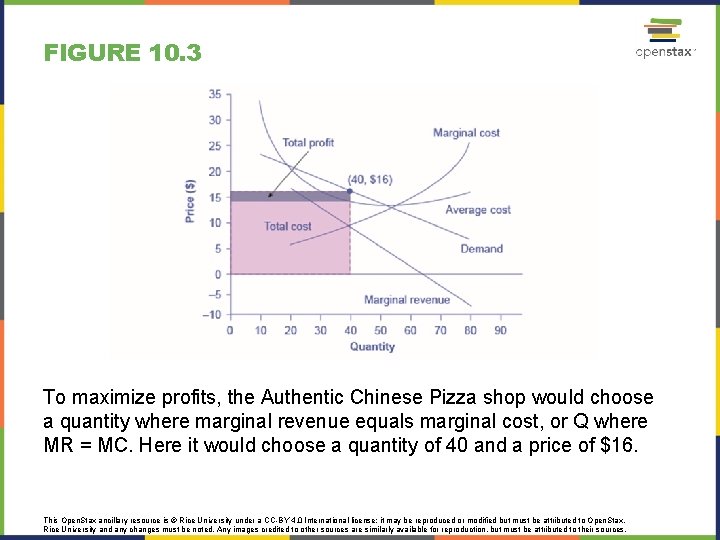
FIGURE 10. 3 To maximize profits, the Authentic Chinese Pizza shop would choose a quantity where marginal revenue equals marginal cost, or Q where MR = MC. Here it would choose a quantity of 40 and a price of $16. This Open. Stax ancillary resource is © Rice University under a CC-BY 4. 0 International license; it may be reproduced or modified but must be attributed to Open. Stax, Rice University and any changes must be noted. Any images credited to other sources are similarly available for reproduction, but must be attributed to their sources.
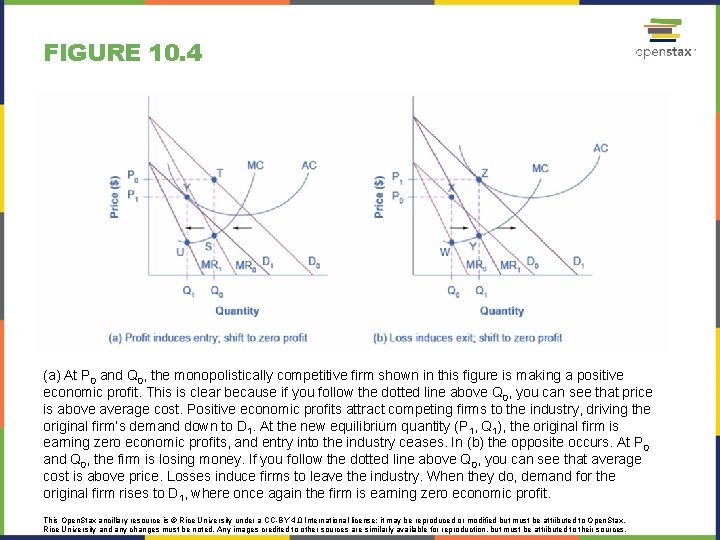
FIGURE 10. 4 (a) At P 0 and Q 0, the monopolistically competitive firm shown in this figure is making a positive economic profit. This is clear because if you follow the dotted line above Q 0, you can see that price is above average cost. Positive economic profits attract competing firms to the industry, driving the original firm’s demand down to D 1. At the new equilibrium quantity (P 1, Q 1), the original firm is earning zero economic profits, and entry into the industry ceases. In (b) the opposite occurs. At P 0 and Q 0, the firm is losing money. If you follow the dotted line above Q 0, you can see that average cost is above price. Losses induce firms to leave the industry. When they do, demand for the original firm rises to D 1, where once again the firm is earning zero economic profit. This Open. Stax ancillary resource is © Rice University under a CC-BY 4. 0 International license; it may be reproduced or modified but must be attributed to Open. Stax, Rice University and any changes must be noted. Any images credited to other sources are similarly available for reproduction, but must be attributed to their sources.
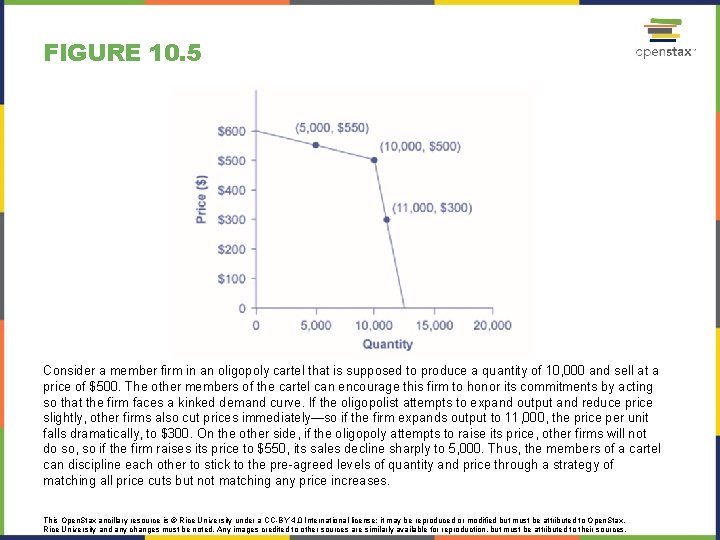
FIGURE 10. 5 Consider a member firm in an oligopoly cartel that is supposed to produce a quantity of 10, 000 and sell at a price of $500. The other members of the cartel can encourage this firm to honor its commitments by acting so that the firm faces a kinked demand curve. If the oligopolist attempts to expand output and reduce price slightly, other firms also cut prices immediately—so if the firm expands output to 11, 000, the price per unit falls dramatically, to $300. On the other side, if the oligopoly attempts to raise its price, other firms will not do so, so if the firm raises its price to $550, its sales decline sharply to 5, 000. Thus, the members of a cartel can discipline each other to stick to the pre-agreed levels of quantity and price through a strategy of matching all price cuts but not matching any price increases. This Open. Stax ancillary resource is © Rice University under a CC-BY 4. 0 International license; it may be reproduced or modified but must be attributed to Open. Stax, Rice University and any changes must be noted. Any images credited to other sources are similarly available for reproduction, but must be attributed to their sources.
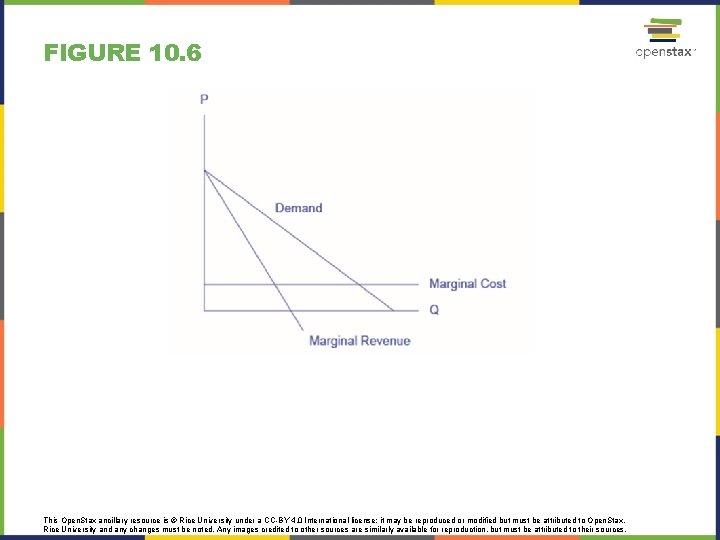
FIGURE 10. 6 This Open. Stax ancillary resource is © Rice University under a CC-BY 4. 0 International license; it may be reproduced or modified but must be attributed to Open. Stax, Rice University and any changes must be noted. Any images credited to other sources are similarly available for reproduction, but must be attributed to their sources.