
Principles of metabolism regulation Molecular mechanisms of hormonal
Principles of metabolism regulation Molecular mechanisms of hormonal signal transduction

Ways of cell communication Autocrine way of signal trunsduction Secretory cell secretes a hormone into extracellular medium. A hormone binds to the same cell inducing physiological response. Secretory cell is also a target for its own hormone

Ways of cell communication Paracrine way of signal trunsduction There are several types of cells in an organ/tissue. Secretory cells release first messenger (hormone) into extracellular medium. First messenger can reach an adjacent cell and combine with its receptors Secretory cell
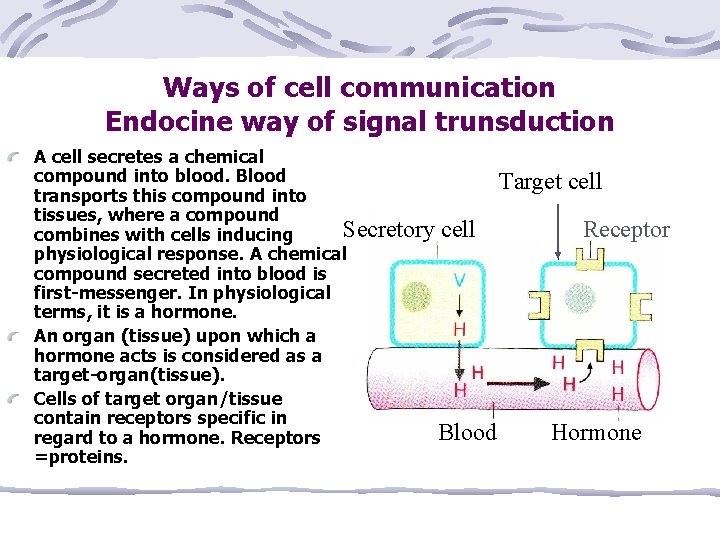
Ways of cell communication Endocine way of signal trunsduction A cell secretes a chemical compound into blood. Blood Target cell transports this compound into tissues, where a compound Secretory cell Receptor combines with cells inducing physiological response. A chemical compound secreted into blood is first-messenger. In physiological terms, it is a hormone. An organ (tissue) upon which a hormone acts is considered as a target-organ(tissue). Cells of target organ/tissue contain receptors specific in Blood Hormone regard to a hormone. Receptors =proteins.
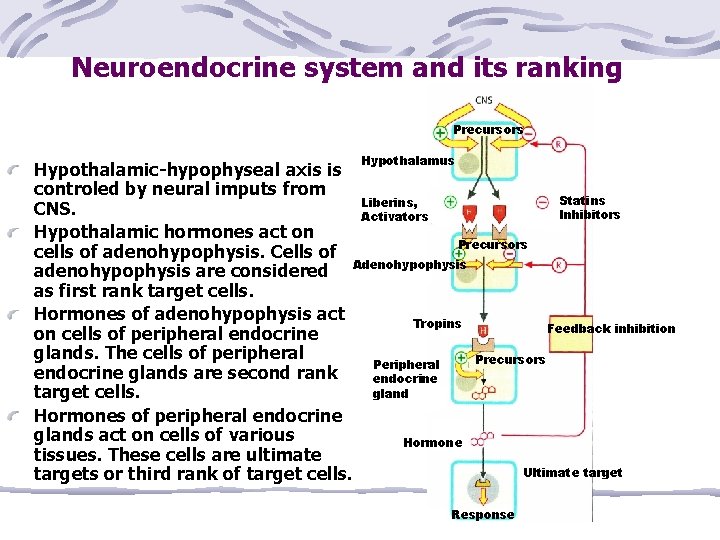
Neuroendocrine system and its ranking Precursors Hypothalamus Hypothalamic-hypophyseal axis is controled by neural imputs from Statins Liberins, CNS. Inhibitors Activators Hypothalamic hormones act on Precursors cells of adenohypophysis. Cells of adenohypophysis are considered Adenohypophysis as first rank target cells. Hormones of adenohypophysis act Tropins Feedback inhibition on cells of peripheral endocrine glands. The cells of peripheral Precursors Peripheral endocrine glands are second rank endocrine gland target cells. Hormones of peripheral endocrine glands act on cells of various Hormone tissues. These cells are ultimate Ultimate targets or third rank of target cells. Response
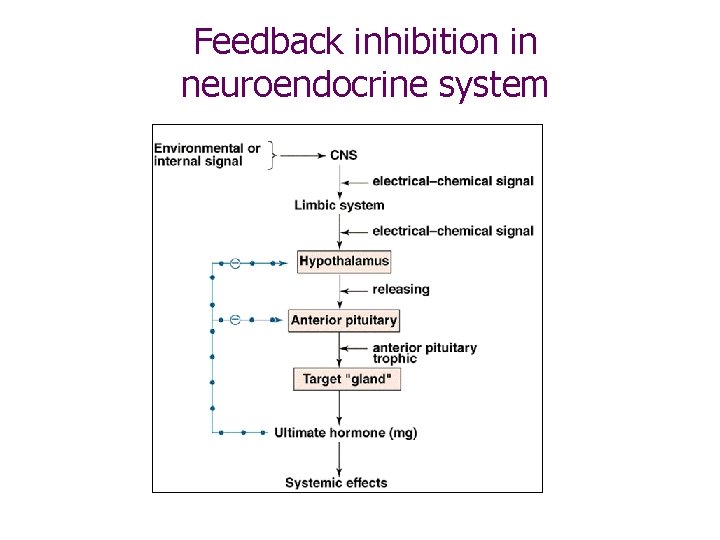
Feedback inhibition in neuroendocrine system

Hypothetical model of target cell Receptors in plasma membrane Complex of receptor and hormone Nucleus Plasma membrane Cytosole Receptors for calcitriol, thyroid hormones and retinoic acid Steroid Receptor in cytosol
Functional classification of plasma membrane reseptors Receptors linked to adenylate cyclase system. Cyclic adenosine monophosphate (c. AMP) is second messenger. Receptors linked to phospholipase C system. Inositol triphosphate (IP 3), diacylglycerol (DAG) ir Ca 2+ are second messengers. Receptors with enzymatic properties: receptory tyrosine kinase and receptory guanylate cyclase.
Hormone action via plasma membrane receptors These receptors are characteristic to all hormones soluble in water. The main steps of action: formation of H-R complex; synthesis of second messenger (second messenger is a regulatory molecule immediately produced in a target cell in response to hormone); alterations of activities of intracellular enzymes; physiological response.
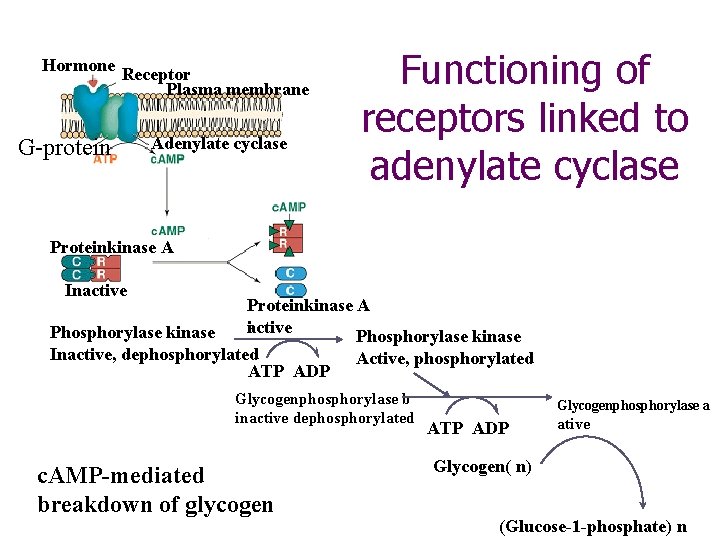
Hormone Receptor Plasma membrane -baltymas G-protein Adenilatciklazė Adenylate cyclase Functioning of receptors linked to adenylate cyclase Proteinkinazė A Proteinkinase Neaktyvi Inactive Proteinkinase A i active Phosphorylase kinase Inactive, dephosphorylated Active, phosphorylated ATP ADP Glycogenphosphorylase b inactive dephosphorylated c. AMP-mediated breakdown of glycogen Glycogenphosphorylase a ATP ADP ative Glycogen( n) (Glucose-1 -phosphate) n
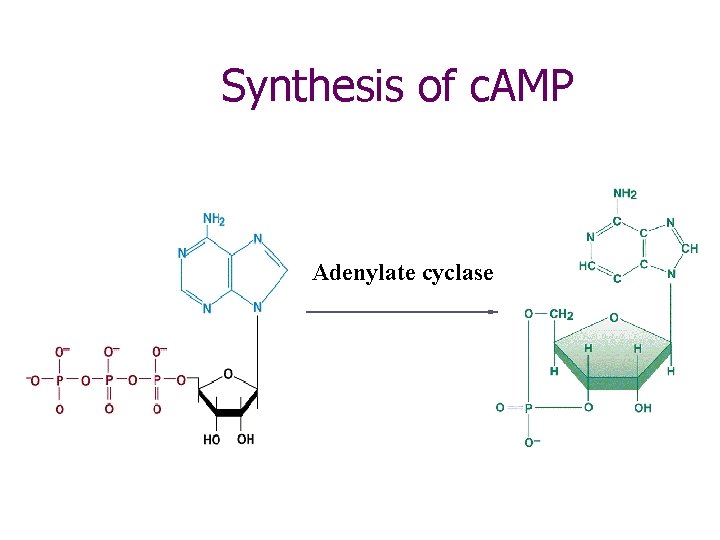
Synthesis of c. AMP Adenylate cyclase
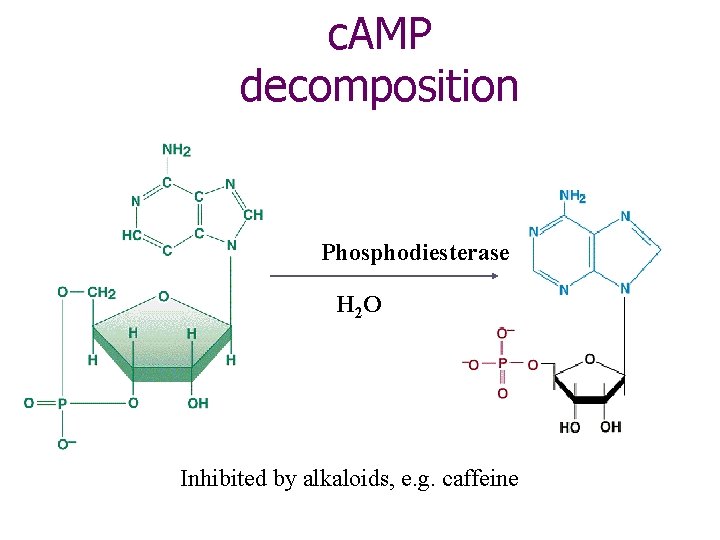
c. AMP decomposition Phosphodiesterase H 2 O Inhibited by alkaloids, e. g. caffeine
Hormones acting via c. AMP Glucagon Adrenalin (activation β-adrenoreceptors results in c. AMP increasing, but α 2 –in increasing) Calcitonin Vasopressin (ADH, antidiuretic hormone) if interacts with V 2 -type receptors in cells of distal tubules of kidney.
G-proteins as mediators of Renzyme interaction H H Adenylate cyclase
Transduction of hormonal signal through phospholipase C system Receptor Hormone G-protein Phospholipase C Proteinkinase C ER Secretory vesicles Ca-calamodulin complex
Hormones acting via phospholipase C system Adrenalin/noradrenalin (via α 1 adrenoreceptors) Vasopressin (ADH) via V 1 receptors (in smooth muscles cells of blood vessels)
Enzymatic receptors. Hormones acting via enzymatic receptors • Insulin • Somatotropin/ growth hormone (GH) • Insulin-like growth factors • Cytokins • Natriuretic peptides
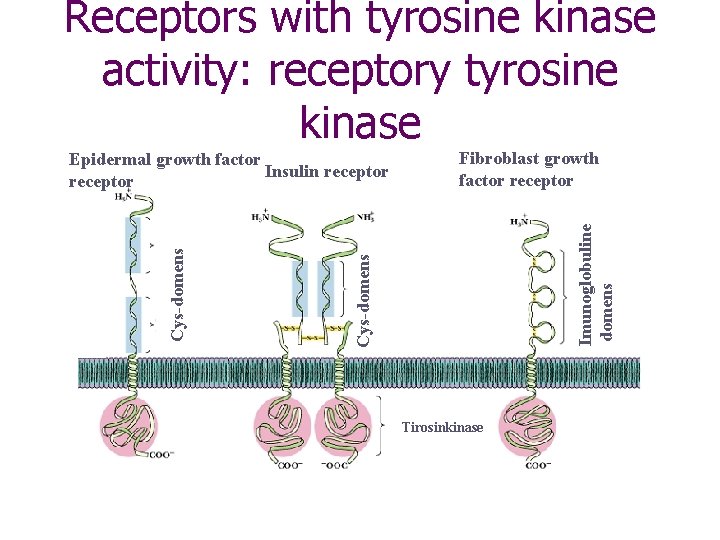
Receptors with tyrosine kinase activity: receptory tyrosine kinase Imunoglobuline domens Fibroblast growth factor receptor Cys-domens Epidermal growth factor Insulin receptor Tirosinkinase

Receptors with guanylate cyclase activity
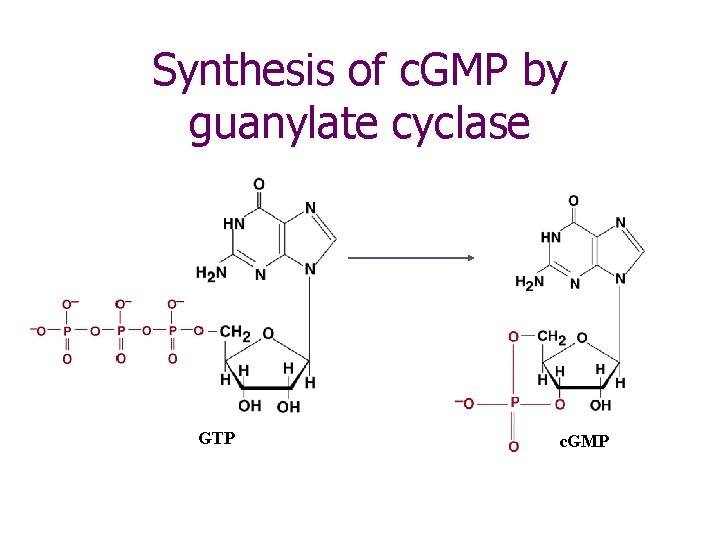
Synthesis of c. GMP by guanylate cyclase GTP c. GMP
Action of hormones via intracellular receptors Intracellular receptors bind only water insoluble hormones (lipophilic ones: steroid-, thyroid hormones and retinoic acid). True second messengers are not produced. Receptors are located in cytoplasm and nucleus of target cells.

Hormone action through intracellular receptors Hormone ir protein complexs Free hormone Plasma membrane Nucleus ŠŠB Branduolio receptoriai Citozolio receptoriai Activation Response Protein Baltymas
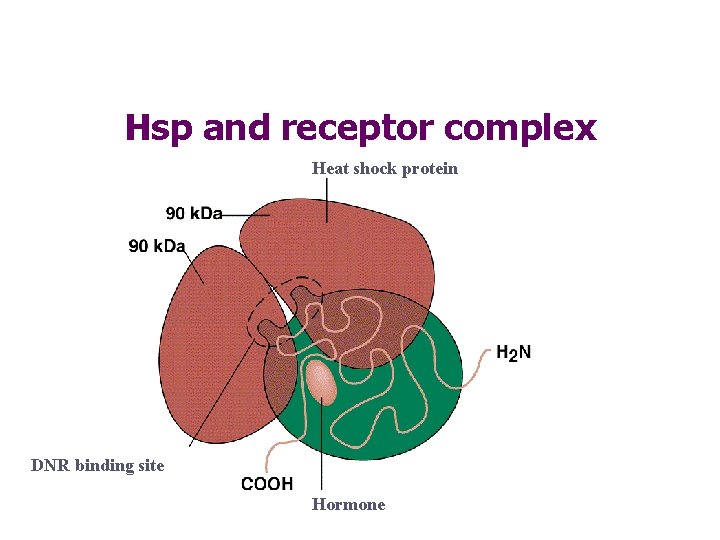
Hsp and receptor complex Heat shock protein DNR binding site Hormone

Structure of receptor specific to lipophilic hormone Length varies Functional areas A/B Regulatory domain E C DNA binding domain E D Nuclear targeting Hormonebinding sequence domain A/B C
- Slides: 24