
PRINCIPLES OF MARKETING Distribution Channels and Logistics Management
PRINCIPLES OF MARKETING Distribution Channels and Logistics Management
Distribution Channels • A set of interdependent organizations (intermediaries) involved in the process of making a product or service available for use or consumption. • Channel decisions – affect other marketing decisions – involve long-term commitments
Role of Intermediaries • Greater efficiency in making goods available to target markets. • Intermediaries provide – Contacts – Experience – Specialization – Scale of operation • Match supply and demand.
Channel Functions • Information • Promotion • Contact • Matching • Negotiation • Physical Distribution • Financing • Risk taking
Channel Levels • Manufacturer • Wholesaler • Retailer • Consumer
Channel Behavior and Conflict • The channel will be most effective when: – each member is assigned tasks it can do best. – all members cooperate to attain overall channel goals and satisfy the target market. • Focus on individual goals leads to conflict – Horizontal Conflict occurs among firms at the same level of the channel. – Vertical Conflict occurs between different levels of the same channel.
Vertical Marketing Systems • Corporate – common ownership at different channel levels • Contractual – contractual agreement among channel members • Administered – leadership assumed by dominant members

Innovations in Marketing Systems Horizontal Marketing System Two or more companies at one channel level join together to increase coverage Example: Banks in Grocery Stores Hybrid Marketing System A single firm sets up two or more marketing channels to increase coverage Example: Retailers, Catalogs, and Sales Force
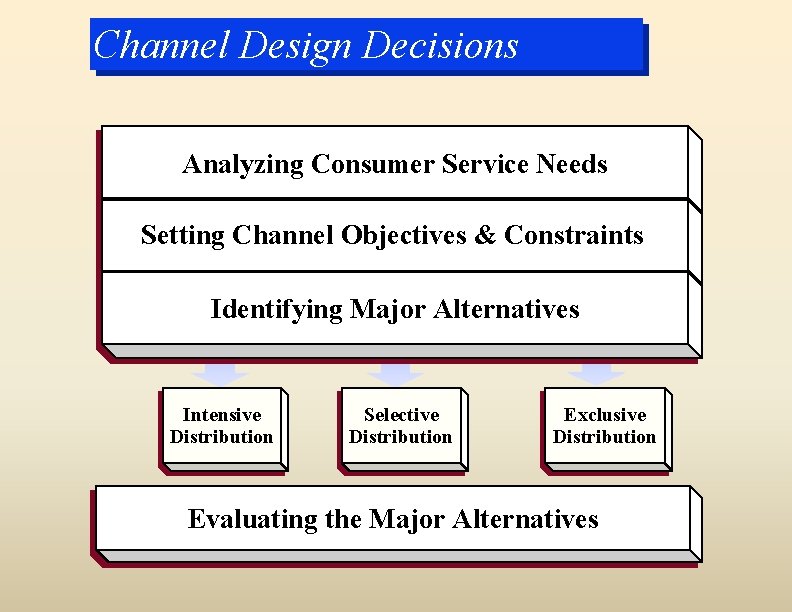
Channel Design Decisions Analyzing Consumer Service Needs Setting Channel Objectives & Constraints Identifying Major Alternatives Intensive Distribution Selective Distribution Exclusive Distribution Evaluating the Major Alternatives

Channel Management Decisions Motivating Evaluating FEEDBACK Selecting
Logistics • Involves entire supply chain • Increasing importance of logistics – effective logistics is becoming a key to winning and keeping customers. – logistics is a major cost element for most companies. – the explosion in product variety has created a need for improved logistics management. – information technology has created opportunities for major gains in distribution efficiency.
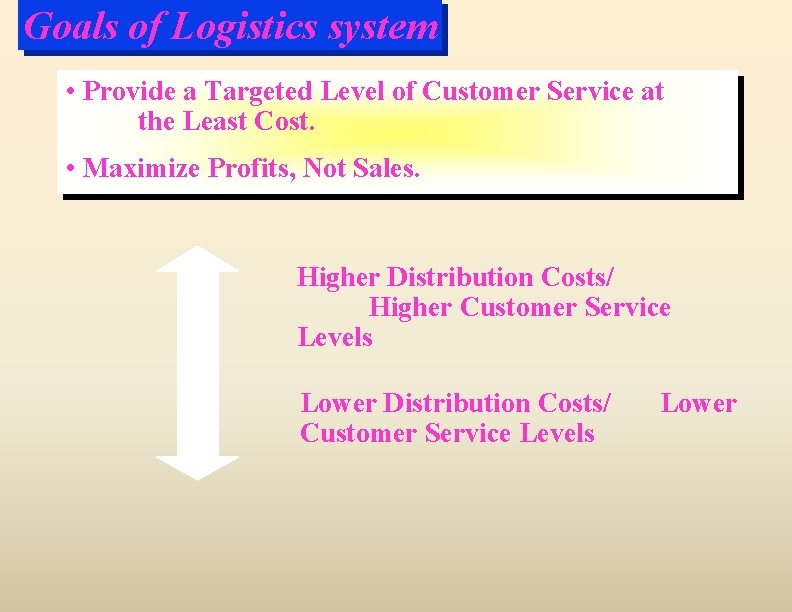
Goals of Logistics system • Provide a Targeted Level of Customer Service at the Least Cost. • Maximize Profits, Not Sales. Higher Distribution Costs/ Higher Customer Service Levels Lower Distribution Costs/ Customer Service Levels Lower
Logistics Functions • • Order Processing Warehousing Inventory Management Transportation • Design system to minimize costs of attaining objectives
Transportation Modes Rail Nation’s largest carrier, cost-effective for shipping bulk products, piggyback Truck Flexible in routing & time schedules, efficient for short-hauls of high value goods Water Low cost for shipping bulky, low-value goods, slowest form Pipeline Ship petroleum, natural gas, and chemicals from sources to markets Air High cost, ideal when speed is needed or to ship high-value, low-bulk items
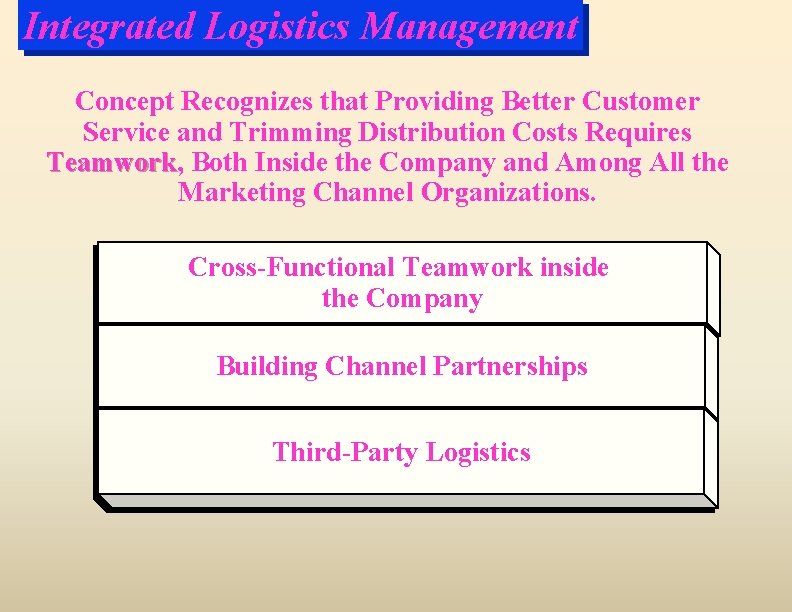
Integrated Logistics Management Concept Recognizes that Providing Better Customer Service and Trimming Distribution Costs Requires Teamwork, Teamwork Both Inside the Company and Among All the Marketing Channel Organizations. Cross-Functional Teamwork inside the Company Building Channel Partnerships Third-Party Logistics
- Slides: 15