
Principles Of Marketing 4 th slide Todays Content
- Slides: 16
Principles Of Marketing 4 th slide
Today’s Content • Designing customer driven marketing strategy. ( Market segmentation, targeting, differentiation and positioning). • Marketing mix.
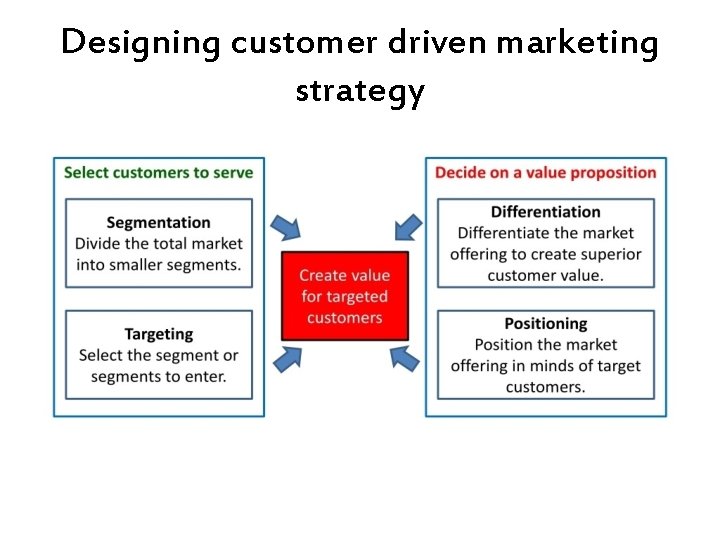
Designing customer driven marketing strategy
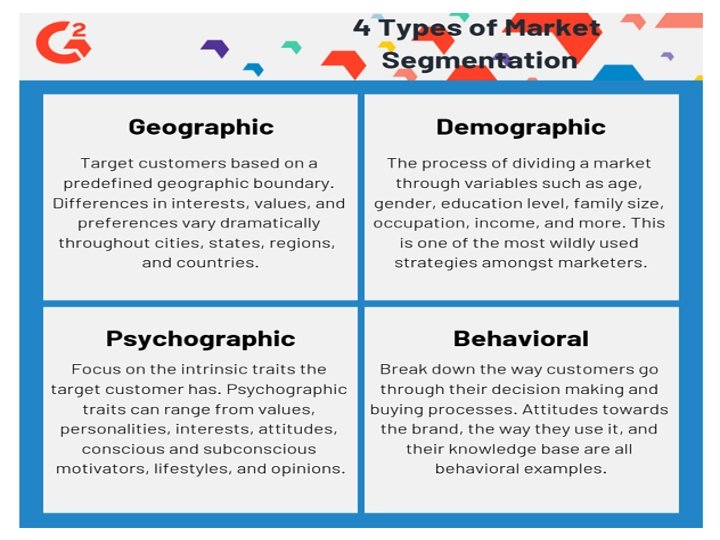
Market Segmentation • Dividing a market into distinct groups with distinct needs, characteristics or behavior who might require separate products or marketing mixes.
Geographic segmentation • Geographic segmentation is a common strategy when you serve customers in a particular area, or when your broad target audience has different preferences based on where they are located. It involves grouping potential customers by country, state, region, city or even neighborhood.
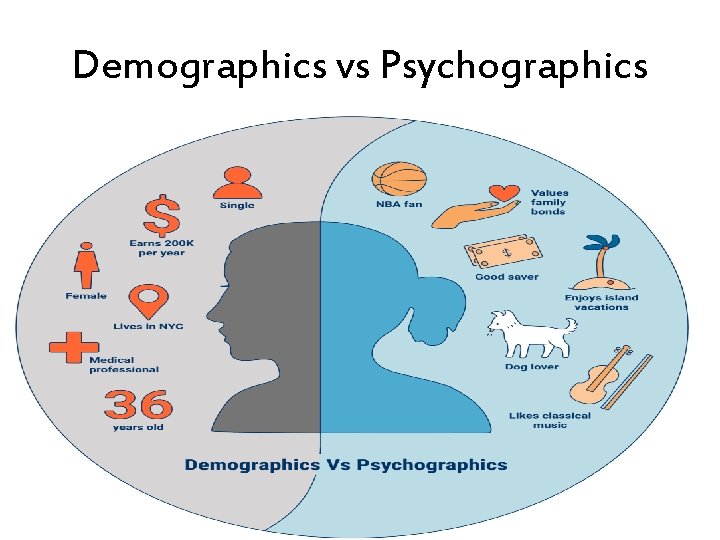
Demographic Segmentation • Demographic segmentation is defined as a market segmentation method based on variables such as age, gender, income etc. . In marketing, it defines people that form a specific market for a product or a service based on demographics.
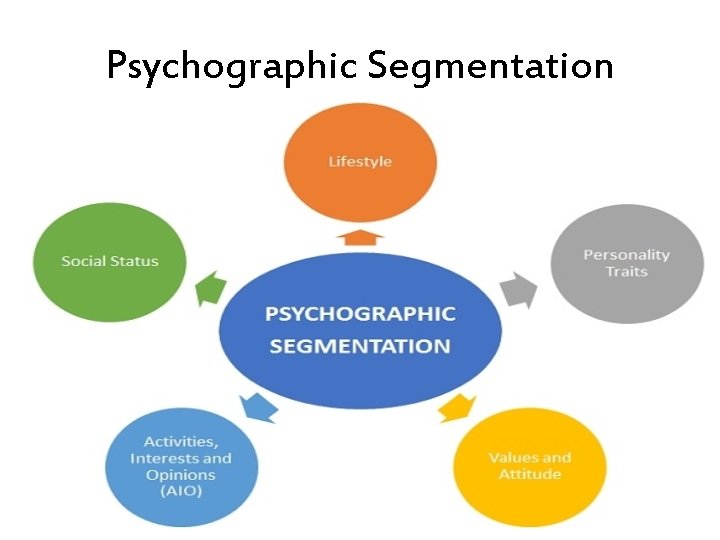
Psychographic Segmentation • Psychographic segmentation is a method used to group prospective, current or previous customers by their shared personality traits, beliefs, values, attitudes, interests, and lifestyles and other factors. These characteristics may be observable or not.
Psychographic Segmentation
Demographics vs Psychographics
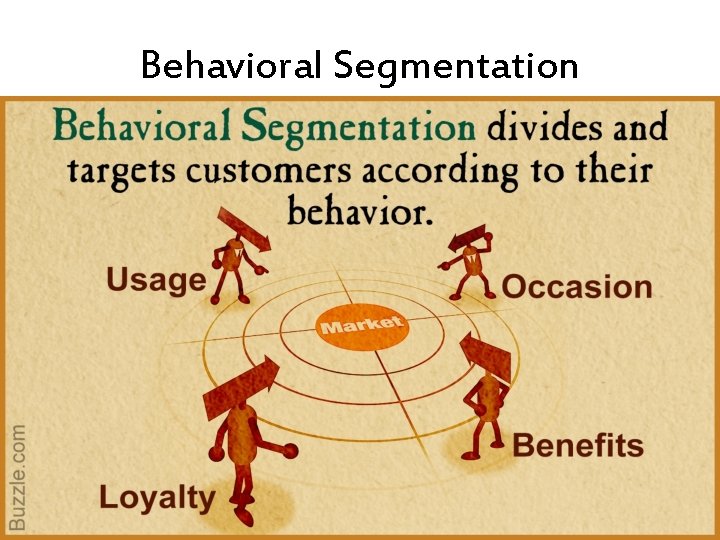
Behavioral Segmentation
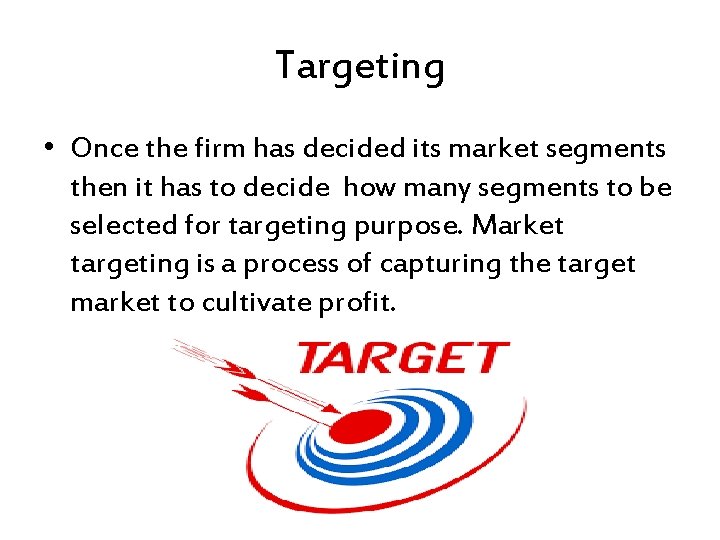
Targeting • Once the firm has decided its market segments then it has to decide how many segments to be selected for targeting purpose. Market targeting is a process of capturing the target market to cultivate profit.
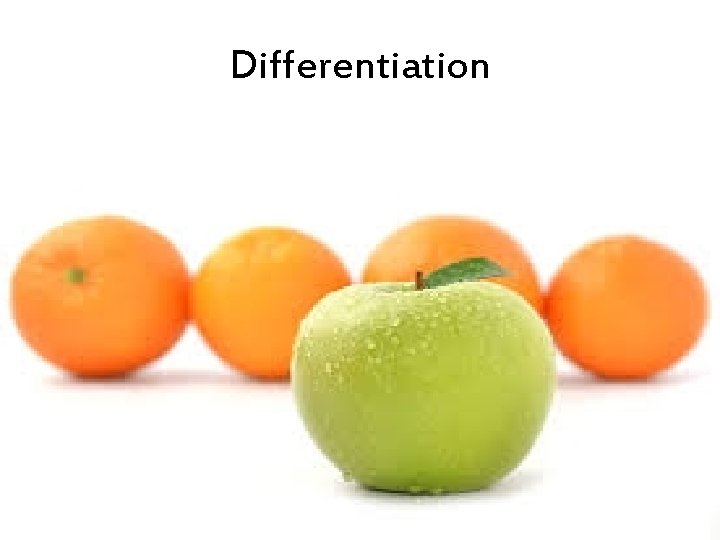
Differentiation • Differentiation is a marketing strategy that businesses employ to make their products unique and stand out from competitors. It is the typical strategy for industries for which multiple competitors produce identical or very similar products.
Differentiation • The key objective of differentiation is to make a product more attractive in comparison with other directly competing products. Successful product differentiation strategy creates a competitive advantage for the producer because customers perceive these products as unique or superior. Recognizable examples of differentiation are attractive packaging or new promotional stories behind the products. Producers often decide to differentiate by introducing innovative features, which might be more difficult to recognize for customers.
Differentiation
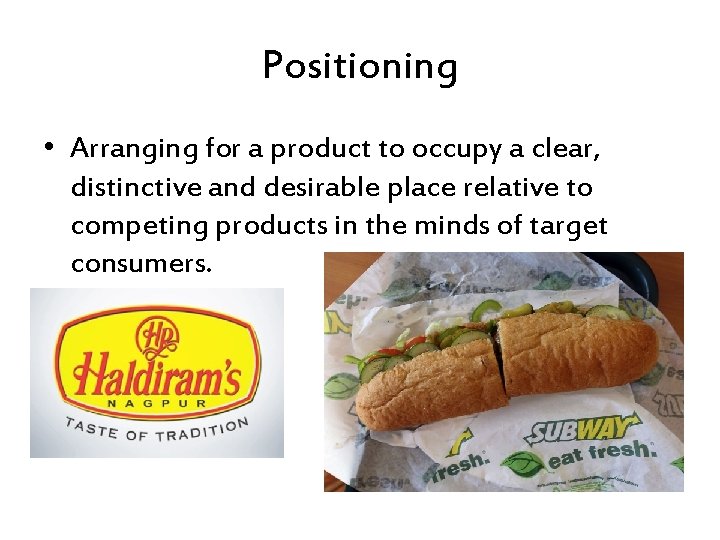
Positioning • Arranging for a product to occupy a clear, distinctive and desirable place relative to competing products in the minds of target consumers.