
PRINCIPLES OF MANAGEMENT ADVANCED CERTIFICATE IN MANAGEMENT STUDIES


- Slides: 32
PRINCIPLES OF MANAGEMENT ADVANCED CERTIFICATE IN MANAGEMENT STUDIES
INTRODUCTION • Andrew Tucker • B Com LLB • Admitted attorney of the High Court of South Africa (non-practicing) • 20 years experience in the workplace • Managed law firm • Managed start-up • Managed corporate division - +/- 800 staff
STUDY GUIDE • Introduction to management • Evolution of management theory • Management environment • Management process • Contemporary management issues
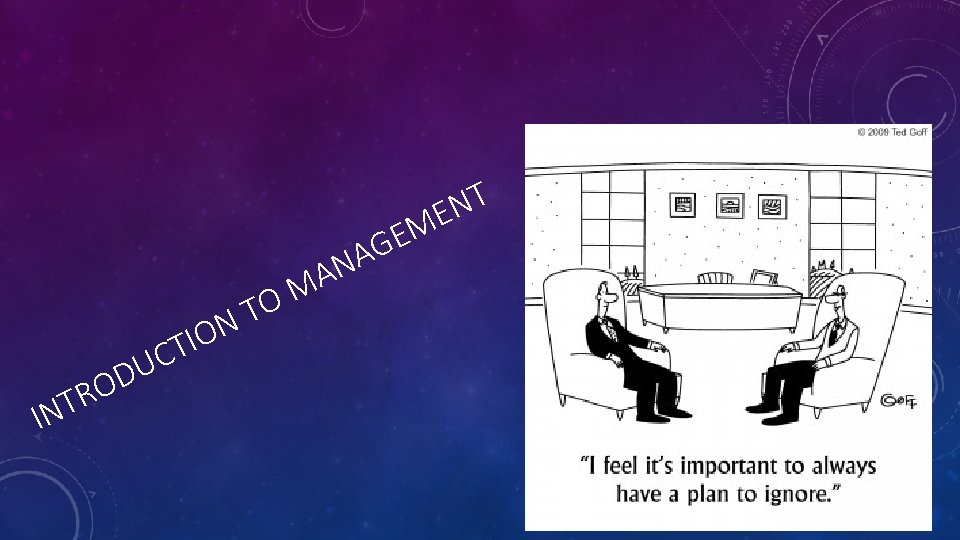
T N E M O I T C U D O R T IN O T N E G A N A M
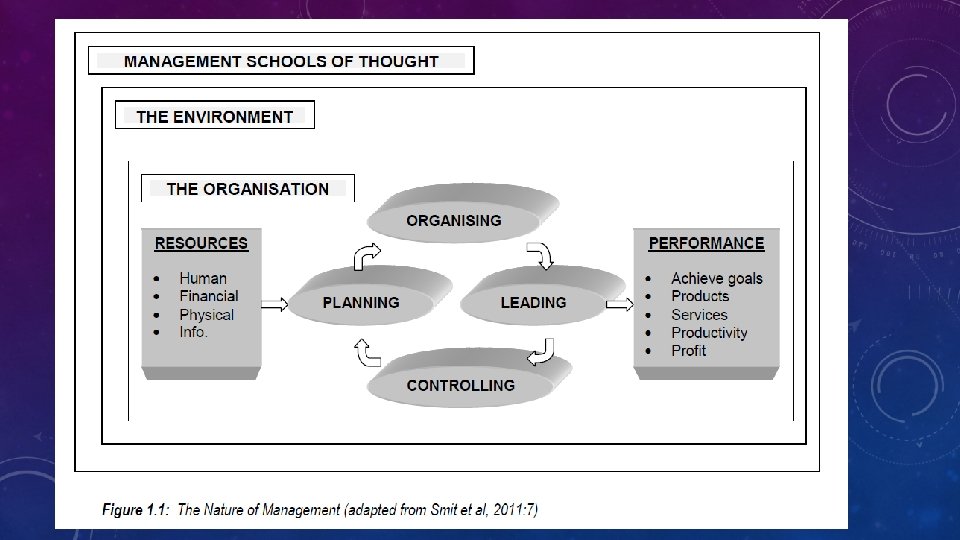
THE NATURE OF MANAGEMENT • The fundamental functions of a manager link up in a specific sequence to form a process, which comprises, planning, organising, leading and controlling. • (Smit et al, 2011: 6)
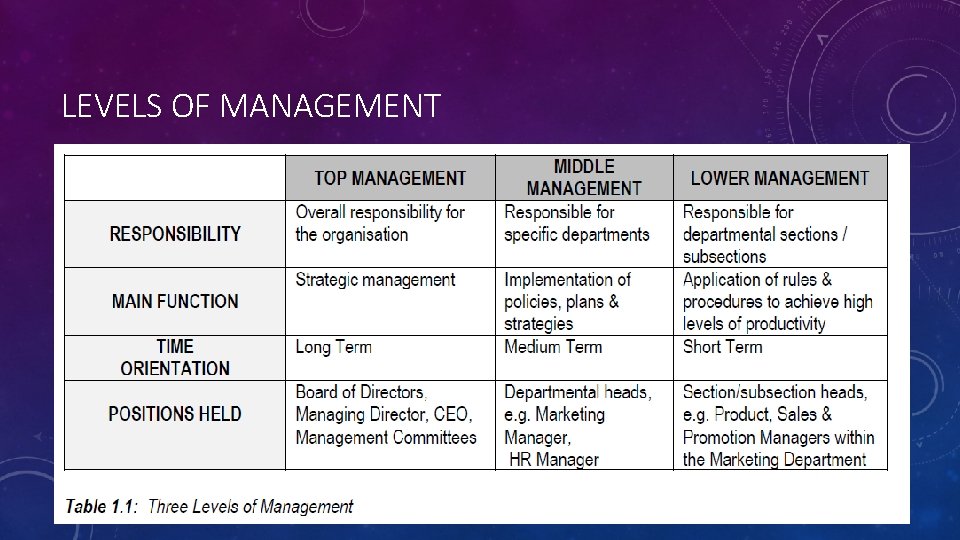
FOCUS AREA • See definitions on page 13/14 • Levels of management on page 15
LEVELS OF MANAGEMENT
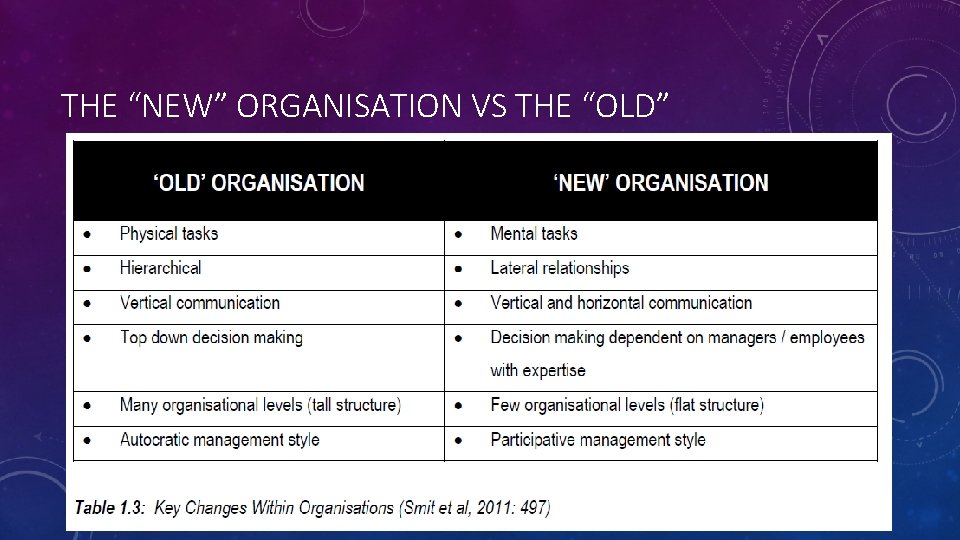
THE “NEW” ORGANISATION VS THE “OLD”
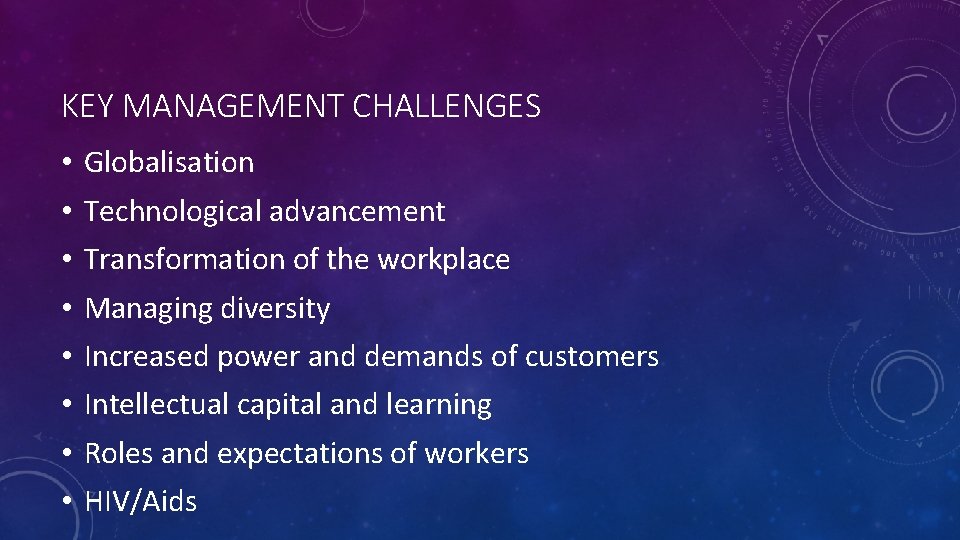
KEY MANAGEMENT CHALLENGES • • Globalisation Technological advancement Transformation of the workplace Managing diversity Increased power and demands of customers Intellectual capital and learning Roles and expectations of workers HIV/Aids
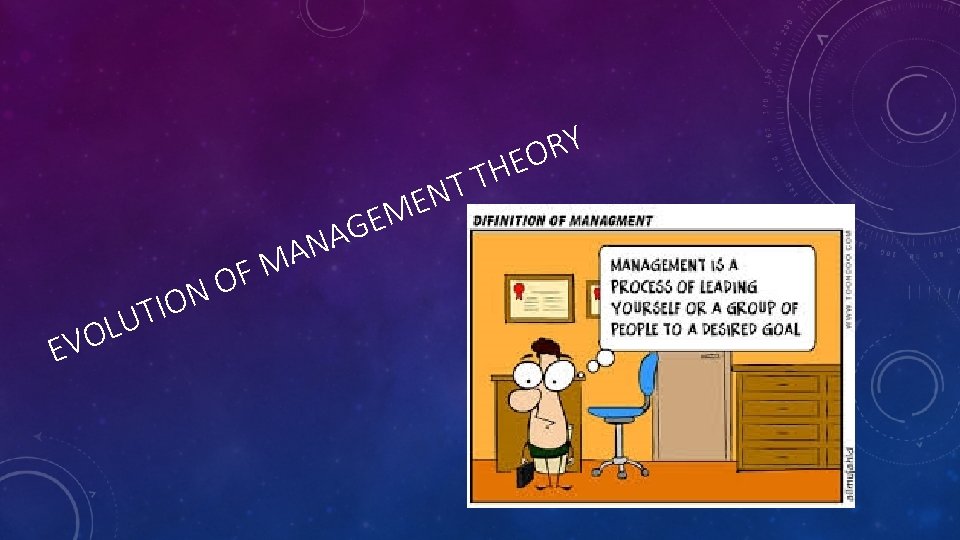
EVO O I T LU F O N N A M M E AG T T EN Y R HEO
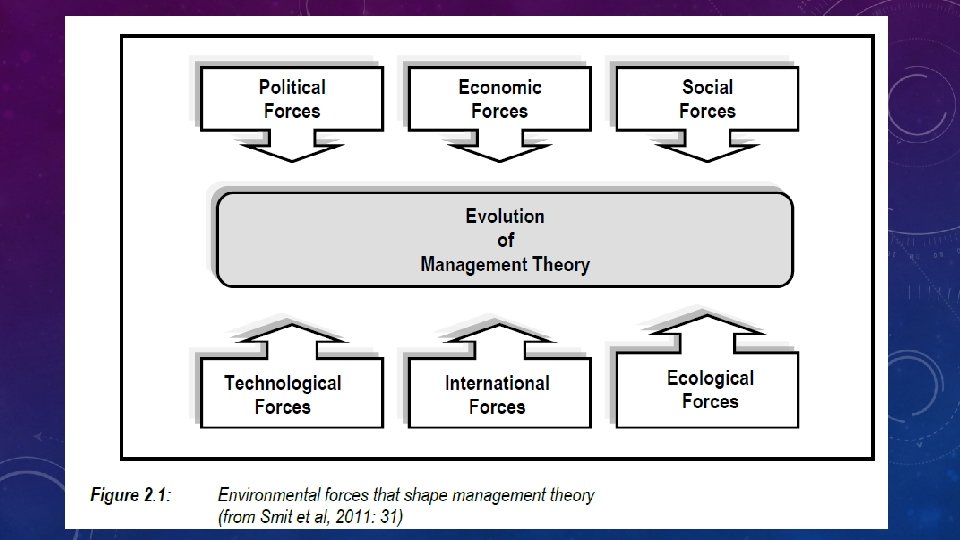
FROM ANCIENT EGYPT TO 2015 ………………… • Why study management theory? • To develop a holistic understanding of the discipline and professional competence • What is theory? • See page 42 • Factors influencing the development of management theory
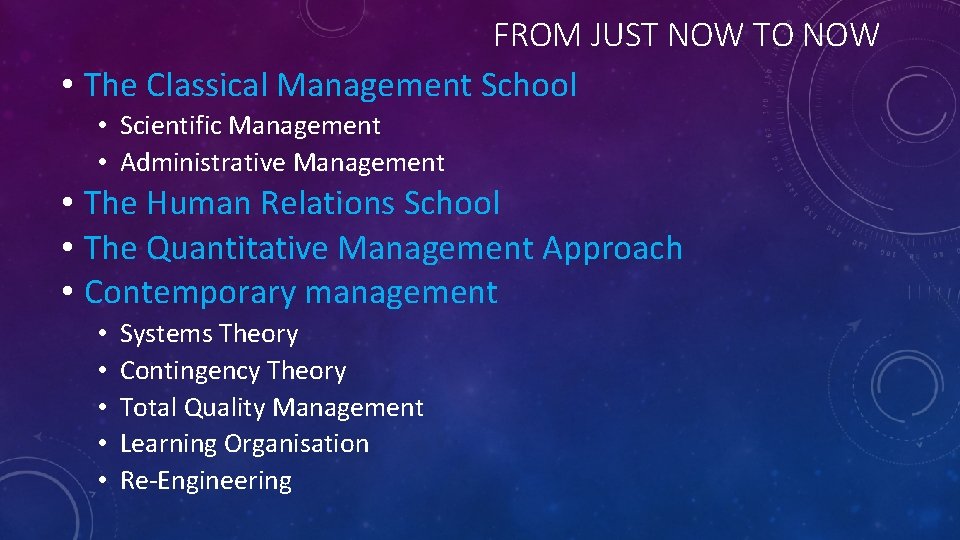
FROM JUST NOW TO NOW • The Classical Management School • Scientific Management • Administrative Management • The Human Relations School • The Quantitative Management Approach • Contemporary management • • • Systems Theory Contingency Theory Total Quality Management Learning Organisation Re-Engineering
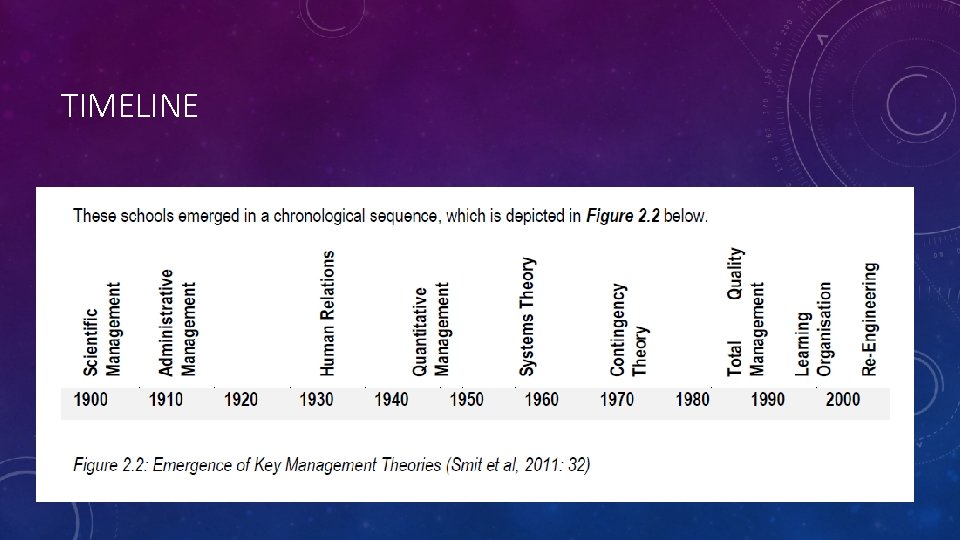
TIMELINE
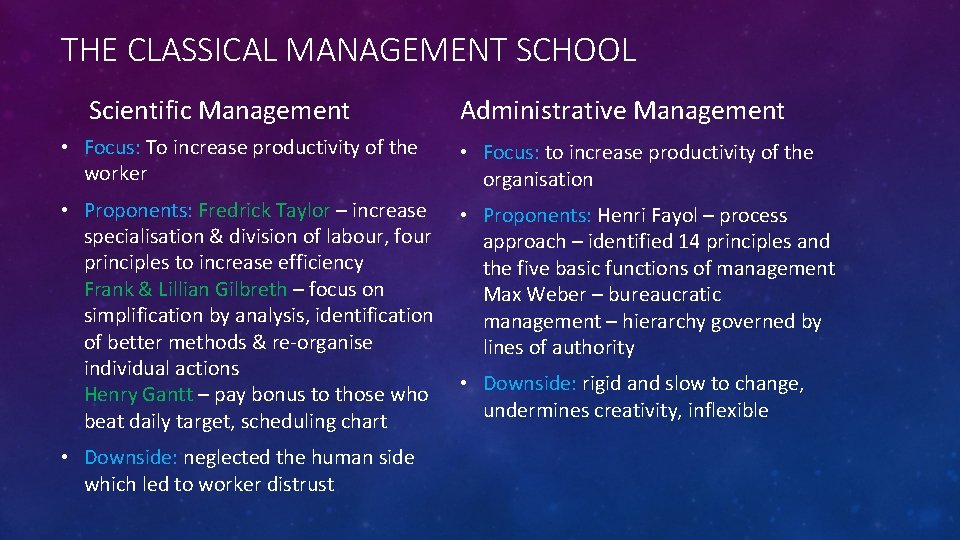
THE CLASSICAL MANAGEMENT SCHOOL Scientific Management Administrative Management • Focus: To increase productivity of the worker • Focus: to increase productivity of the organisation • Proponents: Fredrick Taylor – increase specialisation & division of labour, four principles to increase efficiency Frank & Lillian Gilbreth – focus on simplification by analysis, identification of better methods & re-organise individual actions Henry Gantt – pay bonus to those who beat daily target, scheduling chart • Proponents: Henri Fayol – process approach – identified 14 principles and the five basic functions of management Max Weber – bureaucratic management – hierarchy governed by lines of authority • Downside: neglected the human side which led to worker distrust • Downside: rigid and slow to change, undermines creativity, inflexible
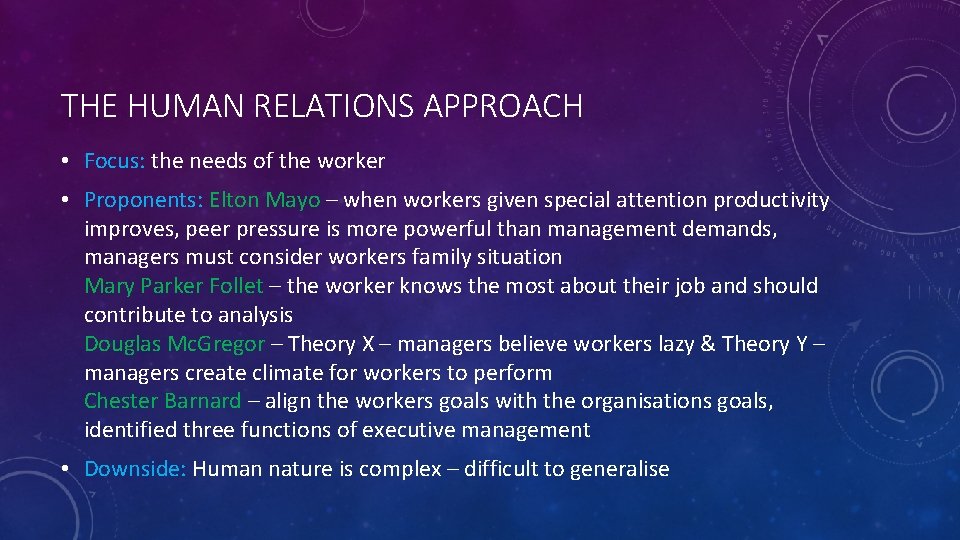
THE HUMAN RELATIONS APPROACH • Focus: the needs of the worker • Proponents: Elton Mayo – when workers given special attention productivity improves, peer pressure is more powerful than management demands, managers must consider workers family situation Mary Parker Follet – the worker knows the most about their job and should contribute to analysis Douglas Mc. Gregor – Theory X – managers believe workers lazy & Theory Y – managers create climate for workers to perform Chester Barnard – align the workers goals with the organisations goals, identified three functions of executive management • Downside: Human nature is complex – difficult to generalise
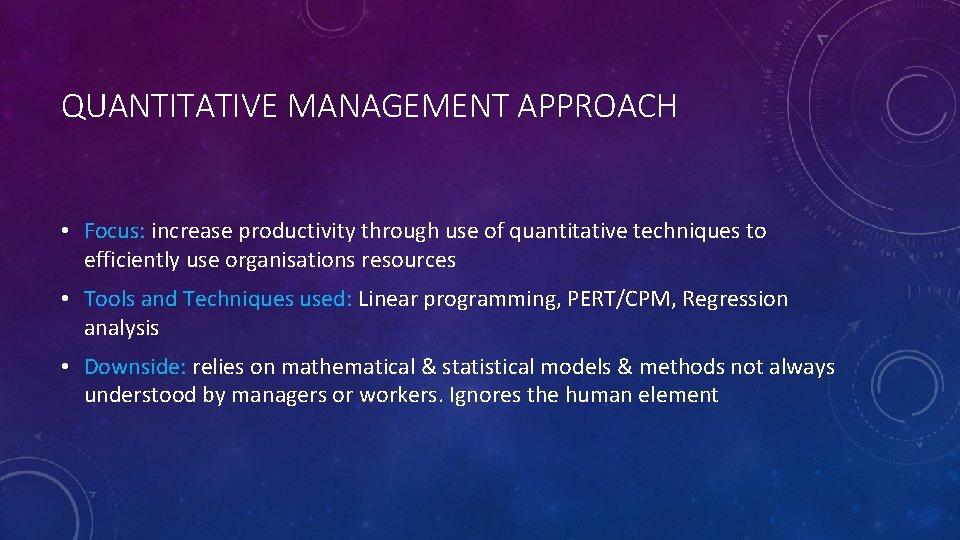
QUANTITATIVE MANAGEMENT APPROACH • Focus: increase productivity through use of quantitative techniques to efficiently use organisations resources • Tools and Techniques used: Linear programming, PERT/CPM, Regression analysis • Downside: relies on mathematical & statistical models & methods not always understood by managers or workers. Ignores the human element
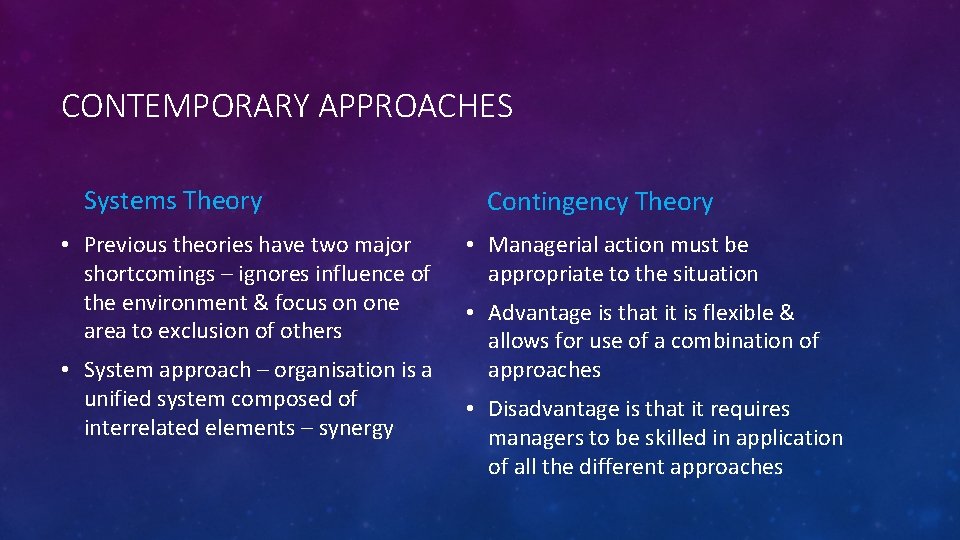
CONTEMPORARY APPROACHES Systems Theory • Previous theories have two major shortcomings – ignores influence of the environment & focus on one area to exclusion of others • System approach – organisation is a unified system composed of interrelated elements – synergy Contingency Theory • Managerial action must be appropriate to the situation • Advantage is that it is flexible & allows for use of a combination of approaches • Disadvantage is that it requires managers to be skilled in application of all the different approaches
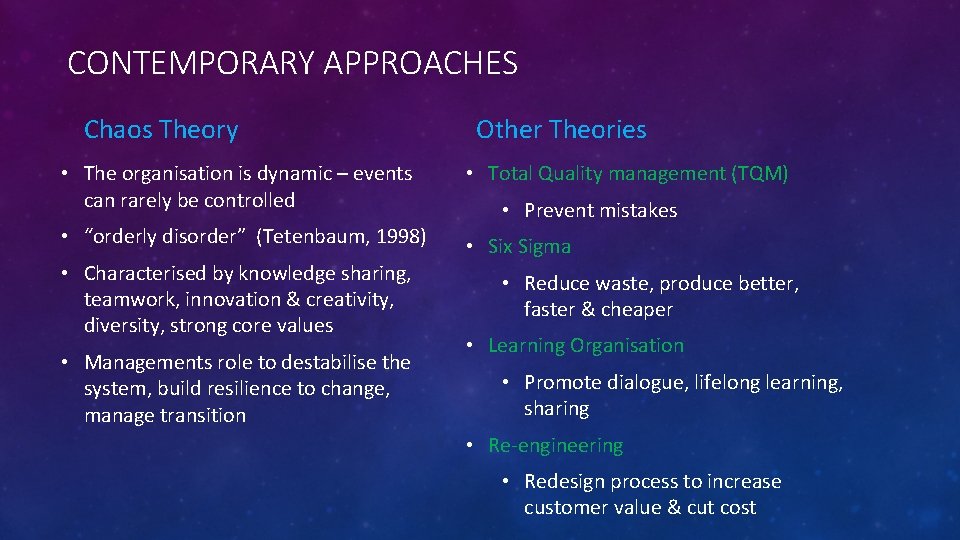
CONTEMPORARY APPROACHES Chaos Theory Other Theories • The organisation is dynamic – events can rarely be controlled • Total Quality management (TQM) • “orderly disorder” (Tetenbaum, 1998) • Six Sigma • Characterised by knowledge sharing, teamwork, innovation & creativity, diversity, strong core values • Managements role to destabilise the system, build resilience to change, manage transition • Prevent mistakes • Reduce waste, produce better, faster & cheaper • Learning Organisation • Promote dialogue, lifelong learning, sharing • Re-engineering • Redesign process to increase customer value & cut cost
THE G A N MA T N E EM T N E M N O R I V EN
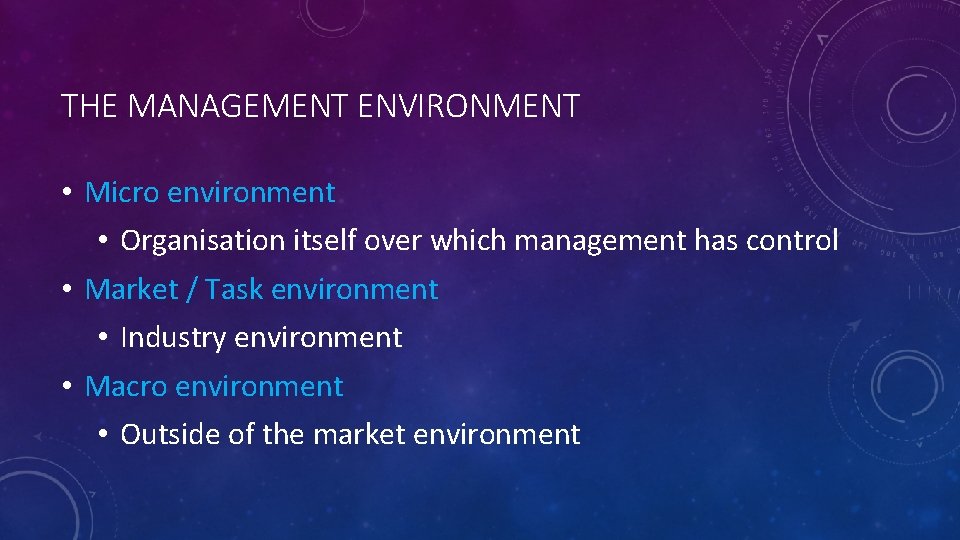
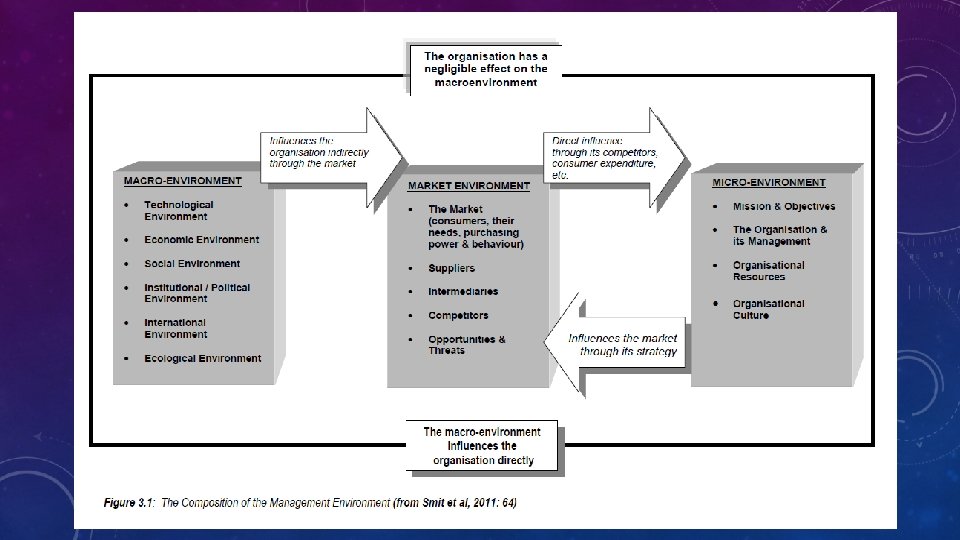
THE MANAGEMENT ENVIRONMENT • Micro environment • Organisation itself over which management has control • Market / Task environment • Industry environment • Macro environment • Outside of the market environment
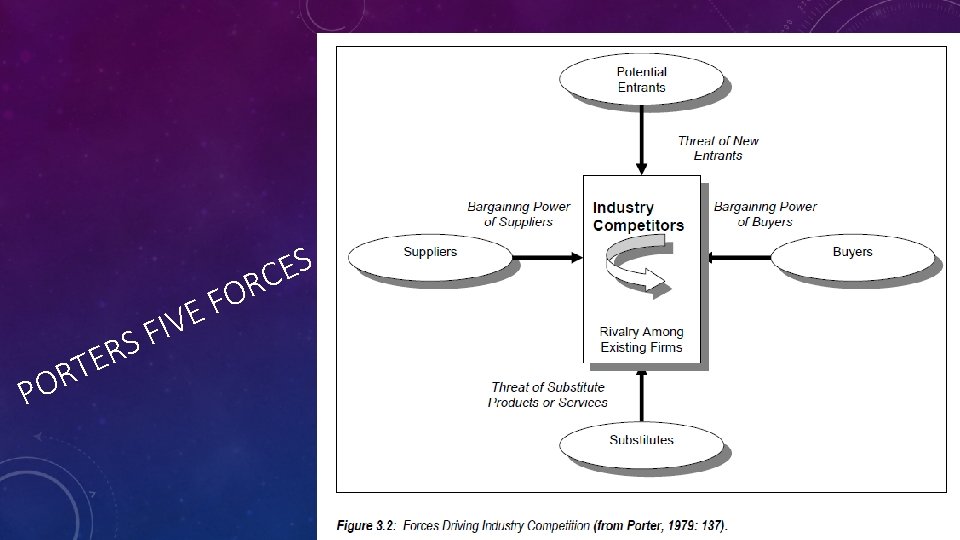
O F E P V I F S R E T OR S E RC
THE G A N MA T N E EM S S E C O R P
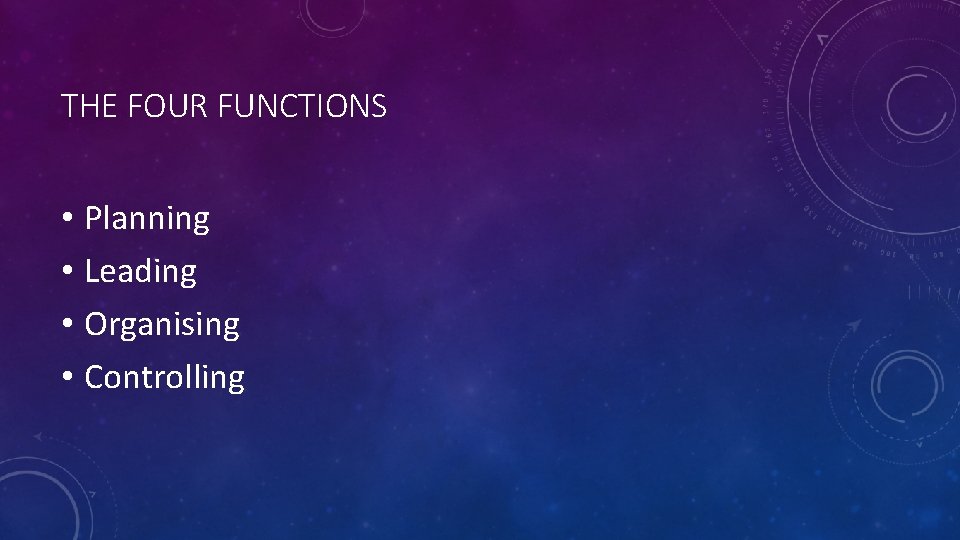
THE FOUR FUNCTIONS • Planning • Leading • Organising • Controlling
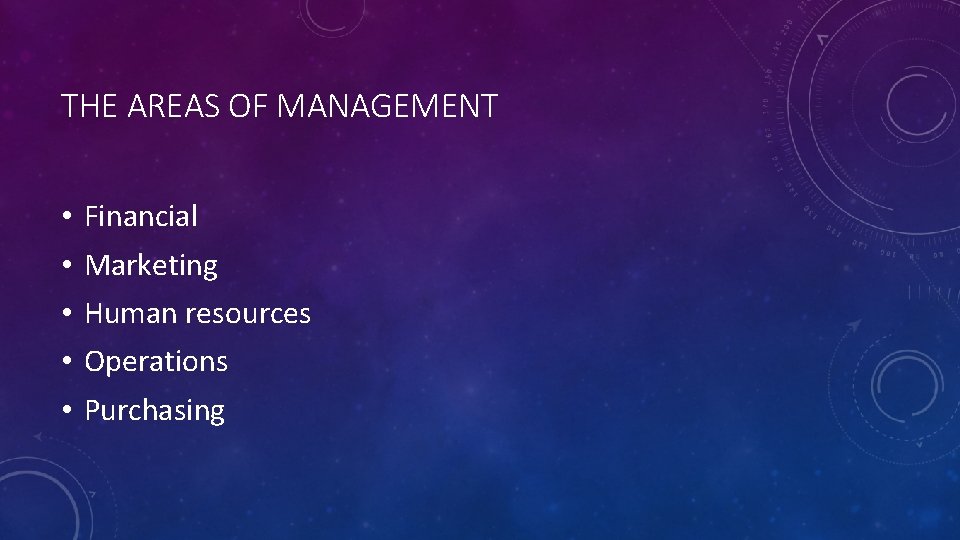
THE AREAS OF MANAGEMENT • • • Financial Marketing Human resources Operations Purchasing
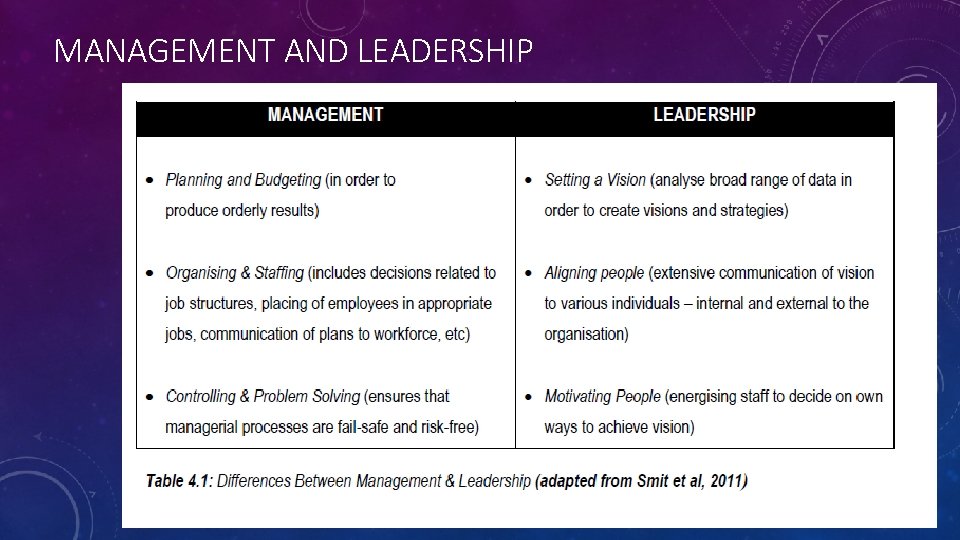
MANAGEMENT AND LEADERSHIP
CONTEMPORARY MANAGEMENT ISSUES
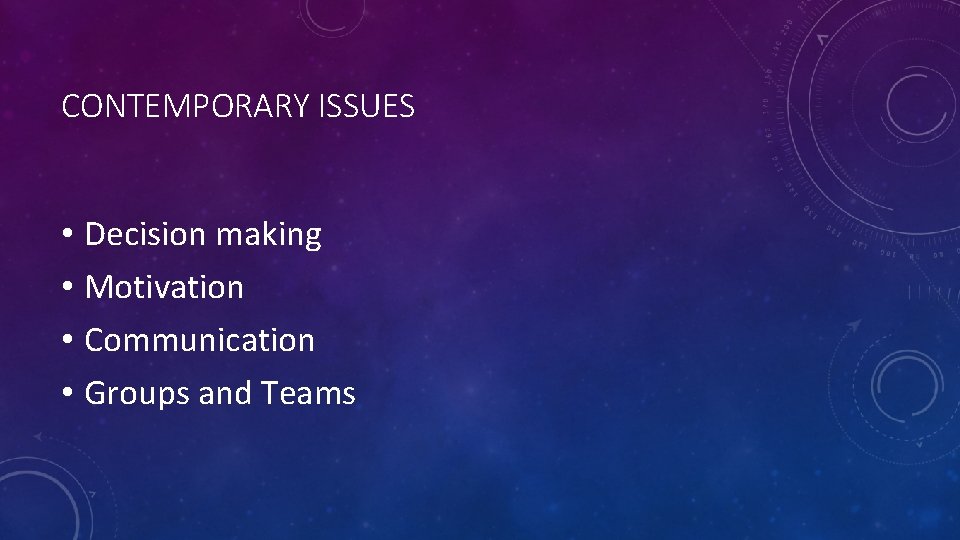
CONTEMPORARY ISSUES • Decision making • Motivation • Communication • Groups and Teams