
Principles of Infection Control and Personal Protective Equipment

- Slides: 55
Principles of Infection Control and Personal Protective Equipment 2
Learning Objectives • Demonstrate knowledge of the principles of infection control • Recognize gaps in infection control infrastructure • Recognize ways to address gaps in infection control infrastructure in different situations • Demonstrate proper selection and use of personal protective equipment
Session Overview • Disease transmission • Introduction to personal protective equipment (PPE) • How to use PPE • Demonstration • Infection control precautions • In health care facilities • In the community
Routes of Disease Transmission
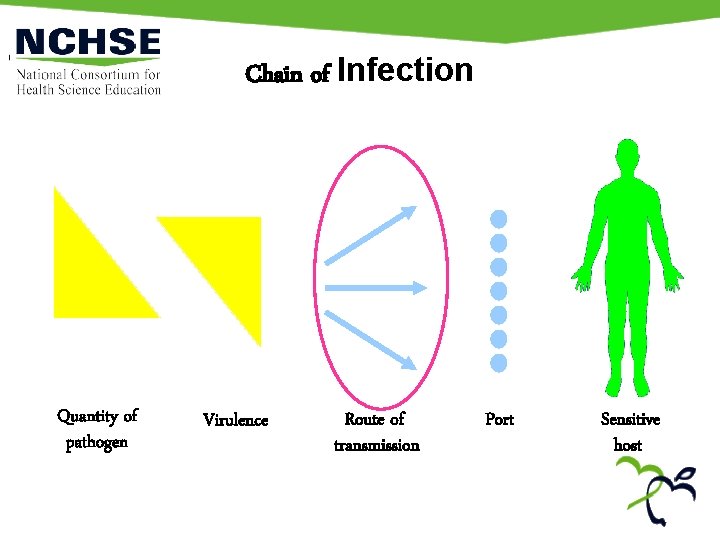
Chain of Infection + Quantity of pathogen Virulence Route of transmission Port Sensitive host
Routes of Transmission • Respiratory • Cough • Sneeze • Fecal-oral • Feces contaminate food, environment, or hands • Vector-borne • Transmitted by insects
Examples: Routes of Transmission Contact Direct Contact Indirect Contact • Host comes into contact with reservoir • Disease is carried from reservoir to host • Kissing, skin-to-skin contact • Contaminated surfaces (fomites) • Contact with soil or vegetation
Routes of Transmission Droplets Large droplets within ~1 meter (3 feet) Transmit infection via: • Coughing, sneezing, talking • Medical procedures Examples: • Diphtheria • Pertussis (Whooping Cough) • Meningococcal meningitis
Routes of Transmission Airborne (droplet nuclei) Very small particles of evaporated droplets or dust with infectious agent may… • Remain in air for a long time • Travel farther than droplets • Become aerosolized during procedures Examples: • Tuberculosis • Measles (Rubela)
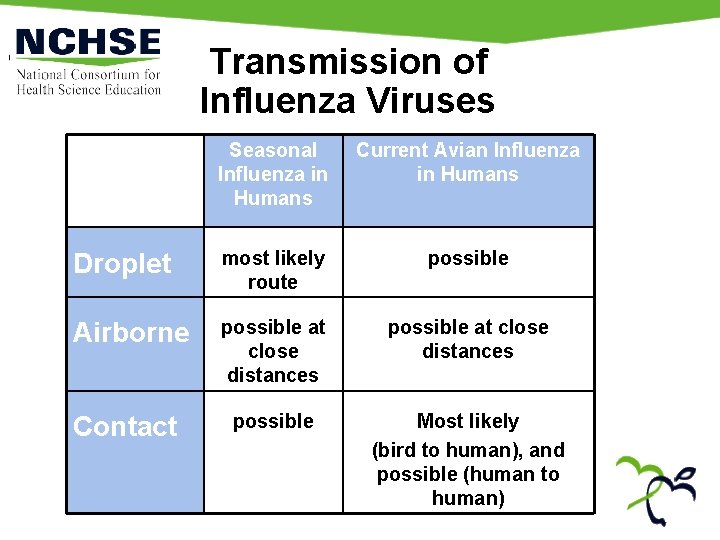
Transmission of Influenza Viruses Seasonal Influenza in Humans Current Avian Influenza in Humans Droplet most likely route possible Airborne possible at close distances possible Most likely (bird to human), and possible (human to human) Contact
Infection Control Methods and Personal Protective Equipment
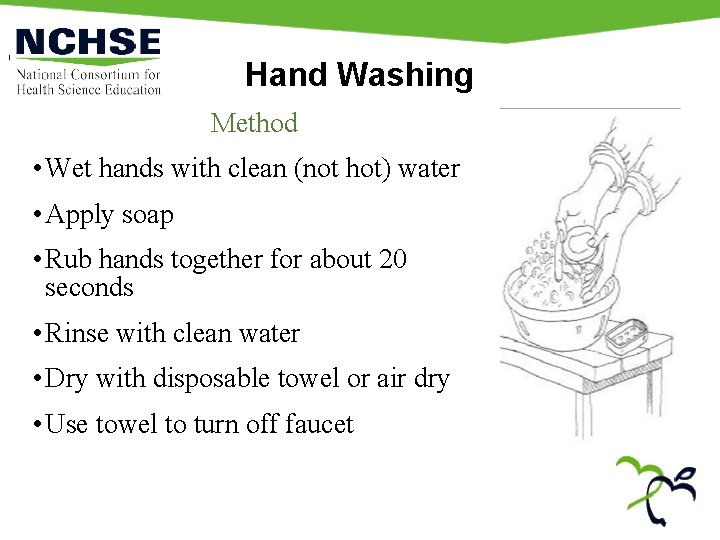
Hand Washing Method • Wet hands with clean (not hot) water • Apply soap • Rub hands together for about 20 seconds • Rinse with clean water • Dry with disposable towel or air dry • Use towel to turn off faucet
Alcohol-based Hand Rubs • Effective if hands not visibly soiled • More costly than soap & water method • Apply appropriate (3 ml) amount to palms • Rub hands together, covering all surfaces until dry
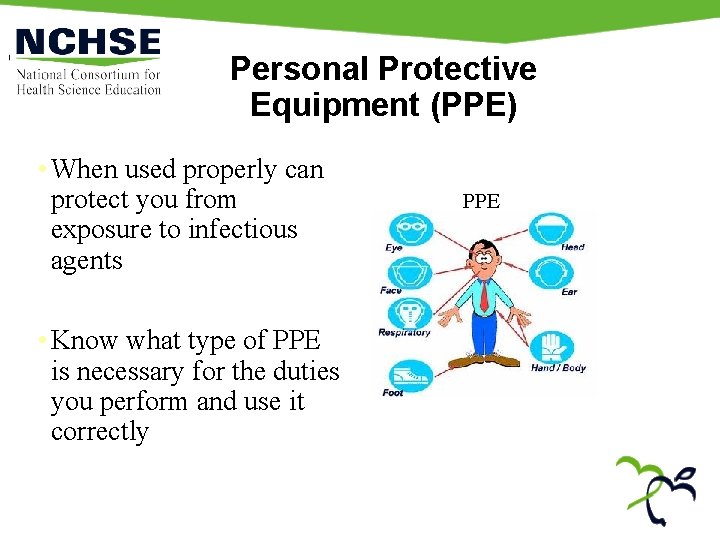
Personal Protective Equipment (PPE) • When used properly can protect you from exposure to infectious agents • Know what type of PPE is necessary for the duties you perform and use it correctly PPE
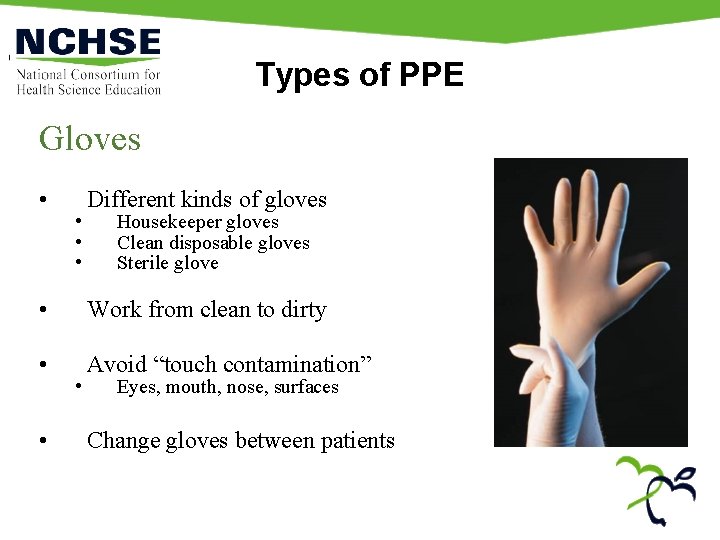
Types of PPE Gloves • • Different kinds of gloves Housekeeper gloves Clean disposable gloves Sterile glove • Work from clean to dirty • Avoid “touch contamination” • • Eyes, mouth, nose, surfaces Change gloves between patients
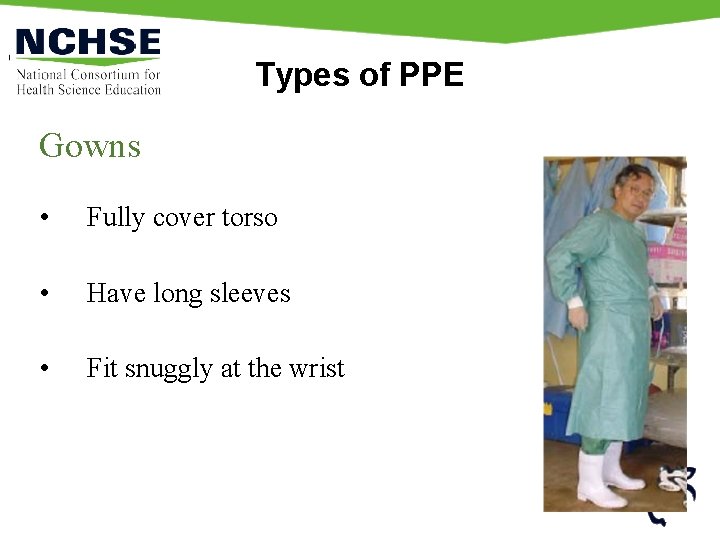
Types of PPE Gowns • Fully cover torso • Have long sleeves • Fit snuggly at the wrist
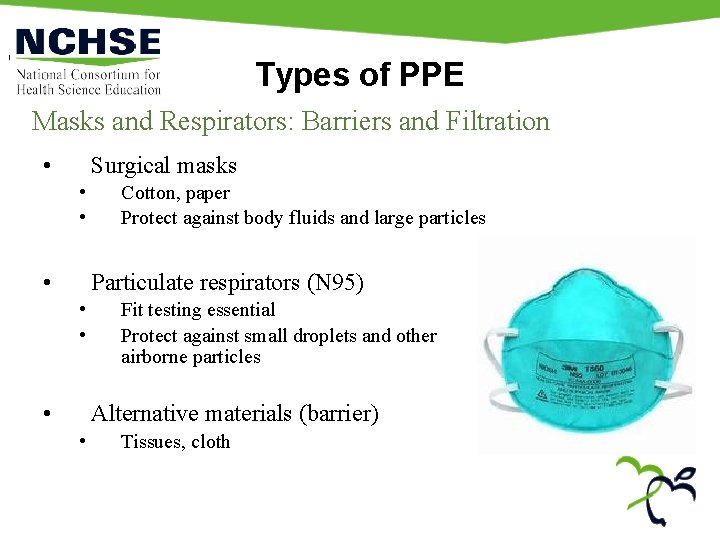
Types of PPE Masks and Respirators: Barriers and Filtration • Surgical masks • • • Cotton, paper Protect against body fluids and large particles Particulate respirators (N 95) • • • Fit testing essential Protect against small droplets and other airborne particles Alternative materials (barrier) • Tissues, cloth
Types of PPE Particulate Respirators • Three types: disposable, reusable, powered air purifying respirators • Disposable Particulate Respirators • Classified N 95, N 99, N 100, R 95, R 99, R 100, P 95, P 99, P 100 • Letter indicates oil resistance: N = not resistant, R = somewhat resistant, P = strongly resistant • Number is percent of airborne particles filtered (e. g. N 95 filters 95% of particles)
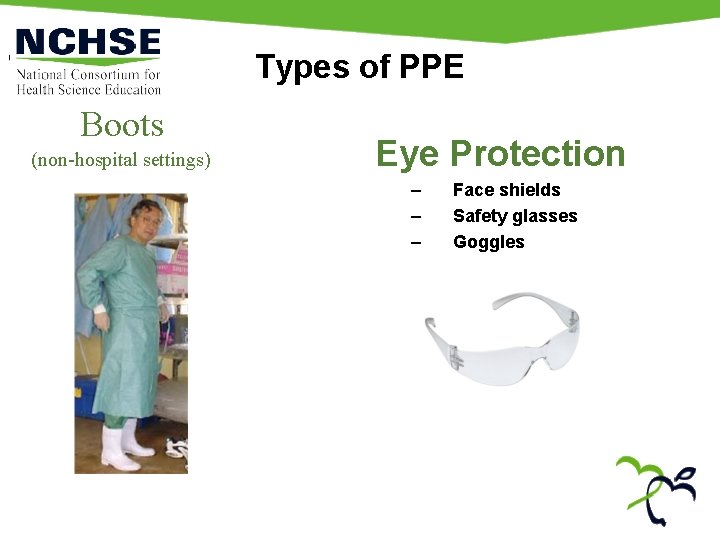
Types of PPE Boots (non-hospital settings) Eye Protection – – – Face shields Safety glasses Goggles
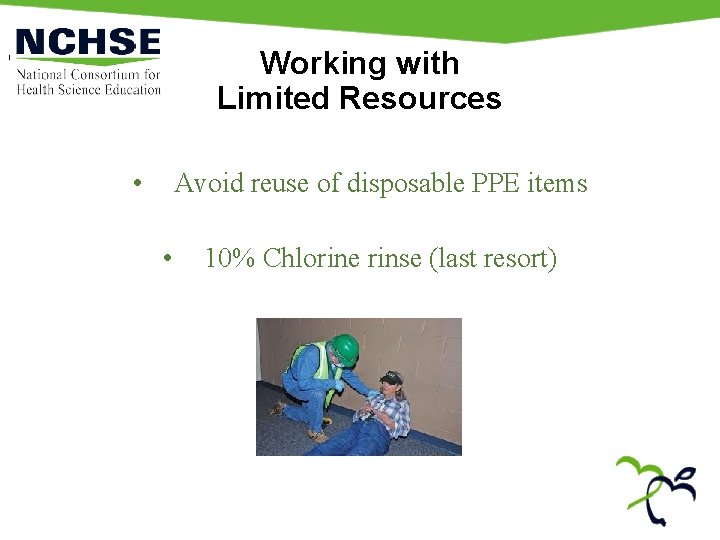
Working with Limited Resources • Avoid reuse of disposable PPE items • 10% Chlorine rinse (last resort)
Infection Control Precautions
Precaution Levels All levels require hand hygiene • Standard Transmission based precautions: • Contact • Droplet • Airborne
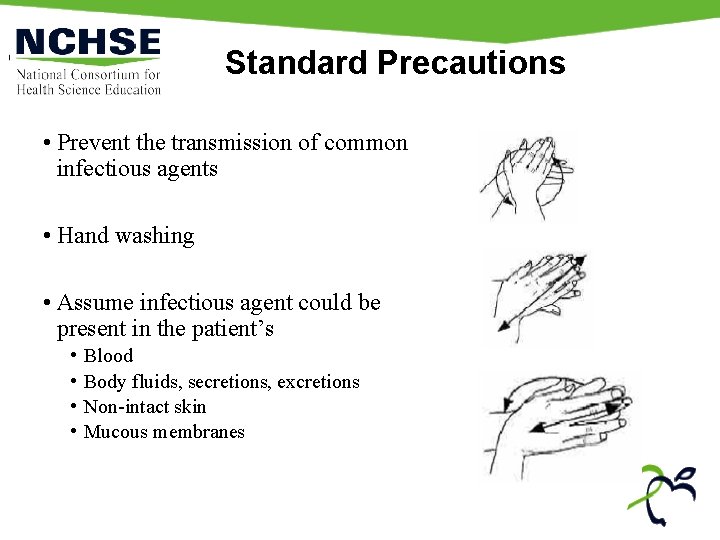
Standard Precautions • Prevent the transmission of common infectious agents • Hand washing • Assume infectious agent could be present in the patient’s • • Blood Body fluids, secretions, excretions Non-intact skin Mucous membranes
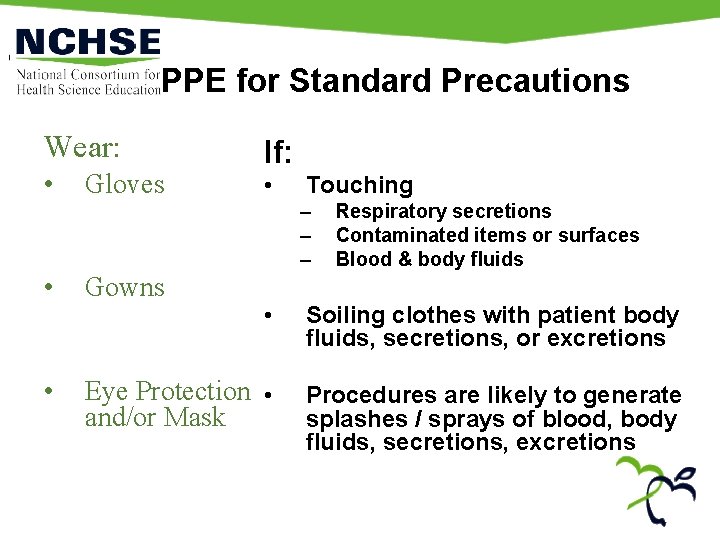
PPE for Standard Precautions Wear: • Gloves If: • Touching – – – Respiratory secretions Contaminated items or surfaces Blood & body fluids • Gowns • Soiling clothes with patient body fluids, secretions, or excretions • Eye Protection • and/or Mask Procedures are likely to generate splashes / sprays of blood, body fluids, secretions, excretions
Contact Precautions Taken in addition to Standard Precautions • Limit patient movement • Isolate or cohort patients • Gown + gloves for patient / room contact • Remove immediately after contact • Do not touch eyes, nose, mouth with hands • Avoid contaminating environmental surfaces
Contact Precautions • Wash hands immediately after patient contact • Use dedicated equipment if possible • If not, clean and disinfect between uses • Clean, then disinfect patient room daily • • Bed rails Bedside tables Lavatory surfaces Blood pressure cuff, equipment surfaces
Cleaning and Disinfection for Contact Precautions • Detergents • • Remove dirt, soiling Mechanical force essential Flush with clean water Disinfectants • • Kill viruses, bacteria Decontaminate surfaces Type depends on infectious agent Use after detergent
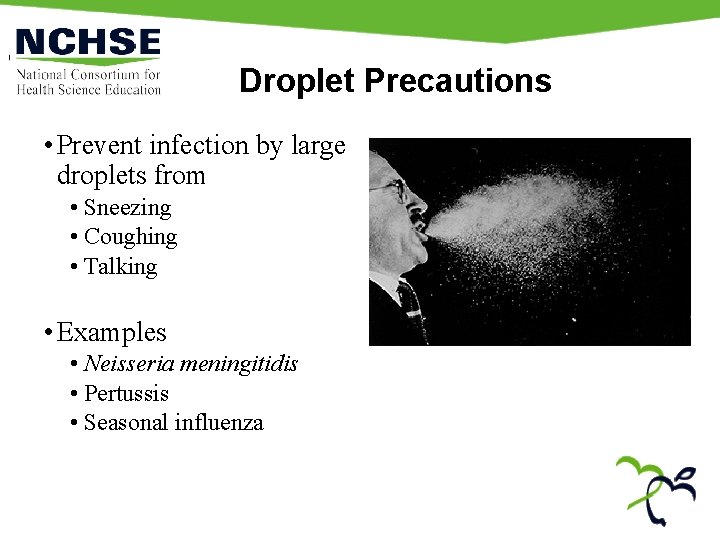
Droplet Precautions • Prevent infection by large droplets from • Sneezing • Coughing • Talking • Examples • Neisseria meningitidis • Pertussis • Seasonal influenza
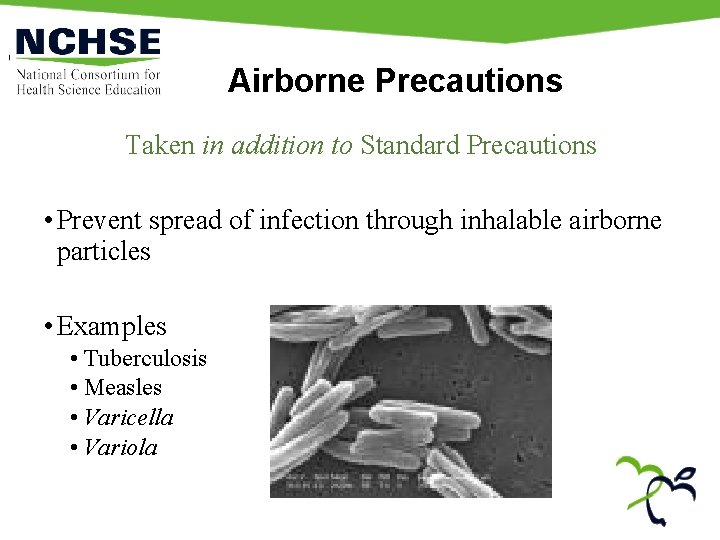
Airborne Precautions Taken in addition to Standard Precautions • Prevent spread of infection through inhalable airborne particles • Examples • Tuberculosis • Measles • Varicella • Variola
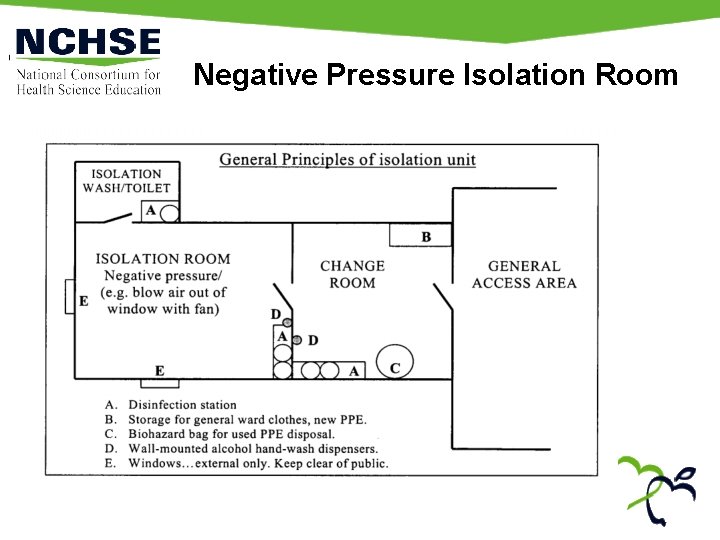
Negative Pressure Isolation Room
Aerosol-generating Procedures (Example; Endotracheal intubation) • N 95 particulate respirator • If not available, wear tight fitting surgical mask and face shield • Eye protection • Gloves and hand washing • Gown and waterproof apron • Isolation room with negative pressure, if available • Hair cover optional
Environmental Decontamination: Disinfecting • Household bleach (diluted) • Peroxygen compounds • Quaternary ammonia compounds • Phenolic disinfectants • Chlorine compounds (Chloramin B, Presept) • Germicides with a tuberculocidal claim on label • Others • Alcohol • Isopropyl 70% or ethyl alcohol 60%
Waste Disposal • Use Standard Precautions • Gloves and hand washing • Gown + Eye protection • Avoid aerosolization • Prevent spills and leaks • Double bag if outside of bag is contaminated • Incineration is usually the preferred method
Managing Linens and Laundry • Use Standard Precautions • Gloves and hygiene • Gown • Mask • Avoid aerosolization – do not shake • Fold or roll heavily soiled laundry • Remove large amounts of solid waste first • Place soiled laundry into bag in patient room • Wash with normal detergent
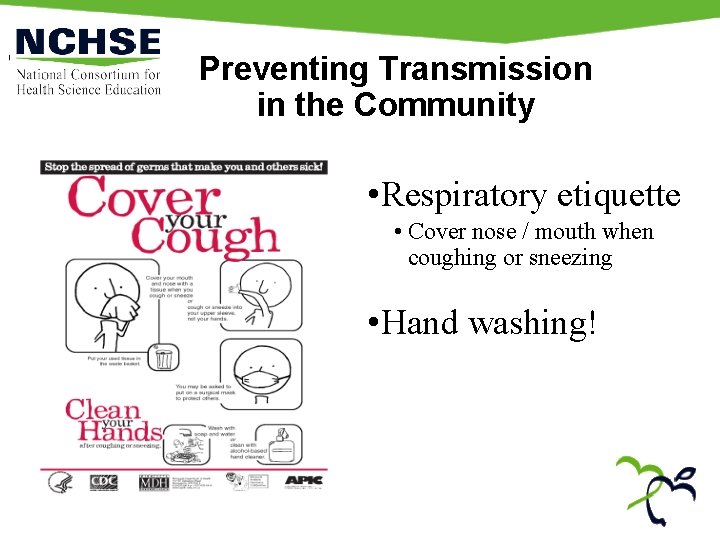
Preventing Transmission in the Community • Respiratory etiquette • Cover nose / mouth when coughing or sneezing • Hand washing!
Overview • Components of infection control infrastructure • Infection control in healthcare facilities • Infection control in the community
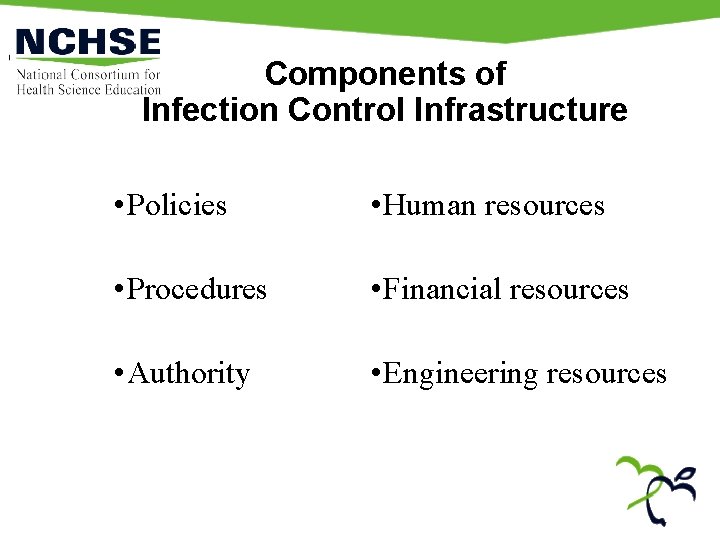
Components of Infection Control Infrastructure • Policies • Human resources • Procedures • Financial resources • Authority • Engineering resources
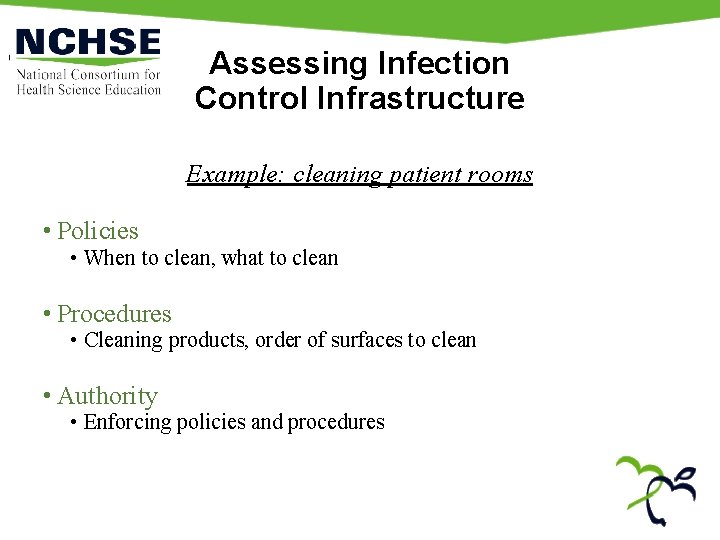
Assessing Infection Control Infrastructure Example: cleaning patient rooms • Policies • When to clean, what to clean • Procedures • Cleaning products, order of surfaces to clean • Authority • Enforcing policies and procedures
Sustainability • Evaluate infection control knowledge • Evaluate infection control procedures • Develop a sustainable program • Encourage routine practice • Build local capacity
How to Put on and Remove Personal Protective Equipment
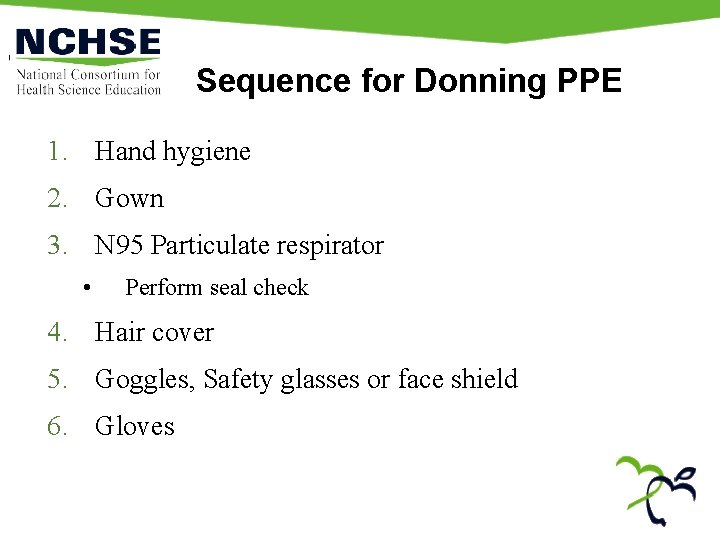
Sequence for Donning PPE 1. Hand hygiene 2. Gown 3. N 95 Particulate respirator • Perform seal check 4. Hair cover 5. Goggles, Safety glasses or face shield 6. Gloves
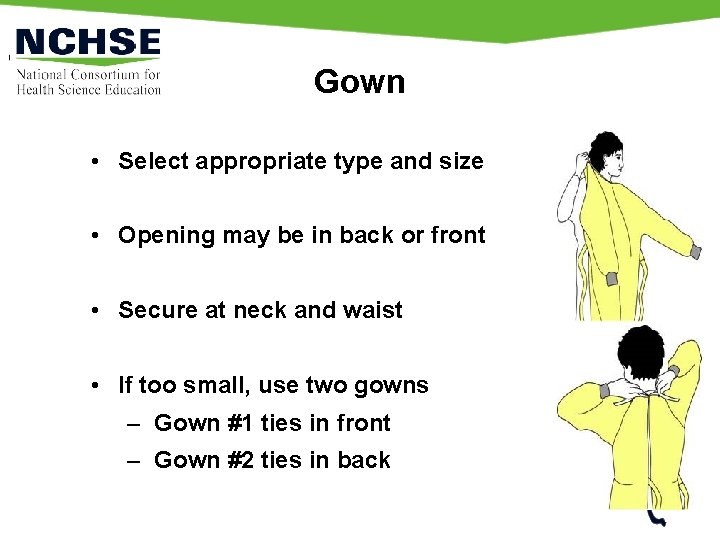
Gown • Select appropriate type and size • Opening may be in back or front • Secure at neck and waist • If too small, use two gowns – Gown #1 ties in front – Gown #2 ties in back
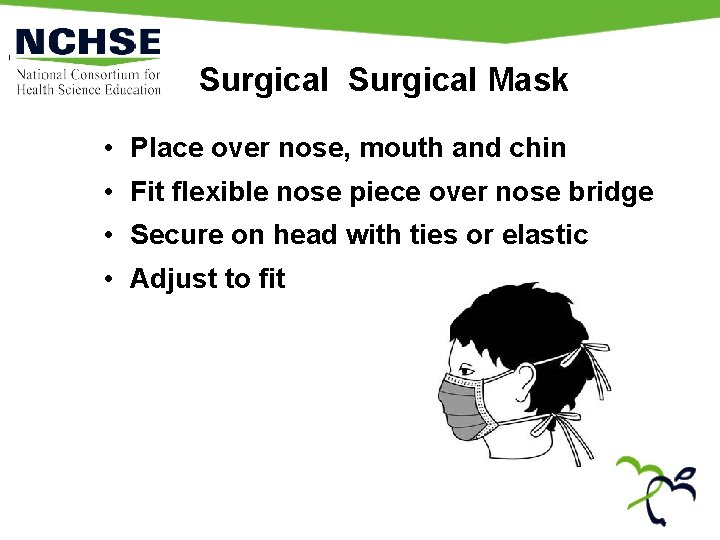
Surgical Mask • Place over nose, mouth and chin • Fit flexible nose piece over nose bridge • Secure on head with ties or elastic • Adjust to fit
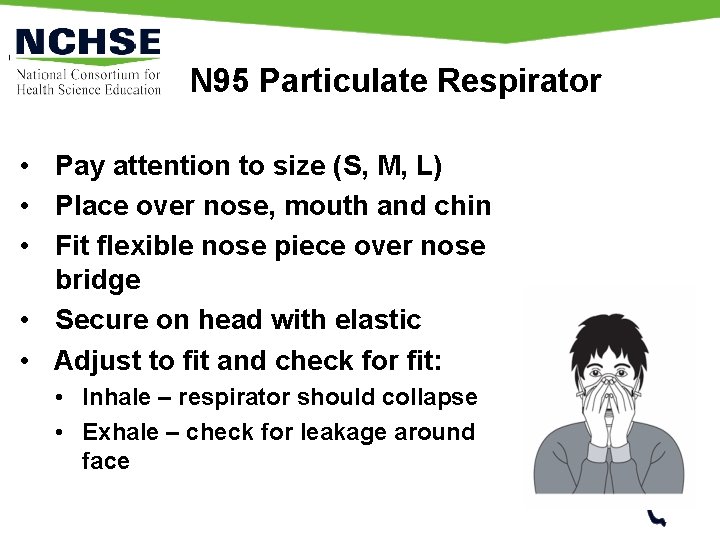
N 95 Particulate Respirator • Pay attention to size (S, M, L) • Place over nose, mouth and chin • Fit flexible nose piece over nose bridge • Secure on head with elastic • Adjust to fit and check for fit: • Inhale – respirator should collapse • Exhale – check for leakage around face
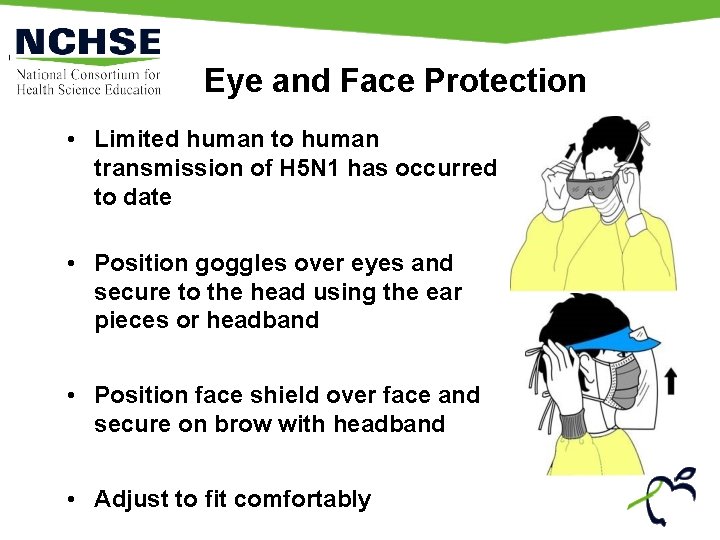
Eye and Face Protection • Limited human to human transmission of H 5 N 1 has occurred to date • Position goggles over eyes and secure to the head using the ear pieces or headband • Position face shield over face and secure on brow with headband • Adjust to fit comfortably
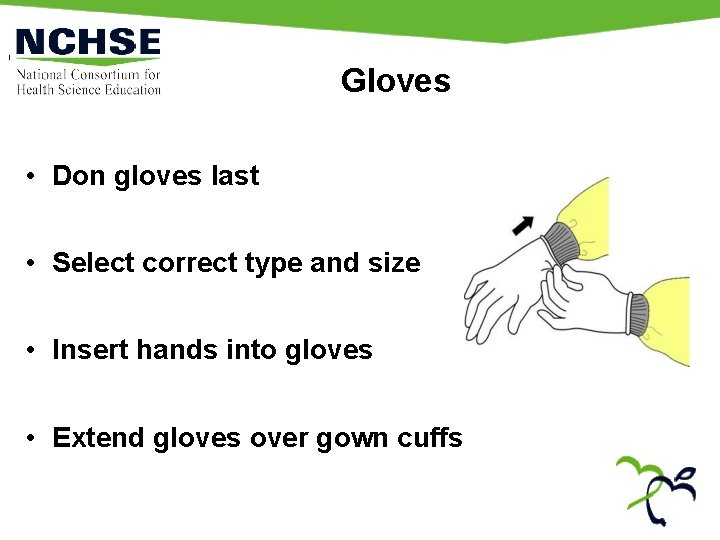
Gloves • Don gloves last • Select correct type and size • Insert hands into gloves • Extend gloves over gown cuffs
Key Infection Control Points • Minimize exposures – Plan before entering room • Avoid adjusting PPE after patient contact – Do not touch eyes, nose or mouth! • Avoid spreading infection – Limit surfaces and items touched • Change torn gloves – Wash hands before donning new gloves
Duration of PPE Use Surgical Masks (if N 95 not available) • Wear once and discard • Discard if moist N 95 Particulate Respirators • May use just one with cohorted patients Eye Protection • May wash, disinfect, reuse
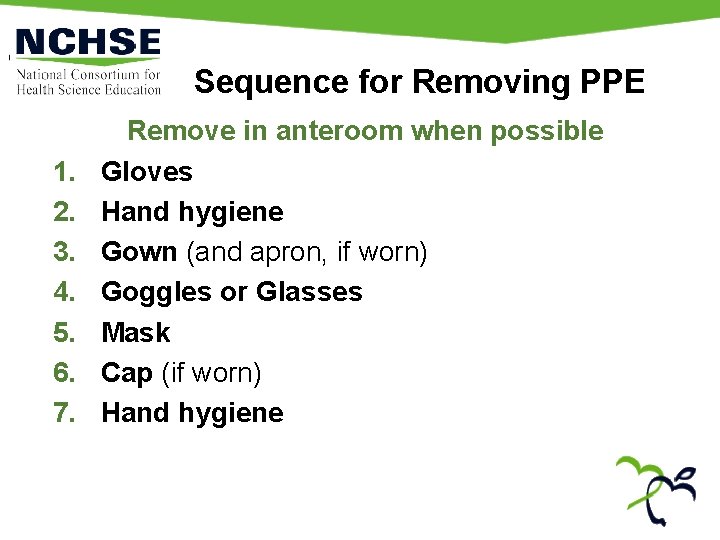
Sequence for Removing PPE 1. 2. 3. 4. 5. 6. 7. Remove in anteroom when possible Gloves Hand hygiene Gown (and apron, if worn) Goggles or Glasses Mask Cap (if worn) Hand hygiene
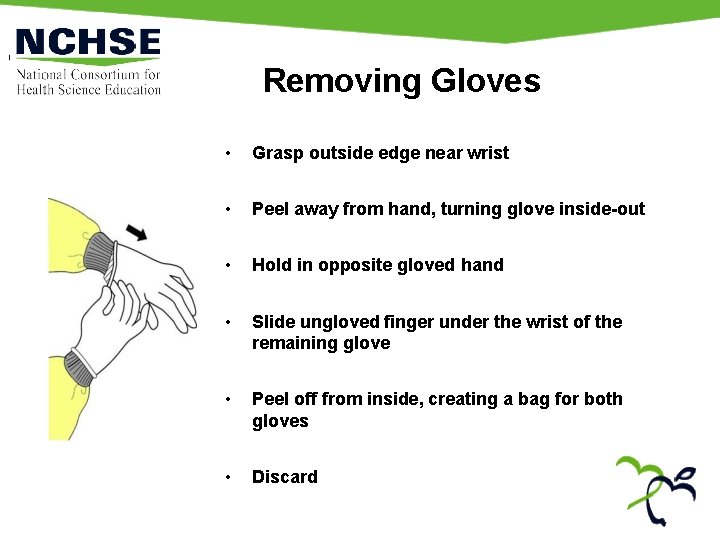
Removing Gloves • Grasp outside edge near wrist • Peel away from hand, turning glove inside-out • Hold in opposite gloved hand • Slide ungloved finger under the wrist of the remaining glove • Peel off from inside, creating a bag for both gloves • Discard
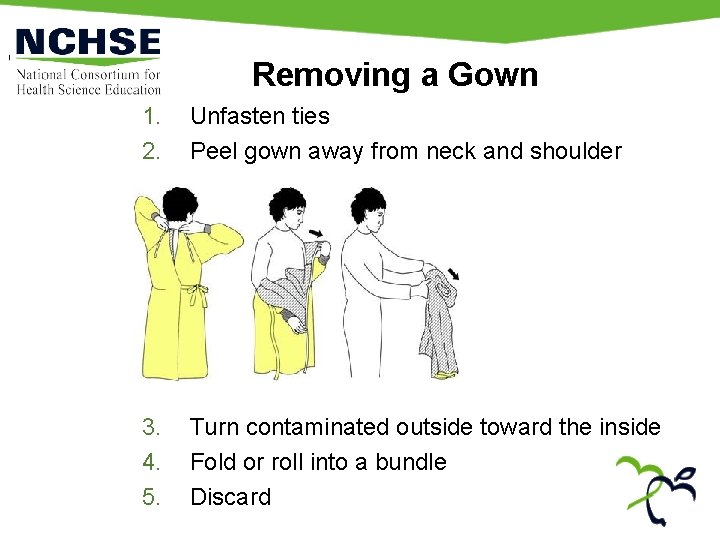
Removing a Gown 1. 2. Unfasten ties Peel gown away from neck and shoulder 3. 4. 5. Turn contaminated outside toward the inside Fold or roll into a bundle Discard
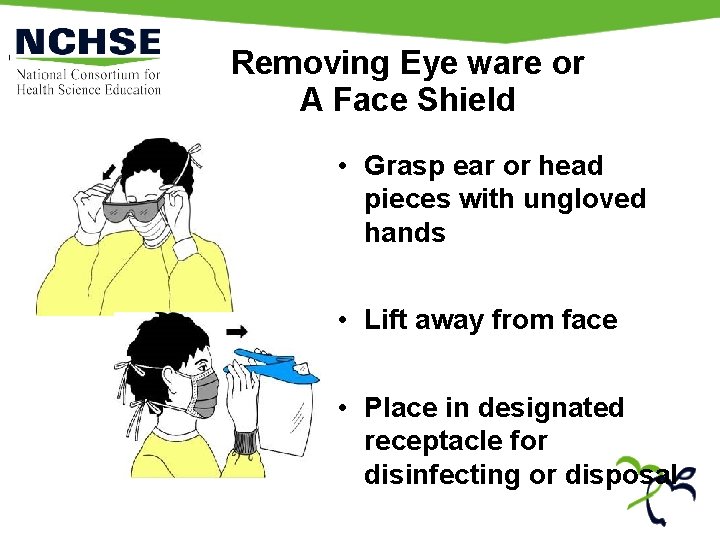
Removing Eye ware or A Face Shield • Grasp ear or head pieces with ungloved hands • Lift away from face • Place in designated receptacle for disinfecting or disposal
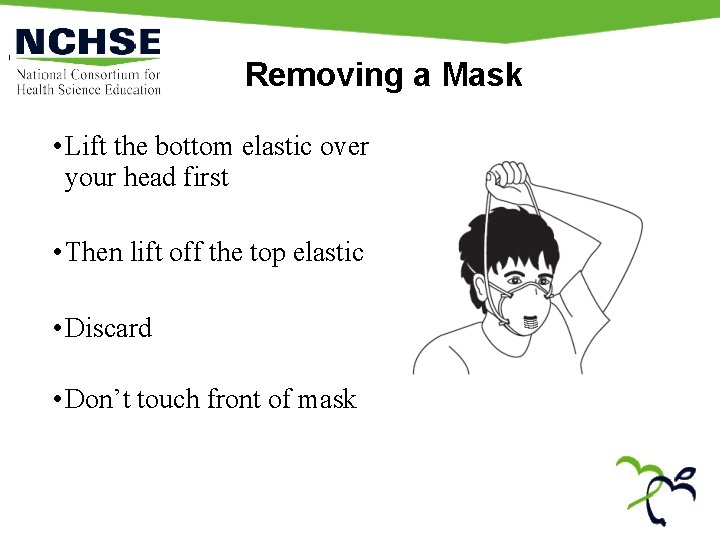
Removing a Mask • Lift the bottom elastic over your head first • Then lift off the top elastic • Discard • Don’t touch front of mask
Glossary Decontamination - The removal of harmful substances such as chemicals, harmful bacteria, or other organisms, from exposed individuals, rooms, and furnishings in buildings or in the outside environment. Disease transmission - The process of the spread of a disease agent through a population Infection control - Measures practiced by health care personnel in health care facilities to prevent the spread of infectious agents Personal protective equipment - Specialized clothing or equipment worn by a worker for protect from a hazard