
Principles of Immunology T Cell Development 31406 For
- Slides: 31
Principles of Immunology T Cell Development 3/14/06 “For every problem there is a neat, simple solution, and it is always wrong. “ H L Mencken
Word/Terms List o o o o Activation Differentiation Double negative cells Double positive cells Effector cells Maturation Negative selection Positive selection
Lymphopoiesis o o o T cell progenitors originate in the BM(~50 million per day) Migrate to thymus Characteristic surface marker and genetic/intracellular changes 98% never make it to maturity, i. e. only 1 million do Apoptosis hits those that do not have functional TCR or don’t get ”selected”
Lymphopoiesis o o o T cell generation slows down with age Mature T cells may divide in secondary lymphoid organs What is consequence of that?
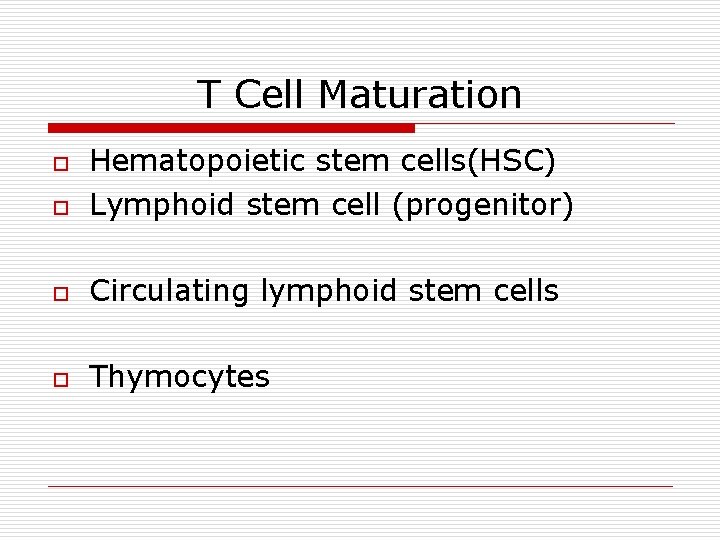
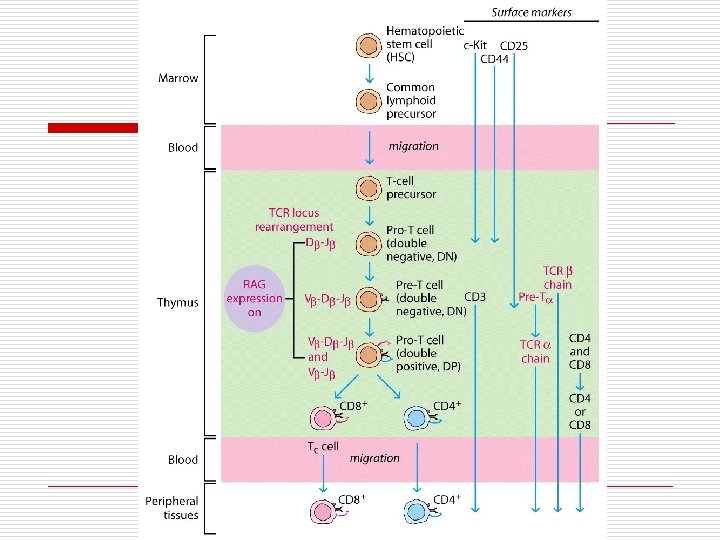
T Cell Maturation o Hematopoietic stem cells(HSC) Lymphoid stem cell (progenitor) o Circulating lymphoid stem cells o Thymocytes o
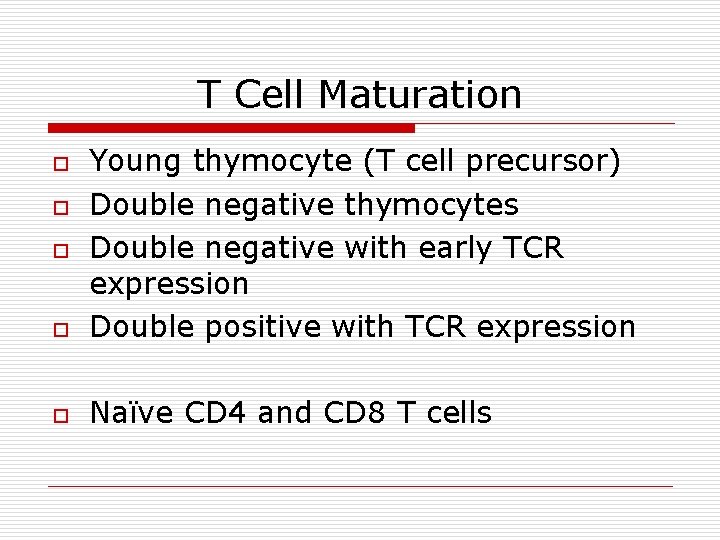
T Cell Maturation o Young thymocyte (T cell precursor) Double negative thymocytes Double negative with early TCR expression Double positive with TCR expression o Naïve CD 4 and CD 8 T cells o o o
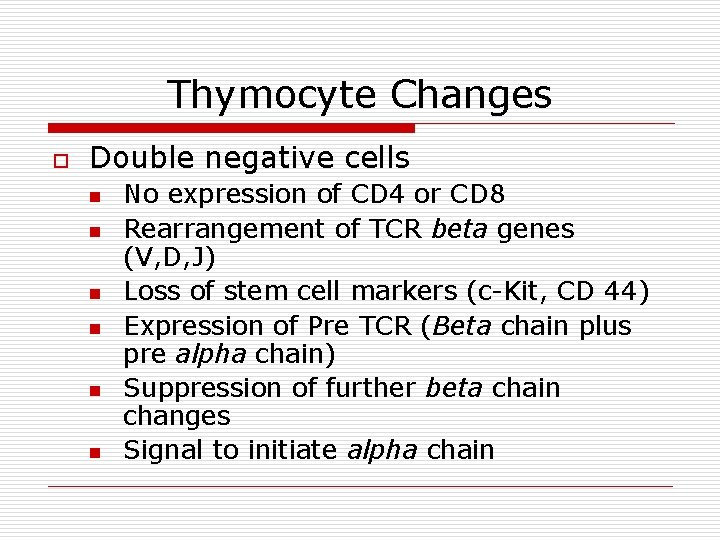
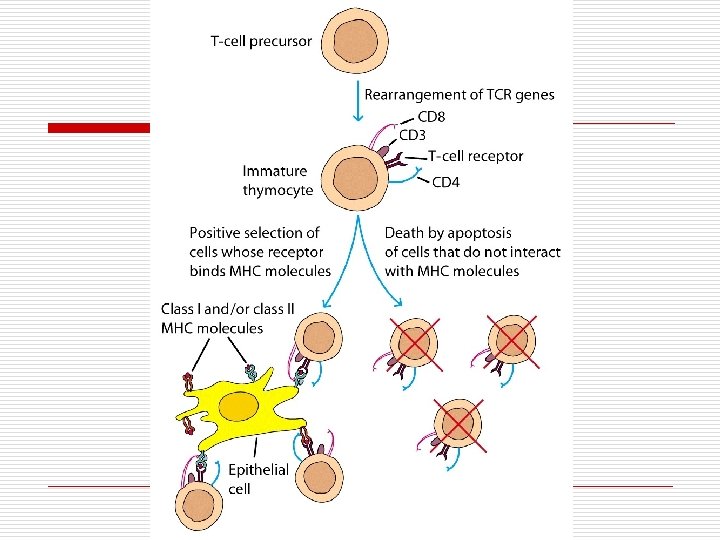
Thymocyte Changes o Double negative cells n n n No expression of CD 4 or CD 8 Rearrangement of TCR beta genes (V, D, J) Loss of stem cell markers (c-Kit, CD 44) Expression of Pre TCR (Beta chain plus pre alpha chain) Suppression of further beta chain changes Signal to initiate alpha chain
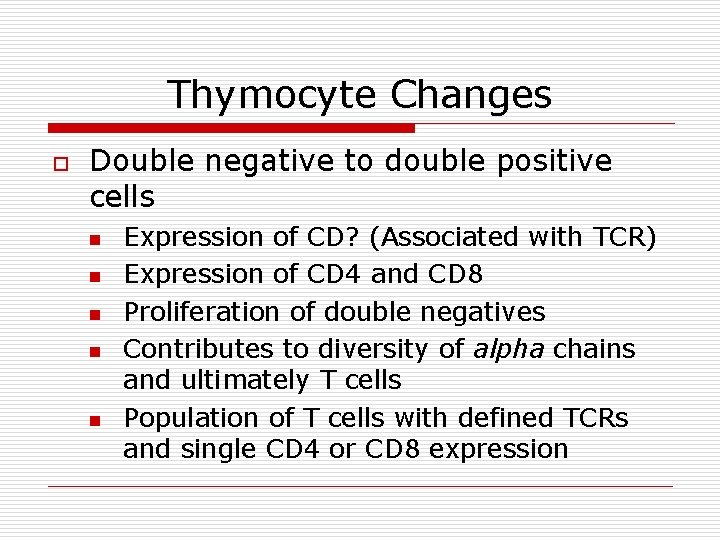
Thymocyte Changes o Double negative to double positive cells n n n Expression of CD? (Associated with TCR) Expression of CD 4 and CD 8 Proliferation of double negatives Contributes to diversity of alpha chains and ultimately T cells Population of T cells with defined TCRs and single CD 4 or CD 8 expression
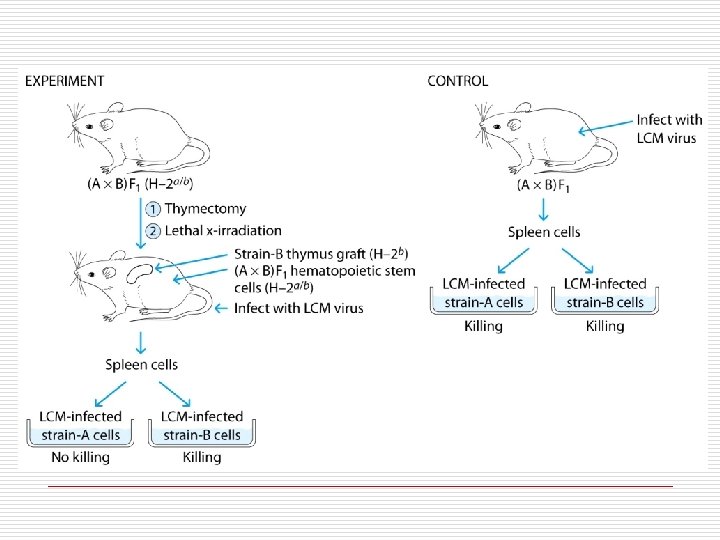
Thymic Selection o o Self MHC restricted Only T cells with TCRs that recognize same haplotype are “selected” for further maturation
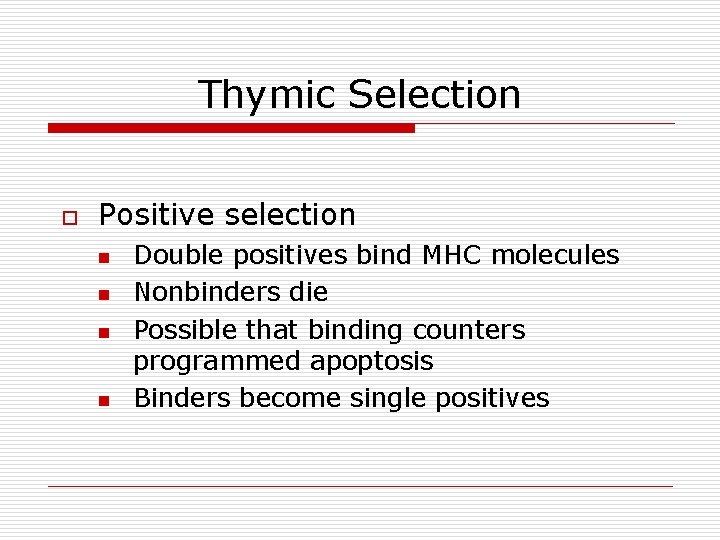
Thymic Selection o Positive selection n n Double positives bind MHC molecules Nonbinders die Possible that binding counters programmed apoptosis Binders become single positives
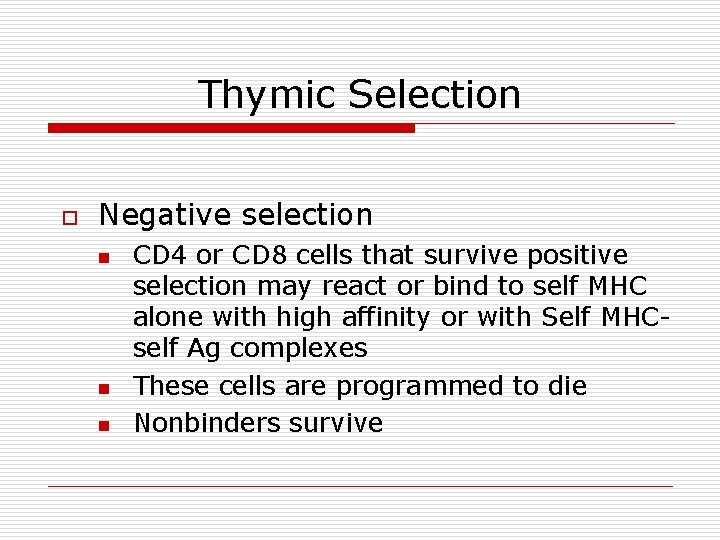
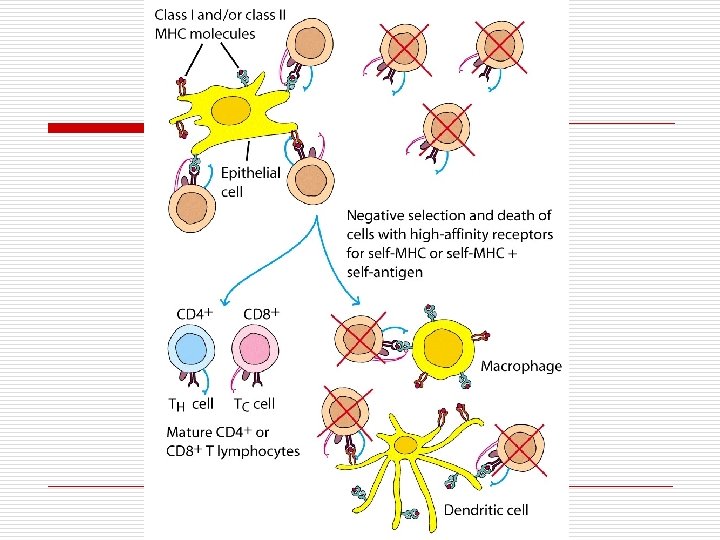
Thymic Selection o Negative selection n CD 4 or CD 8 cells that survive positive selection may react or bind to self MHC alone with high affinity or with Self MHCself Ag complexes These cells are programmed to die Nonbinders survive
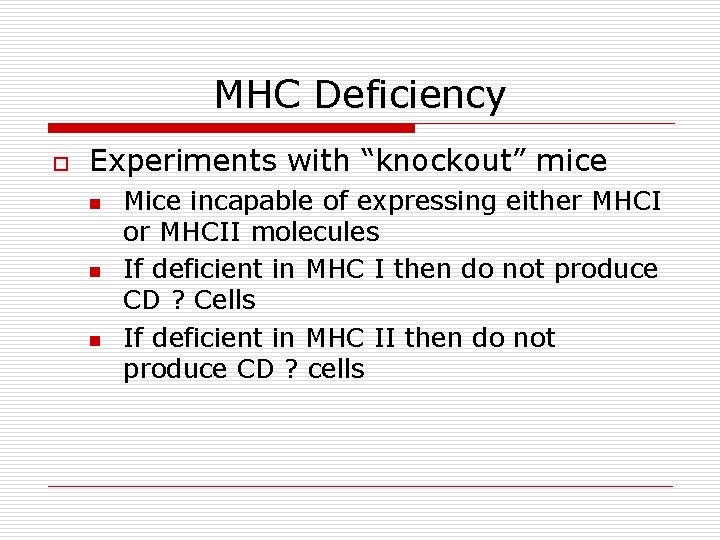
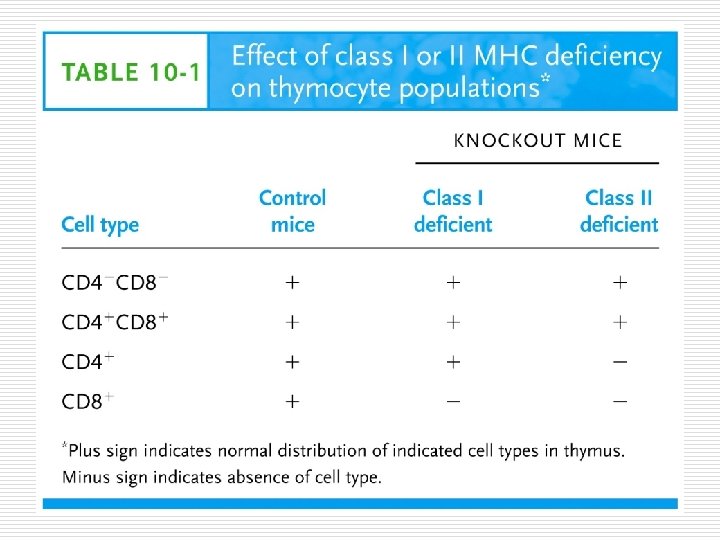
MHC Deficiency o Experiments with “knockout” mice n n n Mice incapable of expressing either MHCI or MHCII molecules If deficient in MHC I then do not produce CD ? Cells If deficient in MHC II then do not produce CD ? cells
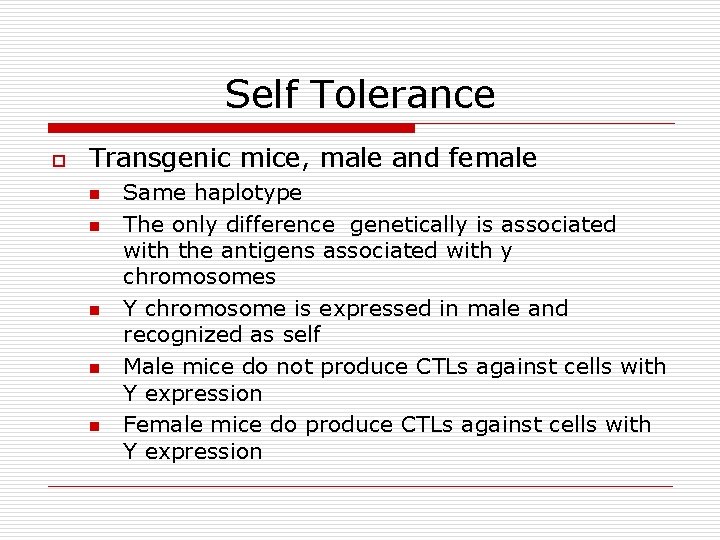
Self Tolerance o Transgenic mice, male and female n n n Same haplotype The only difference genetically is associated with the antigens associated with y chromosomes Y chromosome is expressed in male and recognized as self Male mice do not produce CTLs against cells with Y expression Female mice do produce CTLs against cells with Y expression
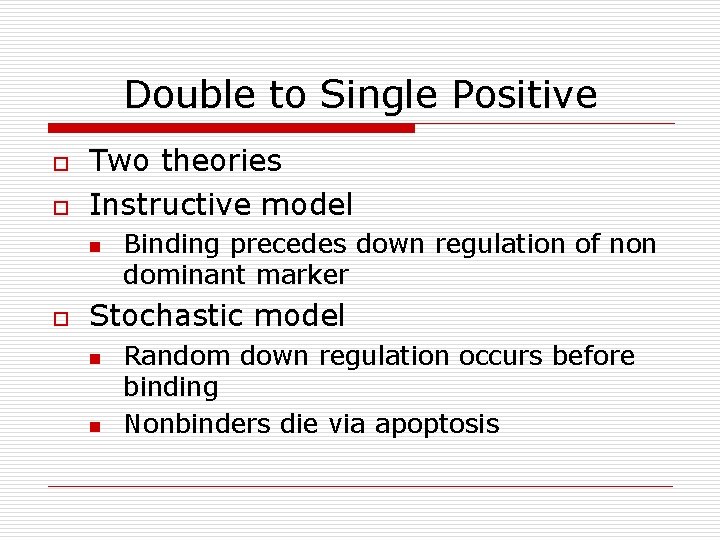
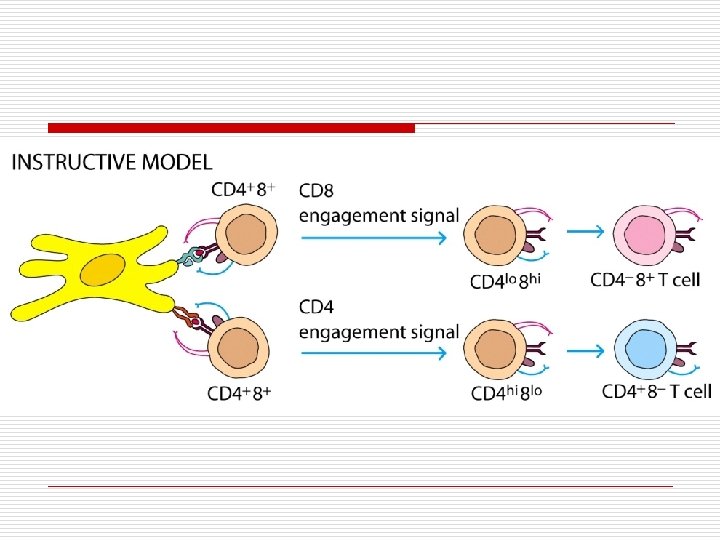
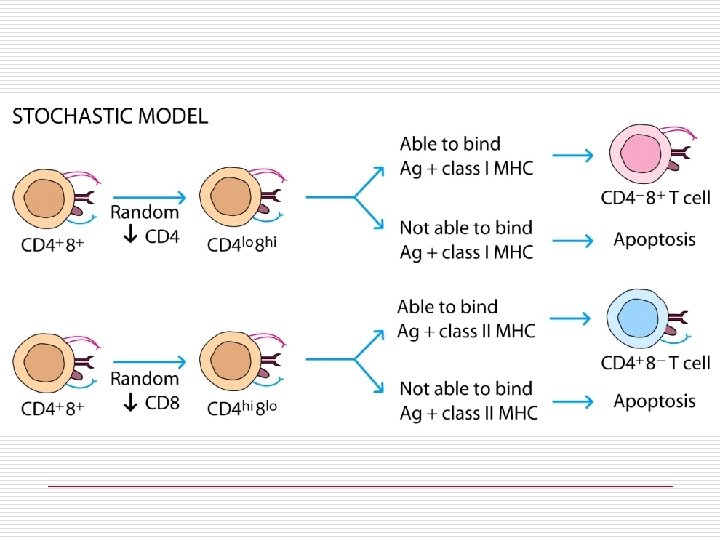
Double to Single Positive o o Two theories Instructive model n o Binding precedes down regulation of non dominant marker Stochastic model n n Random down regulation occurs before binding Nonbinders die via apoptosis
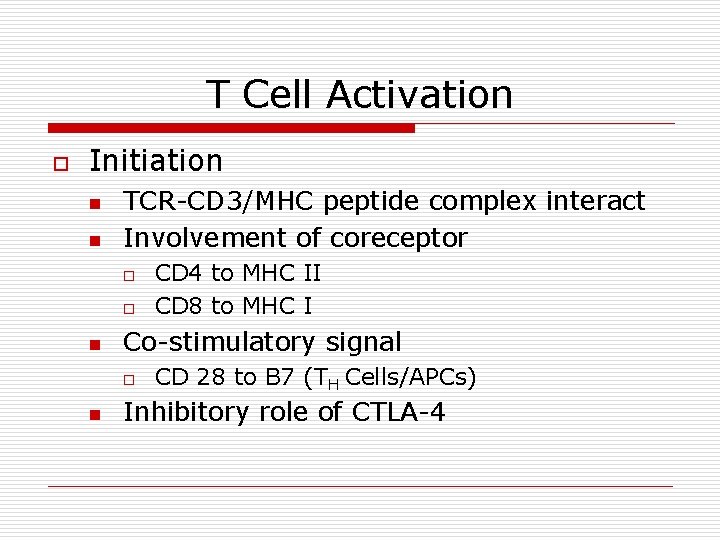
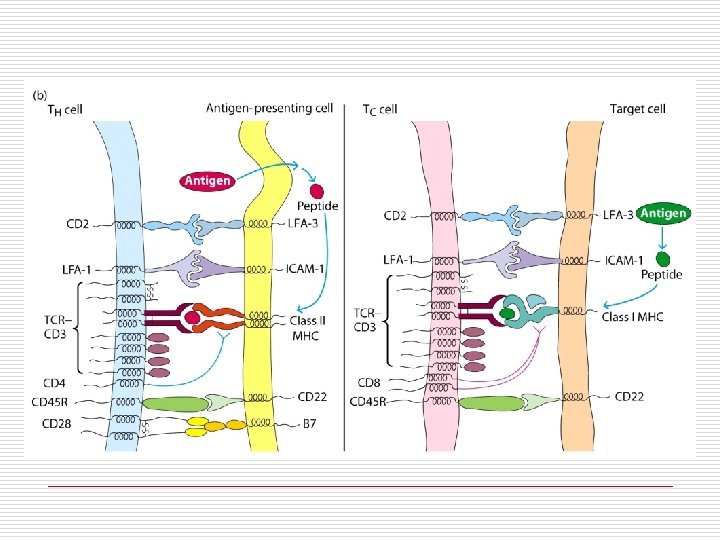
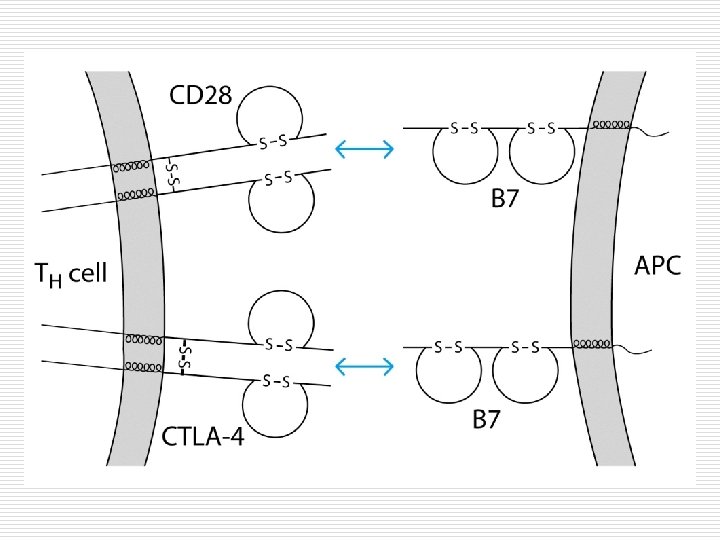
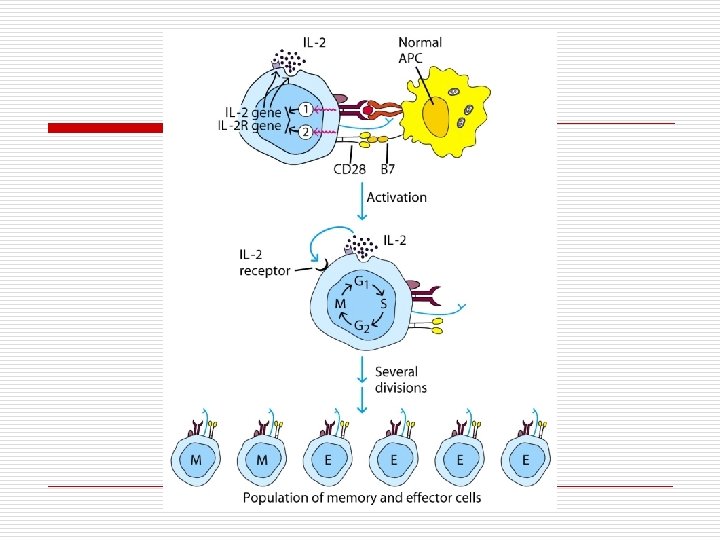
T Cell Activation o Initiation n n TCR-CD 3/MHC peptide complex interact Involvement of coreceptor o o n Co-stimulatory signal o n CD 4 to MHC II CD 8 to MHC I CD 28 to B 7 (TH Cells/APCs) Inhibitory role of CTLA-4
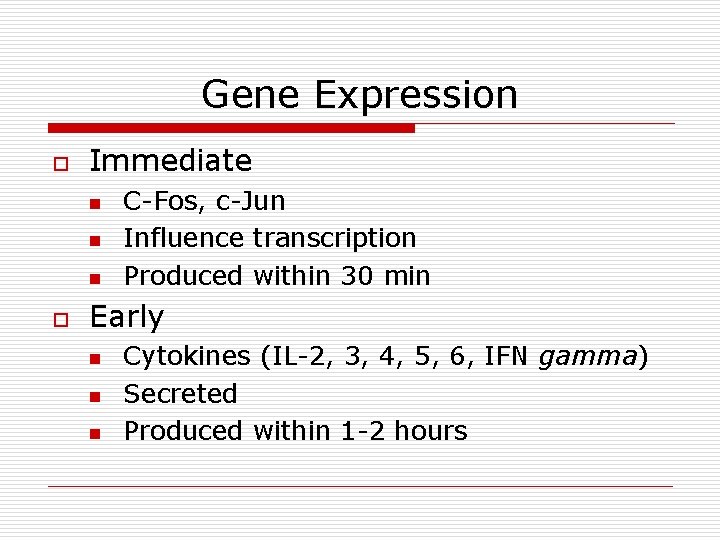
Gene Expression o Immediate n n n o C-Fos, c-Jun Influence transcription Produced within 30 min Early n n n Cytokines (IL-2, 3, 4, 5, 6, IFN gamma) Secreted Produced within 1 -2 hours
Gene Expression o Late n n Adhesion molecules Produced within days
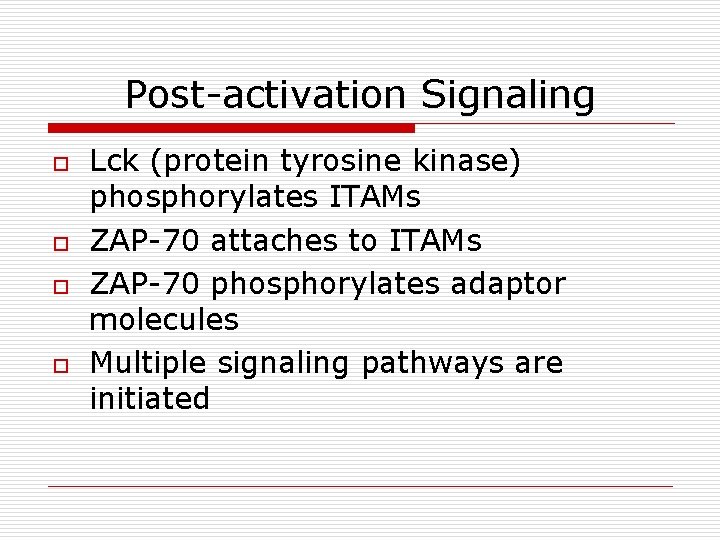
Post-activation Signaling o o Lck (protein tyrosine kinase) phosphorylates ITAMs ZAP-70 attaches to ITAMs ZAP-70 phosphorylates adaptor molecules Multiple signaling pathways are initiated
Results of Signaling Pathways o o o Gene expression changes Functional changes Differentiation
Differentiation o o o Occurs in secondary lymphoid tissue Activated cell becomes a blast cell IL-2 levels are increased 100 times Binds to IL-2 receptor on producing cell Takes several days to occur Effector cells and memory cells are produced
Differentiation o Functions of effectors n n o B cell helper Cytotoxicity Characteristics of memory cells n n Last months to years vs. effector cells that last days to weeks Memory cells more easily activated by all APCs then naïve T cells