
Principles of Government Origins of Government Govt and
- Slides: 21
Principles of Government Origins of Government
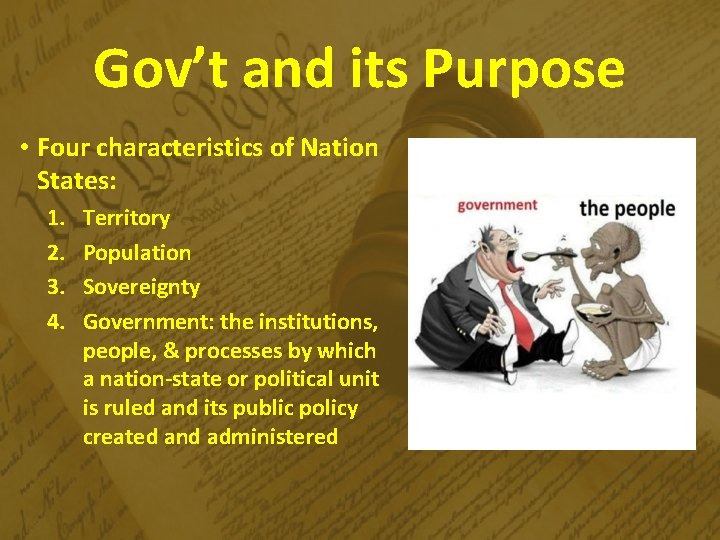
Gov’t and its Purpose • Four characteristics of Nation States: 1. 2. 3. 4. Territory Population Sovereignty Government: the institutions, people, & processes by which a nation-state or political unit is ruled and its public policy created and administered
Gov’t and its Purpose • Gov’t Responsibilities 1. Protection 2. Maintenance of Public Order 3. Resolution of Social Conflicts 4. Creating and maintaining a stable economy 5. Provision of Public Service
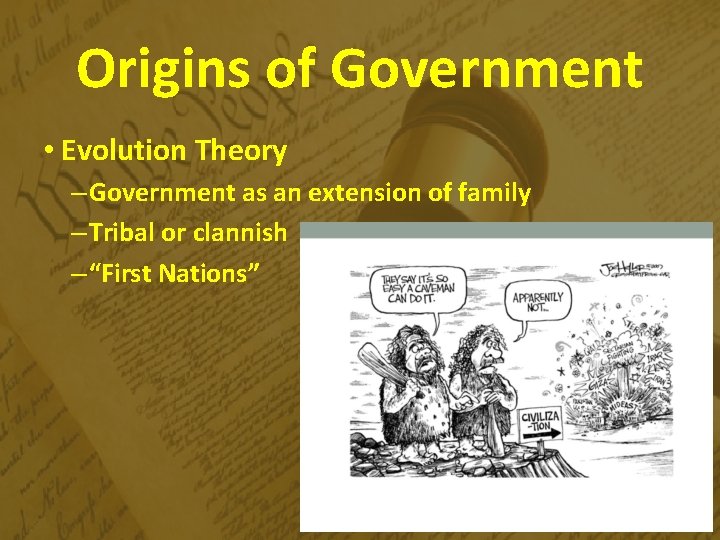
Origins of Government • Evolution Theory – Government as an extension of family – Tribal or clannish – “First Nations”
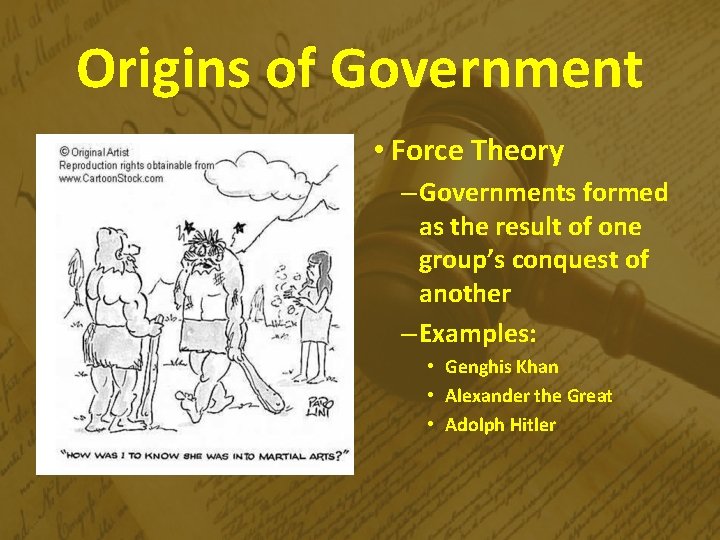
Origins of Government • Force Theory – Governments formed as the result of one group’s conquest of another – Examples: • Genghis Khan • Alexander the Great • Adolph Hitler
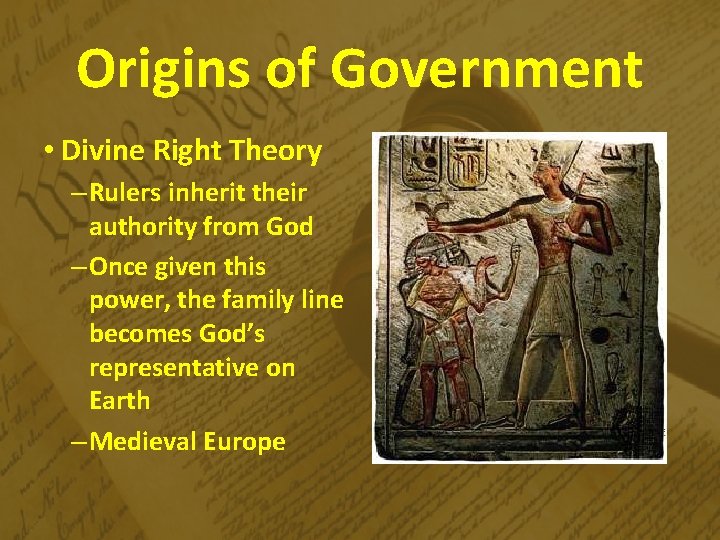
Origins of Government • Divine Right Theory – Rulers inherit their authority from God – Once given this power, the family line becomes God’s representative on Earth – Medieval Europe
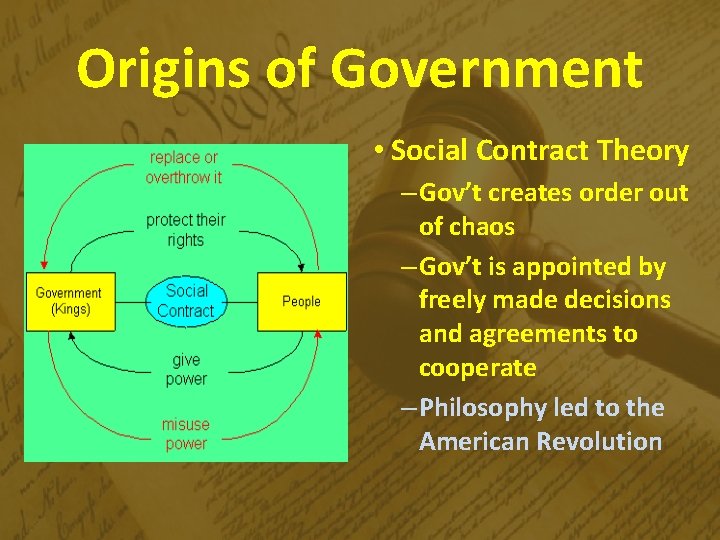
Origins of Government • Social Contract Theory – Gov’t creates order out of chaos – Gov’t is appointed by freely made decisions and agreements to cooperate – Philosophy led to the American Revolution
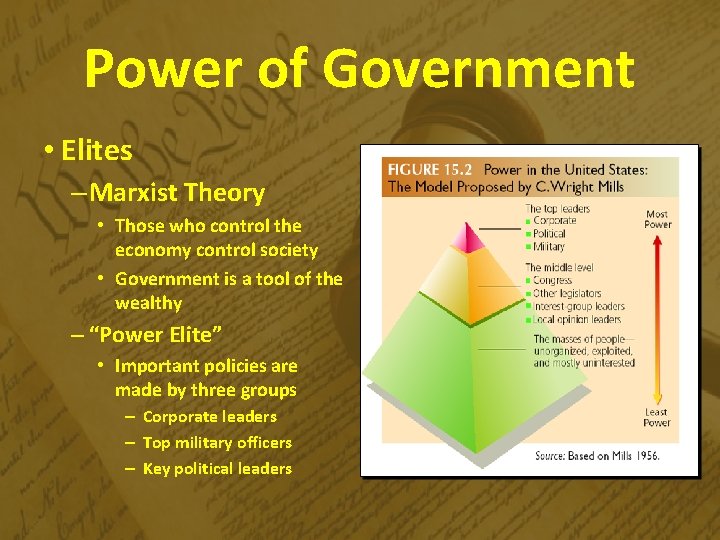
Power of Government • Elites – Marxist Theory • Those who control the economy control society • Government is a tool of the wealthy – “Power Elite” • Important policies are made by three groups – Corporate leaders – Top military officers – Key political leaders
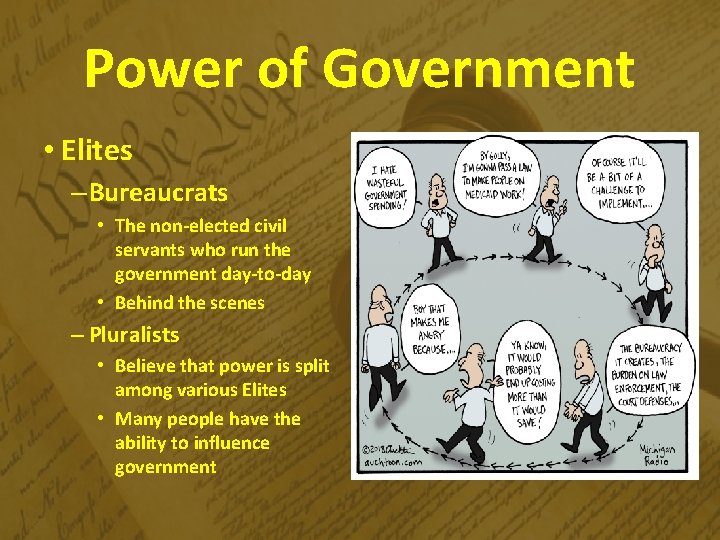
Power of Government • Elites – Bureaucrats • The non-elected civil servants who run the government day-to-day • Behind the scenes – Pluralists • Believe that power is split among various Elites • Many people have the ability to influence government
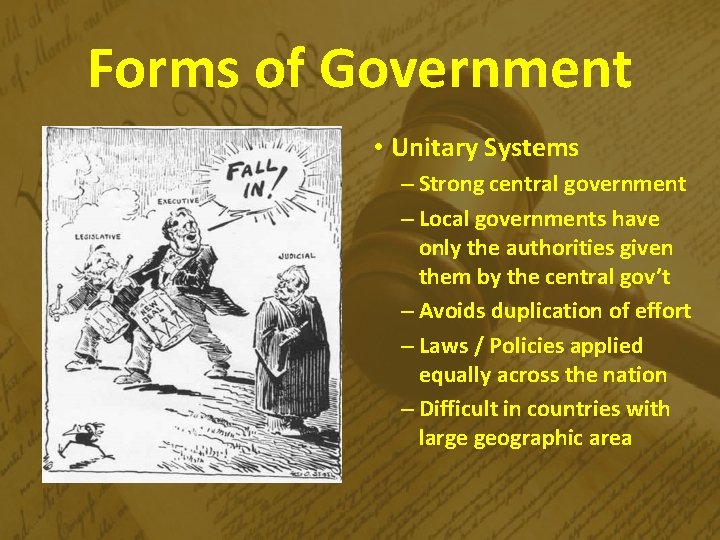
Forms of Government • Unitary Systems – Strong central government – Local governments have only the authorities given them by the central gov’t – Avoids duplication of effort – Laws / Policies applied equally across the nation – Difficult in countries with large geographic area
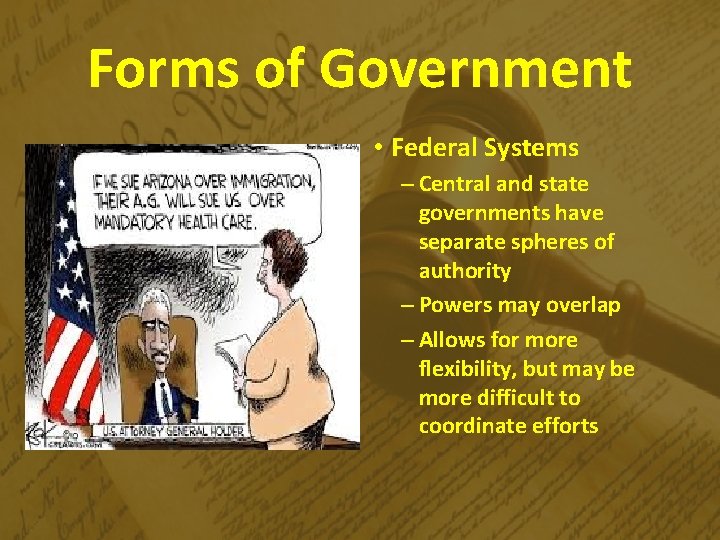
Forms of Government • Federal Systems – Central and state governments have separate spheres of authority – Powers may overlap – Allows for more flexibility, but may be more difficult to coordinate efforts
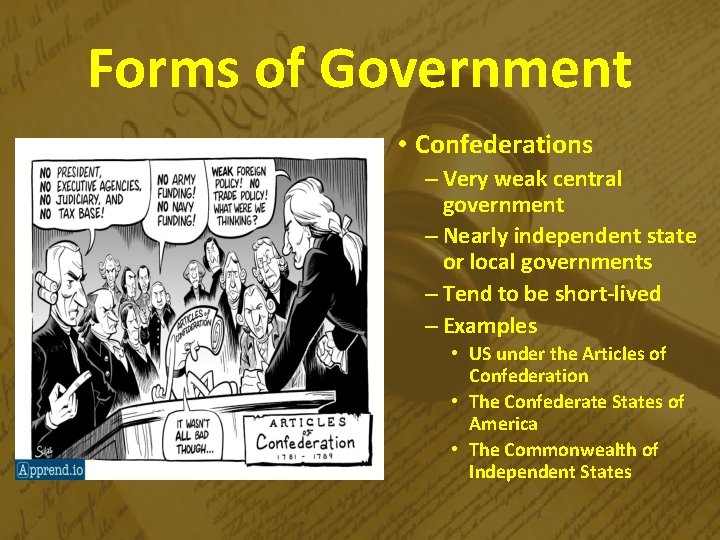
Forms of Government • Confederations – Very weak central government – Nearly independent state or local governments – Tend to be short-lived – Examples • US under the Articles of Confederation • The Confederate States of America • The Commonwealth of Independent States
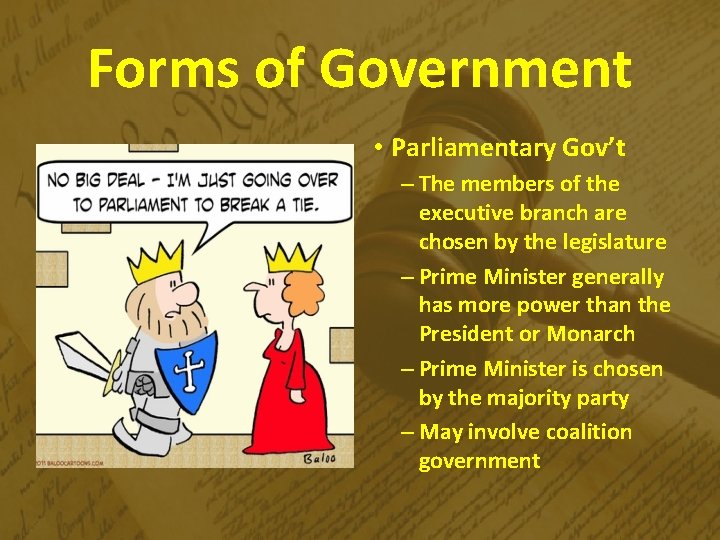
Forms of Government • Parliamentary Gov’t – The members of the executive branch are chosen by the legislature – Prime Minister generally has more power than the President or Monarch – Prime Minister is chosen by the majority party – May involve coalition government
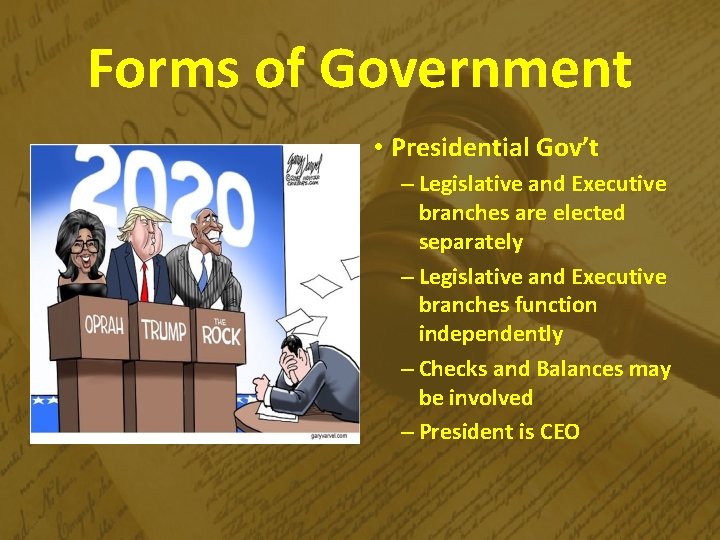
Forms of Government • Presidential Gov’t – Legislative and Executive branches are elected separately – Legislative and Executive branches function independently – Checks and Balances may be involved – President is CEO
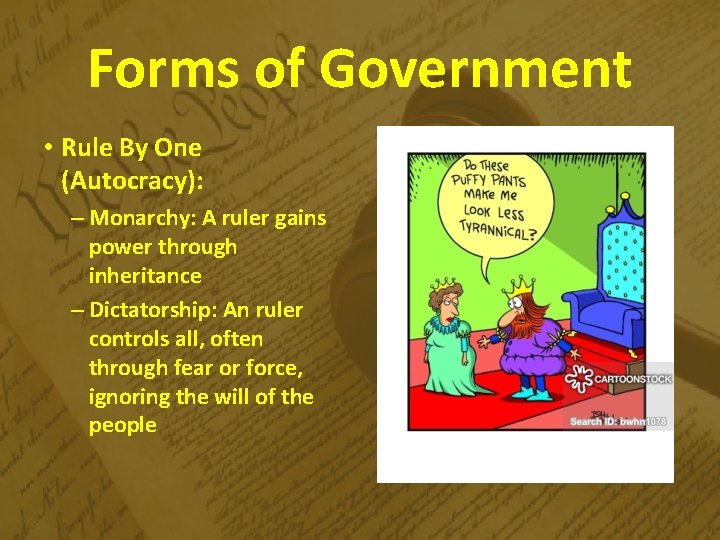
Forms of Government • Rule By One (Autocracy): – Monarchy: A ruler gains power through inheritance – Dictatorship: An ruler controls all, often through fear or force, ignoring the will of the people
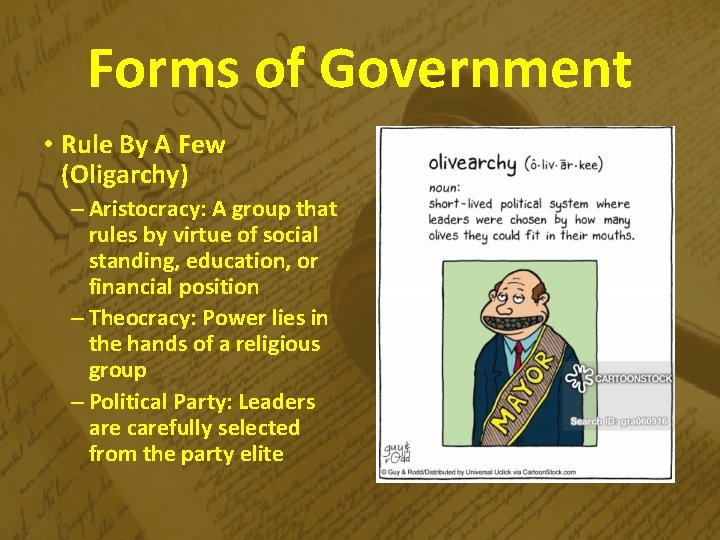
Forms of Government • Rule By A Few (Oligarchy) – Aristocracy: A group that rules by virtue of social standing, education, or financial position – Theocracy: Power lies in the hands of a religious group – Political Party: Leaders are carefully selected from the party elite
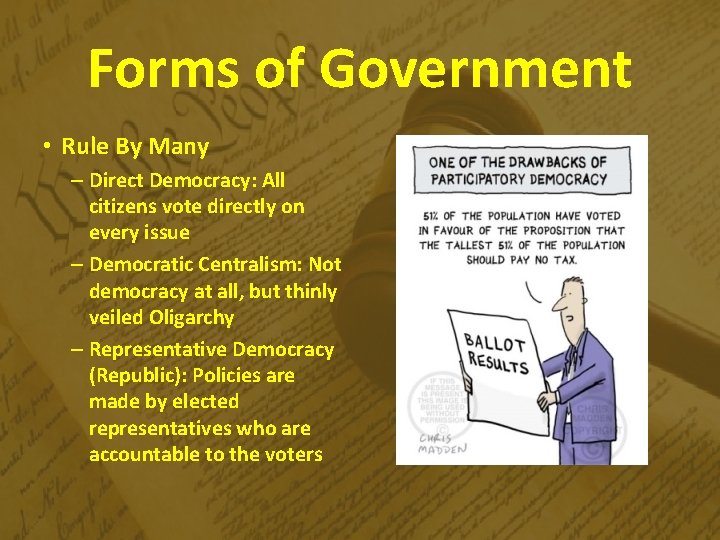
Forms of Government • Rule By Many – Direct Democracy: All citizens vote directly on every issue – Democratic Centralism: Not democracy at all, but thinly veiled Oligarchy – Representative Democracy (Republic): Policies are made by elected representatives who are accountable to the voters
Principles of Government Beginnings of American Government
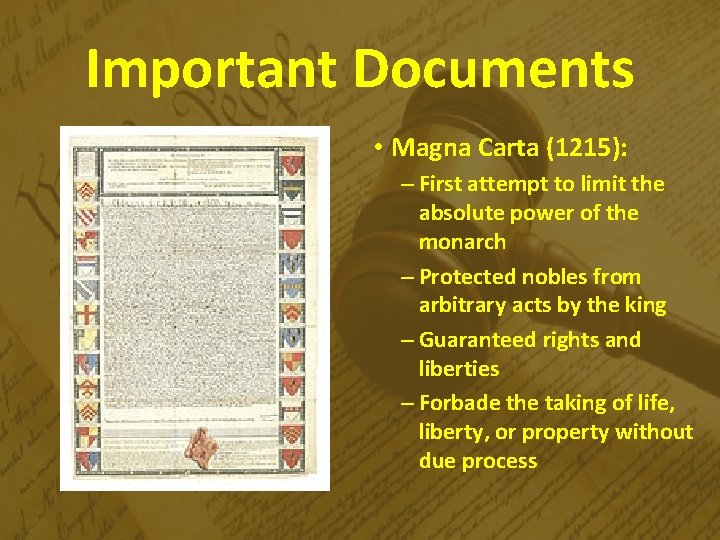
Important Documents • Magna Carta (1215): – First attempt to limit the absolute power of the monarch – Protected nobles from arbitrary acts by the king – Guaranteed rights and liberties – Forbade the taking of life, liberty, or property without due process
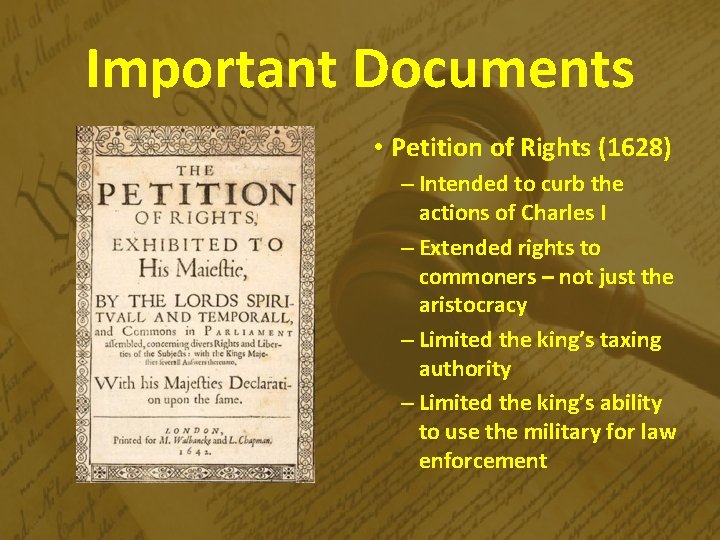
Important Documents • Petition of Rights (1628) – Intended to curb the actions of Charles I – Extended rights to commoners – not just the aristocracy – Limited the king’s taxing authority – Limited the king’s ability to use the military for law enforcement
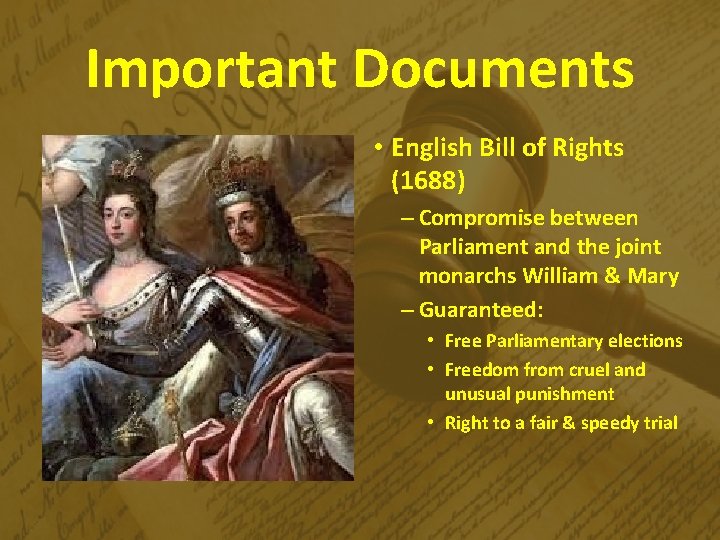
Important Documents • English Bill of Rights (1688) – Compromise between Parliament and the joint monarchs William & Mary – Guaranteed: • Free Parliamentary elections • Freedom from cruel and unusual punishment • Right to a fair & speedy trial