
Principles of Food Science and Nutrition PROTEIN PART
- Slides: 27
Principles of Food Science and Nutrition PROTEIN PART III Dr. Nahlaa Khalifa
Recommendations for Protein Intake l 1. 2. Recommended level of intake is expressed in two ways: Acceptable Macronutrient Distribution Range =10 – 25 % daily caloric intake 0. 8 grams protein per kg body weight (0. 36 gram per pound) (RDA) l l Computer program uses this value Most meet this level EASILY
Recommendations for protein intake l l l The protein allowance is based on the amount of protein necessary to maintain nitrogen balance. Generally , 45 to 60 grams of protein will meet the health needs of most adult. The requirements is then increased to account for the mixed protein diet and the allowance is 0. 8 grams for each kilogram of body wt. For adults a man weighing 79 kg and a woman weighing 63 kg need 63 grams and 50 grams of protein respectively For infants , the allowances are based on the amount of protein provided by the quantity of milk required to ensure a satisfactory rate growth.
Recommendations for protein intake l l l This is estimated to be 2. 24 grams /kilograms/ day during the first month of life and falls gradually to about 1. 5 grams kilograms day by the sixth month and decrease gradually to 0. 8 kilograms day by age 18. The protein requirements during growth is higher than that in adulthood , because nitrogen must be provided for the formation of new tissues. During pregnancy , at least 60 grams of protein daily is recommended . This is based on nitrogen retention of 16 milligrams kilograms day and on 50%utilization of dietary protein
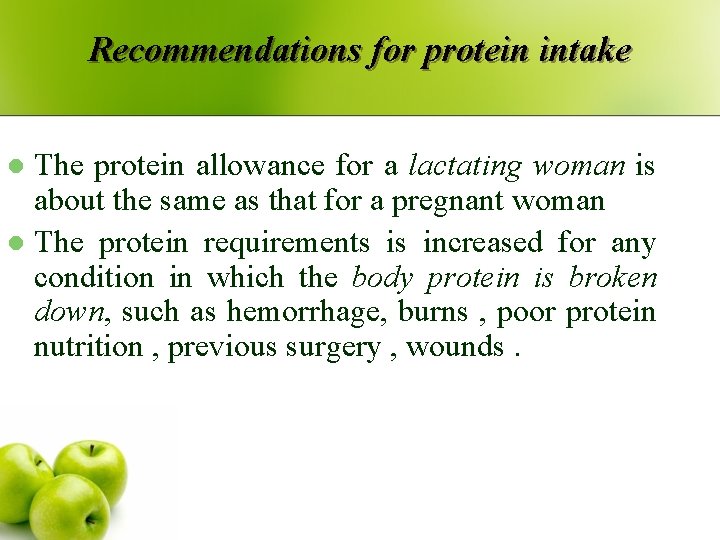
Recommendations for protein intake The protein allowance for a lactating woman is about the same as that for a pregnant woman l The protein requirements is increased for any condition in which the body protein is broken down, such as hemorrhage, burns , poor protein nutrition , previous surgery , wounds. l
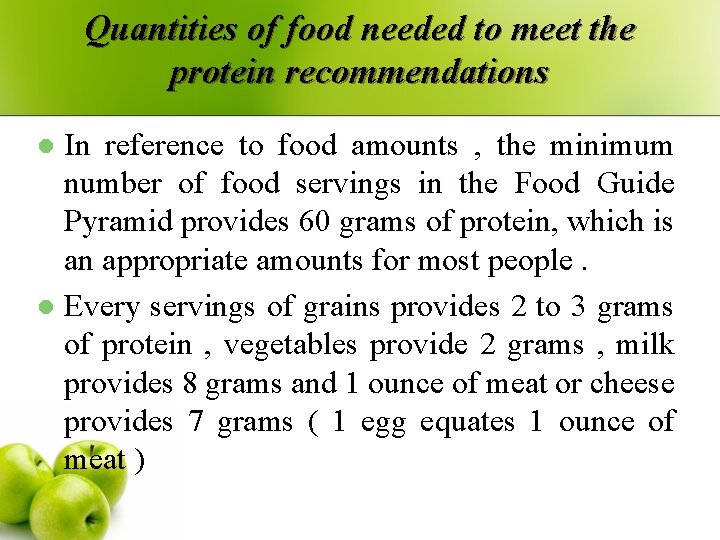
Quantities of food needed to meet the protein recommendations In reference to food amounts , the minimum number of food servings in the Food Guide Pyramid provides 60 grams of protein, which is an appropriate amounts for most people. l Every servings of grains provides 2 to 3 grams of protein , vegetables provide 2 grams , milk provides 8 grams and 1 ounce of meat or cheese provides 7 grams ( 1 egg equates 1 ounce of meat ) l
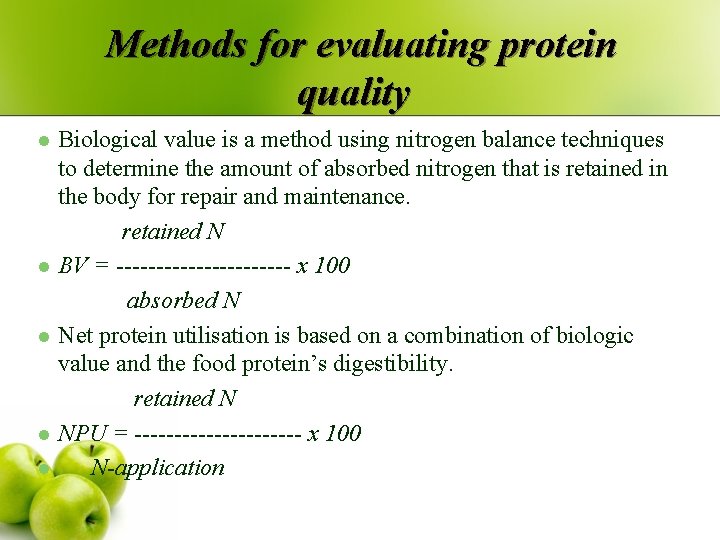
Methods for evaluating protein quality Biological value is a method using nitrogen balance techniques to determine the amount of absorbed nitrogen that is retained in the body for repair and maintenance. retained N l BV = ----------- x 100 absorbed N l Net protein utilisation is based on a combination of biologic value and the food protein’s digestibility. retained N l NPU = ----------- x 100 l N-application l
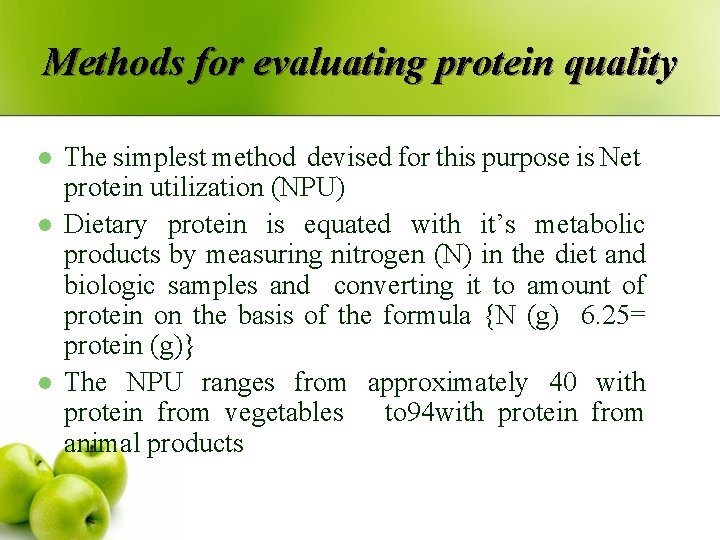
Methods for evaluating protein quality l l l The simplest method devised for this purpose is Net protein utilization (NPU) Dietary protein is equated with it’s metabolic products by measuring nitrogen (N) in the diet and biologic samples and converting it to amount of protein on the basis of the formula {N (g) 6. 25= protein (g)} The NPU ranges from approximately 40 with protein from vegetables to 94 with protein from animal products
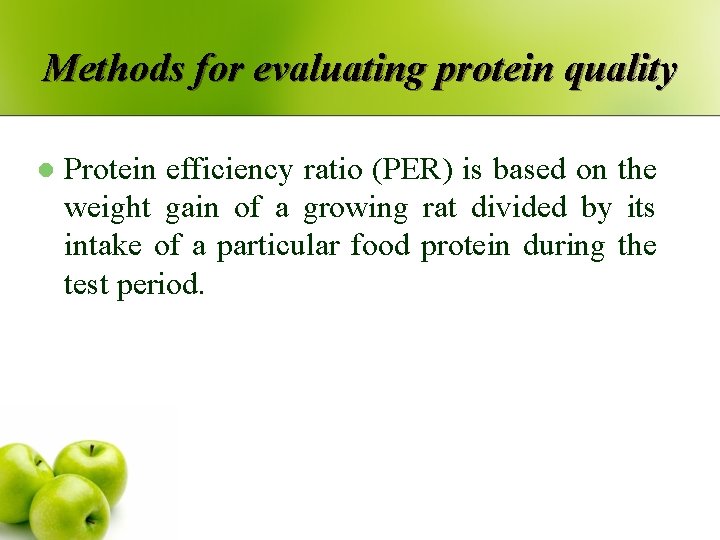
Methods for evaluating protein quality l Protein efficiency ratio (PER) is based on the weight gain of a growing rat divided by its intake of a particular food protein during the test period.
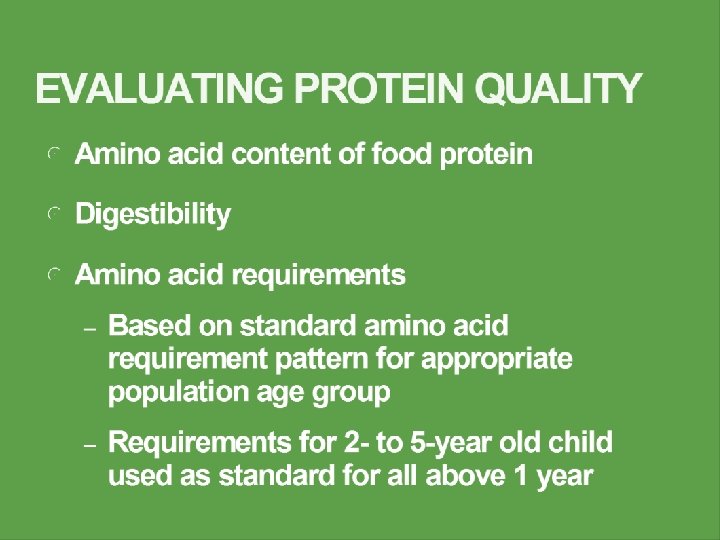
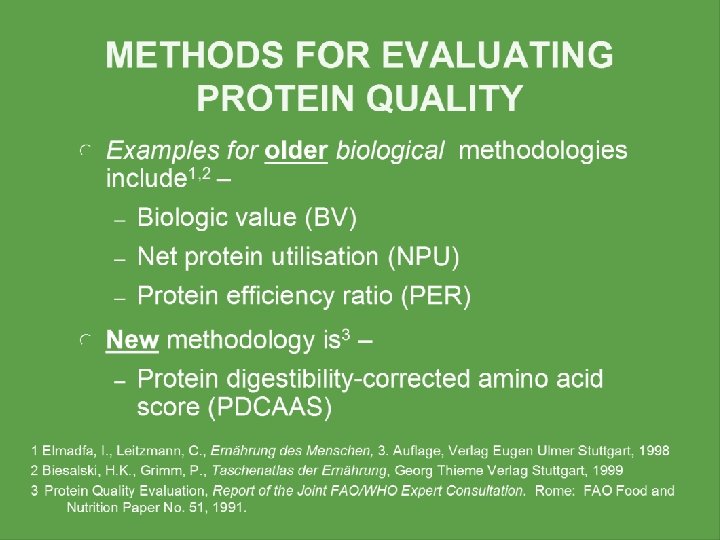
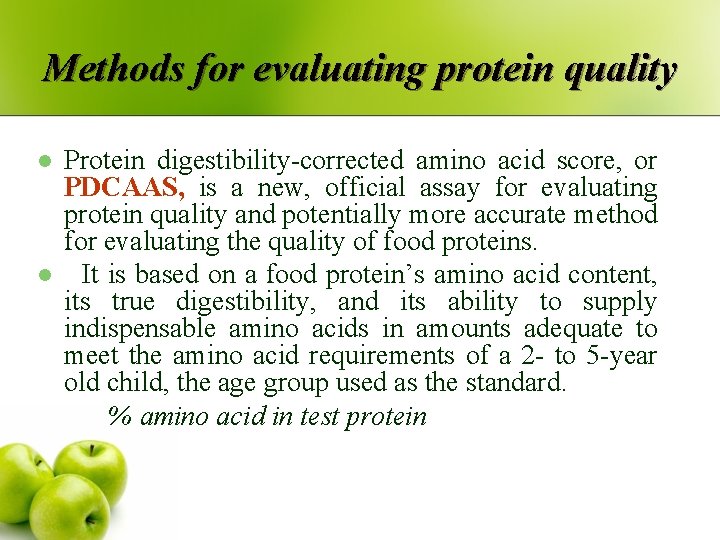
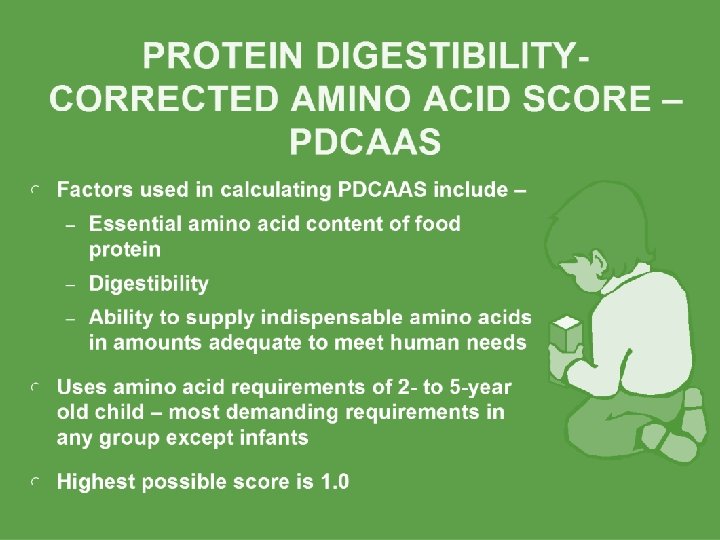
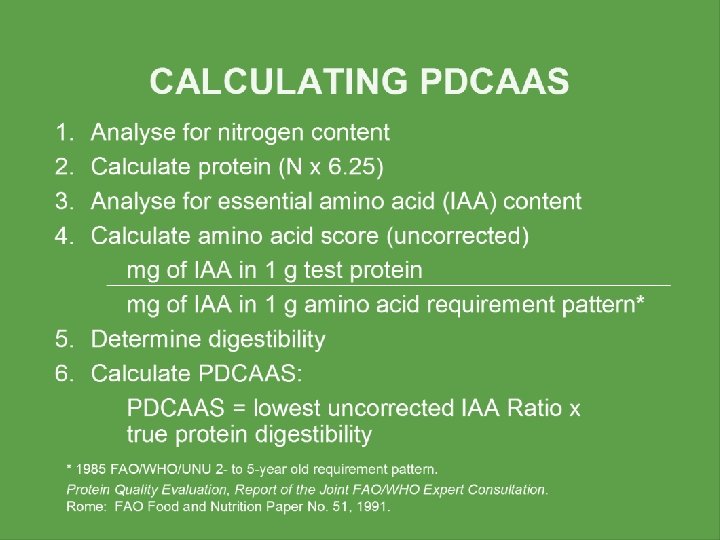
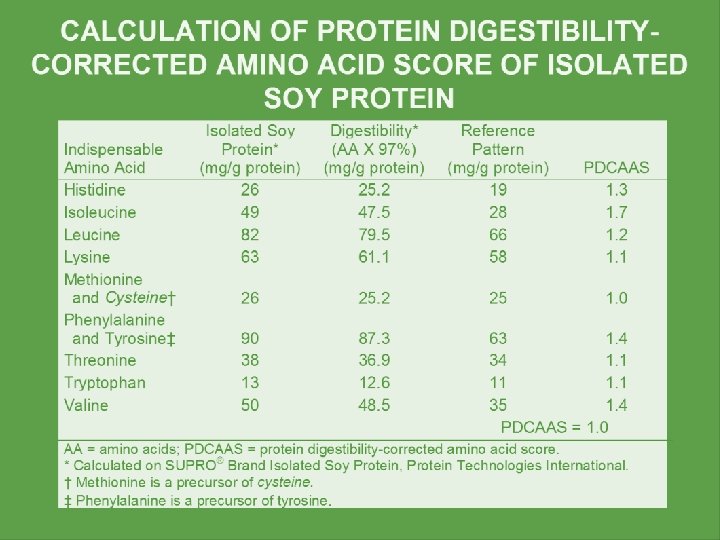
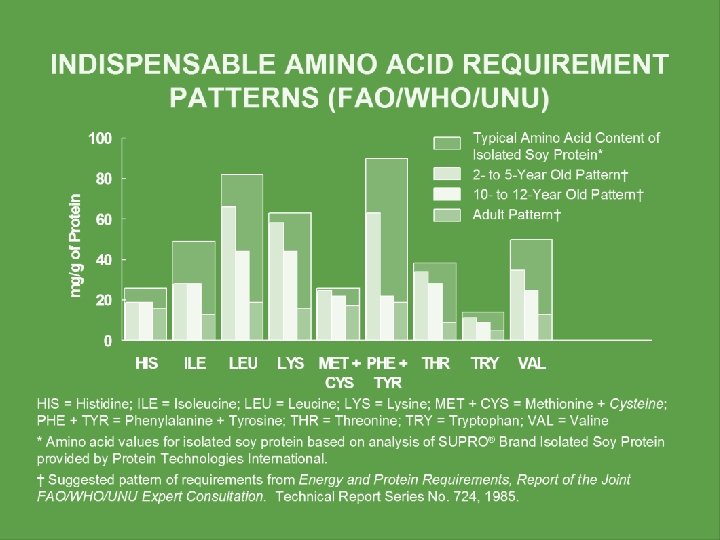
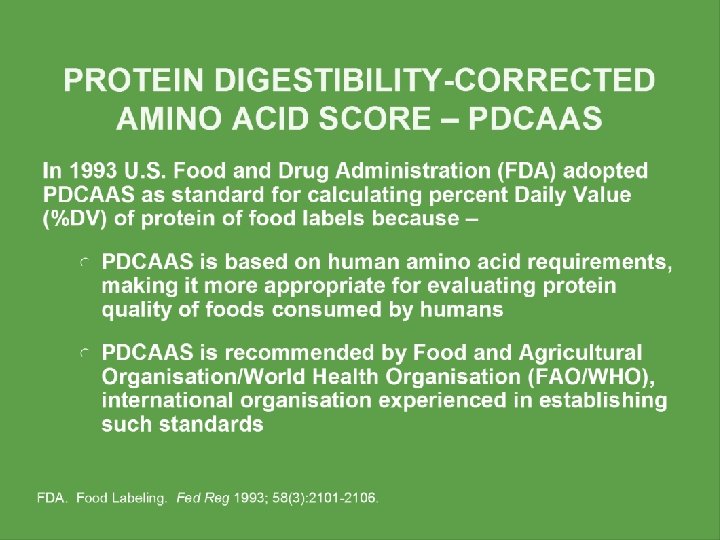
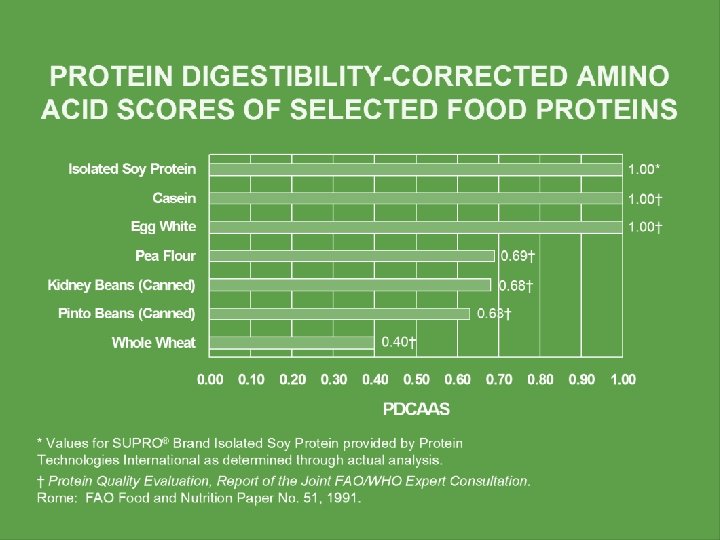
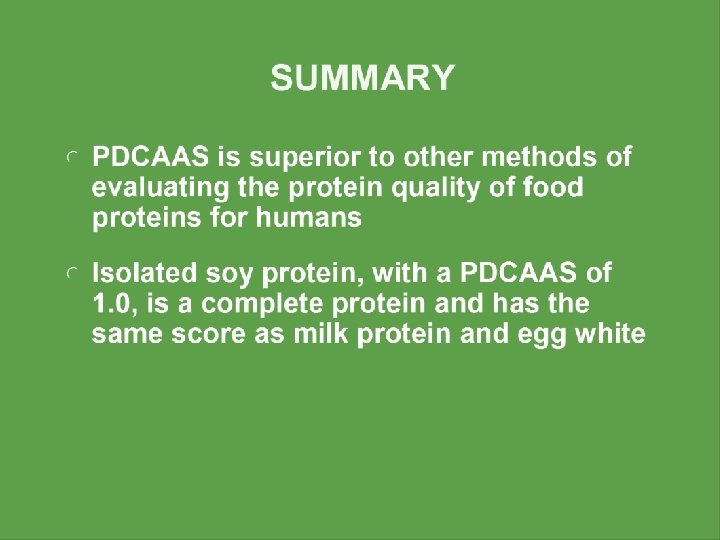
Methods for evaluating protein quality l l Protein digestibility-corrected amino acid score, or PDCAAS, is a new, official assay for evaluating protein quality and potentially more accurate method for evaluating the quality of food proteins. It is based on a food protein’s amino acid content, its true digestibility, and its ability to supply indispensable amino acids in amounts adequate to meet the amino acid requirements of a 2 - to 5 -year old child, the age group used as the standard. % amino acid in test protein
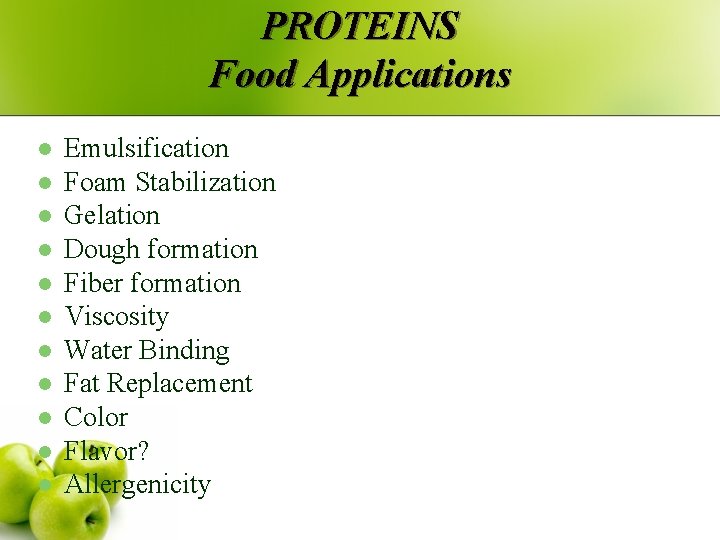
PROTEINS Food Applications l l l Emulsification Foam Stabilization Gelation Dough formation Fiber formation Viscosity Water Binding Fat Replacement Color Flavor? Allergenicity
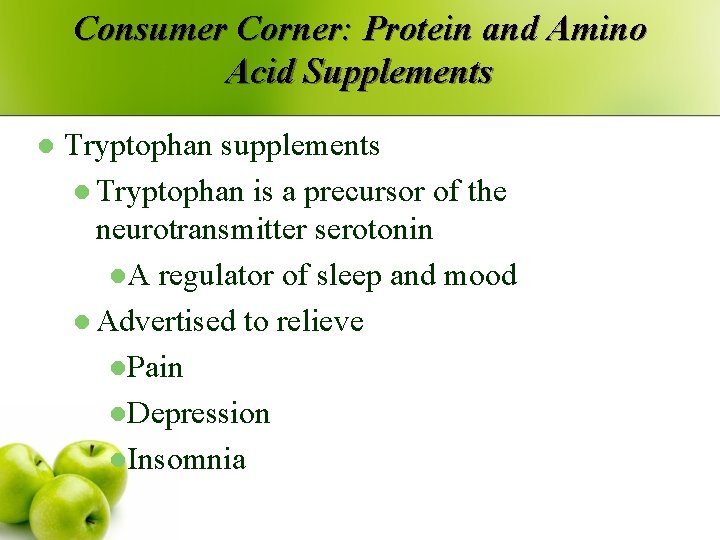
Consumer Corner: Protein and Amino Acid Supplements l Tryptophan supplements l Tryptophan is a precursor of the neurotransmitter serotonin l. A regulator of sleep and mood l Advertised to relieve l. Pain l. Depression l. Insomnia
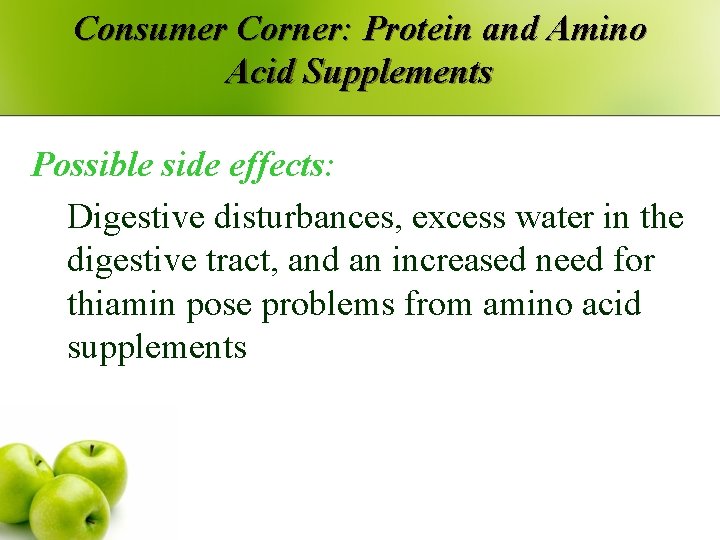
Consumer Corner: Protein and Amino Acid Supplements Possible side effects: Digestive disturbances, excess water in the digestive tract, and an increased need for thiamin pose problems from amino acid supplements
Consumer Corner: Protein and Amino Acid Supplements Creatine supplements Boost sport performance by increasing energy level l Increase muscle mass l Possible side effects: l l Enlarged liver and kidneys l Kidney damage l Muscle cramp
Gender and Protein l Naturally men have a higher metabolism than most women because of their larger physical size, bone structure, muscle mass & larger brain size. l Women who have gone through menopause, may need to pay attention to protein intake and increase calcium to assist in the prevention of osteoporosis
Vegetarianism Vegan - no animal products l Lacto-vegetarian - eats only dairy products - avoid all flesh products l Ovo-vegetarian – eats only eggs l Ovolacto-vegetarian - eats eggs and dairy l Pesco-vegetarian - eats fish, dairy, eggs, no red meat, poultry & pork l Semi-vegetarians - eat fish chicken, dairy, and eggs, but no red meat & pork l