
Principles of Flight Leading Cadet Training Pressure Lift
- Slides: 33
Principles of Flight Leading Cadet Training Pressure, Lift and Weight Lecture 1
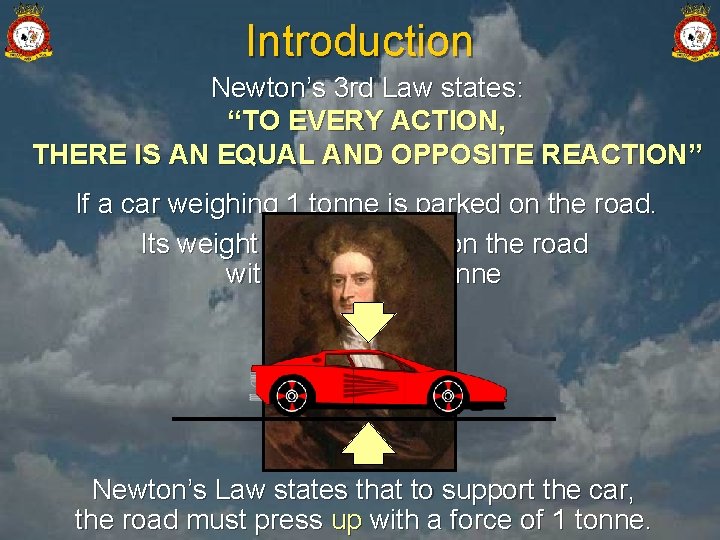
Introduction Newton’s 3 rd Law states: “TO EVERY ACTION, THERE IS AN EQUAL AND OPPOSITE REACTION” If a car weighing 1 tonne is parked on the road. Its weight presses down on the road with a force of 1 tonne Newton’s Law states that to support the car, the road must press up with a force of 1 tonne.
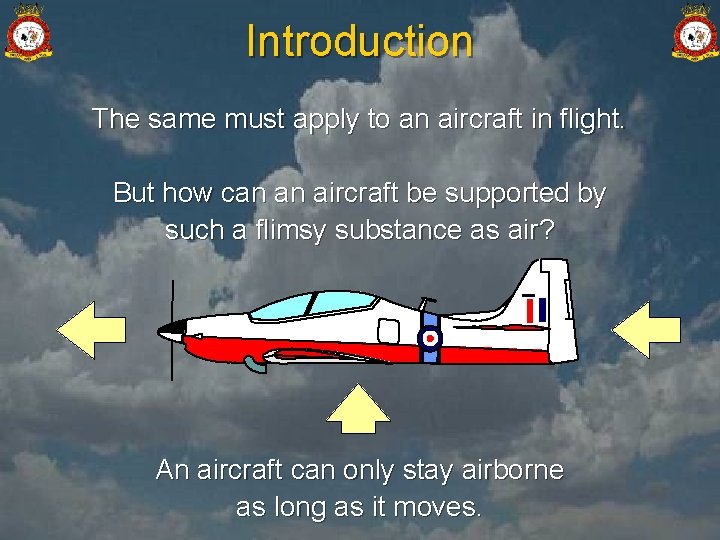
Introduction The same must apply to an aircraft in flight. But how can an aircraft be supported by such a flimsy substance as air? An aircraft can only stay airborne as long as it moves.
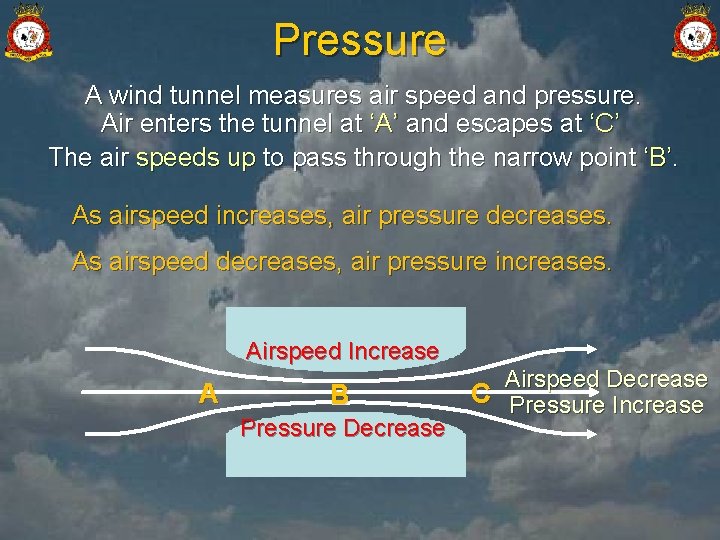
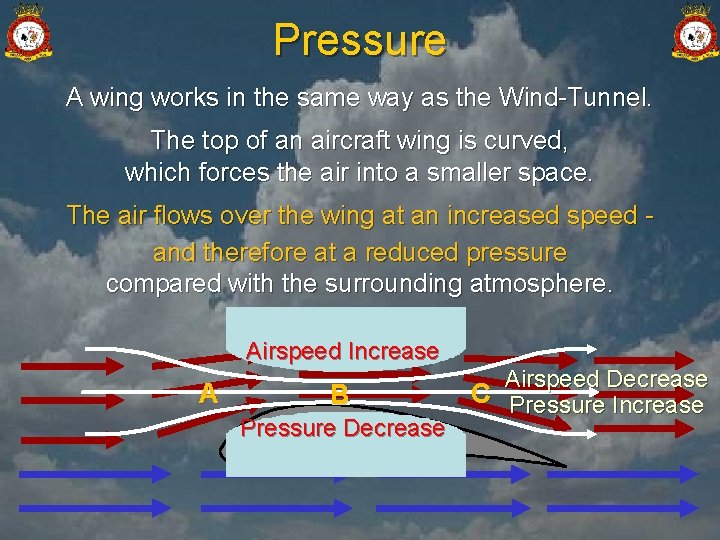
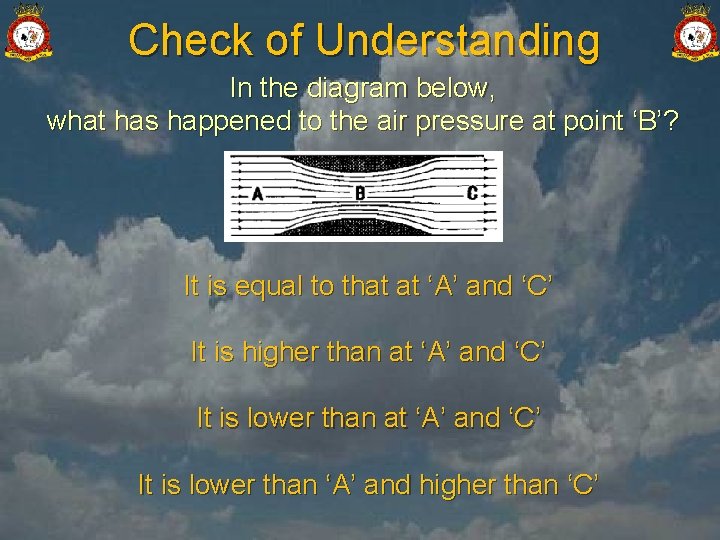
Pressure A wind tunnel measures air speed and pressure. Air enters the tunnel at ‘A’ and escapes at ‘C’ The air speeds up to pass through the narrow point ‘B’. As airspeed increases, air pressure decreases. As airspeed decreases, air pressure increases. Airspeed Increase A B Pressure Decrease Airspeed Decrease C Pressure Increase
Pressure A wing works in the same way as the Wind-Tunnel. The top of an aircraft wing is curved, which forces the air into a smaller space. The air flows over the wing at an increased speed and therefore at a reduced pressure compared with the surrounding atmosphere. Airspeed Increase A B Pressure Decrease Airspeed Decrease C Pressure Increase
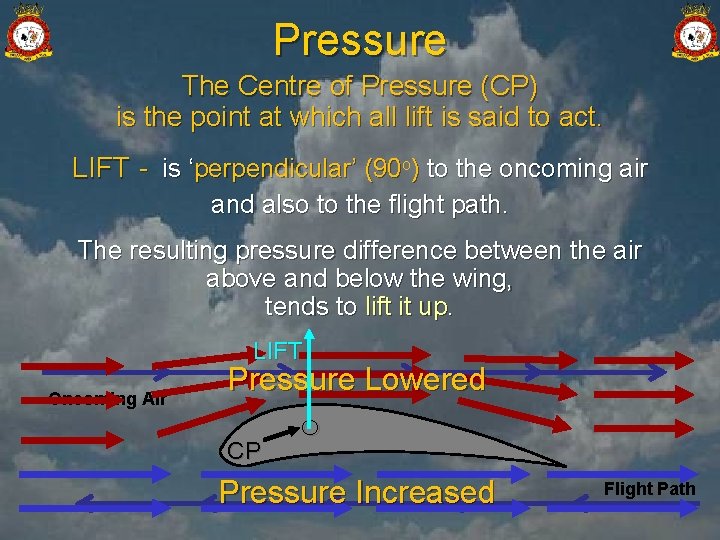
Pressure The Centre of Pressure (CP) is the point at which all lift is said to act. LIFT - is ‘perpendicular’ (90 o) to the oncoming air and also to the flight path. The resulting pressure difference between the air above and below the wing, tends to lift it up. LIFT Oncoming Air Pressure Lowered CP o Pressure Increased Flight Path
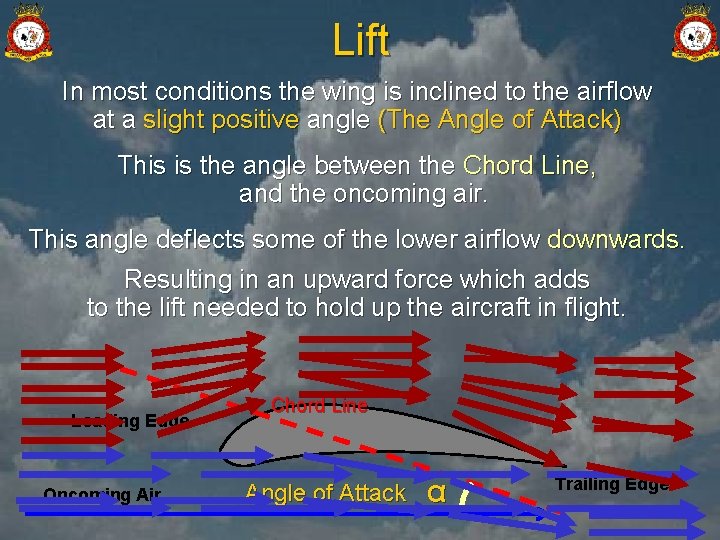
Lift In most conditions the wing is inclined to the airflow at a slight positive angle (The Angle of Attack) This is the angle between the Chord Line, and the oncoming air. This angle deflects some of the lower airflow downwards. Resulting in an upward force which adds to the lift needed to hold up the aircraft in flight. Leading Edge Oncoming Air Chord Line Angle of Attack α Trailing Edge
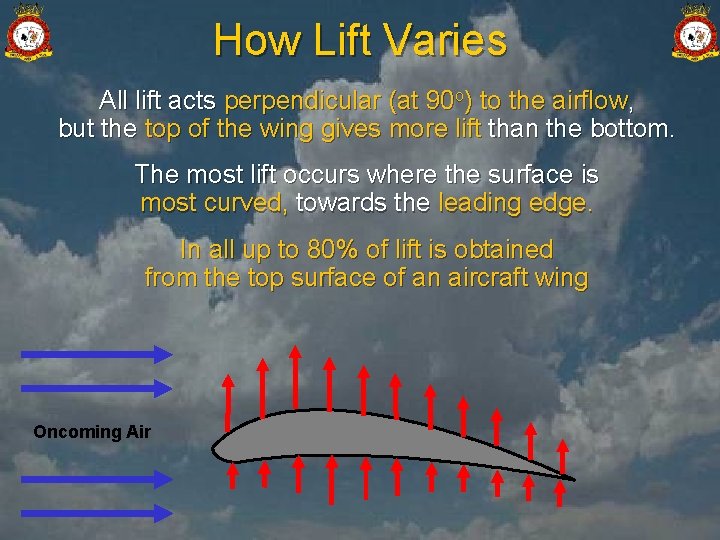
How Lift Varies All lift acts perpendicular (at 90 o) to the airflow, but the top of the wing gives more lift than the bottom. The most lift occurs where the surface is most curved, towards the leading edge. In all up to 80% of lift is obtained from the top surface of an aircraft wing Oncoming Air
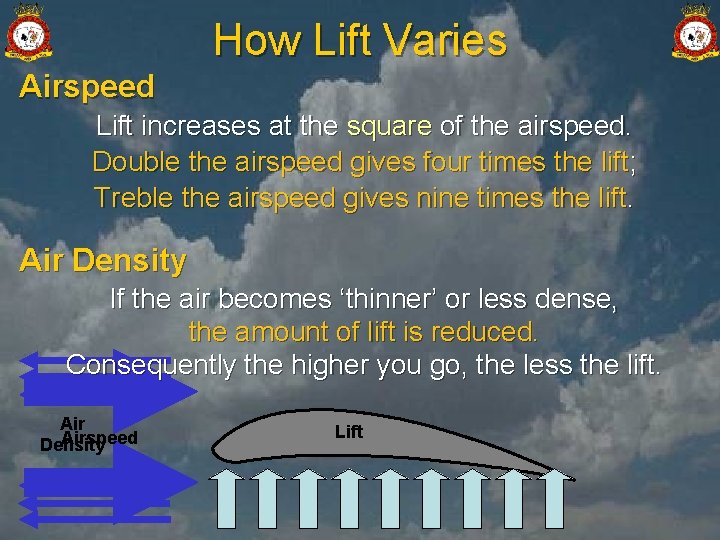
How Lift Varies Airspeed Lift increases at the square of the airspeed. Double the airspeed gives four times the lift; Treble the airspeed gives nine times the lift. Air Density If the air becomes ‘thinner’ or less dense, the amount of lift is reduced. Consequently the higher you go, the less the lift. Airspeed Density Lift
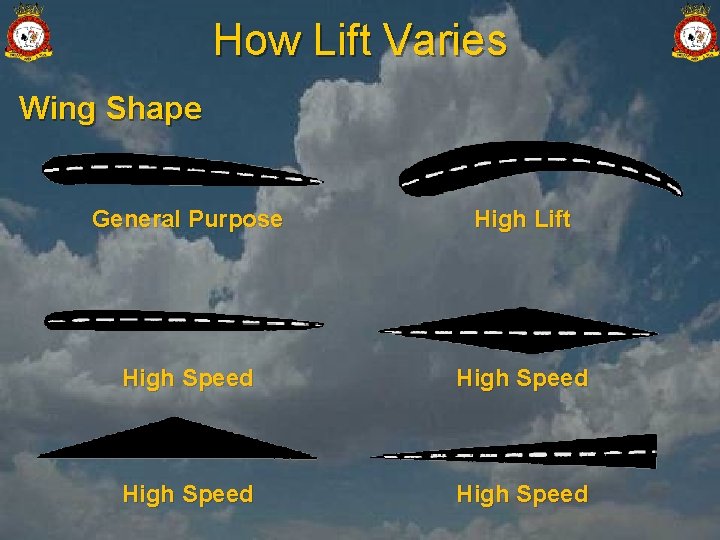
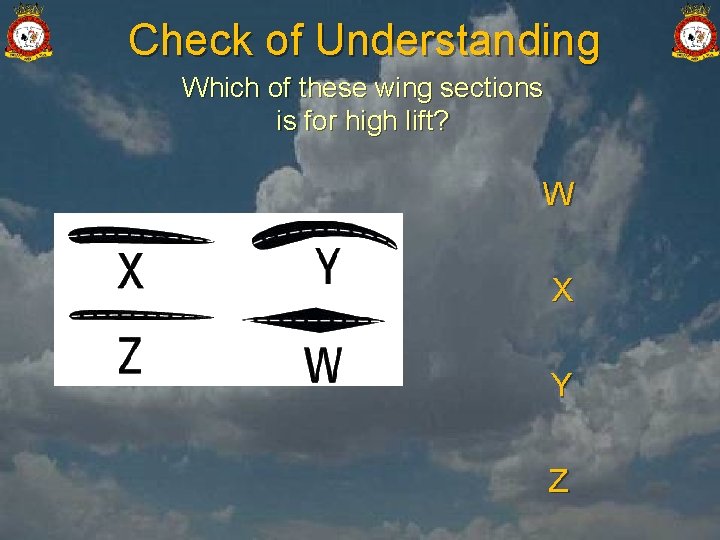
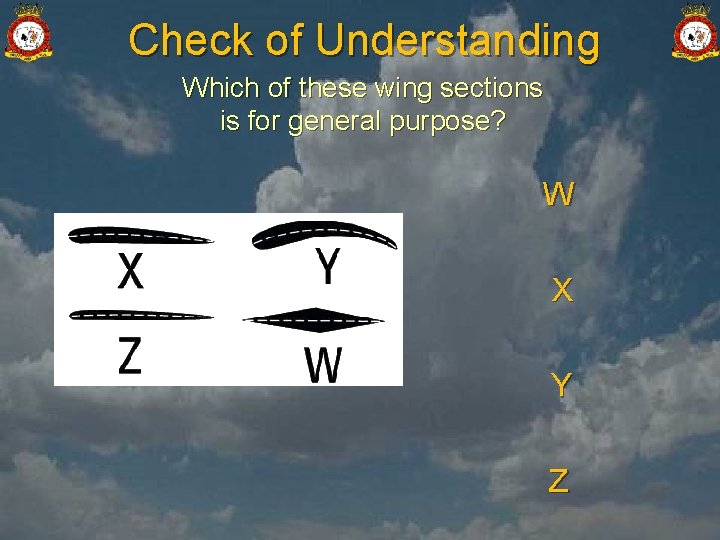
How Lift Varies Wing Shape General Purpose High Lift High Speed
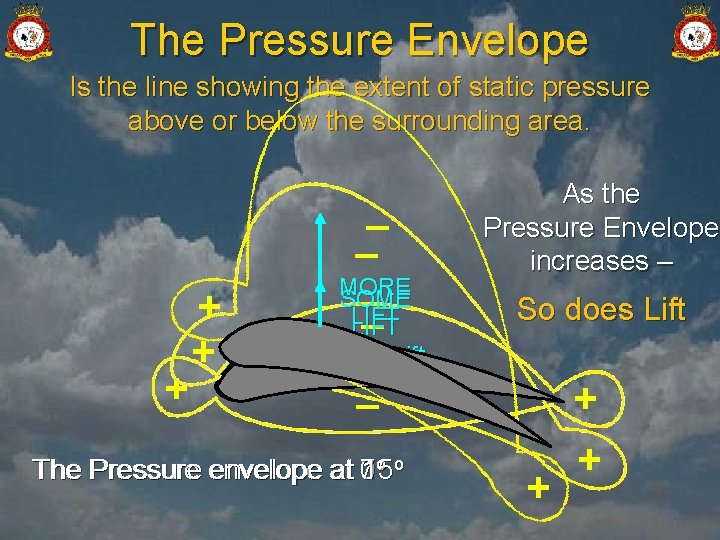
The Pressure Envelope Is the line showing the extent of static pressure above or below the surrounding area. _ _ + + + MORE SOME LIFT _ As the Pressure Envelope increases – So does Lift Little Lift _ o o The 015 The Pressure envelope at at 7 + + +
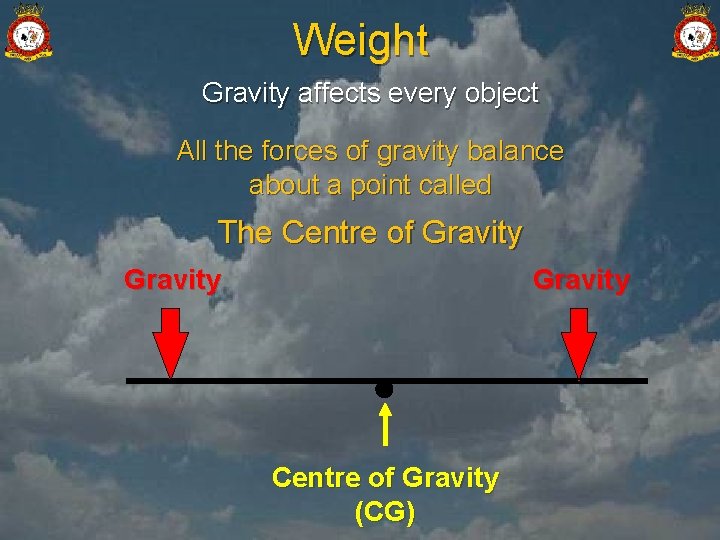
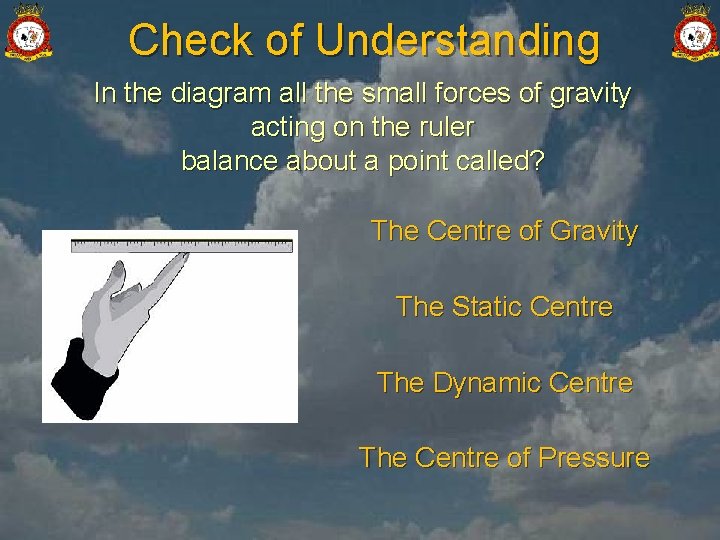
Weight Gravity affects every object All the forces of gravity balance about a point called The Centre of Gravity Centre of Gravity (CG)
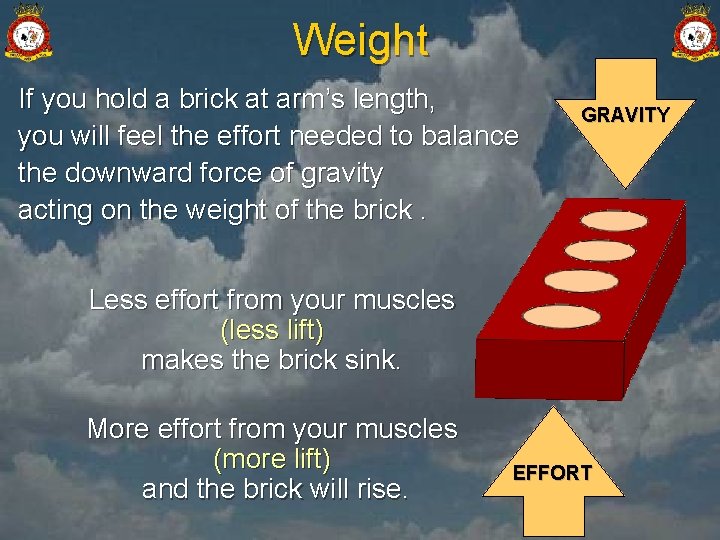
Weight If you hold a brick at arm’s length, you will feel the effort needed to balance the downward force of gravity acting on the weight of the brick. GRAVITY Less effort from your muscles (less lift) makes the brick sink. More effort from your muscles (more lift) and the brick will rise. EFFORT
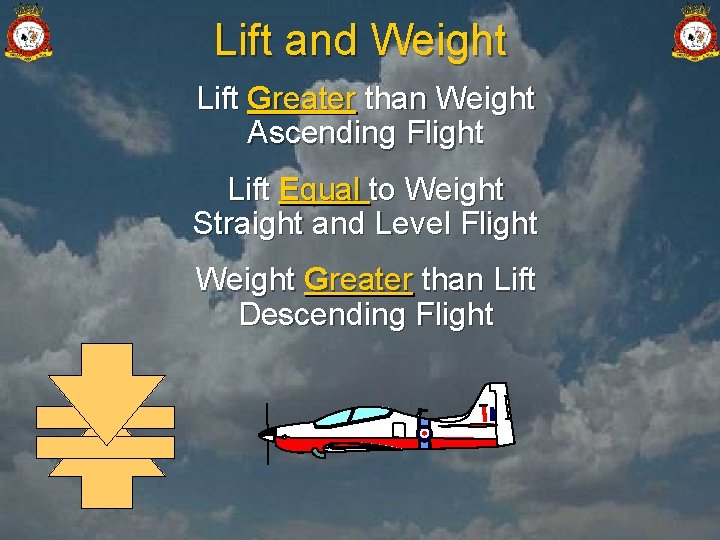
Lift and Weight Lift Greater than Weight Ascending Flight Lift Equal to Weight Straight and Level Flight Weight Greater than Lift Descending Flight
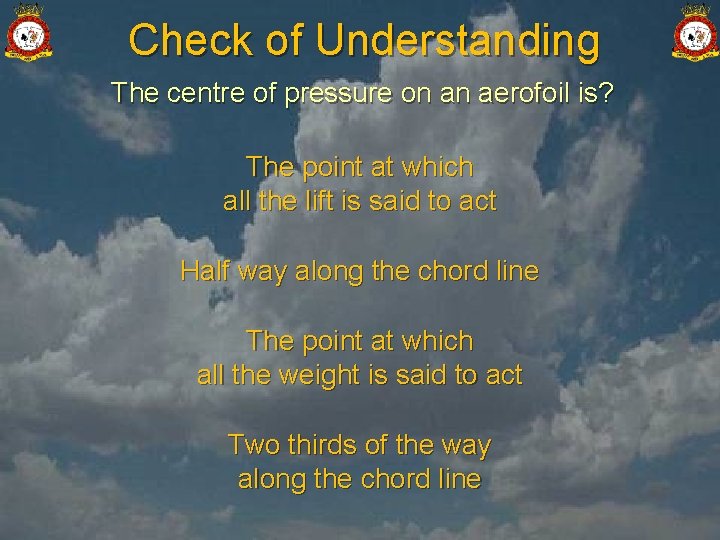
Check of Understanding The centre of pressure on an aerofoil is? The point at which all the lift is said to act Half way along the chord line The point at which all the weight is said to act Two thirds of the way along the chord line
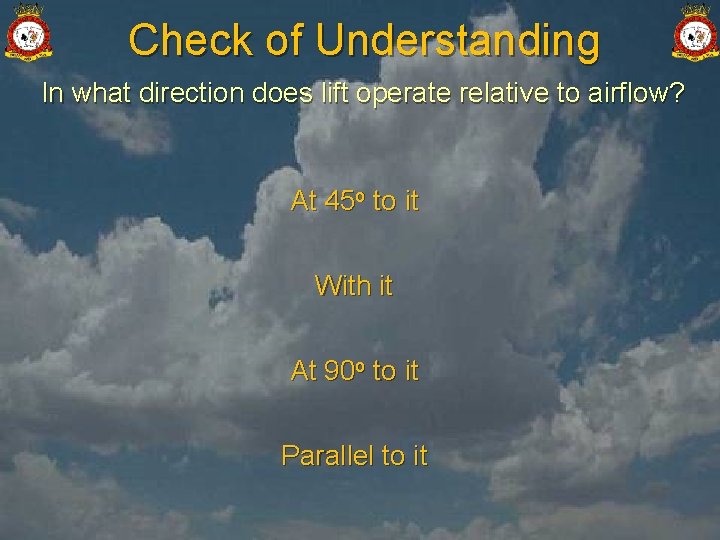
Check of Understanding In what direction does lift operate relative to airflow? At 45 o to it With it At 90 o to it Parallel to it
Check of Understanding Which of these wing sections is for high lift? W X Y Z
Check of Understanding The effect of gravity on an aircraft is called? Weight Lift Pressure Density
Check of Understanding In the diagram below, what has happened to the air pressure at point ‘B’? It is equal to that at ‘A’ and ‘C’ It is higher than at ‘A’ and ‘C’ It is lower than ‘A’ and higher than ‘C’
Check of Understanding For an aircraft in straight and level flight only one of these statements is true. Which one? Lift is slightly less than weight Lift exactly equals weight Lift is slightly more than weight Lift is considerably greater than weight
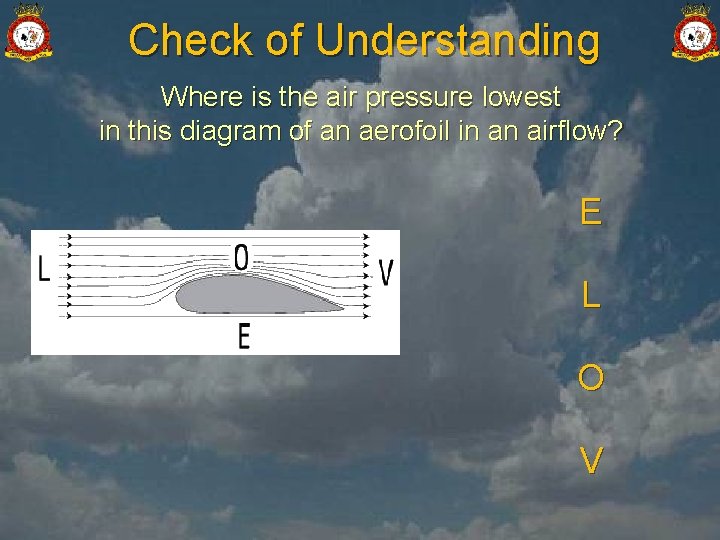
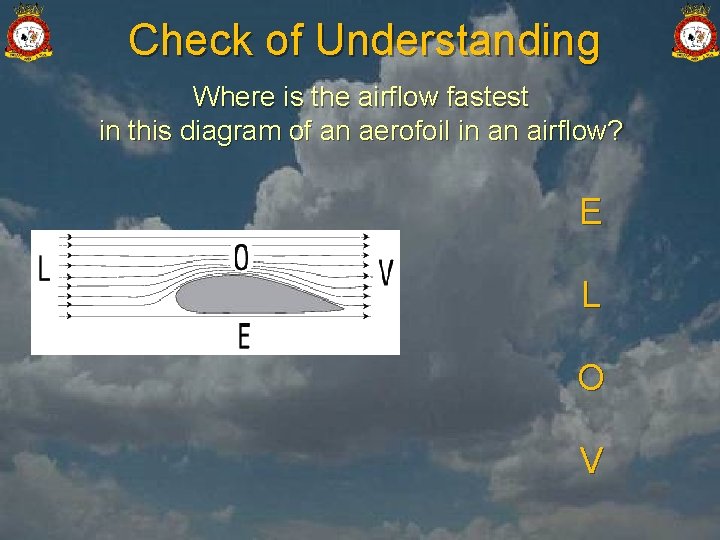
Check of Understanding Where is the air pressure lowest in this diagram of an aerofoil in an airflow? E L O V
Check of Understanding What is the force that acts opposite to lift? Pressure Density Weight Airflow
Check of Understanding If the air density in an airflow is reduced and all other factors are unchanged, what happens to the lift generated by a wing in the airflow? It becomes unpredictable It is increased It is unchanged It is reduced
Check of Understanding For low subsonic speeds, if the airspeed is doubled and all other factors affecting lift are unchanged, the lift is: Multiplied by two Multiplied by four Multiplied by eight Unchanged
Check of Understanding In the diagram all the small forces of gravity acting on the ruler balance about a point called? The Centre of Gravity The Static Centre The Dynamic Centre The Centre of Pressure
Check of Understanding What happens as the pressure envelope on an aerofoil increases? Lift Decreases Lift Remains Constant Lift Increases Lift Ceases
Check of Understanding For air moving in a smooth streamline flow, if the air is made to speed up, what happens to the pressure of the air where it is flowing faster? It fluctuates wildly It increases It remains constant It decreases
Check of Understanding In normal flight, what happens to the speed of the air passing over the top surface of a wing? The speed remains constant The speed increases The speed decreases The speed fluctuates
Check of Understanding Which of these wing sections is for general purpose? W X Y Z
Check of Understanding Lift is obtained from almost all parts of the wing but not equally from every part. About how much is obtained from the top surface of an aircraft wing such as a Chipmunk? Up to 33 o Up to 60 o Up to 80 o Up to 100 o
Check of Understanding If the airspeed over a wing is trebled, and all other factors affecting lift are unchanged, the lift is? Multiplied by about 9 Multiplied by about 3 Decreased by about 3 Remains unchanged
Check of Understanding Where is the airflow fastest in this diagram of an aerofoil in an airflow? E L O V
Principles of Flight Leading Cadet Training End of Presentation