
PRINCIPLES OF FISH PRESERVATION Things to understand Composition

- Slides: 10
PRINCIPLES OF FISH PRESERVATION
Things to understand… Composition of fish Why fish is perishable Methods and principles of fish preservation
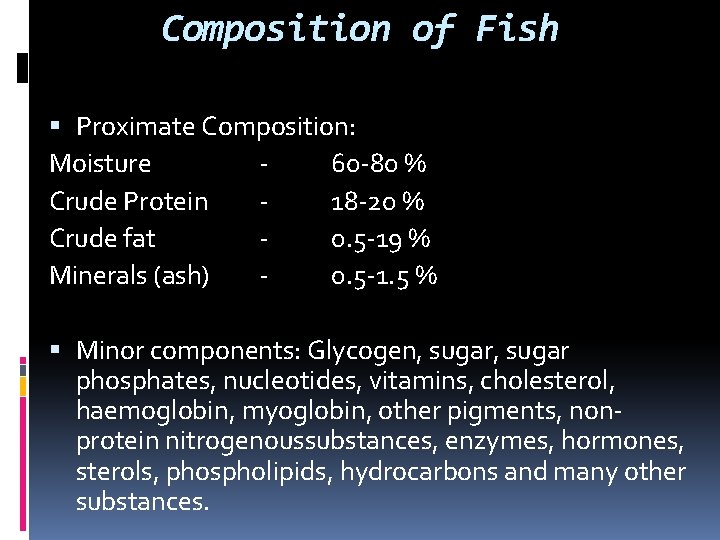
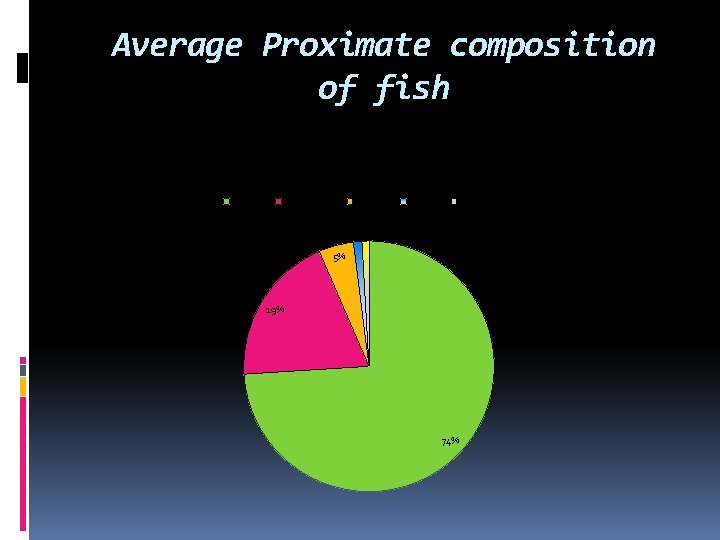
Composition of Fish Proximate Composition: Moisture 60 -80 % Crude Protein 18 -20 % Crude fat 0. 5 -19 % Minerals (ash) 0. 5 -1. 5 % Minor components: Glycogen, sugar phosphates, nucleotides, vitamins, cholesterol, haemoglobin, myoglobin, other pigments, nonprotein nitrogenoussubstances, enzymes, hormones, sterols, phospholipids, hydrocarbons and many other substances.
Average Proximate composition of fish Series 1 Moisture Crude protein Crude fat 1% Minerals Miscellaneous 1% 5% 19% 74%
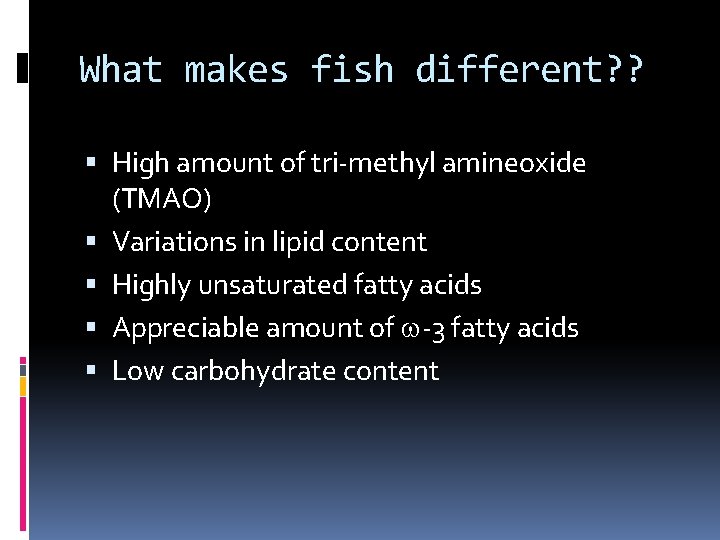
What makes fish different? ? High amount of tri-methyl amineoxide (TMAO) Variations in lipid content Highly unsaturated fatty acids Appreciable amount of -3 fatty acids Low carbohydrate content
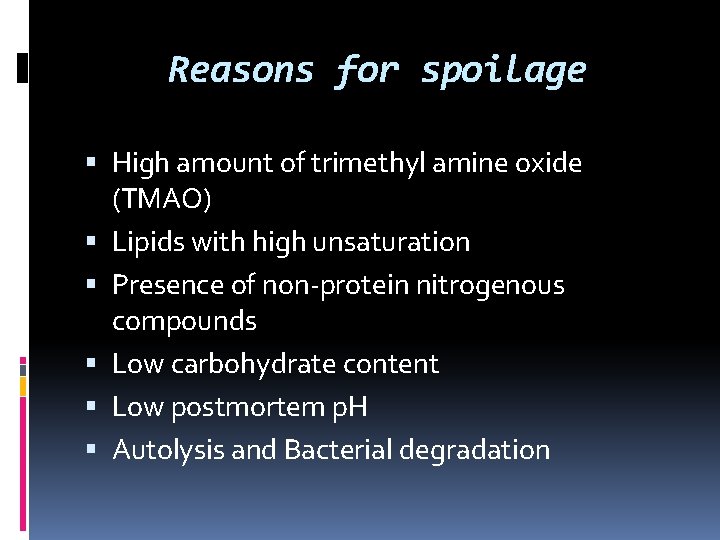
Reasons for spoilage High amount of trimethyl amine oxide (TMAO) Lipids with high unsaturation Presence of non-protein nitrogenous compounds Low carbohydrate content Low postmortem p. H Autolysis and Bacterial degradation
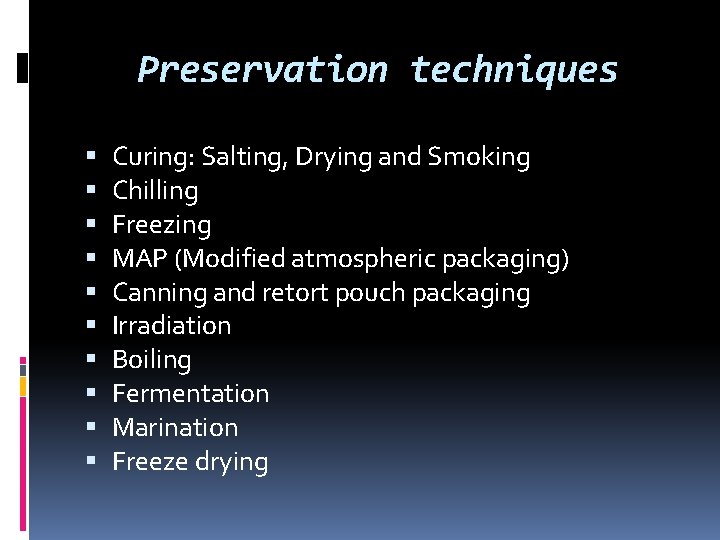
Preservation techniques Curing: Salting, Drying and Smoking Chilling Freezing MAP (Modified atmospheric packaging) Canning and retort pouch packaging Irradiation Boiling Fermentation Marination Freeze drying
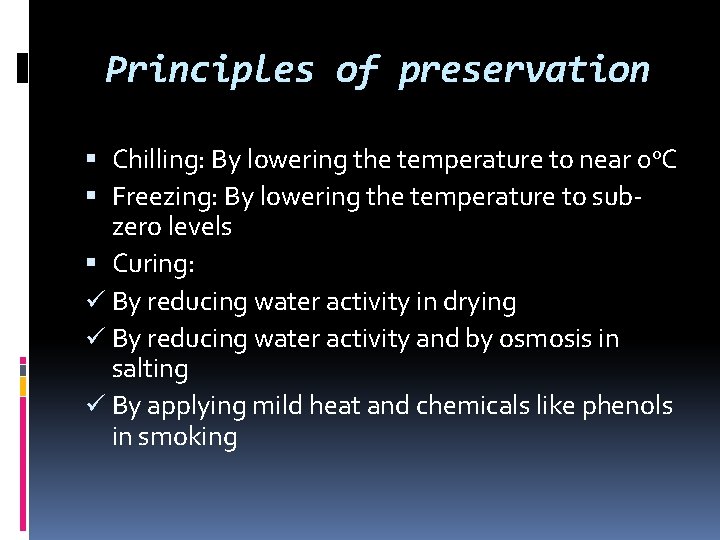
Principles of preservation Chilling: By lowering the temperature to near 00 C Freezing: By lowering the temperature to subzero levels Curing: ü By reducing water activity in drying ü By reducing water activity and by osmosis in salting ü By applying mild heat and chemicals like phenols in smoking
MAP: by creating unfavorable environment with changing gaseous environment Irradiation: By damaging DNA and tissue cells by use of radiation Canning and Retort pouch packaging: By applying high amount of heat (1210 C). Marinating: By lowering p. H, by use of acid and salt Boiling: by using heat Marination: By using salt Freeze-drying: By dehydration using sublimation.
End of the presentation