
Principles of Environmental Toxicology Every day interactions with
- Slides: 21
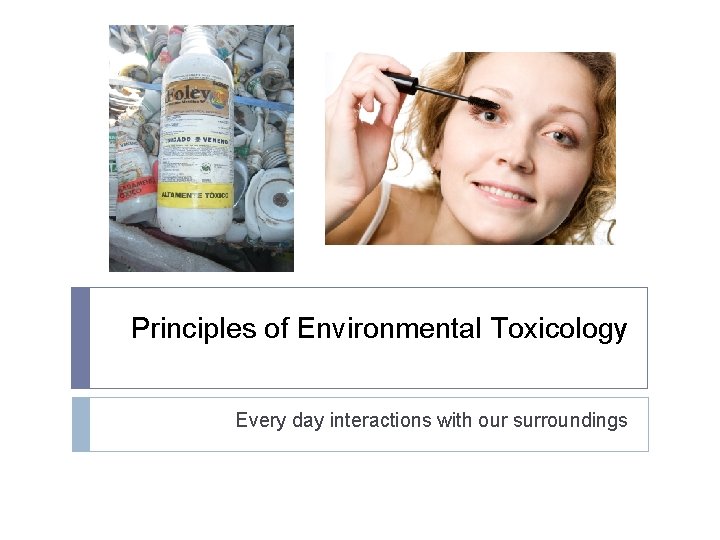
Principles of Environmental Toxicology Every day interactions with our surroundings
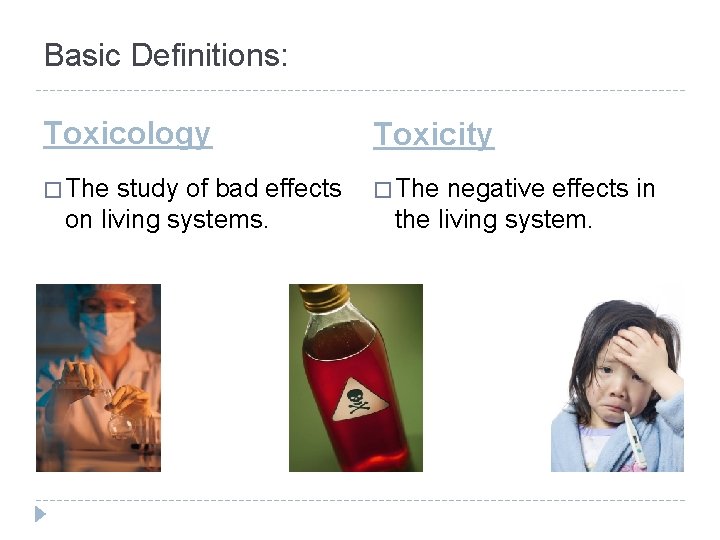
Basic Definitions: Toxicology Toxicity � The study of bad effects on living systems. negative effects in the living system.
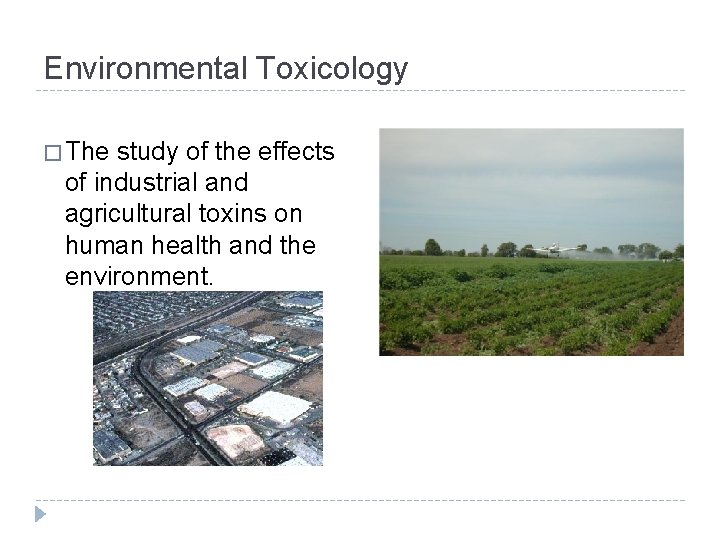
Environmental Toxicology � The study of the effects of industrial and agricultural toxins on human health and the environment.
WELCOME TOXICOLOGIST! YOU ARE ALL TOXICOLOGISTS
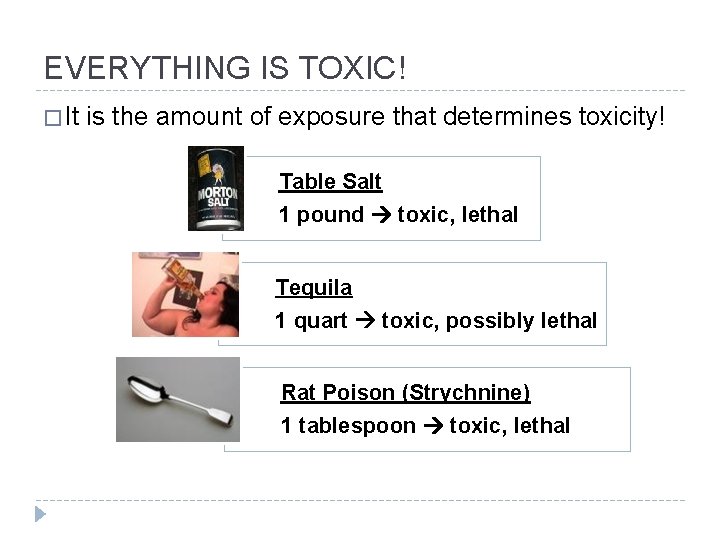
EVERYTHING IS TOXIC! � It is the amount of exposure that determines toxicity! Table Salt 1 pound toxic, lethal Tequila 1 quart toxic, possibly lethal Rat Poison (Strychnine) 1 tablespoon toxic, lethal
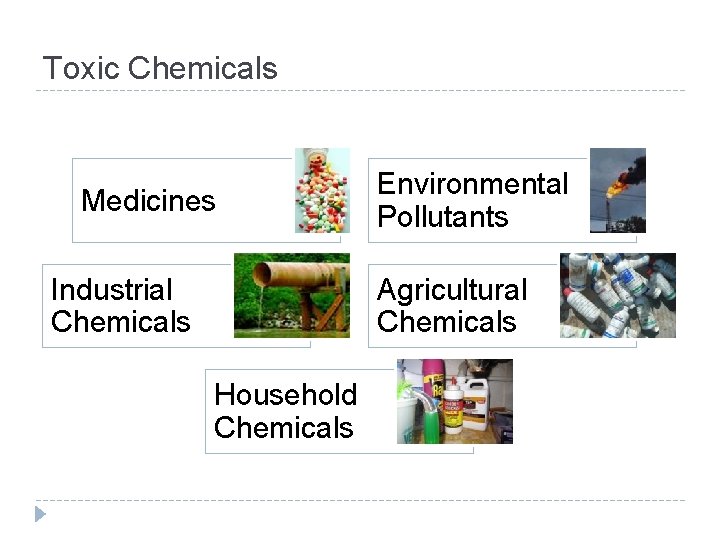
Toxic Chemicals Medicines Industrial Chemicals Environmental Pollutants Agricultural Chemicals Household Chemicals
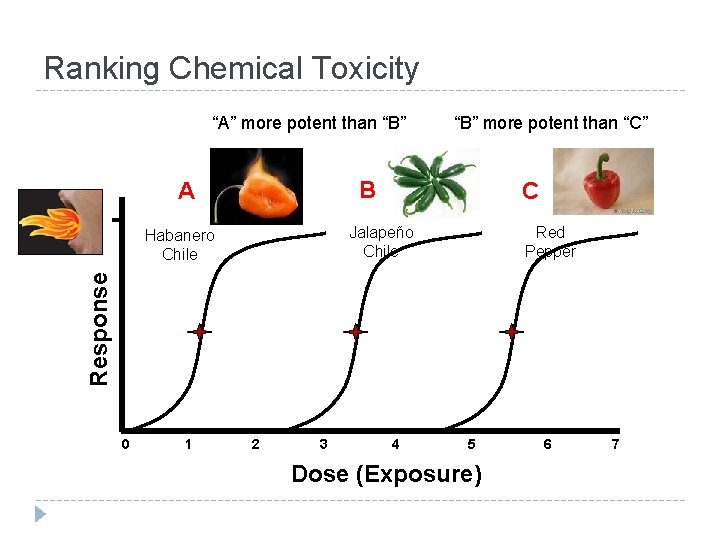
Ranking Chemical Toxicity “A” more potent than “B” more potent than “C” B A C Jalapeño Chile Red Pepper Response Habanero Chile 0 1 2 3 4 5 Dose (Exposure) 6 7
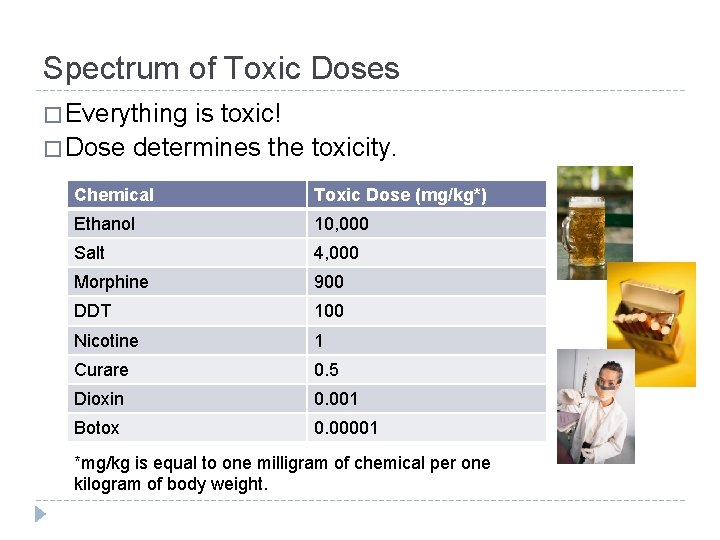
Spectrum of Toxic Doses � Everything is toxic! � Dose determines the toxicity. Chemical Toxic Dose (mg/kg*) Ethanol 10, 000 Salt 4, 000 Morphine 900 DDT 100 Nicotine 1 Curare 0. 5 Dioxin 0. 001 Botox 0. 00001 *mg/kg is equal to one milligram of chemical per one kilogram of body weight.
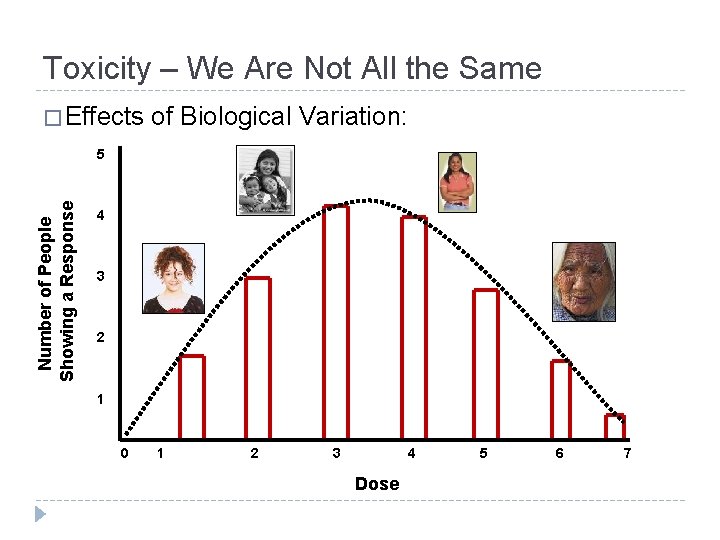
Toxicity – We Are Not All the Same � Effects of Biological Variation: Number of People Showing a Response 5 4 3 2 1 0 1 2 3 4 Dose 5 6 7
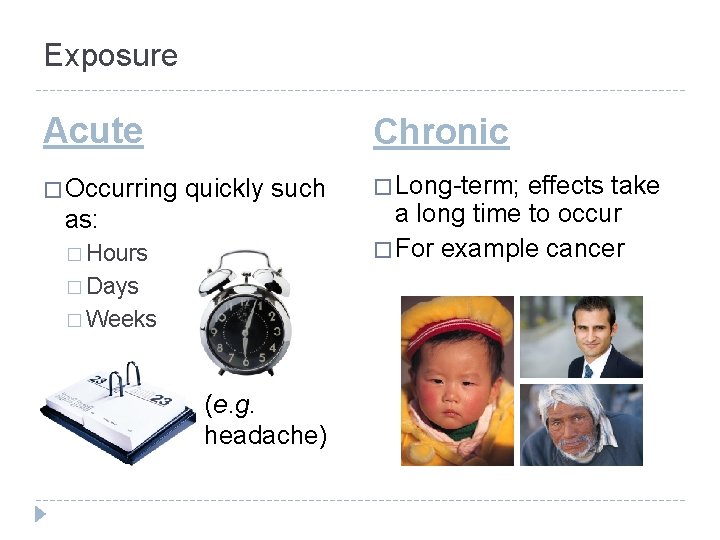
Exposure Acute � Occurring Chronic quickly such as: � Hours � Days � Weeks (e. g. headache) � Long-term; effects take a long time to occur � For example cancer
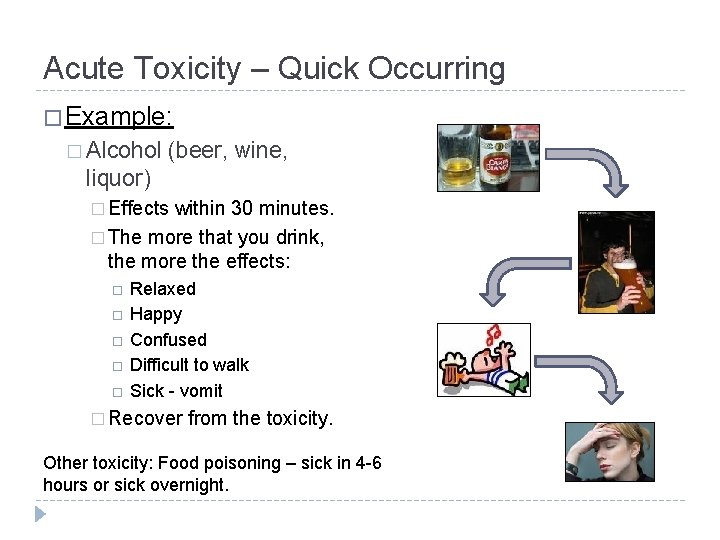
Acute Toxicity – Quick Occurring � Example: � Alcohol (beer, wine, liquor) � Effects within 30 minutes. � The more that you drink, the more the effects: Relaxed Happy Confused Difficult to walk Sick - vomit � Recover from the toxicity. Other toxicity: Food poisoning – sick in 4 -6 hours or sick overnight.
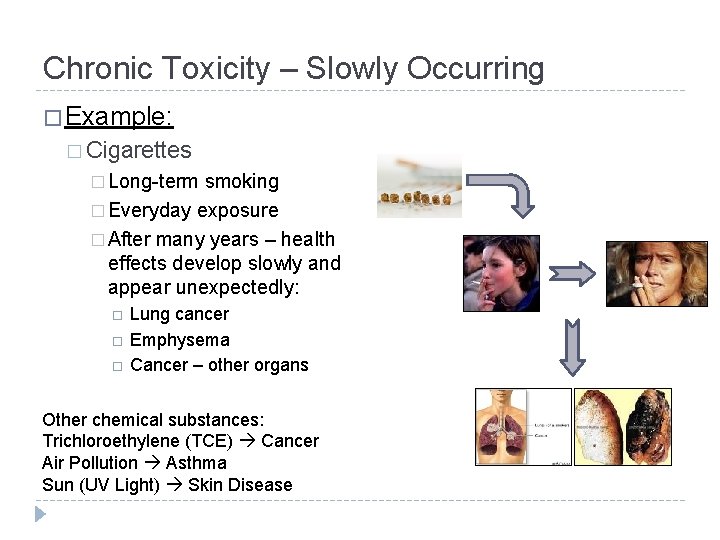
Chronic Toxicity – Slowly Occurring � Example: � Cigarettes � Long-term smoking � Everyday exposure � After many years – health effects develop slowly and appear unexpectedly: Lung cancer Emphysema Cancer – other organs Other chemical substances: Trichloroethylene (TCE) Cancer Air Pollution Asthma Sun (UV Light) Skin Disease
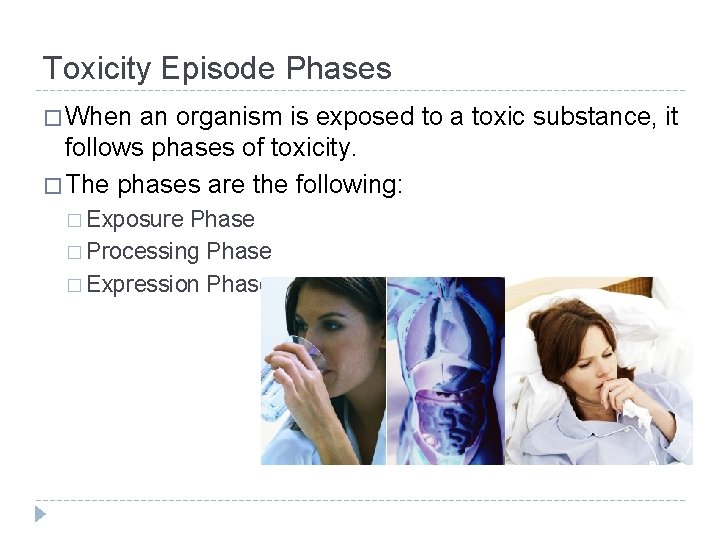
Toxicity Episode Phases � When an organism is exposed to a toxic substance, it follows phases of toxicity. � The phases are the following: � Exposure Phase � Processing Phase � Expression Phase
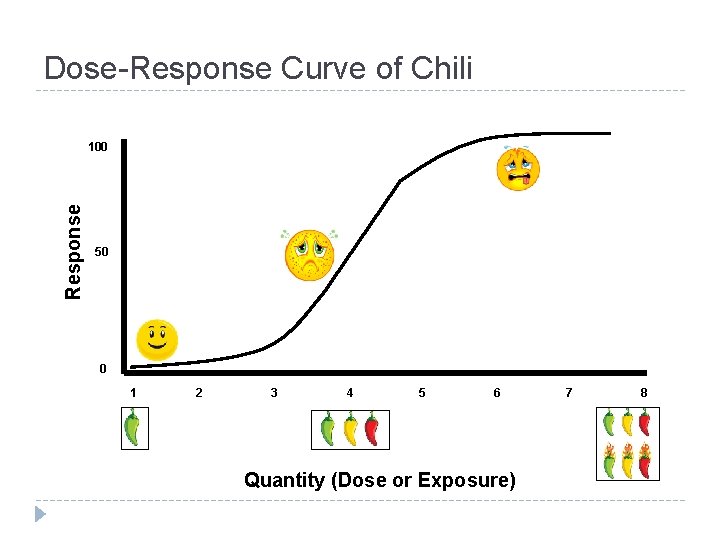
Dose-Response Curve of Chili Response 100 50 0 1 2 3 4 5 6 Quantity (Dose or Exposure) 7 8
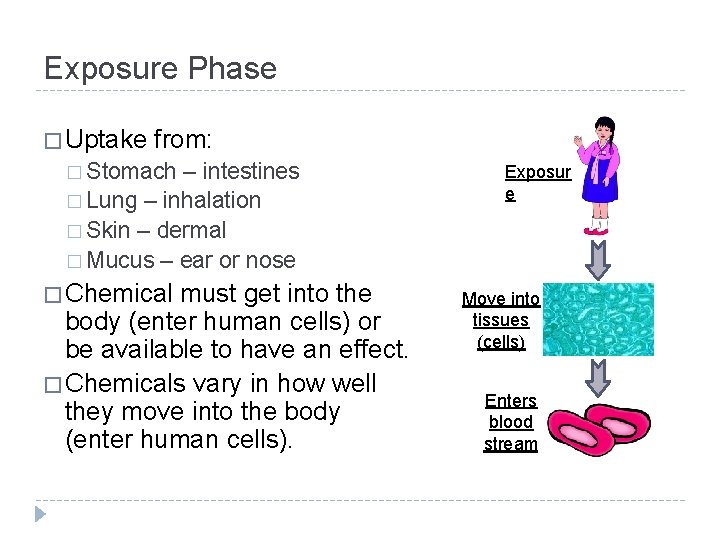
Exposure Phase � Uptake from: � Stomach – intestines � Lung – inhalation � Skin – dermal � Mucus – ear or nose � Chemical must get into the body (enter human cells) or be available to have an effect. � Chemicals vary in how well they move into the body (enter human cells). Exposur e Move into tissues (cells) Enters blood stream
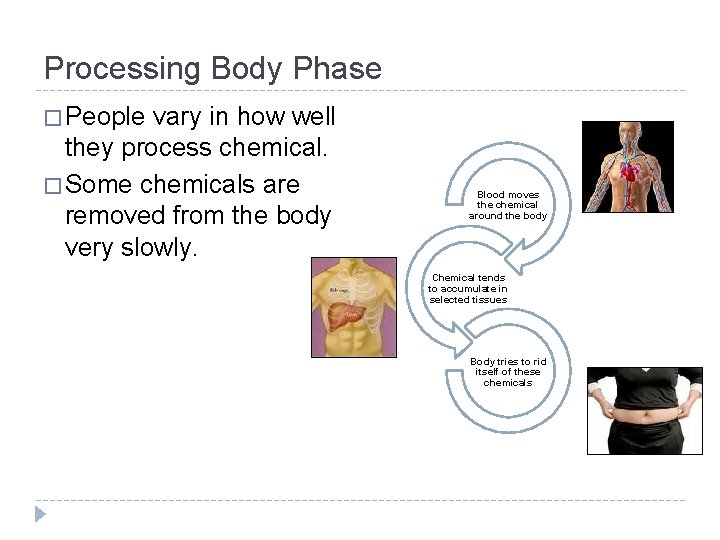
Processing Body Phase � People vary in how well they process chemical. � Some chemicals are removed from the body very slowly. Blood moves the chemical around the body Chemical tends to accumulate in selected tissues Body tries to rid itself of these chemicals
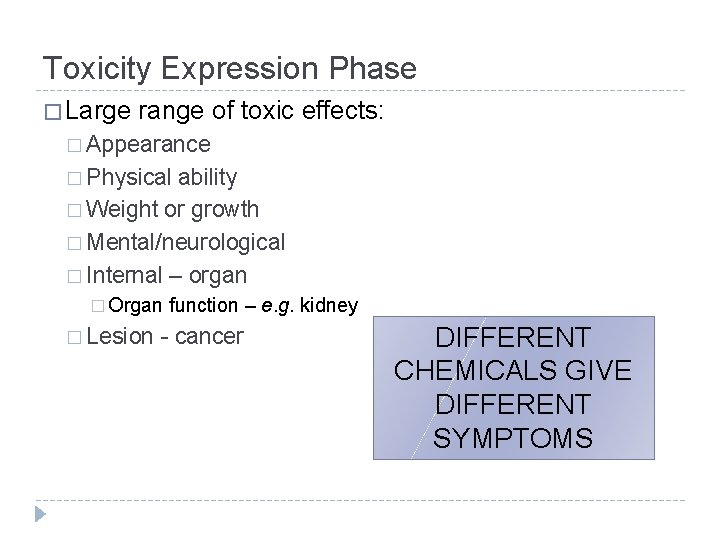
Toxicity Expression Phase � Large range of toxic effects: � Appearance � Physical ability � Weight or growth � Mental/neurological � Internal – organ � Organ � Lesion function – e. g. kidney - cancer DIFFERENT CHEMICALS GIVE DIFFERENT SYMPTOMS
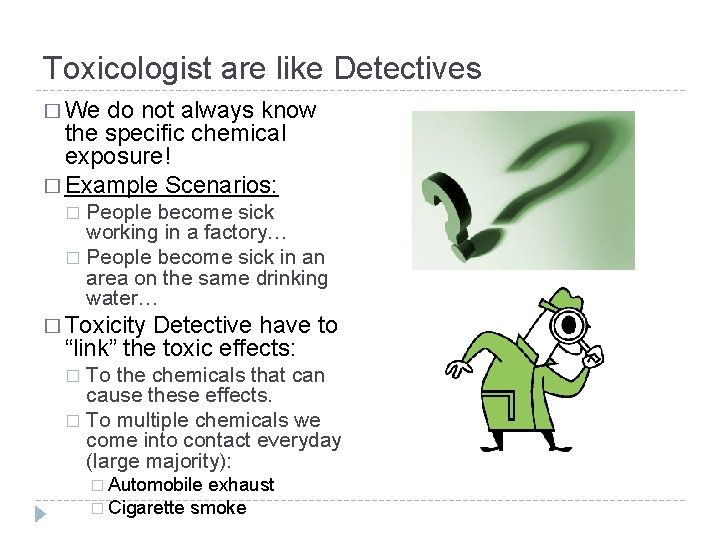
Toxicologist are like Detectives � We do not always know the specific chemical exposure! � Example Scenarios: People become sick working in a factory… � People become sick in an area on the same drinking water… � � Toxicity Detective have to “link” the toxic effects: To the chemicals that can cause these effects. � To multiple chemicals we come into contact everyday (large majority): � � Automobile exhaust � Cigarette smoke
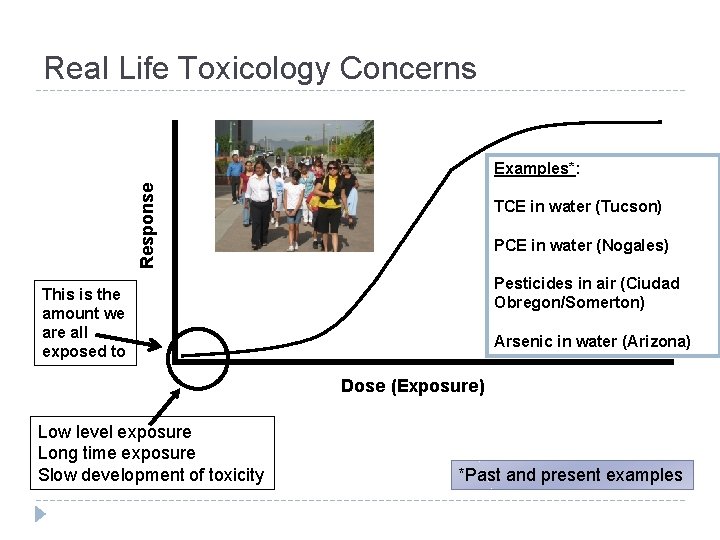
Real Life Toxicology Concerns Response Examples*: TCE in water (Tucson) PCE in water (Nogales) Pesticides in air (Ciudad Obregon/Somerton) This is the amount we are all exposed to Arsenic in water (Arizona) Dose (Exposure) Low level exposure Long time exposure Slow development of toxicity *Past and present examples
Are We Safe? � What � No is a safe level? adverse (bad) effects! � Example - Chlorine in a swimming pool: � Chlorine levels are enough to kill bacteria. � Chlorine not at levels to harm swimmers. � What is a safe level for… � Arsenic in our drinking water? � TCE in the soil? � Pesticides in our food?
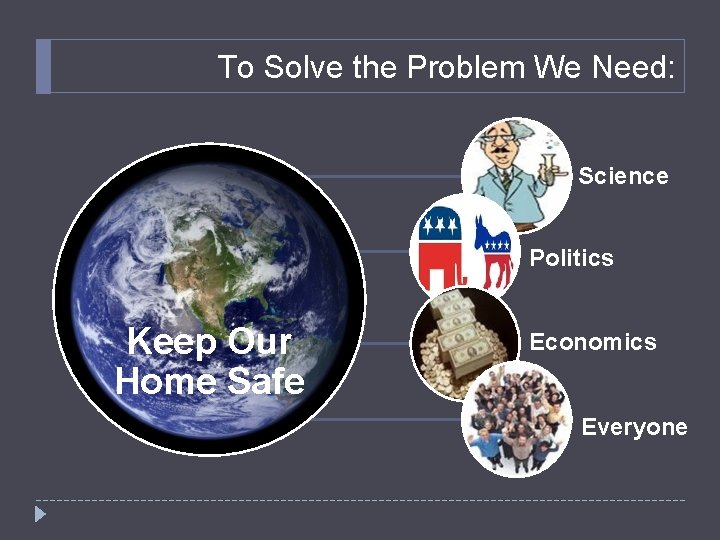
To Solve the Problem We Need: Science Politics Keep Our Home Safe Economics Everyone