
Principles of Environmental Science Inquiry and Applications Third
- Slides: 48
Principles of Environmental Science Inquiry and Applications Third Edition Cunningham • Cunningham Chapter 5 Lecture Outlines* *See Power. Point Image Slides for all figures and tables pre-inserted into Power. Point without notes. Copyright © The Mc. Graw-Hill Companies, Inc. Permission required for reproduction or display. 1
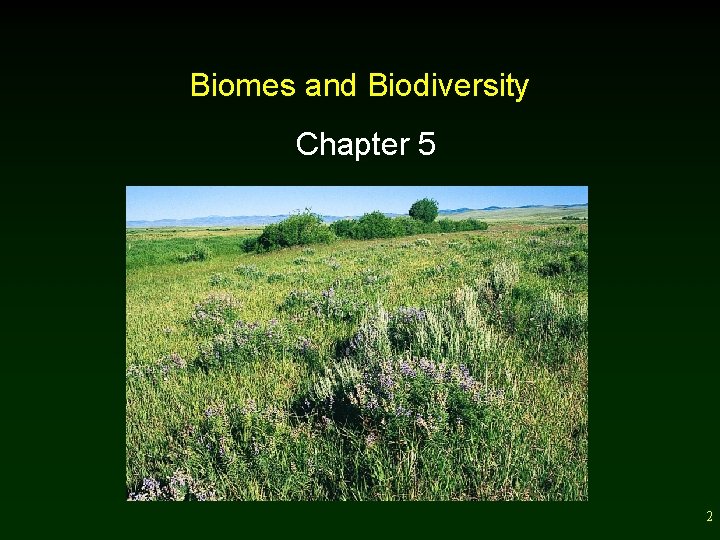
Biomes and Biodiversity Chapter 5 2
Outline: • • Terrestrial Biomes Aquatic Ecosystems Biodiversity and Species Definitions v Benefits of Biodiversity v Threats to Biodiversity - Human Caused Reductions Biodiversity Protection v ESA - Recovery Plans - Minimum Viable Populations 3
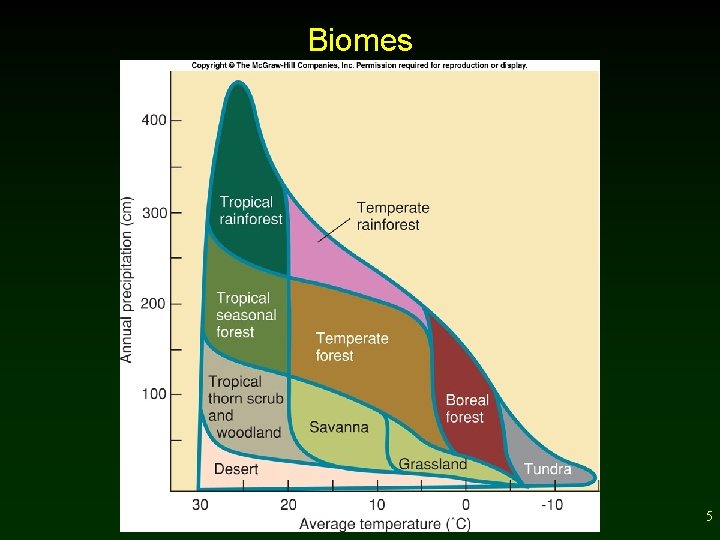
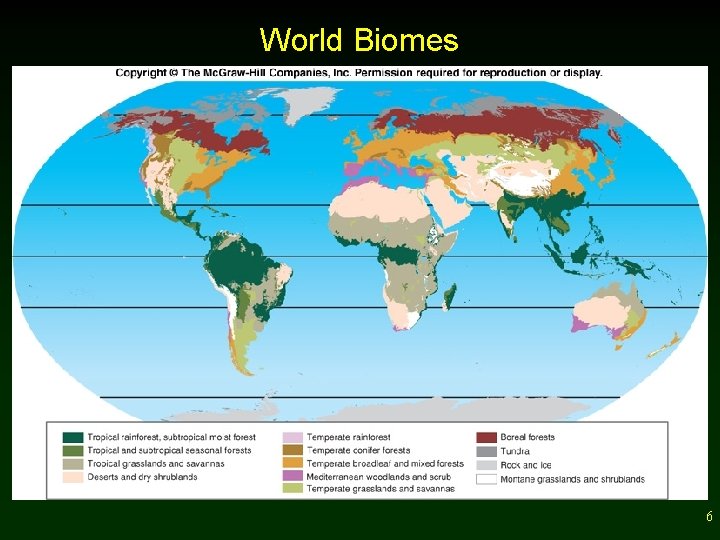
BIOMES • Biomes - Areas sharing similar climate, topographic and soil conditions, and roughly comparable communities. v Temperature and precipitation are among the most important determinants in biome distribution. - Evapotranspiration v Influenced by prevailing landforms. 4
Biomes 5
World Biomes 6
Deserts • • Characterized by low moisture levels and precipitation that is infrequent and unpredictable from year to year. Wide daily and seasonal temperature fluctuations. Soils are easily disturbed by human activities, and slow to recover. Plants exhibit water conservation characteristics. 7
Grasslands • • Communities of grasses, seasonal herbaceous flowering plants, and open savannas. Few trees due to inadequate rainfall. Large daily and seasonal temperature fluctuations. Frequent grass fires. 8
Tundra • • • Short growing season. Cold, harsh winters. Water locked up much of the year. Most animals migrate south or downhill in winter. Low biological productivity, low diversity, and low resilience. 9
Conifer Forests • • Cone-bearing trees. v Needle-like leaves with waxy coatings. - Minimize water loss. Boreal Forests v Northern coniferous forests. Taiga v Northernmost edge of boreal forest. Temperate Rainforests v Pacific Northwest 10
Broad-Leaved Deciduous and Evergreen Forests • • • Occur throughout the world where rainfall is plentiful. Deciduous trees shed leaves when water is scarce or ground is frozen. Rich variation of tree species. v Forest canopy covers diverse understory. 11
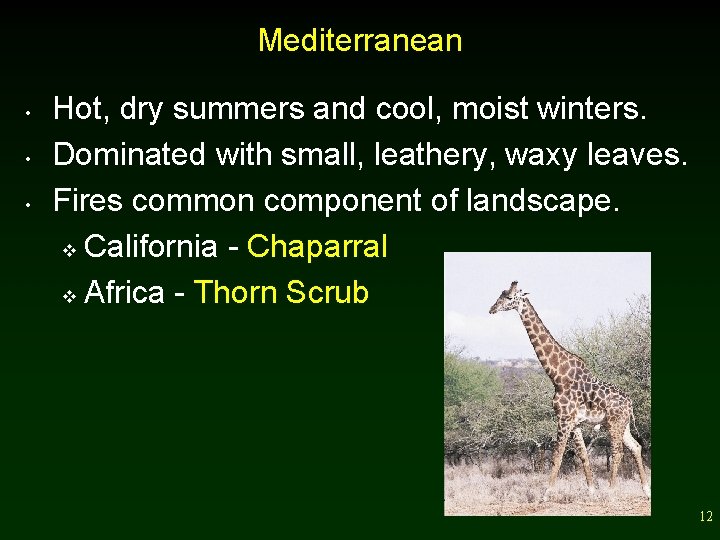
Mediterranean • • • Hot, dry summers and cool, moist winters. Dominated with small, leathery, waxy leaves. Fires common component of landscape. v California - Chaparral v Africa - Thorn Scrub 12
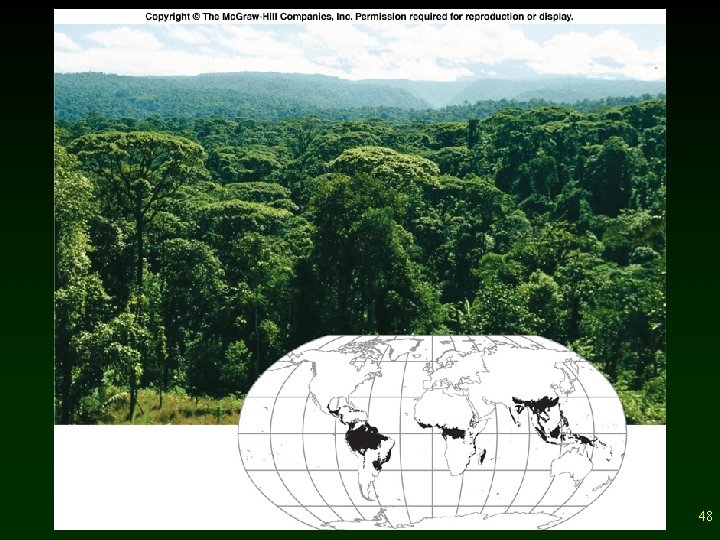
Tropical Moist Forests • • Cloud Forests - High mountains with heavy fog and mist. Tropical Rainforests - More than 200 cm annual rainfall with warm-hot temperatures year-round. v Rapid decomposition and nutrient cycling. v Thin soil cannot support continued cropping, and cannot resist erosion. 13
Tropical Seasonal Forests • Characterized by distinct wet and dry seasons instead of uniform heavy rainfall year-around. v Tend toward open woodlands and grassy savannas. 14
Freshwater Ecosystems • • • Include standing waters of ponds and lakes, as well as flowing waters of rivers and streams. Cover relatively little total area, but biologically distinctive. Extremely varied due to individual site influences. 15
Critical Aquatic Characteristics • • Dissolved Substances Suspended Matter Depth Temperature Flow Rate Bottom Characteristics Internal Convective Currents Connectivity to Other Aquatic Ecosystems 16
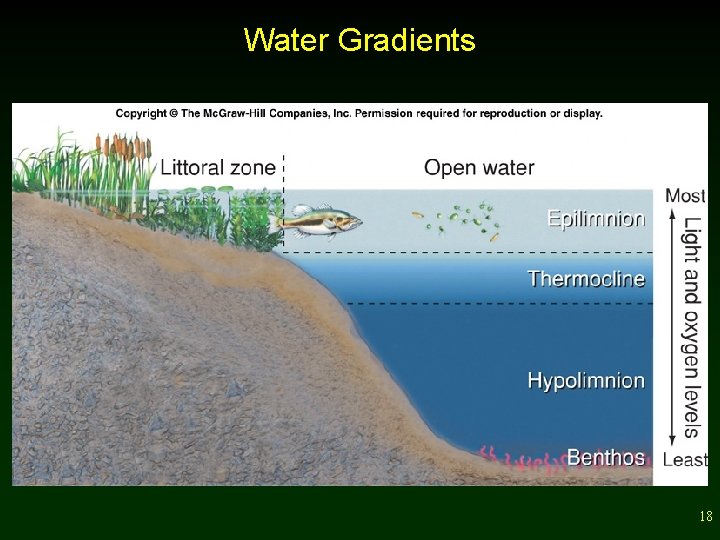
Vertical Component • Vertical stratification is an important aspect of many aquatic ecosystems. v Organisms tend to form distinctive vertical sub-communities. - Benthos - Bottom sub-community. Ø Low oxygen levels - Thermocline - Distinctive temperature transition zone that separates warm upper layer and deeper cold layer. 17
Water Gradients 18
Wetlands • • • Land surface is saturated or covered with water at least part of the year. v Swamps - Wetlands with trees. v Marshes - Wetlands without trees. v Bogs and Fens - Waterlogged soils that tend to accumulate peat. Water usually shallow enough to allow full sunlight penetration. Trap and filter water, and store runoff. 19
Estuaries • Estuaries - Bays or semi-enclosed bodies of brackish water that form where rivers enter the ocean. v Usually carry rich sediments. - Fan-shaped sediment deposit (delta) formed on shallow continental shelves. 20
Marine Ecosystems • • Marine ecosystems have as much variability as those on land. v Food webs and communities off-shore are intricately connected to those onshore. Coral Reefs - Accumulated calcareous skeletons of colonial organisms (coral). v Depth limited by light penetration. v Among most endangered communities. 21
BIODIVERSITY • Biodiversity - Variety of living things. v Genetic Diversity - Measures variety of different versions of same genes. v Species Diversity - Measures number of different kinds of organisms within a community. v Ecological Diversity - Measures richness and complexity of a community. 22
How Many Species • • • Currently 1. 7 million species identified. Estimates range between 3 -50 million. v May be 30 million insect species. v Invertebrates make up 70% of all known species, and probably most of yet to be discovered species. Tropical rainforests and coral reefs are biodiversity hotspots. v North America and Europe only contain 10 -15%. 23
BENEFITS OF BIODIVERSITY • • Food v As many as 80, 000 edible wild plant species could be utilized by humans. Drugs and Medicines v More than half of all prescriptions contain some natural product. v Pharmaceutical products derived from developing world, plants, animals, and microbes to be more than $30 billion/year. 24
BENEFITS OF BIODIVERSITY CONT’D • Ecological Benefits v Soil formation, waste disposal, air and water purification, nutrient cycling, solar energy absorption, and food production and hydrological cycles all depend on biodiversity. - At least $33 Trillion annual benefit. v Can a system function without all its integral parts? 25
BENEFITS OF BIODIVERSITY CONT’D • Aesthetic and Cultural Benefits v Cultural diversity inextricably linked to biodiversity. v USFWS estimates Americans spend $104 billion annually on wildlife-related recreation. v Ecotourism can be an important form of sustainable economic development. v Existence (intrinsic) value. 26
THREATS TO BIODIVERSITY • Extinction - Elimination of a species. v Normal Process - In undisturbed ecosystems, background rate appears to be one species per decade. Ø In this century, human impacts have accelerated that rate, causing perhaps hundreds to thousands of extinctions annually. 27
Natural Causes of Extinction • Fossil record suggests more than 99% of all species ever in existence are now extinct. v Most went extinct before humans arrived. - End of Cretaceous period - Dinosaurs and 50% of existing genera disappeared. - Permian period - Two-thirds of all marine species and nearly half of all plant and animal families died out. 28
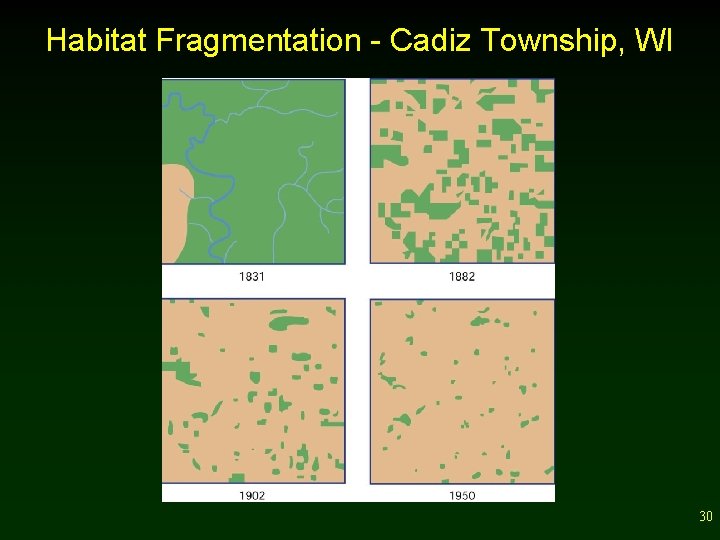
Human-Caused Reductions in Biodiversity • Habitat Destruction v Biggest reason for current increase in extinction is habitat loss. - Habitat fragmentation divides populations into isolated groups vulnerable to catastrophic events. Ø Island Biogeography § Species diversity is a balance between colonization and extinction. 29
Habitat Fragmentation - Cadiz Township, WI 30
Human-Caused Reductions in Biodiversity Cont’d • Hunting and Fishing v Overharvesting of game species. - American Passenger Pigeon - American Bison - Whales - Atlantic Cod 31
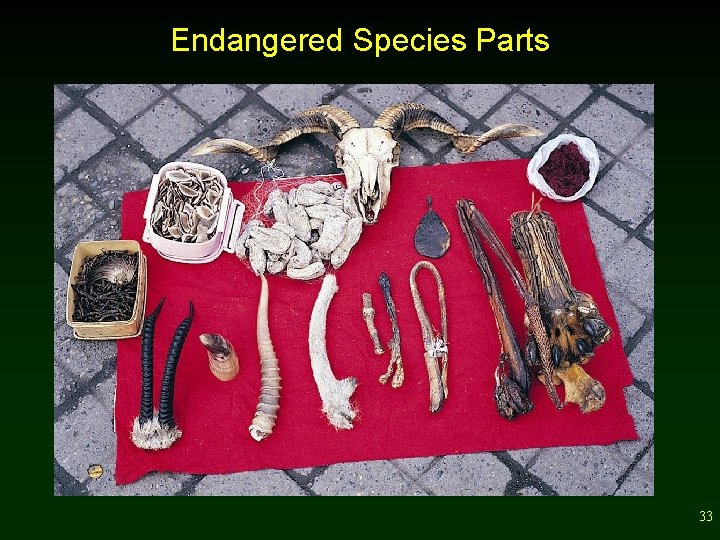
• Human-Caused Reductions in Biodiversity Cont’d Commercial Products and Live Specimens v Wildlife smuggling is very profitable. - 50 deaths for every live arrival at market. v U. S. Annual pet trade in wild species: § 2 million reptiles § 1 million amphibians and mammals § 500, 000 birds § 128 million tropical fish - often caught with cyanide above coral reefs. 32
Endangered Species Parts 33
Predator and Pest Control • Many animal populations have been greatly reduced or exterminated because they are regarded as dangerous to humans or livestock. v Animal control costs $20 million in federal and state funds annually. - 700, 000 birds and mammals annually. Ø 100, 000 coyotes 34
Predator and Pest Control Cont’d • Exotic Species Introductions v Exotic organisms - Organisms introduced into habitats where they are not native. - Biological Pollution Ø Kudzu Vine Ø Leafy Spurge Ø Purple Loosestrife Ø Zebra Mussels Ø Asian Long-Horned Beetles 35
Predator and Pest Control Cont’d • • • Diseases v When a disease is introduced into a new environment, natural balance may be tipped, leading to an epidemic. - Chestnut Blight, Whirling Disease Pollution v Toxic Pollutants - Pesticides, Lead , DDT Genetic Assimilation 36
BIODIVERSITY PROTECTION • Hunting and Fishing Laws v By 1890’s, most states had enacted some hunting and fishing laws. - General idea was pragmatic, not aesthetic or moral preservation. Ø White-tailed deer Ø Wild turkeys Ø Wood ducks 37
Endangered Species Act • Established in 1973. v Endangered are those considered in imminent danger of extinction. v Threatened are those likely to become endangered, at least locally, in the near future. - Vulnerable are those that are naturally rare or have been locally depleted to a level that puts them at risk. 38
Endangered Species Act Cont’d • ESA regulates a wide range of activities involving Endangered Species: v Taking (harassing, harming, pursuing, hunting, shooting, killing, capturing, or collecting) either accidentally, or on purpose. v Selling v Importing into or Exporting out of the U. S. v Possessing v Transporting or Shipping 39
Endangered Species Act Cont’d • Currently, the U. S. has 1, 300 species on its endangered and threatened lists, and 250 candidate species waiting for consideration. v Number reflects more about human interests than actual status. - Invertebrates make up 75% of all species, but only 9% worthy of protection. v Listing process is extremely slow. 40
Recovery Plans • • Once a species is listed, USFWS is required to propose a recovery plan detailing the rebuilding of the species to sustainable levels. v Total cost of all current plans = $5 billion. Opponents have continually tried to require economic costs and benefits be incorporated into planning. 41
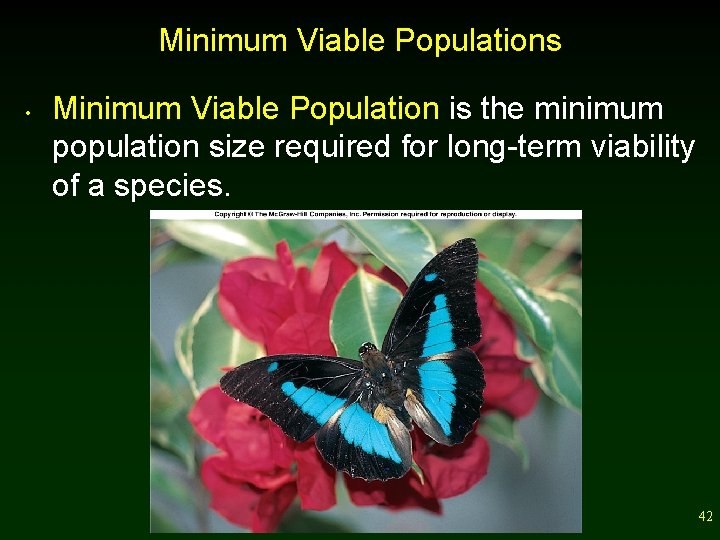
Minimum Viable Populations • Minimum Viable Population is the minimum population size required for long-term viability of a species. 42
Minimum Viable Populations Cont’d • Diversity Loss in Small Populations: v Founder Effect - Few individuals start a new population. v Demographic Bottleneck - Few individuals survive catastrophe. v Genetic Drift - Random reduction in gene frequency. v Inbreeding - Mating between related individuals. 43
Private Land Critical Habitat • • Private land is essential in endangered species protection. v Eighty percent of habitat for more than half of all listed species is on nonpublic property. Habitat Conservation Plans (HCP) v Landowners are allowed to harvest resources or build on part of their land as long as the species benefits overall. 44
Reauthorizing ESA • ESA officially expired in 1992. v Proposals for new ESA generally fall into two general categories: - Versions that encourage ecosystem and habitat protection rather than individual species. - Safe Harbor policies that allow exceptions to critical habitat designations. Ø (Economic Considerations) 45
International Wildlife Treaties • Convention on International Trade In Endangered Species (CITES) - 1975. v Regulated trade in living specimens and products derived from listed species. 46
Summary: • • Terrestrial Biomes Aquatic Ecosystems Biodiversity and Species Definitions v Benefits of Biodiversity v Threats to Biodiversity - Human Caused Reductions Biodiversity Protection v ESA - Recovery Plans - Minimum Viable Populations 47
48