
PRINCIPLES OF ECOLOGY WHAT IS ECOLOGY From the




- Slides: 46
PRINCIPLES OF ECOLOGY
WHAT IS ECOLOGY? • From the Greek work oikos meaning “house” • The study of the interactions of living organisms with one another and with their environment • 1866 Ernst Haeckel, German biologist coined the term
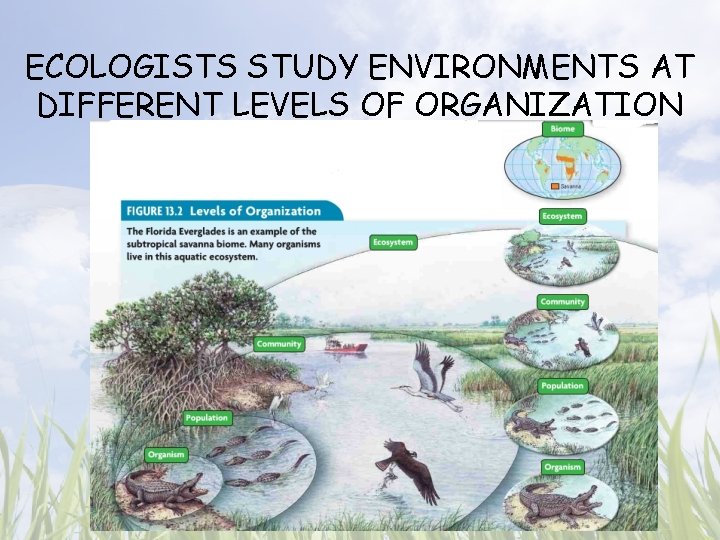
ECOLOGISTS STUDY ENVIRONMENTS AT DIFFERENT LEVELS OF ORGANIZATION
LEVELS OF ORGANIZATION • Organism: an individual living thing • Population: a group of the same species that lives in one area • Community: a group of different species that live together in one area • Ecosystem: includes all of the organisms as well as the climate, soil, water, rocks, and other nonliving things in a given area • Biome: a major regional or global community of organisms; usually categorized by climate conditions and plant communities that thrive there
ECOLOGICAL RESEARCH METHODS INCLUDE: OBSERVATION, EXPERIMENTATION, & MODELING
OBSERVATION • Using the senses to study the world • Using tools to collect measurements • Examining previous research results
OBSERVATION • Monitoring activities of a species – Direct survey: for species that are easy to follow (naked eye, binocular, etc. ) – Indirect survey : for species that are difficult to track (feces, signs of a recent kill, etc. ) – Radiotelemetry • Population size – Mark recapture: mobile population – Quadrat: plant populations; stationary
EXPERIMENTATION • Lab – Pros: controlled – Cons: does not reflect complex interactions that occur in nature • Field – Pros: accurate picture of how organisms interact in a natural setting – Cons: difficult to determine cause and effect due to the large number of factors at work in nature
MODELING • Computer and mathematical • Test hypothetical situations but are based on real data
AN ECOSYSTEM INCLUDES BOTH BIOTIC AND ABIOTIC FACTORS
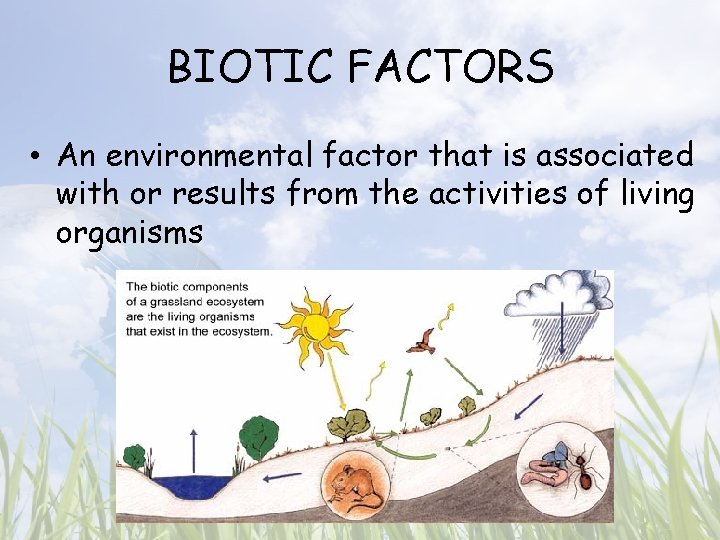
BIOTIC FACTORS • An environmental factor that is associated with or results from the activities of living organisms
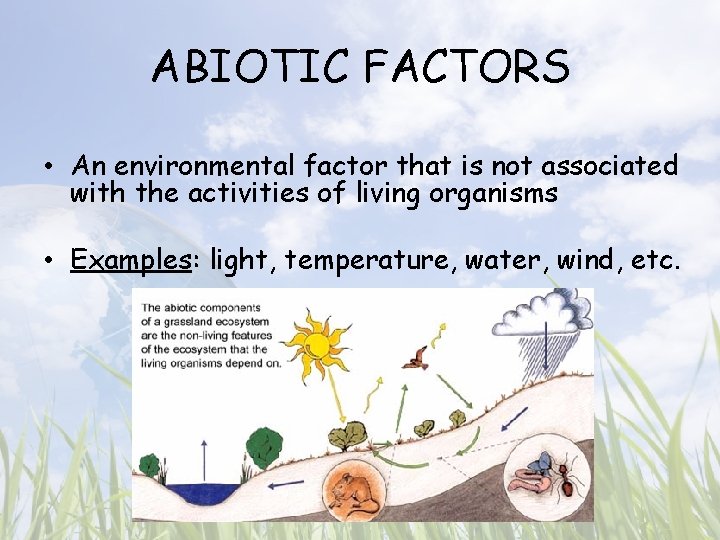
ABIOTIC FACTORS • An environmental factor that is not associated with the activities of living organisms • Examples: light, temperature, water, wind, etc.
CHANGING ONE FACTOR IN AN ECOSYSTEM CAN EFFECT MANY OTHER FACTORS
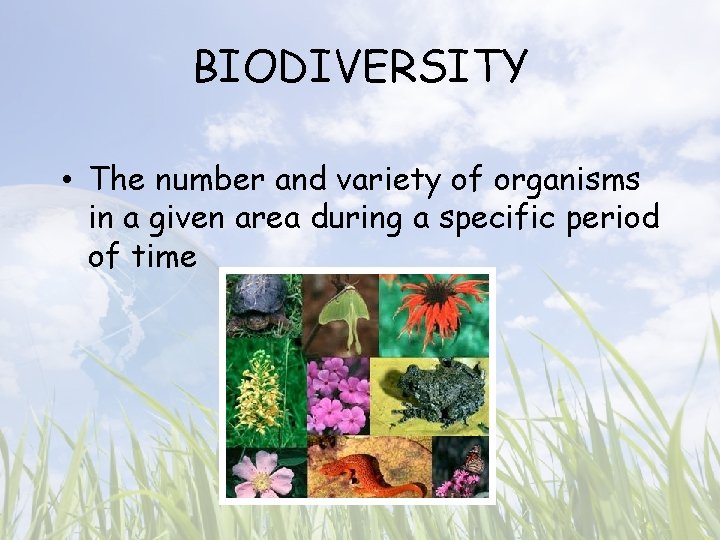
BIODIVERSITY • The number and variety of organisms in a given area during a specific period of time
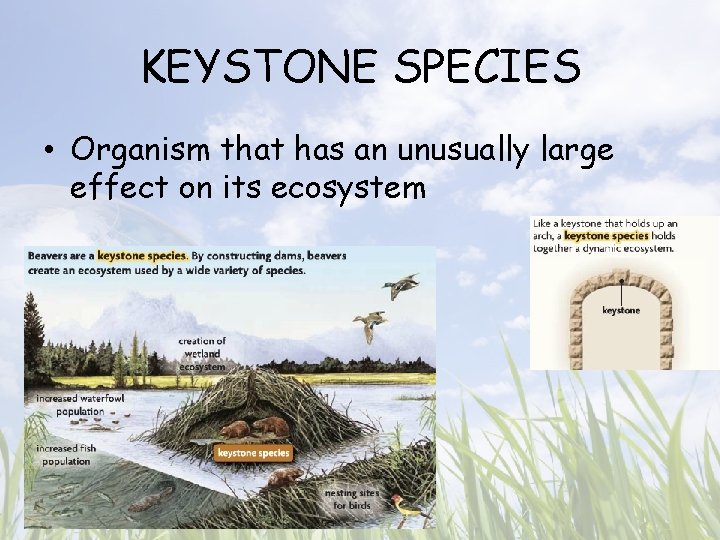
KEYSTONE SPECIES • Organism that has an unusually large effect on its ecosystem
ENERGY IN ECOSYSTEMS
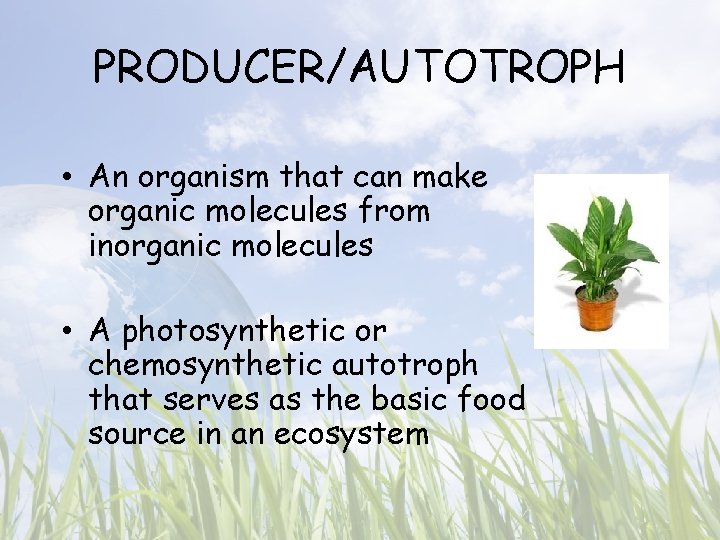
PRODUCER/AUTOTROPH • An organism that can make organic molecules from inorganic molecules • A photosynthetic or chemosynthetic autotroph that serves as the basic food source in an ecosystem
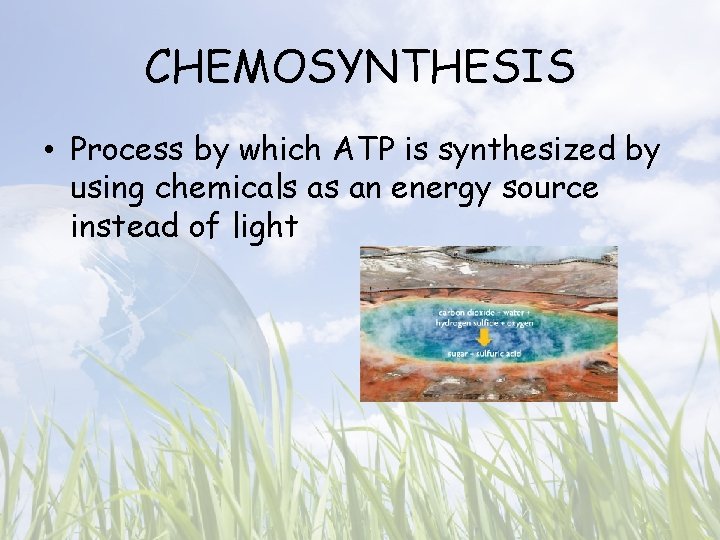
CHEMOSYNTHESIS • Process by which ATP is synthesized by using chemicals as an energy source instead of light
CONSUMER/HETEROTROPH • An organism that eats other organisms or organic matter instead of producing its own nutrients or obtaining nutrients from inorganic sources
TYPES OF CONSUMERS • Herbivores • Detritivores • Carnivores • Decomposers • Omnivores • Generalists
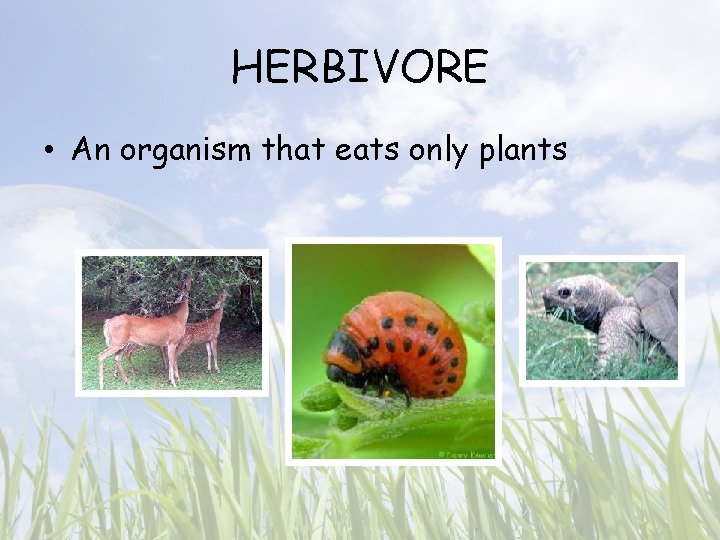
HERBIVORE • An organism that eats only plants
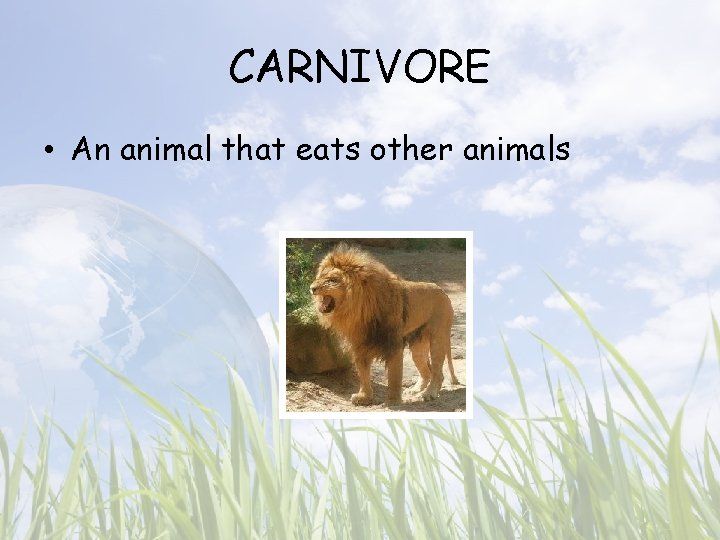
CARNIVORE • An animal that eats other animals
OMNIVORE • An organisms that eats both plants and animals
DETRITIVORE • A consumer that feeds on dead plants and animals • organisms that eat detritus, or dead organic matter
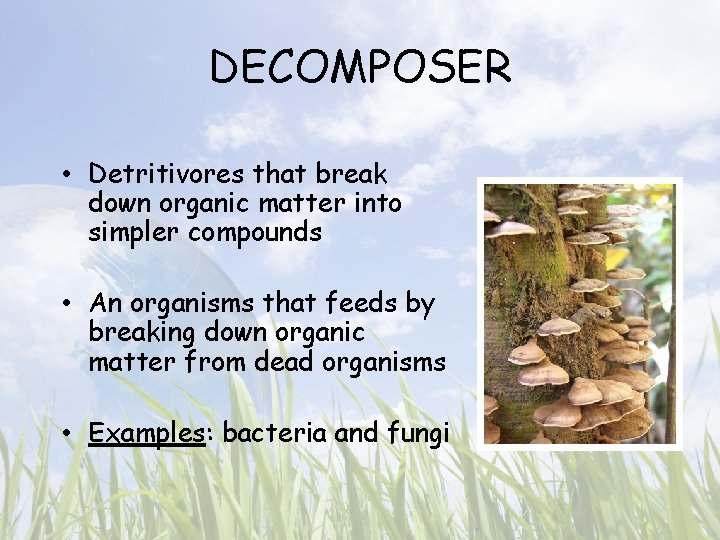
DECOMPOSER • Detritivores that break down organic matter into simpler compounds • An organisms that feeds by breaking down organic matter from dead organisms • Examples: bacteria and fungi
GENERALIST • Consumers that have a varying diet • Do not rely on a single food source • Example: gray wolf
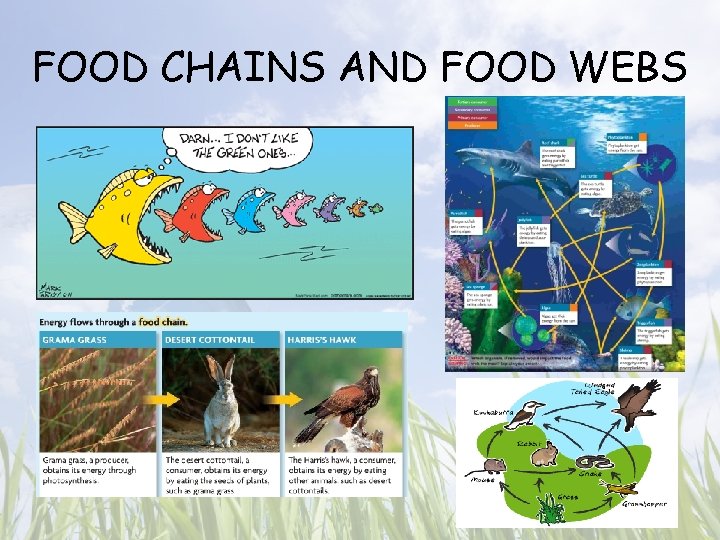
FOOD CHAINS AND FOOD WEBS
TROPHIC LEVELS • Levels of nourishment in a food chain • Primary consumers • Secondary consumers • Tertiary consumers
A FOOD WEB SHOWS A COMPLEX NETWORK OF FEEDING RELATIONSHIPS • Arrows point in the direction of energy flow • Arrows point to the one doing the “eating”
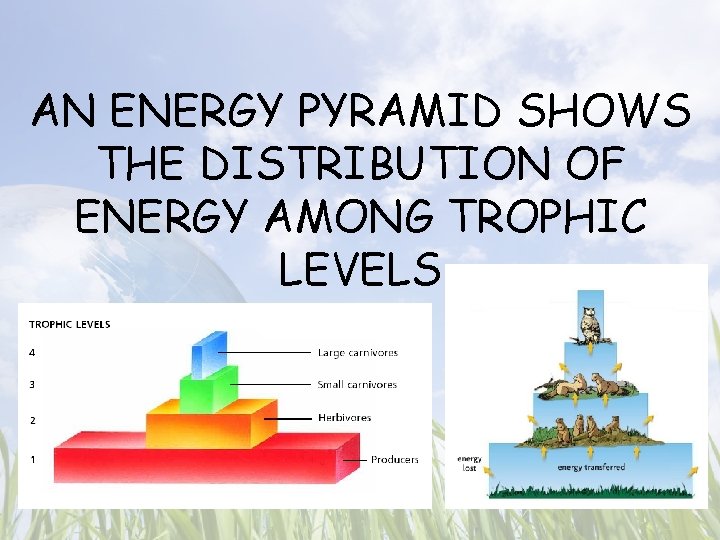
AN ENERGY PYRAMID SHOWS THE DISTRIBUTION OF ENERGY AMONG TROPHIC LEVELS
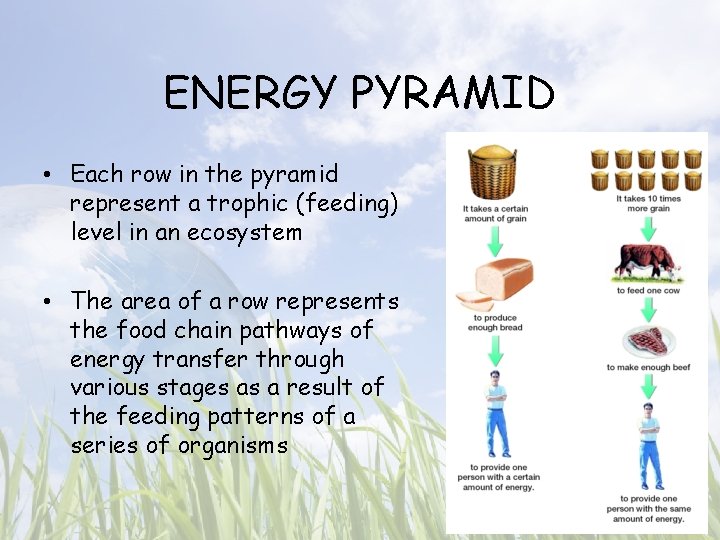
ENERGY PYRAMID • Each row in the pyramid represent a trophic (feeding) level in an ecosystem • The area of a row represents the food chain pathways of energy transfer through various stages as a result of the feeding patterns of a series of organisms
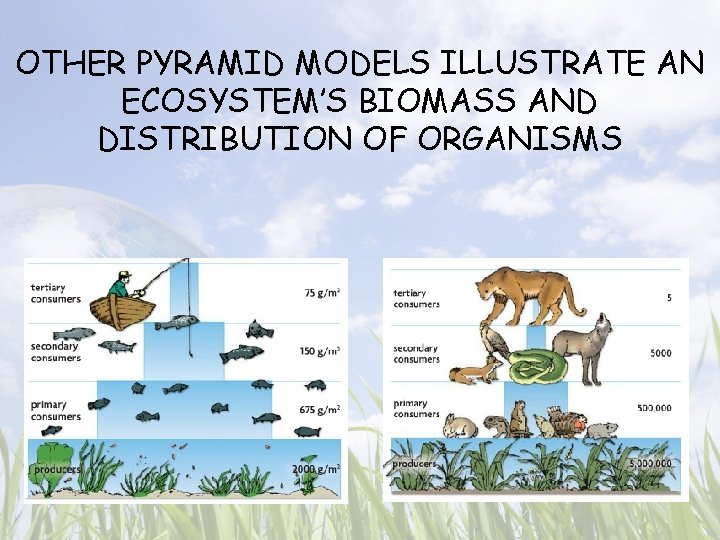
OTHER PYRAMID MODELS ILLUSTRATE AN ECOSYSTEM’S BIOMASS AND DISTRIBUTION OF ORGANISMS
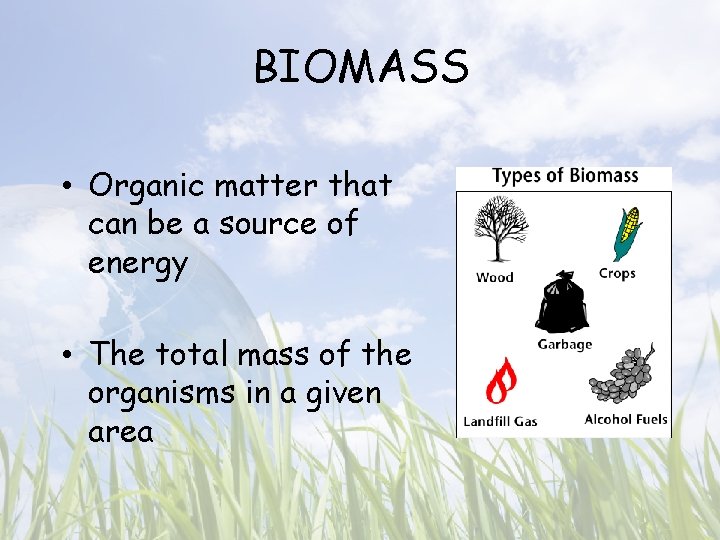
BIOMASS • Organic matter that can be a source of energy • The total mass of the organisms in a given area
CYCLING OF MATTER
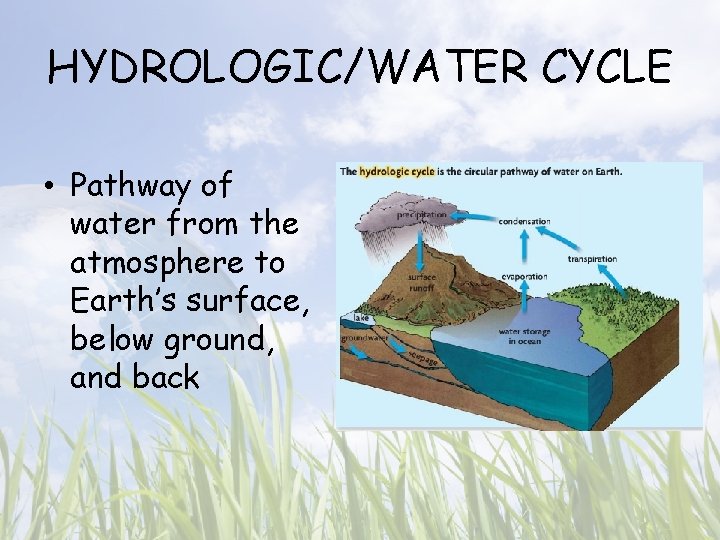
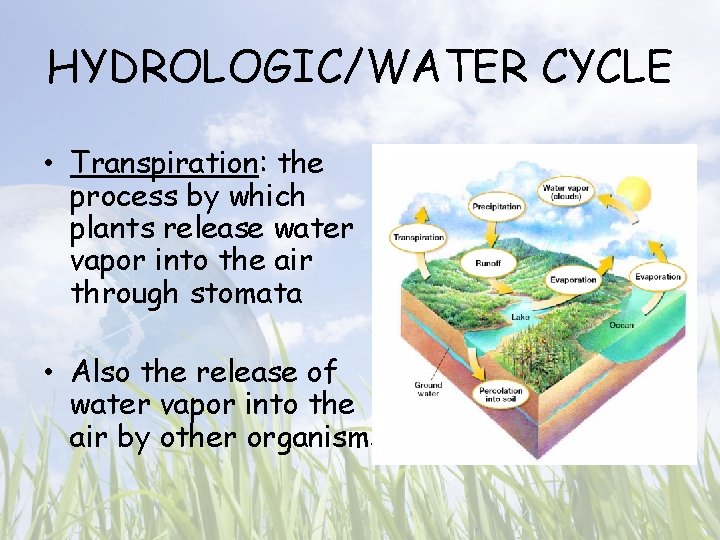
HYDROLOGIC/WATER CYCLE • Pathway of water from the atmosphere to Earth’s surface, below ground, and back
HYDROLOGIC/WATER CYCLE • Water has the greatest nonliving influence on an ecosystem’s inhabitants • Ground Water: water that is beneath the Earth’s surface as a result of rain or snow • Most water evaporates back into the atmosphere
HYDROLOGIC/WATER CYCLE • Transpiration: the process by which plants release water vapor into the air through stomata • Also the release of water vapor into the air by other organisms
ELEMENTS ESSENTIAL FOR LIFE ALSO CYCLE THROUGH ECOSYSTEMS
BIOGEOCHEMICAL CYCLES • The circulation of substances through living organisms from or to the environment • All materials that cycle through living organisms are important in maintaining the health of ecosystems
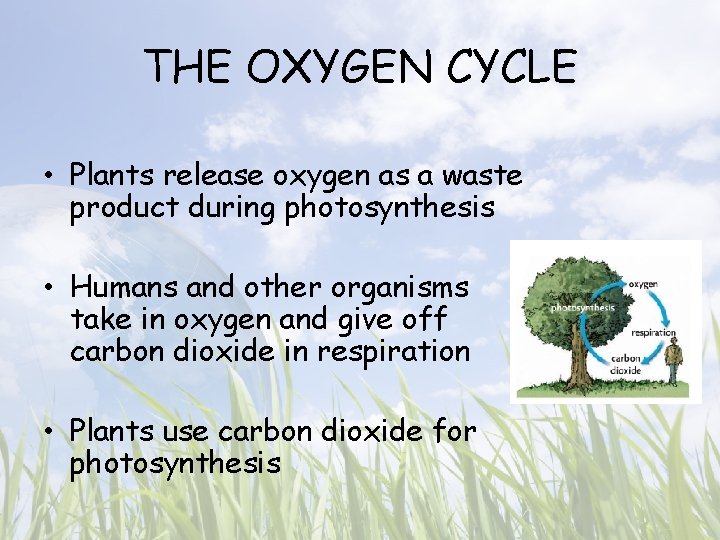
THE OXYGEN CYCLE • Plants release oxygen as a waste product during photosynthesis • Humans and other organisms take in oxygen and give off carbon dioxide in respiration • Plants use carbon dioxide for photosynthesis
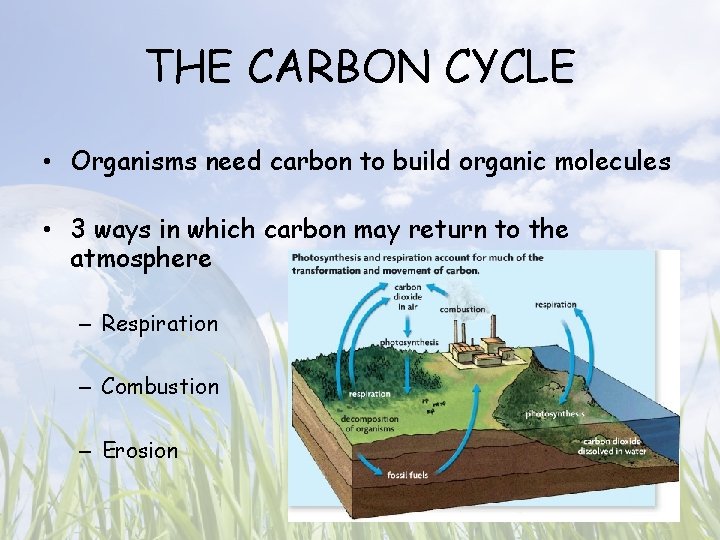
THE CARBON CYCLE • Organisms need carbon to build organic molecules • 3 ways in which carbon may return to the atmosphere – Respiration – Combustion – Erosion
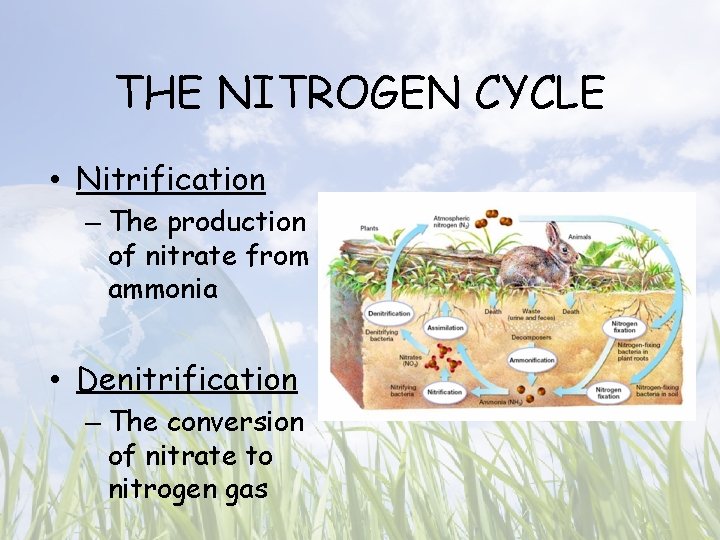
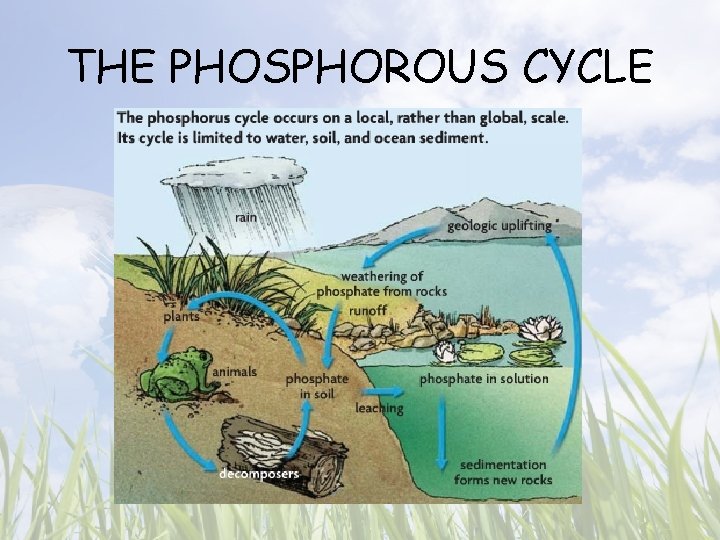
PHOSPHOROUS & NITROGEN CYCLES • Organisms need nitrogen and phosphorous to build proteins and nucleic acids • Phosphorous is present in soil and rock as calcium phosphate…used by plants and used to build organic molecules • The atmosphere is about 78%, N 2 • Must be converted in order for organisms to use it
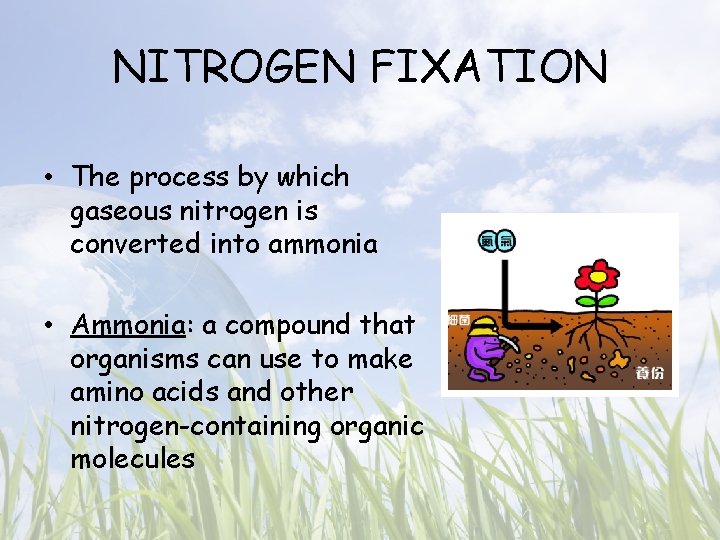
NITROGEN FIXATION • The process by which gaseous nitrogen is converted into ammonia • Ammonia: a compound that organisms can use to make amino acids and other nitrogen-containing organic molecules
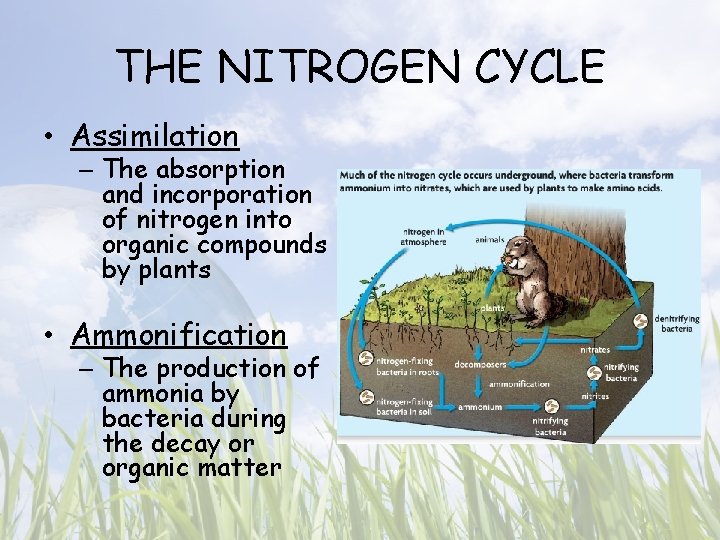
THE NITROGEN CYCLE • Assimilation – The absorption and incorporation of nitrogen into organic compounds by plants • Ammonification – The production of ammonia by bacteria during the decay or organic matter
THE NITROGEN CYCLE • Nitrification – The production of nitrate from ammonia • Denitrification – The conversion of nitrate to nitrogen gas
THE PHOSPHOROUS CYCLE