
Principles of Ecology Types of Organisms REVIEW Autotrophs

- Slides: 26
Principles of Ecology
Types of Organisms: REVIEW! • Autotrophs (Producers) – Photoautotrophs – Chemoautotrophs • Heterotrophs (Consumers) – Herbivores – Carnivores – Omnivores – Scavengers – Decomposers
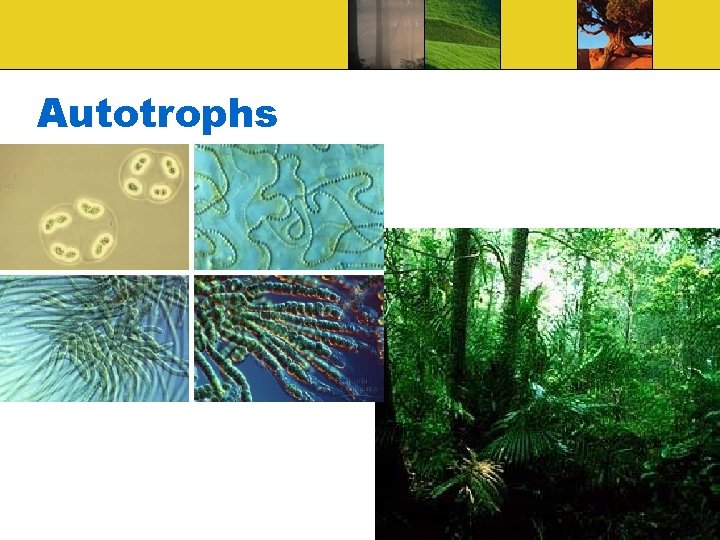
Types of Organisms: Autotrophs • Autotrophs –Also called Producers –Organisms that produce their own food from the sun or from chemicals
Types of Organisms: Autotrophs • Photoautotrophs –Use photosynthesis to make food –Ex. plants, algae, certain bacteria
Types of Organisms: Autotrophs • Chemoautotrophs –Make food from chemicals (chemosynthesis)
Autotrophs
Types of Organisms: Heterotrophs • Heterotrophs –Also called consumers –Organisms that make energy from the food they eat
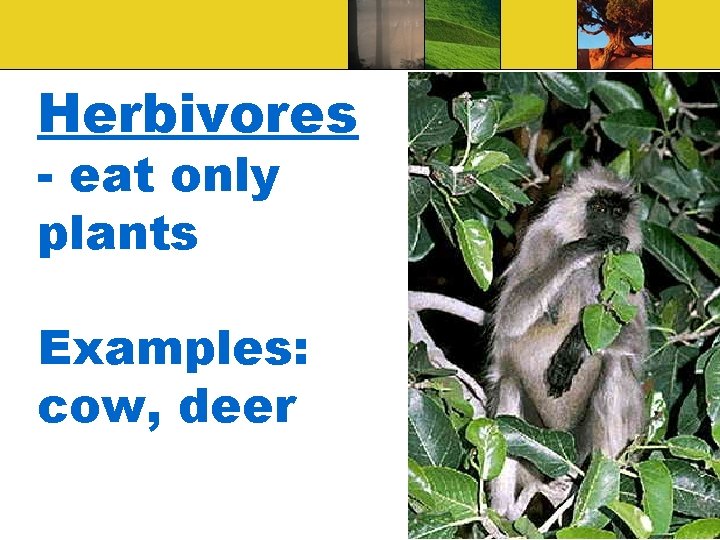
Herbivores - eat only plants Examples: cow, deer
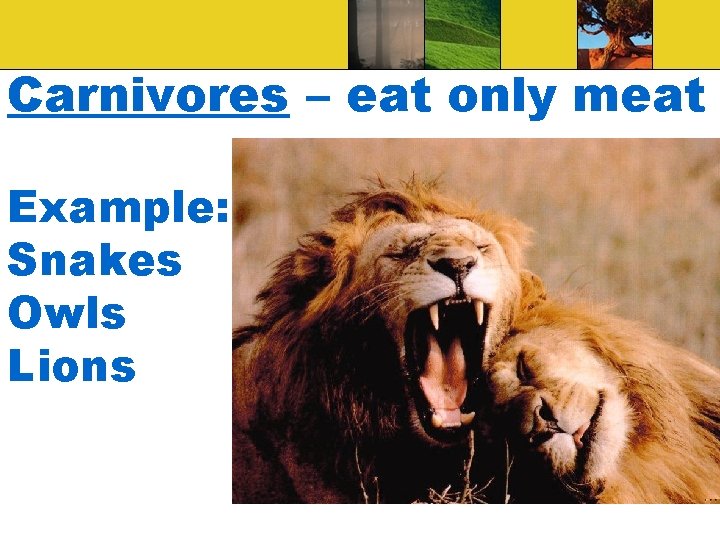
Carnivores – eat only meat Example: Snakes Owls Lions
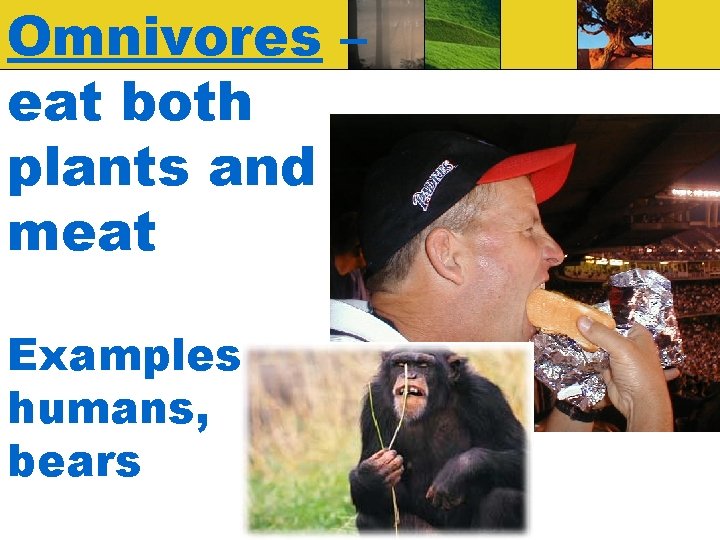
Omnivores – eat both plants and meat Examples: humans, bears
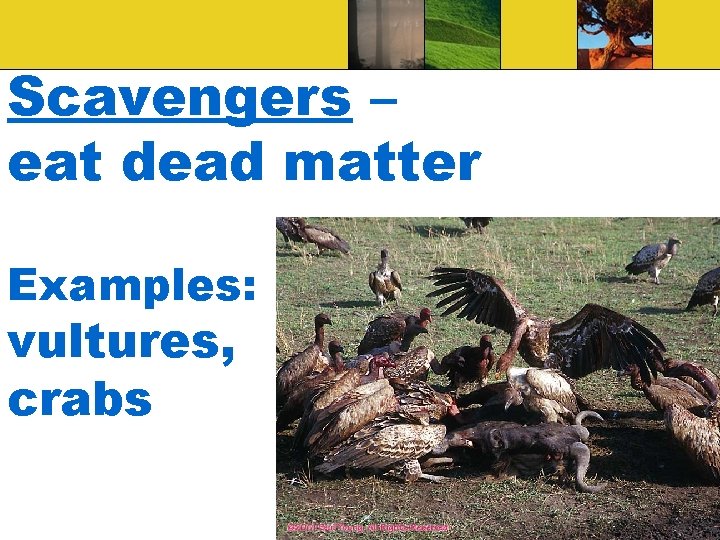
Scavengers – eat dead matter Examples: vultures, crabs
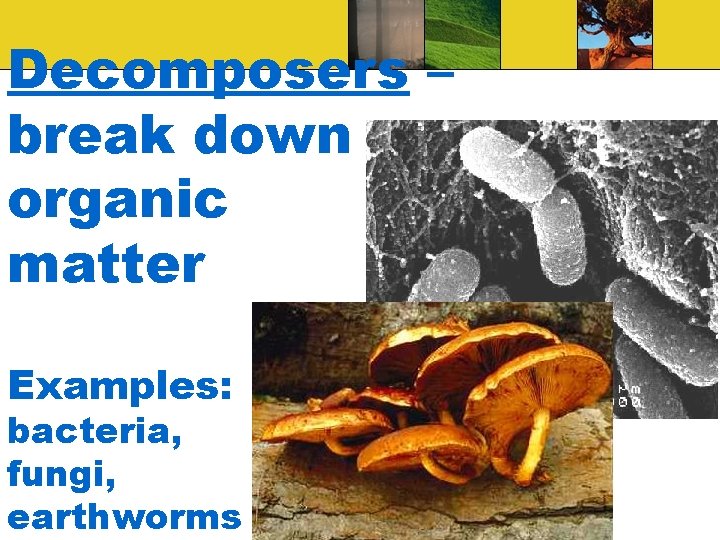
Decomposers – break down organic matter Examples: bacteria, fungi, earthworms
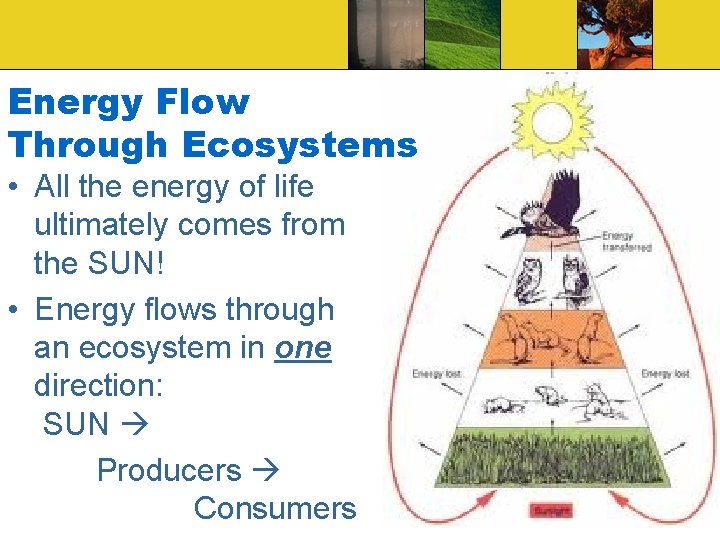
Energy Flow Through Ecosystems • All the energy of life ultimately comes from the SUN! • Energy flows through an ecosystem in one direction: SUN Producers Consumers
Energy Flow Through Ecosystems • Producers (autotrophs) capture the sun’s energy to make food • This energy is passed to consumers (heterotrophs) when they eat the producers • Energy flow is represented by food chains and food webs
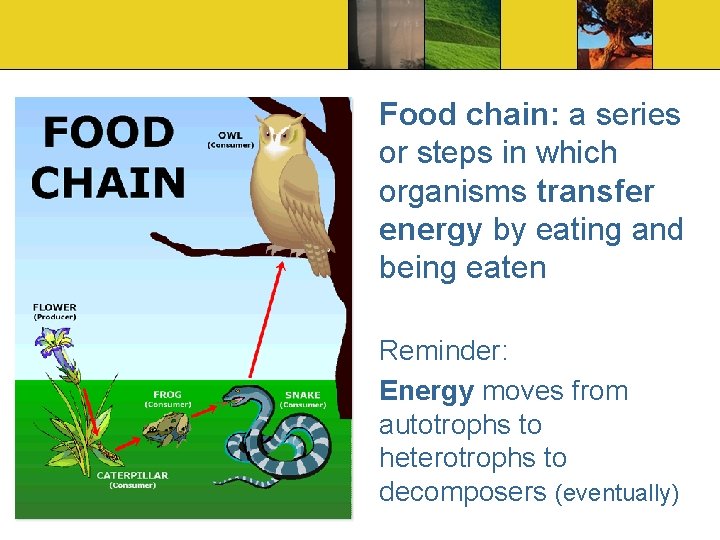
Food chain: a series or steps in which organisms transfer energy by eating and being eaten Reminder: Energy moves from autotrophs to heterotrophs to decomposers (eventually)
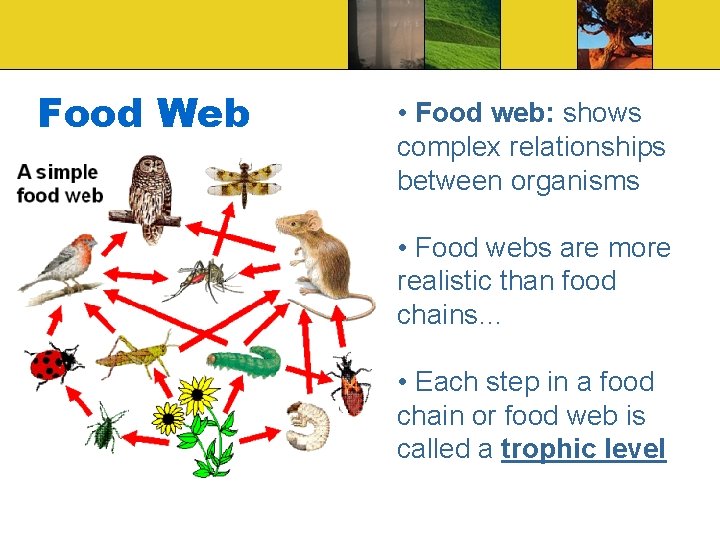
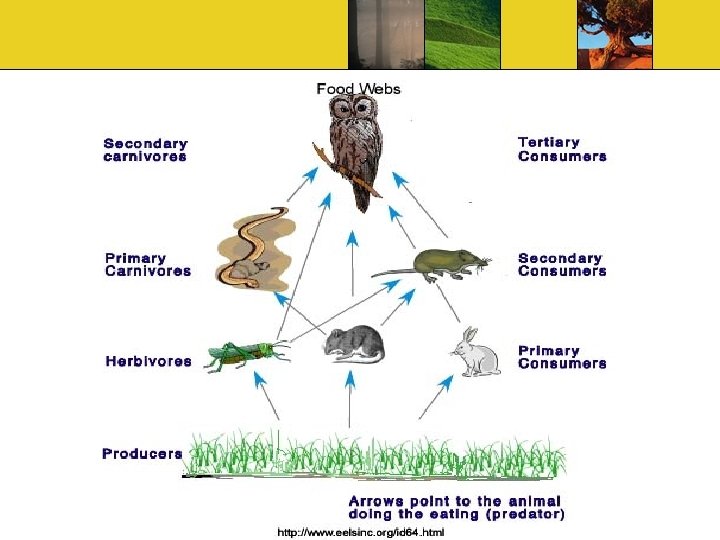
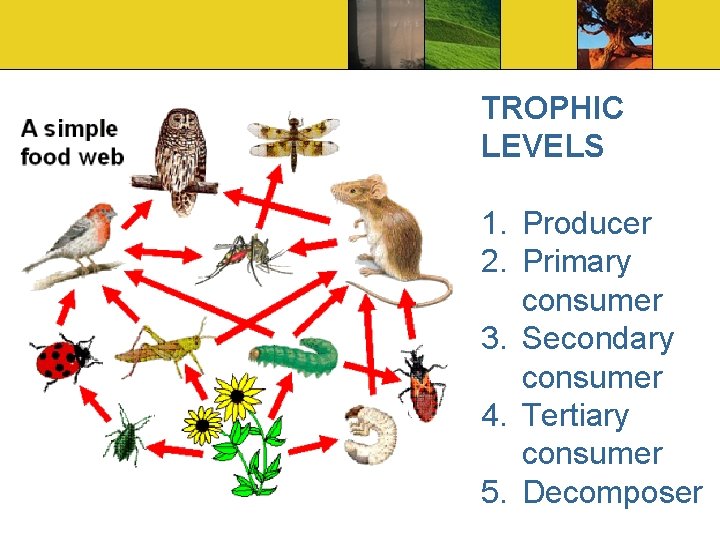
Food Web • Food web: shows complex relationships between organisms • Food webs are more realistic than food chains… • Each step in a food chain or food web is called a trophic level
TROPHIC LEVELS 1. Producer 2. Primary consumer 3. Secondary consumer 4. Tertiary consumer 5. Decomposer
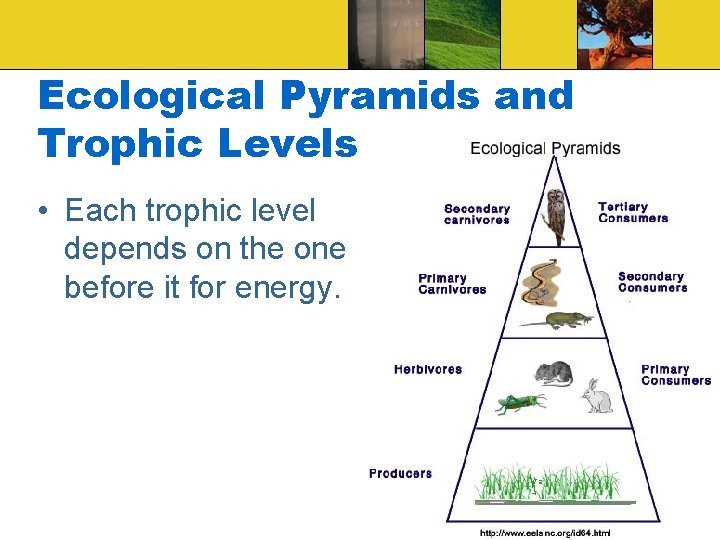
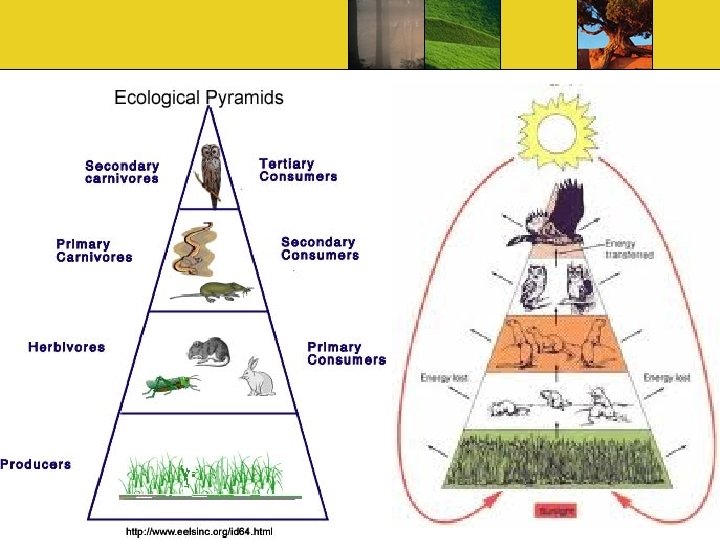
Ecological Pyramids and Trophic Levels • Each trophic level depends on the one before it for energy.
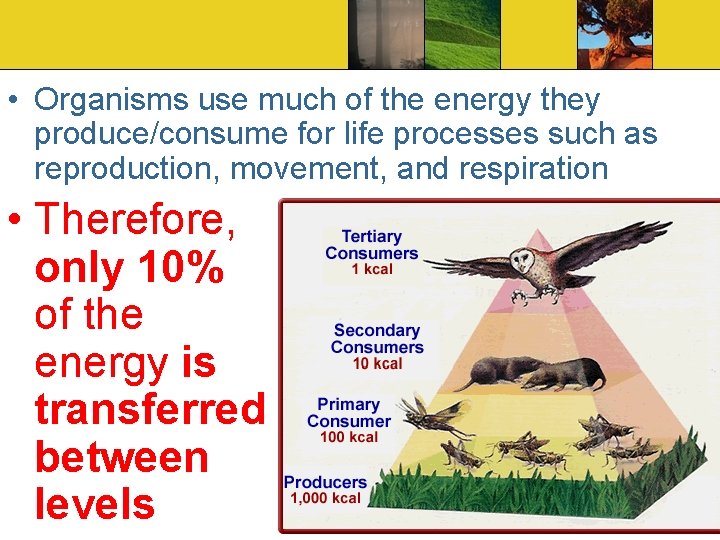
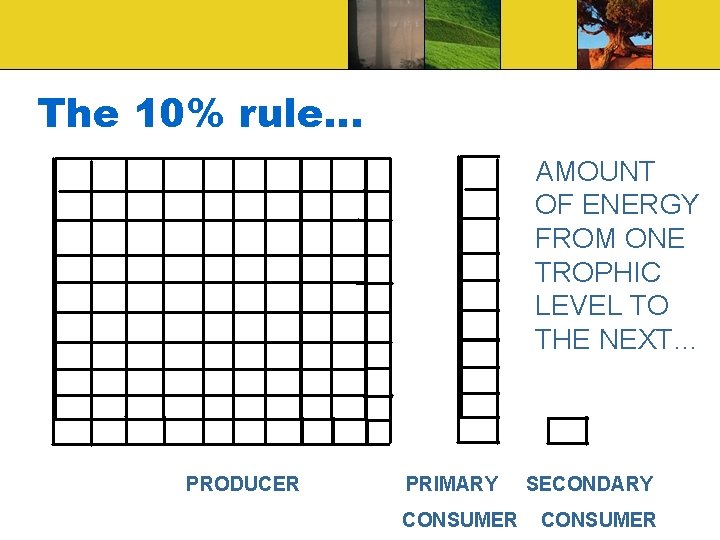
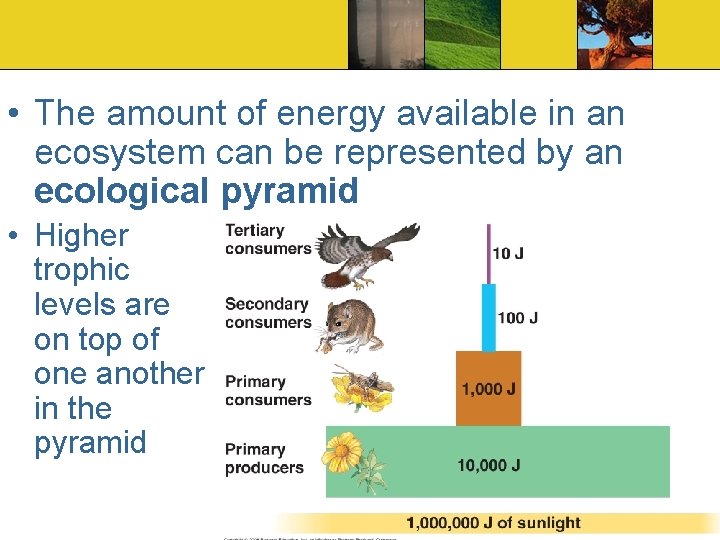
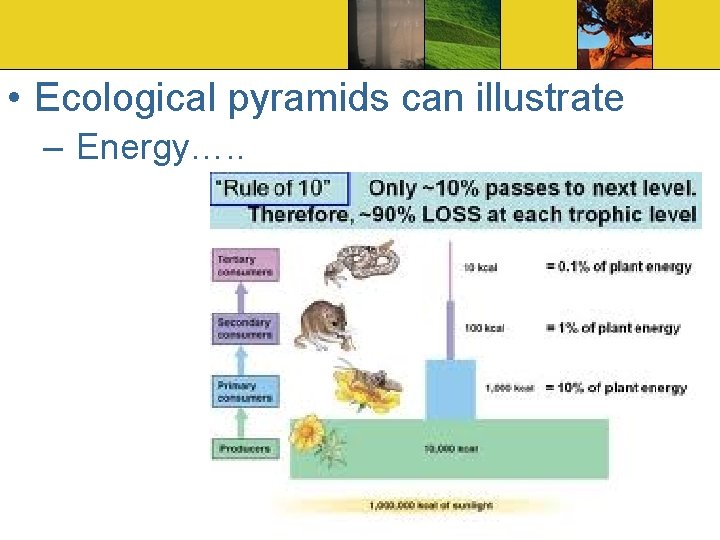
• Organisms use much of the energy they produce/consume for life processes such as reproduction, movement, and respiration • Therefore, only 10% of the energy is transferred between levels
The 10% rule… AMOUNT OF ENERGY FROM ONE TROPHIC LEVEL TO THE NEXT… PRODUCER PRIMARY CONSUMER SECONDARY CONSUMER
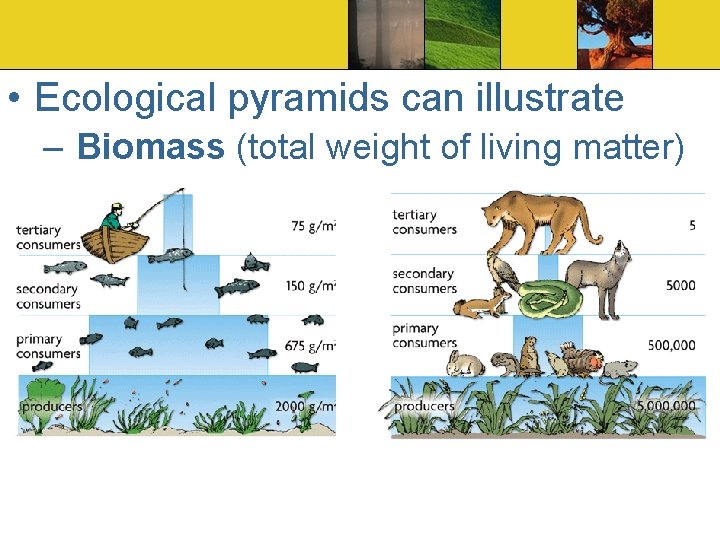
• The amount of energy available in an ecosystem can be represented by an ecological pyramid • Higher trophic levels are on top of one another in the pyramid
• Ecological pyramids can illustrate – Energy…. .
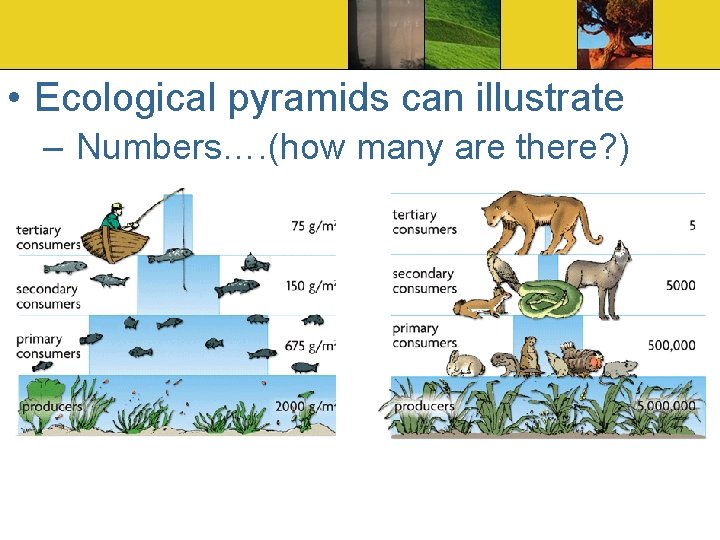
• Ecological pyramids can illustrate – Numbers…. (how many are there? )
• Ecological pyramids can illustrate – Biomass (total weight of living matter)