
Principles of Ecology Levels of Organization Ecosystem Interactions

- Slides: 24
Principles of Ecology Levels of Organization Ecosystem Interactions Community Interactions
Essential Question What are the relationships that occur among organisms within communities and ecosystems?
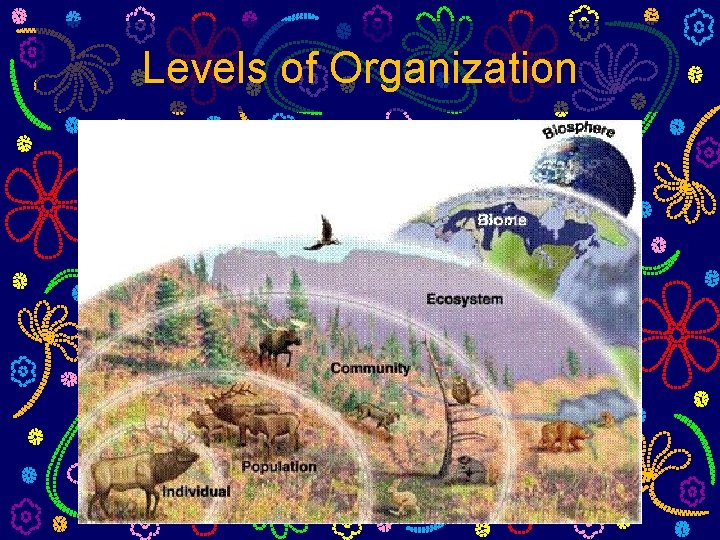
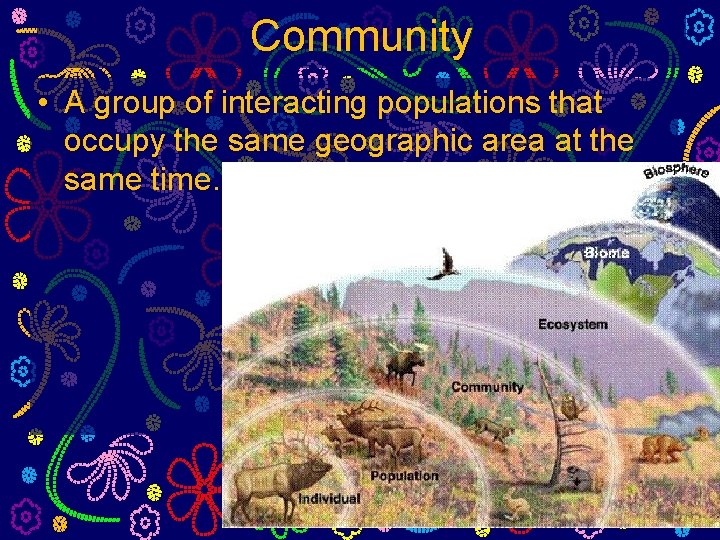
Levels of Organization
• Look on p. 36 for these definitions: – Species – Population – Community – Ecosystem • You will be responsible for knowing these terms!
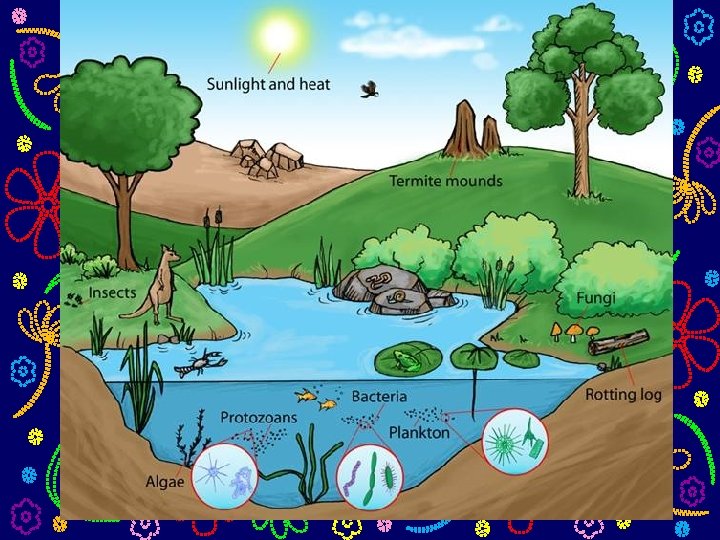
Ecosystem • Includes all living organisms (biotic factors) in an area as well as its non-living environment (abiotic factors) functioning together as a unit.
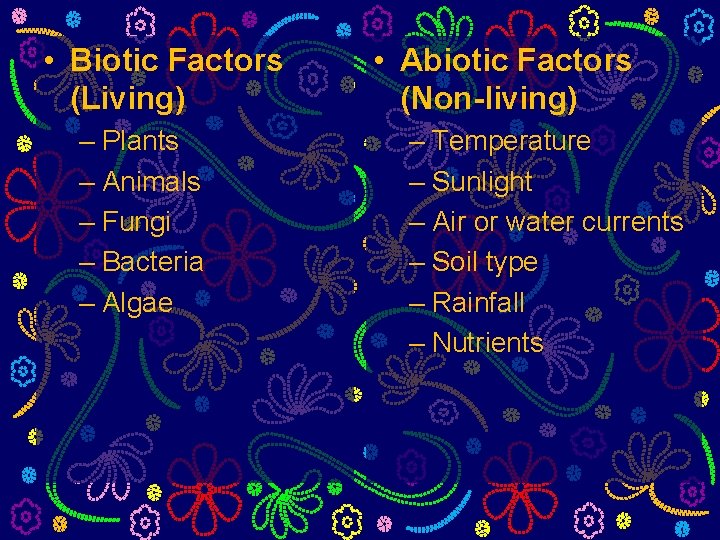
• Biotic Factors (Living) – Plants – Animals – Fungi – Bacteria – Algae • Abiotic Factors (Non-living) – Temperature – Sunlight – Air or water currents – Soil type – Rainfall – Nutrients
Ecosystem Interactions • Habitat: An area where an organism lives – Address • Niche: The role or position an organism has in its environment – Profession
• Giraffe – Habitat: African Savanna – Niche: eating leaves from the canopy of trees • Honeybees – Habitat: Hive – Niche: obtaining nectar from flowering plants to produce honey
Community • A group of interacting populations that occupy the same geographic area at the same time.
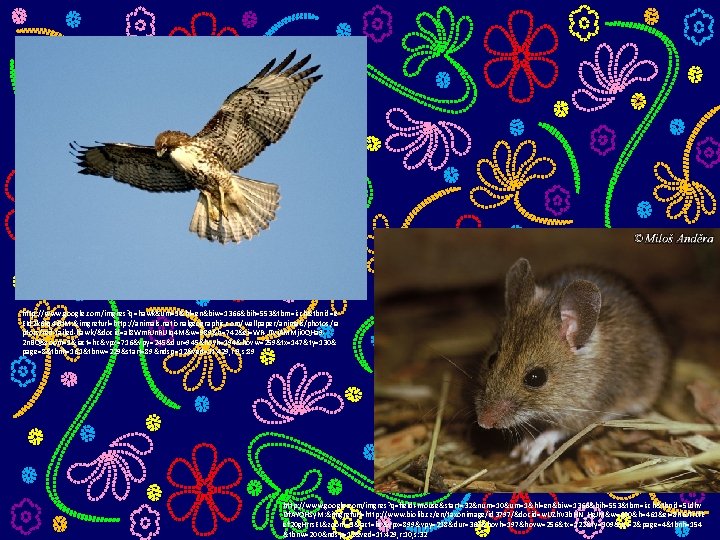
In the pictures that follow, describe the relationship between the two organisms
http: //www. google. com/imgres? q=hawk&um=1&hl=en&biw=1366&bih=553&tbm=isch&tbnid=e EId 2 k 6 kq 4 i. Bt. M: &imgrefurl=http: //animals. nationalgeographic. com/wallpaper/animals/photos/ra ptors/red-tailed-hawk/&docid=al 8 Wm. RJn. RUIq 4 M&w=989&h=742&ei=WR-JTvj. AMMji 0 QHa 92 n. BQ&zoom=1&iact=hc&vpx=716&vpy=245&dur=945&hovh=194&hovw=259&tx=147&ty=130& page=8&tbnh=161&tbnw=229&start=89&ndsp=12&ved=1 t: 429, r: 9, s: 89 http: //www. google. com/imgres? q=field+mouse&start=32&num=10&um=1&hl=en&biw=1366&bih=553&tbm=isch&tbnid=5 Ldhv Df. AYQHSy. M: &imgrefurl=http: //www. biolib. cz/en/taxonimage/id 3797/&docid=w. UZh. V 3 b. HN_Hg. JM&w=600&h=461&ei=8 R 6 JTr. Lf. E ef 20 g. Hrrs. EL&zoom=1&iact=hc&vpx=899&vpy=218&dur=361&hovh=197&hovw=256&tx=122&ty=109&sqi=2&page=4&tbnh=154 &tbnw=200&ndsp=12&ved=1 t: 429, r: 10, s: 32
http: //www. neotropicalbirds. org/FG_Broad. Winged. Hawks. html http: //true-wildlife. blogspot. com/2011/02/eagle. html
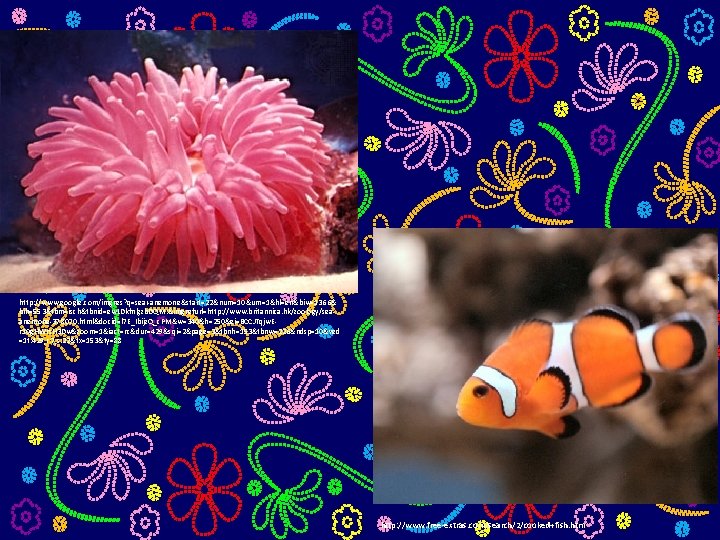
http: //www. google. com/imgres? q=sea+anemone&start=22&num=10&um=1&hl=en&biw=1366& bih=553&tbm=isch&tbnid=ew. LDkfnlgzb. DQM: &imgrefurl=http: //www. britannica. hk/zoology/seaanemone-378070. html&docid=l 7 E_Ibijz. Q_c. PM&w=340&h=250&ei=BCCJTqjw. Er 10 g. HWrs. H 3 Dw&zoom=1&iact=rc&dur=429&sqi=2&page=3&tbnh=153&tbnw=226&ndsp=10&ved =1 t: 429, r: 7, s: 22&tx=153&ty=88 http: //www. free-extras. com/search/2/cooked+fish. htm
Community Interactions • Predation: The act of one organism consuming another food • Competition: When more than one organism uses a resource at the same time.
What is symbiosis? • Any relationship where two species live on or near each other. The term literally means “living together”. • There are three primary types of symbiotic relationships.
Mutualism • Remember the sea anemone and clown fish… • In mutualism, both species benefit from the relationship (+, +)
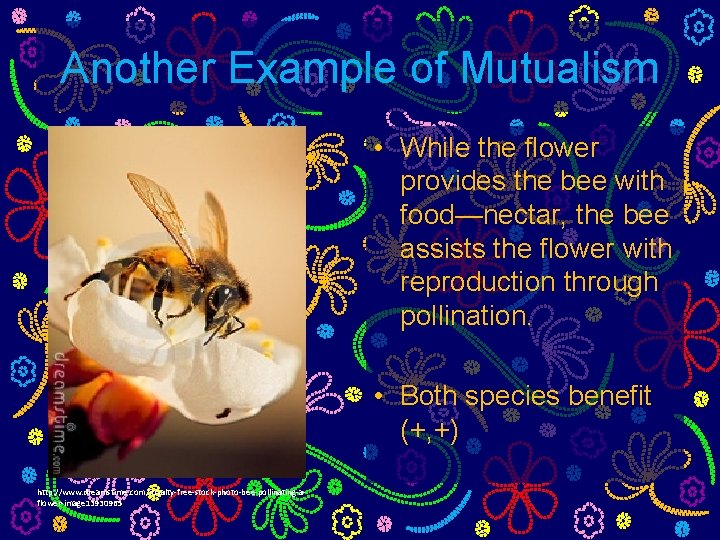
Another Example of Mutualism • While the flower provides the bee with food—nectar, the bee assists the flower with reproduction through pollination. • Both species benefit (+, +) http: //www. dreamstime. com/royalty-free-stock-photo-bee-pollinating-aflower-image 13930965
Commensalism • In commensalism, one species benefits while the other is neither helped nor harmed • (+, 0)
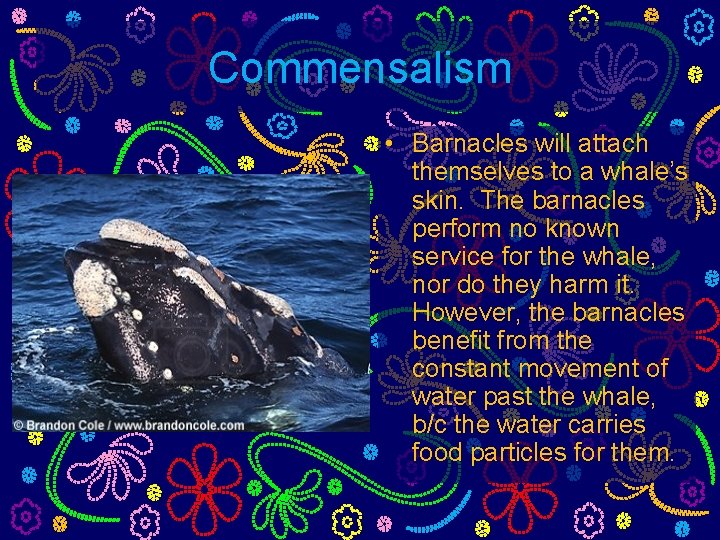
Commensalism • Barnacles will attach themselves to a whale’s skin. The barnacles perform no known service for the whale, nor do they harm it. However, the barnacles benefit from the constant movement of water past the whale, b/c the water carries food particles for them.
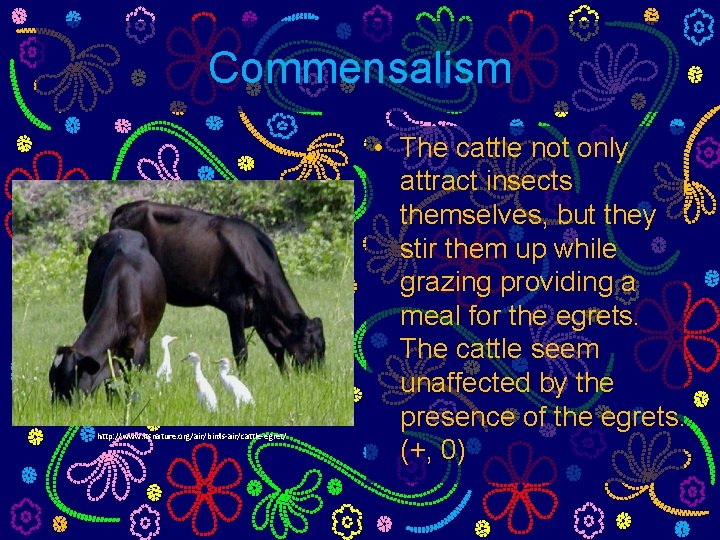
Commensalism http: //www. itsnature. org/air/birds-air/cattle-egret/ • The cattle not only attract insects themselves, but they stir them up while grazing providing a meal for the egrets. The cattle seem unaffected by the presence of the egrets. (+, 0)
Parasitism • One organism lives on or inside another organism and harms it. (+, --) • The parasite examples are roundworms, heartworms, and a cuterebra.
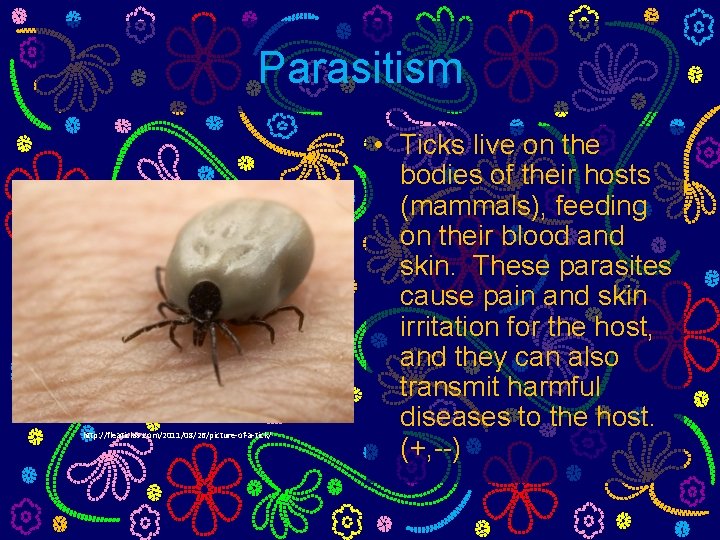
Parasitism http: //fleatickss. com/2011/08/26/picture-of-a-tick/ • Ticks live on the bodies of their hosts (mammals), feeding on their blood and skin. These parasites cause pain and skin irritation for the host, and they can also transmit harmful diseases to the host. (+, --)
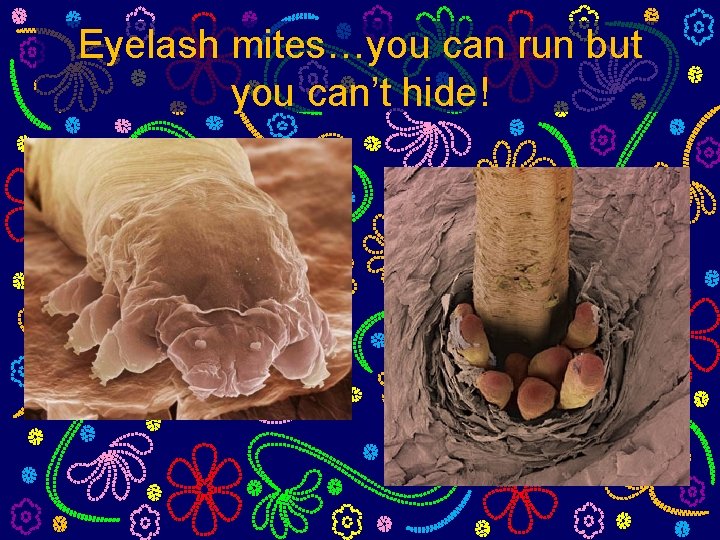
Eyelash mites…you can run but you can’t hide!