
PRINCIPLES OF ECOLOGY Chapter 2 Organisms Their Environment

- Slides: 20
PRINCIPLES OF ECOLOGY Chapter 2
Organisms & Their Environment Ch. 2, Sec. 1
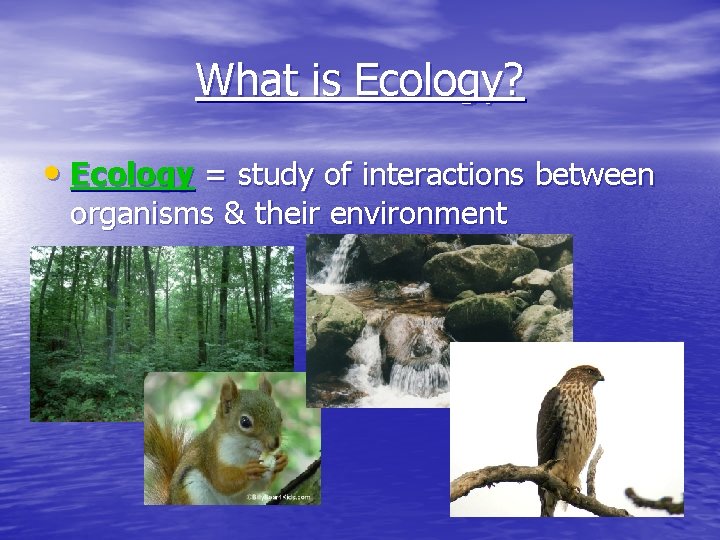
What is Ecology? • Ecology = study of interactions between organisms & their environment
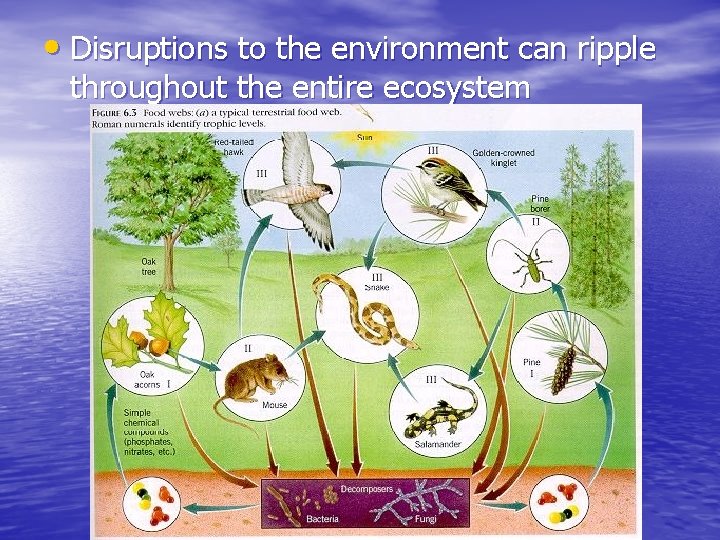
• Disruptions to the environment can ripple throughout the entire ecosystem
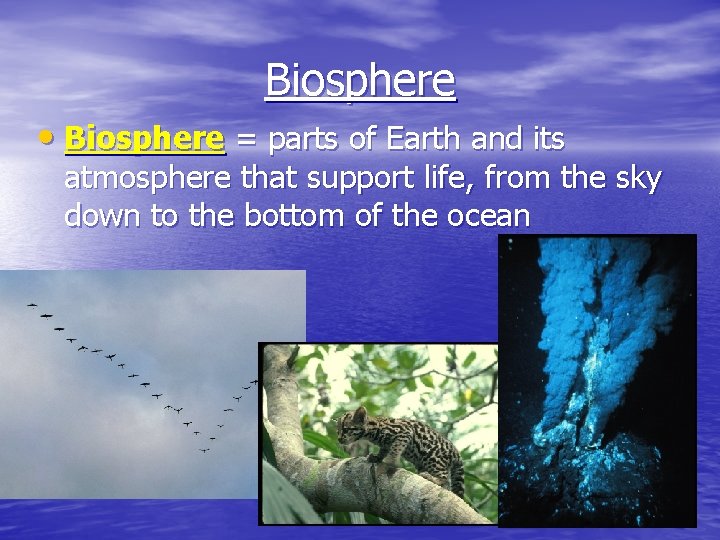
Biosphere • Biosphere = parts of Earth and its atmosphere that support life, from the sky down to the bottom of the ocean
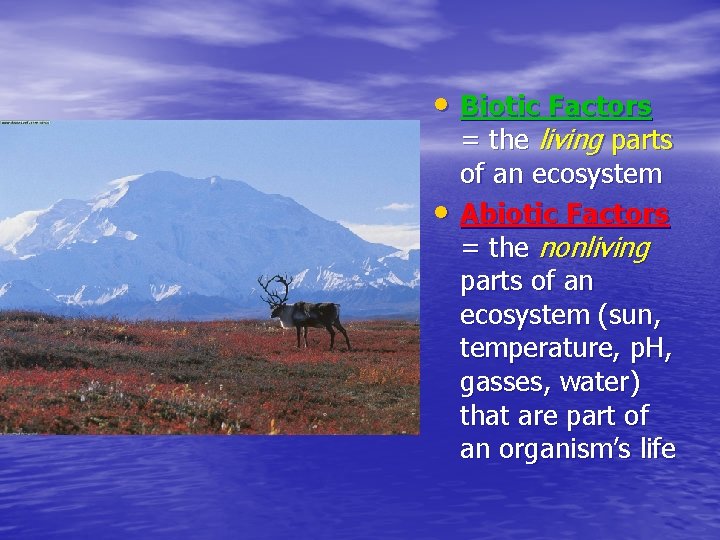
• Biotic Factors • = the living parts of an ecosystem Abiotic Factors = the nonliving parts of an ecosystem (sun, temperature, p. H, gasses, water) that are part of an organism’s life
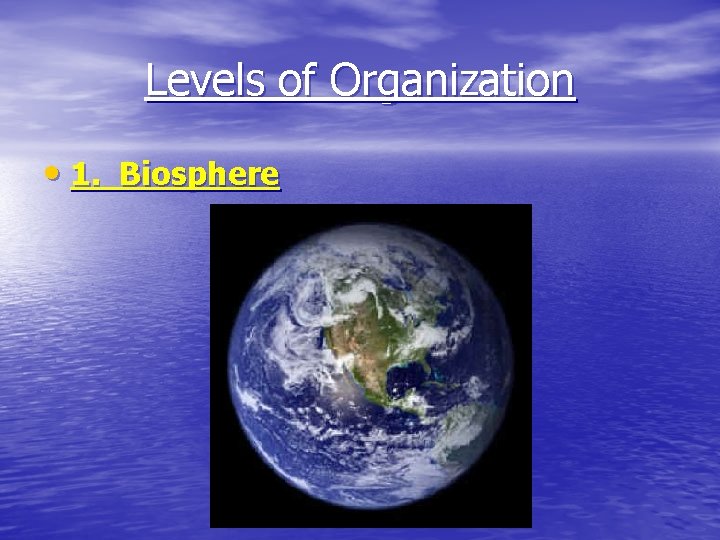
Levels of Organization • 1. Biosphere
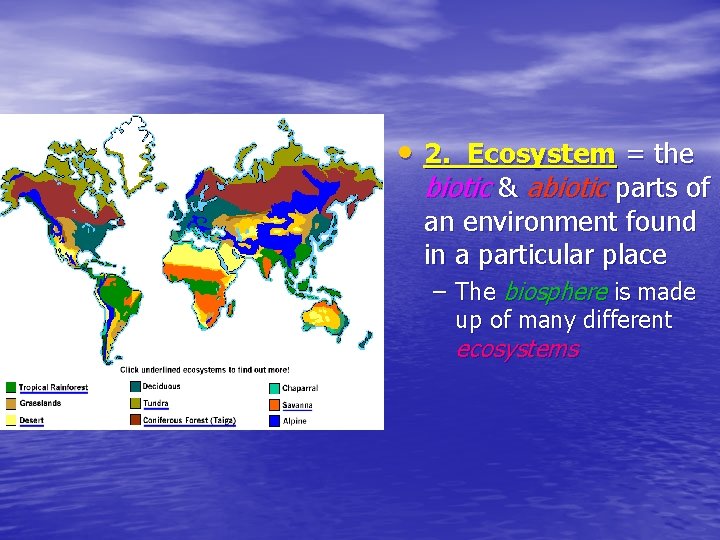
• 2. Ecosystem = the biotic & abiotic parts of an environment found in a particular place – The biosphere is made up of many different ecosystems
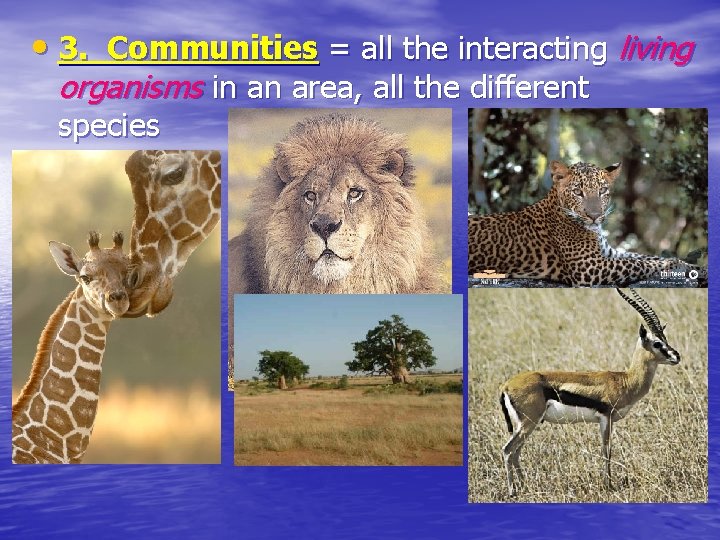
• 3. Communities = all the interacting living organisms in an area, all the different species
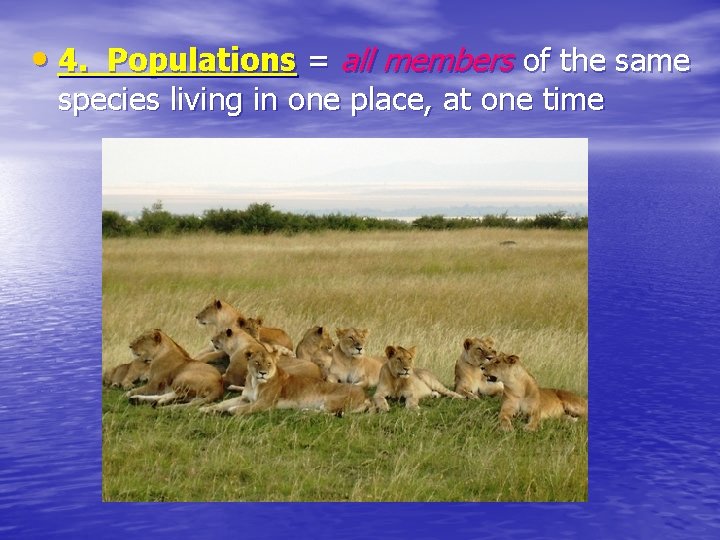
• 4. Populations = all members of the same species living in one place, at one time
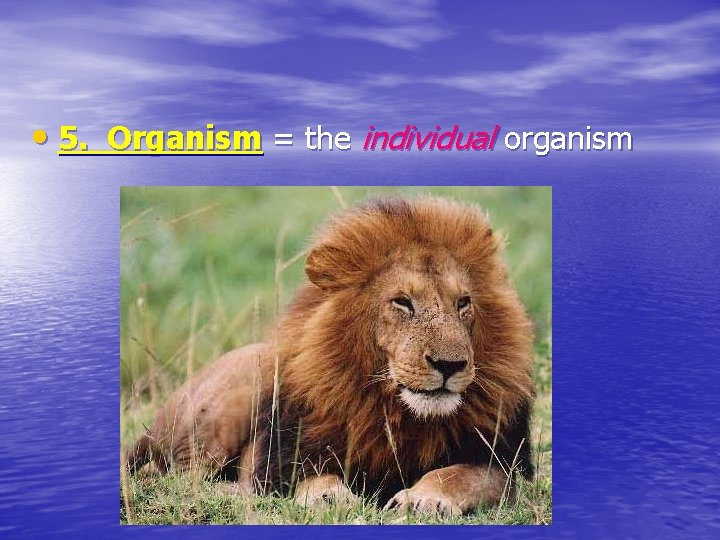
• 5. Organism = the individual organism
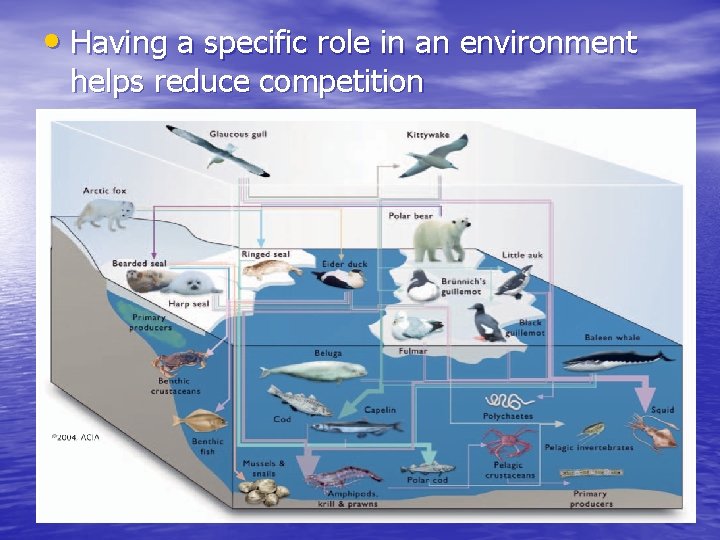
Organisms in Ecosystems • Habitat = the place where an organism lives out its life • Niche = all strategies & adaptations a species uses in its environment; an species’ role – What food they eat – What kind of shelter used – Where they reproduce
• Having a specific role in an environment helps reduce competition
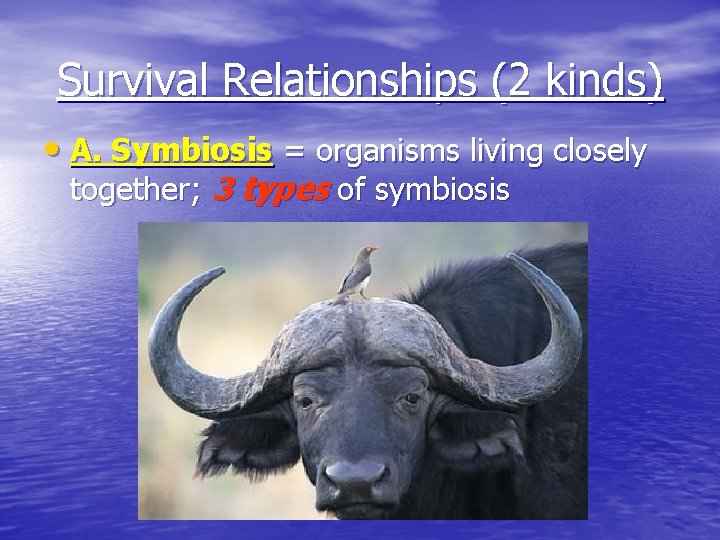
Survival Relationships (2 kinds) • A. Symbiosis = organisms living closely together; 3 types of symbiosis
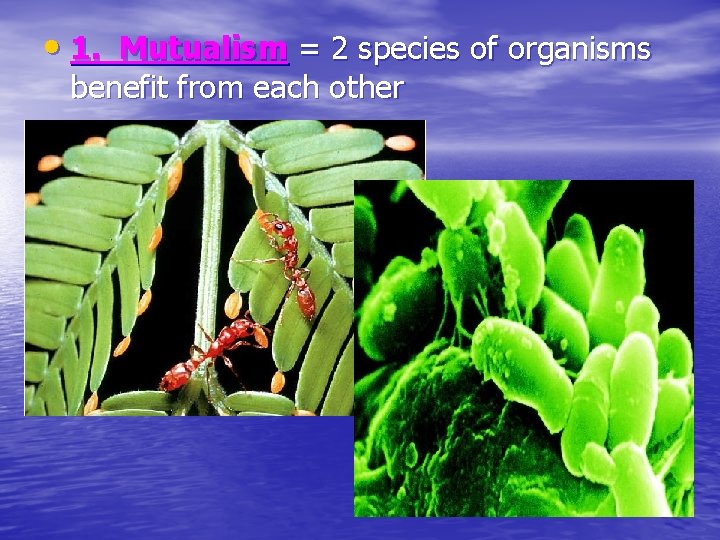
• 1. Mutualism = 2 species of organisms benefit from each other
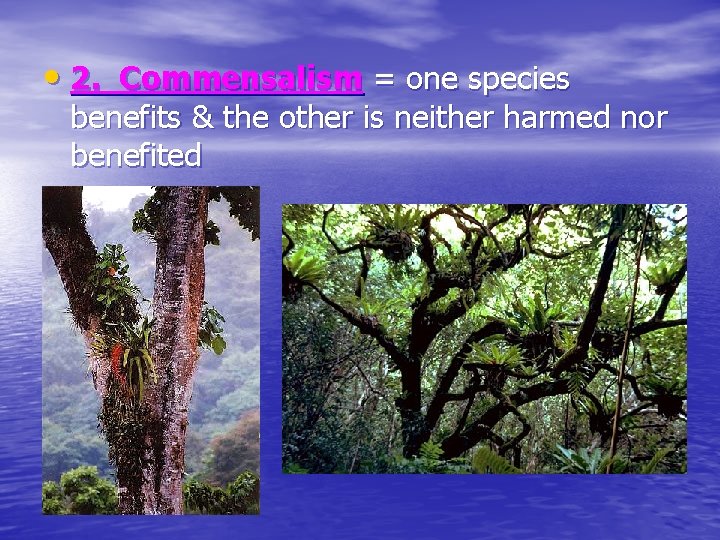
• 2. Commensalism = one species benefits & the other is neither harmed nor benefited
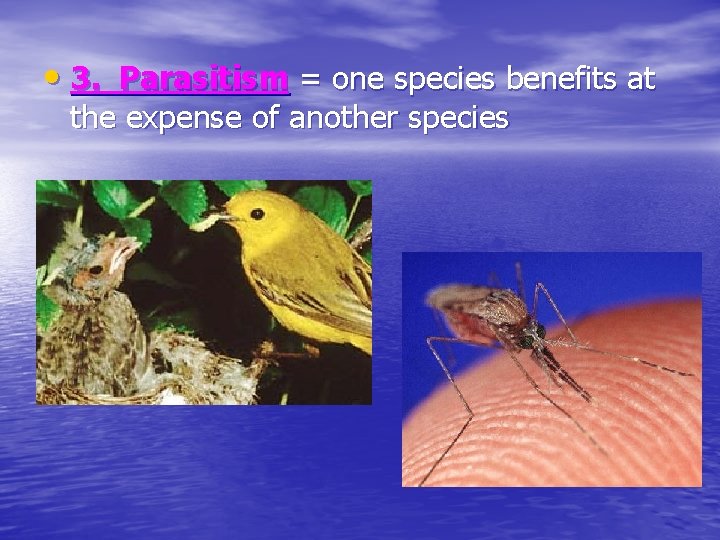
• 3. Parasitism = one species benefits at the expense of another species
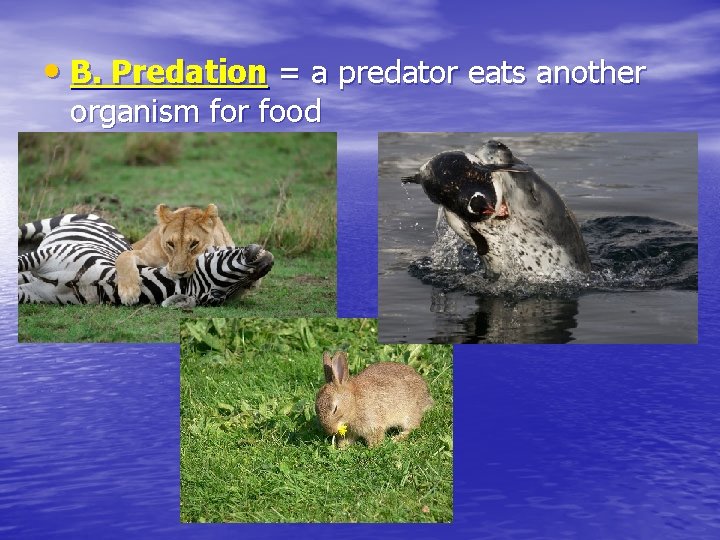
• B. Predation = a predator eats another organism for food
• http: //www. cstephenmurray. com/onlinequ izes/biology/Ecology/typesofinteractionsex amples. htm
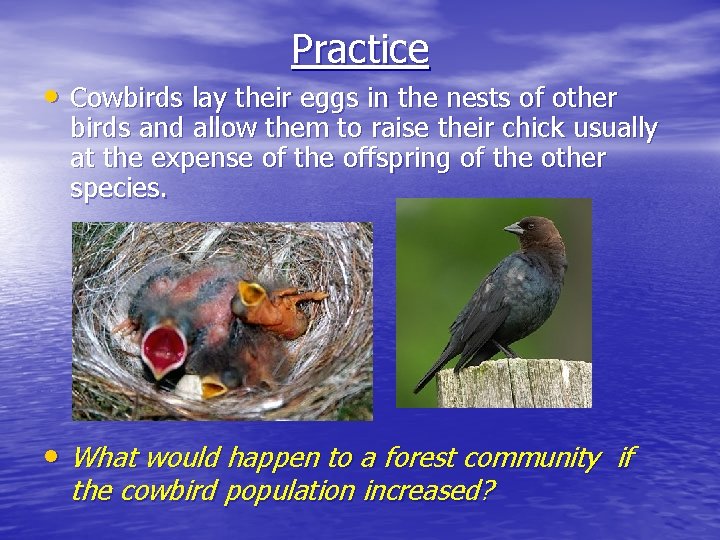
Practice • Cowbirds lay their eggs in the nests of other birds and allow them to raise their chick usually at the expense of the offspring of the other species. • What would happen to a forest community if the cowbird population increased?