
Principles of Ecology Chapter 13 Review What is
- Slides: 39
Principles of Ecology Chapter 13
Review § What is a system? § Smaller parts working together, organized into a larger whole § What systems are you a part of? § We, as animals, are all part of an ecosystem. § We interact with the environment to get energy and materials.
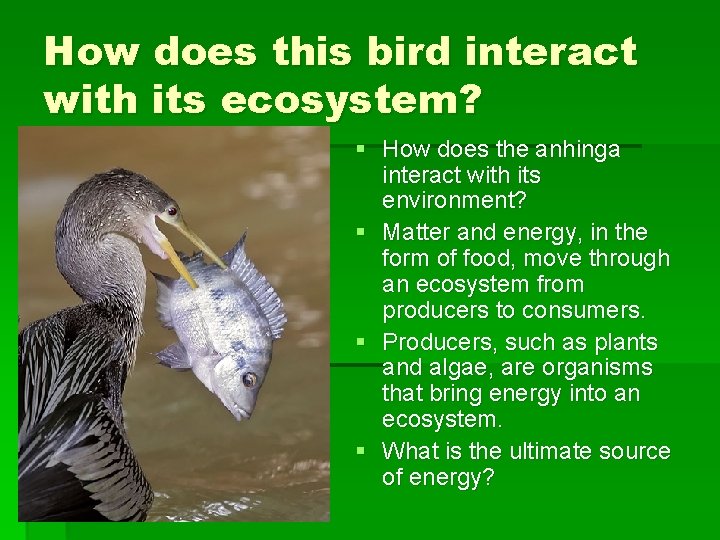
How does this bird interact with its ecosystem? § How does the anhinga interact with its environment? § Matter and energy, in the form of food, move through an ecosystem from producers to consumers. § Producers, such as plants and algae, are organisms that bring energy into an ecosystem. § What is the ultimate source of energy?
What is Ecology? § The study of interactions among living things, and between living things and their surroundings.
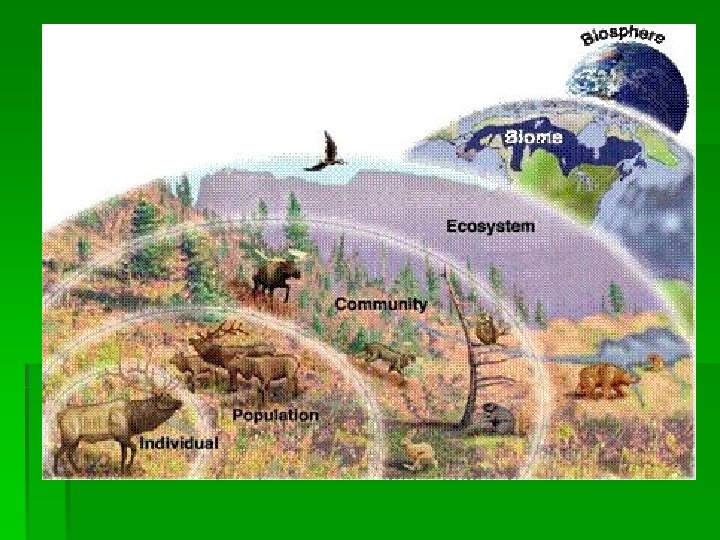
Ecologists study environments at different levels of organization
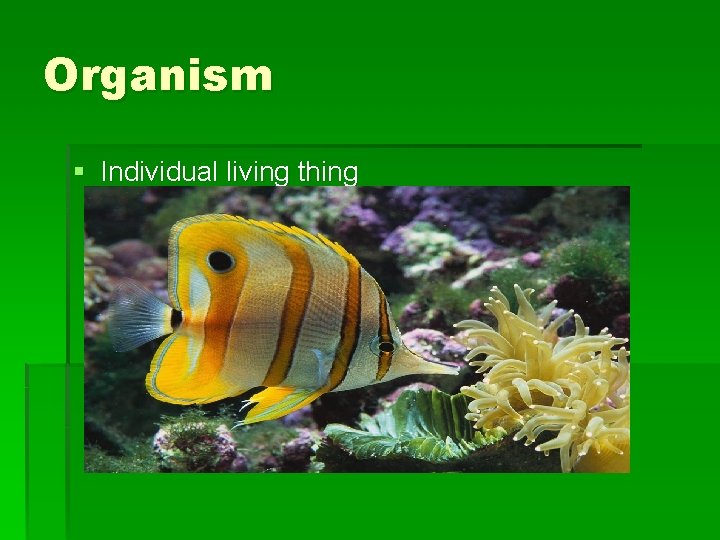
Organism § Individual living thing
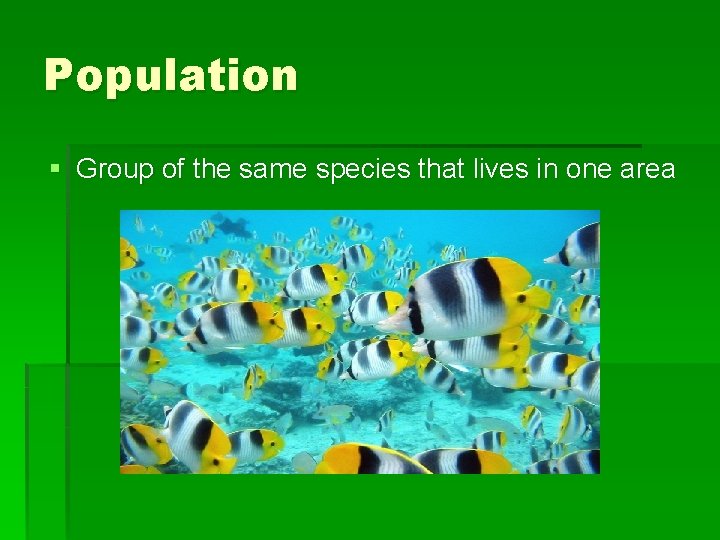
Population § Group of the same species that lives in one area
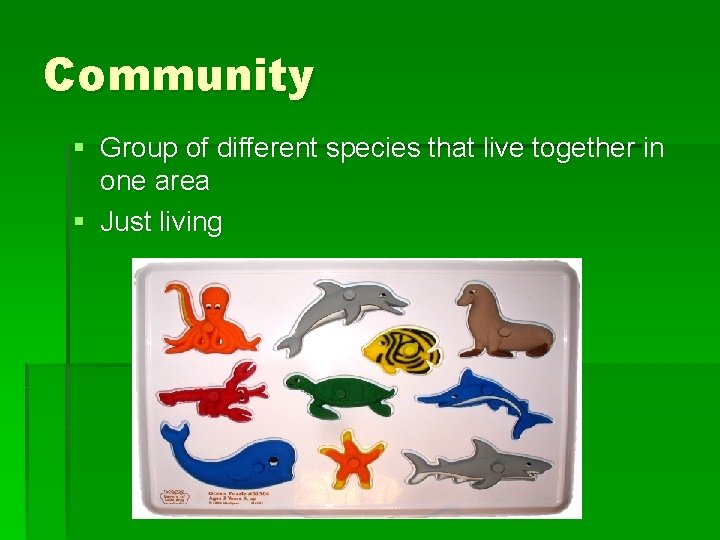
Community § Group of different species that live together in one area § Just living
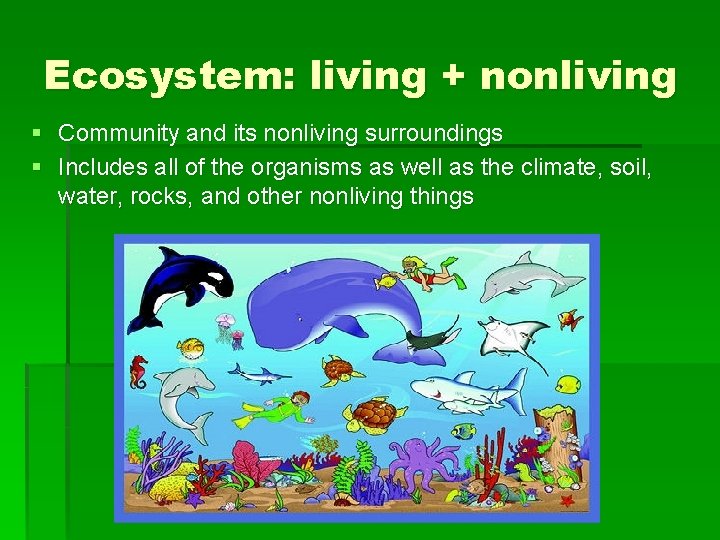
Ecosystem: living + nonliving § Community and its nonliving surroundings § Includes all of the organisms as well as the climate, soil, water, rocks, and other nonliving things
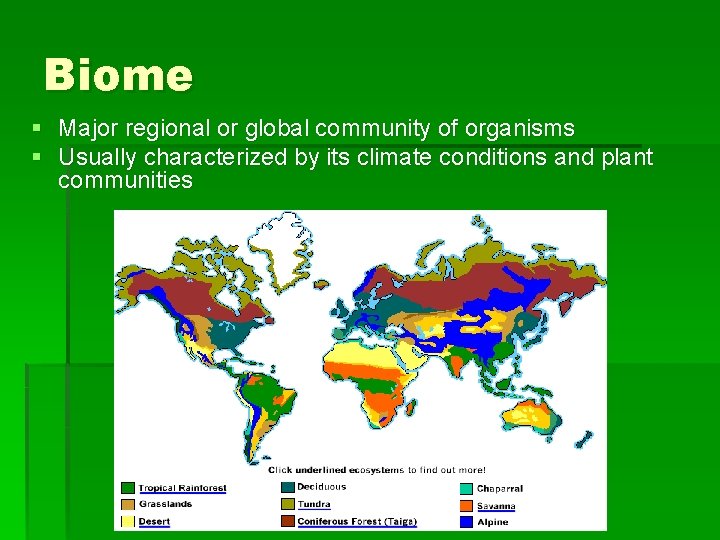
Biome § Major regional or global community of organisms § Usually characterized by its climate conditions and plant communities
Vocabulary to know! § § § § § Ecology Community Biome Biotic Abiotic Keystone species Autotroph Heterotroph Producer § § § Consumer Food chain Herbivore Omnivore Carnivore Detritivore Decomposer Trophic Level Food Web Specialist Generalist
An ecosystem includes both biotic and abiotic factors § Biotic factors: living things § Examples: plants, animals, fungi, bacteria § Each organism plays a particular role in the ecosystem.
An ecosystem includes both biotic and abiotic factors § Abiotic factors: nonliving thigns § Examples: moisture, temperature, wind, sunlight, and soil § Balance of factors determines if living things survive or not
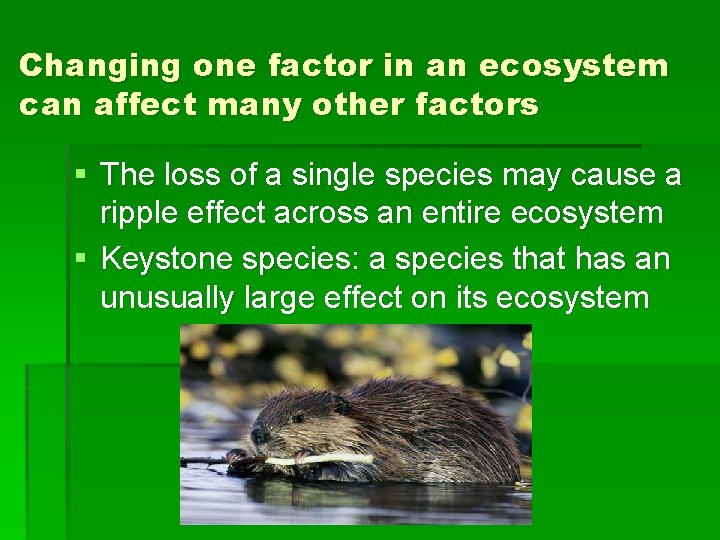
Changing one factor in an ecosystem can affect many other factors § The loss of a single species may cause a ripple effect across an entire ecosystem § Keystone species: a species that has an unusually large effect on its ecosystem
Energy in Ecosystems § Producers: organisms that get their energy from nonliving resources § Make their own food § Also called autotrophs § Consumers: organisms that get their energy by eating other live or once-living resources (plants and animals) § Also called heterotrophs
All ecosystems depend on producers § Producers provide the basis for the ecosystem’s energy § All consumers depend on producers § But could producers survive without consumers? § Most producers depend on the sun as their source of energy § Use process of photosynthesis § Few producers live deep below a lake’s surface…Why?
A few producers do not depend on sunlight § Some producers obtain energy through process of chemosynthesis § Chemosynthesis: process by which an organism uses chemical as an energy sources § Several reactions change the chemicals into usable energy
Types of Consumers § Herbivores: organisms that eat only plants § Carnivores: organisms that eat only animals § Omnivores: organisms that eat both plants and animals
Types of Consumers cont. § Detritivores: organisms that eat dead organic matter (detritus) § Example: earthworm § Decomposers: detritivores that break down organic matter into simpler compounds § Examples: bacteria and fungi § Important because they return vital nutrients back to the environment
Practice! § I eat dead organic matter § I eat only other animals § I eat both plants and animals § I eat only plants § I break down organic matter into simpler compounds
Specialists vs. Generalists § Specialist: consumer that primarily eats one specific organism or feeds on a very small number of organisms § Very sensitive to changes in the availability of prey § Generalists: consumers that have a varying diet § Do not rely on a single source of food § What danger does a specialist face that a generalist does not?
Objective of this section § Illustrate the flow of energy through an ecosystem using food chains, trophic levels, and food webs
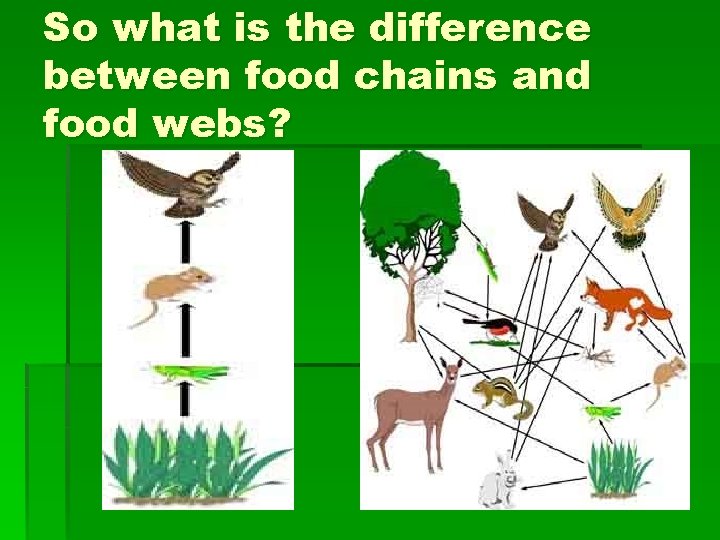
Food Chains § The simplest way to show matter and energy flow through an ecosystem is using a food chain § Food chain: a model that links organisms by their feeding relationships § Only follows the connection between one producer and a single chain of consumers within an ecosystem
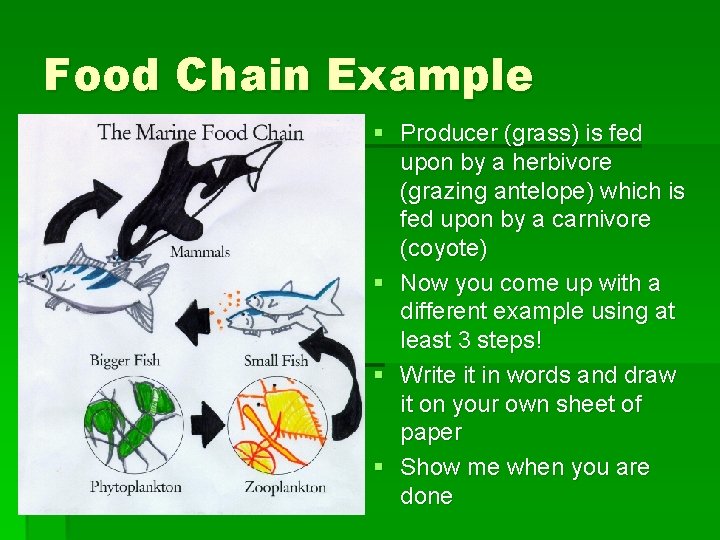
Food Chain Example § Producer (grass) is fed upon by a herbivore (grazing antelope) which is fed upon by a carnivore (coyote) § Now you come up with a different example using at least 3 steps! § Write it in words and draw it on your own sheet of paper § Show me when you are done
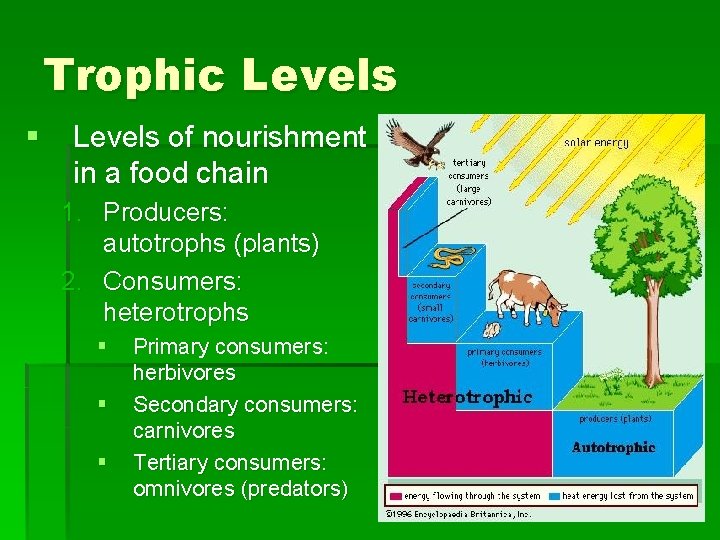
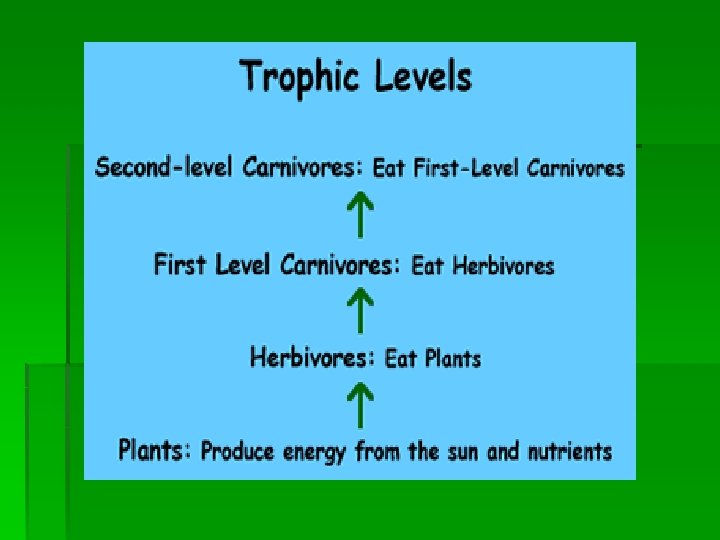
Trophic Levels § Levels of nourishment in a food chain 1. Producers: autotrophs (plants) 2. Consumers: heterotrophs § § § Primary consumers: herbivores Secondary consumers: carnivores Tertiary consumers: omnivores (predators)
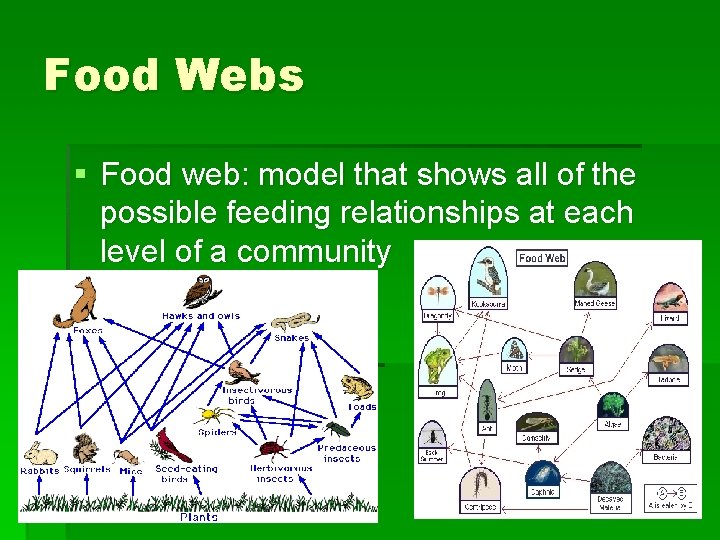
Food Webs § Food web: model that shows all of the possible feeding relationships at each level of a community
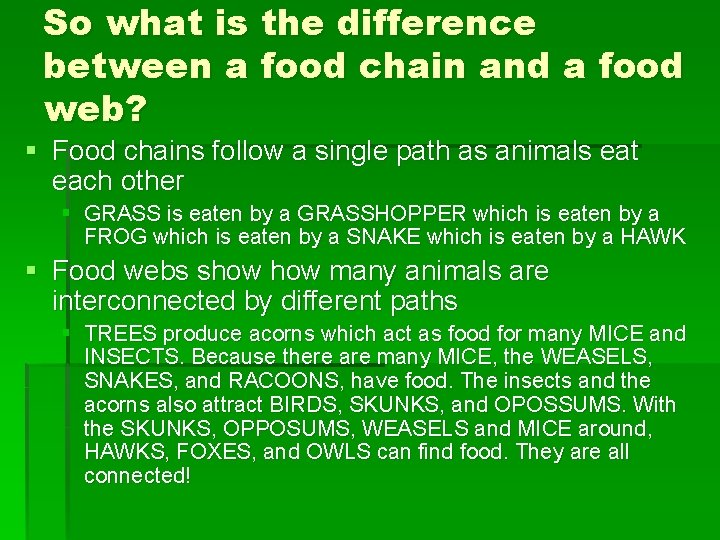
So what is the difference between a food chain and a food web? § Food chains follow a single path as animals eat each other § GRASS is eaten by a GRASSHOPPER which is eaten by a FROG which is eaten by a SNAKE which is eaten by a HAWK § Food webs show many animals are interconnected by different paths § TREES produce acorns which act as food for many MICE and INSECTS. Because there are many MICE, the WEASELS, SNAKES, and RACOONS, have food. The insects and the acorns also attract BIRDS, SKUNKS, and OPOSSUMS. With the SKUNKS, OPPOSUMS, WEASELS and MICE around, HAWKS, FOXES, and OWLS can find food. They are all connected!
So what is the difference between food chains and food webs?
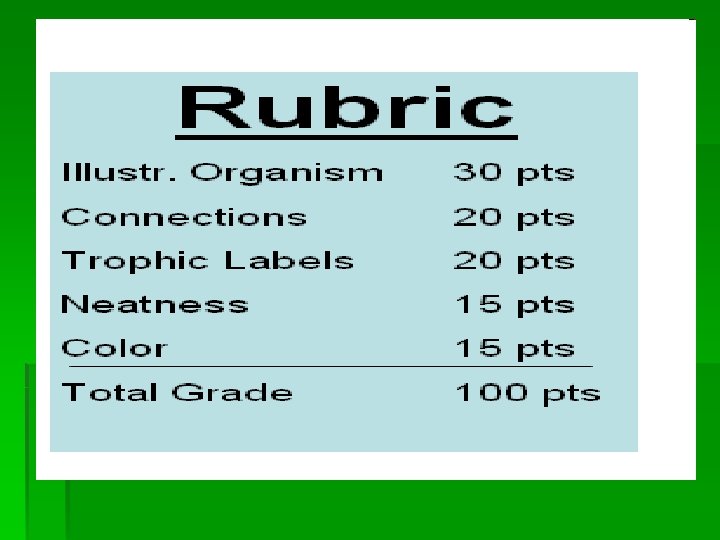
Food Web Project Day 1 1. You will work with a partner that I choose randomly for you. 2. First, determine the environment you want to use (marine, desert, meadow, wetlands, etc) 3. Come up with a list of organisms that you will include in your food web. You must have the following: a. b. c. d. e. 1 decomposer 3 different producers 3 herbivores (primary consumers) 3 carnivores (secondary consumers) 2 top predators (tertiary consumers)
Food Web Project Day 2 4. Approve list of organisms with me to get your posterboard 5. Illustrate and color each organism represented in the food web 6. For each organism, label the following: a. Name of organism (ex: shark) b. Type of consumer (shark is a carnivore) c. Trophic Level (shark is a tertiary consumer, top predator)
Pyramid Models § Energy pyramids show the distribution of energy among trophic levels § Thoughout a food chain, energy is lost § Each level in the food chain contains much less energy than the level below it § Between each level, up to 90% of the energy could be lost as heat into the atmosphere
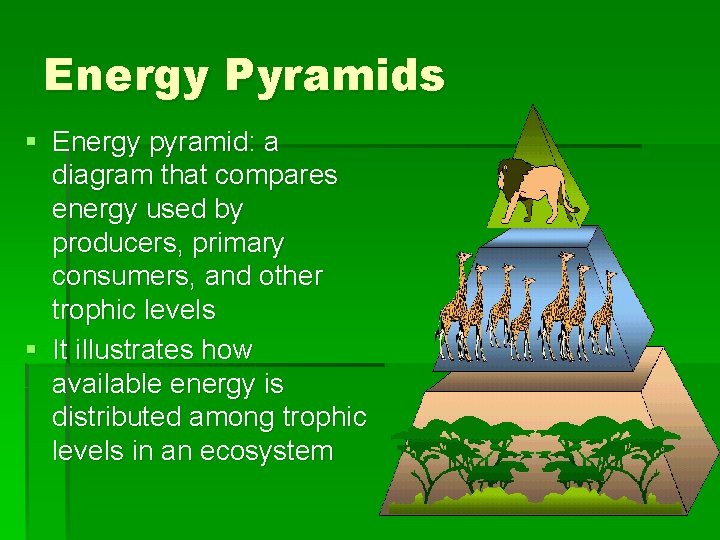
Energy Pyramids § Energy pyramid: a diagram that compares energy used by producers, primary consumers, and other trophic levels § It illustrates how available energy is distributed among trophic levels in an ecosystem
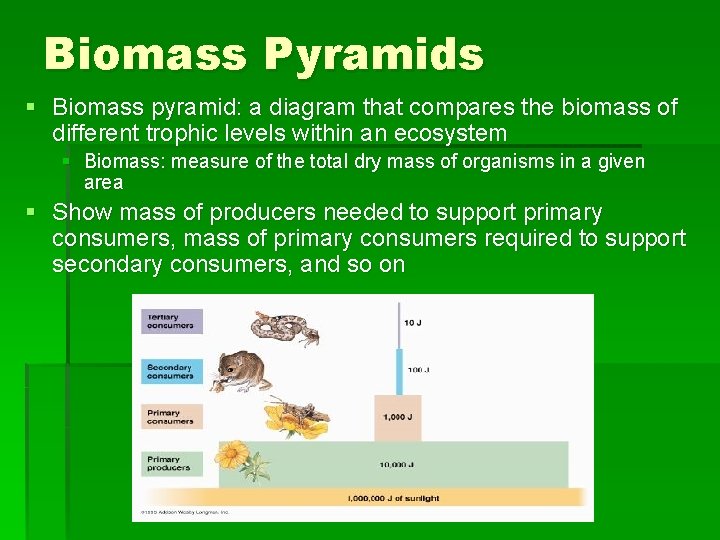
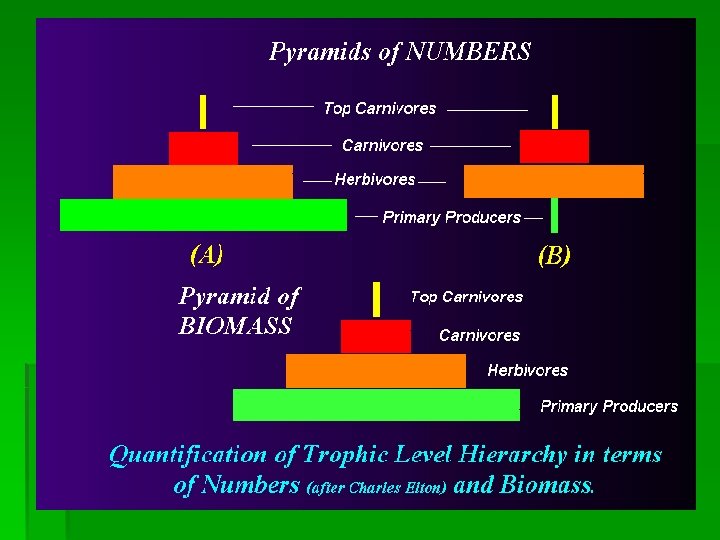
Biomass Pyramids § Biomass pyramid: a diagram that compares the biomass of different trophic levels within an ecosystem § Biomass: measure of the total dry mass of organisms in a given area § Show mass of producers needed to support primary consumers, mass of primary consumers required to support secondary consumers, and so on
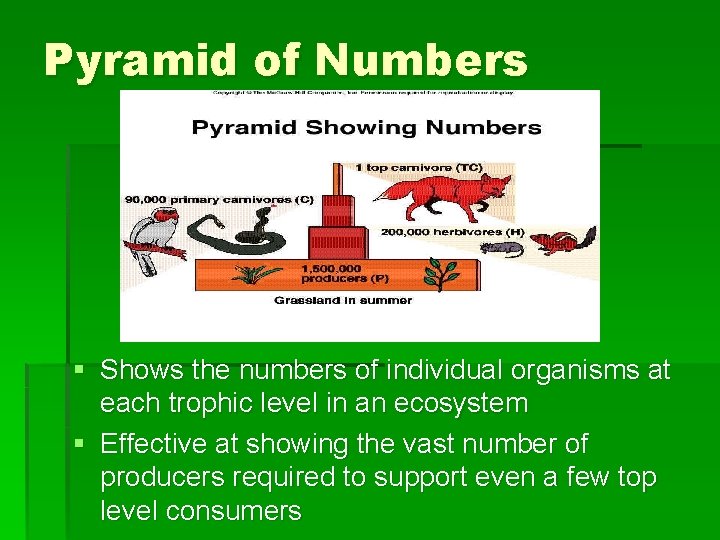
Pyramid of Numbers § Shows the numbers of individual organisms at each trophic level in an ecosystem § Effective at showing the vast number of producers required to support even a few top level consumers
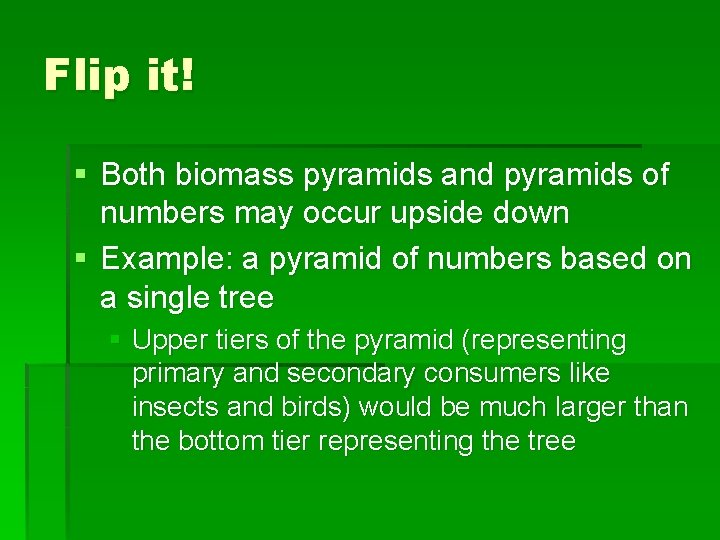
Flip it! § Both biomass pyramids and pyramids of numbers may occur upside down § Example: a pyramid of numbers based on a single tree § Upper tiers of the pyramid (representing primary and secondary consumers like insects and birds) would be much larger than the bottom tier representing the tree