
Principles of Earth Science Unit One Big Ideas
Principles of Earth Science Unit One
Big Ideas • You will be able to demonstrate an understanding: • Processes, events and features on Earth result from energy transfer and movement of matter through interconnected Earth systems. • Conduction, Convection, and Radiation are processes that drive our planet at many different but interconnected levels.
Let’s Begin! ☺ Overview • Scientific Method • Earth Science Breakdown • Rock Cycle • Water Cycle • Nitrogen Cycle • Carbon Cycle • Resources
What does it take to be a scientist? • The only thing you need to become a scientist is one thing… you have to want to learn! • Scientific Inquiry – what is this? • Creating a hypothesis • Forming a theory • ALSO KNOWN AS THE SCIENTIFIC METHOD…
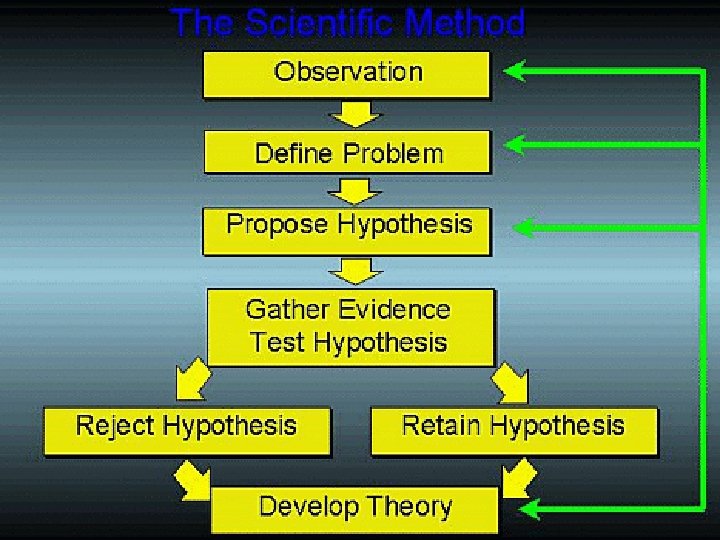
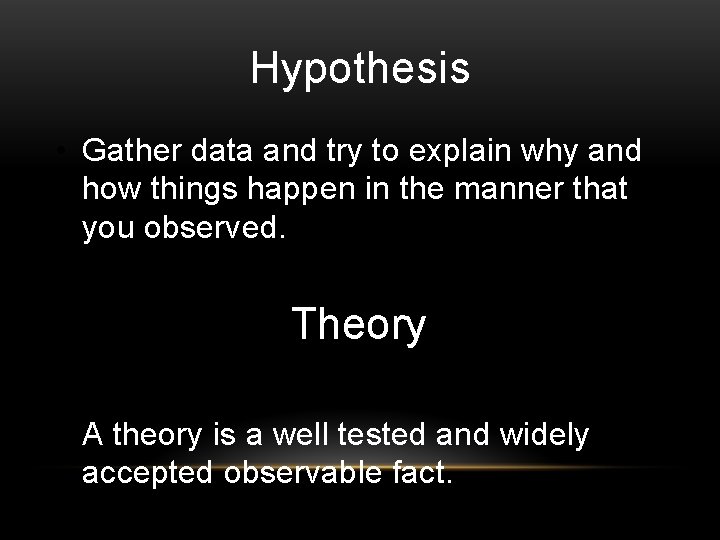
Hypothesis • Gather data and try to explain why and how things happen in the manner that you observed. Theory • A theory is a well tested and widely accepted observable fact.
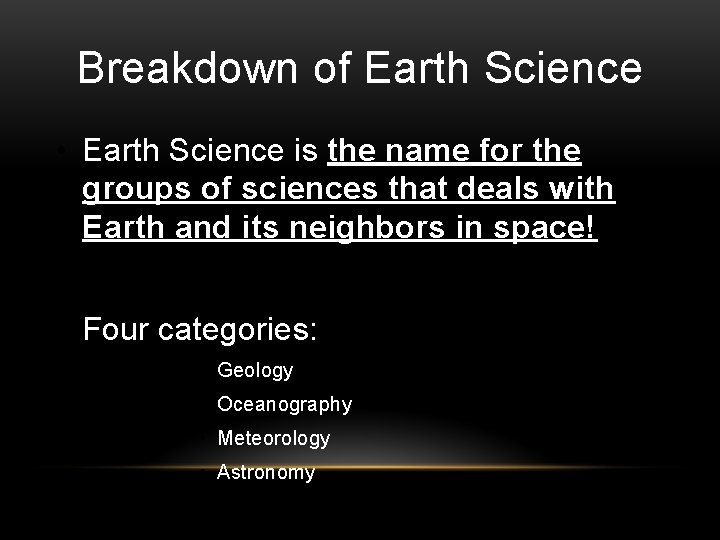
Breakdown of Earth Science • Earth Science is the name for the groups of sciences that deals with Earth and its neighbors in space! • Four categories: • Geology • Oceanography • Meteorology • Astronomy
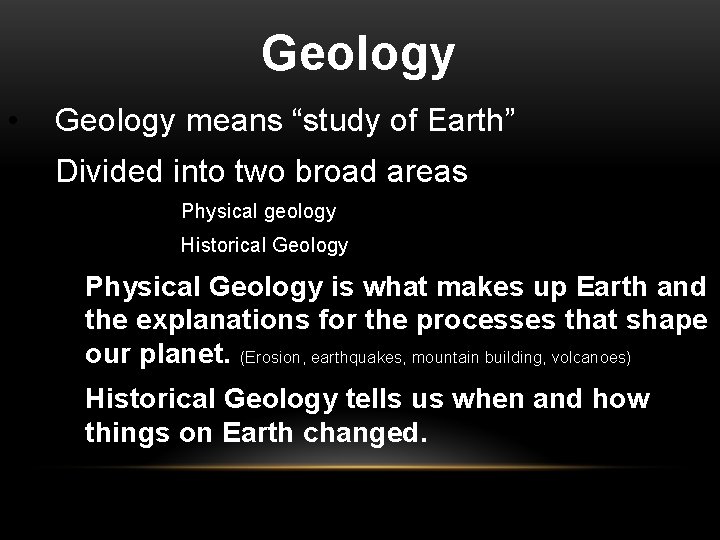
Geology • Geology means “study of Earth” • Divided into two broad areas 1. Physical geology 2. Historical Geology • Physical Geology is what makes up Earth and the explanations for the processes that shape our planet. (Erosion, earthquakes, mountain building, volcanoes) • Historical Geology tells us when and how things on Earth changed.
Oceanography • Chemistry, physics, geology, and biology merged together. (Anything that has to do with water!) • Oceanographers study the composition and movements of seawater and marine life
Meteorology • Study of the atmosphere and processes that produce weather and climate. • Weather – constantly changing and refers to the state of the atmosphere at any given time and place • Climate – observations of weather that have been collected over years.
Astronomy • Study of the Universe • Stars, planets, and the origin of our environment
How our Solar System was formed • Nebular Formation • Began as an enormous cloud of dust and gases • This cloud is called a nebula started to rotate and collapse towards the center • This collapsing produced heat, which eventually turned into the sun. • Once the sun was created the nebula cooled, this formed rocky and metallic solid materials • These repeated collided with each other and merged to form our planets.
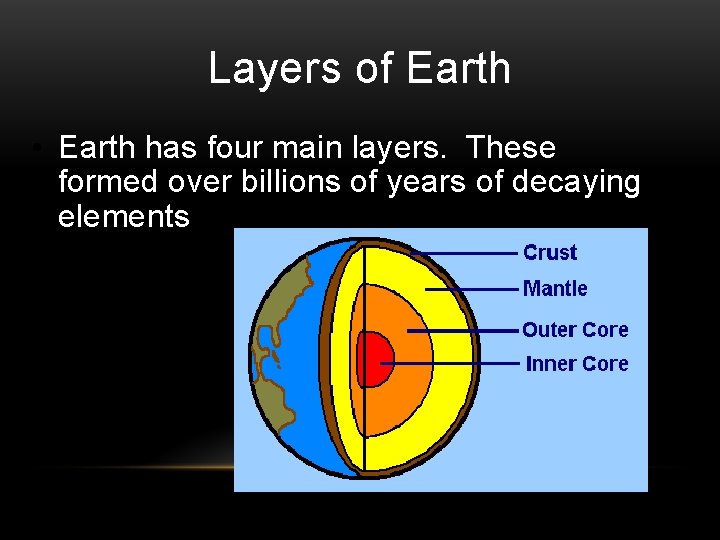
Layers of Earth • Earth has four main layers. These formed over billions of years of decaying elements
Earth’s Major Spheres • 3 major spheres • Hydrosphere – water portion of Earth • Atmosphere – Earth’s gaseous envelope • Geosphere – layers of Earth under the Crust (mantle, outer core, inner core) These three spheres form our Earth. There is also one more sphere…
Biosphere • The biosphere is all the life-forms on Earth and how they interact with the hydrosphere, atmosphere, and geosphere.
Hydrosphere • Earth is the only place that contains water in our universe. • What types of water are there on Earth? Oceans make up a vast majority of our water, about 97%. Glaciers, groundwater, streams, lakes, and in our atmosphere.
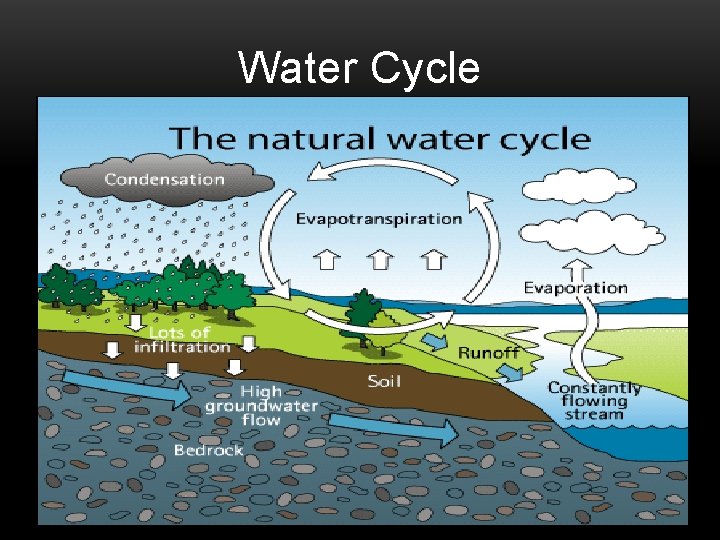
Water Cycle
Atmosphere • Our atmosphere is important for life. Why? • Our atmosphere protects us from the sun, provides the air we breathe, and helps produce weather and climate.
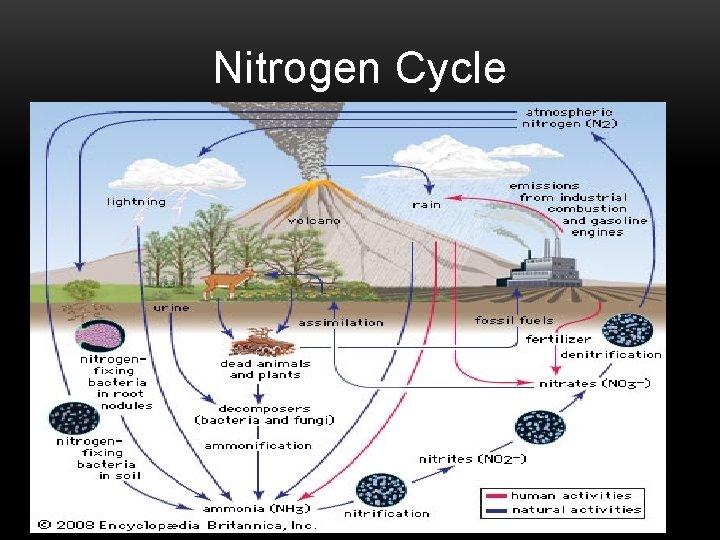
Nitrogen Cycle
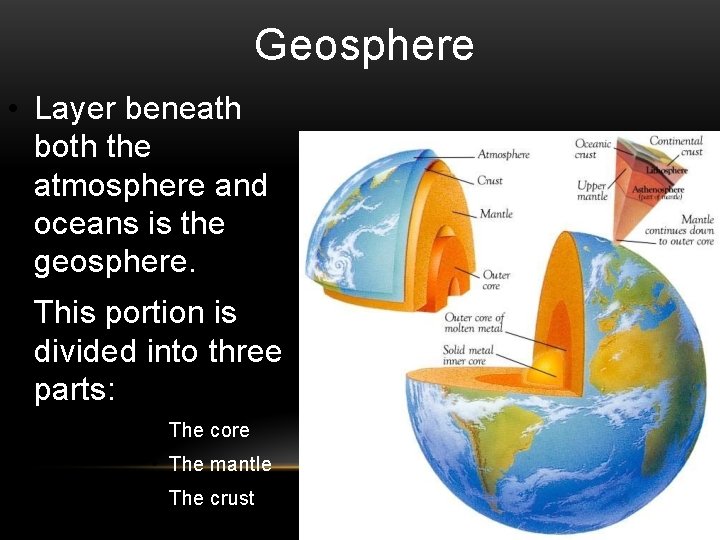
Geosphere • Layer beneath both the atmosphere and oceans is the geosphere. • This portion is divided into three parts: • The core • The mantle • The crust
Rock Cycle
Check Point • What are the four spheres that make up Earth? • What are the four categories of Earth Science? • Explain the following in your own words: • The Rock Cycle • The Nitrogen Cycle • The Water Cycle • How do these movements form and change their environment
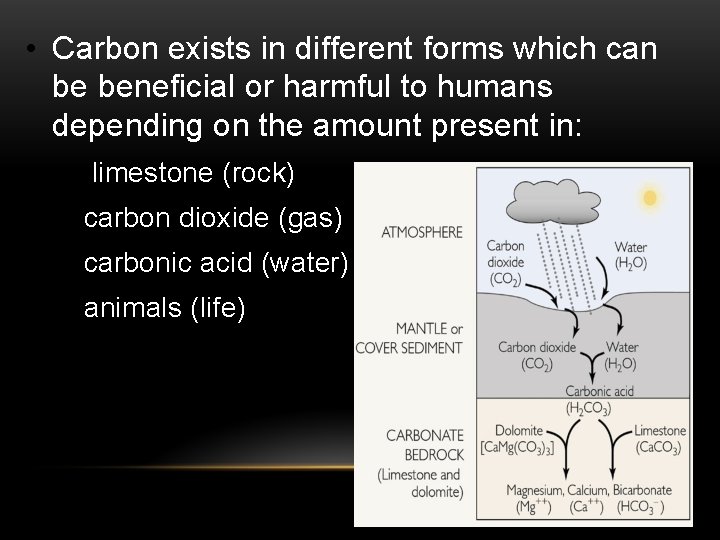
• Carbon exists in different forms which can be beneficial or harmful to humans depending on the amount present in: • limestone (rock) • carbon dioxide (gas) • carbonic acid (water) • animals (life)
Examples of Too Much • Lake Nyos • Lake Erie Dead Zone
HOLD ON!!! • All the things that we learned so far are processes that exist on Earth… • But all processes that exist on Earth need energy to make them work… • So what is the energy that gets them to work?
For that answer we can look at our Requirements • E 2. 2 A Describe the Earth’s principal sources of internal and external energy (e. g. , radioactive decay, gravity, solar energy). • E 2. 2 C Describe natural processes heat transfer in the Earth occurs by conduction, convection, and radiation. • E 2. 2 D Identify the main sources of energy to the climate system. • E 2. 2 e Explain how energy changes form through Earth systems.
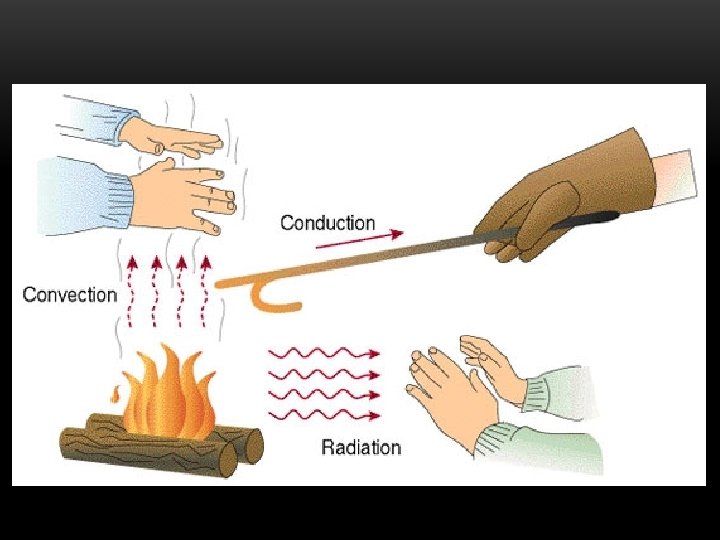
Here’s the answer • All processes on Earth are driven by internal and external processes. • Internal processes are gravity & radioactive decay • External process is THE SUN • All of these processes are driven by CONDUCTION, CONVECTION, and RADIATION
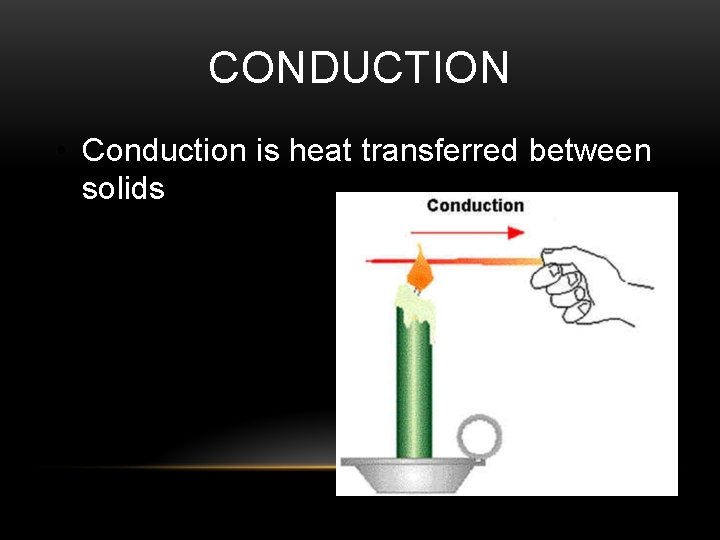
CONDUCTION • Conduction is heat transferred between solids
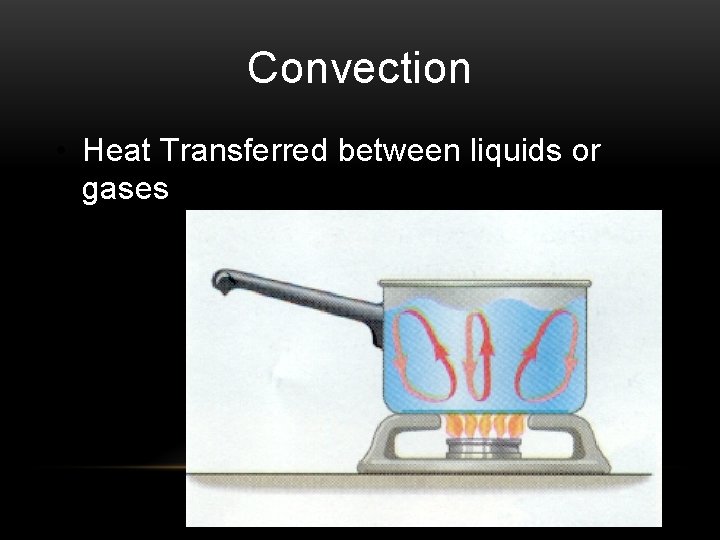
Convection • Heat Transferred between liquids or gases
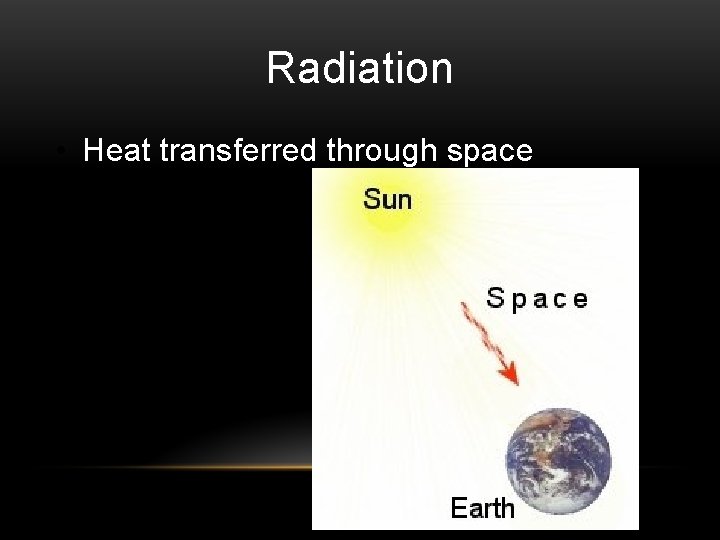
Radiation • Heat transferred through space
EXAMPLE
So what do we do with this information • How many planets do we have that can support life?
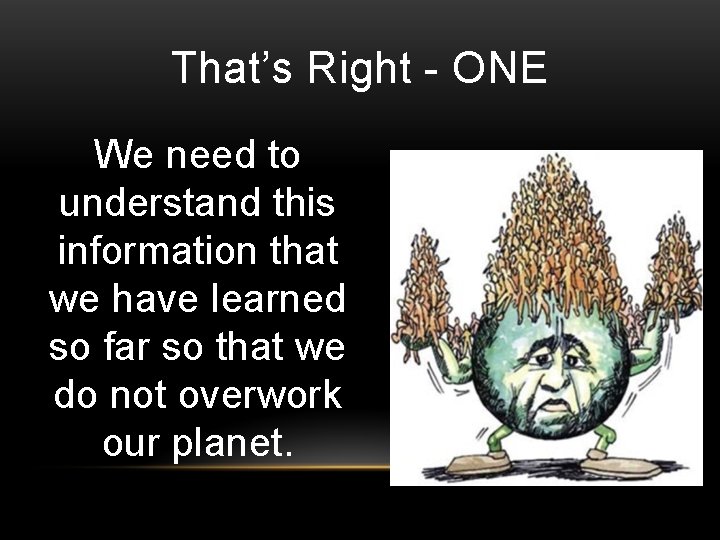
That’s Right - ONE We need to understand this information that we have learned so far so that we do not overwork our planet.
How we do this is 1. Understand the resources we use 2. Understand how they affect our four spheres 3. Know what is involved in all steps of products getting to our hands
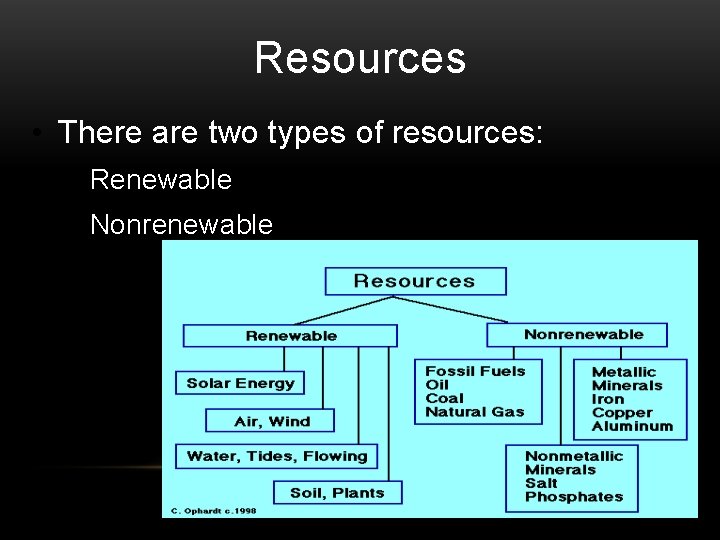
Resources • There are two types of resources: • Renewable • Nonrenewable

T R A P M A E X E N O
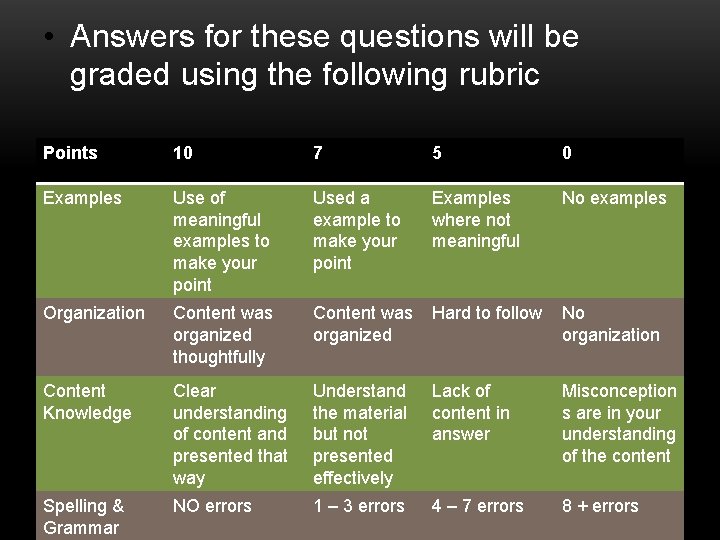
• Answers for these questions will be graded using the following rubric Points 10 7 5 0 Examples Use of meaningful examples to make your point Used a example to make your point Examples where not meaningful No examples Organization Content was organized thoughtfully Content was organized Hard to follow No organization Content Knowledge Clear understanding of content and presented that way Understand the material but not presented effectively Lack of content in answer Misconception s are in your understanding of the content Spelling & Grammar NO errors 1 – 3 errors 4 – 7 errors 8 + errors
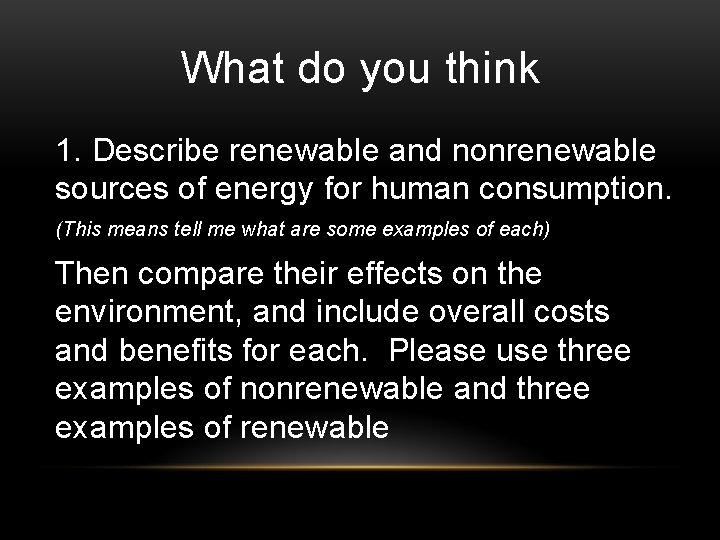
What do you think 1. Describe renewable and nonrenewable sources of energy for human consumption. (This means tell me what are some examples of each) Then compare their effects on the environment, and include overall costs and benefits for each. Please use three examples of nonrenewable and three examples of renewable
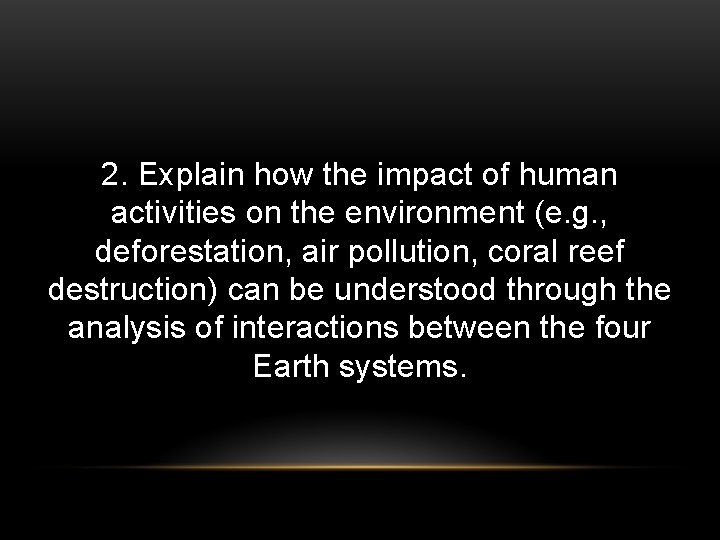
2. Explain how the impact of human activities on the environment (e. g. , deforestation, air pollution, coral reef destruction) can be understood through the analysis of interactions between the four Earth systems.
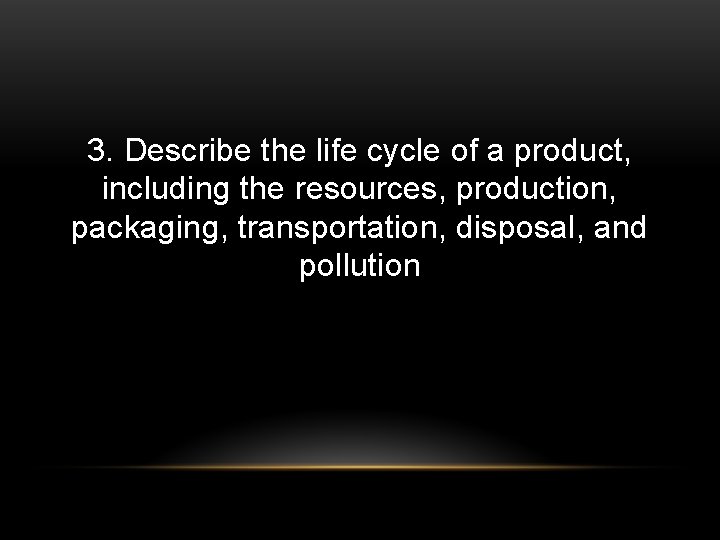
3. Describe the life cycle of a product, including the resources, production, packaging, transportation, disposal, and pollution
4. Identify differences in the origin and use of renewable and nonrenewable sources of energy.
- Slides: 42