
PRINCIPLES OF DESIGN Directions or guidelines for using
- Slides: 51
PRINCIPLES OF DESIGN Directions or guidelines for using the elements of design
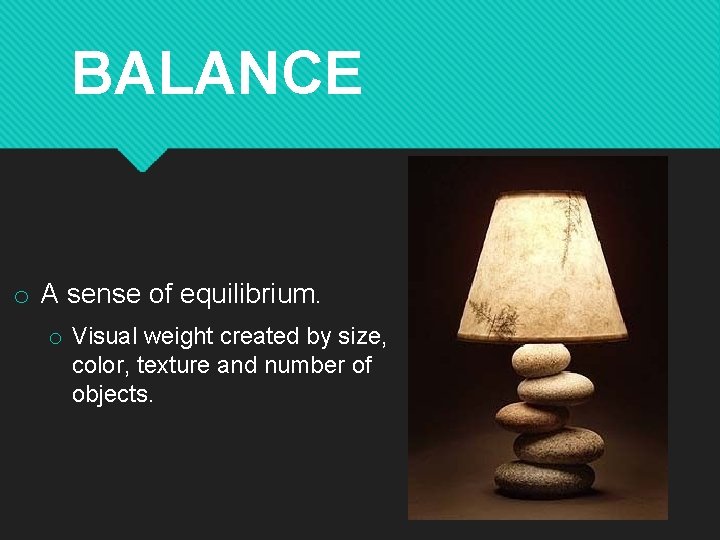
BALANCE o A sense of equilibrium. o Visual weight created by size, color, texture and number of objects.
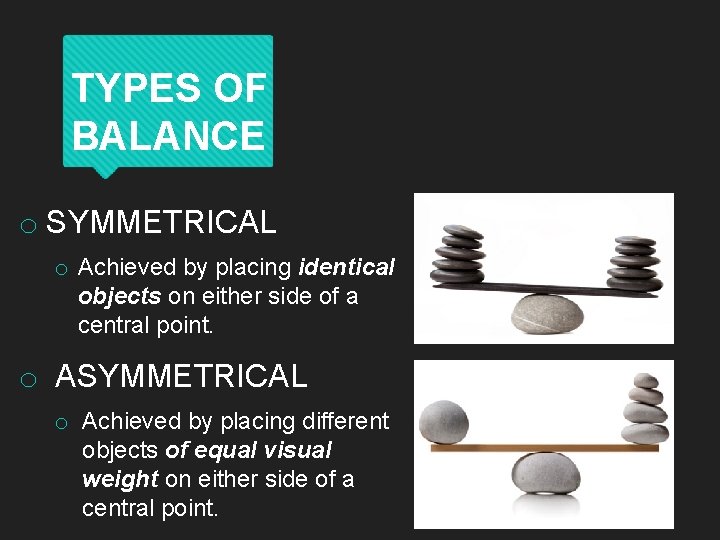
TYPES OF BALANCE o SYMMETRICAL o Achieved by placing identical objects on either side of a central point. o ASYMMETRICAL o Achieved by placing different objects of equal visual weight on either side of a central point.
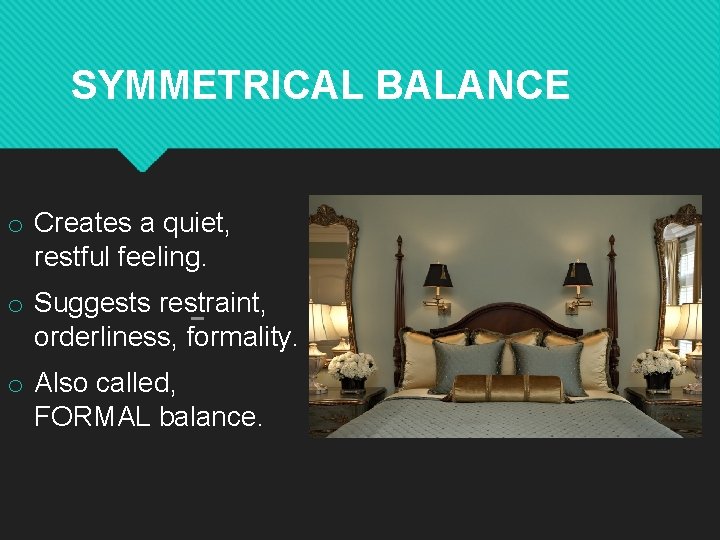
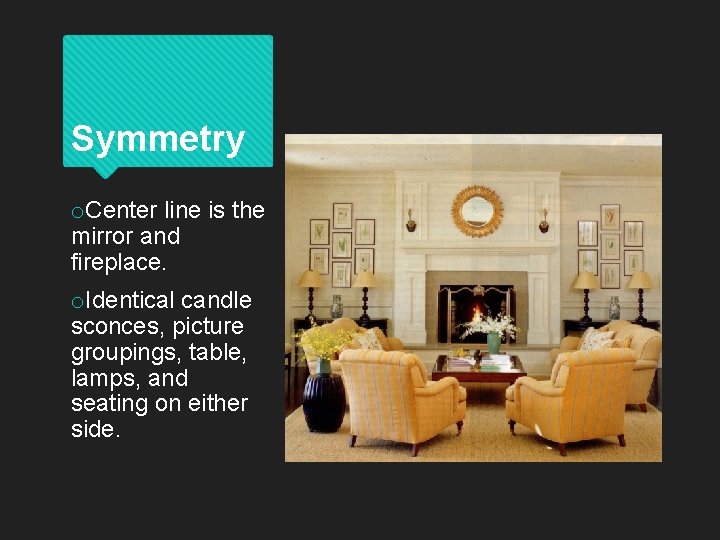
SYMMETRICAL BALANCE o Creates a quiet, restful feeling. o Suggests restraint, orderliness, formality. o Also called, FORMAL balance.
Symmetry o. Center line is the mirror and fireplace. o. Identical candle sconces, picture groupings, table, lamps, and seating on either side.
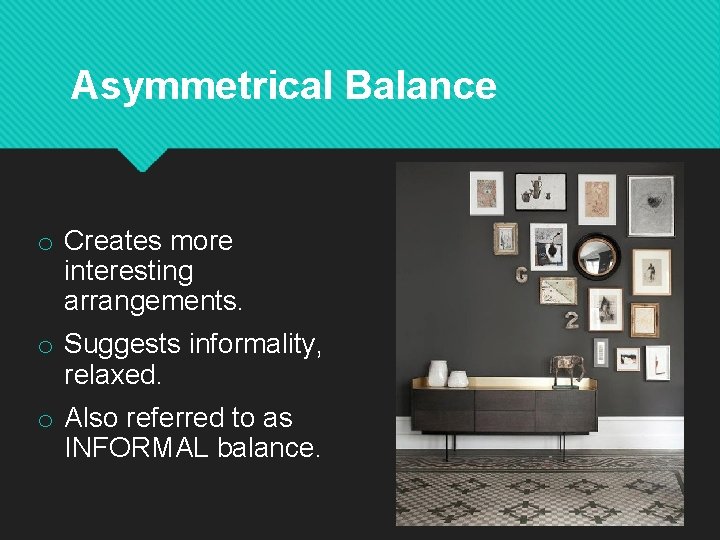
Asymmetrical Balance o Creates more interesting arrangements. o Suggests informality, relaxed. o Also referred to as INFORMAL balance.
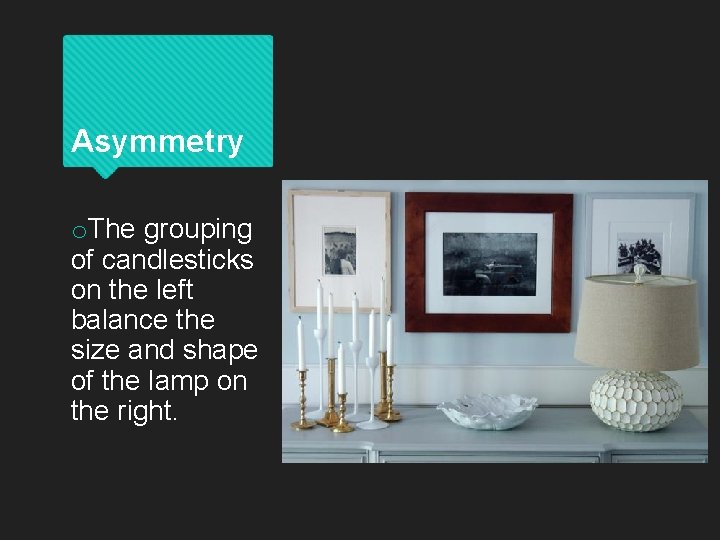
Asymmetry o. The grouping of candlesticks on the left balance the size and shape of the lamp on the right.
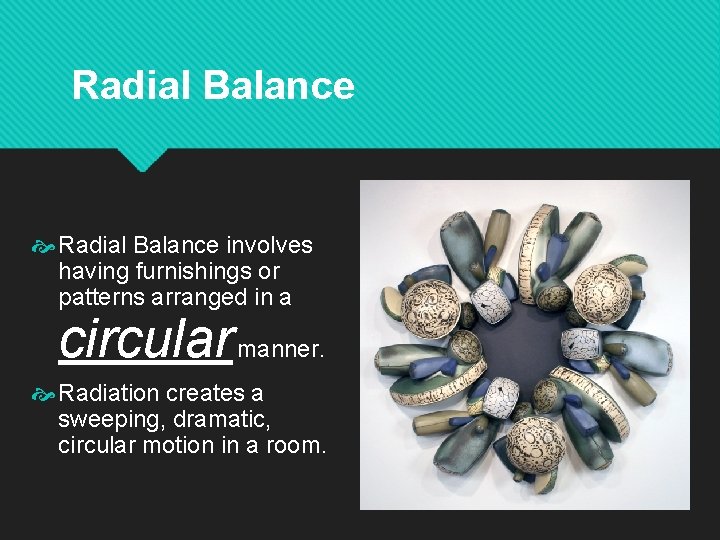
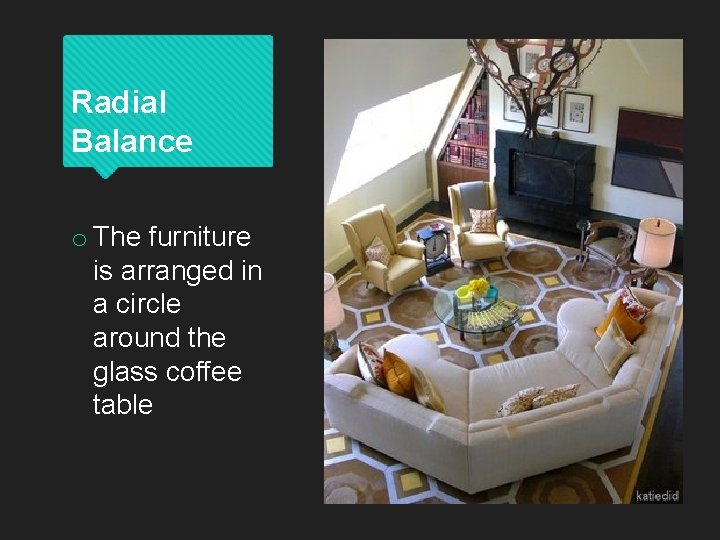
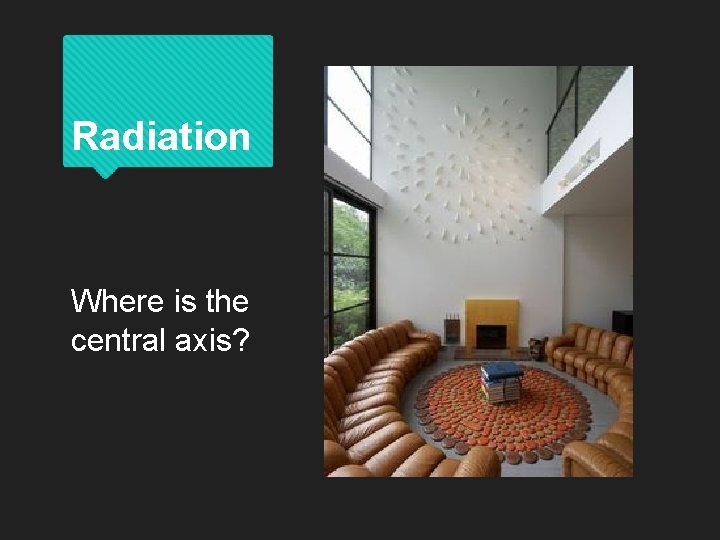
Radial Balance involves having furnishings or patterns arranged in a circular manner. Radiation creates a sweeping, dramatic, circular motion in a room.
Radial Balance o The furniture is arranged in a circle around the glass coffee table
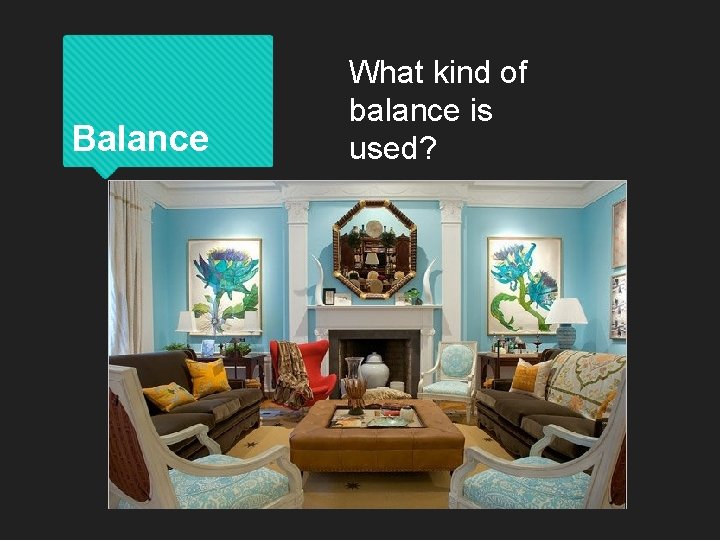
Balance What kind of balance is used?
RHYTHM o Leads the eye from one point to another and creates motion.
TYPES OF RHYTHM o Rhythm by Repetition o Rhythm by Gradation o Rhythm by Radiation o Rhythm by Opposition o Rhythm by Transition
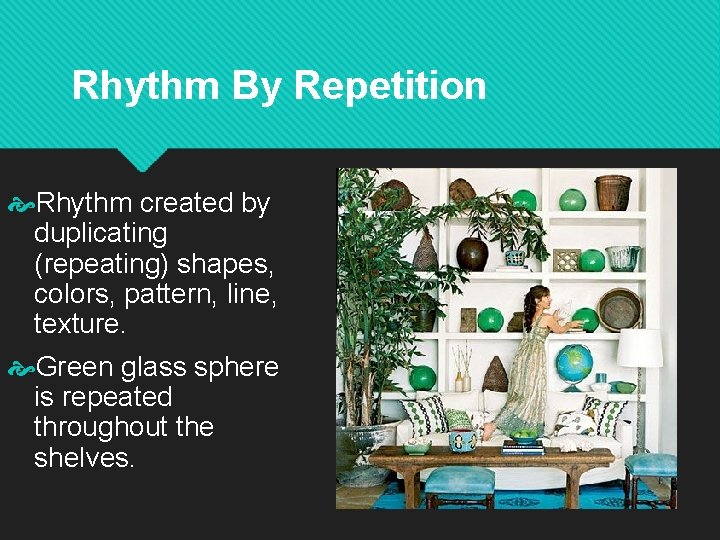
Rhythm By Repetition Rhythm created by duplicating (repeating) shapes, colors, pattern, line, texture. Green glass sphere is repeated throughout the shelves.
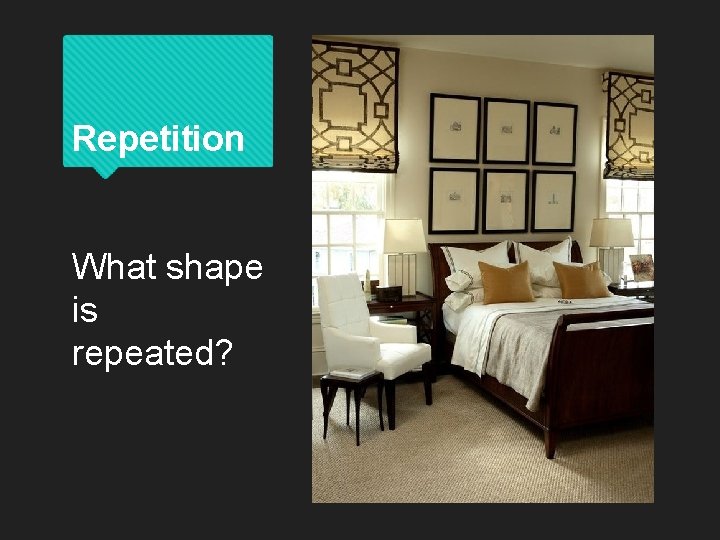
Repetition What shape is repeated?
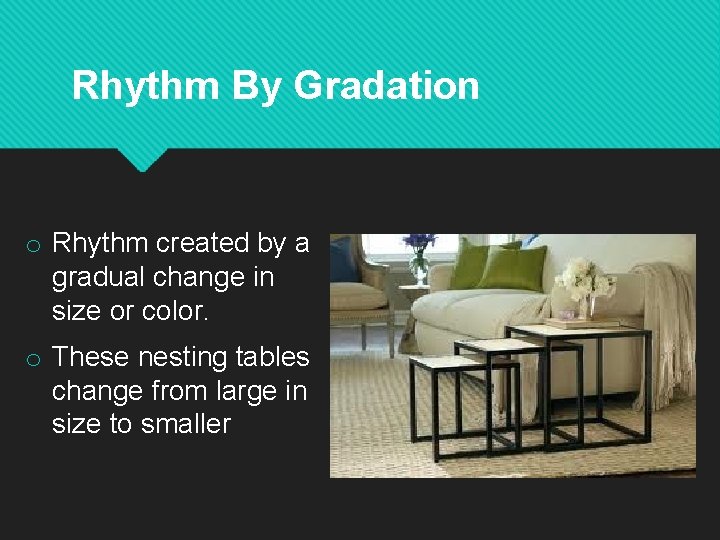
Rhythm By Gradation o Rhythm created by a gradual change in size or color. o These nesting tables change from large in size to smaller
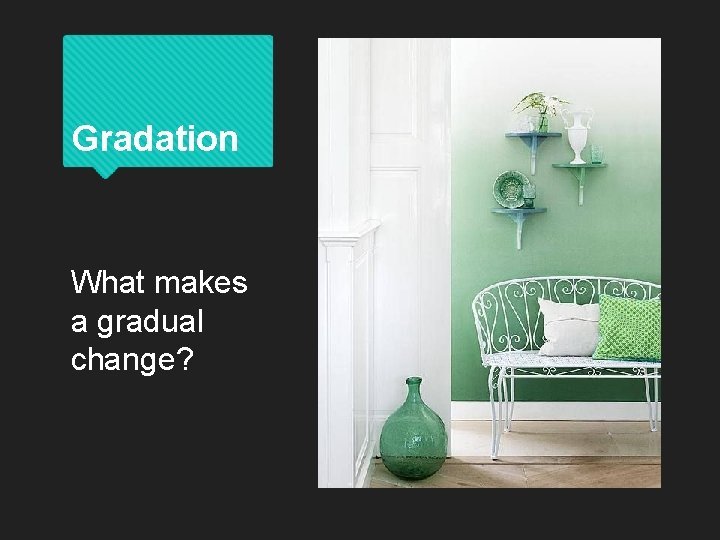
Gradation What makes a gradual change?
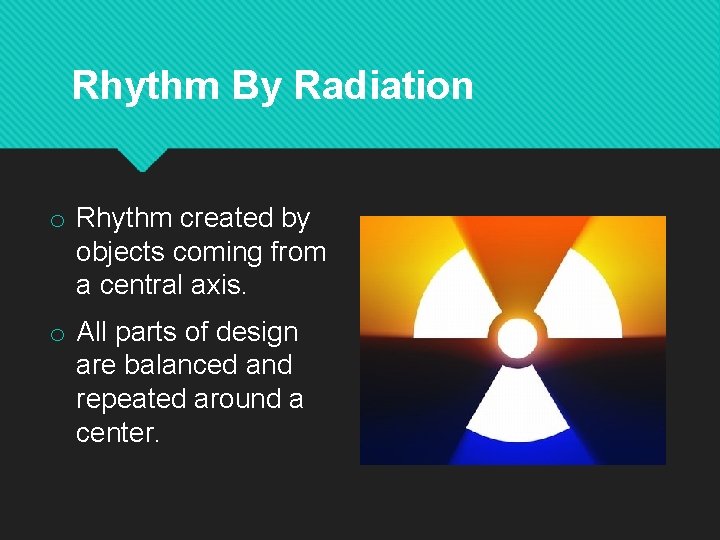
Rhythm By Radiation o Rhythm created by objects coming from a central axis. o All parts of design are balanced and repeated around a center.
Radiation Where is the central axis?
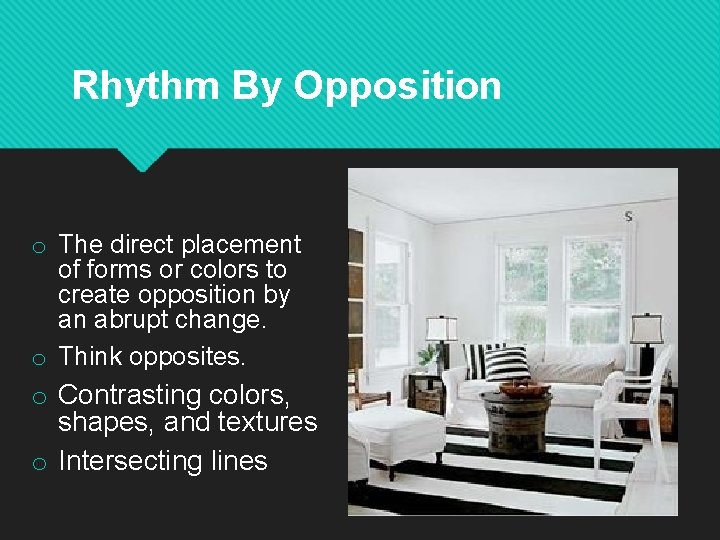
Rhythm By Opposition o The direct placement of forms or colors to create opposition by an abrupt change. o Think opposites. o Contrasting colors, shapes, and textures o Intersecting lines
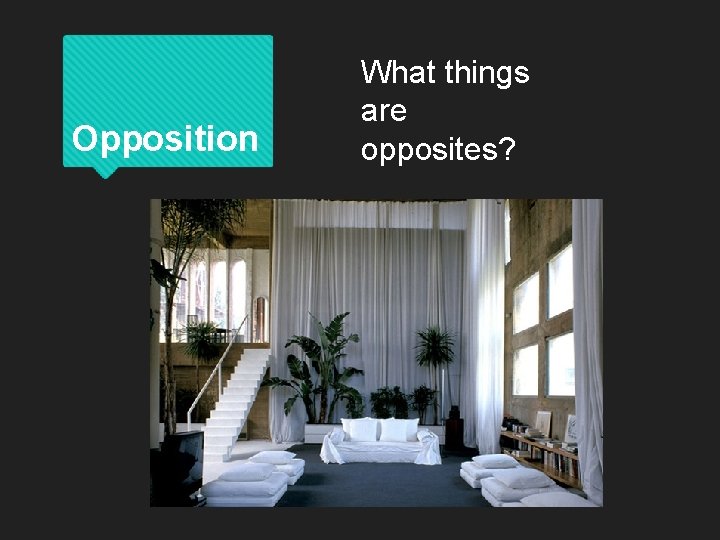
Opposition What things are opposites?
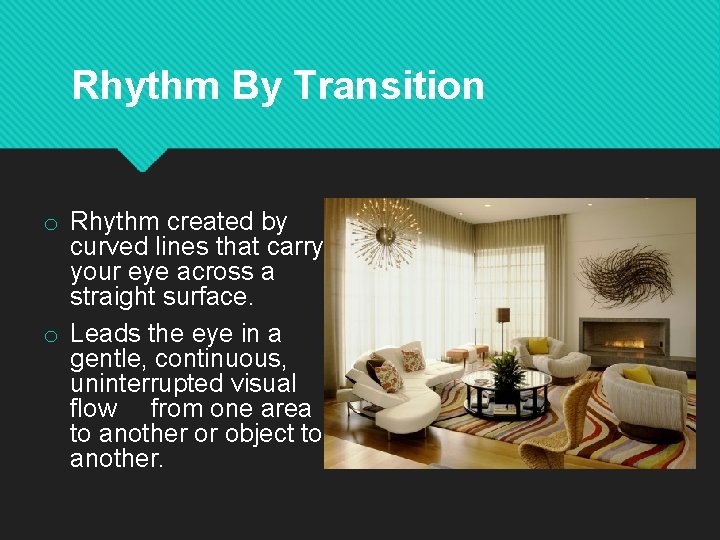
Rhythm By Transition o Rhythm created by curved lines that carry your eye across a straight surface. o Leads the eye in a gentle, continuous, uninterrupted visual flow from one area to another or object to another.
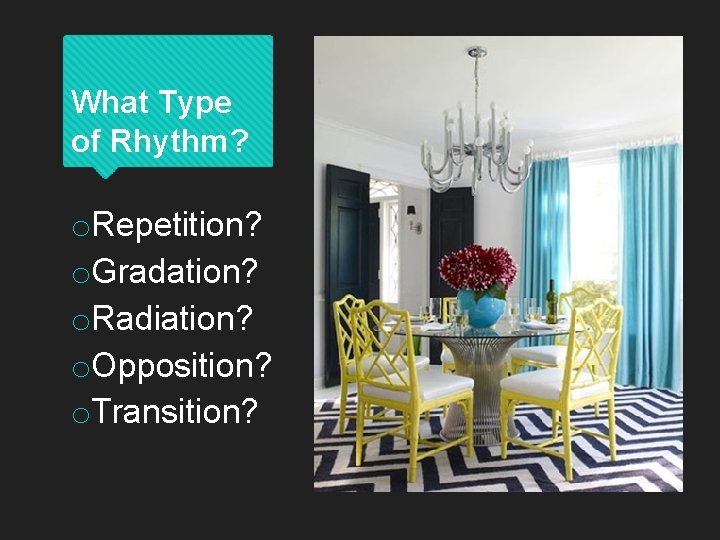
What Type of Rhythm? o. Repetition? o. Gradation? o. Radiation? o. Opposition? o. Transition?
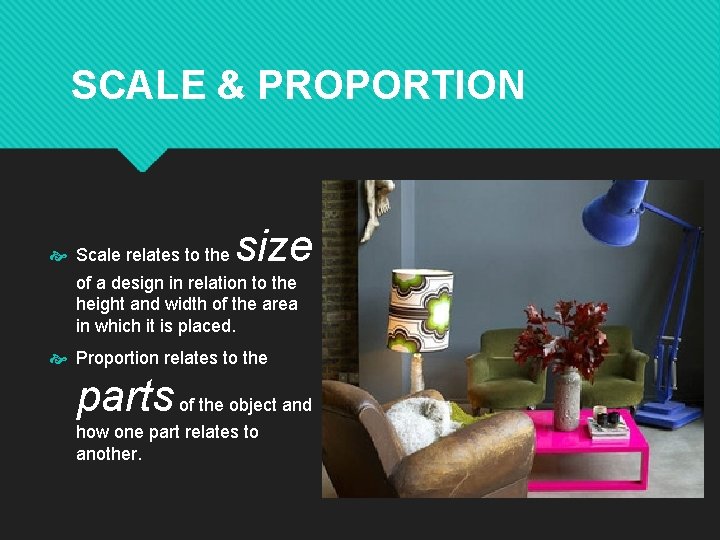
SCALE & PROPORTION size Scale relates to the of a design in relation to the height and width of the area in which it is placed. Proportion relates to the parts of the object and how one part relates to another.
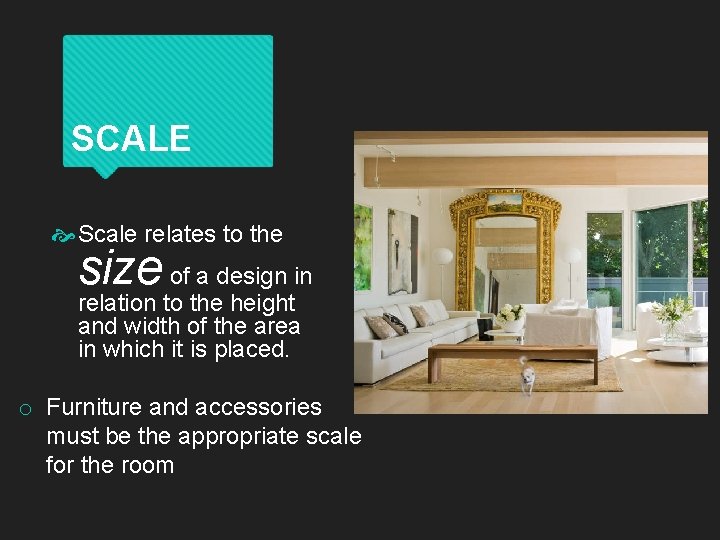
SCALE Scale relates to the size of a design in relation to the height and width of the area in which it is placed. o Furniture and accessories must be the appropriate scale for the room
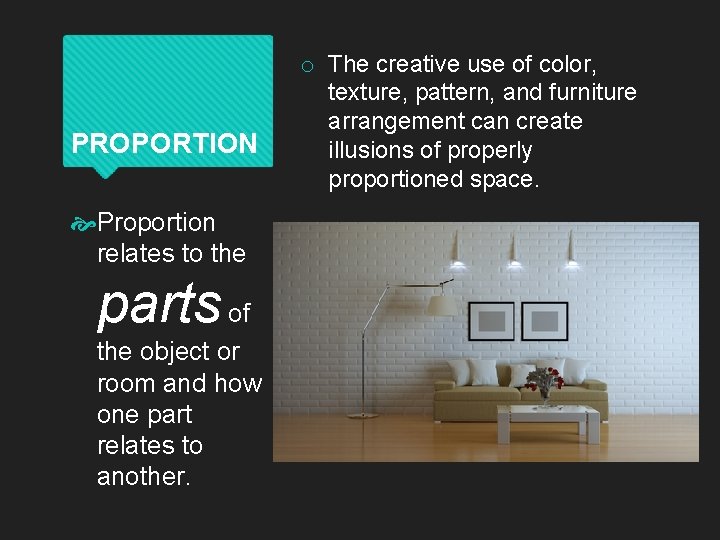
PROPORTION Proportion relates to the parts of the object or room and how one part relates to another. o The creative use of color, texture, pattern, and furniture arrangement can create illusions of properly proportioned space.
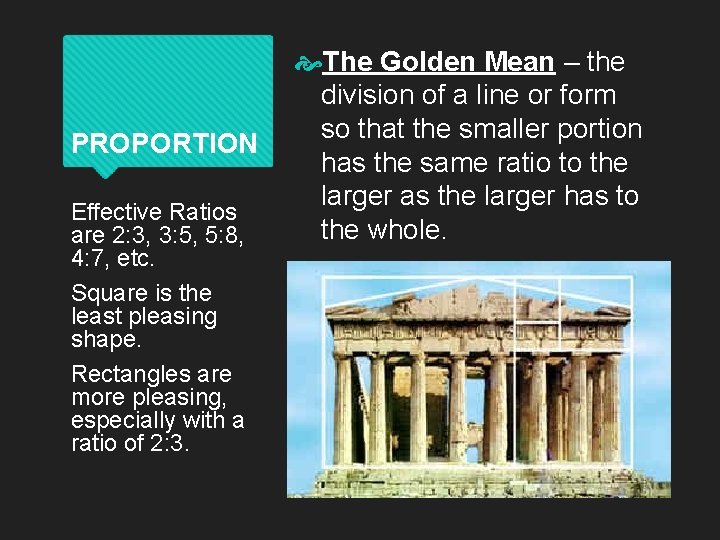
PROPORTION Effective Ratios are 2: 3, 3: 5, 5: 8, 4: 7, etc. Square is the least pleasing shape. Rectangles are more pleasing, especially with a ratio of 2: 3. The Golden Mean – the division of a line or form so that the smaller portion has the same ratio to the larger as the larger has to the whole.
Scale and Proportion Too Big, Too Small, Just Right
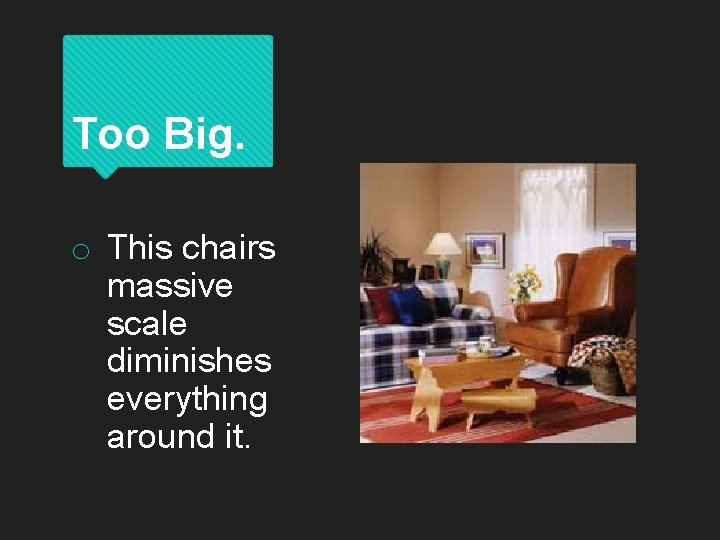
Too Big. o This chairs massive scale diminishes everything around it.
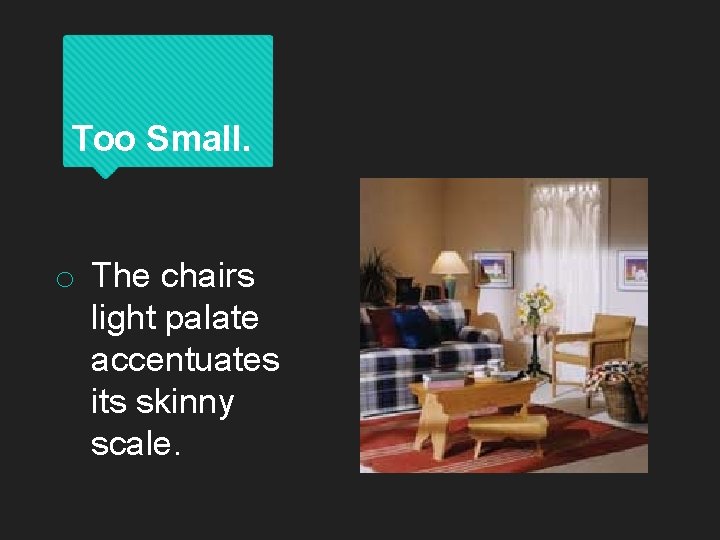
Too Small. o The chairs light palate accentuates its skinny scale.
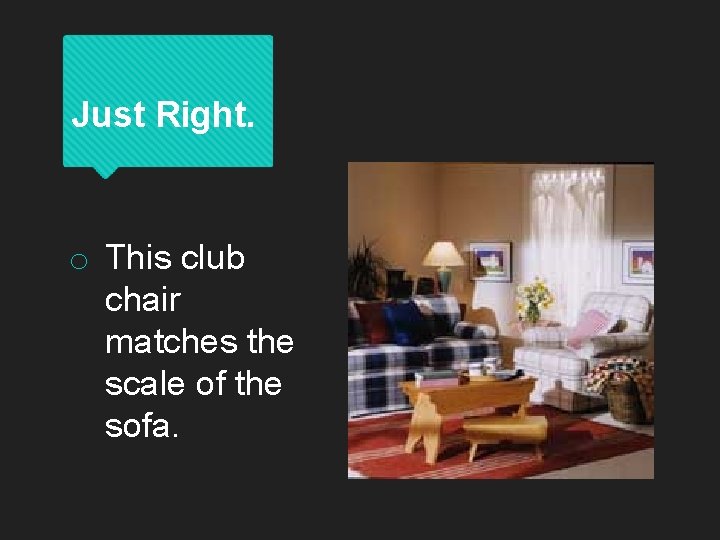
Just Right. o This club chair matches the scale of the sofa.
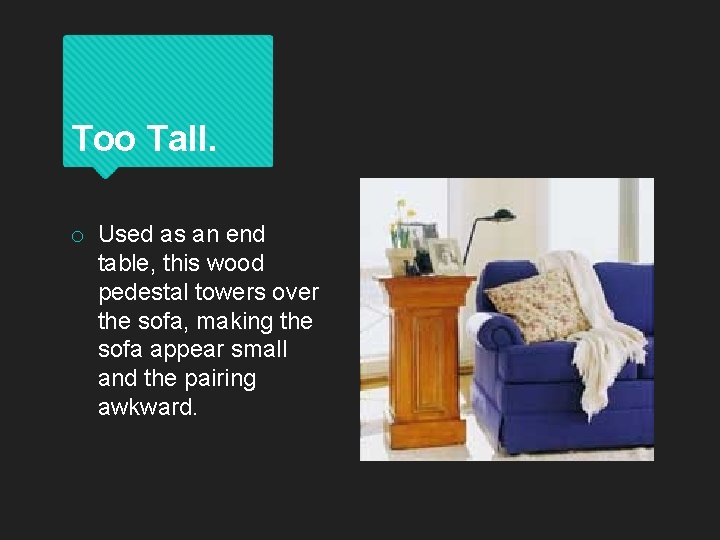
Too Tall. o Used as an end table, this wood pedestal towers over the sofa, making the sofa appear small and the pairing awkward.
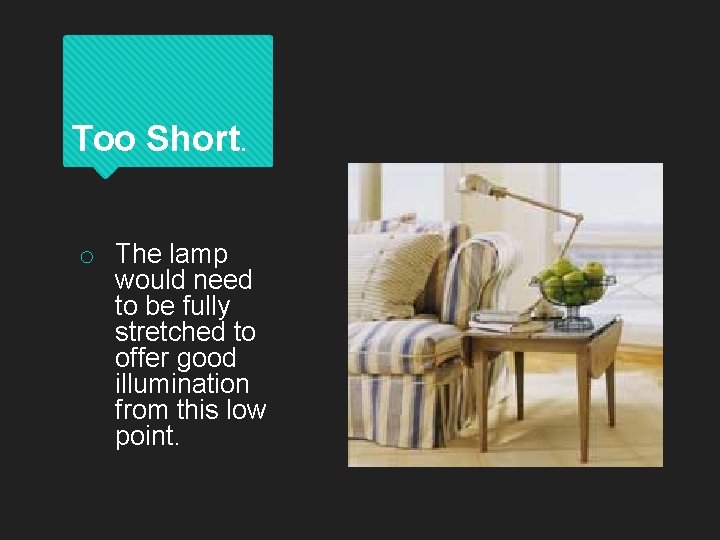
Too Short. o The lamp would need to be fully stretched to offer good illumination from this low point.
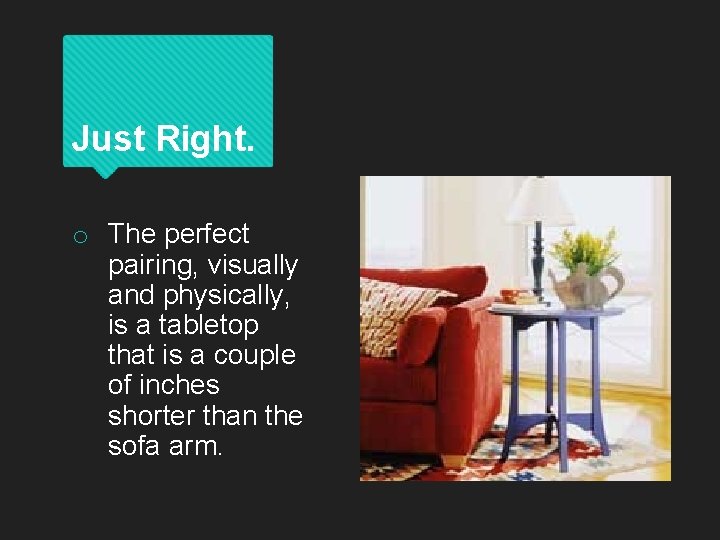
Just Right. o The perfect pairing, visually and physically, is a tabletop that is a couple of inches shorter than the sofa arm.
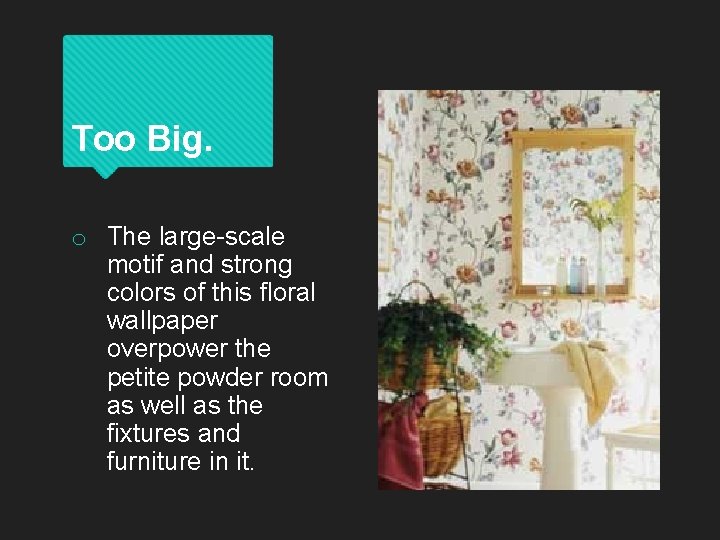
Too Big. o The large-scale motif and strong colors of this floral wallpaper overpower the petite powder room as well as the fixtures and furniture in it.
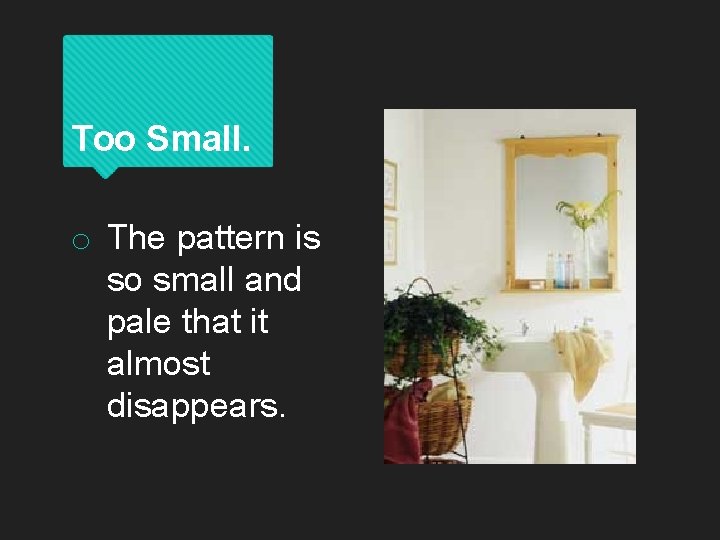
Too Small. o The pattern is so small and pale that it almost disappears.
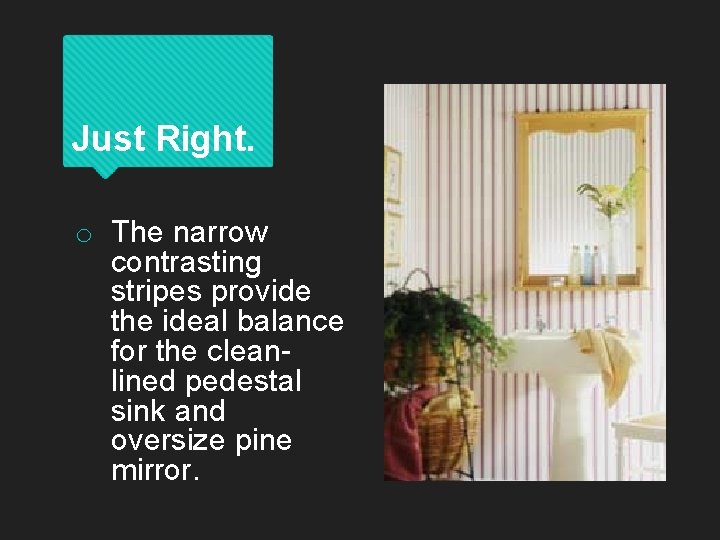
Just Right. o The narrow contrasting stripes provide the ideal balance for the cleanlined pedestal sink and oversize pine mirror.
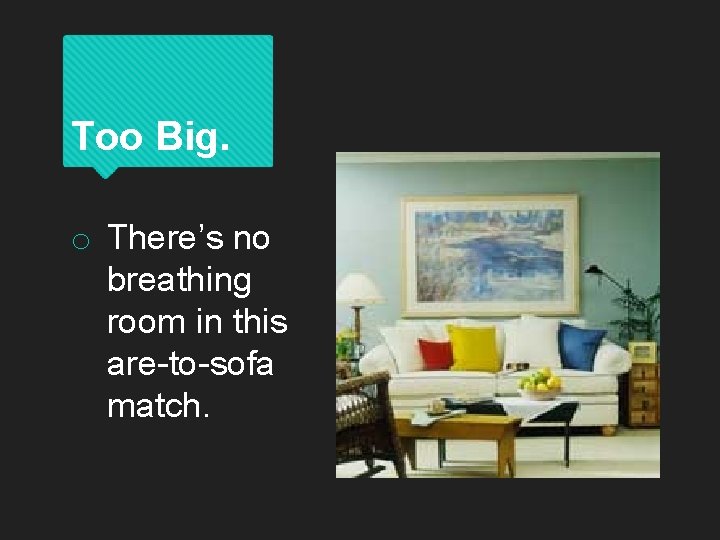
Too Big. o There’s no breathing room in this are-to-sofa match.
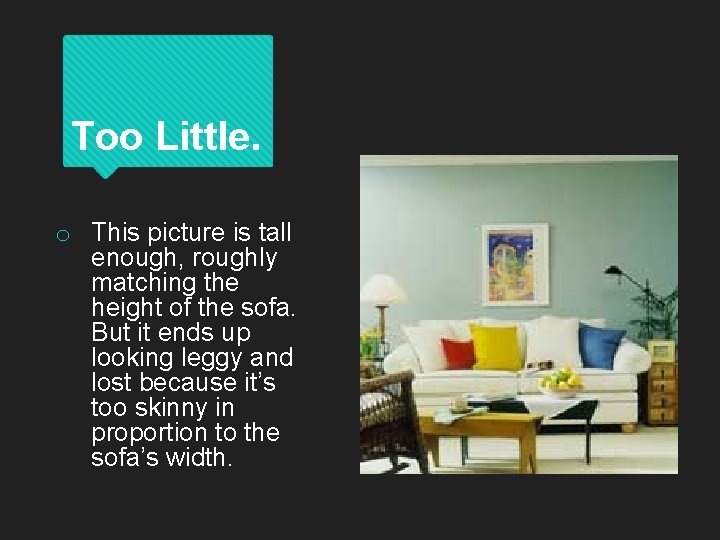
Too Little. o This picture is tall enough, roughly matching the height of the sofa. But it ends up looking leggy and lost because it’s too skinny in proportion to the sofa’s width.
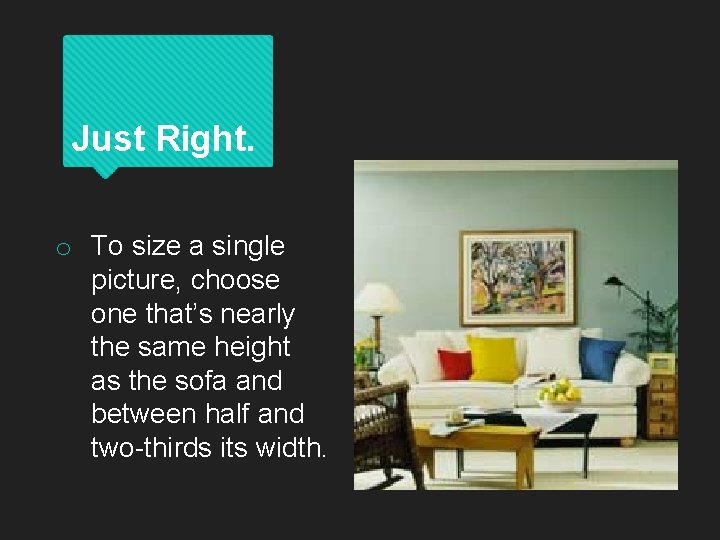
Just Right. o To size a single picture, choose one that’s nearly the same height as the sofa and between half and two-thirds its width.
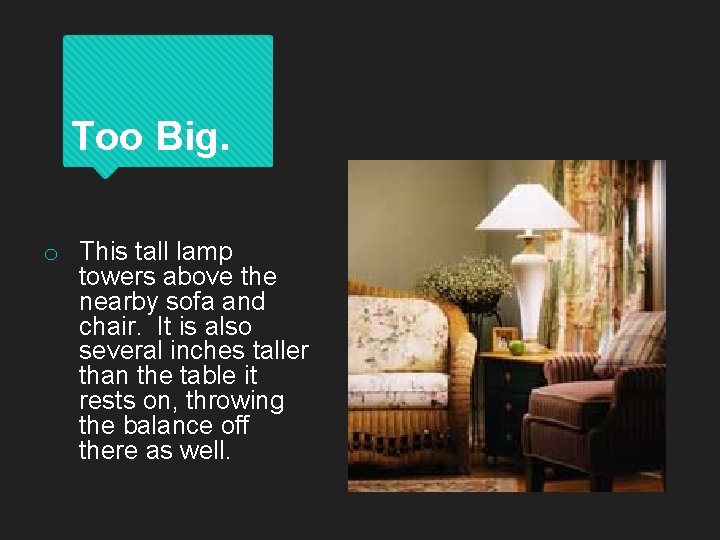
Too Big. o This tall lamp towers above the nearby sofa and chair. It is also several inches taller than the table it rests on, throwing the balance off there as well.
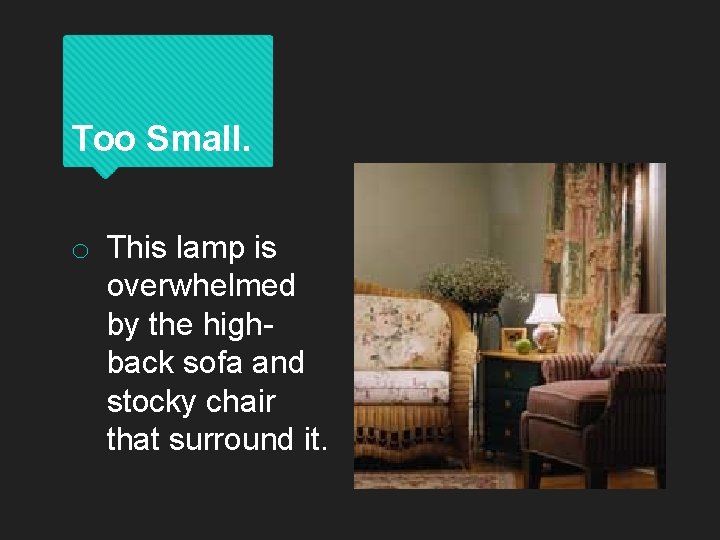
Too Small. o This lamp is overwhelmed by the highback sofa and stocky chair that surround it.
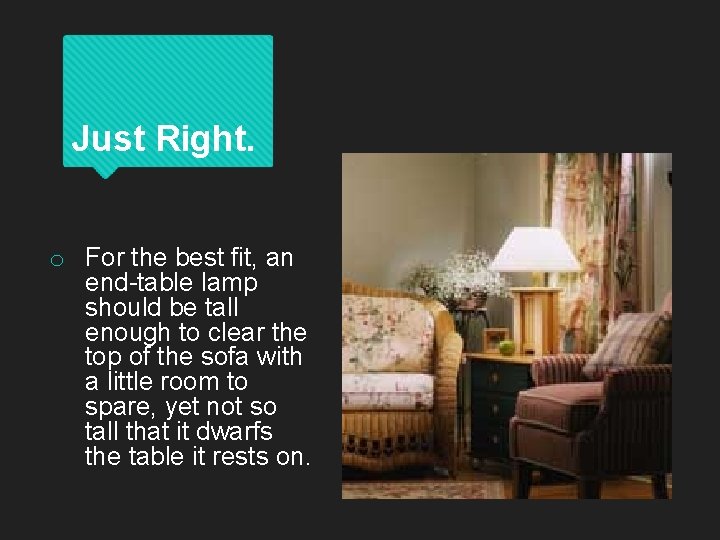
Just Right. o For the best fit, an end-table lamp should be tall enough to clear the top of the sofa with a little room to spare, yet not so tall that it dwarfs the table it rests on.
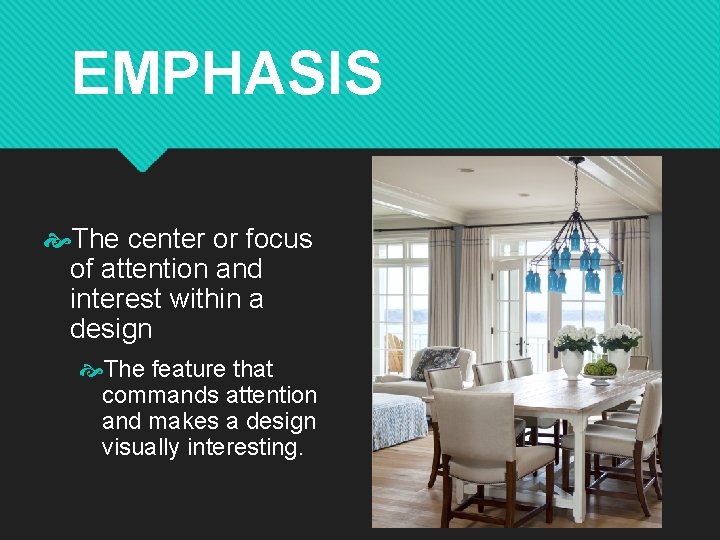
EMPHASIS The center or focus of attention and interest within a design The feature that commands attention and makes a design visually interesting.
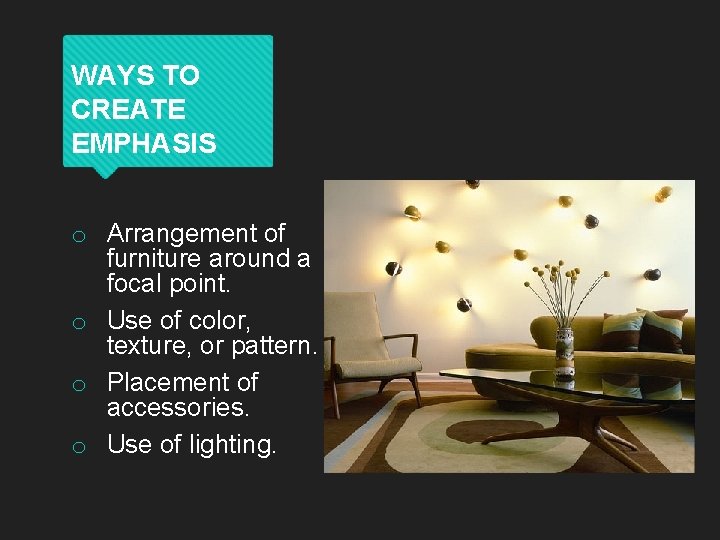
WAYS TO CREATE EMPHASIS o Arrangement of furniture around a focal point. o Use of color, texture, or pattern. o Placement of accessories. o Use of lighting.
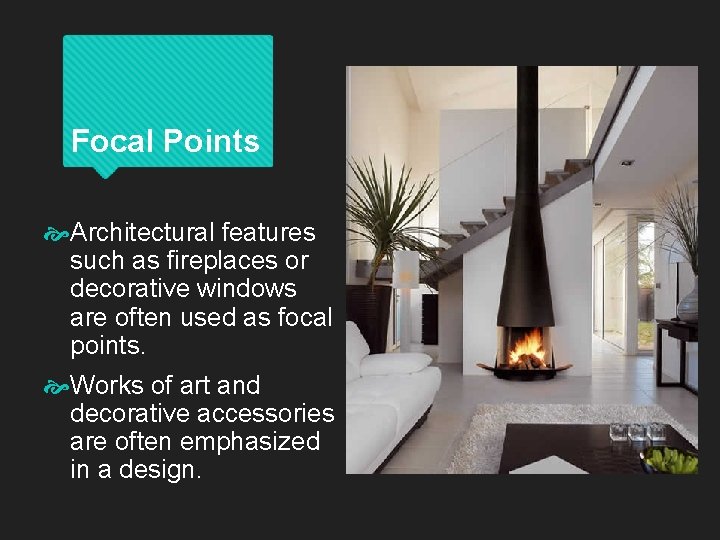
Focal Points Architectural features such as fireplaces or decorative windows are often used as focal points. Works of art and decorative accessories are often emphasized in a design.
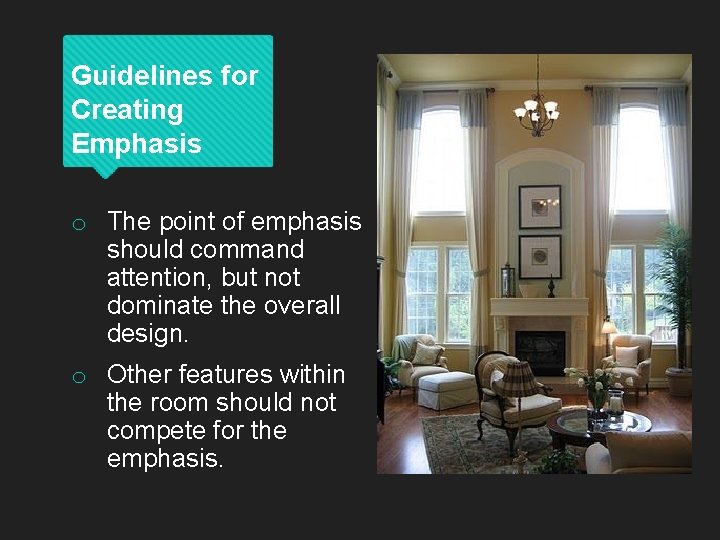
Guidelines for Creating Emphasis o The point of emphasis should command attention, but not dominate the overall design. o Other features within the room should not compete for the emphasis.
Harmony There are 2 aspects of harmony. o. Unity o. Variety
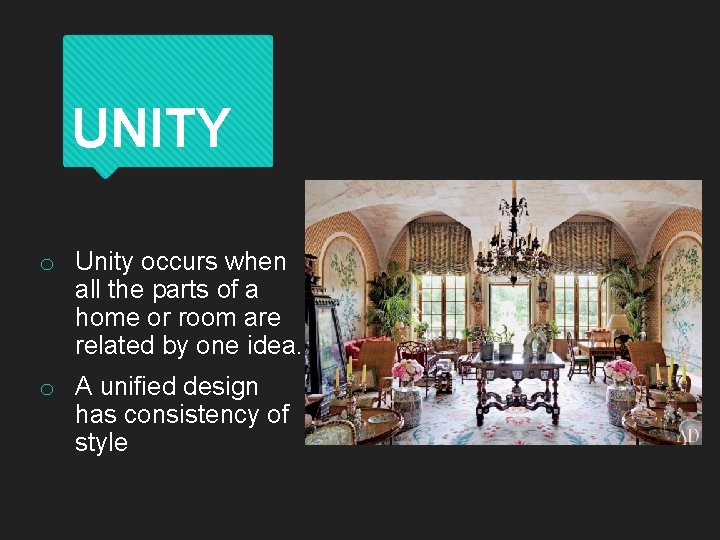
UNITY o Unity occurs when all the parts of a home or room are related by one idea. o A unified design has consistency of style
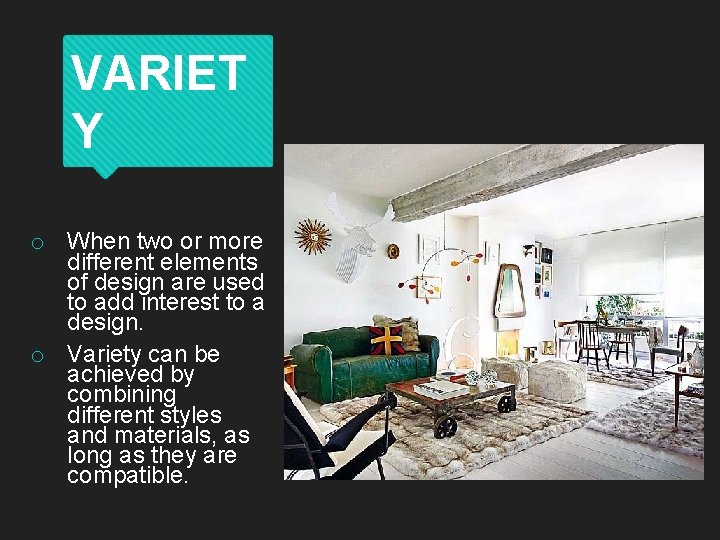
VARIET Y o When two or more different elements of design are used to add interest to a design. o Variety can be achieved by combining different styles and materials, as long as they are compatible.
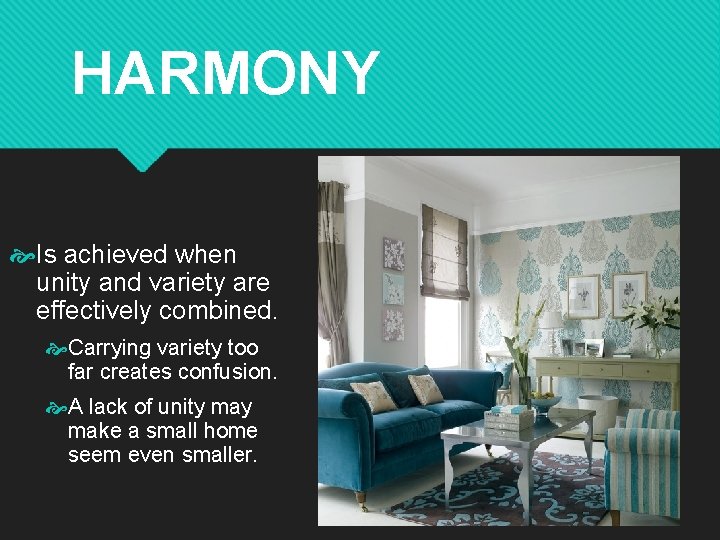
HARMONY Is achieved when unity and variety are effectively combined. Carrying variety too far creates confusion. A lack of unity make a small home seem even smaller.
QUESTIONS? What are the elements of design? List Them (6) What are the principles of design? List Them (5)