
Principles of Curriculum Design in STEM Education Merrilyn
- Slides: 16
Principles of Curriculum Design … in STEM Education Merrilyn Goos University of Limerick
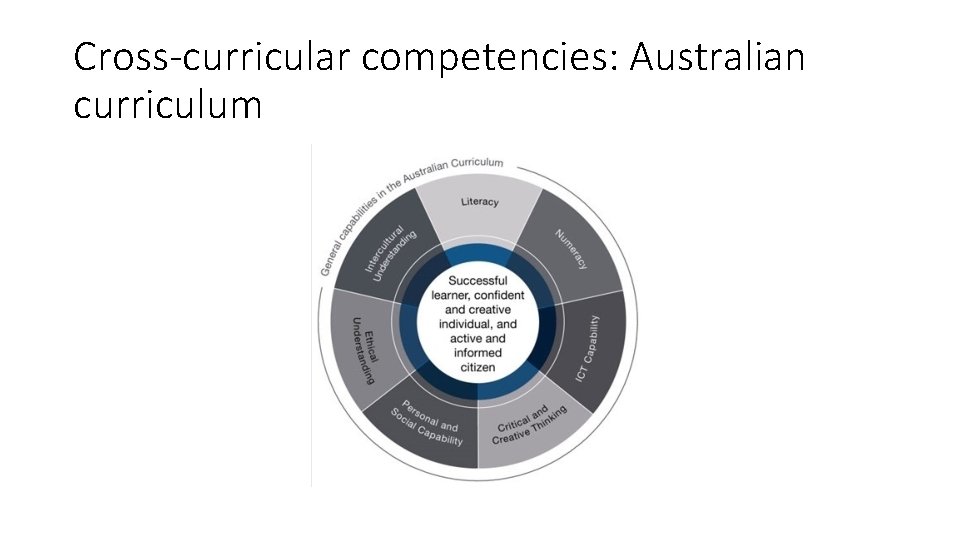
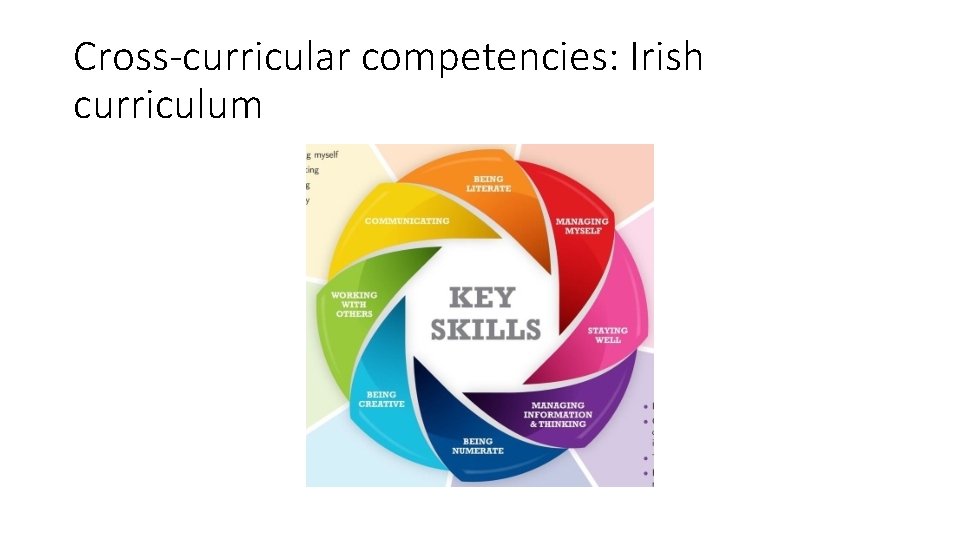
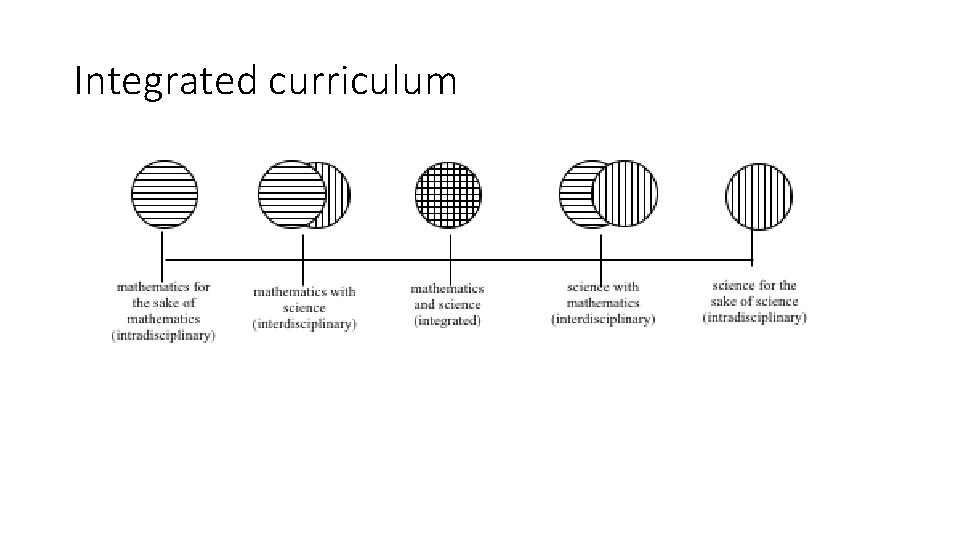
Outline 1. Understanding STEM education 2. Curriculum design components 3. Three models for organising curriculum: o Disciplinary process driven o Cross-curricular competencies o Integrated curriculum
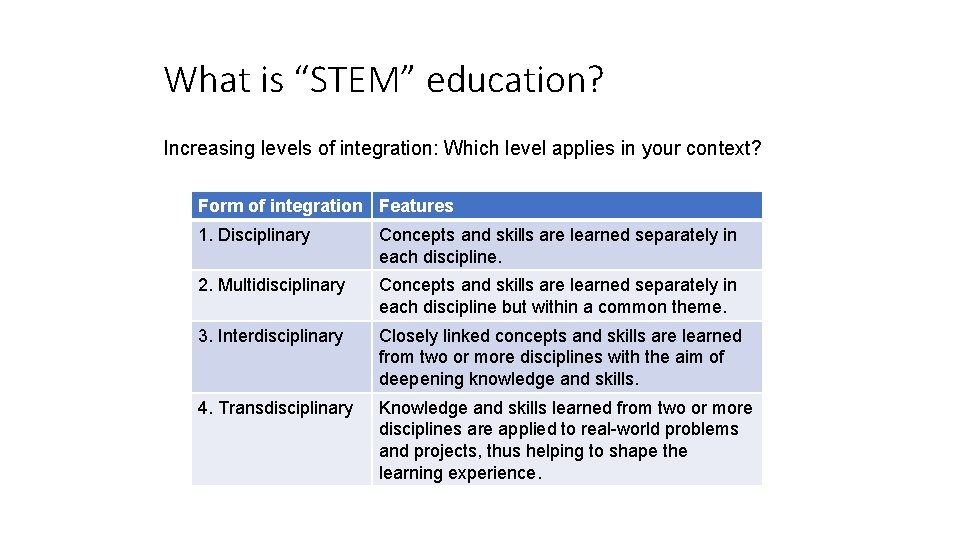
What is “STEM” education? Increasing levels of integration: Which level applies in your context? Form of integration Features 1. Disciplinary Concepts and skills are learned separately in each discipline. 2. Multidisciplinary Concepts and skills are learned separately in each discipline but within a common theme. 3. Interdisciplinary Closely linked concepts and skills are learned from two or more disciplines with the aim of deepening knowledge and skills. 4. Transdisciplinary Knowledge and skills learned from two or more disciplines are applied to real-world problems and projects, thus helping to shape the learning experience.
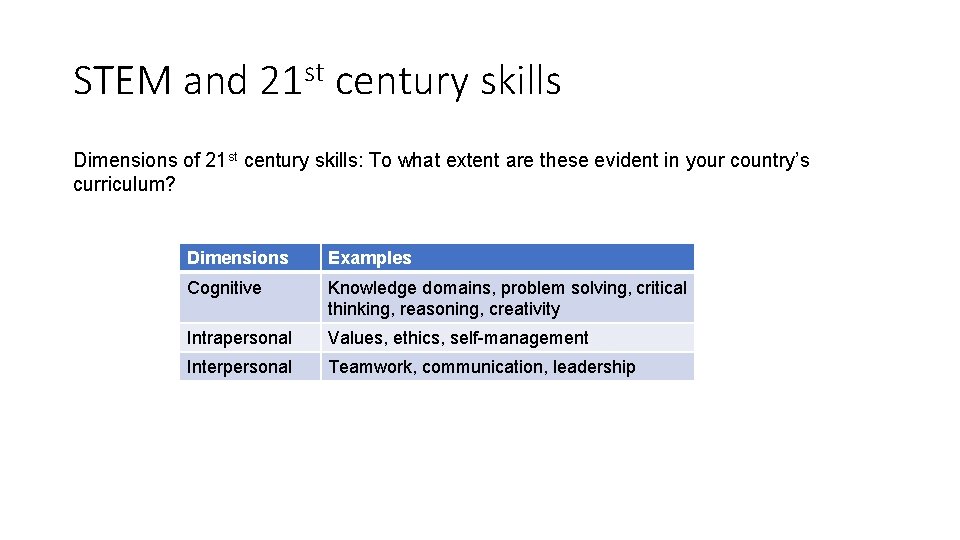
STEM and 21 st century skills Dimensions of 21 st century skills: To what extent are these evident in your country’s curriculum? Dimensions Examples Cognitive Knowledge domains, problem solving, critical thinking, reasoning, creativity Intrapersonal Values, ethics, self-management Interpersonal Teamwork, communication, leadership
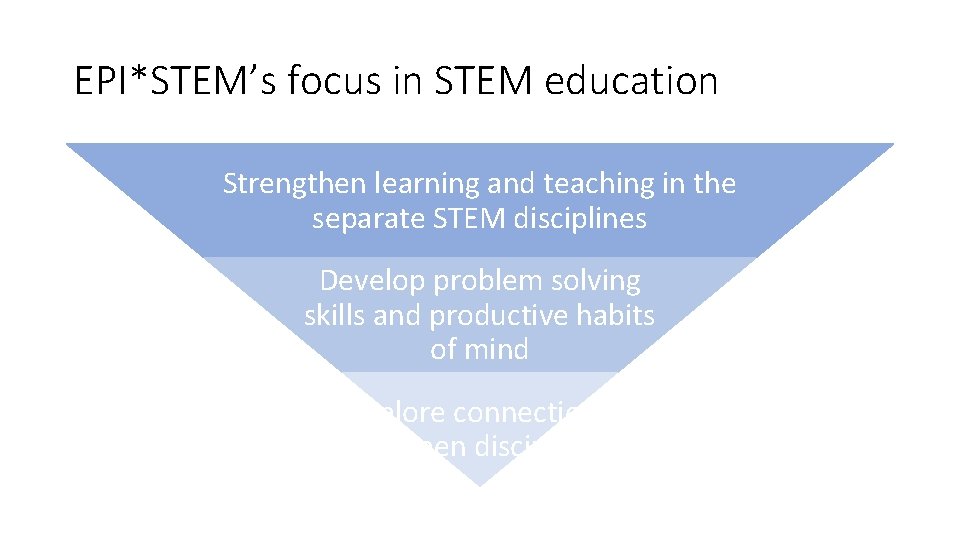
EPI*STEM’s focus in STEM education Strengthen learning and teaching in the separate STEM disciplines Develop problem solving skills and productive habits of mind Explore connections between disciplines
What is a “curriculum”? A curriculum is an attempt to communicate the essential principles and features of an educational proposal in such a form that it is open to critical scrutiny and capable of effective translation into practice’ (Stenhouse, 1975, p. 4). • Intended curriculum: vision laid out by curriculum designers • Implemented curriculum: teachers’ interpretation of formal written documents and the way they enact this in the classroom • Attained curriculum: learning experiences as perceived by students and what students actually learn
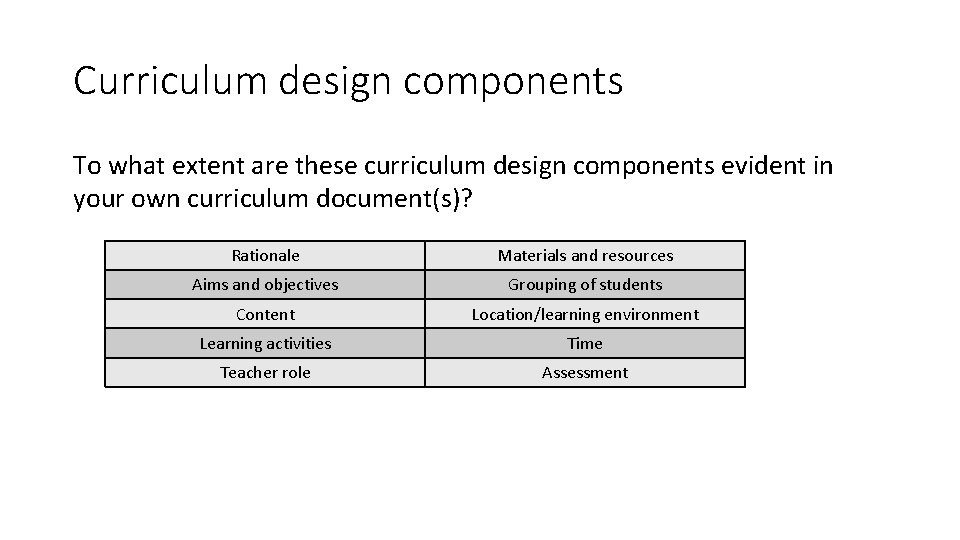
Curriculum design components 1. Rationale: What educational purposes and principles underpin the curriculum? 2. Aims and objectives: Towards which specific learning goals are students working? 3. Content: What are students learning and how is this sequenced? 4. Learning activities: How are students learning? 5. Teacher role: How is the teacher facilitating learning?
Curriculum design components (continued) 6. Materials and resources: With what are students learning? 7. Grouping: How are students allocated to various learning pathways and how are they organised for learning within the classroom? 8. Location: What are the social and physical characteristics of the learning environment? 9. Time: How much time is available for specific topics and learning tasks? 10. Assessment: How shall we know how far has learning progressed?
Curriculum design components To what extent are these curriculum design components evident in your own curriculum document(s)? Rationale Materials and resources Aims and objectives Grouping of students Content Location/learning environment Learning activities Time Teacher role Assessment
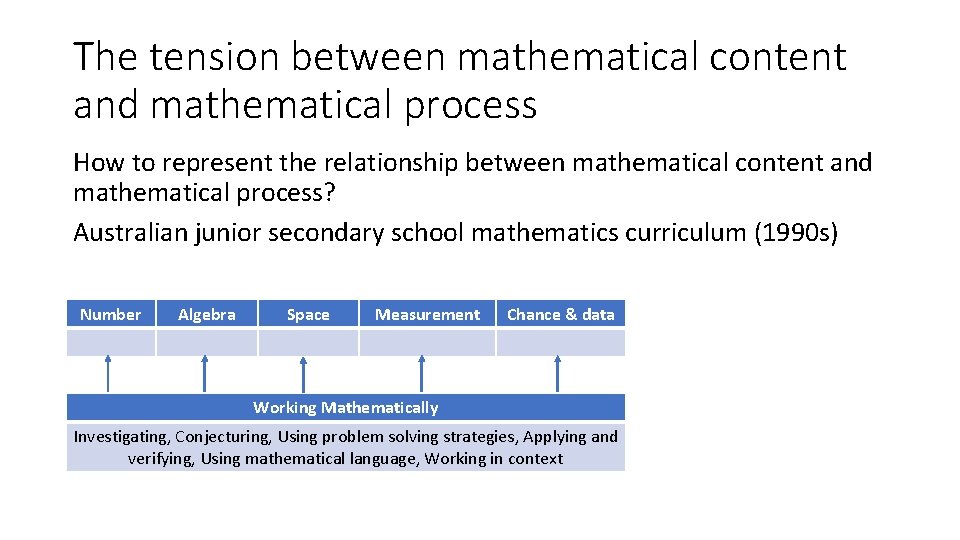
Curriculum driven by disciplinary processes • A process-driven curriculum emphasises the “thinking and doing” of the discipline as well as its content. • Example: In mathematics education, process-driven school curricula emphasise problem solving, investigation, applications and modelling. • But there is an inevitable tension between representing the content and processes of a discipline.
The tension between mathematical content and mathematical process How to represent the relationship between mathematical content and mathematical process? Australian junior secondary school mathematics curriculum (1990 s) Number Algebra Space Measurement Chance & data Working Mathematically Investigating, Conjecturing, Using problem solving strategies, Applying and verifying, Using mathematical language, Working in context
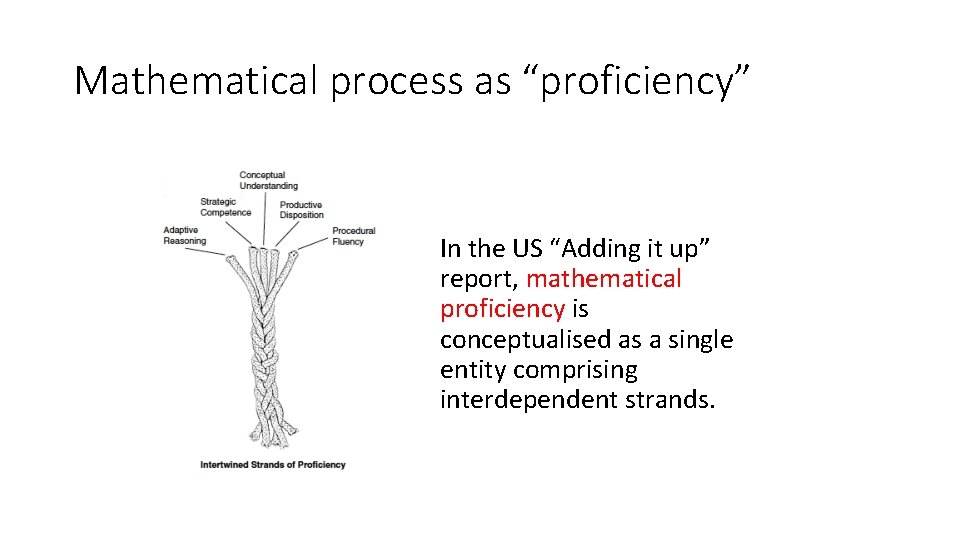
Mathematical process as “proficiency” In the US “Adding it up” report, mathematical proficiency is conceptualised as a single entity comprising interdependent strands.
Cross-curricular competencies: Australian curriculum
Cross-curricular competencies: Irish curriculum
Integrated curriculum
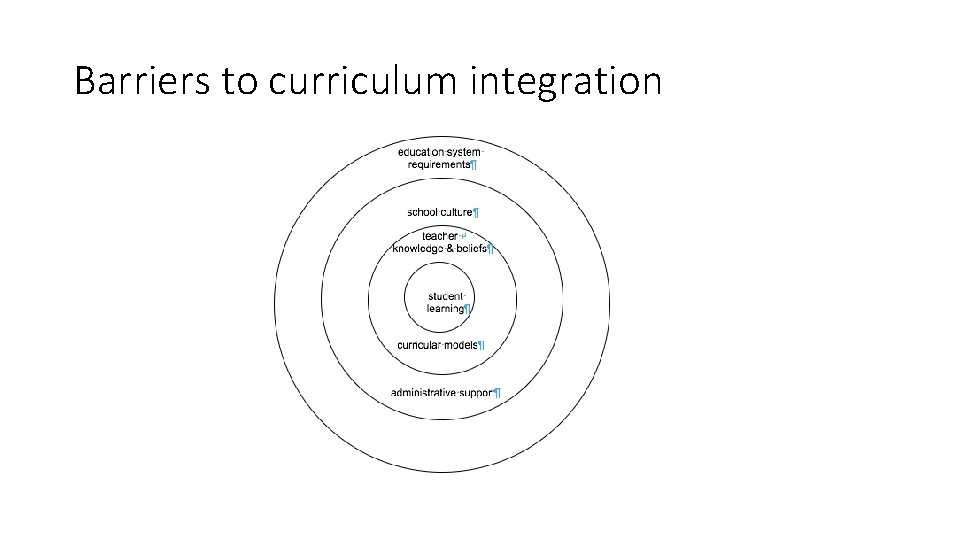
Barriers to curriculum integration