
Principles of Constitutional Democracies The Rule of Law

- Slides: 7
Principles of Constitutional Democracies
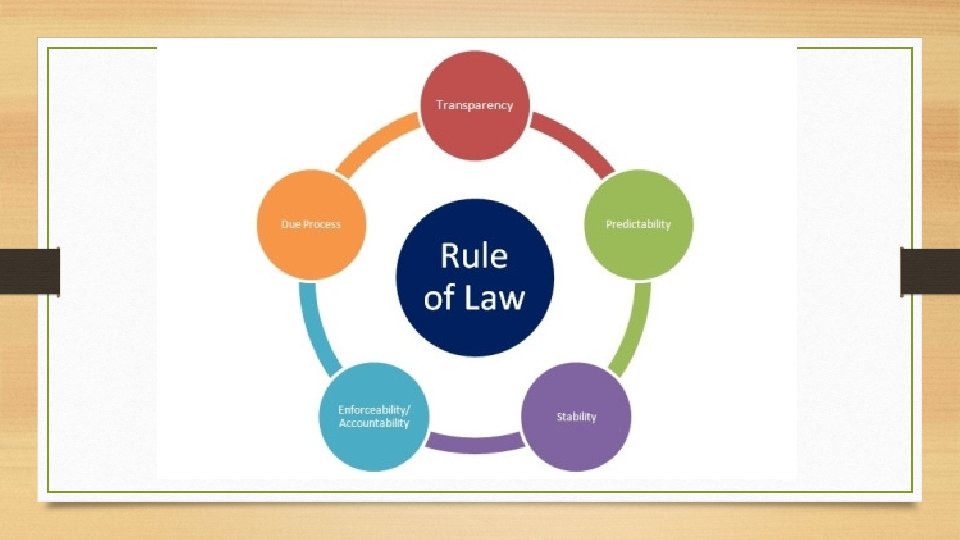
The Rule of Law laws must take precedence over the arbitrary governance of people; all citizens, including the government and government officials, must obey the law; the law has more power than any person or party government action cannot be arbitrary or capricious; it must adhere to authority granted in the constitution or in laws passed by the legislature this is the core principle of the American Political System; it supports order and fairness; the law is applied equally to all status, wealth, gender, race, ethnicity, religion, power, education, etc. (and all other differences and distinctions) are not to interfere in this principle of equality and fairness http: //www. youtube. com/watch? v=Cu 3 hj. Ly. TI 88
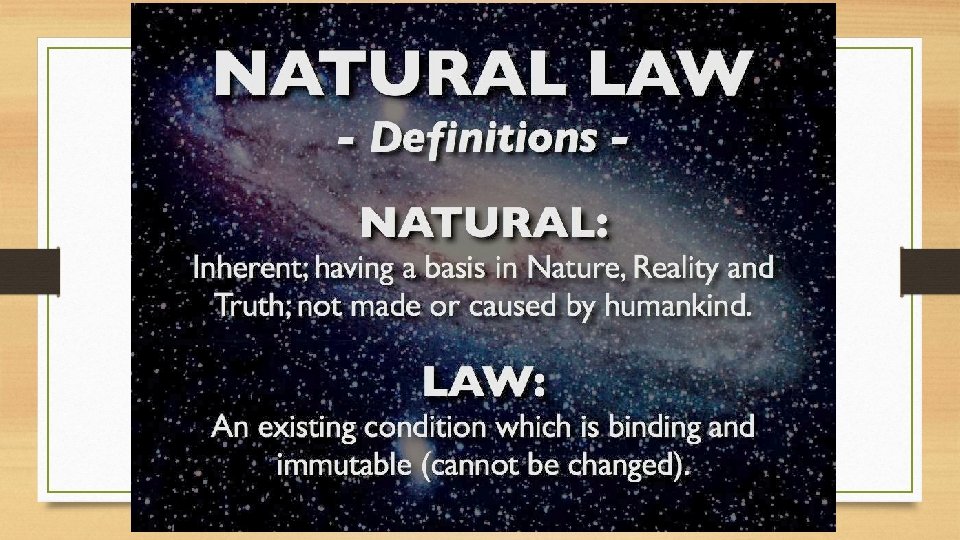
Natural Law this sense of law comes from nature and is superior to written law passed by legislatures all human beings naturally have the ability to reason (“right reason”); on a basic level, it directs our sense of ethics by calling us to our duties as human beings and restraining us from doing wrong Natural Law Theory leads to the conclusion that if statutory laws (passed by legislative bodies) conflicts with natural laws, they need not be obeyed The US Declaration of Independence begins by making this argument about the right of the American rebels to reject the laws of the British Parliament and King that they determined violated natural laws http: //www. youtube. com/watch? v=ej. M 6 Usflny. Q
Natural Rights rights to which every person is entitled and that exist and are apart from and are not dependent on (or can be given by) any form of government these rights stem from natural law and belong to everyone at birth and cannot be taken away by any person or any group, no matter how powerful John Locke (1632 -1704) : “life, liberty and property” the Declaration of Independence (1776): “life, liberty and pursuit of happiness” http: //www. youtube. com/watch? v=p. ZBs 78 WQu. Uc