
Principles of Communication Chapter 5 Public Speaking W
Principles of Communication Chapter 5: Public Speaking W. I. I. F. M?
SCOPE • Chapter 5 Lecture and Discussion: • Terminology for Public Speaking Events • Importance of Preparation for Public Speaking • Various Public Speaking Situations • Chapter 5 Case Study • Instructor Review • Student Q&A Principles of Communication - Public Speaking 2/6/2015 Page 2

5. 3 Audiences • An audience is an individual or group of people who are participating in a presentation to gain some new information. • You “adapt” your presentation to meet the needs, interests, and background of the audience. Principles of Communication - Public Speaking 2/6/2015 Page 3
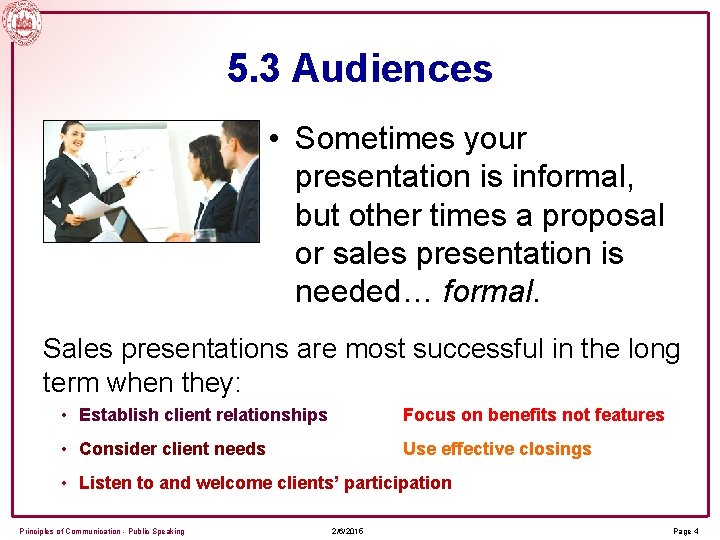
5. 3 Audiences • Sometimes your presentation is informal, but other times a proposal or sales presentation is needed… formal. Sales presentations are most successful in the long term when they: • Establish client relationships Focus on benefits not features • Consider client needs Use effective closings • Listen to and welcome clients’ participation Principles of Communication - Public Speaking 2/6/2015 Page 4

5. 3 Audiences • Identify the common division of audiences… 1. Experts: These are the people who know theory and the product inside and out. 2. Technicians: These are the people who build, operate, maintain, and repair the stuff that the experts design and theorize about. 3. Executives: These are the people who make business, economic, administrative, legal, governmental or political decisions on the stuff that the experts and technicians work with. 4. Principles of Communication - Public Speaking Non-specialists: These readers have the least technical knowledge of all. 2/6/2015 Page 5
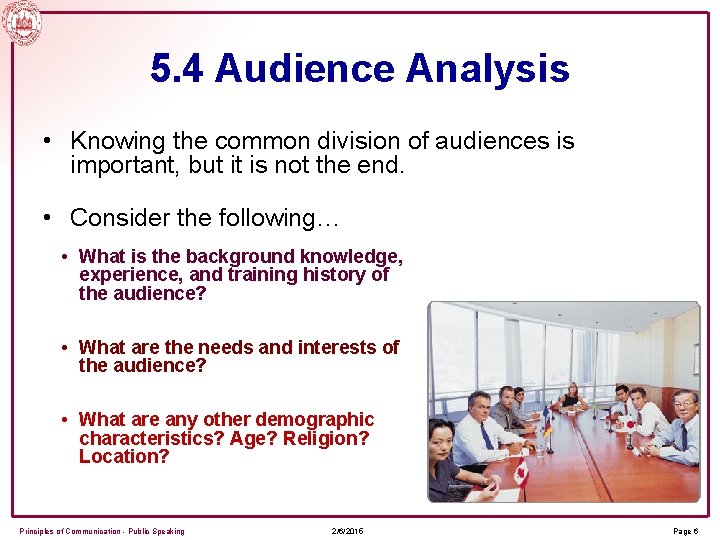
5. 4 Audience Analysis • Knowing the common division of audiences is important, but it is not the end. • Consider the following… • What is the background knowledge, experience, and training history of the audience? • What are the needs and interests of the audience? • What are any other demographic characteristics? Age? Religion? Location? Principles of Communication - Public Speaking 2/6/2015 Page 6
5. 4 Audience Analysis • Audience analysis is the collection of information about an audience and determining the characteristics that would affect their participation. • More than one audience • Format the presentation for general audiences, and then add headings and section introductions to alert your audience about how to use your report. • Wide variability in an audience • Again, format for general audiences, and then put the supplemental information in appendixes or insert cross-references to beginners' books. Principles of Communication - Public Speaking 2/6/2015 Page 7
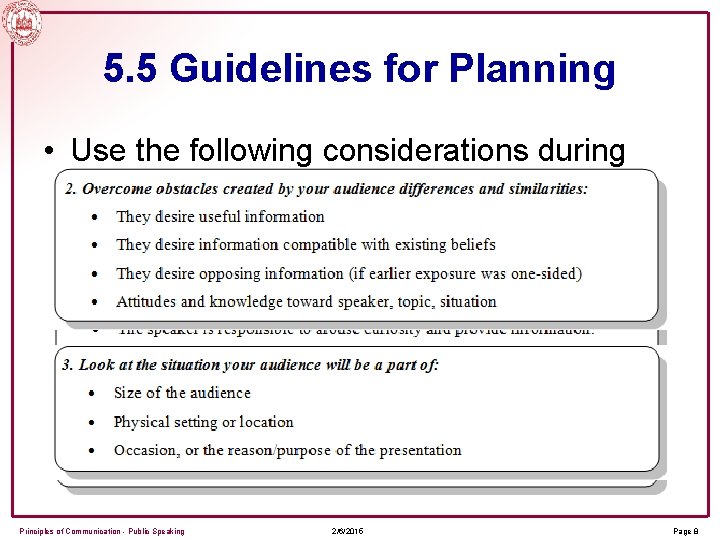
5. 5 Guidelines for Planning • Use the following considerations during your planning process… Principles of Communication - Public Speaking 2/6/2015 Page 8
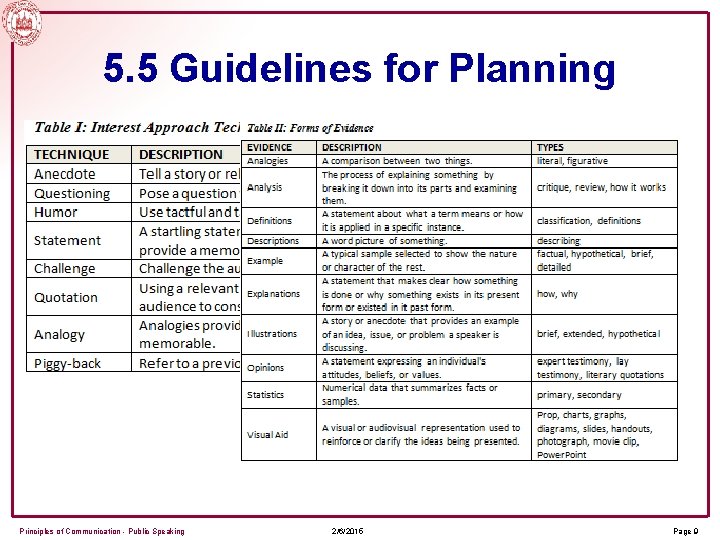
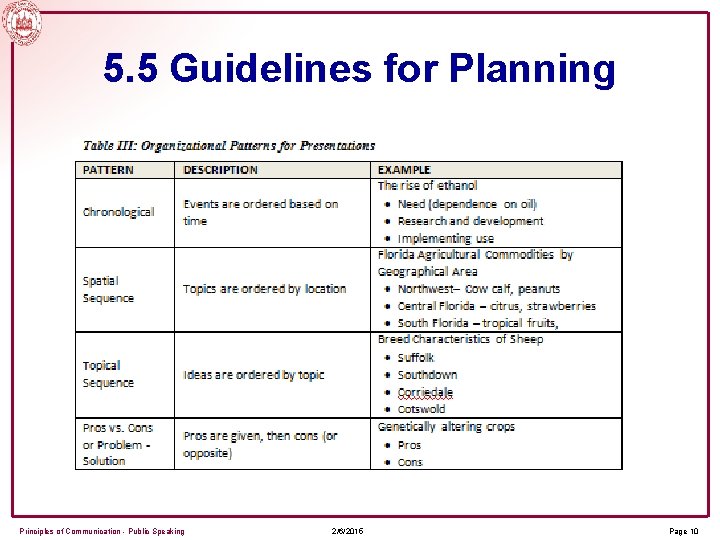
5. 5 Guidelines for Planning • Review the three tables on pages 64 to 65 for ideas on different techniques for presenting a speech. Principles of Communication - Public Speaking 2/6/2015 Page 9
5. 5 Guidelines for Planning Principles of Communication - Public Speaking 2/6/2015 Page 10
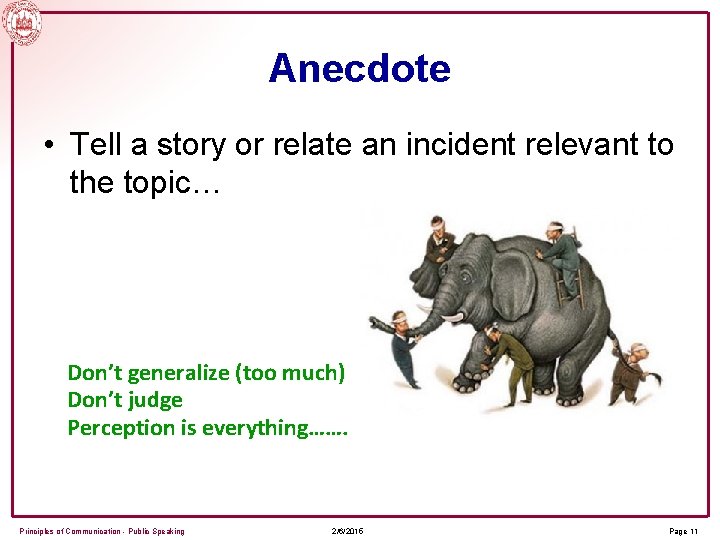
Anecdote • Tell a story or relate an incident relevant to the topic… Don’t generalize (too much) Don’t judge Perception is everything……. Principles of Communication - Public Speaking 2/6/2015 Page 11
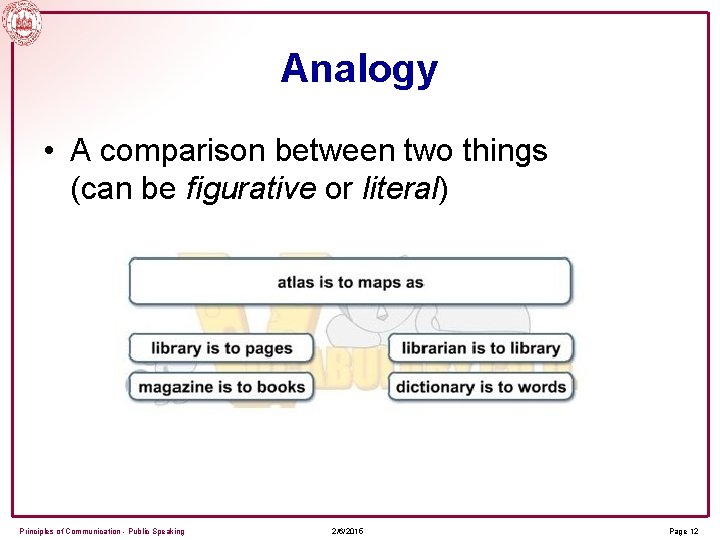
Analogy • A comparison between two things (can be figurative or literal) Principles of Communication - Public Speaking 2/6/2015 Page 12
5. 6 Audience Adaptation • Audience adaptation refers to the process of adjusting one's • topic • purpose • language • communication style in order to avoid offending or alienating members of the audience. Principles of Communication - Public Speaking 2/6/2015 Page 13

5. 6 Audience Adaptation • Add information readers need to understand your presentation. • Omit information your audience does not need. • Change the level of the information if necessary. • Add examples to help the audience understand. • Change the level of your examples. • Change the organization of your information. • Strengthen transitions… the connections between the main sections of your presentation. • Prepare stronger introductions for the presentation and individual sections. Principles of Communication - Public Speaking 2/6/2015 Page 14
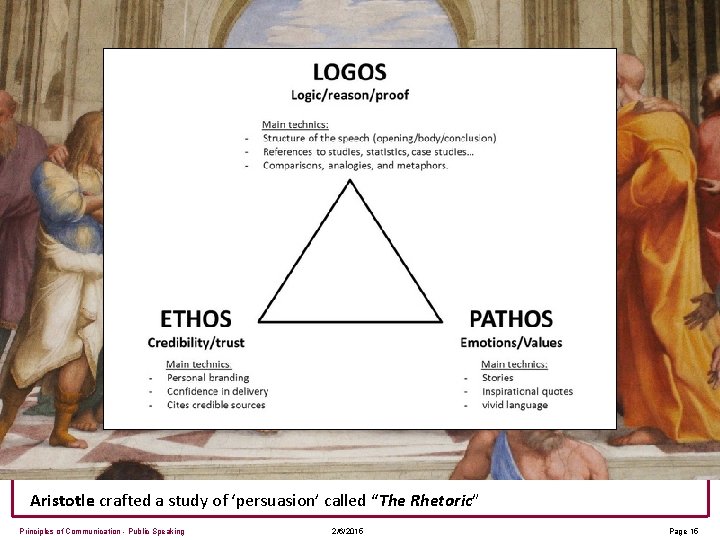
• Credibility is the persuasive force that comes 10. 7 Persuasive Strategies from the audience’s belief in and respect for the speaker. • Demonstrate Your Competence • Earn the Trust of Your Audience • Emphasize Your Similarity to the Audience Aristotle crafted a study of ‘persuasion’ called “The Rhetoric” Principles of Communication - Public Speaking 2/6/2015 Page 15
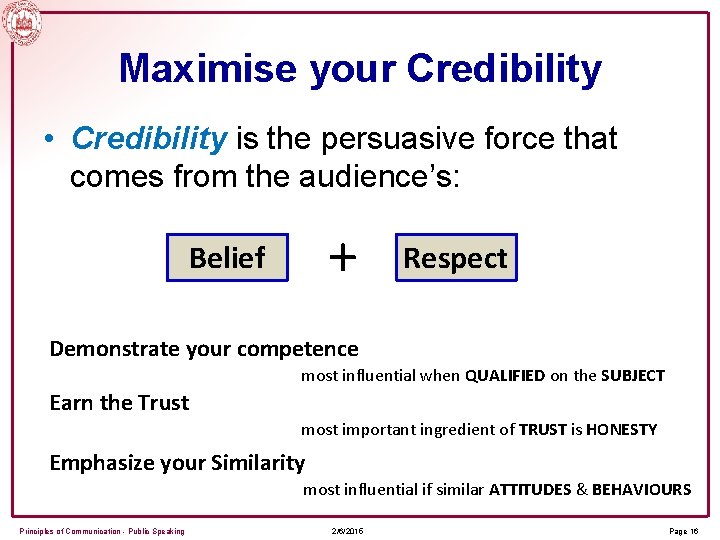
Maximise your Credibility • Credibility is the persuasive force that comes from the audience’s: + Belief Respect Demonstrate your competence most influential when QUALIFIED on the SUBJECT Earn the Trust most important ingredient of TRUST is HONESTY Emphasize your Similarity most influential if similar ATTITUDES & BEHAVIOURS Principles of Communication - Public Speaking 2/6/2015 Page 16
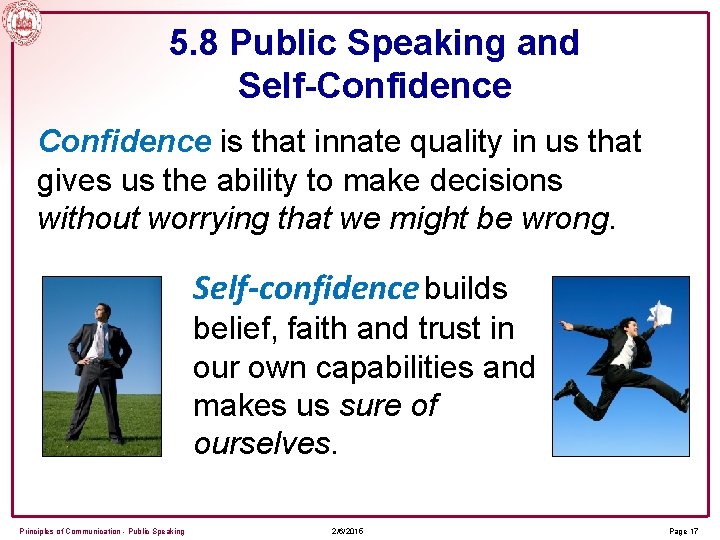
5. 8 Public Speaking and Self-Confidence is that innate quality in us that gives us the ability to make decisions without worrying that we might be wrong. Self-confidence builds belief, faith and trust in our own capabilities and makes us sure of ourselves. Principles of Communication - Public Speaking 2/6/2015 Page 17
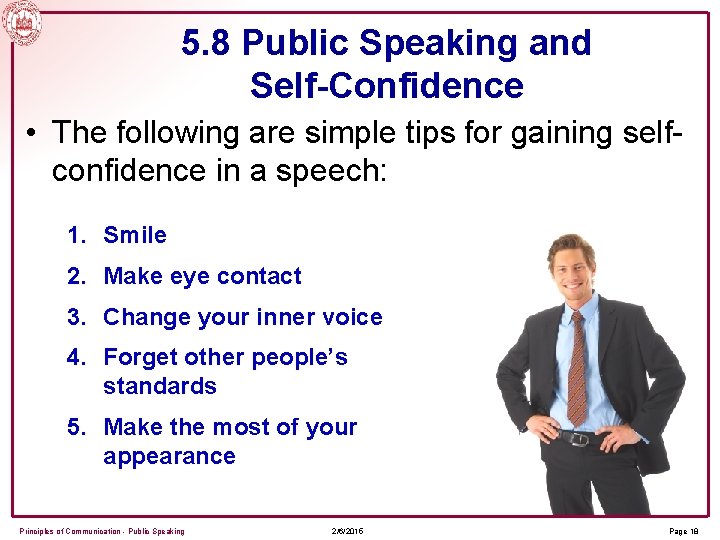
5. 8 Public Speaking and Self-Confidence • The following are simple tips for gaining selfconfidence in a speech: 1. Smile 2. Make eye contact 3. Change your inner voice 4. Forget other people’s standards 5. Make the most of your appearance Principles of Communication - Public Speaking 2/6/2015 Page 18
5. 8 Public Speaking and Self-Confidence • The following are simple tips for gaining selfconfidence in a speech: 6. Pray or meditate briefly… (center yourself) 7. Reframe 8. Find the next step 9. Speak slowly 10. Contribute something Principles of Communication - Public Speaking 2/6/2015 Page 19
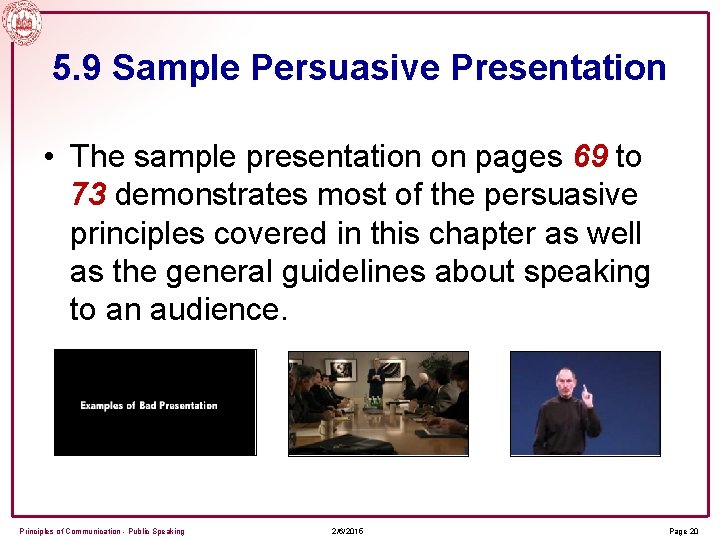
5. 9 Sample Persuasive Presentation • The sample presentation on pages 69 to 73 demonstrates most of the persuasive principles covered in this chapter as well as the general guidelines about speaking to an audience. Principles of Communication - Public Speaking 2/6/2015 Page 20
Lessons from Jobs • • Set theme Make your theme clear and consistent Provide the Outline (open and close each section) Demonstrate Enthusiasm (Wow!) Make numbers meaningful Give ‘em a show Rehearse, rehearse Oh! and ONE MORE THING……… Principles of Communication - Public Speaking 2/6/2015 Page 21
BREAK! • Now, take a 30 -minute break and then return to the class to work on your assignment. • Enjoy! break! Principles of Communication - Public Speaking Take a 2/6/2015 Page 22
Handout Review • You will now be given a handout with comprehension questions. • Use the book and the notes you’ve taken to answer the questions as best as possible. • You have 45 -minutes to complete the handouts and return them to the instructor at the end of class. Principles of Communication - Public Speaking 2/6/2015 Page 23
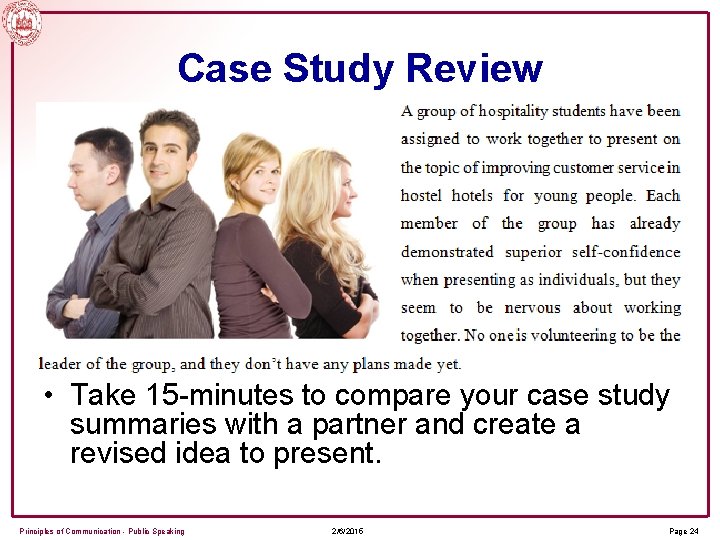
Case Study Review • Take 15 -minutes to compare your case study summaries with a partner and create a revised idea to present. Principles of Communication - Public Speaking 2/6/2015 Page 24
- Slides: 24