
Principles of Communication Chapter 3 Perception and Self
- Slides: 31
Principles of Communication Chapter 3: Perception and Self
SCOPE Chapter 3 Lecture and Discussion: • Describe Self-identity and Motivation • Realise Importance of Knowing Oneself • Discuss Impact of Perception on Professional and Personal Lives Chapter 3 Case Study • Instructor Review • Student Q&A Principles of Communication 17/09/2021 Page 2
“We see the world, not as it is, but as we are. ” – Talmud (or Anais Nin) Principles of Communication 17/09/2021 Page 3
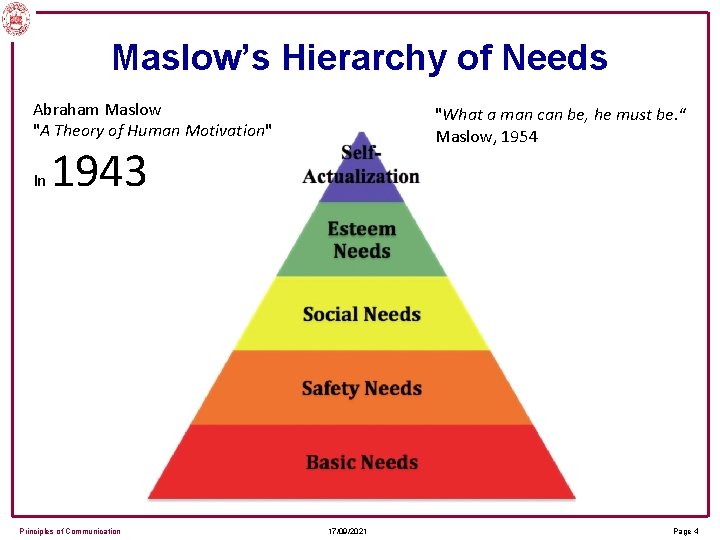
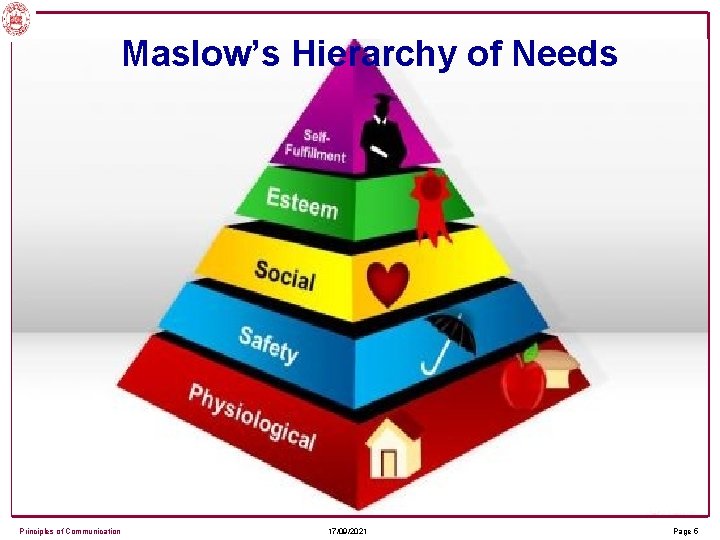
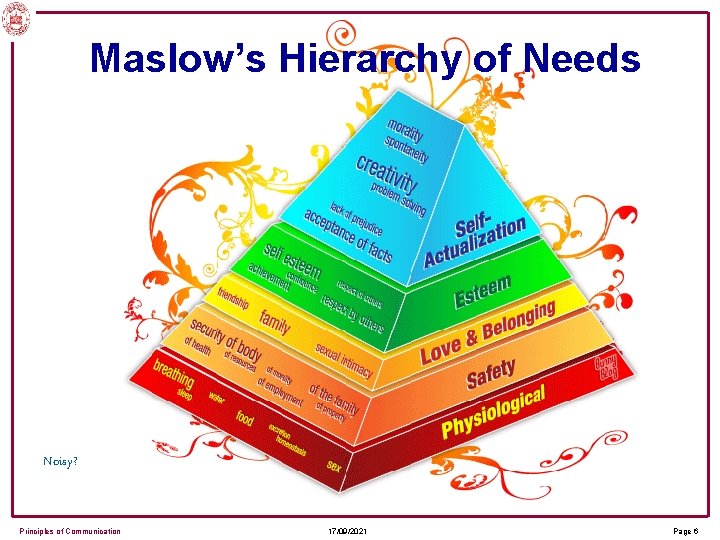
Maslow’s Hierarchy of Needs Abraham Maslow "A Theory of Human Motivation" In "What a man can be, he must be. “ Maslow, 1954 1943 Principles of Communication 17/09/2021 Page 4
Maslow’s Hierarchy of Needs Principles of Communication 17/09/2021 Page 5
Maslow’s Hierarchy of Needs Noisy? Principles of Communication 17/09/2021 Page 6
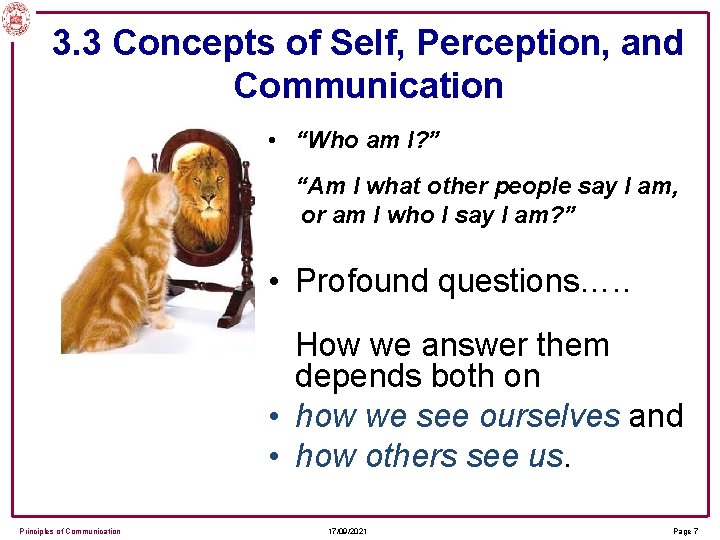
3. 3 Concepts of Self, Perception, and Communication • “Who am I? ” “Am I what other people say I am, or am I who I say I am? ” • Profound questions…. . How we answer them depends both on • how we see ourselves and • how others see us. Principles of Communication 17/09/2021 Page 7
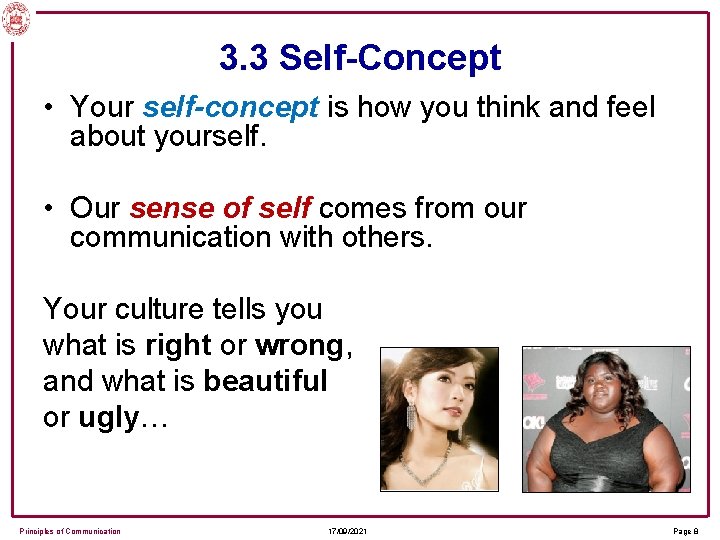
3. 3 Self-Concept • Your self-concept is how you think and feel about yourself. • Our sense of self comes from our communication with others. Your culture tells you what is right or wrong, and what is beautiful or ugly… Principles of Communication 17/09/2021 Page 8
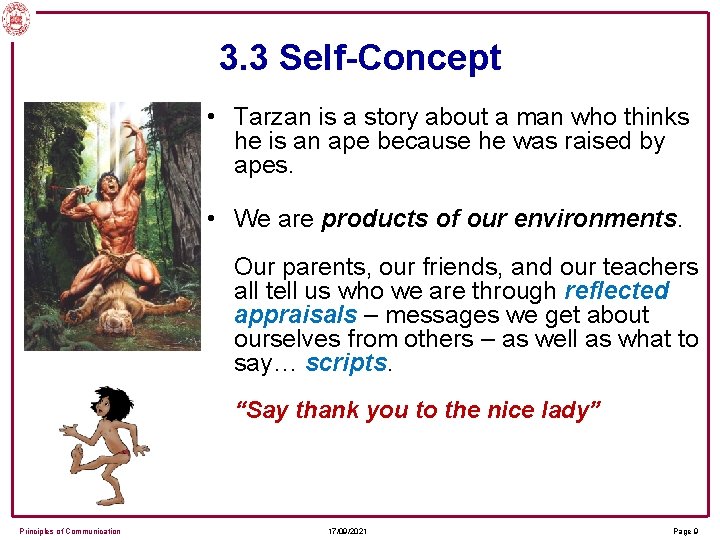
3. 3 Self-Concept • Tarzan is a story about a man who thinks he is an ape because he was raised by apes. • We are products of our environments. Our parents, our friends, and our teachers all tell us who we are through reflected appraisals – messages we get about ourselves from others – as well as what to say… scripts. “Say thank you to the nice lady” Principles of Communication 17/09/2021 Page 9
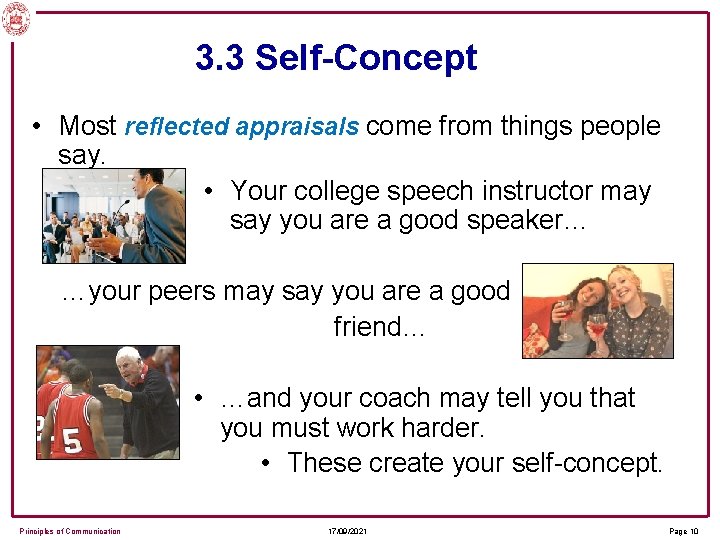
3. 3 Self-Concept • Most reflected appraisals come from things people say. • Your college speech instructor may say you are a good speaker… …your peers may say you are a good friend… • …and your coach may tell you that you must work harder. • These create your self-concept. Principles of Communication 17/09/2021 Page 10
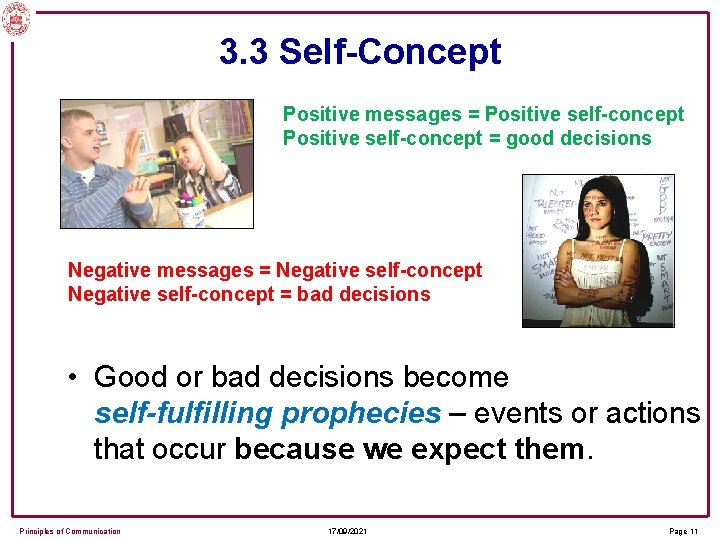
3. 3 Self-Concept Positive messages = Positive self-concept = good decisions Negative messages = Negative self-concept = bad decisions • Good or bad decisions become self-fulfilling prophecies – events or actions that occur because we expect them. Principles of Communication 17/09/2021 Page 11
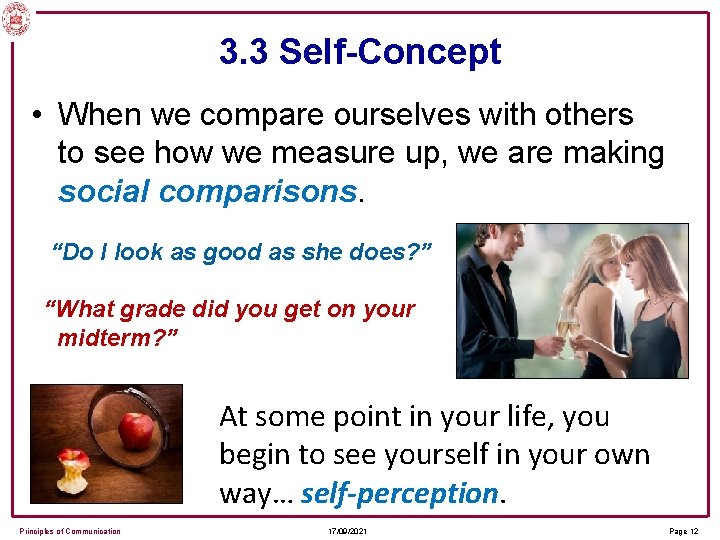
3. 3 Self-Concept • When we compare ourselves with others to see how we measure up, we are making social comparisons. “Do I look as good as she does? ” “What grade did you get on your midterm? ” At some point in your life, you begin to see yourself in your own way… self-perception. Principles of Communication 17/09/2021 Page 12
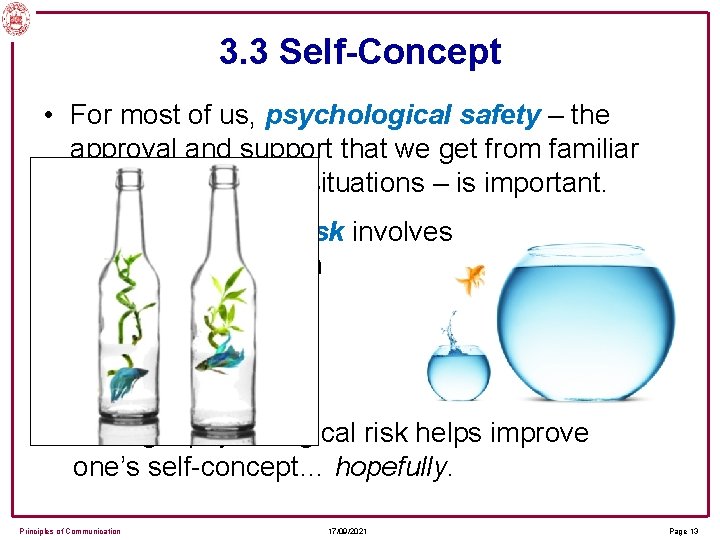
3. 3 Self-Concept • For most of us, psychological safety – the approval and support that we get from familiar people, ideas, and situations – is important. • A psychological risk involves taking a chance on something new. • Taking a psychological risk helps improve one’s self-concept… hopefully. Principles of Communication 17/09/2021 Page 13
3. 4 Improving Self-Concept • Look in the self-improvement section of any bookstore or library…. • Books will not improve your self-concept… only you can do that. Internet chat and social networking are not the answer. Principles of Communication 17/09/2021 Page 14
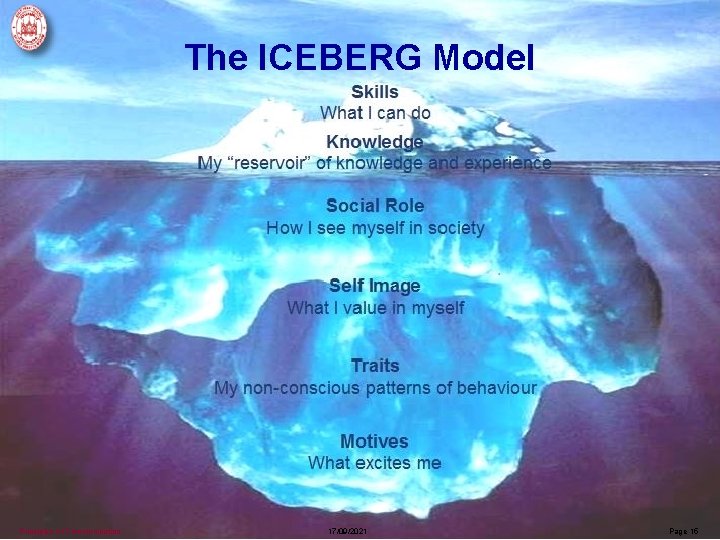
The ICEBERG Model Principles of Communication 17/09/2021 Page 15
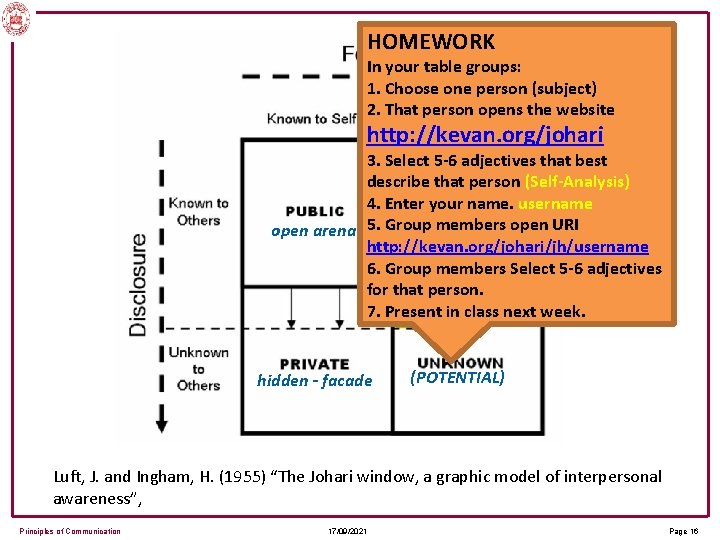
HOMEWORK In your table groups: The JOHARI Window 1. Choose one person (subject) 2. That person opens the website http: //kevan. org/johari 3. Select 5 -6 adjectives that best describe that person (Self-Analysis) 4. Enter your name. username members open arena 5. Groupblind spot open URI http: //kevan. org/johari/jh/username 6. Group members Select 5 -6 adjectives for that person. 7. Present in class next week. hidden - facade (POTENTIAL) Luft, J. and Ingham, H. (1955) “The Johari window, a graphic model of interpersonal awareness”, Principles of Communication 17/09/2021 Page 16
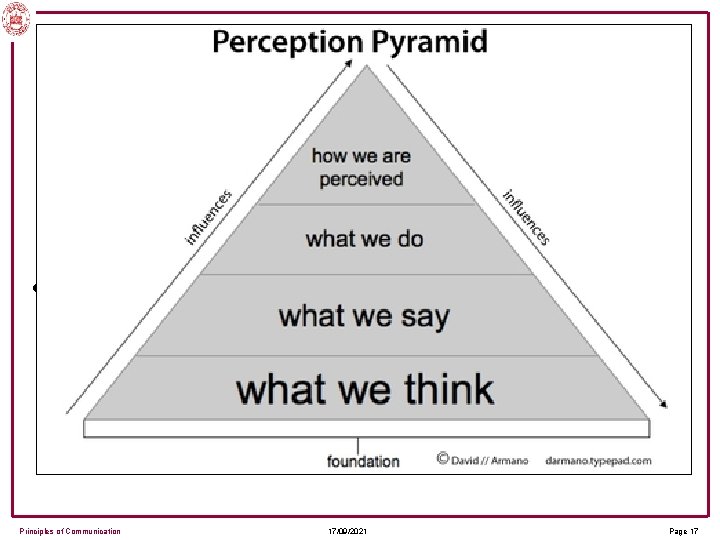
3. 5 Perception • While your self-concept is how you see yourself, perception is how you look at others and the world around you. • How you look at the world depends on: what you think of yourself, and what you think of yourself will influence how you look at the world. Principles of Communication 17/09/2021 Page 17
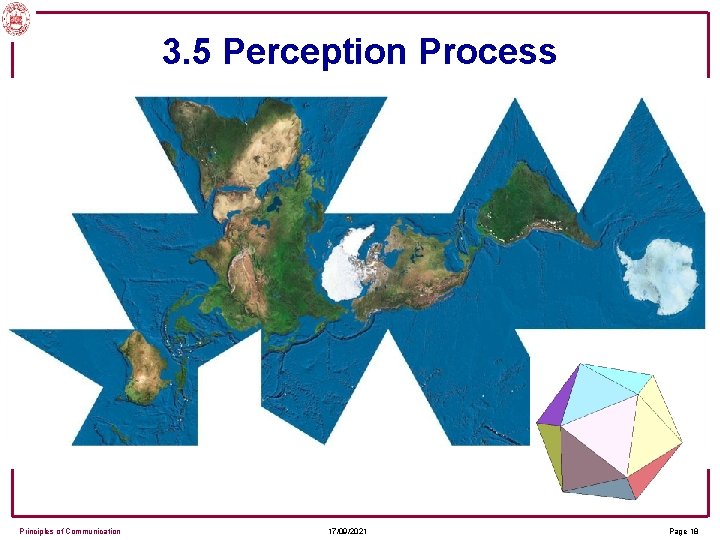
3. 5 Perception Process Perception is a THREE STEP PROCESS select the information Principles of Communication organize it 17/09/2021 interpret it Page 18
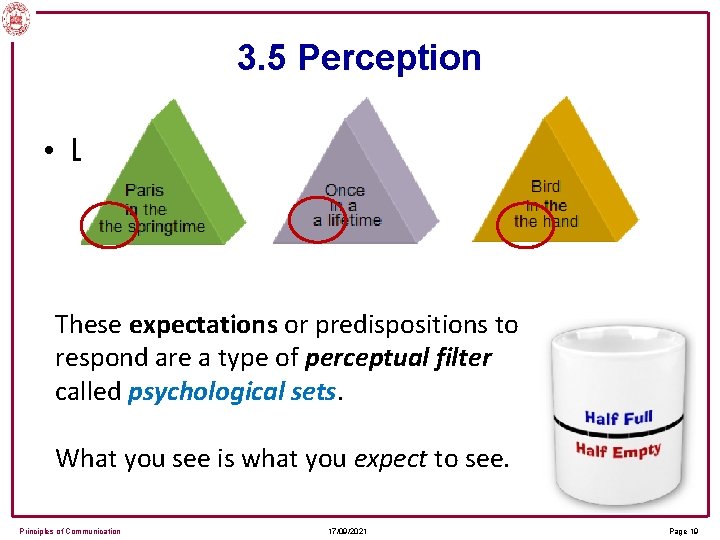
3. 5 Perception • Look at these three triangles… These expectations or predispositions to respond are a type of perceptual filter called psychological sets. What you see is what you expect to see. Principles of Communication 17/09/2021 Page 19
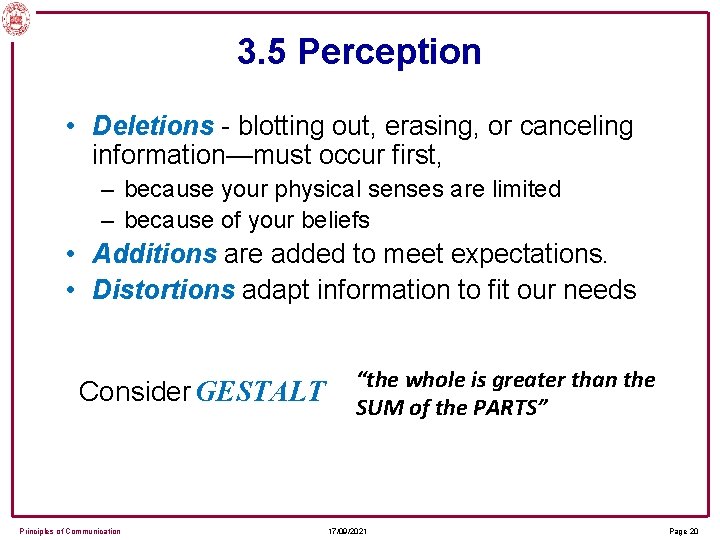
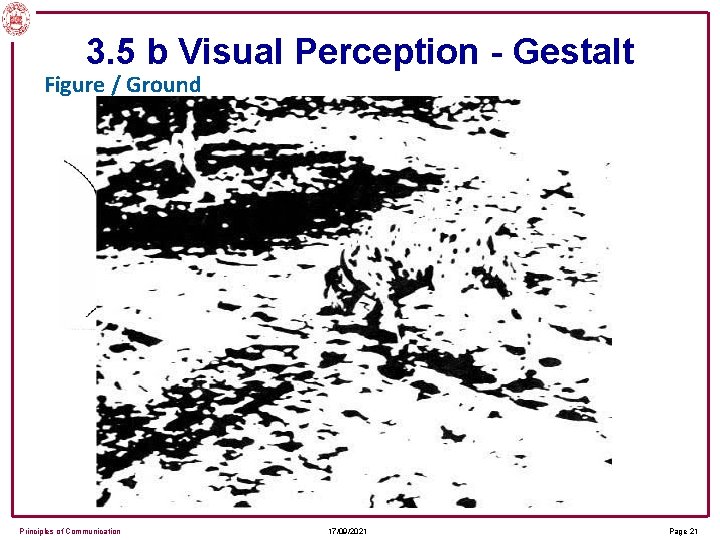
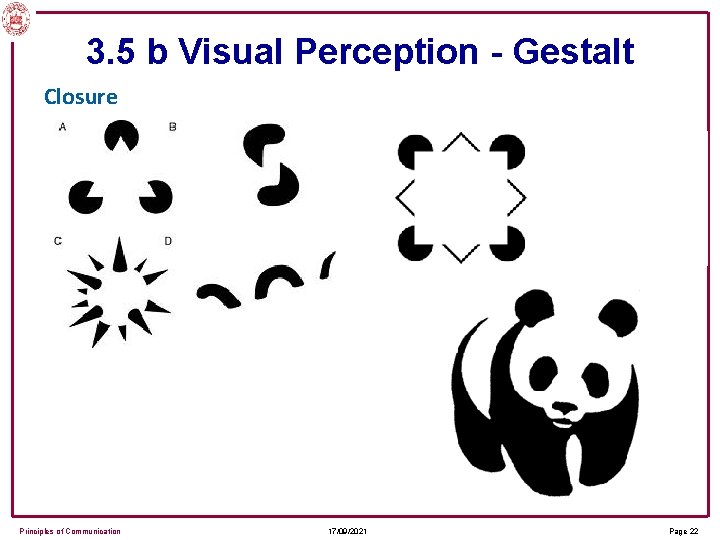
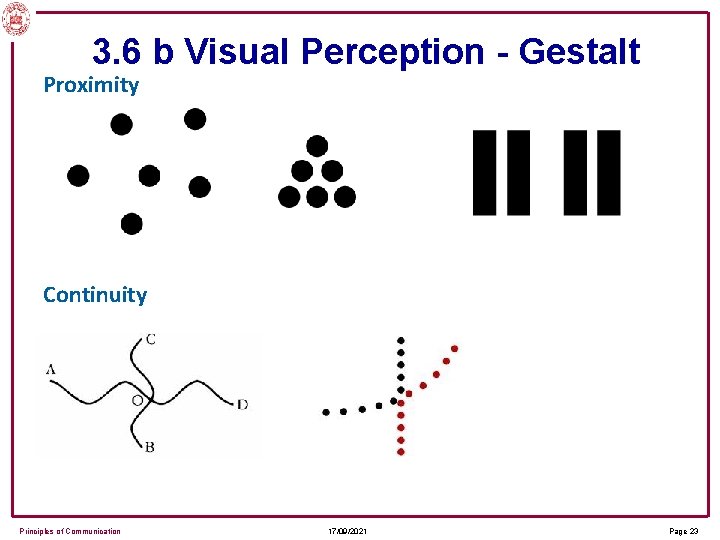
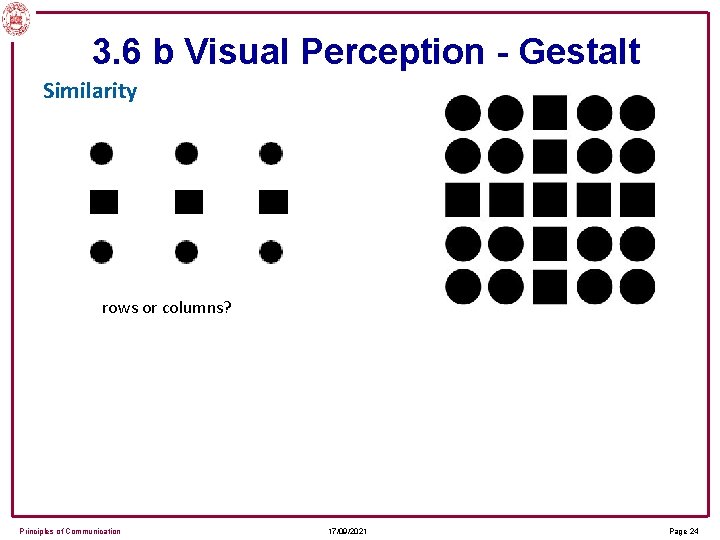
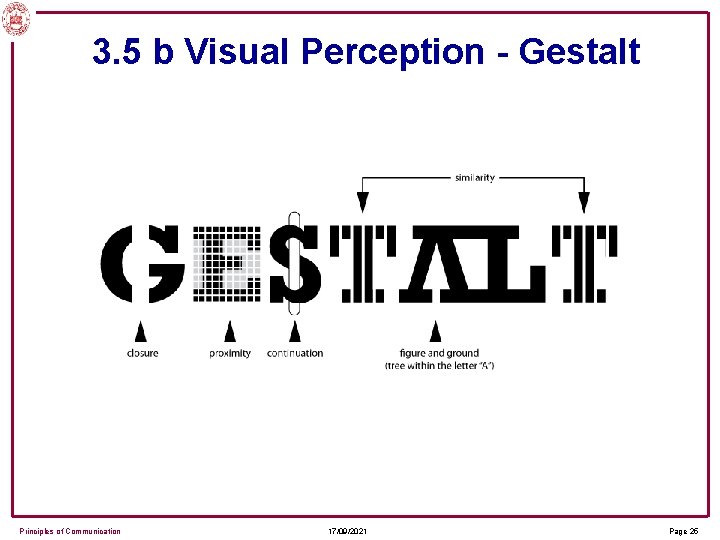
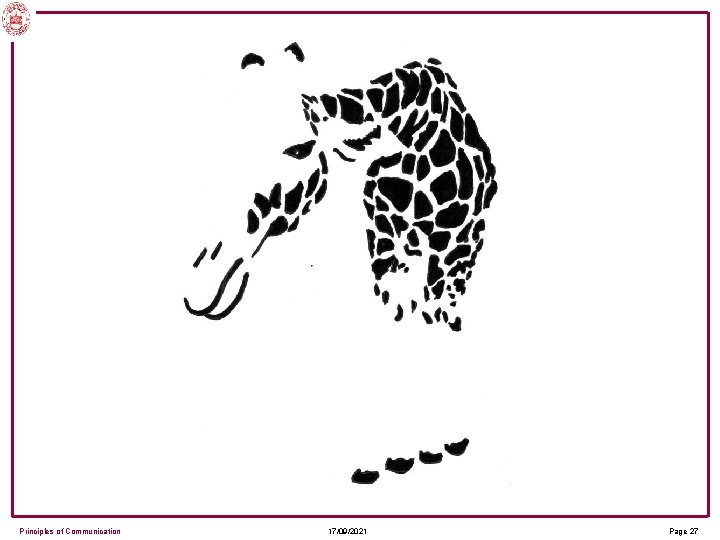
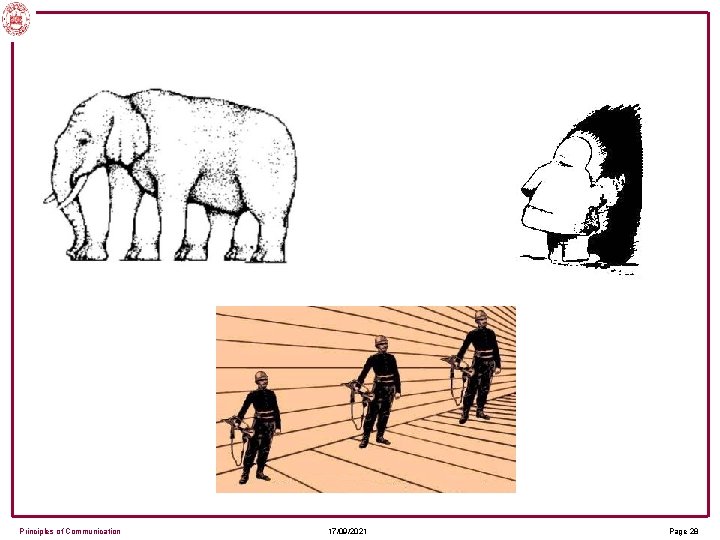
3. 5 Perception • Deletions - blotting out, erasing, or canceling information—must occur first, – because your physical senses are limited – because of your beliefs • Additions are added to meet expectations. • Distortions adapt information to fit our needs Consider GESTALT Principles of Communication “the whole is greater than the SUM of the PARTS” 17/09/2021 Page 20
3. 5 b Visual Perception - Gestalt Figure / Ground Principles of Communication 17/09/2021 Page 21
3. 5 b Visual Perception - Gestalt Closure Principles of Communication 17/09/2021 Page 22
3. 6 b Visual Perception - Gestalt Proximity Continuity Principles of Communication 17/09/2021 Page 23
3. 6 b Visual Perception - Gestalt Similarity rows or columns? Principles of Communication 17/09/2021 Page 24
3. 5 b Visual Perception - Gestalt Principles of Communication 17/09/2021 Page 25
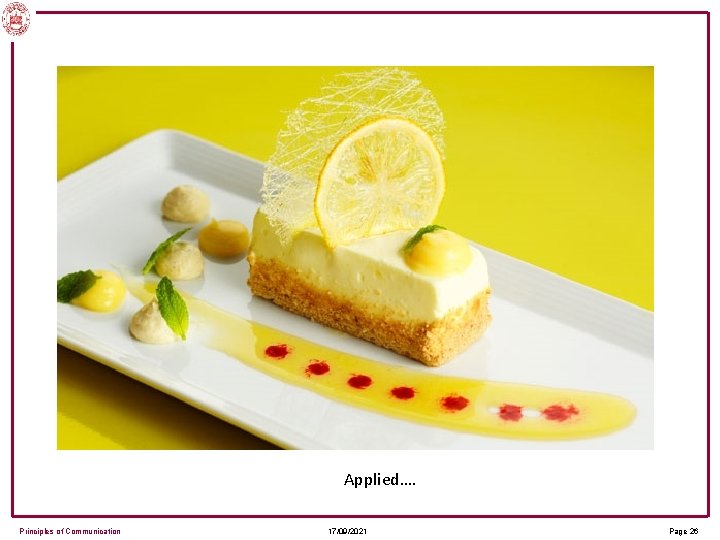
Applied…. Principles of Communication 17/09/2021 Page 26
Principles of Communication 17/09/2021 Page 27
Principles of Communication 17/09/2021 Page 28
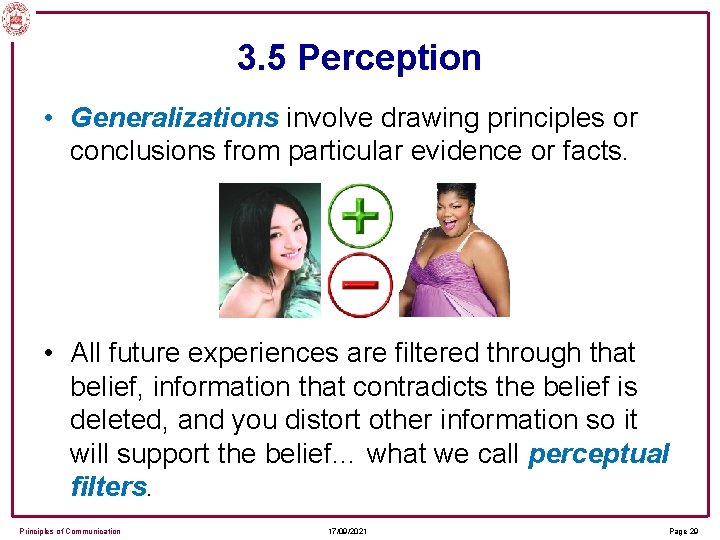
3. 5 Perception • Generalizations involve drawing principles or conclusions from particular evidence or facts. • All future experiences are filtered through that belief, information that contradicts the belief is deleted, and you distort other information so it will support the belief… what we call perceptual filters. Principles of Communication 17/09/2021 Page 29
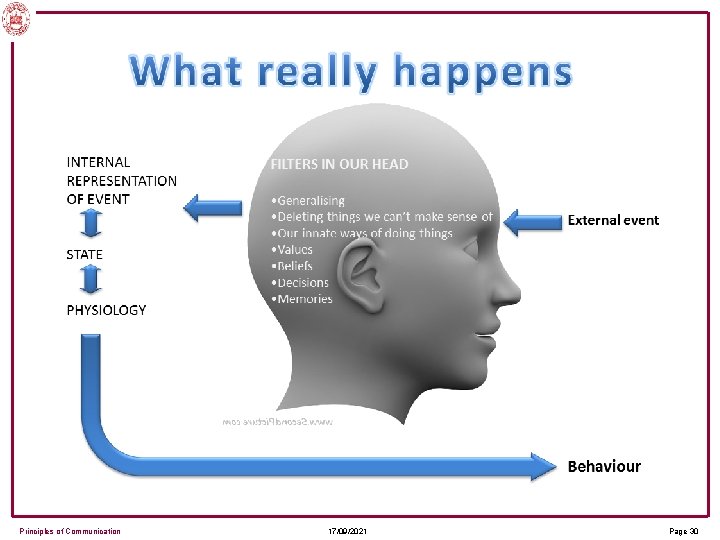
Principles of Communication 17/09/2021 Page 30
BREAK! • Now, take a 30 -minute break and then return to the class to work on your term paper focus. • Enjoy! Take a break! Principles of Communication 17/09/2021 Page 31