
PRINCIPLES OF BUSINESS AND FINANCE Unit 1 Essential

PRINCIPLES OF BUSINESS AND FINANCE Unit 1 Essential Standard: Understand communication skills and customer relations
Objective 1. 01: Apply verbal skills to obtain and convey information.
1. 01 & 1. 02 Vocabulary
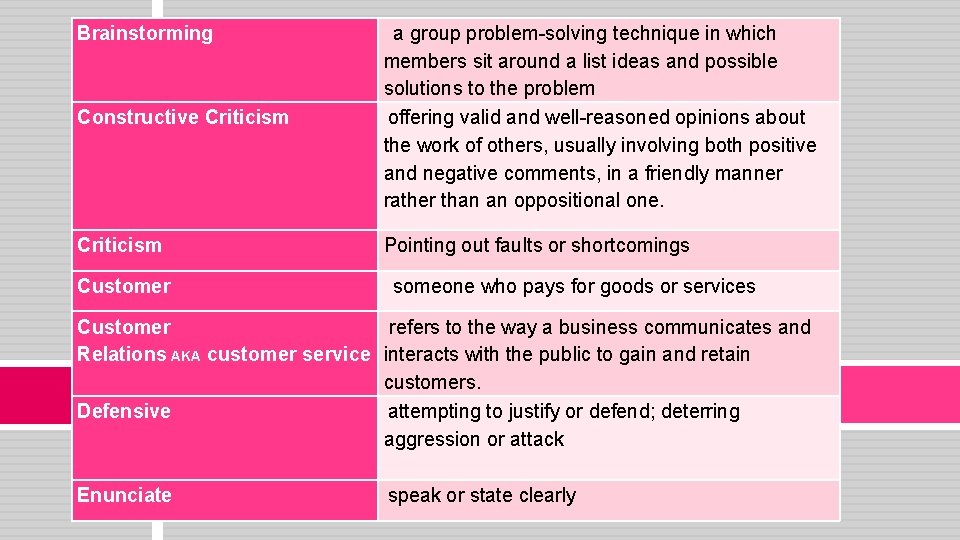
Brainstorming Constructive Criticism a group problem-solving technique in which members sit around a list ideas and possible solutions to the problem offering valid and well-reasoned opinions about the work of others, usually involving both positive and negative comments, in a friendly manner rather than an oppositional one. Criticism Pointing out faults or shortcomings Customer someone who pays for goods or services Customer refers to the way a business communicates and Relations AKA customer service interacts with the public to gain and retain customers. Defensive attempting to justify or defend; deterring aggression or attack Enunciate speak or state clearly
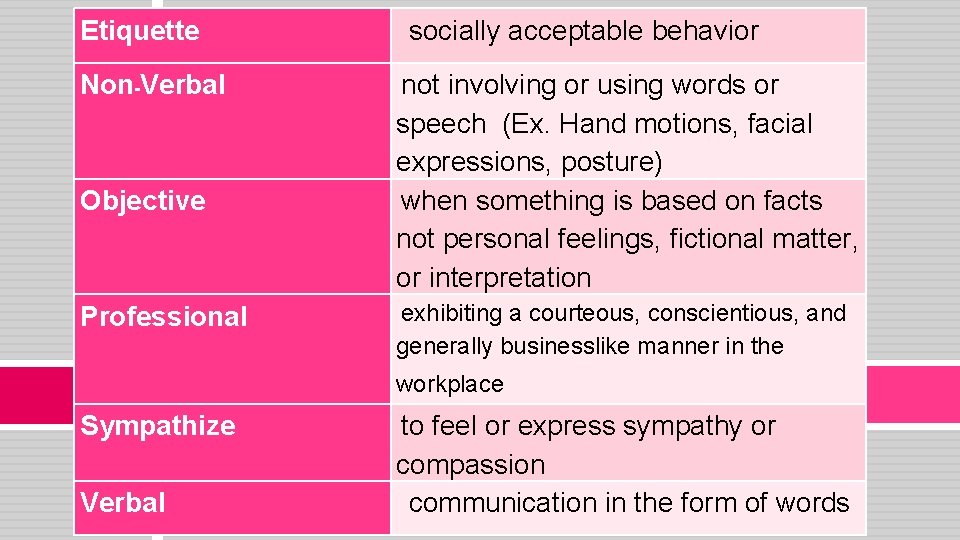
Etiquette socially acceptable behavior Non-Verbal not involving or using words or Objective speech (Ex. Hand motions, facial expressions, posture) when something is based on facts not personal feelings, fictional matter, or interpretation Professional exhibiting a courteous, conscientious, and generally businesslike manner in the workplace Sympathize to feel or express sympathy or Verbal compassion communication in the form of words
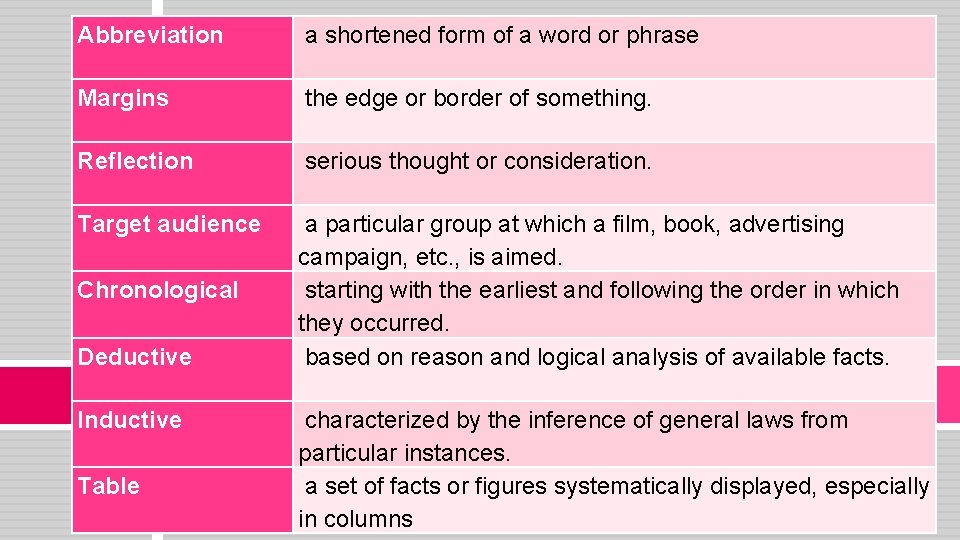
Abbreviation a shortened form of a word or phrase Margins the edge or border of something. Reflection serious thought or consideration. Target audience a particular group at which a film, book, advertising campaign, etc. , is aimed. starting with the earliest and following the order in which they occurred. based on reason and logical analysis of available facts. Chronological Deductive Inductive Table characterized by the inference of general laws from particular instances. a set of facts or figures systematically displayed, especially in columns
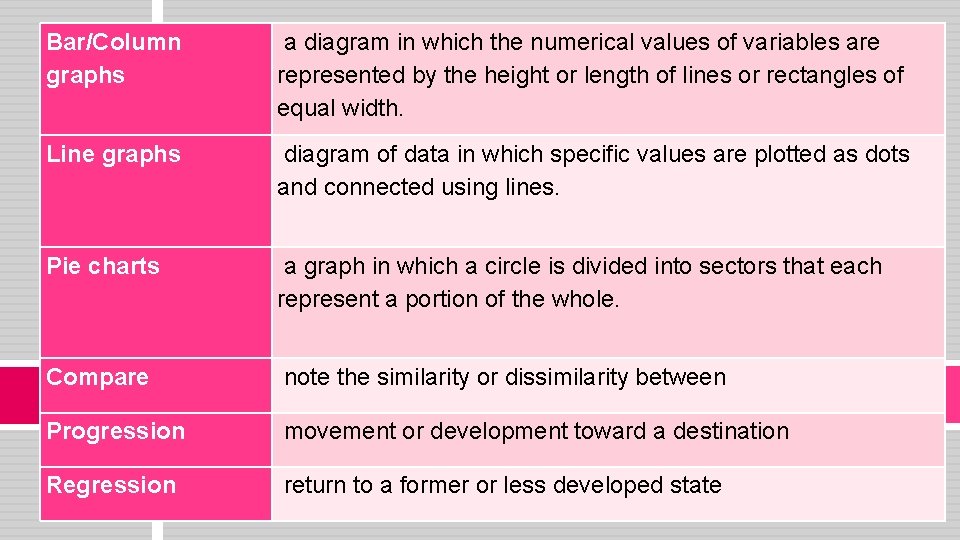
Bar/Column graphs a diagram in which the numerical values of variables are represented by the height or length of lines or rectangles of equal width. Line graphs diagram of data in which specific values are plotted as dots and connected using lines. Pie charts a graph in which a circle is divided into sectors that each represent a portion of the whole. Compare note the similarity or dissimilarity between Progression movement or development toward a destination Regression return to a former or less developed state
Objective 1. 01: Apply verbal skills to obtain and convey information.
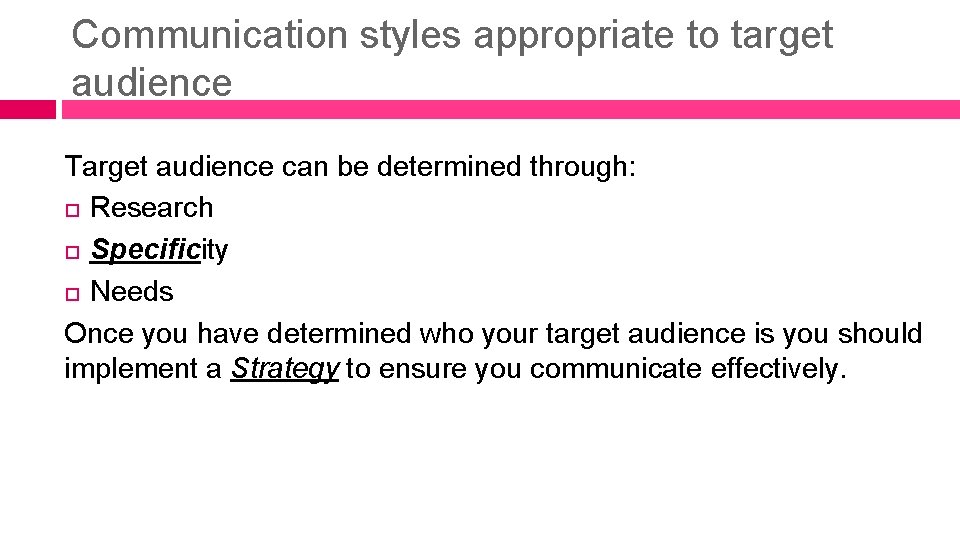
Communication styles appropriate to target audience Target audience can be determined through: Research Specificity Needs Once you have determined who your target audience is you should implement a Strategy to ensure you communicate effectively.
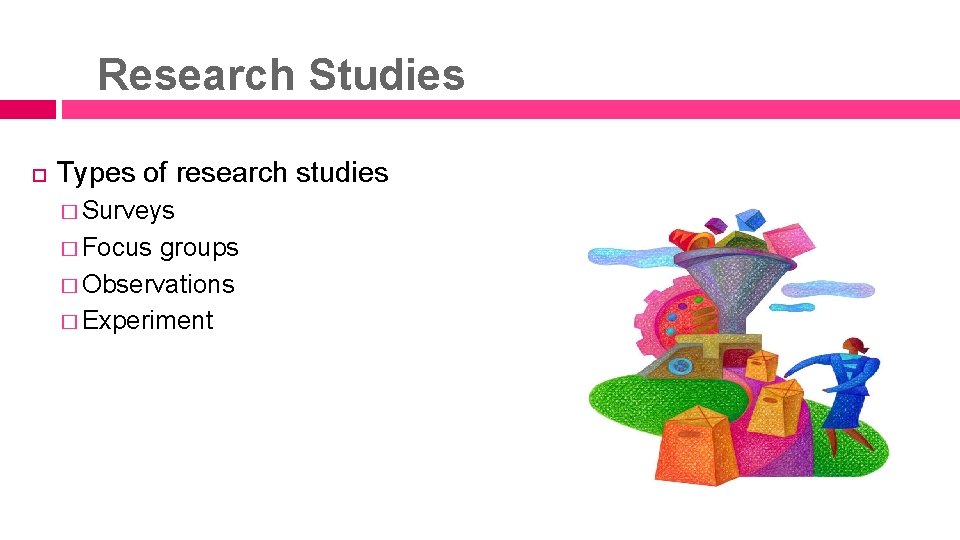
Research Studies Types of research studies � Surveys � Focus groups � Observations � Experiment
Communication Styles Types of communicators Controllers Collaborators Analyzers Socializers
Types of Communicators Controllers. Take-charge and want control of themselves, others and situations. Task-oriented, drivers and are only focused on the end goal. Typically Controllers are/have: Direct, sense of urgency, louder volume and express limited to no emotion. When communicating with a Controller: Get to the point, state what's in it for them and ask straightforward questions. Communicate confidently with a clear and concise message. Avoid the clutter and fluff
Types of Communicators Collaborators. Easy-going, relationship-oriented, and enjoy working with people to work towards a consensus. Typically Collaborators are/have: Appear relaxed, ask a lot of questions, have a win-win attitude, hesitant to make decisions and highly emotional with an expressive tone. When communicating with a Collaborator: Show an interest in them, listen patiently and give them a good "feel" about your message or what you're asking them to do.
Types of Communicators Analyzers. Detail-oriented, logical thinkers who analyze others and situations. Work best alone to come up with solutions, and therefore may take more time to make a decision and take action. Typically Analyzers are/have: Cautious, logical thinkers, soft-spoken, monotone voice, limited eye contact and facial expressions. When communicating with a Analyzer: Avoid small talk, present facts and data, provide details and the process you'll follow to service them.
Types of Communicators Socializers. Outgoing, thrive on change and enjoy meeting people. They get their energy from others and therefore work best when brainstorming with others to make a decision and take action. Typically Socializers are/have: Outspoken, quick to make a decision, assertive, fast talker, express how they're feeling through gestures, facial expressions and tone. . When communicating with a Socializer: Show interest in them, be upbeat, tie their personal experiences to your message.
Communication Styles Different communication styles are appropriate for different situations and for different audiences. � Formal: When conducting evaluation or counseling interviews with employees, it is usually appropriate to use a formal communication style. The person conducting the interview is in a position of authority and may be discussing problems or behavioral issues with an employee. � Casual and Routine: appropriate for discussions between friends or coworkers on the same level. � Technical: May be appropriate when communicating complex information to those who understand the information.
Defend ideas objectively Why do you need to provide evidence to support a position? When you defend your idea in a defensive way, you will seem like you are attacking others. Providing evidence, data, etc. will show the other party that you are not using your personal opinions/beliefs. Brainstorming is coming up with ideas. You can brainstorm with a group of people or alone
Brainstorming Activity Class is split into groups of 3 or 4 Each Group gets a poster with a topic in the center. They also need a marker. Topics 1. Animals 2. Candy 3. Restaurants 4. Music 5. Desert (do not include candy) 6. Movies 7. Types of Vehicles 8. Transportation 9. Careers 10. Hobbies
Brainstorming Activity Hand out topics � Brainstorm ideas for 3 minutes Switch Topic Posters with another group � Brainstorm ideas for 3 minutes Choose 1 or 2 specific examples � Brainstorm details about this idea for 3 minutes Switch Topic Posters with another group Choose a specific example � Brainstorm details about this idea for 3 minutes Topics 1. Animals 2. Candy 3. Restaurants 4. Music 5. Desert (do not include candy) 6. Movies 7. Types of Vehicles 8. Transportation 9. Careers 10. Hobbies
Defend ideas objectively Stages of an idea evaluation process. � � Formative evaluation: Evaluate prior to and during implementation of an idea. Process evaluation: help employees/customers see how an idea achieved. Impact evaluation: What are some other things that this will/could impact? Outcome evaluation: What are the potential outcomes of implementing this idea? Procedures for defending ideas objectively. � � � Be prepared- Use evidence when possible Thank any critics- Thanking someone for their criticism, even when you don’t agree with them provides an opportunity for positive discussion. “Practice makes perfect”-you should practice defending yourself, talk to your friends, family, and even talk to yourself in the mirror. Control your body language Accept any criticism
Evaluation Activity: 1. Split into groups and assign problems
Evaluation Activity: 1. With your group come up with a list of ideas to solve a problem. � Formative evaluation: Evaluate prior to and during implementation of an idea. 2. From the list created above choose two ideas to explain step by step the process of implementing (actually doing) the ideas. � Process evaluation: help employees/customers see how an idea achieved. 3. Using the ideas from #2 list some other things that these ideas could/will impact. � Impact evaluation: What are some other things that this will/could impact? 4. Using the two chosen ideas list any possible outcomes of following through with this plan. � Outcome evaluation: What are the potential outcomes of implementing this idea?
Evaluation Activity Topics/Problems Mrs. Hanks Example: You have a test tomorrow. 1. You need to get to a concert in California. 2. You are out of food to snack on at home. 3. You do not know how to do your homework. 4. Your mom said you are in charge of making dinner tonight. 5. You need to decide what to do after high school. 6. You ran out of gas and are stuck on the side of the road. 7. You need to figure out how to do your hair for prom. 8. You were in a car accident and wrecked your car. 9. You went out to eat and forgot your money. 10. You have to work and don’t have your license yet.
Defend ideas objectively People more easily accept new ideas when you: Verbal Skills: ensure you can communicate your points Address Issues and Concerns Use numbers, terms, and ideas someone can relate to Use the feel, felt, found technique- Show the customer that others had the same fear or concern and demonstrate how your idea was able to help them. Ask open-ended questions. Open-ended questions are the type that cannot be answered with one word, or a "yes" or a "no. " These questions help you get the true or underlying concerns. � Ex. You could ask, "Can you give me a little detail about _______? ”
Handle telephone calls in a business like manner Listen without interrupting Gather the facts and make a note of them Take their details so you can get back to them: do not give out someone else's personal/private information without their consent. Sympathize with them and offer to act as fast as you can Apologize if you have made a mistake Stay calm- Enunciate your words, Don’t speak to fast, Use terminology that your audience will understand. End the phone call pleasantly to ensure the customer has a good impression of the company.
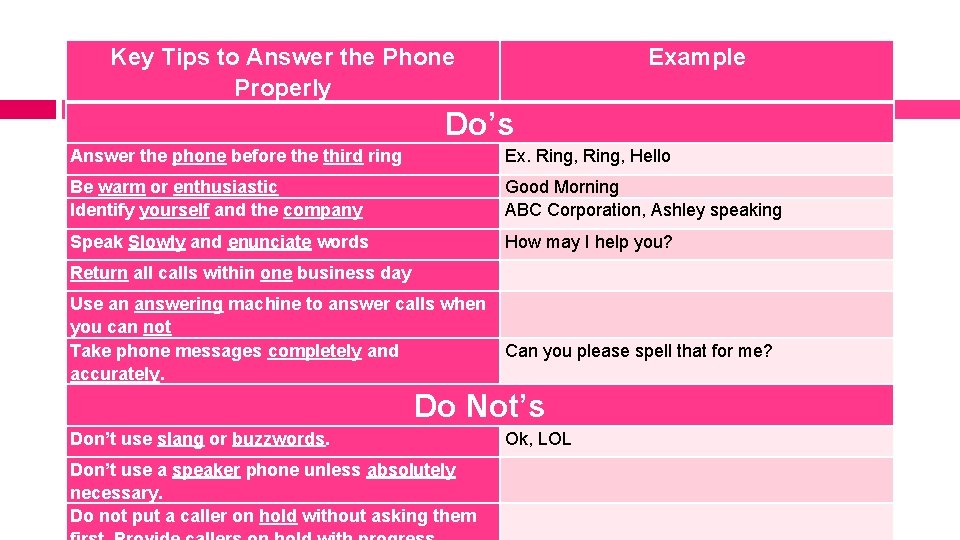
Key Tips to Answer the Phone Properly Example Do’s Answer the phone before third ring Ex. Ring, Hello Be warm or enthusiastic Identify yourself and the company Good Morning ABC Corporation, Ashley speaking Speak Slowly and enunciate words How may I help you? Return all calls within one business day Use an answering machine to answer calls when you can not Take phone messages completely and Can you please spell that for me? accurately. Do Not’s Don’t use slang or buzzwords. Ok, LOL Don’t use a speaker phone unless absolutely necessary. Do not put a caller on hold without asking them
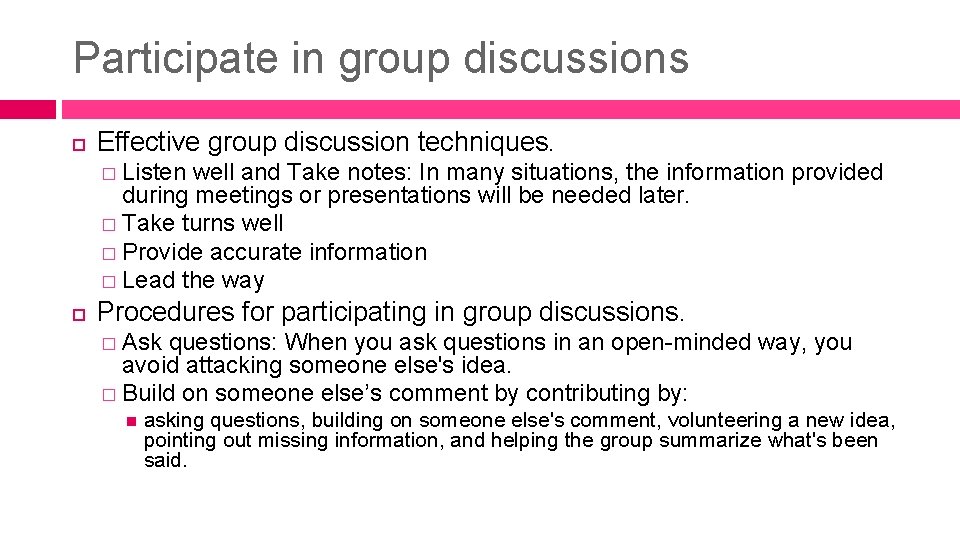
Participate in group discussions Effective group discussion techniques. � Listen well and Take notes: In many situations, the information provided during meetings or presentations will be needed later. � Take turns well � Provide accurate information � Lead the way Procedures for participating in group discussions. � Ask questions: When you ask questions in an open-minded way, you avoid attacking someone else's idea. � Build on someone else’s comment by contributing by: asking questions, building on someone else's comment, volunteering a new idea, pointing out missing information, and helping the group summarize what's been said.
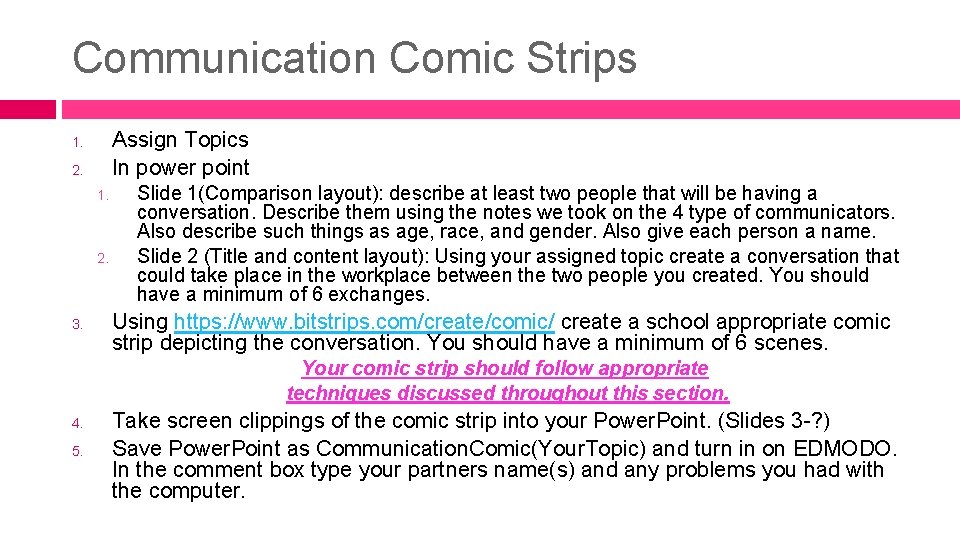
Communication Comic Strips Assign Topics In power point 1. 2. 1. 2. 3. Slide 1(Comparison layout): describe at least two people that will be having a conversation. Describe them using the notes we took on the 4 type of communicators. Also describe such things as age, race, and gender. Also give each person a name. Slide 2 (Title and content layout): Using your assigned topic create a conversation that could take place in the workplace between the two people you created. You should have a minimum of 6 exchanges. Using https: //www. bitstrips. com/create/comic/ create a school appropriate comic strip depicting the conversation. You should have a minimum of 6 scenes. Your comic strip should follow appropriate techniques discussed throughout this section. 4. 5. Take screen clippings of the comic strip into your Power. Point. (Slides 3 -? ) Save Power. Point as Communication. Comic(Your. Topic) and turn in on EDMODO. In the comment box type your partners name(s) and any problems you had with the computer.
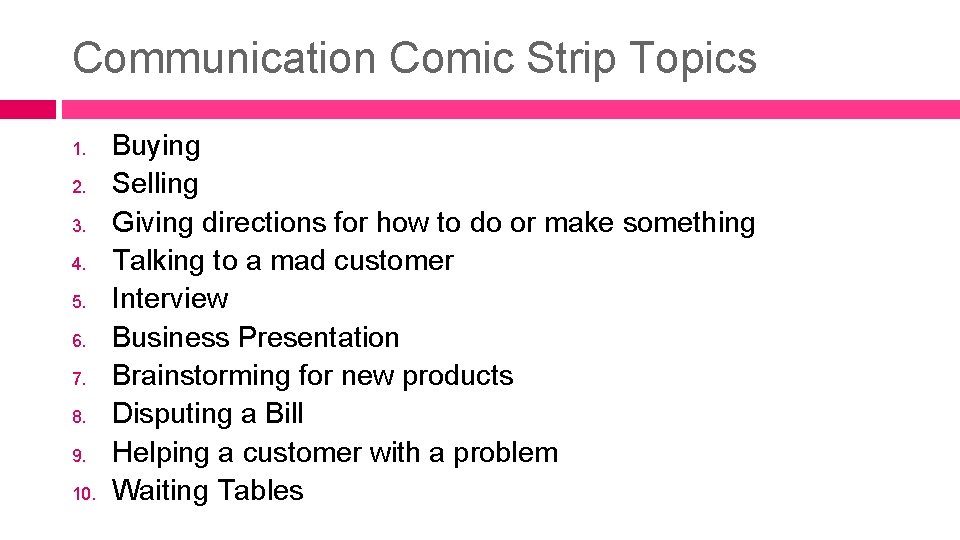
Communication Comic Strip Topics 1. 2. 3. 4. 5. 6. 7. 8. 9. 10. Buying Selling Giving directions for how to do or make something Talking to a mad customer Interview Business Presentation Brainstorming for new products Disputing a Bill Helping a customer with a problem Waiting Tables
Objective 1. 02: Record information to maintain and present a report of business activity.
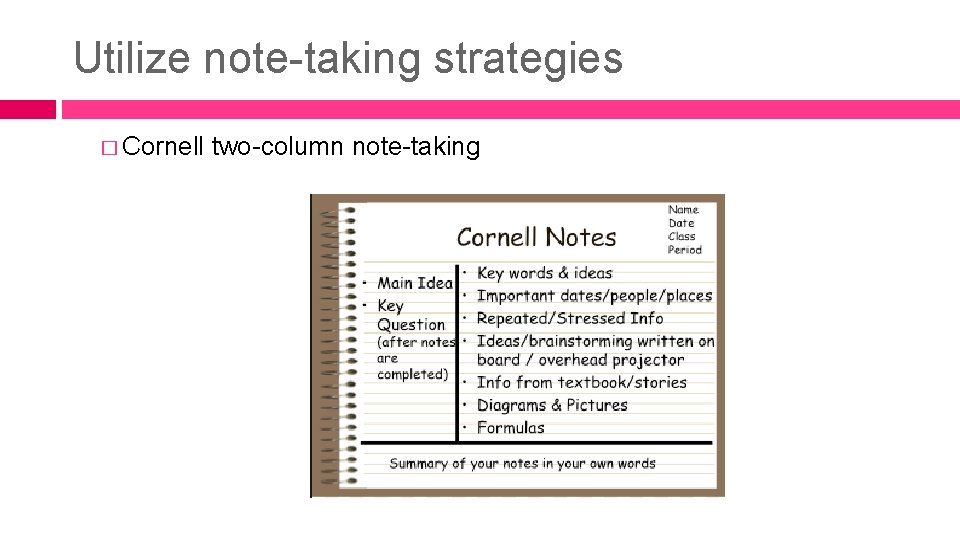
Utilize note-taking strategies � Cornell two-column note-taking
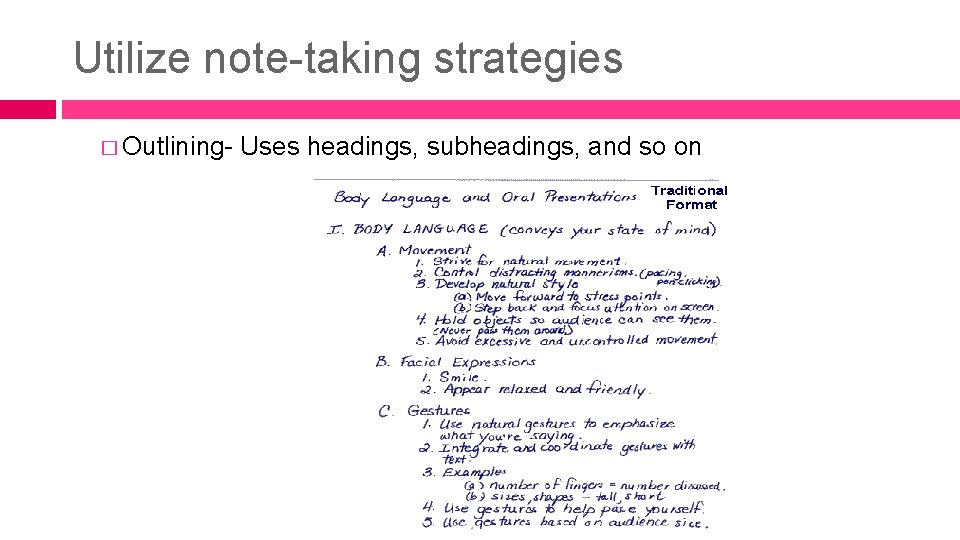
Utilize note-taking strategies � Outlining- Uses headings, subheadings, and so on
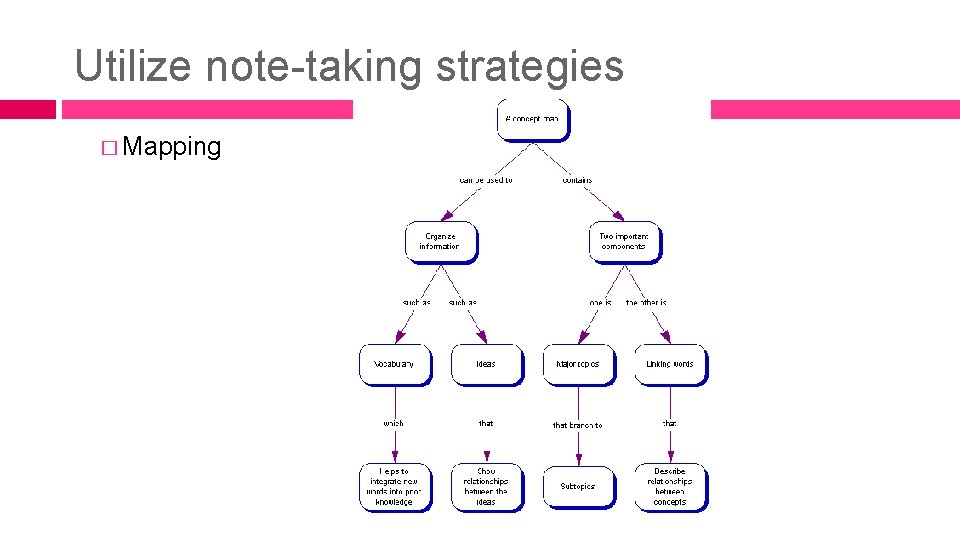
Utilize note-taking strategies � Mapping
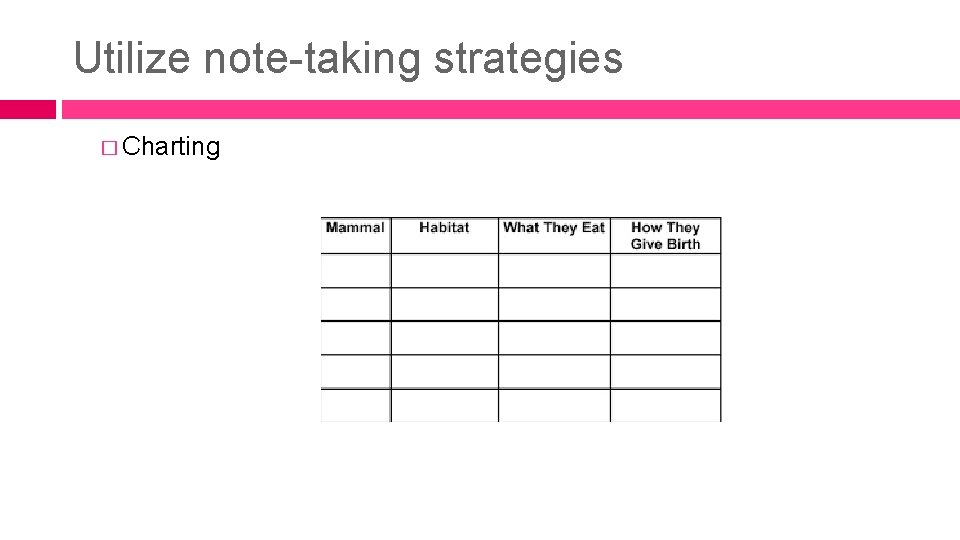
Utilize note-taking strategies � Charting
Utilize note-taking strategies- Common note-taking abbreviations Symbol: ≠ does not equal & = and w/= with ∆ change w/o= without f frequency vs= against Standard Abbreviations: cr = compare ex= example dept = department NYC = New York City Omit vowels from the middle of words, but keep enough to recognize: bkgd = background ppd = prepared prblm = problem estmt = estimate gvt = government Use an apostrophe: amount gov’t = government am’t = continued educat’l =
Organize information after taking notes. � Clear up points of confusion by talking with the instructor and/or classmates. � Use texts, online documents, and Internet searches to fill in missing points, find specific examples � Mark what you consider big concepts. � Jot down in margins the notes of your own reflections, ideas, and questions. � Do assignments while the material is still fresh
Organize information Your target audience impacts how you should organize information: � If you are taking notes for yourself you can abbreviate however if you are taking notes for your employer or making a note for a customer you will add more information or choose a different way to organize the information. Common approaches to organizing/ordering information � Chronological order (A-B-C or 1 -2 -3) � Problem/solution � Most important to least important � Deductive order- Using general statements followed by specifics Example: Meditation is a good way to relax � Inductive order- Using specifics followed by general ideas
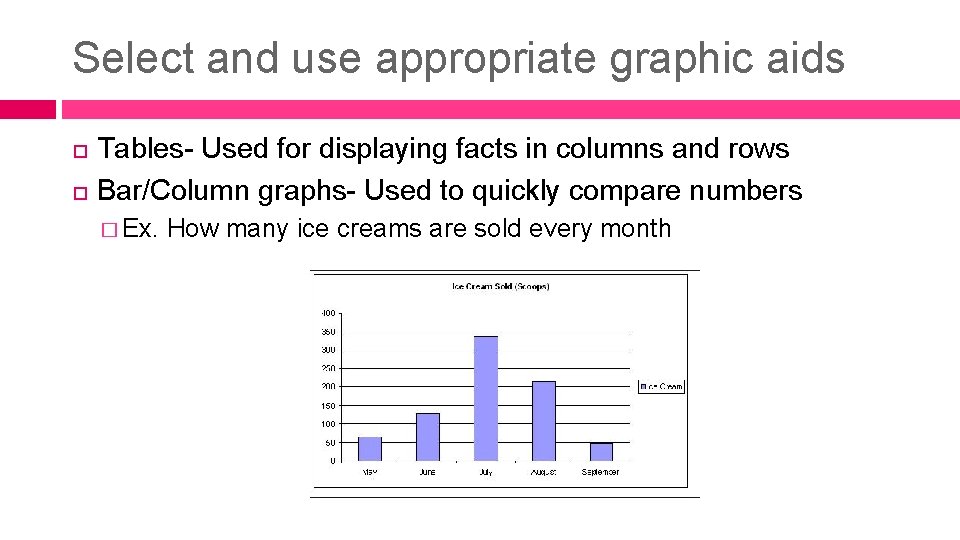
Select and use appropriate graphic aids Tables- Used for displaying facts in columns and rows Bar/Column graphs- Used to quickly compare numbers � Ex. How many ice creams are sold every month
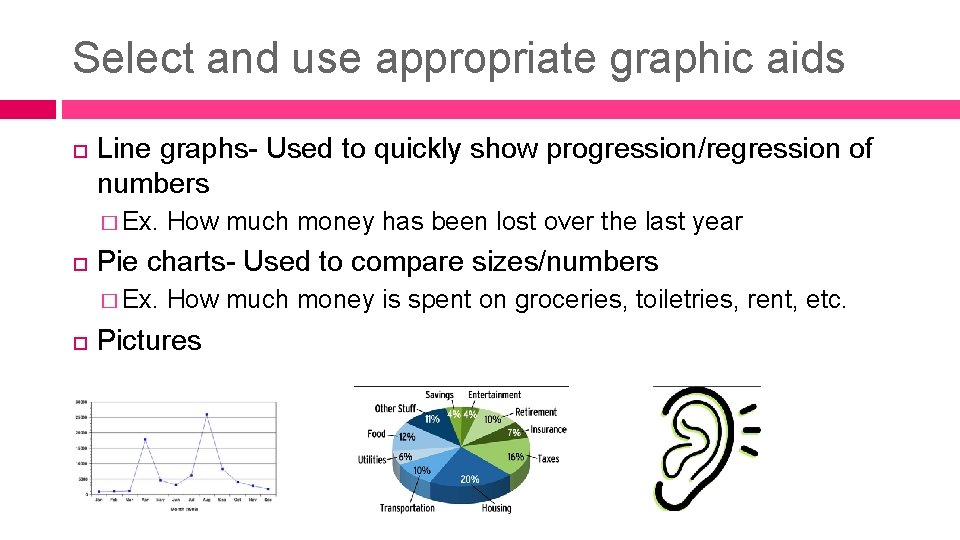
Select and use appropriate graphic aids Line graphs- Used to quickly show progression/regression of numbers � Ex. How much money has been lost over the last year Pie charts- Used to compare sizes/numbers � Ex. How much money is spent on groceries, toiletries, rent, etc. Pictures
Stock Market Spreadsheets/Graphs 1. 2. 3. 4. Chooses 3 well know companies and find out what their prices have been over the last 5 days. **You may NOT use any of the same companies as the person/people sitting next to you. ** Create a table containing these days/prices in an Excel Spreadsheet Using the numbers create a line graph, for each company showing how the price has changed over the last 5 days. (You should have three different line graphs, title each graph the name of the company) Create a Column/Bar Chart depicting the price differences between the companies Today/Day 5. (You should have 1 column/bar chart. Title it “Stock Price Differences”) Create a Pie Chart depicting which stock would be worth the most if you owned all three of the stocks. (You should have 1 pie chart. Title it “Parts of a Whole”)
1. 03 & 1. 04 Vocabulary
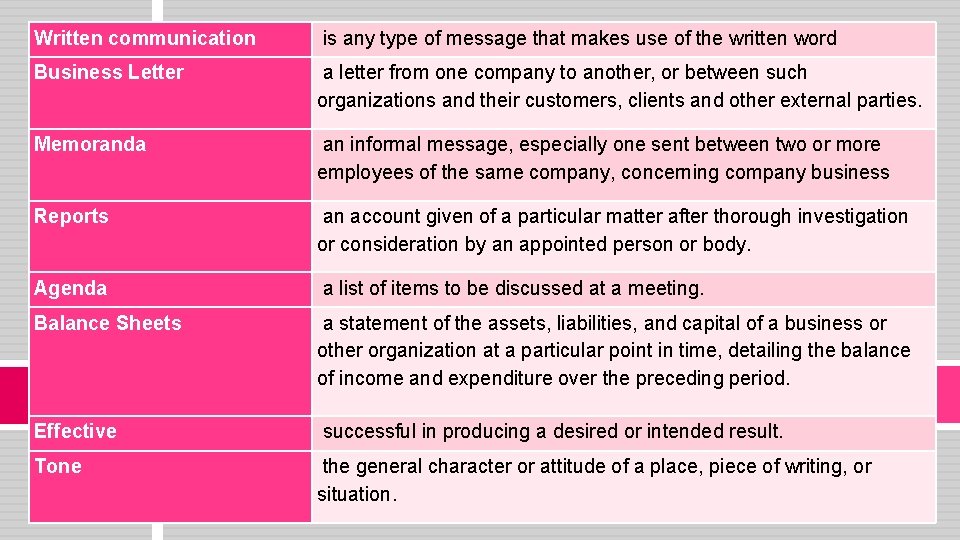
Written communication is any type of message that makes use of the written word Business Letter a letter from one company to another, or between such organizations and their customers, clients and other external parties. Memoranda an informal message, especially one sent between two or more employees of the same company, concerning company business Reports an account given of a particular matter after thorough investigation or consideration by an appointed person or body. Agenda a list of items to be discussed at a meeting. Balance Sheets a statement of the assets, liabilities, and capital of a business or other organization at a particular point in time, detailing the balance of income and expenditure over the preceding period. Effective successful in producing a desired or intended result. Tone the general character or attitude of a place, piece of writing, or situation.
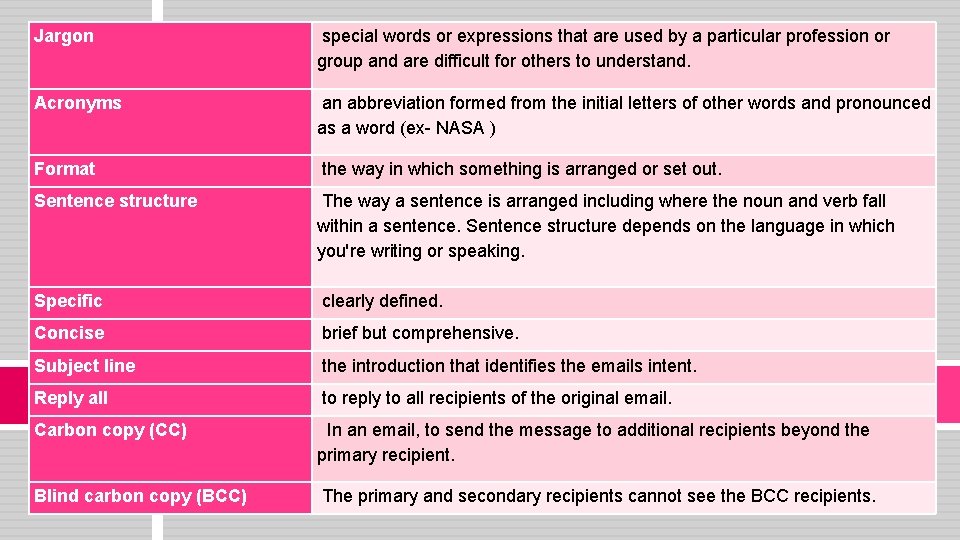
Jargon special words or expressions that are used by a particular profession or group and are difficult for others to understand. Acronyms an abbreviation formed from the initial letters of other words and pronounced as a word (ex- NASA ) Format the way in which something is arranged or set out. Sentence structure The way a sentence is arranged including where the noun and verb fall within a sentence. Sentence structure depends on the language in which you're writing or speaking. Specific clearly defined. Concise brief but comprehensive. Subject line the introduction that identifies the emails intent. Reply all to reply to all recipients of the original email. Carbon copy (CC) In an email, to send the message to additional recipients beyond the primary recipient. Blind carbon copy (BCC) The primary and secondary recipients cannot see the BCC recipients.
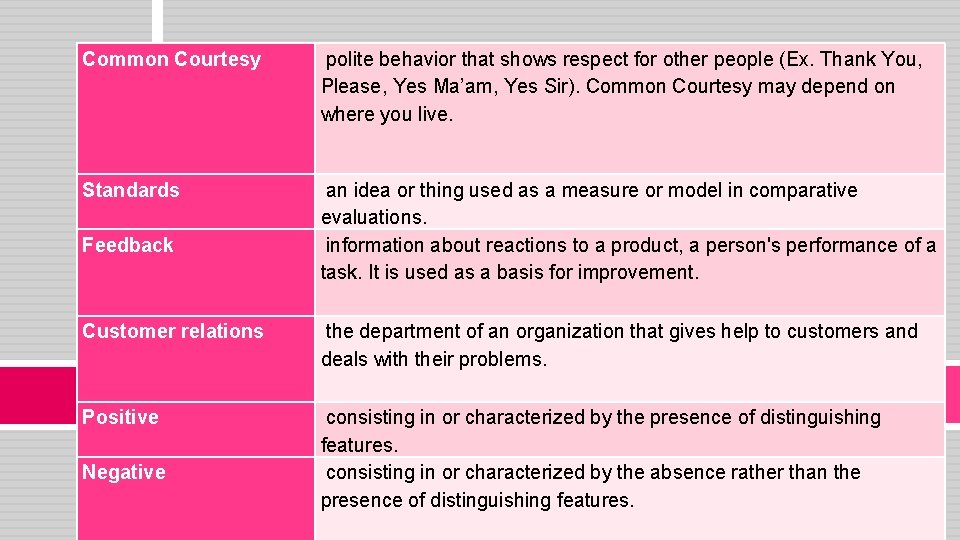
Common Courtesy polite behavior that shows respect for other people (Ex. Thank You, Please, Yes Ma’am, Yes Sir). Common Courtesy may depend on where you live. Standards an idea or thing used as a measure or model in comparative evaluations. information about reactions to a product, a person's performance of a task. It is used as a basis for improvement. Feedback Customer relations the department of an organization that gives help to customers and deals with their problems. Positive consisting in or characterized by the presence of distinguishing features. consisting in or characterized by the absence rather than the presence of distinguishing features. Negative
Objective 1. 03: Write internal and external business correspondence to convey and obtain information effectively.
Written Communication Written communication involves putting ideas, thoughts, and agreements into words and writing those words in a document or letter.
Effective written communications Types of written communication used in business. 1. Business Letters: Examples of Business letters are - sales letters, information letters, problem letters etc. 2. Memoranda AKA Memo: Memos are generally short means of written communication within an organization. 3. Reports: A report is prepared after lot of investigation. Reports are important for analyzing the performance of the organization. It helps in making important decisions within an organization. Information included should be OBJECTIVE to ensure accuracy, and to make sure the information is not BIAS. 4. Agenda: Agenda is an outline about all the contents of the meeting. Designing an agenda beforehand helps the people to come prepared for the meeting. 5. Balance Sheets- A way to compile and communicate information about a companies finances.
Characteristics of effective written communication 1. 2. 3. 4. 5. Words and Phrases sound natural: Especially in memos, effective business communications don't need to be formal and stuffy to communicate effectively. Most readers understand what you're saying more easily when you use a normal, conversational tone. Positive but not to positive What's the hidden benefit: If you really want to reach your readers, tell them how they will benefit from the message you're communicating Don’t writing over their head: A business communication is written to communicate. To do that effectively, your readers must understand the message you're sending, so be sure to use words your readers will understand. Use a tone that is not petty or angry: Little things can slip into your writing that you wouldn't normally allow, putting up walls between you and your reader or fostering ill will.
Characteristics of effective written communication 6. 7. 8. 9. 10. Determine what questions will the reader have: Your reader will benefit from being informed up-front and you'll save on additional correspondence or communications to answer those questions later. Jargon and acronyms: If you're writing to a colleague in the same field, it may be acceptable to use industry jargon. But if you're writing to someone and you're not certain what their level of understanding is, spell it out in clear terms everyone can understand. Length: If you can say what you want to say in three paragraphs, why write five? However you should ensure that you have included all the necessary information. Distance: If you can wait an extra day before sending the communication, take advantage of that extra time. PROOF READ: Frequently, you will find small or subtle errors you might
Appropriate formats for professional writing Format is the way a letter, memo, agenda is laid out on paper. Formatting details: � You included: date, address, greeting, body, closing, signature block � Full Block Method: Does not use indentation at the beginning of paragraphs � It is easy to read (Ex. Including a list may be good for short statements but not for long expressions)
Edit and revise written work consistent with professional standards Revision process � � � Criteria used when revising written work � � � Rereading for meaning Adding Rearranging Removing Replacing Logical sequencing Appropriate word choice Effective transitions Criteria used when editing written work � � � Proper sentence structure Appropriate punctuation Correct spelling
Write professional e-mails Characteristics of professional e-mails � � � Specific Concise- To the point Clear Information that should be included in a professional e-mail signature. Name, Title, Company Melody Hanks CTE Teacher, West Brunswick High School Shallotte NC, (910)754 -4338 � Different commands used to send outgoing messages � � Reply all- Sends a reply to everyone who was sent the original message. Carbon copy [CC]- Sends the exact same message to someone else. Blind carbon copy [BCC]- Sends the exact same message to someone else, however no one knows who else the message is sent to. Subject line
Objective 1. 04: Foster positive relationships with customers to enhance company image.
The nature of positive customer relations Customer relations- the way a business and employees of the business communicate and interact with their customers. Importance of positive customer relations Develops customer trust in product or service � Allows company to seek and act on customer feedback to improve product or service � Develops repeat business � Establish long term success � Techniques for building Use Common Courtesy � Understand each customer has unique needs � Listen to and engage your customers � Set and achieve high service standards �
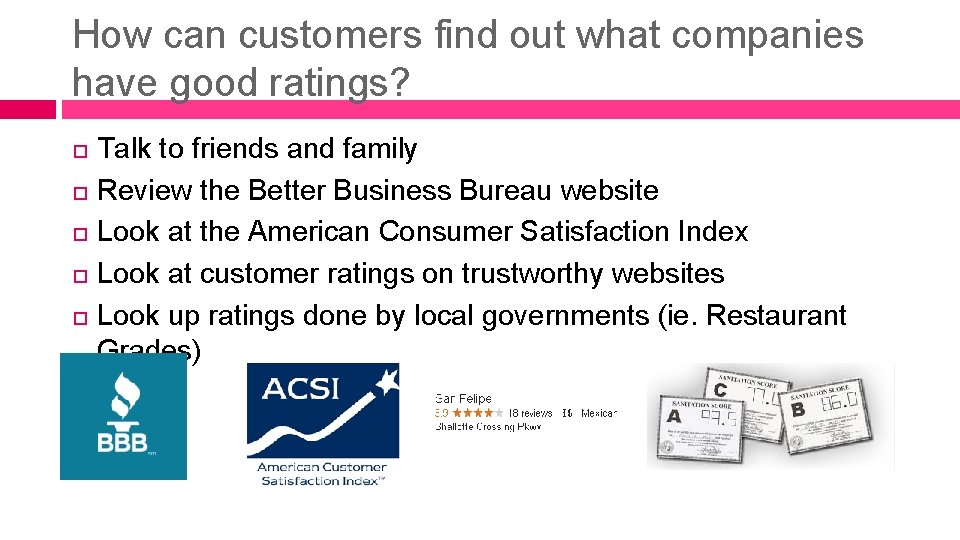
How can customers find out what companies have good ratings? Talk to friends and family Review the Better Business Bureau website Look at the American Consumer Satisfaction Index Look at customer ratings on trustworthy websites Look up ratings done by local governments (ie. Restaurant Grades)
- Slides: 55