
PRINCIPLES OF BAKING On Baking Chapter 3 WHAT
PRINCIPLES OF BAKING On Baking Chapter 3
WHAT DOES MIXING DO? Evenly distributes ingredients Breaks down fats and liquids, causing them to emulsify Activation of gluten from wheat flour proteins Add air to dough aeration
MIXING METHODS Beating Vigorously incorporate air or develop gluten Spoon, electric mixer with paddle Blending Mixing two or more ingredients evenly Spoon, rubber spatula, whisk, Creaming To mix softened fat and sugar to make light and fluffy Electric mixer with paddle
MIXING METHODS Cutting Incorporating solid fat (butter) into dry ingredients to desired size Forks, pastry blender, food processor Folding Gently incorporating ingredients such as whipped eggs or cream into other ingredients Rubber spatula Kneading Working dough to develop gluten Hands, electric mixer with dough hook, food processor with dough blade
MIXING METHODS Sifting Passing one or more dry ingredients through a wire mesh to remove lumps, combine, and add air sifter Stirring Gently mixing ingredients by hand Spoon, spatula, whisk Whipping Beating vigorously to incorporate air Whisk or electric mixer with whip attachment
MOISTURE IN BAKED GOODS Dissolves ingredients Helps hydrate Activates compounds
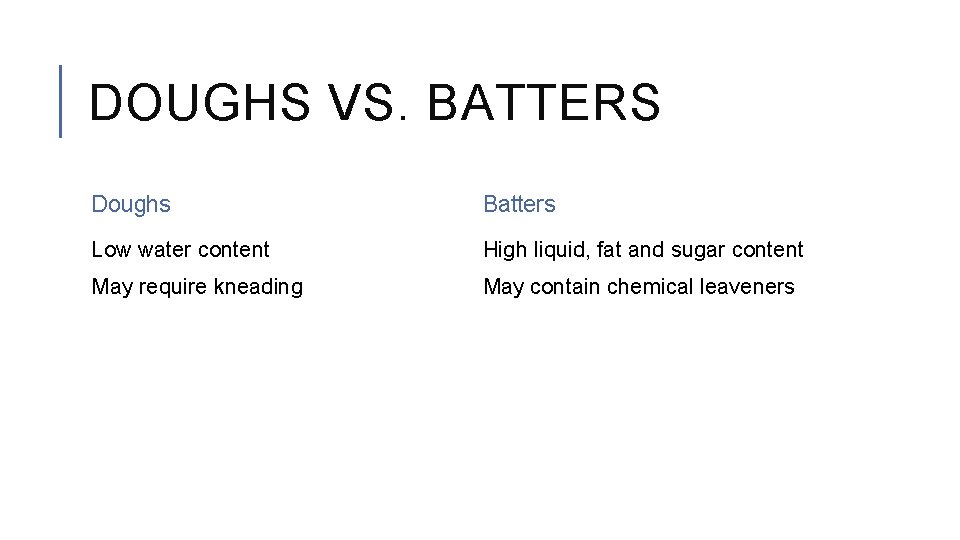
DOUGHS VS. BATTERS Doughs Batters Low water content High liquid, fat and sugar content May require kneading May contain chemical leaveners
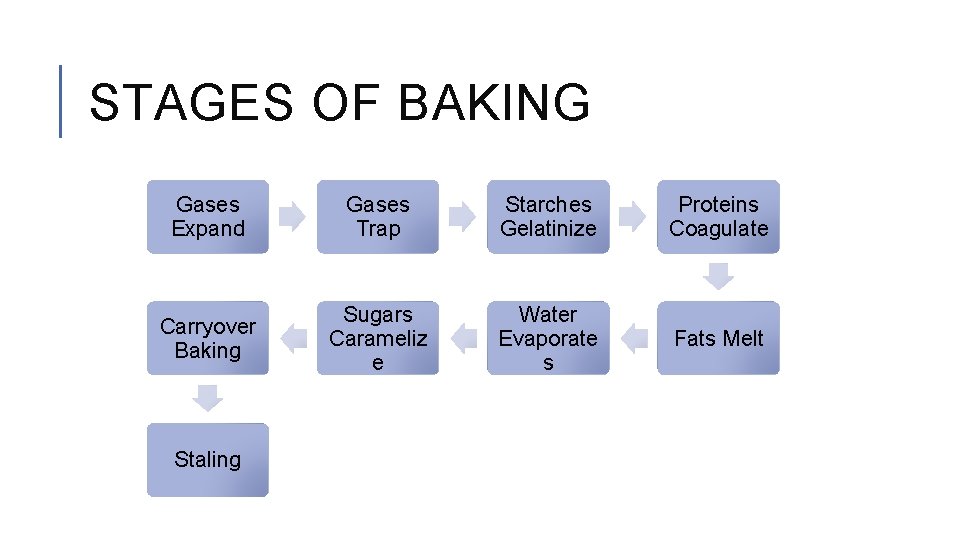
STAGES OF BAKING Gases Expand Gases Trap Starches Gelatinize Proteins Coagulate Carryover Baking Sugars Carameliz e Water Evaporate s Fats Melt Staling
- Slides: 8