
PRINCIPLES OF ANTIMICROBIAL THERAPY OVERVIEW Selective toxicity Ability
PRINCIPLES OF ANTIMICROBIAL THERAPY 감영내과 백승희

OVERVIEW Selective toxicity - Ability to kill an invading microorganism without harming the cells of the host. - relative

ANTIBIOTICS CHECK LIST Is an antibiotic indicated? Have appropriate specimens been obtained, examined, and cultured? What organism are most likely? If several antibiotics are available, which is best? Is an antibiotics combination appropriate? What are the important host factors? What is the best route of administration? What is the appropriate dose? Will initial therapy require modification after culture data are returned? What is the optimal duration of treatment, and is development of resistance during prolonged therapy likely to occur?
Is an antibiotic indicated?
Have appropriate specimens been obtained, examined, and cultured?
What organism are most likely?
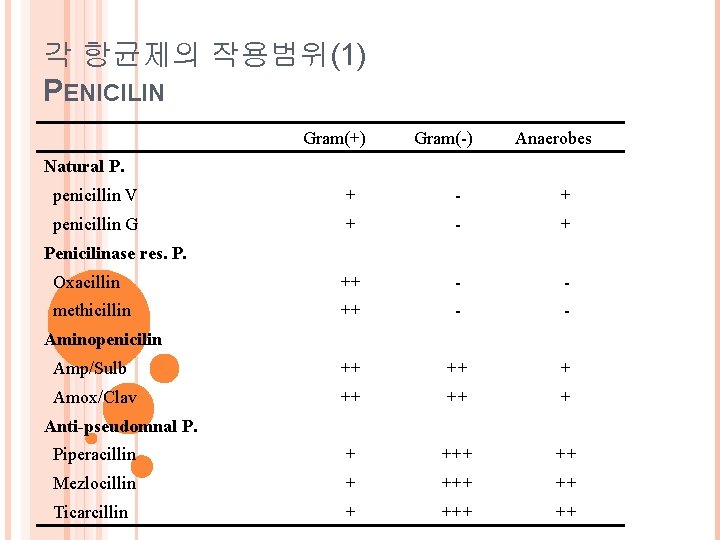
각 항균제의 작용범위(1) PENICILIN Gram(+) Gram(-) Anaerobes Natural P. penicillin V + - + penicillin G + - + Oxacillin ++ - - methicillin ++ - - Amp/Sulb ++ ++ + Amox/Clav ++ ++ + Piperacillin + ++ Mezlocillin + ++ Ticarcillin + ++ Penicilinase res. P. Aminopenicilin Anti-pseudomnal P.

각항군제의 작용범위(2) CEPHALOSPORINS Gram(+) Gram(-) Anaerobes 1 st generation Cephalothin + ± - Cefazolin + ± - Cefuroxim + ++ + Cefoxitin + ++ + Cefotetan + ++ + Cefamandole + ++ + Cefotaxime ± +++ ± Ceftriaxone ± +++ ± Cefoperazone ± +++ ± Ceftazidime ± +++ ± 2 nd generation 3 rd generation
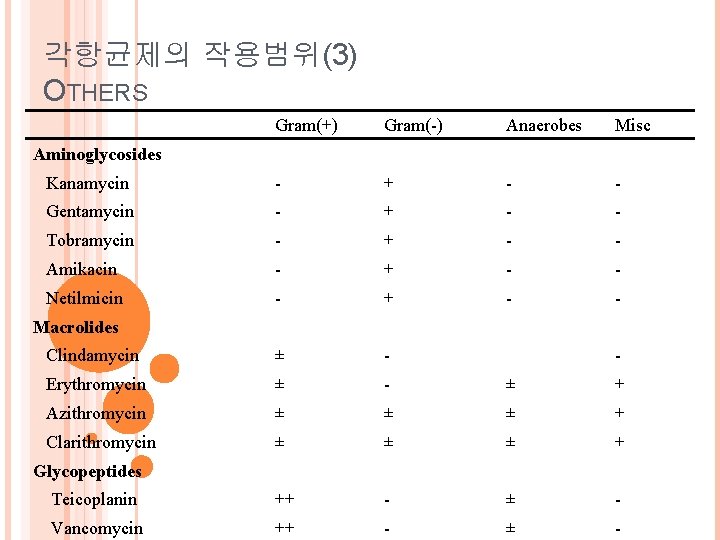
각항균제의 작용범위(3) OTHERS Gram(+) Gram(-) Anaerobes Misc Kanamycin - + - - Gentamycin - + - - Tobramycin - + - - Amikacin - + - - Netilmicin - + - - Clindamycin ± - Erythromycin ± - ± + Azithromycin ± ± ± + Clarithromycin ± ± ± + Teicoplanin ++ - ± - Vancomycin ++ - ± - Aminoglycosides Macrolides - Glycopeptides

각항균제의 작용범위(4) OTHERS Gram(+) Gram(-) Anaerobes Misc. Ciprofloxacin ± ++ - + Ofloxacin ± ++ ± + Perfloxacin - ++ - ± Rufloxacin ± ++ - + Imipenem - +++ ++ - Aztronam - ++ - - Metronidazole - - ++ - Chloramhenicol ± + ++ + Doxycycline ± ± + + Minocycline ± ± + + TMP/SMX ± + - - Polymyxin B - + - - Fluoroquinolones
If several antibiotics are available, which is best?

Is an antibiotics combination appropriate?
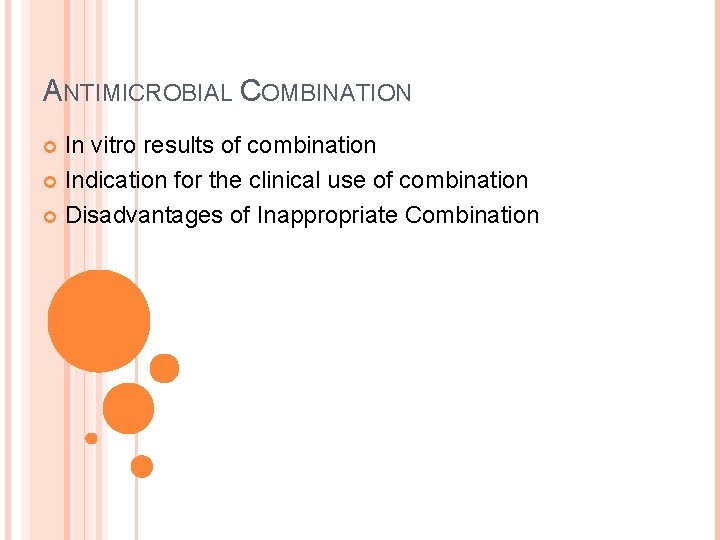
ANTIMICROBIAL COMBINATION In vitro results of combination Indication for the clinical use of combination Disadvantages of Inappropriate Combination
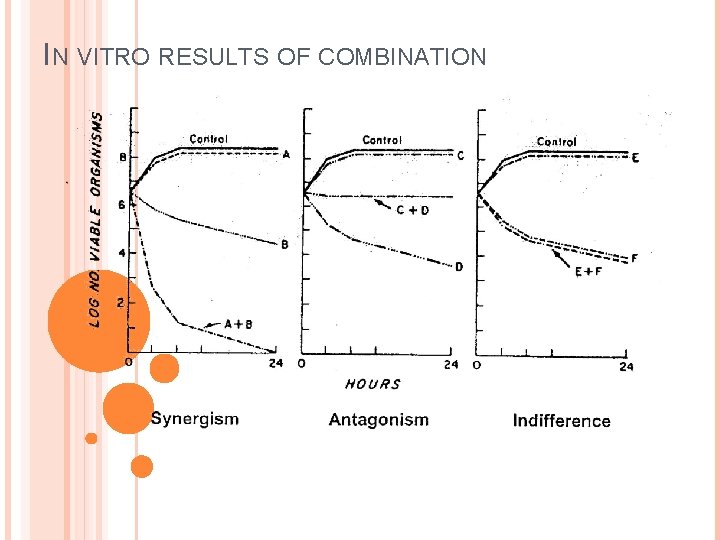
IN VITRO RESULTS OF COMBINATION

INDICATIONS FOR THE COMBINATION(1) Prevention of emergence of resistant organism: TB Polymicrobial infection: intraperitoneal, pelvic infection Initial therapy : neutropenic patients Decreased toxicity: ↓ the amount of drug required for treatment → dose-related toxicity↓

INDICATIONS FOR THE COMBINATION(2) Synergism -resistant or relatively resitant organisms -Examples; penicillin+ Aminoglycoside: enterococcal endocarditid oxacillin + gentamicin; S. aureus antipseudomonal PC + Amnoglycoside : P. Aeruginosa TMP+ SMX: UTI. Shigellosis Amphotericin B + Flucytosine, RFP, TC; Antifungals
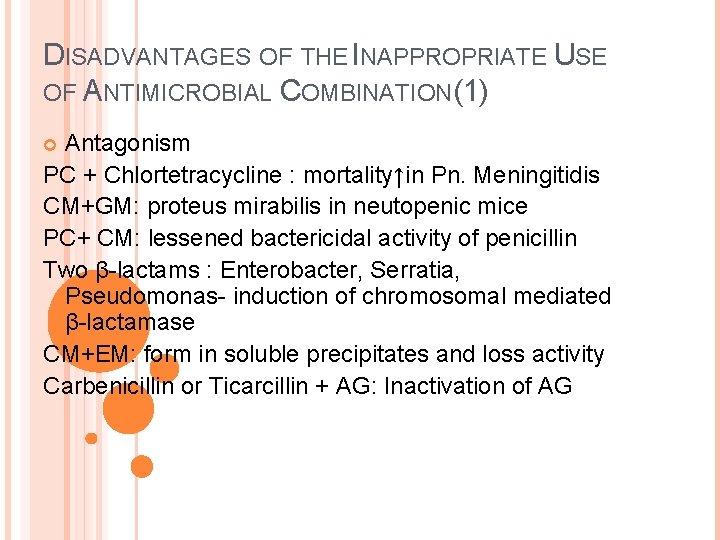
DISADVANTAGES OF THE INAPPROPRIATE USE OF ANTIMICROBIAL COMBINATION(1) Antagonism PC + Chlortetracycline : mortality↑in Pn. Meningitidis CM+GM: proteus mirabilis in neutopenic mice PC+ CM: lessened bactericidal activity of penicillin Two β-lactams : Enterobacter, Serratia, Pseudomonas- induction of chromosomal mediated β-lactamase CM+EM: form in soluble precipitates and loss activity Carbenicillin or Ticarcillin + AG: Inactivation of AG

DISADVANTAGES OF THE INAPPROPRIATE USE OF ANTIMICROBIAL COMBINATION(2) Cost Adverse effect(5%) Hypersensitivity reactions Direct toxic effects It is often difficult to be certain of the agent that caused the reaction
WHAT ARE THE IMPORTANT HOST FACTORS? History of previous adverse reaction to antimicrobial agents Age of patient Genetic or metabolic abnormalities Pregnancy Renal and hepatic function Site of infection

What is the best route of administration?
ROUTE OF ADMINISTRATION Oral Parenteral : IV, IM, IT, IP, etc - for the treatment of serious infection ( high serum conc. of antimocrobials are required) - Direct instillation: CSF, Eye etc
What is the appropriate dose?
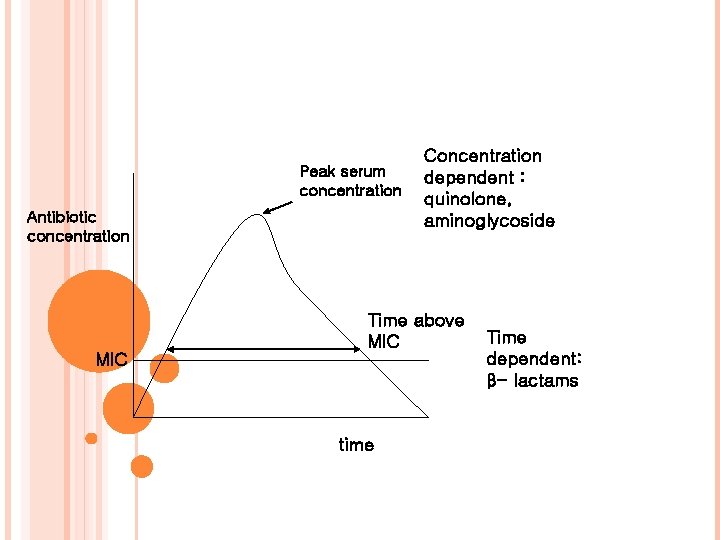
Peak serum concentration Antibiotic concentration Concentration dependent : quinolone, aminoglycoside Time above MIC time Time dependent: β- lactams
Will initial therapy require modification after culture data are returned?
What is the optimal duration of treatment, and is development of resistance during prolonged therapy likely to occur?
DURATION OF ANTIMICROBIAL THERAPY Clinical improvement is the best guide Improvement of laboratory findings Eradication of microorganism No evidence of infection Sufficient duration for each infectious diseases or each organisms → If all above findings were satisfied, then you can stop the antimicrobials after 3 -5 days
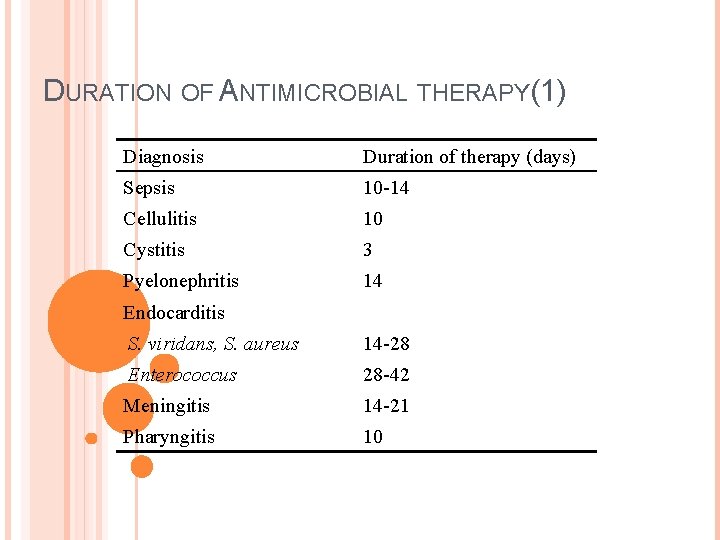
DURATION OF ANTIMICROBIAL THERAPY(1) Diagnosis Duration of therapy (days) Sepsis 10 -14 Cellulitis 10 Cystitis 3 Pyelonephritis 14 Endocarditis S. viridans, S. aureus 14 -28 Enterococcus 28 -42 Meningitis 14 -21 Pharyngitis 10
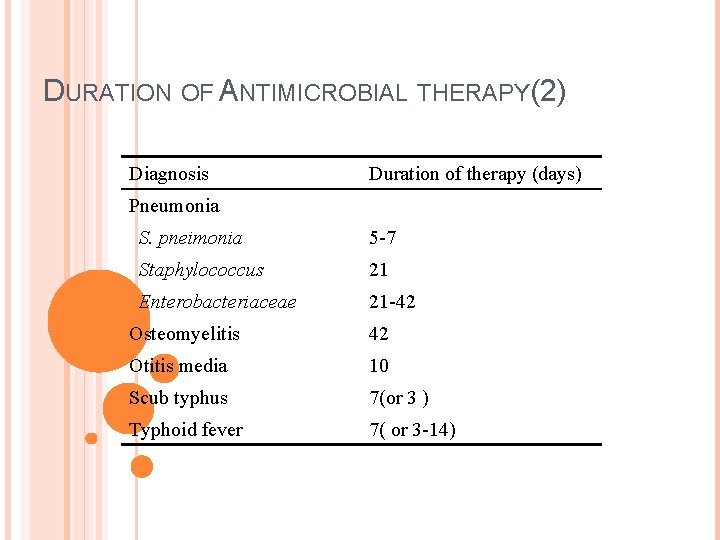
DURATION OF ANTIMICROBIAL THERAPY(2) Diagnosis Duration of therapy (days) Pneumonia S. pneimonia 5 -7 Staphylococcus 21 Enterobacteriaceae 21 -42 Osteomyelitis 42 Otitis media 10 Scub typhus 7(or 3 ) Typhoid fever 7( or 3 -14)

- Slides: 35