
Principles of Animation How to create maximun impact
- Slides: 13
Principles of Animation How to create maximun impact
Principles of traditional Animation • Early animators worked from scratch to analyze and improve upon silence live action films. • Anticipation • squash and strech • characters move at differerent speeds • lines of action • secondary actions • follow through • staging • inbetweens
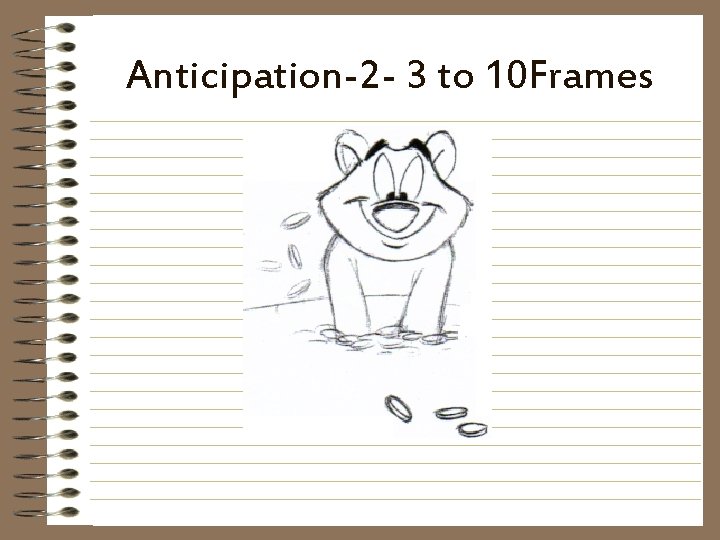
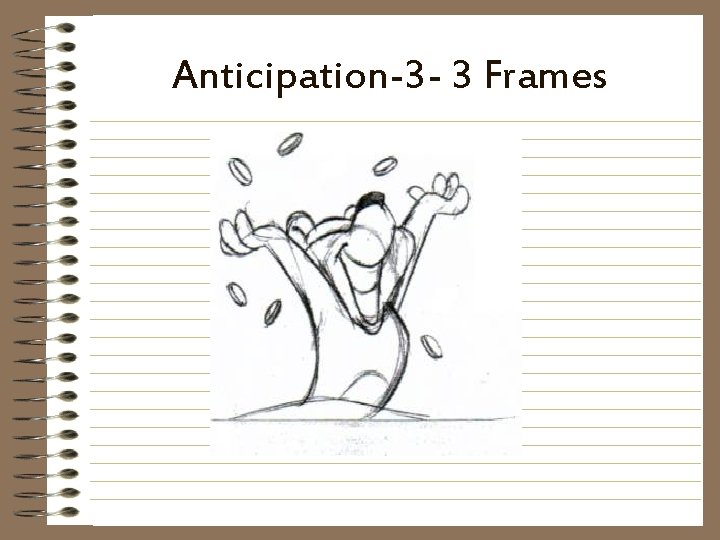
Anticipation • Anticipation • Means before the character commits himself by moving in one direction, he first draw back in the opposite direction. – It is used in all motions in animation-big and small. – The result is more emphatic motion. – During anticipation the whole body gets into anticipatory movement. – Train your eye to look for anticipation when you watch cartoons.
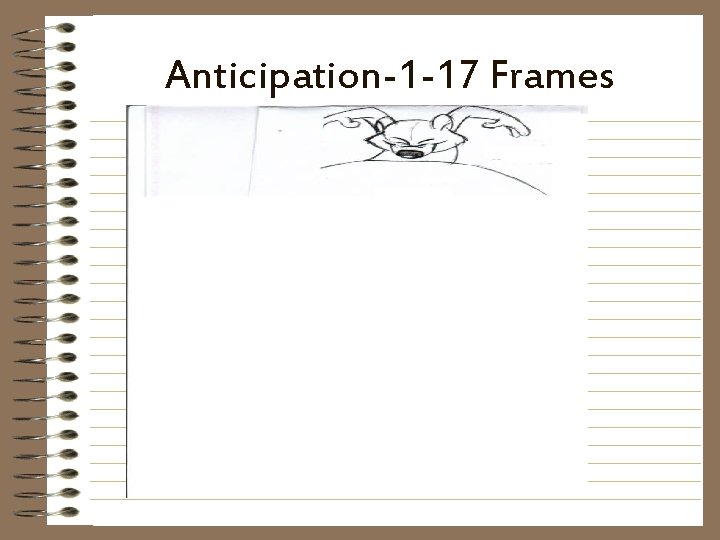
Anticipation-1 -17 Frames
Anticipation-2 - 3 to 10 Frames
Anticipation-3 - 3 Frames
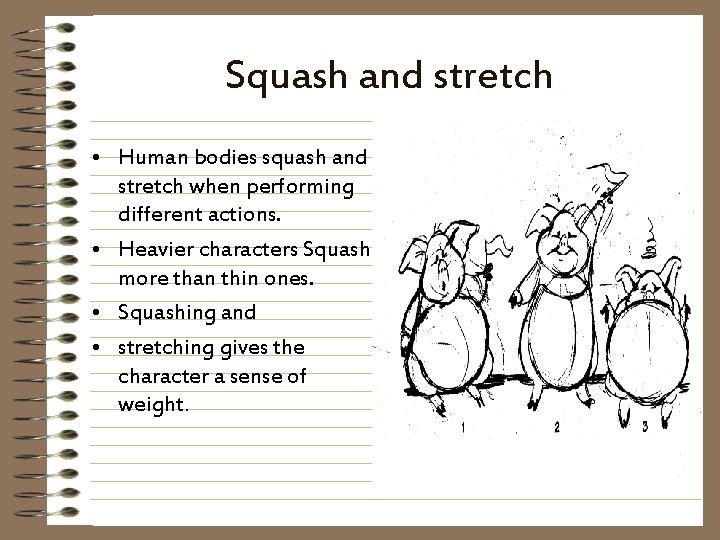
Squash and stretch • Human bodies squash and stretch when performing different actions. • Heavier characters Squash more than thin ones. • Squashing and • stretching gives the character a sense of weight.
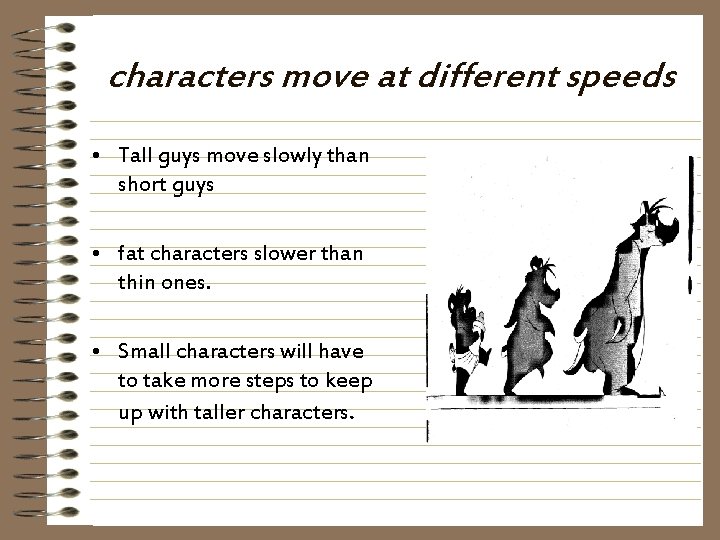
characters move at different speeds • Tall guys move slowly than short guys • fat characters slower than thin ones. • Small characters will have to take more steps to keep up with taller characters.
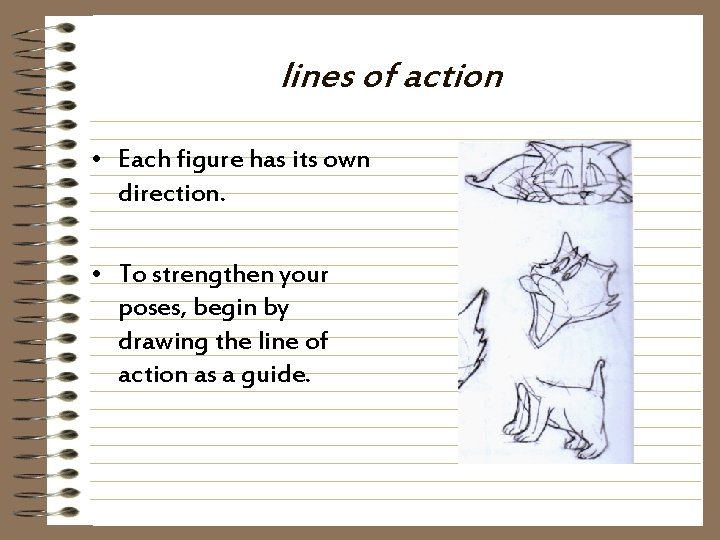
lines of action • Each figure has its own direction. • To strengthen your poses, begin by drawing the line of action as a guide.
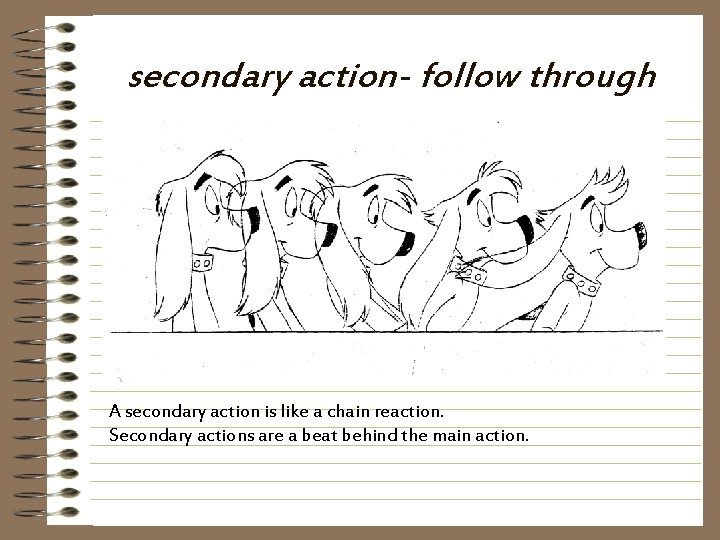
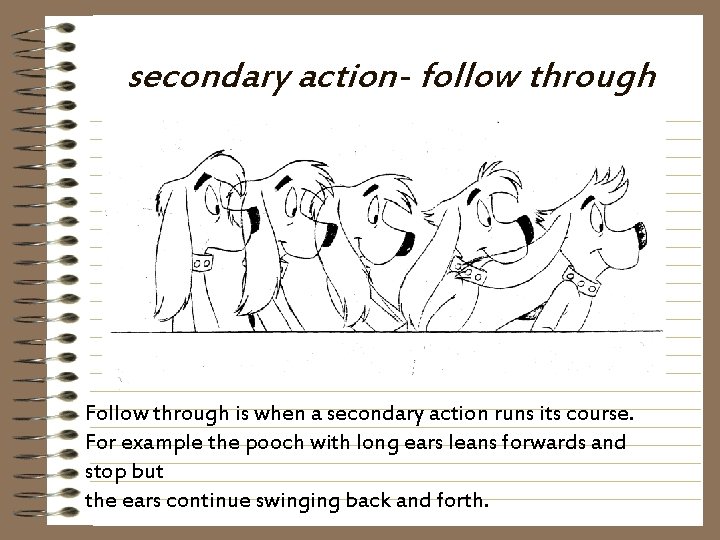
secondary action- follow through A secondary action is like a chain reaction. Secondary actions are a beat behind the main action.
secondary action- follow through Follow through is when a secondary action runs its course. For example the pooch with long ears leans forwards and stop but the ears continue swinging back and forth.
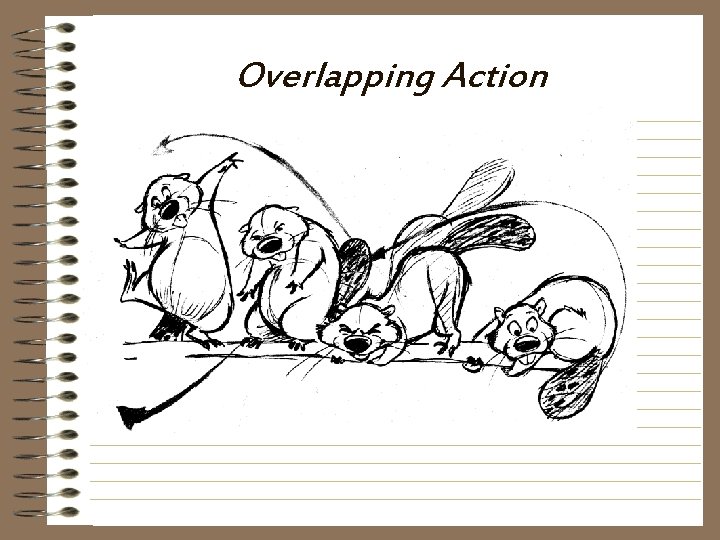
Overlapping Action • Stage your action in modern stylistic surroundings. • Research for info. on styles.
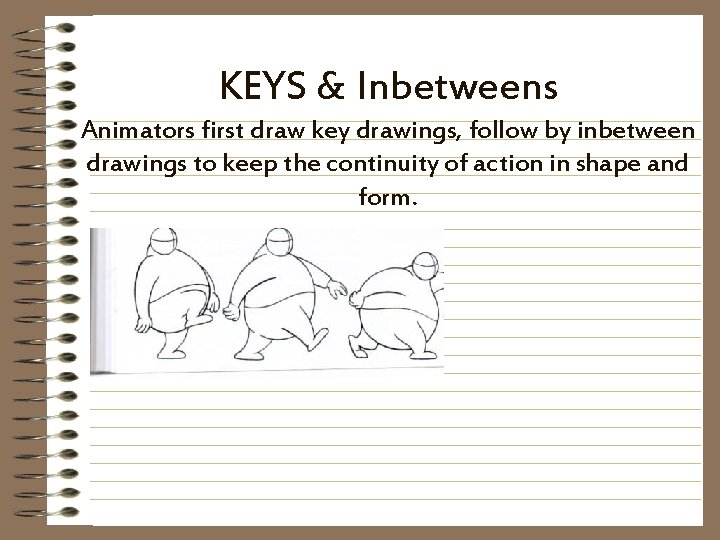
KEYS & Inbetweens Animators first draw key drawings, follow by inbetween drawings to keep the continuity of action in shape and form.