
Principles of Anatomy and Physiology 14 th Edition

- Slides: 39
Principles of Anatomy and Physiology 14 th Edition CHAPTER 1 An Introduction to the Human Body Copyright © 2014 John Wiley & Sons, Inc. All rights
Introduction The purpose of the chapter is to: 1. Introduce the disciplines of anatomy and physiology 2. Discuss the organization of the human body 3. Reveal shared properties of all living things 4. Discuss the concept of homeostasis Copyright © 2014 John Wiley & Sons, Inc. All rights
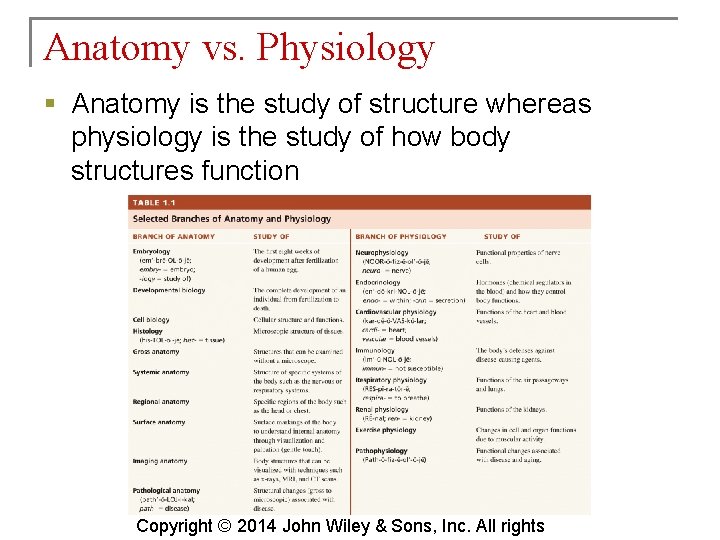
Anatomy vs. Physiology § Anatomy is the study of structure whereas physiology is the study of how body structures function Copyright © 2014 John Wiley & Sons, Inc. All rights
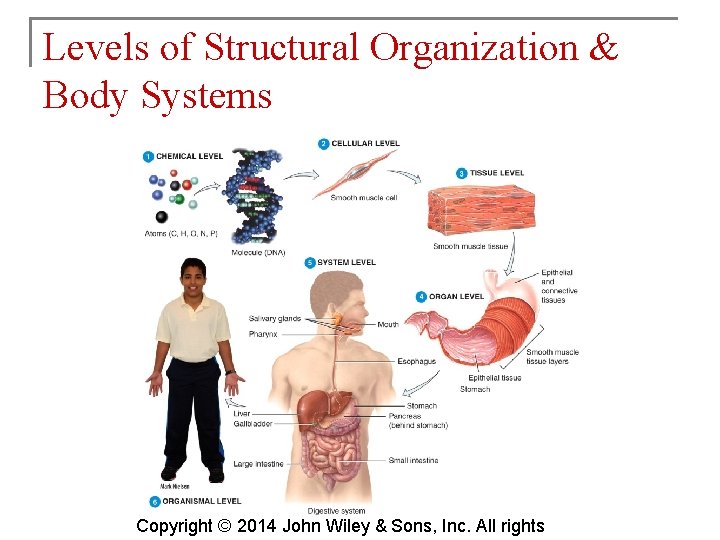
Levels of Structural Organization & Body Systems Copyright © 2014 John Wiley & Sons, Inc. All rights
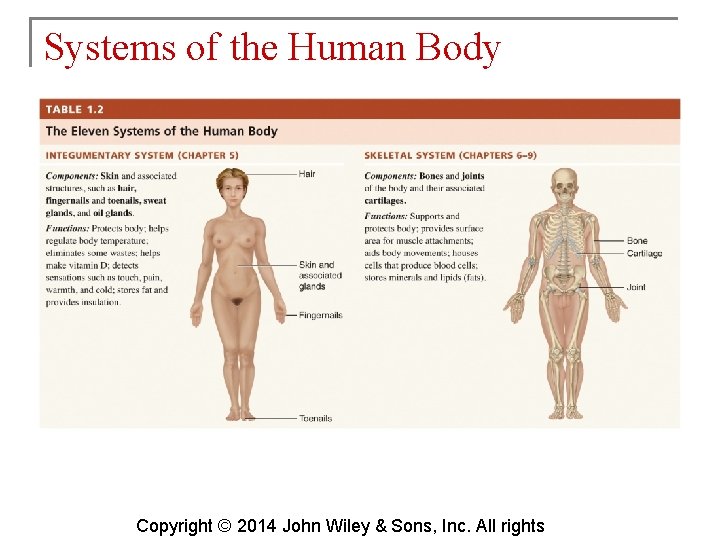
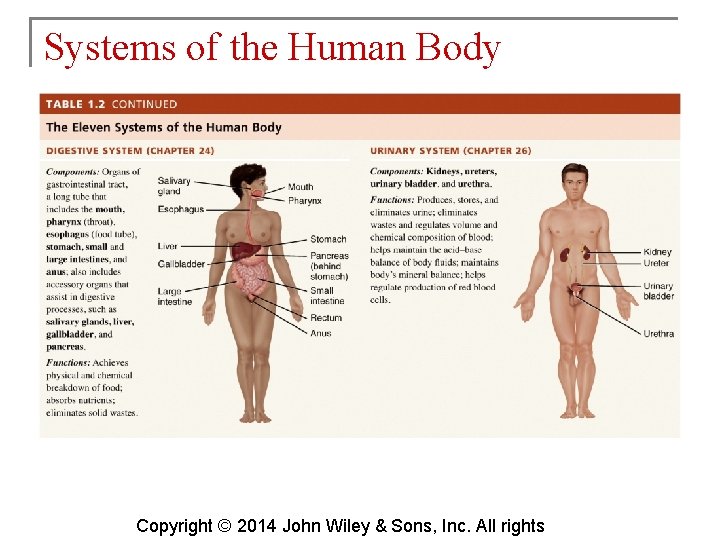
Systems of the Human Body Copyright © 2014 John Wiley & Sons, Inc. All rights
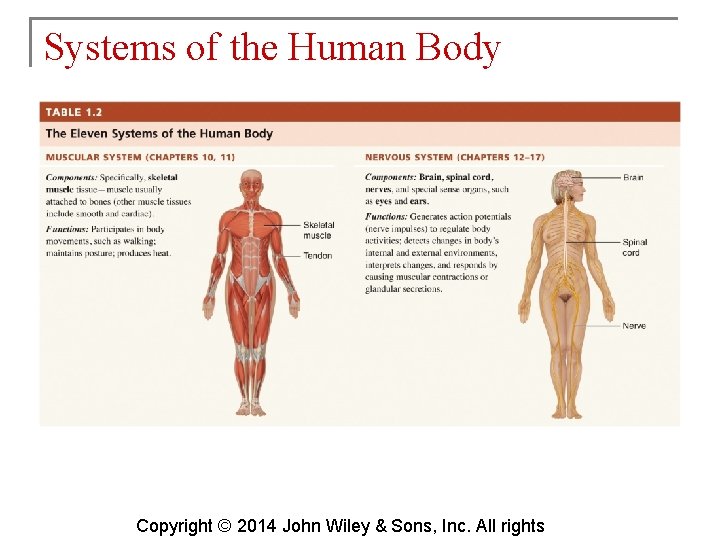
Systems of the Human Body Copyright © 2014 John Wiley & Sons, Inc. All rights
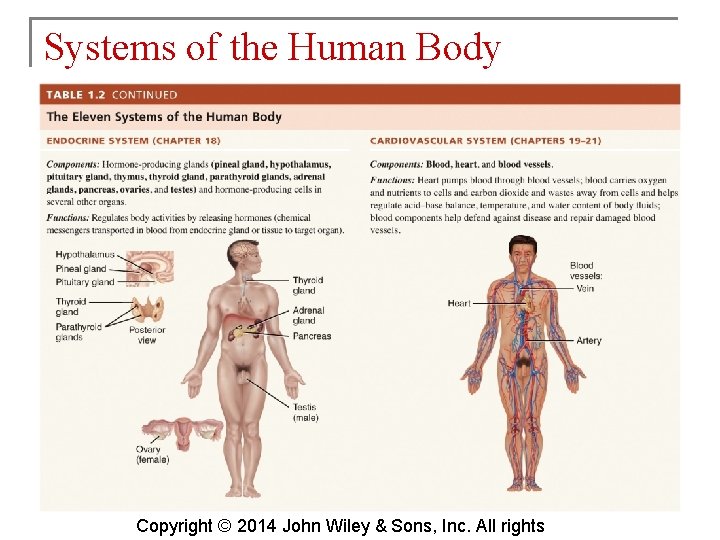
Systems of the Human Body Copyright © 2014 John Wiley & Sons, Inc. All rights
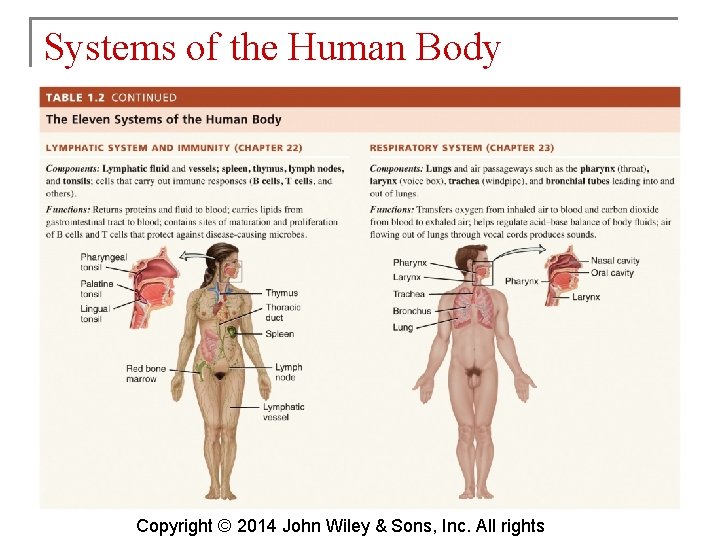
Systems of the Human Body Copyright © 2014 John Wiley & Sons, Inc. All rights
Systems of the Human Body Copyright © 2014 John Wiley & Sons, Inc. All rights
Systems of the Human Body Copyright © 2014 John Wiley & Sons, Inc. All rights
Clinical Connection: Noninvasive Diagnostic Techniques § Palpation, auscultation, and percussion are used to assess certain aspects of body structure and function Copyright © 2014 John Wiley & Sons, Inc. All rights
Basic Life Processes § All living things have certain characteristics that distinguish them from nonliving things § Life processes in humans include metabolism, responsiveness, movement, growth, differentiation, and reproduction Copyright © 2014 John Wiley & Sons, Inc. All rights
Clinical Connection: Autopsy § An autopsy is a postmortem examination of the body and dissection of its internal organs to confirm or determine cause of death Copyright © 2014 John Wiley & Sons, Inc. All rights
Homeostasis § Homeostasis is a condition of equilibrium, or balance, in the body’s internal environment § Homeostasis is maintained by regulatory processes Copyright © 2014 John Wiley & Sons, Inc. All rights
Homeostasis & Body Fluids § The survival of our body cells is dependent on the precise regulation of the chemical composition of their surrounding fluid § This fluid is known as extracellular fluid Copyright © 2014 John Wiley & Sons, Inc. All rights
Homeostasis Interactions Animation: § Communication, Regulation, and Homeostasis You must be connected to the Internet and in Slideshow Mode to run this animation. Copyright © 2014 John Wiley & Sons, Inc. All rights
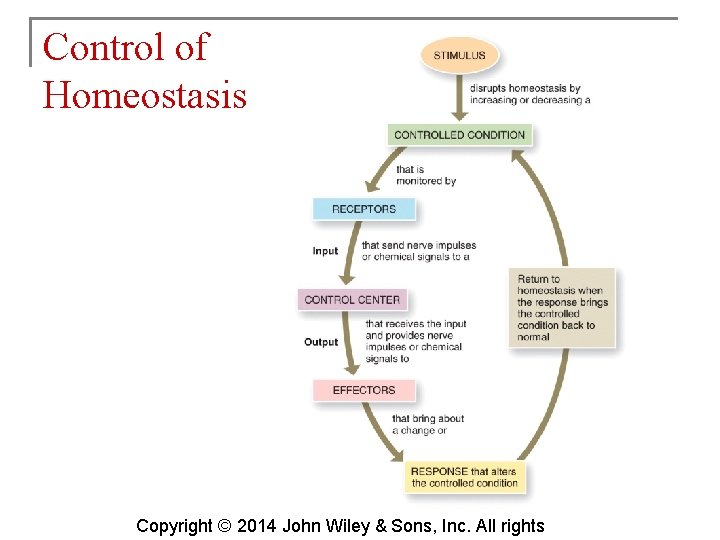
Control of Homeostasis Copyright © 2014 John Wiley & Sons, Inc. All rights
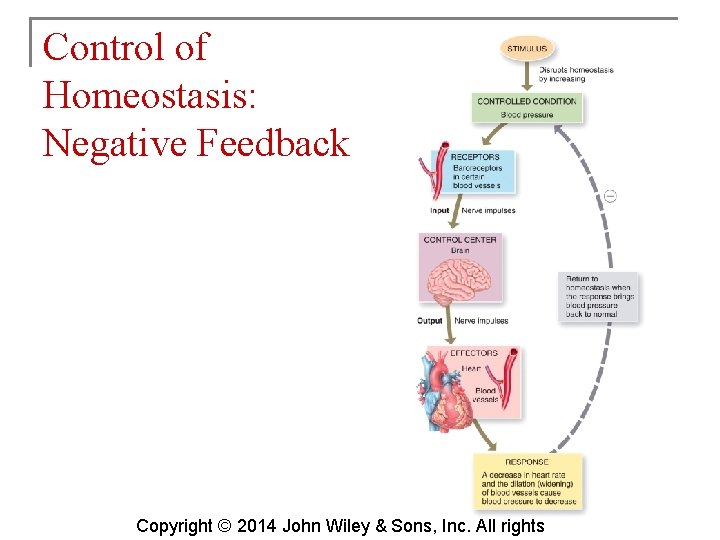
Control of Homeostasis: Negative Feedback Copyright © 2014 John Wiley & Sons, Inc. All rights
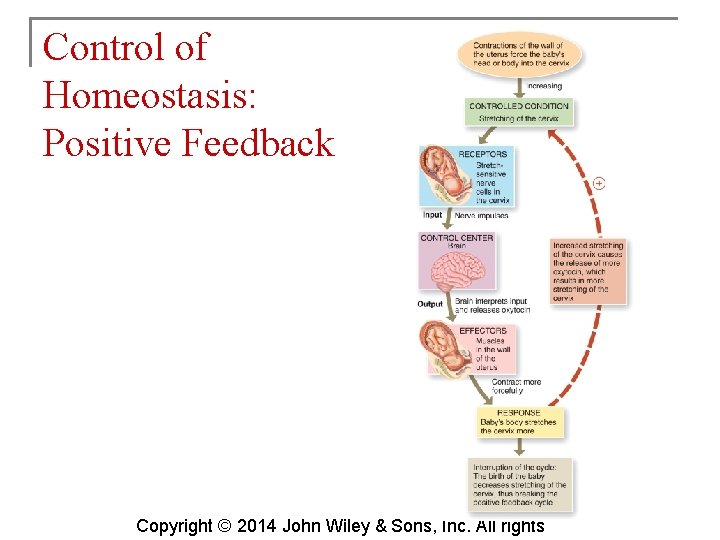
Control of Homeostasis: Positive Feedback Copyright © 2014 John Wiley & Sons, Inc. All rights
Homeostatic Imbalances § When homeostasis is disrupted disease, disorder, and even death may result Copyright © 2014 John Wiley & Sons, Inc. All rights
Basic Anatomical Terminology § Body positions § Regional names § Directional terms § Planes and sections § Body cavities Copyright © 2014 John Wiley & Sons, Inc. All rights
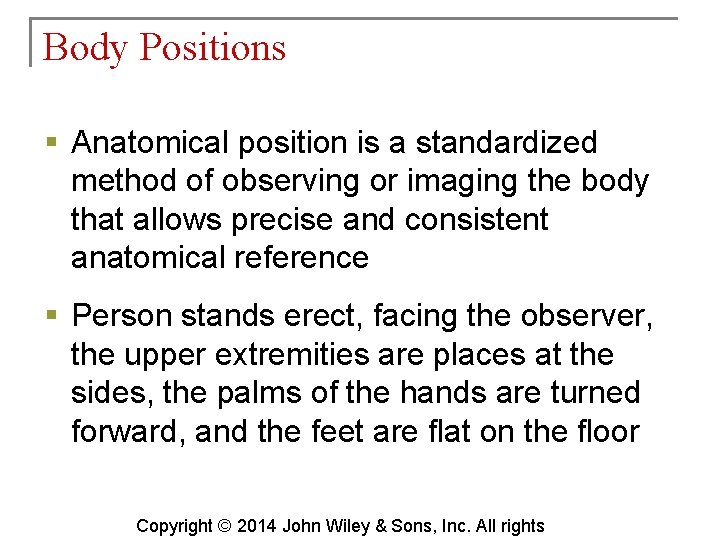
Body Positions § Anatomical position is a standardized method of observing or imaging the body that allows precise and consistent anatomical reference § Person stands erect, facing the observer, the upper extremities are places at the sides, the palms of the hands are turned forward, and the feet are flat on the floor Copyright © 2014 John Wiley & Sons, Inc. All rights
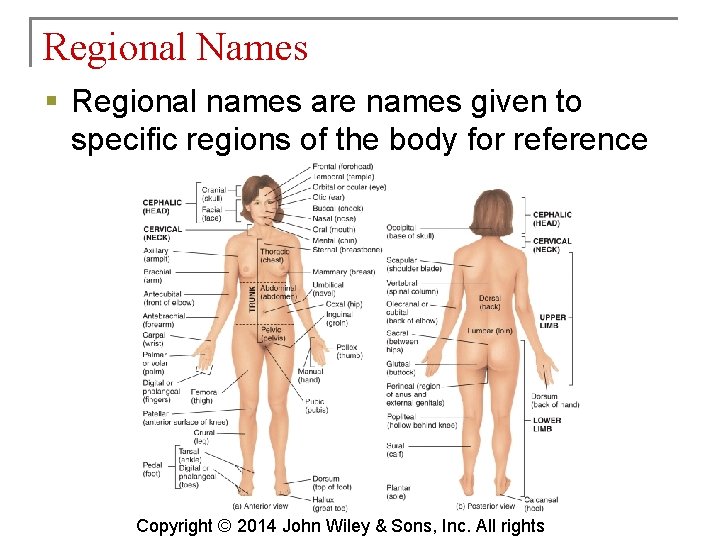
Regional Names § Regional names are names given to specific regions of the body for reference Copyright © 2014 John Wiley & Sons, Inc. All rights
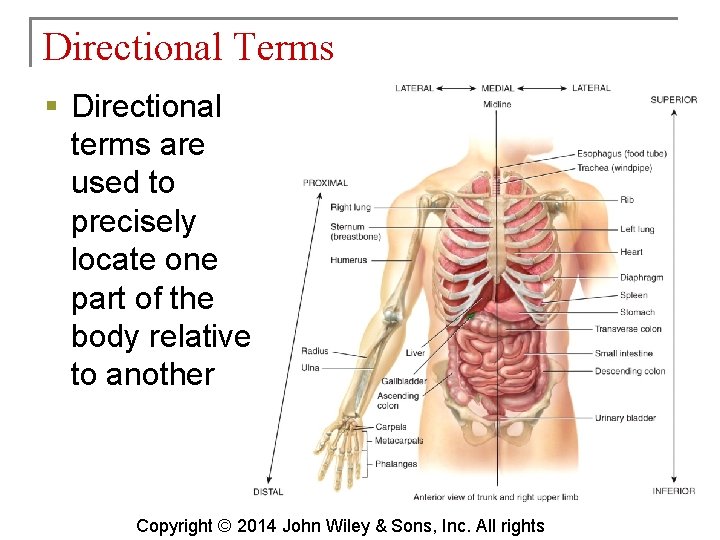
Directional Terms § Directional terms are used to precisely locate one part of the body relative to another Copyright © 2014 John Wiley & Sons, Inc. All rights
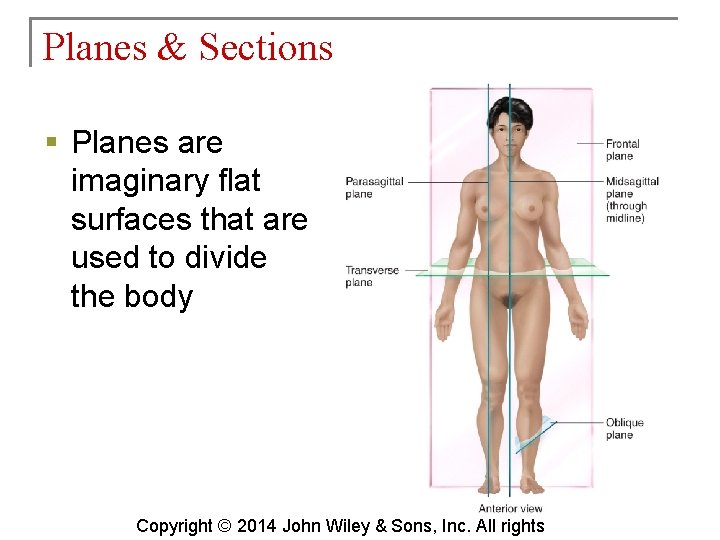
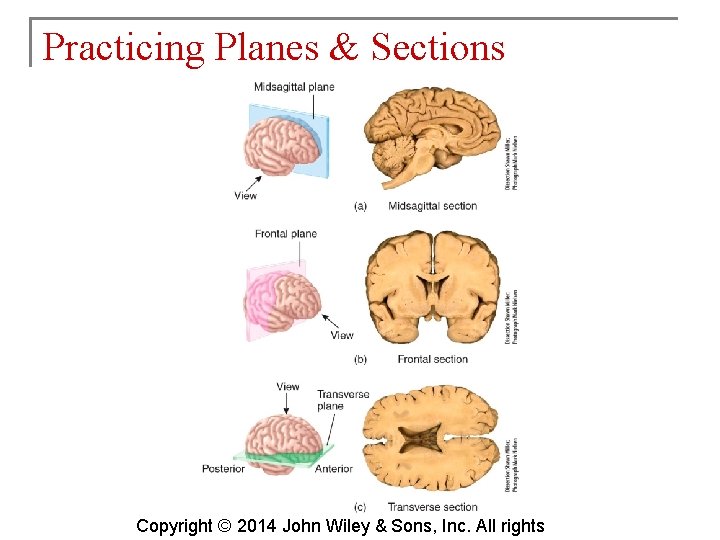
Planes & Sections § Planes are imaginary flat surfaces that are used to divide the body Copyright © 2014 John Wiley & Sons, Inc. All rights
Practicing Planes & Sections Copyright © 2014 John Wiley & Sons, Inc. All rights
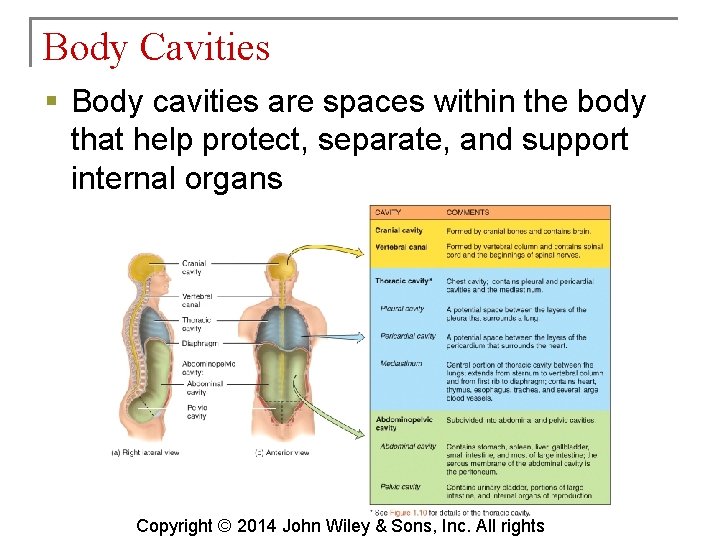
Body Cavities § Body cavities are spaces within the body that help protect, separate, and support internal organs Copyright © 2014 John Wiley & Sons, Inc. All rights
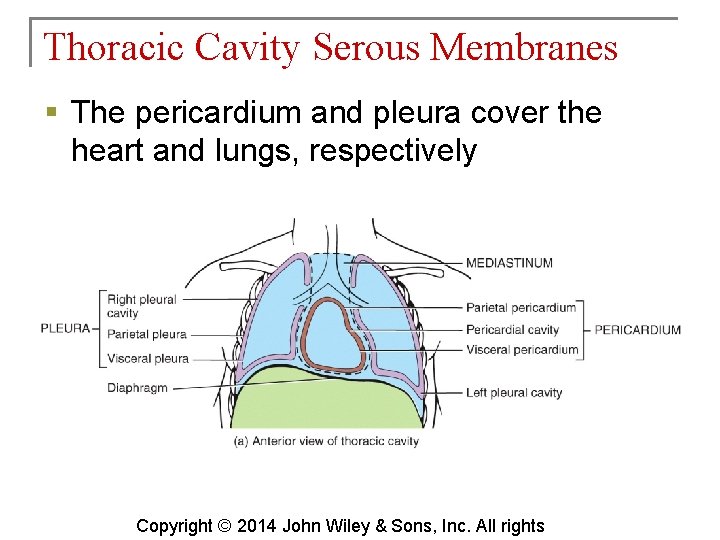
Thoracic Cavity Serous Membranes § The pericardium and pleura cover the heart and lungs, respectively Copyright © 2014 John Wiley & Sons, Inc. All rights
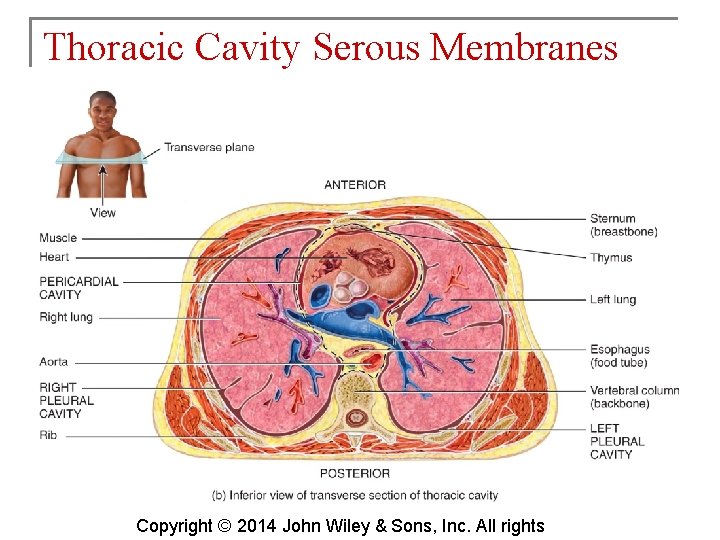
Thoracic Cavity Serous Membranes Copyright © 2014 John Wiley & Sons, Inc. All rights
Abdominal Cavity Serous Membrane § The peritoneum, covers many of the abdominal organs § The visceral membrane covers the organs § The parietal layer lines the abdominal wall Copyright © 2014 John Wiley & Sons, Inc. All rights
Abdominopelvic Regions & Quadrants § The abdominal cavity can be divided into 9 regions to easily describe the location of organs Copyright © 2014 John Wiley & Sons, Inc. All rights
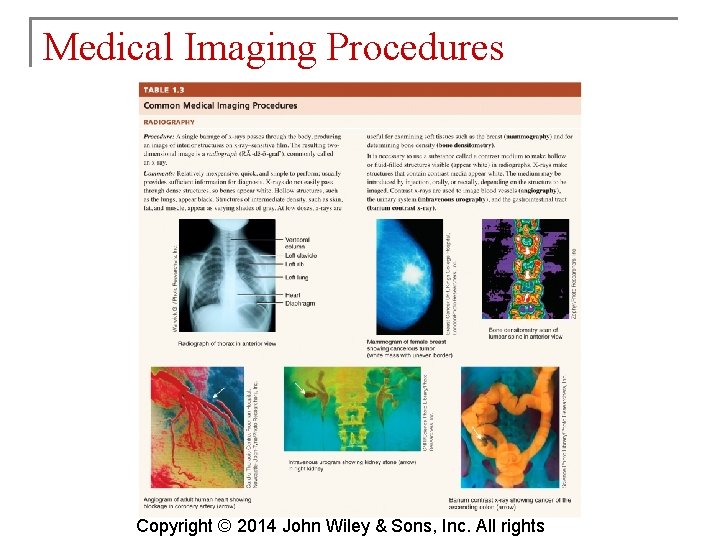
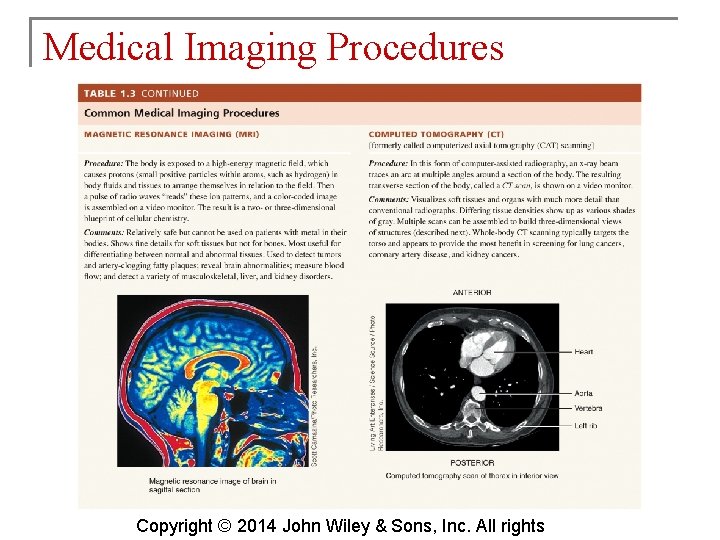
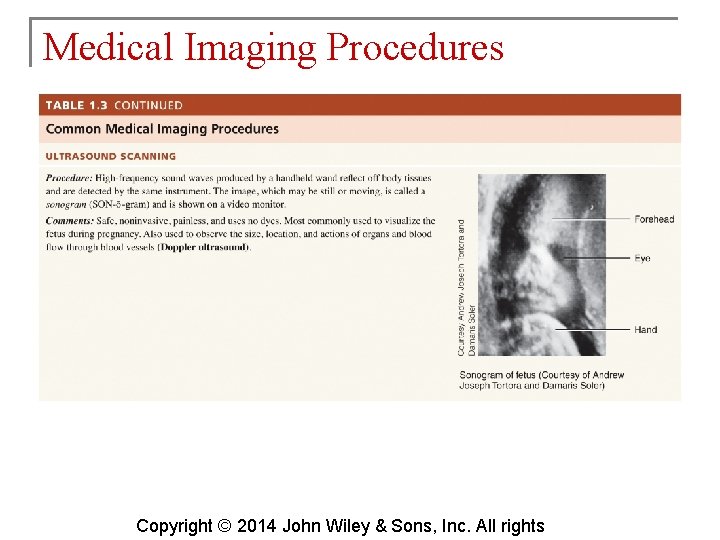
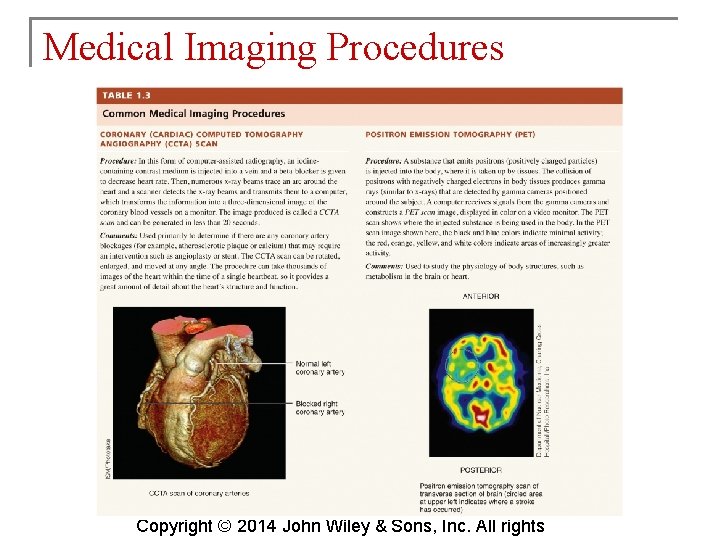
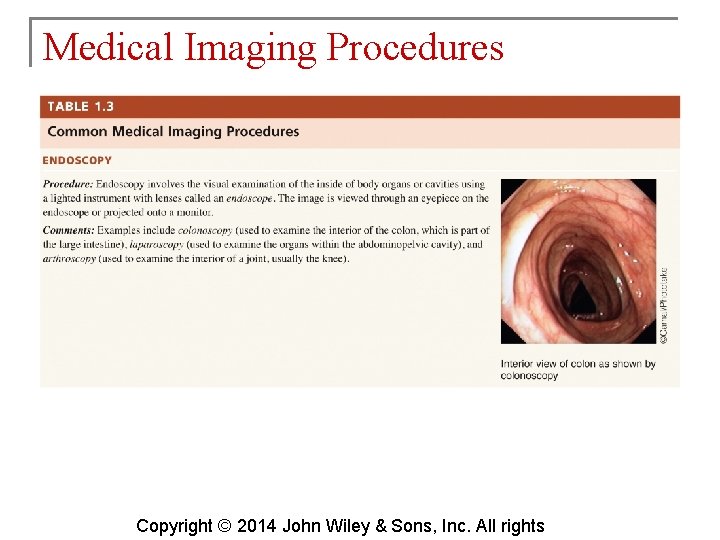
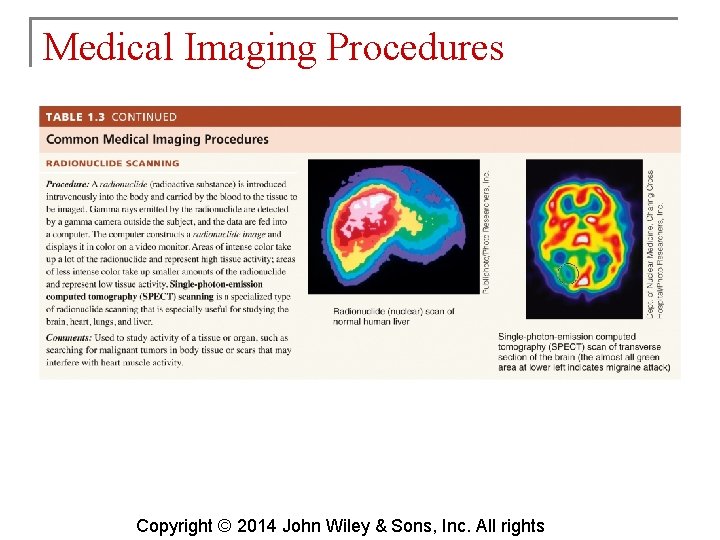
Medical Imaging § Medical imaging involves techniques that allow physicians to view images of the human body § This allows physicians to diagnose anatomical and physiological abnormalities Copyright © 2014 John Wiley & Sons, Inc. All rights
Medical Imaging Procedures Copyright © 2014 John Wiley & Sons, Inc. All rights
Medical Imaging Procedures Copyright © 2014 John Wiley & Sons, Inc. All rights
Medical Imaging Procedures Copyright © 2014 John Wiley & Sons, Inc. All rights
Medical Imaging Procedures Copyright © 2014 John Wiley & Sons, Inc. All rights
Medical Imaging Procedures Copyright © 2014 John Wiley & Sons, Inc. All rights
Medical Imaging Procedures Copyright © 2014 John Wiley & Sons, Inc. All rights
End of Chapter 1 Copyright 2014 John Wiley & Sons, Inc. All rights reserved. Reproduction or translation of this work beyond that permitted in section 117 of the 1976 United States Copyright Act without express permission of the copyright owner is unlawful. Request for further information should be addressed to the Permission Department, John Wiley & Sons, Inc. The purchaser may make back-up copies for his/her own use only and not for distribution or resale. The Publishers assumes no responsibility for errors, omissions, or damages caused by the use of these programs or from the use of the information herein. Copyright © 2014 John Wiley & Sons, Inc. All rights