
Principles of Anatomy and Physiology 14 th Edition

- Slides: 18
Principles of Anatomy and Physiology 14 th Edition CHAPTER 11 The Muscular System Copyright © 2014 John Wiley & Sons, Inc. All rights
How Skeletal Muscles Produce Movement § Skeletal muscles produce movements by exerting force on tendons. Tendons attach to and pull on bones, and movement occurs Copyright © 2014 John Wiley & Sons, Inc. All rights
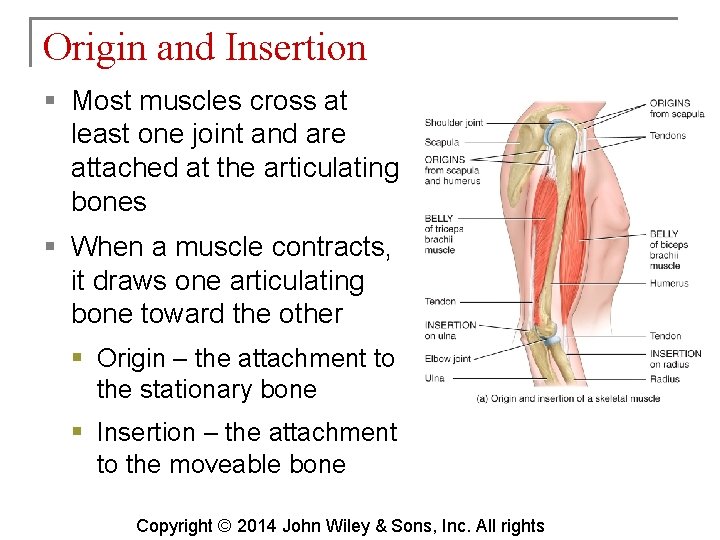
Origin and Insertion § Most muscles cross at least one joint and are attached at the articulating bones § When a muscle contracts, it draws one articulating bone toward the other § Origin – the attachment to the stationary bone § Insertion – the attachment to the moveable bone Copyright © 2014 John Wiley & Sons, Inc. All rights
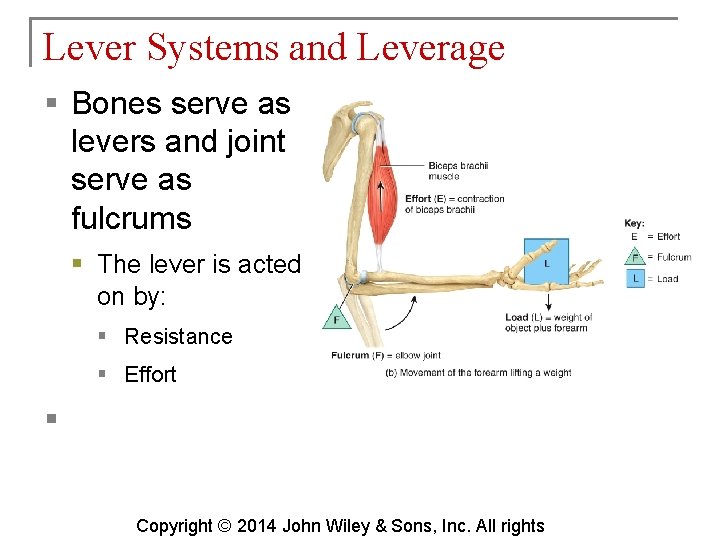
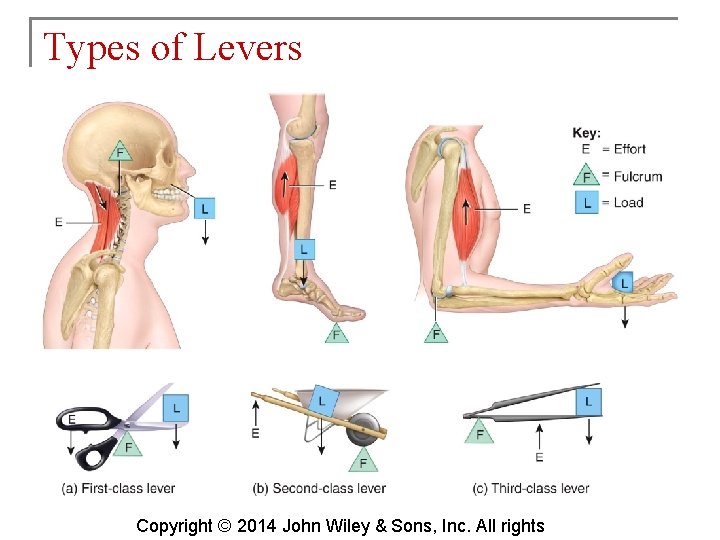
Lever Systems and Leverage § Bones serve as levers and joint serve as fulcrums § The lever is acted on by: § Resistance § Effort § Copyright © 2014 John Wiley & Sons, Inc. All rights
Types of Levers Copyright © 2014 John Wiley & Sons, Inc. All rights
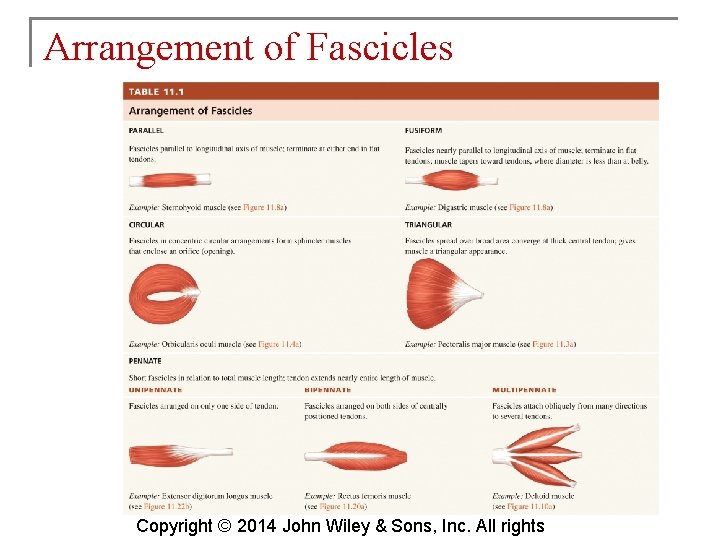
Effects of Fascicle Arrangement § Muscle fibers are arranged in parallel bundles within fascicles but the arrangement of fasciculi in relation to the tendon can vary § Fascicular arrangement is correlated with: § The amount of power of a muscle can produce § The range of motion a muscle can produce Copyright © 2014 John Wiley & Sons, Inc. All rights
Arrangement of Fascicles Copyright © 2014 John Wiley & Sons, Inc. All rights
Coordination Within Muscle Groups § Most muscle movements are coordinated by several skeletal muscles acting in groups rather than individually, and most skeletal muscles are arranged in opposing pairs at joints § Agonist/prime mover § Antagonist § Synergist § Copyright © 2014 John Wiley & Sons, Inc. All rights
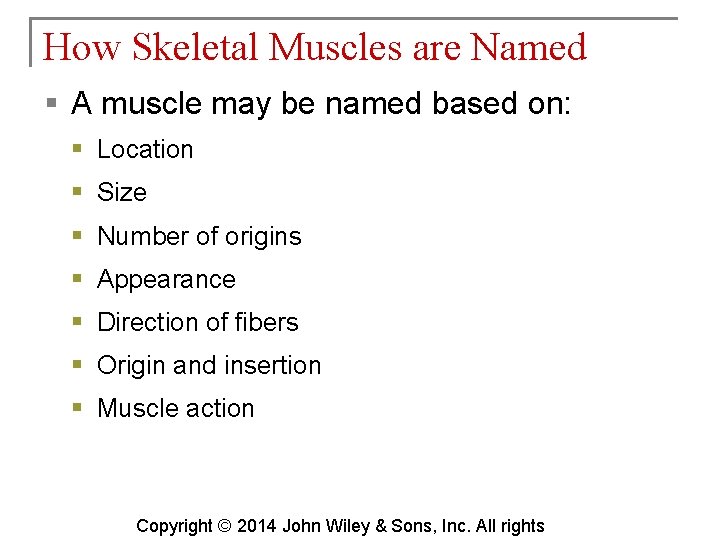
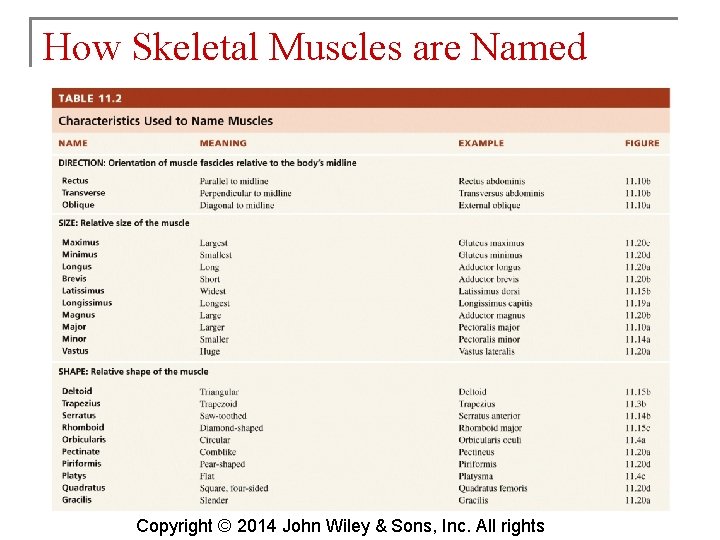
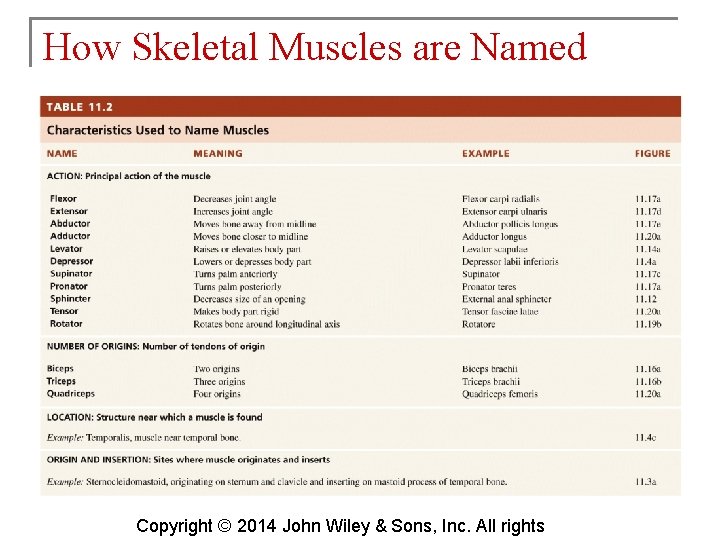
How Skeletal Muscles are Named § A muscle may be named based on: § Location § Size § Number of origins § Appearance § Direction of fibers § Origin and insertion § Muscle action Copyright © 2014 John Wiley & Sons, Inc. All rights
How Skeletal Muscles are Named Copyright © 2014 John Wiley & Sons, Inc. All rights
How Skeletal Muscles are Named Copyright © 2014 John Wiley & Sons, Inc. All rights
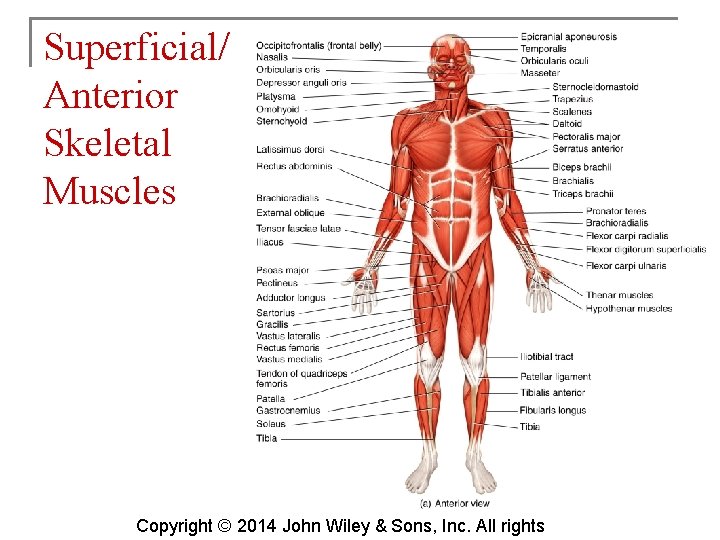
Superficial/ Anterior Skeletal Muscles Copyright © 2014 John Wiley & Sons, Inc. All rights
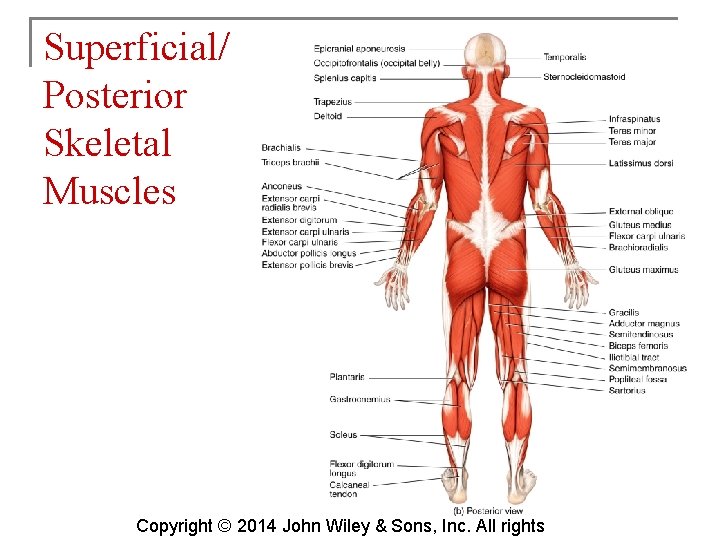
Superficial/ Posterior Skeletal Muscles Copyright © 2014 John Wiley & Sons, Inc. All rights
Muscles and Their Movements Anatomy Overview: n Selected Muscles and Movements You must be connected to the Internet and in Slideshow Mode to run this animation. Copyright © 2014 John Wiley & Sons, Inc. All rights
Running Injuries § Most running injuries involve the knee § Running injuries are usually related to faulty training techniques § Running injuries can be treated with: § PRICE § NSAIDS or corticosteriod injections § Rehabilitative exercises Copyright © 2014 John Wiley & Sons, Inc. All rights
Compartment Syndrome § Pressure constricts the structures within a compartment resulting in damaged blood vessels § Left untreated: § Nerves can suffer damage § Muscles can develop scar tissue and contracture may result Copyright © 2014 John Wiley & Sons, Inc. All rights
Plantar Fascitis § This is a painful heel condition that results from chronic irritation of the plantar aponeurosis at its origin on the calcaneus § Treatment includes ice, heat, stretching, weight loss, prosthetics, steroid injections, and/or surgery Copyright © 2014 John Wiley & Sons, Inc. All rights
End of Chapter 11 §Copyright 2014 John Wiley & Sons, Inc. §All rights reserved. Reproduction or translation of this work beyond that permitted in section 117 of the 1976 United States Copyright Act without express permission of the copyright owner is unlawful. Request for further information should be addressed to the Permission Department, John Wiley & Sons, Inc. The purchaser may make back-up copies for his/her own use only and not for distribution or resale. The Publisher assumes no responsibility for errors, omissions, or damages caused by the use of these programs or from the use of the information herein. Copyright © 2014 John Wiley & Sons, Inc. All rights