
Principles for Whole of Program Curriculum Design to
- Slides: 53
Principles for Whole of Program Curriculum Design to Develop and Assure Student Learning Outcomes Romy Lawson University of Wollongong
What I’ve learnt from my fellowship! Romy Lawson University of Wollongong
So why are you here?
Hunters & Gatherers: Strategies for Curriculum Mapping and Data Collection for Assurance of Learning assuringlearning. com
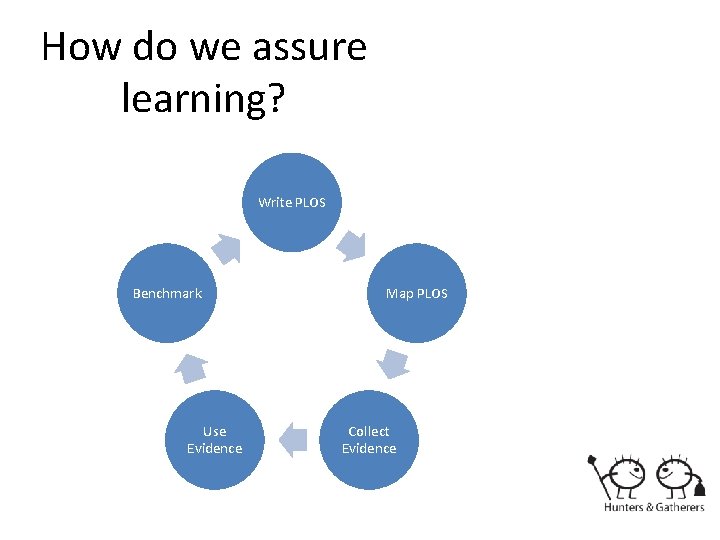
How do we assure learning? Write PLOS Benchmark Use Evidence Map PLOS Collect Evidence
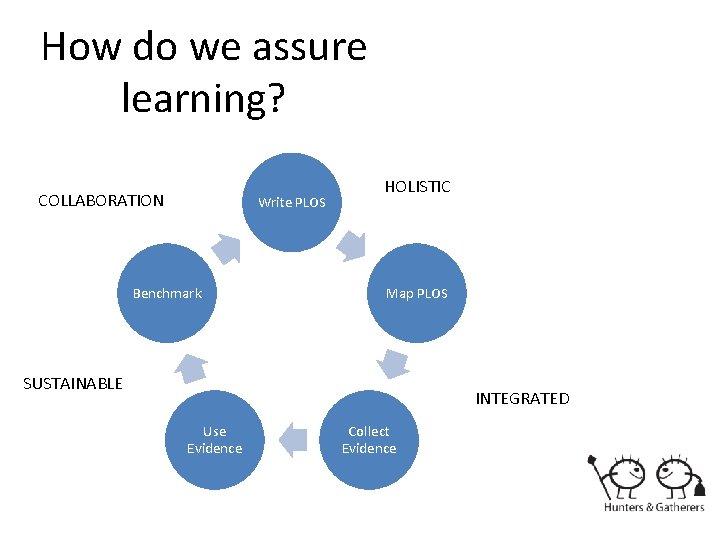
How do we assure learning? COLLABORATION Write PLOS Benchmark HOLISTIC Map PLOS SUSTAINABLE INTEGRATED Use Evidence Collect Evidence
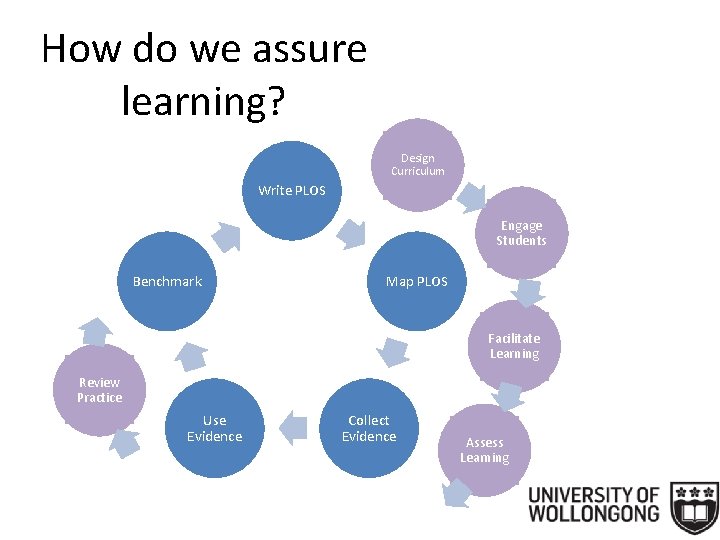
How do we assure learning? Design Curriculum Write PLOS Engage Students Benchmark Map PLOS Facilitate Learning Review Practice Use Evidence Collect Evidence Assess Learning
Curriculum design for assuring learning in business education - leading the way
Whole of Program Approach
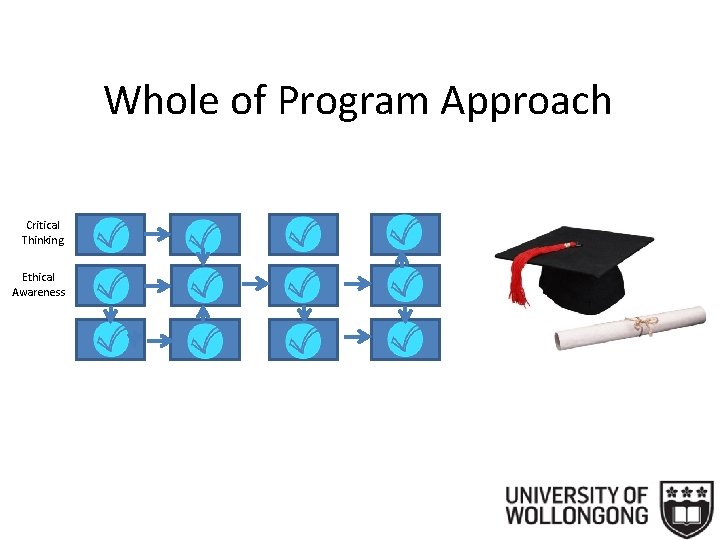
Whole of Program Approach Critical Thinking Ethical Awareness
Whole of Program Process – How? • Writing program Learning Outcomes • Understanding Criteria and Standards needed to achieve the PLOs (whole of program rubrics) • Designing Authentic Scaffolded Assessment of PLOS • Teaching PLOs with Effective Feedback/Feedforward Mechanisms • Leading the Process – Facilitating Change
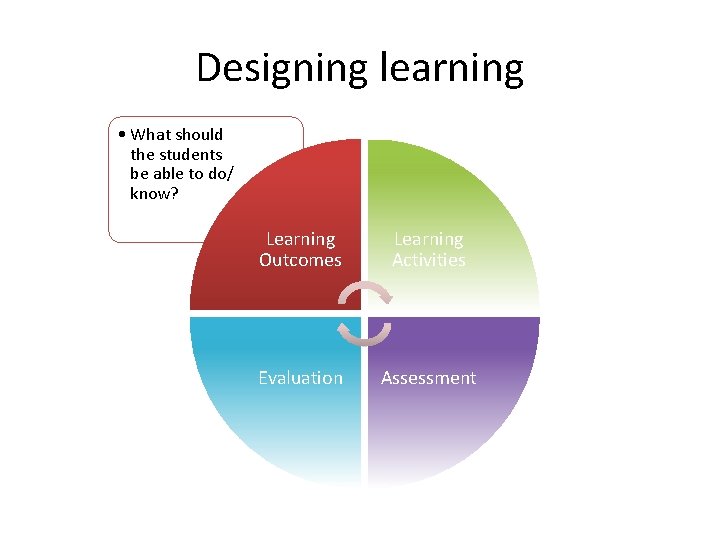
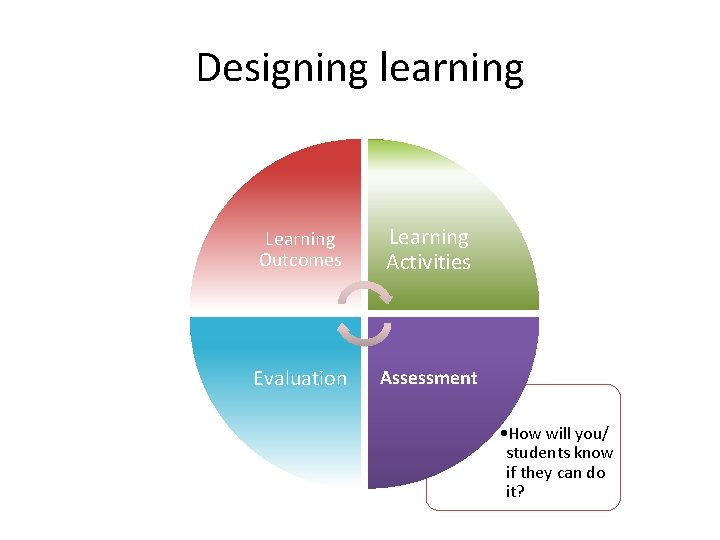
Designing learning • What should the students be able to do/ know? Learning Outcomes Learning Activities Evaluation Assessment
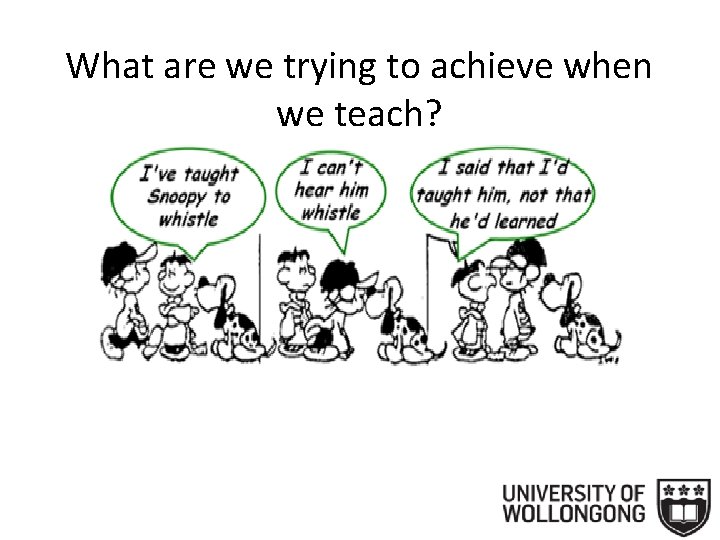
What are we trying to achieve when we teach?
Step 1 Have you got the right PLOs?
PLO - Considerations • National (International) –Professional Bodies eg CPA
PLO - Considerations • National (International) – Professional Bodies eg CPA • Institutional/Faculty – University requirements (point of distinction) – GA Themes • Program – Context – Level
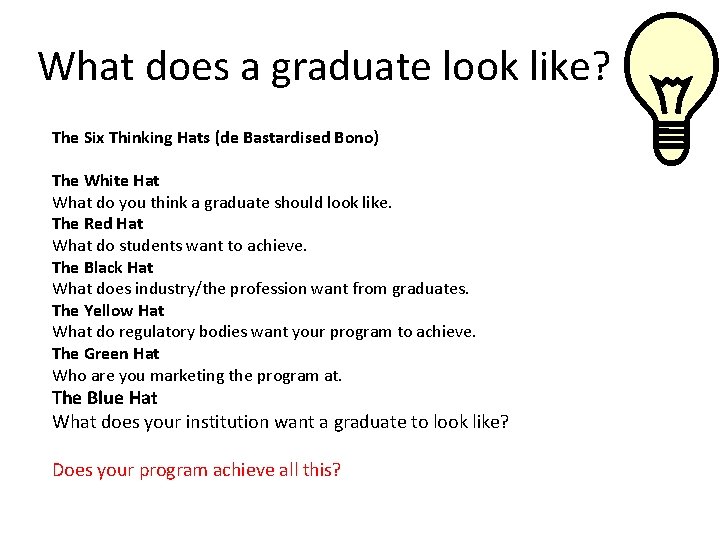
What does a graduate look like? The Six Thinking Hats (de Bastardised Bono) The White Hat What do you think a graduate should look like. The Red Hat What do students want to achieve. The Black Hat What does industry/the profession want from graduates. The Yellow Hat What do regulatory bodies want your program to achieve. The Green Hat Who are you marketing the program at. The Blue Hat What does your institution want a graduate to look like? Does your program achieve all this?
Whole of Program Design Tool • Login
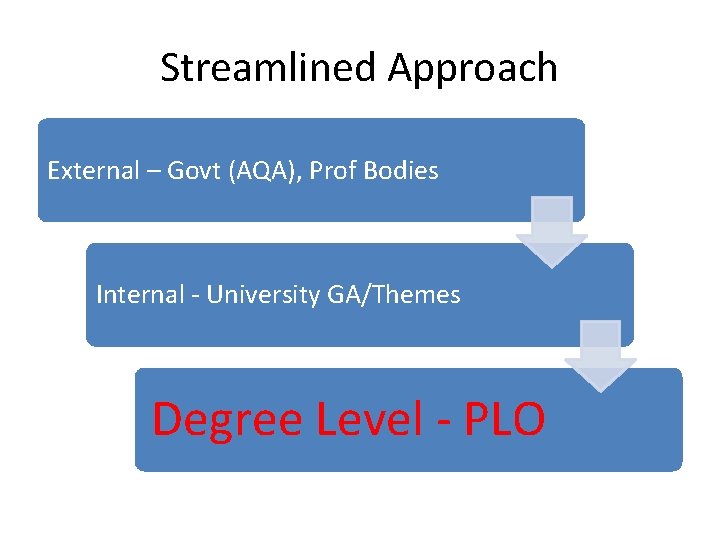
Streamlined Approach External – Govt (AQA), Prof Bodies Internal - University GA/Themes Degree Level - PLO
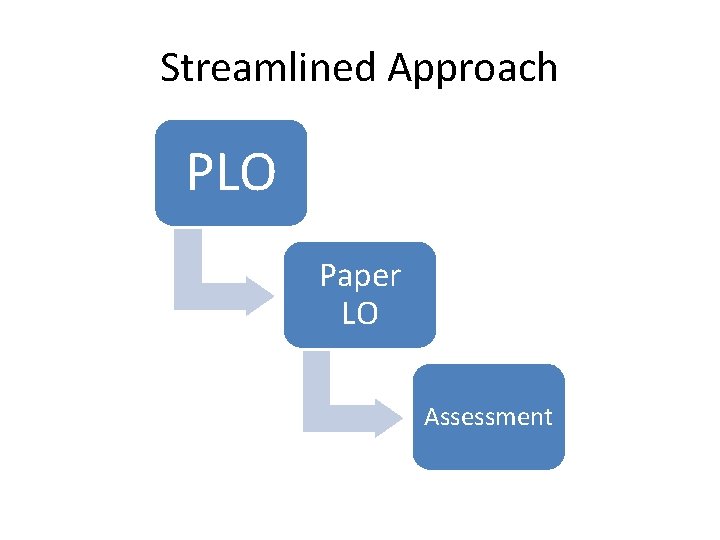
Streamlined Approach PLO Paper LO Assessment
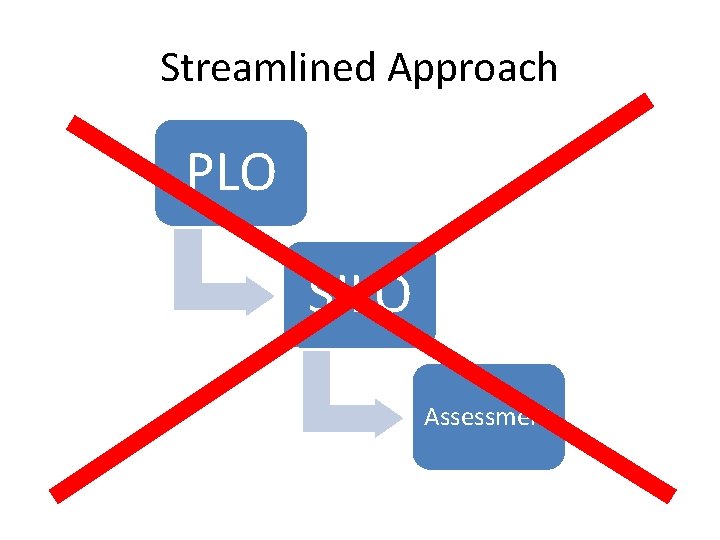
Streamlined Approach PLO SILO Assessment
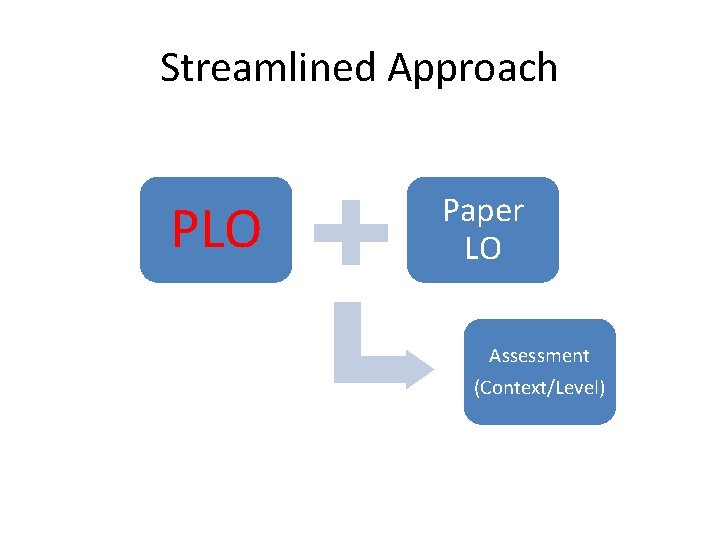
Streamlined Approach PLO Paper LO Assessment (Context/Level)
Designing learning Learning Outcomes Learning Activities Evaluation Assessment • How will you/ students know if they can do it?
Step 2 Creating PLO Rubrics
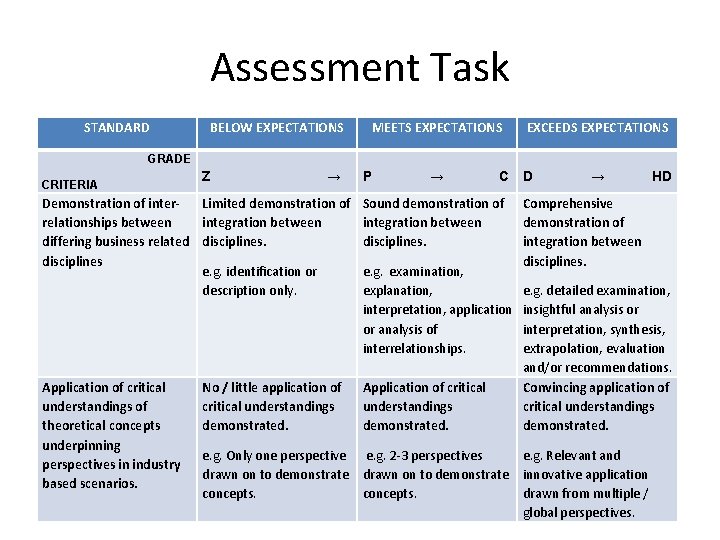
Assessment Task STANDARD BELOW EXPECTATIONS MEETS EXPECTATIONS EXCEEDS EXPECTATIONS → → GRADE CRITERIA Z → P C D Demonstration of inter. Limited demonstration of relationships between integration between differing business related disciplines e. g. identification or description only. Sound demonstration of integration between disciplines. Application of critical understandings of theoretical concepts underpinning perspectives in industry based scenarios. No / little application of critical understandings demonstrated. Application of critical understandings demonstrated. e. g. Only one perspective drawn on to demonstrate concepts. e. g. 2 -3 perspectives drawn on to demonstrate concepts. e. g. examination, explanation, interpretation, application or analysis of interrelationships. HD Comprehensive demonstration of integration between disciplines. e. g. detailed examination, insightful analysis or interpretation, synthesis, extrapolation, evaluation and/or recommendations. Convincing application of critical understandings demonstrated. e. g. Relevant and innovative application drawn from multiple / global perspectives.
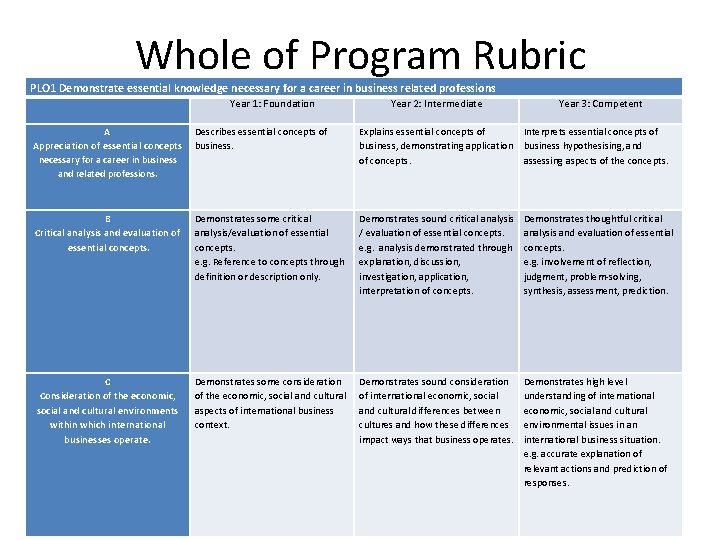
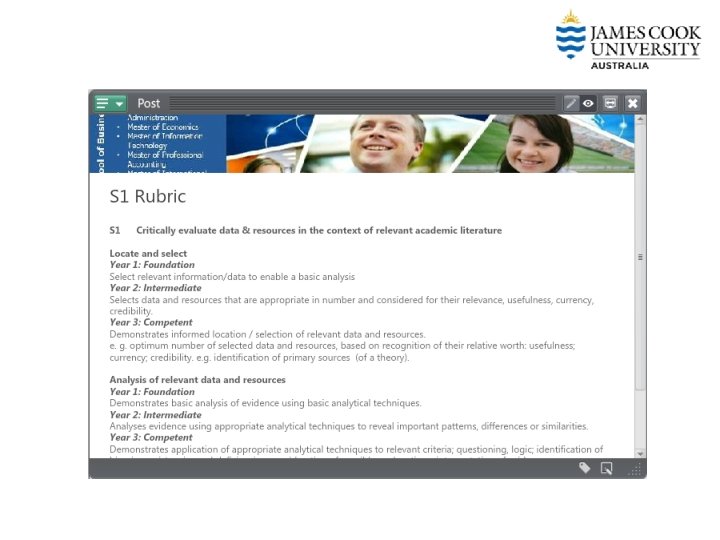
Whole of Program Rubric PLO 1 Demonstrate essential knowledge necessary for a career in business related professions Year 1: Foundation Year 2: Intermediate Year 3: Competent A Appreciation of essential concepts necessary for a career in business and related professions. Describes essential concepts of business. Explains essential concepts of business, demonstrating application of concepts. Interprets essential concepts of business hypothesising, and assessing aspects of the concepts. B Critical analysis and evaluation of essential concepts. Demonstrates some critical analysis/evaluation of essential concepts. e. g. Reference to concepts through definition or description only. Demonstrates sound critical analysis / evaluation of essential concepts. e. g. analysis demonstrated through explanation, discussion, investigation, application, interpretation of concepts. Demonstrates thoughtful critical analysis and evaluation of essential concepts. e. g. involvement of reflection, judgment, problem-solving, synthesis, assessment, prediction. C Consideration of the economic, social and cultural environments within which international businesses operate. Demonstrates some consideration of the economic, social and cultural aspects of international business context. Demonstrates sound consideration of international economic, social and cultural differences between cultures and how these differences impact ways that business operates. Demonstrates high level understanding of international economic, social and cultural environmental issues in an international business situation. e. g. accurate explanation of relevant actions and prediction of responses.
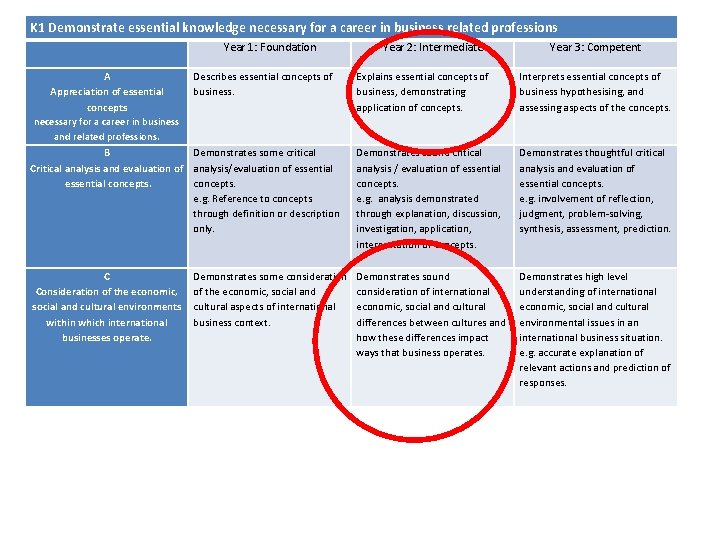
K 1 Demonstrate essential knowledge necessary for a career in business related professions Year 1: Foundation A Appreciation of essential concepts necessary for a career in business and related professions. Describes essential concepts of business. Year 2: Intermediate Year 3: Competent Explains essential concepts of business, demonstrating application of concepts. Interprets essential concepts of business hypothesising, and assessing aspects of the concepts. B Demonstrates some critical Critical analysis and evaluation of analysis/evaluation of essential concepts. e. g. Reference to concepts through definition or description only. Demonstrates sound critical analysis / evaluation of essential concepts. e. g. analysis demonstrated through explanation, discussion, investigation, application, interpretation of concepts. Demonstrates thoughtful critical analysis and evaluation of essential concepts. e. g. involvement of reflection, judgment, problem-solving, synthesis, assessment, prediction. C Consideration of the economic, social and cultural environments within which international businesses operate. Demonstrates sound consideration of international economic, social and cultural differences between cultures and how these differences impact ways that business operates. Demonstrates high level understanding of international economic, social and cultural environmental issues in an international business situation. e. g. accurate explanation of relevant actions and prediction of responses. Demonstrates some consideration of the economic, social and cultural aspects of international business context.
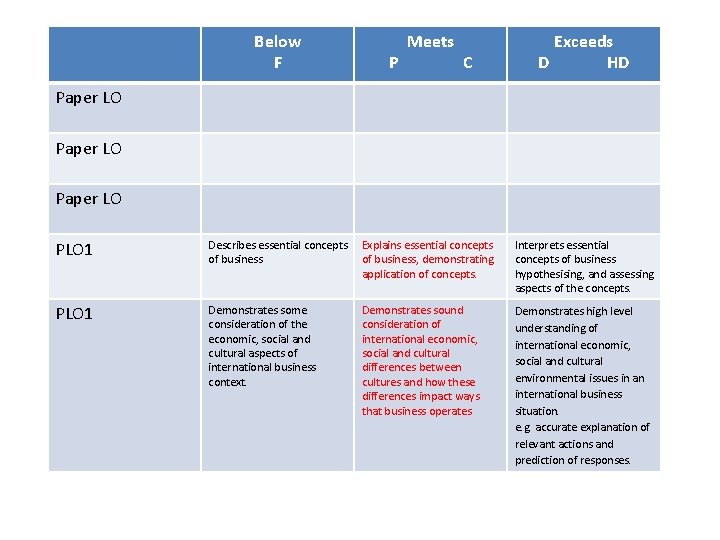
Below F P Meets C Exceeds D HD Paper LO PLO 1 Describes essential concepts of business Explains essential concepts of business, demonstrating application of concepts. Interprets essential concepts of business hypothesising, and assessing aspects of the concepts. PLO 1 Demonstrates some consideration of the economic, social and cultural aspects of international business context. Demonstrates sound consideration of international economic, social and cultural differences between cultures and how these differences impact ways that business operates Demonstrates high level understanding of international economic, social and cultural environmental issues in an international business situation. e. g. accurate explanation of relevant actions and prediction of responses.
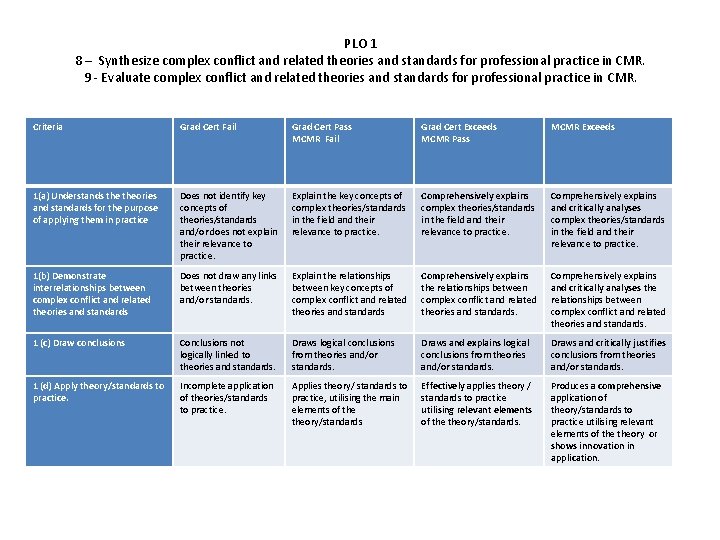
PLO 1 8 – Synthesize complex conflict and related theories and standards for professional practice in CMR. 9 - Evaluate complex conflict and related theories and standards for professional practice in CMR. Criteria Grad Cert Fail Grad Cert Pass MCMR Fail Grad Cert Exceeds MCMR Pass MCMR Exceeds 1(a) Understands theories and standards for the purpose of applying them in practice Does not identify key concepts of theories/standards and/or does not explain their relevance to practice. Explain the key concepts of complex theories/standards in the field and their relevance to practice. Comprehensively explains and critically analyses complex theories/standards in the field and their relevance to practice. 1(b) Demonstrate interrelationships between complex conflict and related theories and standards Does not draw any links between theories and/or standards. Explain the relationships between key concepts of complex conflict and related theories and standards Comprehensively explains the relationships between complex conflict and related theories and standards. Comprehensively explains and critically analyses the relationships between complex conflict and related theories and standards. 1 (c) Draw conclusions Conclusions not logically linked to theories and standards. Draws logical conclusions from theories and/or standards. Draws and explains logical conclusions from theories and/or standards. Draws and critically justifies conclusions from theories and/or standards. 1 (d) Apply theory/standards to practice. Incomplete application of theories/standards to practice. Applies theory/ standards to practice, utilising the main elements of theory/standards Effectively applies theory / standards to practice utilising relevant elements of theory/standards. Produces a comprehensive application of theory/standards to practice utilising relevant elements of theory or shows innovation in application.
Rubric Links • http: //boliver. ning. com/page/standardsrubrics-business-and-law • http: //www. aacu. org/value/rubrics/index. cfm
Whole of Program Design Tool • Login
Step 3 Designing Authentic Assessment
Designing a PLO Assessment • Select a PLO • Brainstorm – How would students demonstrate the competence in industry/profession/real life? • Translate this brainstorm into authentic assessment tasks
Step 4 Scaffolding Assessment
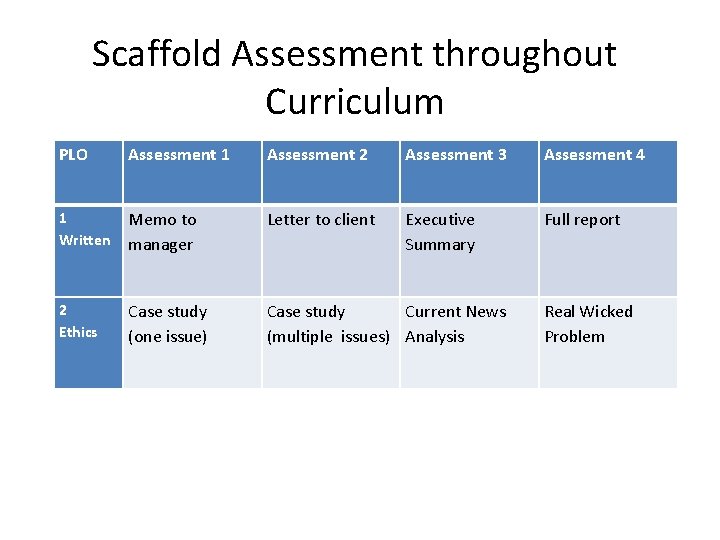
Scaffolding Assessment • Now look at this collection assessment tasks and ask – How can you build throughout the program(increase complexity) eg from level 8 (grad cert) to level 9 (MBA)? This is scaffolded assessment – Example critical analysis may start with a simpler issue with just a couple of perspectives and build to a more complex dilemma with a multitude of perspectives and no real solution (a wicked problem)
Scaffold Assessment throughout Curriculum PLO Assessment 1 Assessment 2 Assessment 3 Assessment 4 1 Written Memo to manager Letter to client Executive Summary Full report 2 Ethics Case study (one issue) Case study Current News (multiple issues) Analysis Real Wicked Problem
Whole of Program Design Tool • Login
Step 5 Mapping into the Curriculum
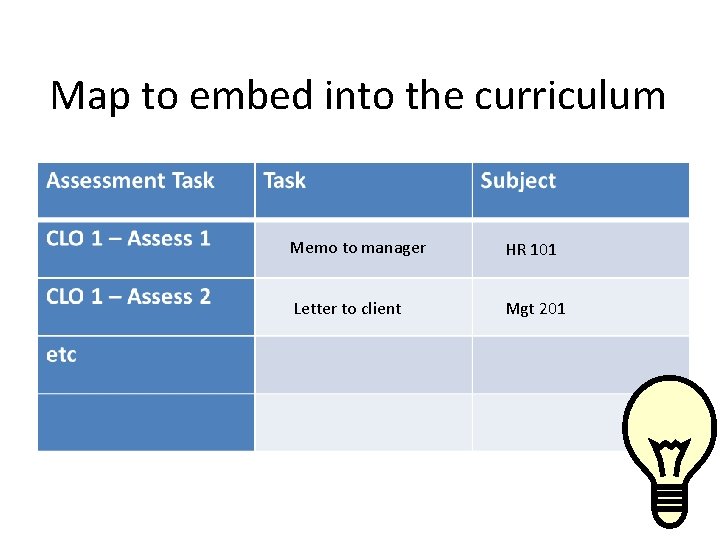
Map to embed into the curriculum Memo to manager HR 101 Letter to client Mgt 201
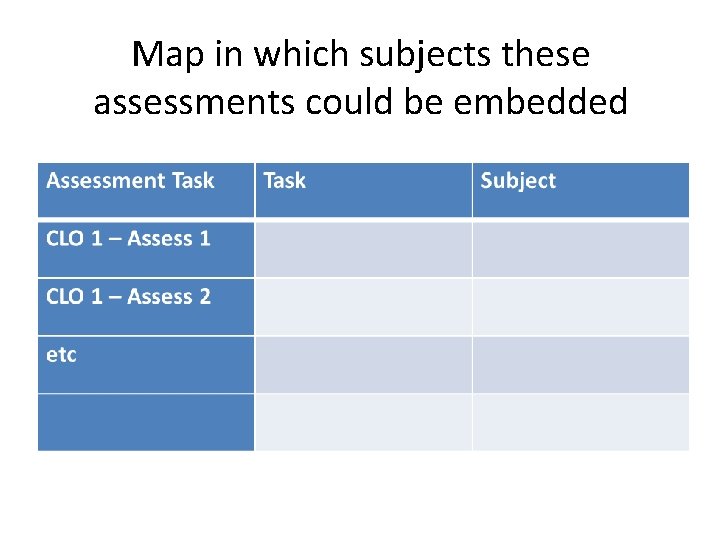
Map in which subjects these assessments could be embedded
Whole of Program Design Tool • Login
Step 6 Engaging Students
Whole of Program Marking
Step 7 Calibration
Assessment – How do we make judgements? • Sadler (2012) discusses commonly used options in assuring achievement including: – overall results, – external examiner systems, – threshold standards and – standardised testing, but stresses problems with each of these methods unless a – moderation and calibration process is included.
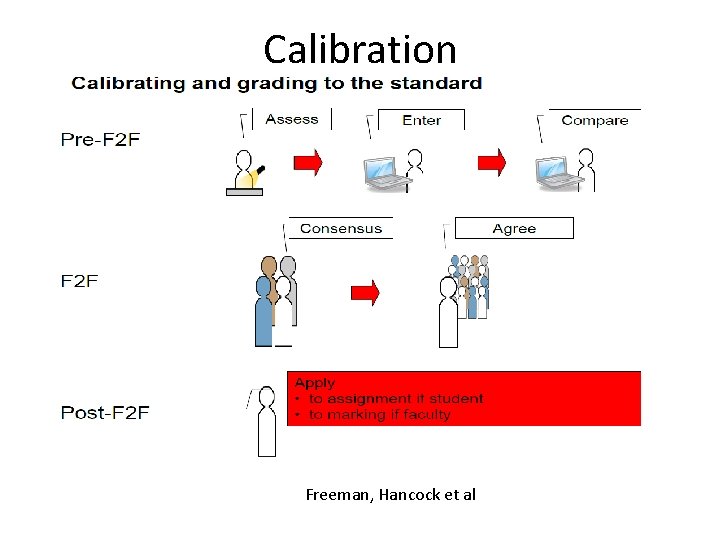
Calibration Freeman, Hancock et al
Step 8 Evidence
Whole of Program e. Portfolios • Yorke (2008) proposed that evidence can (some might say 'should') be created by students. • Creating e. Portfolios is said to enable students to enhance their learning by giving them a better understanding of their skills and attributes, as well as where and how they need to improve to meet academic and career goals (Yancey, 1999).
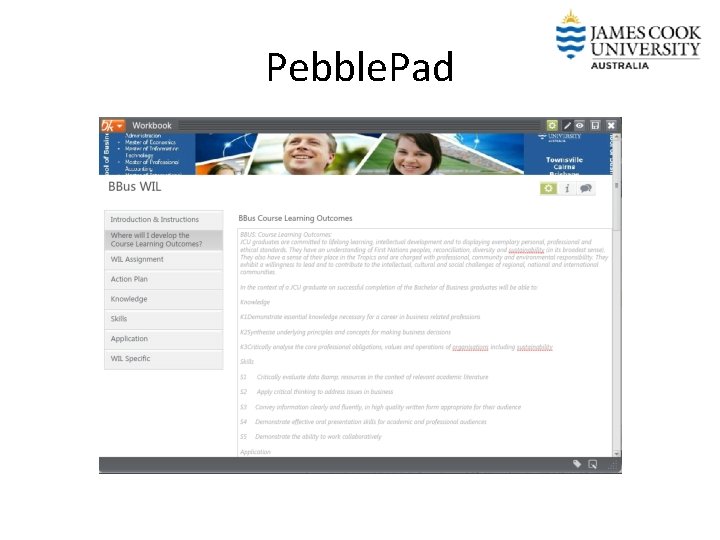
Pebble. Pad
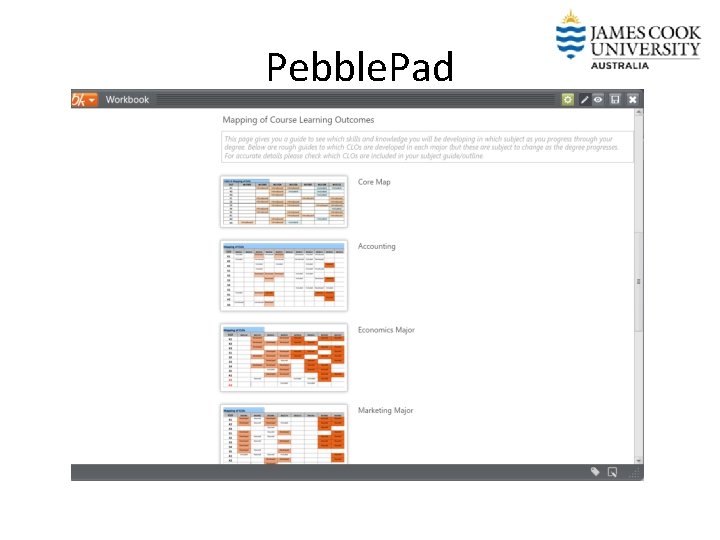
Pebble. Pad
Resources • Website: – http: //assuringlearning. com/ – Curriculum Design