
Principle of protein folding in the cellular environment

- Slides: 11
Principle of protein folding in the cellular environment The ability of newly synthesized protein chains to fold into their functional form within the complex intracellular environment.
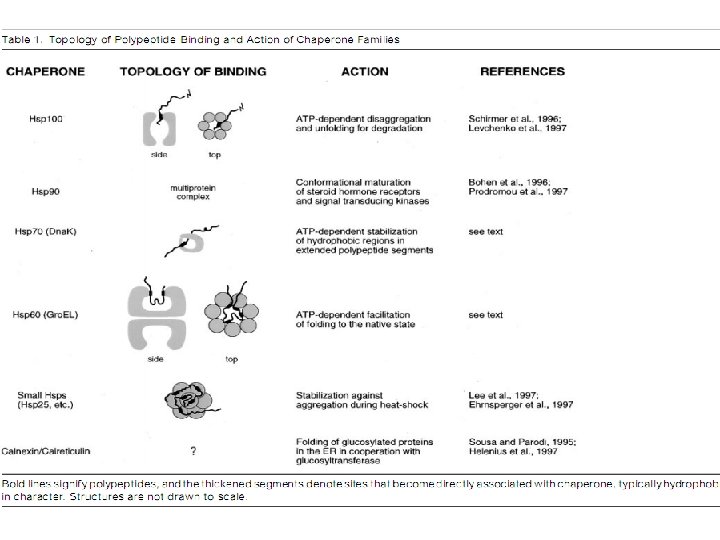
Molecular Chaperons • Proteins that help the folding of other proteins, usually through cycles of binding and release, without forming part of their final native structure. • Increase in the efficiency, not the specificity, of protein folding • Change in emphasis from post-translational modification to co-translational modification • In vitro, both Gro. EL and Hsp 70 interact promiscuously with most unfolded proteins.
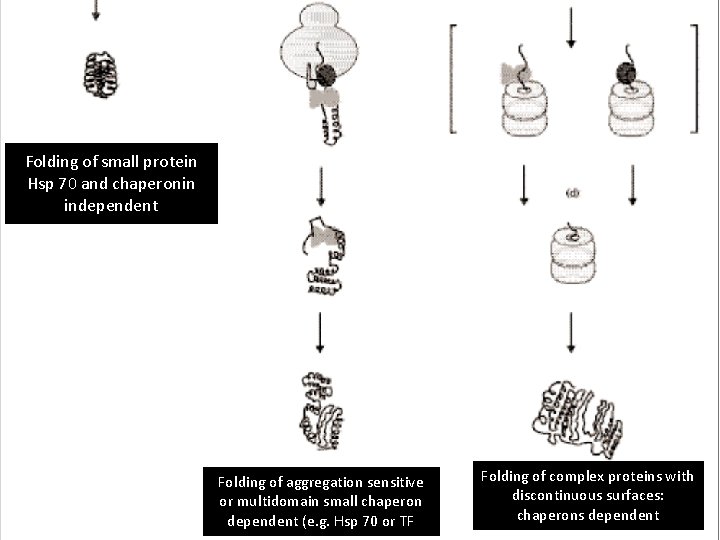
Protein folding in the cytosol of prokaryotic and eukaryotic cells.
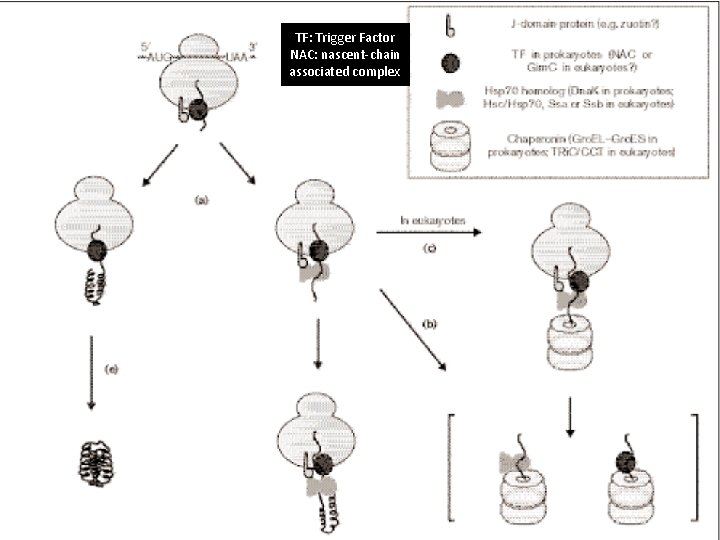
TF: Trigger Factor NAC: nascent-chain associated complex
Folding of small protein Hsp 70 and chaperonin independent Folding of aggregation sensitive or multidomain small chaperon dependent (e. g. Hsp 70 or TF Folding of complex proteins with discontinuous surfaces: chaperons dependent
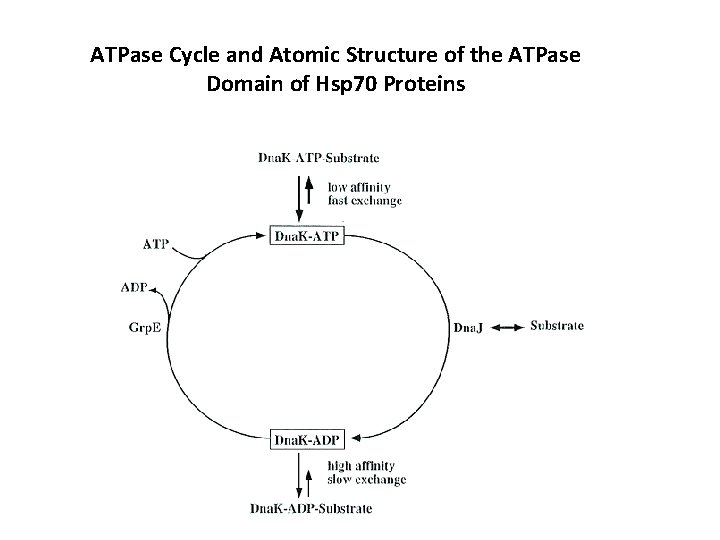
ATPase Cycle and Atomic Structure of the ATPase Domain of Hsp 70 Proteins
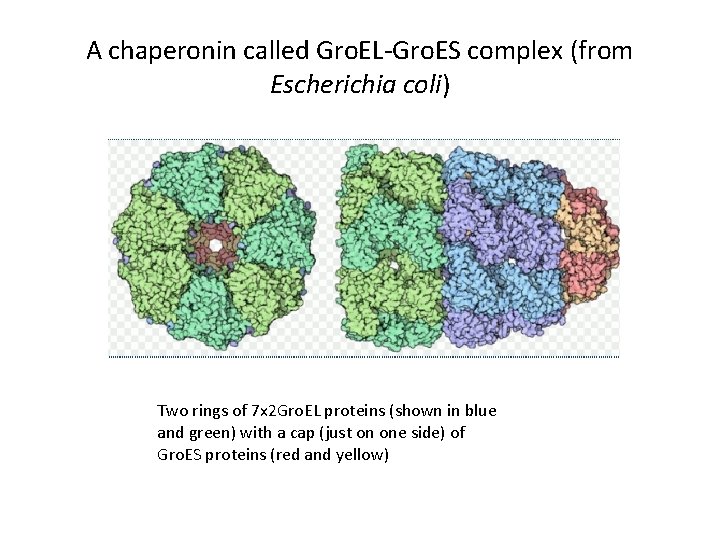
A chaperonin called Gro. EL-Gro. ES complex (from Escherichia coli) Two rings of 7 x 2 Gro. EL proteins (shown in blue and green) with a cap (just on one side) of Gro. ES proteins (red and yellow)
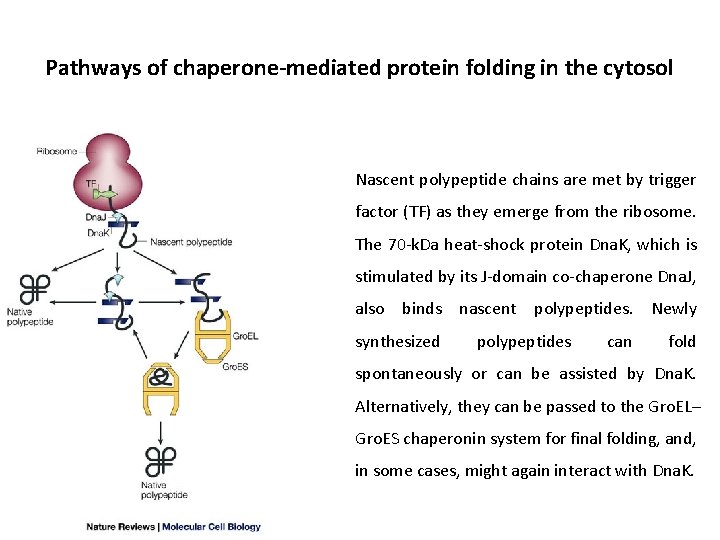
Pathways of chaperone-mediated protein folding in the cytosol Nascent polypeptide chains are met by trigger factor (TF) as they emerge from the ribosome. The 70 -k. Da heat-shock protein Dna. K, which is stimulated by its J-domain co-chaperone Dna. J, also binds nascent polypeptides. Newly synthesized polypeptides can fold spontaneously or can be assisted by Dna. K. Alternatively, they can be passed to the Gro. EL– Gro. ES chaperonin system for final folding, and, in some cases, might again interact with Dna. K.
• The steric information necessary for newly synthesized protein chains to fold correctly within cells resides solely in the primary structure of the initial translation product. – Three families of molecular chaperone best known to interact with newly synthesized protein: hsp 70, hsp 40, and chaperonins
Reference