
Principle and working of a nuclear reactor The
- Slides: 11
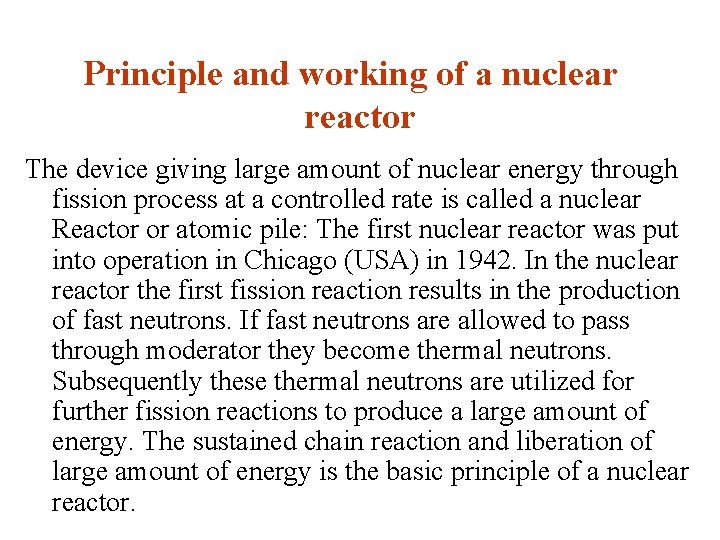
Principle and working of a nuclear reactor The device giving large amount of nuclear energy through fission process at a controlled rate is called a nuclear Reactor or atomic pile: The first nuclear reactor was put into operation in Chicago (USA) in 1942. In the nuclear reactor the first fission reaction results in the production of fast neutrons. If fast neutrons are allowed to pass through moderator they become thermal neutrons. Subsequently these thermal neutrons are utilized for further fission reactions to produce a large amount of energy. The sustained chain reaction and liberation of large amount of energy is the basic principle of a nuclear reactor.
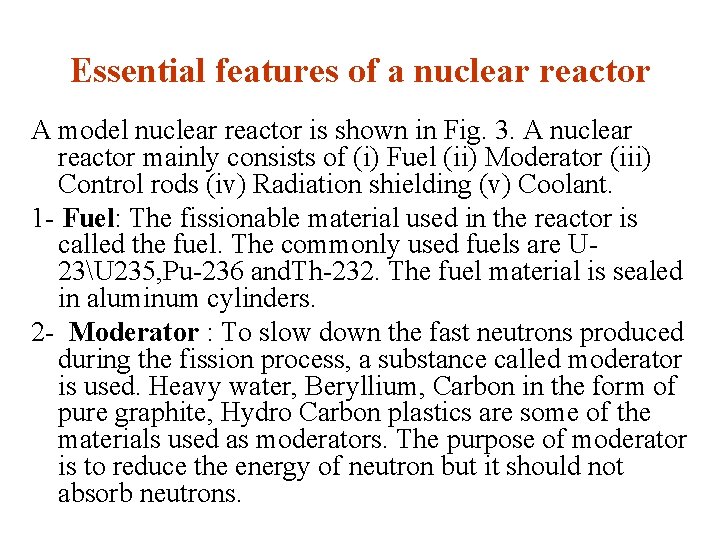
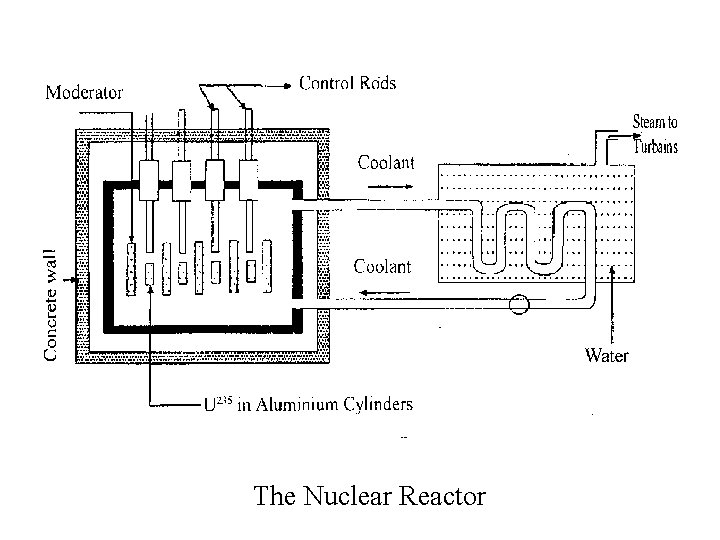
Essential features of a nuclear reactor A model nuclear reactor is shown in Fig. 3. A nuclear reactor mainly consists of (i) Fuel (ii) Moderator (iii) Control rods (iv) Radiation shielding (v) Coolant. 1 - Fuel: The fissionable material used in the reactor is called the fuel. The commonly used fuels are U 23U 235, Pu-236 and. Th-232. The fuel material is sealed in aluminum cylinders. 2 - Moderator : To slow down the fast neutrons produced during the fission process, a substance called moderator is used. Heavy water, Beryllium, Carbon in the form of pure graphite, Hydro Carbon plastics are some of the materials used as moderators. The purpose of moderator is to reduce the energy of neutron but it should not absorb neutrons.
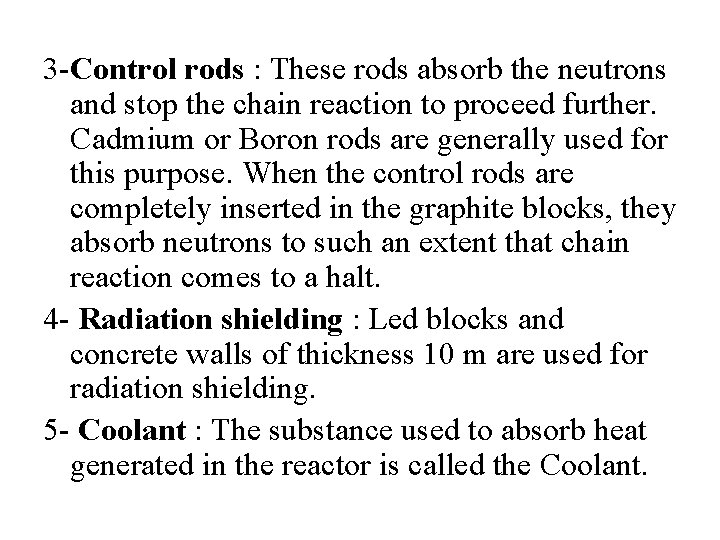
3 -Control rods : These rods absorb the neutrons and stop the chain reaction to proceed further. Cadmium or Boron rods are generally used for this purpose. When the control rods are completely inserted in the graphite blocks, they absorb neutrons to such an extent that chain reaction comes to a halt. 4 - Radiation shielding : Led blocks and concrete walls of thickness 10 m are used for radiation shielding. 5 - Coolant : The substance used to absorb heat generated in the reactor is called the Coolant.
The Nuclear Reactor
• Reactors are classified into different categories based on the fuel used in them. • In Fission, most of the neutrons are released promptly, but some are delayed. These are crucial in enabling a chain reacting system (or reactor) to be controllable and to be able to be held precisely critical.
Radio-isotopes and their uses Radio - isotopes are produced in nuclear reactor and are used in the fields of medicine, agriculture, engineering and industry. Important uses of istopes are given below : 1 - Isotopes are used to test the wear and tear of engine parts like piston rings, gears, ball bearings and in deciding the efficiency of lubricants. 2 - Radioiodine(53 I 131) has half life of 8 days and decay through '{3 " emission and is used in determining the size, activity and functioning of thyroid gland. So also by means of detecting the emitted radiation from the mixture of radio-isotope and organic dyes the radiologist gets information about the size and location of brain tumour. 3 - Restriction in blood circulation can be detected using radio sodium.
4 - Leukamea disease is found to respond to treatment by radiation from radio-isotopes of phosphorus. 5 - By using a fertilizer in which radio-phosphorus is employed it is possible to know to what extent the plant absorbs phosphorus from a particular fertilizer. 6 - By measuring the ratio of concentration of C-14 to C 12 in the remnants of dead organisms and comparing it with the normal ratio in living organism it is possible to estimate, when the organism ceased to live. To find the age of ancient objects found during excavations, manuscripts, etc. this technique of 'radio-carbon dating' is used. 7 - Radio-isotopes are used to test the metal castings and welds without causing any damage to the material (called Non Destructive Testing).
Nuclear radiation hazards • Living matter is sensitive to radiation. Irradiation of the body with small dose of y -rays or X-rays increases the body temperature. More primitive animals and plants are some what less sensitive to radiation. • Damage to the intestinal mucosa, impairment of the production of the blood corpuscles, damage to the system of producing antibodies which are important in the defense against infections, damage to the lens of the eye, production of cancers including leukemia, etc. , Developing organisms (children) are more sensitive than adult organisms to radiation hazards. Radiation causes genetic mutation. • External radiation sources are effective mainly when they emit penetrating radiations like electromagnetic and neutron radiations. The radiation damage to human beings is due to (i) intake of radio active materials and (ii) exposure to radiation.
• A radio active gas like Radon inhaled is injurious to lungs. The extent of damage depends on the nature of radiation and dose absorbed. Radio-iodine is extremely dangerous as it is concentrated in the thyroid gland, a very sensitive organ. Because of small penetrating power of a radiation its damage is the least. The, main external hazard is posed by γ -rays and neutrons.
Protective Shielding • Uses of lead blocks, concrete walls of thickness 10 m can prevent the spreading of radio-active effect around the nuclear reactor. This is called radiation shielding. • To prevent radiation hazards, rules have been worked out by International Commission of Radiation Protection (ICRP) Tolerance doses which are permissible for individuals when exposed professionally to penetrating radiations, have been published by 'ICRP'. Maximum amount of various radio-elements acceptable within a human body through drinking water and air (vapor or dust) are also published by 'ICRP', in order to prevent radiation hazards.
• Regarding the radiation hazards in connection with nuclear reactors care should be taken to store the radio active fission products after separation from the nuclear fuel. Storage tanks made of steel are generally used to contain the unwanted fission products.