
Principal Performance Evaluation System Student Academic Progress Goal
- Slides: 33
Principal Performance Evaluation System Student Academic Progress Goal Setting February 2013 1
What are the Purposes of Student Academic Progress Goal Setting? • • Focus on student results Explicitly connect teaching and learning Improve instructional practices and teacher performance Tool for school improvement 2
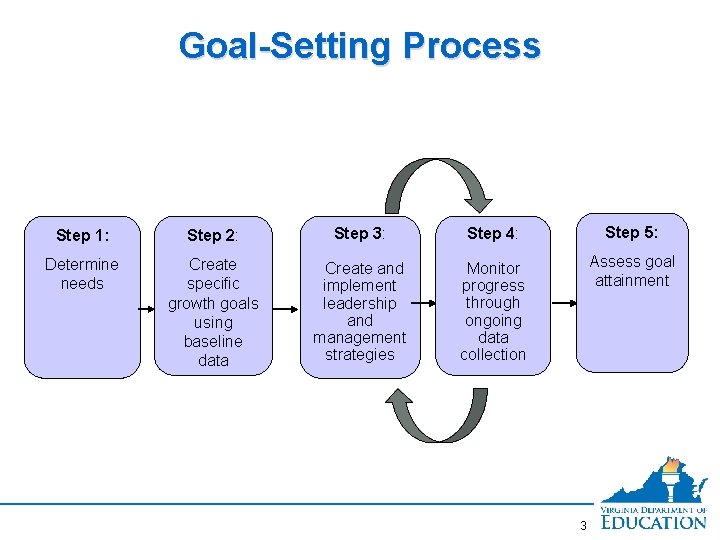
Goal-Setting Process Step 1: Step 2: Step 3: Step 4: Step 5: Determine needs Create specific growth goals using baseline data Create and implement leadership and management strategies Monitor progress through ongoing data collection Assess goal attainment 3
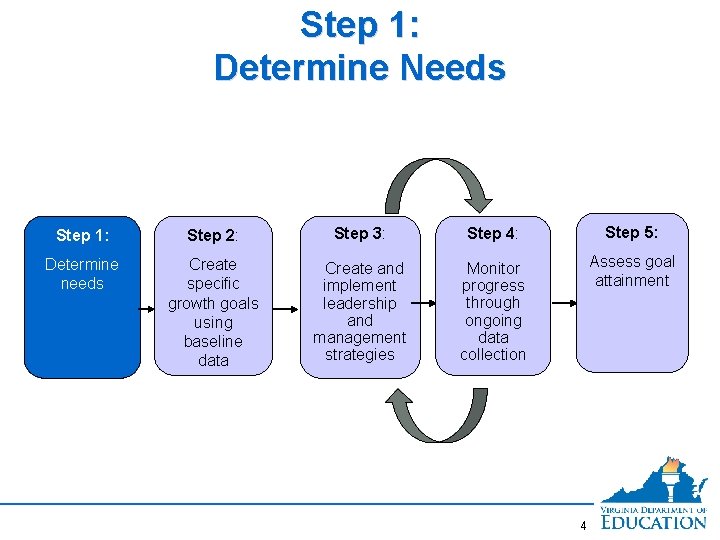
Step 1: Determine Needs Step 1: Step 2: Step 3: Step 4: Step 5: Determine needs Create specific growth goals using baseline data Create and implement leadership and management strategies Monitor progress through ongoing data collection Assess goal attainment 4
How Do We Determine Needs? 5
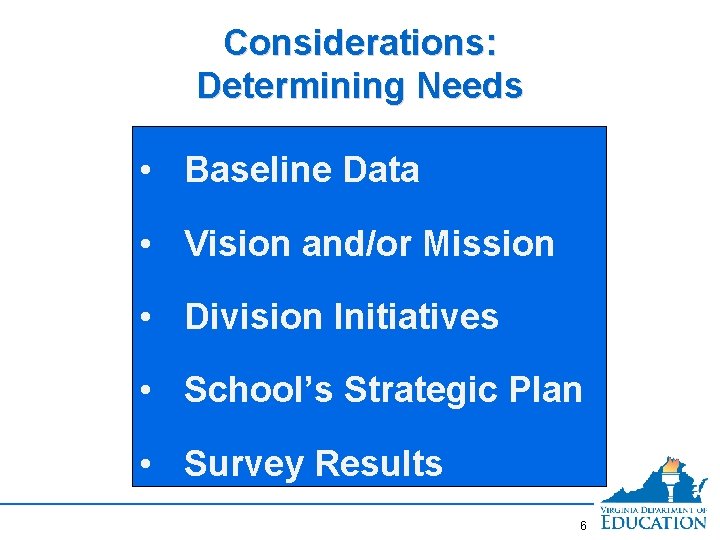
Considerations: Determining Needs • Baseline Data • Vision and/or Mission • Division Initiatives • School’s Strategic Plan • Survey Results 6
Simulation: Principal A Elementary School Principal 7
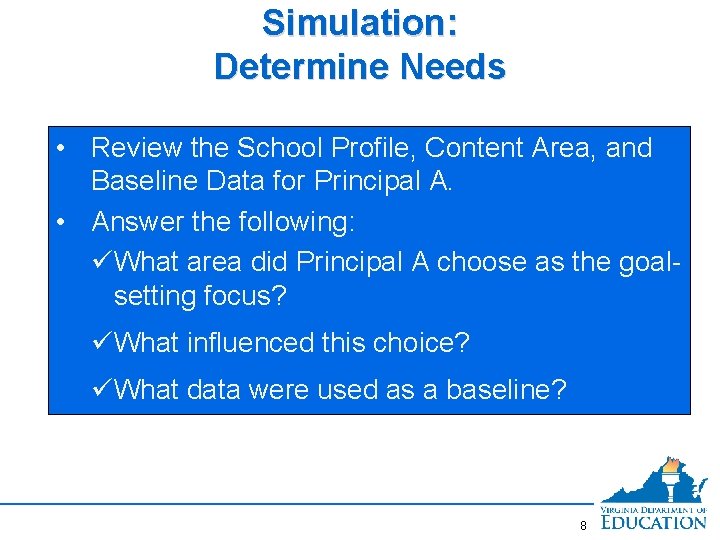
Simulation: Determine Needs • Review the School Profile, Content Area, and Baseline Data for Principal A. • Answer the following: üWhat area did Principal A choose as the goalsetting focus? üWhat influenced this choice? üWhat data were used as a baseline? 8
Implementation: Determine Needs • What might be some areas of focus for your school? • What baseline data could be used? 9
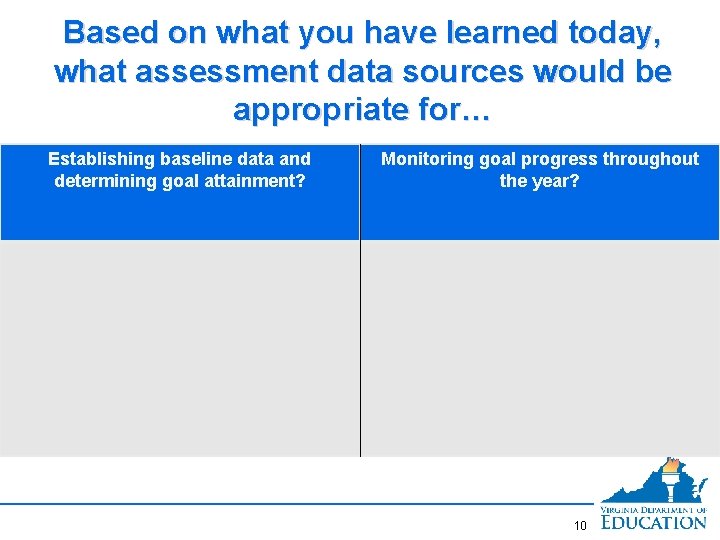
Based on what you have learned today, what assessment data sources would be appropriate for… Establishing baseline data and determining goal attainment? Monitoring goal progress throughout the year? 10
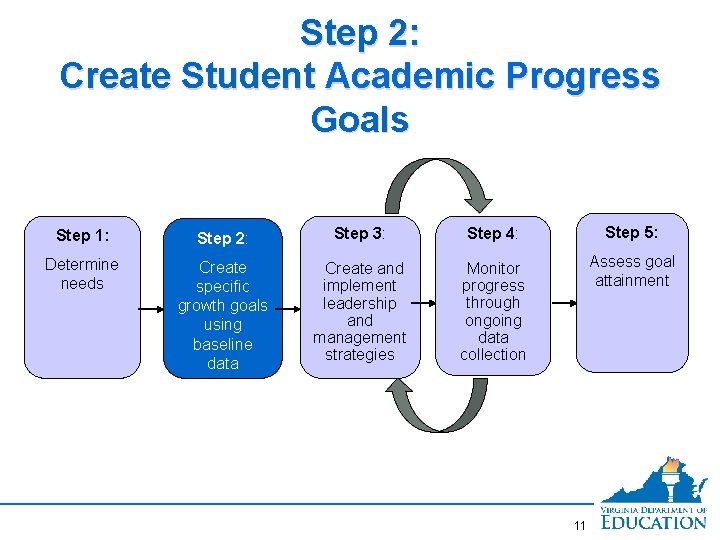
Step 2: Create Student Academic Progress Goals Step 1: Step 2: Step 3: Step 4: Step 5: Determine needs Create specific growth goals using baseline data Create and implement leadership and management strategies Monitor progress through ongoing data collection Assess goal attainment 11
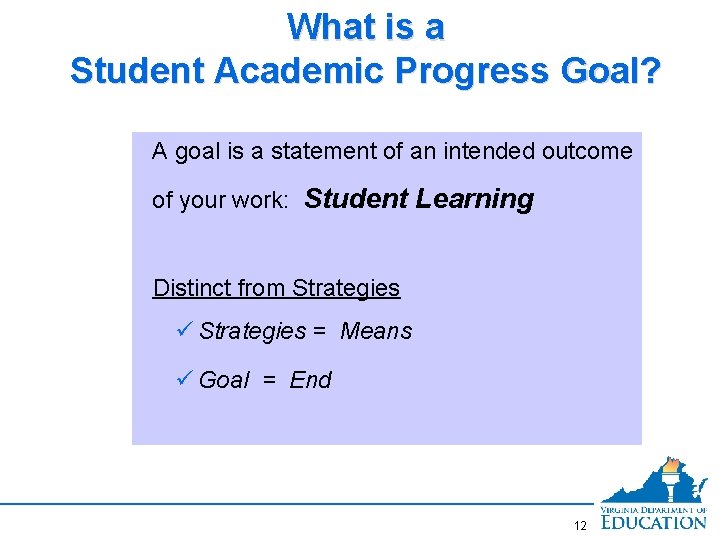
What is a Student Academic Progress Goal? A goal is a statement of an intended outcome of your work: Student Learning Distinct from Strategies ü Strategies = Means ü Goal = End 12
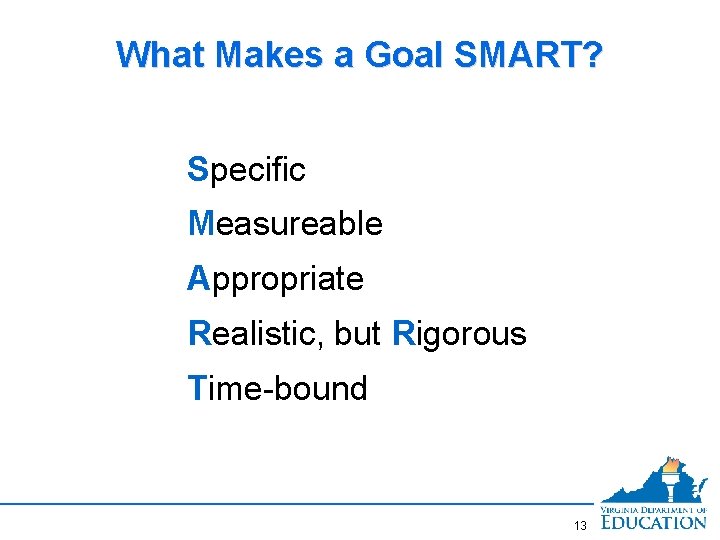
What Makes a Goal SMART? Specific Measureable Appropriate Realistic, but Rigorous Time-bound 13
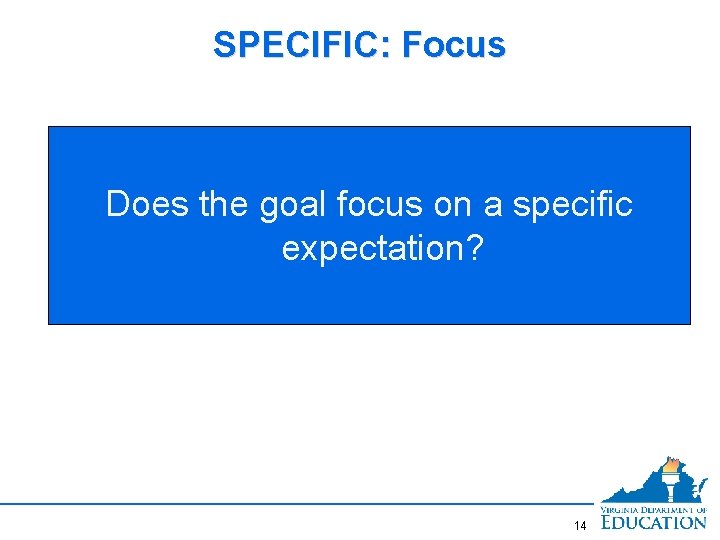
SPECIFIC: Focus Does the goal focus on a specific expectation? 14
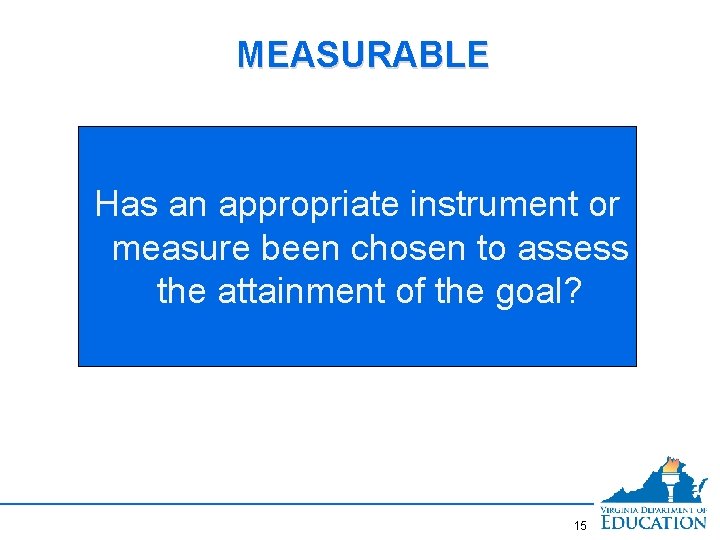
MEASURABLE Has an appropriate instrument or measure been chosen to assess the attainment of the goal? 15
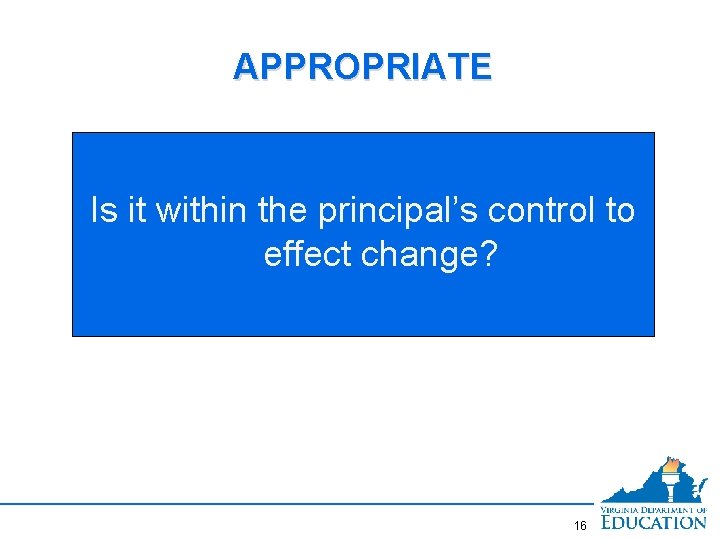
APPROPRIATE Is it within the principal’s control to effect change? 16
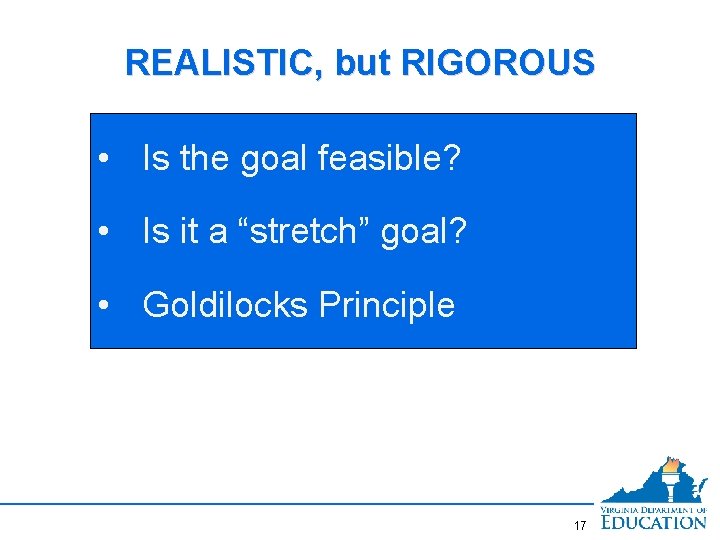
REALISTIC, but RIGOROUS • Is the goal feasible? • Is it a “stretch” goal? • Goldilocks Principle 17
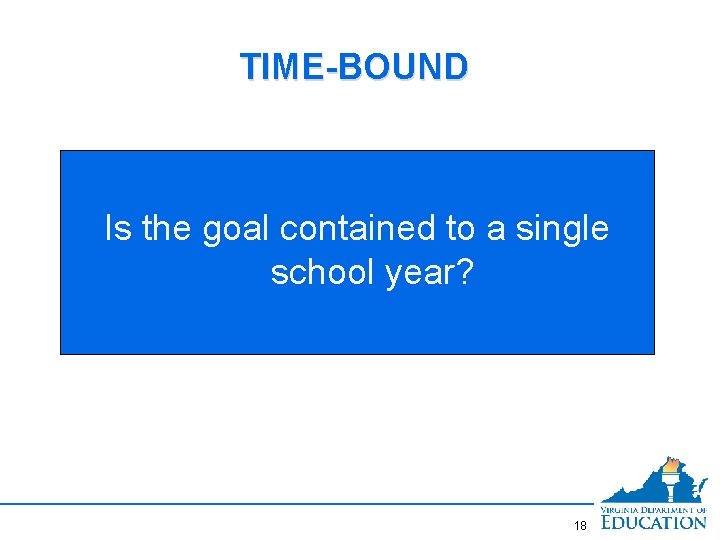
TIME-BOUND Is the goal contained to a single school year? 18
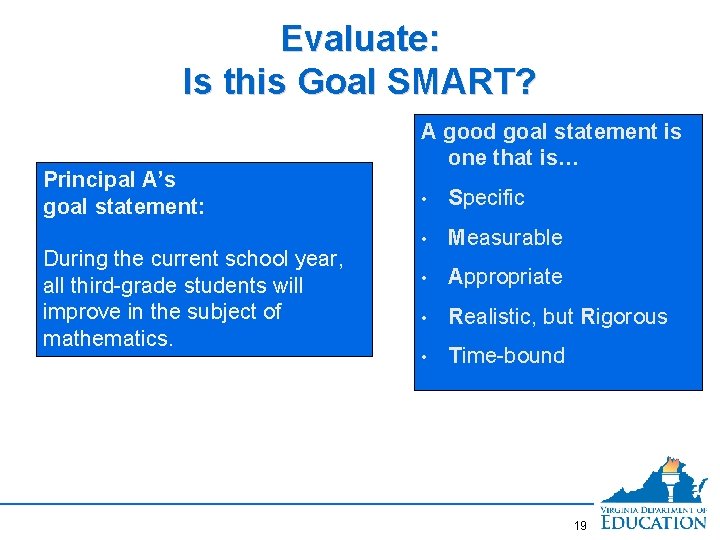
Evaluate: Is this Goal SMART? Principal A’s goal statement: During the current school year, all third-grade students will improve in the subject of mathematics. A good goal statement is one that is… • Specific • Measurable • Appropriate • Realistic, but Rigorous • Time-bound 19
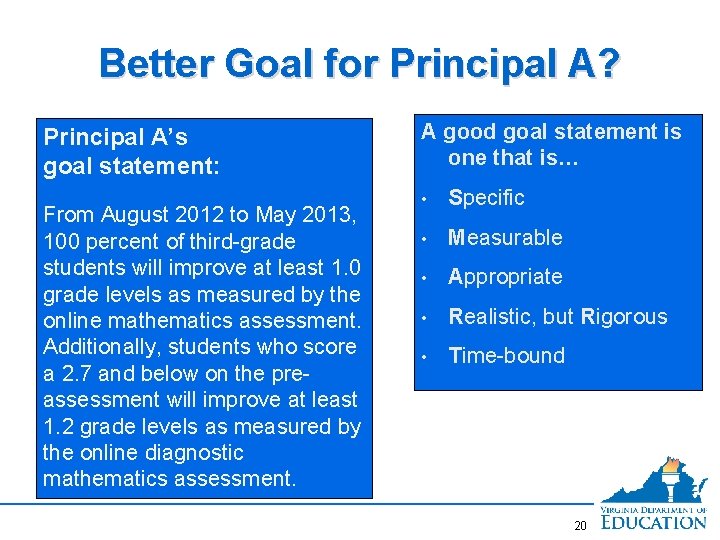
Better Goal for Principal A? Principal A’s goal statement: From August 2012 to May 2013, 100 percent of third-grade students will improve at least 1. 0 grade levels as measured by the online mathematics assessment. Additionally, students who score a 2. 7 and below on the preassessment will improve at least 1. 2 grade levels as measured by the online diagnostic mathematics assessment. A good goal statement is one that is… • Specific • Measurable • Appropriate • Realistic, but Rigorous • Time-bound 20
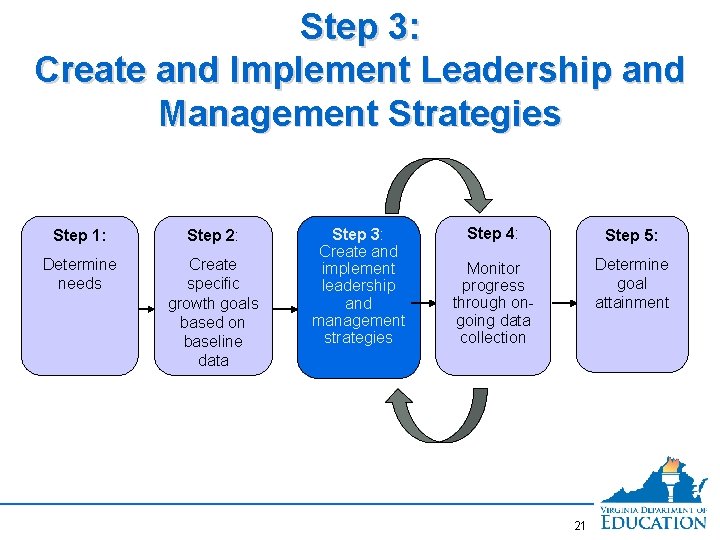
Step 3: Create and Implement Leadership and Management Strategies Step 1: Step 2: Determine needs Create specific growth goals based on baseline data Step 3: Create and implement leadership and management strategies Step 4: Step 5: Monitor progress through ongoing data collection Determine goal attainment 21
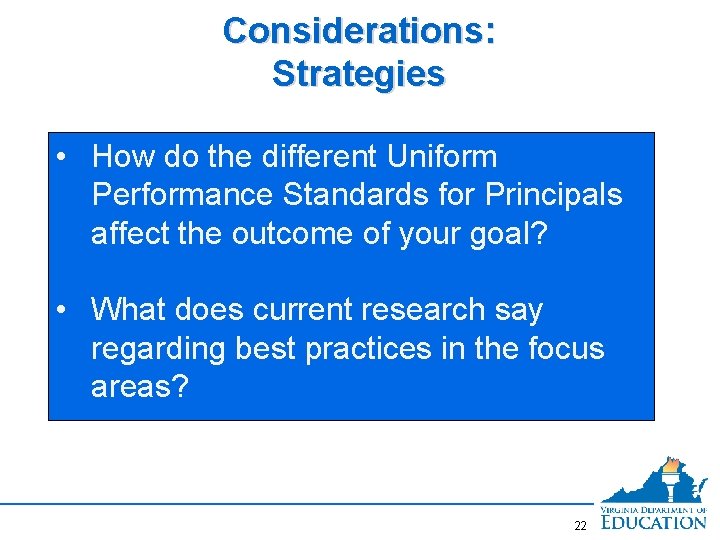
Considerations: Strategies • How do the different Uniform Performance Standards for Principals affect the outcome of your goal? • What does current research say regarding best practices in the focus areas? 22
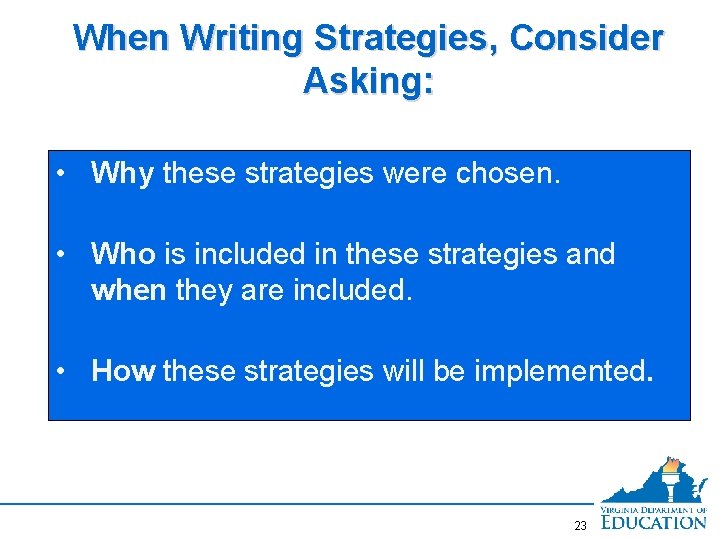
When Writing Strategies, Consider Asking: • Why these strategies were chosen. • Who is included in these strategies and when they are included. • How these strategies will be implemented. 23
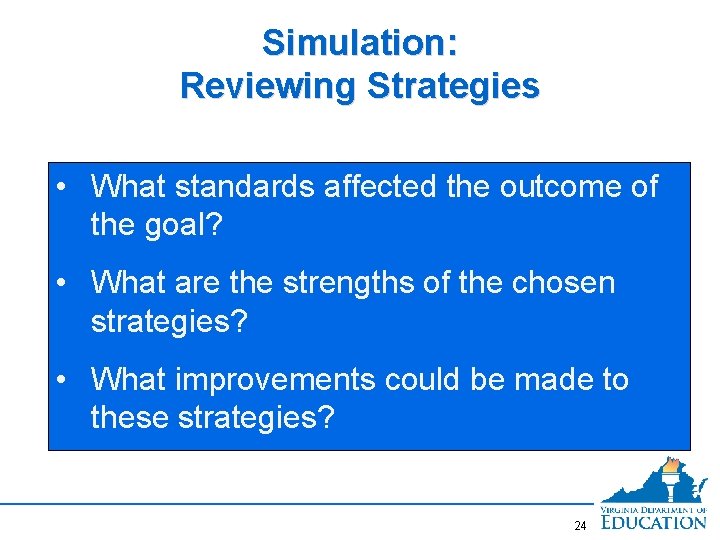
Simulation: Reviewing Strategies • What standards affected the outcome of the goal? • What are the strengths of the chosen strategies? • What improvements could be made to these strategies? 24
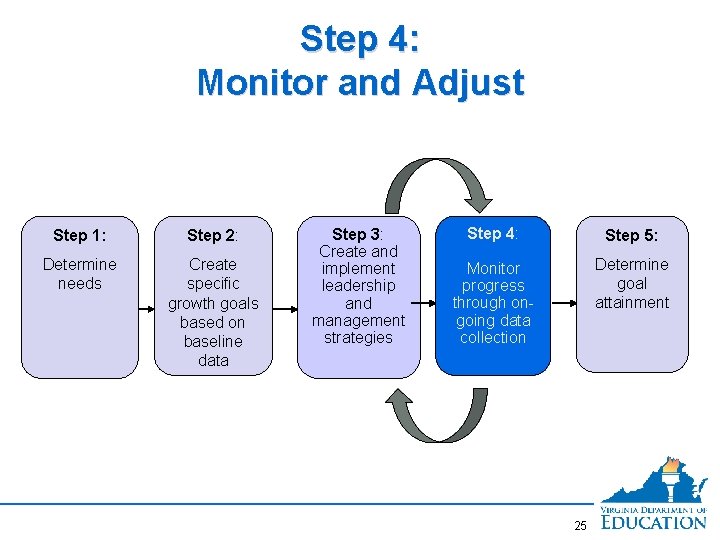
Step 4: Monitor and Adjust Step 1: Step 2: Determine needs Create specific growth goals based on baseline data Step 3: Create and implement leadership and management strategies Step 4: Step 5: Monitor progress through ongoing data collection Determine goal attainment 25
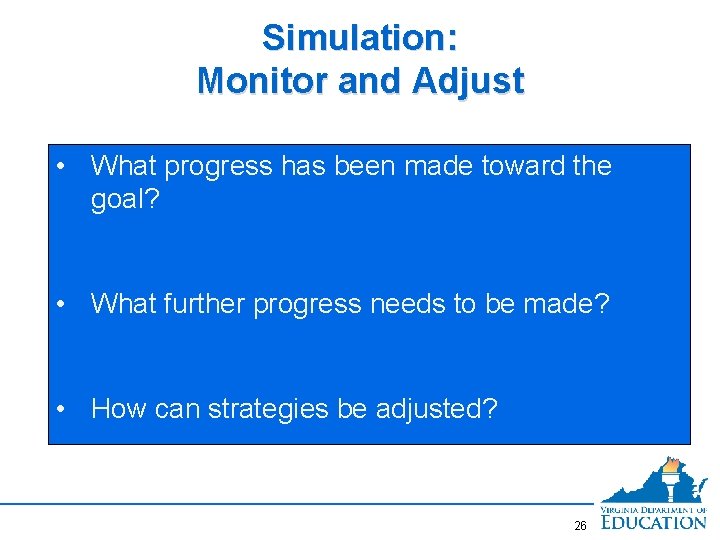
Simulation: Monitor and Adjust • What progress has been made toward the goal? • What further progress needs to be made? • How can strategies be adjusted? 26
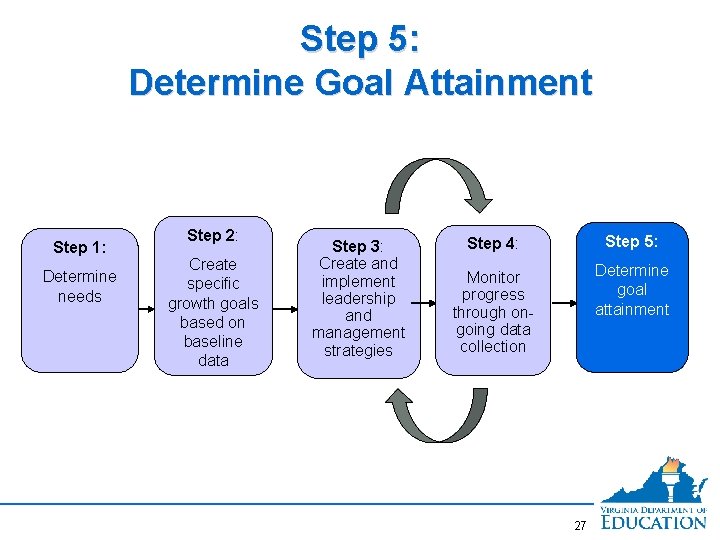
Step 5: Determine Goal Attainment Step 1: Determine needs Step 2: Create specific growth goals based on baseline data Step 3: Create and implement leadership and management strategies Step 4: Step 5: Monitor progress through ongoing data collection Determine goal attainment 27
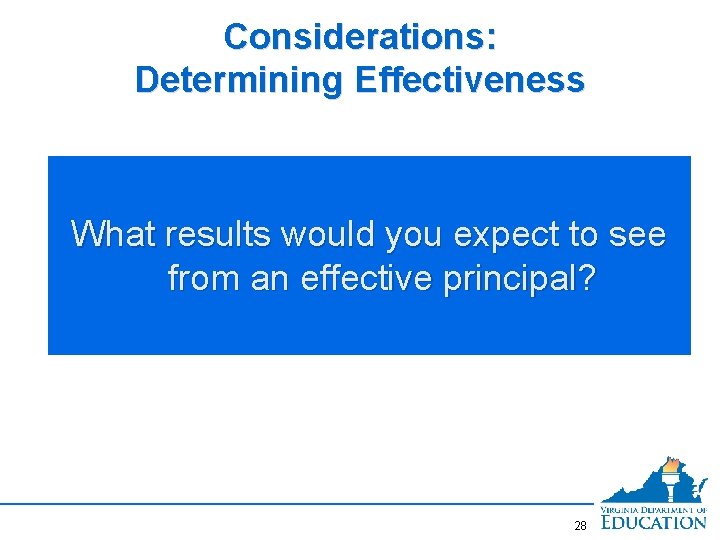
Considerations: Determining Effectiveness What results would you expect to see from an effective principal? 28
Simulation: Determine Goal Achievement • Did Principal A achieve the goal? • What contributed to any successes? • What improvements could be made? • If the same focus area is chosen next year, what might the new goal be? 29
In summary… 30
What are the challenges to student academic progress goals for principals? 31
What are the benefits of student academic progress goals for principals? 32
Questions? 33