
Principal Modality 1 MRI Radiological Category Musculoskeletal Principal

- Slides: 14
Principal Modality (1): MRI Radiological Category: Musculoskeletal Principal Modality (2): none Case Report # 757 Submitted by: Eduardo Gonzalez , M. D. Faculty reviewer: Chitra Chandrasekhar, M. D The University of Texas Medical School at Houston Date accepted: 14 February, 2011
Case History 36 year old male patient that presents with worsening right knee pain and remote history of trauma.
Radiological Presentations
Radiological Presentations
Radiological Presentations
Radiological Presentations
Radiological Presentations
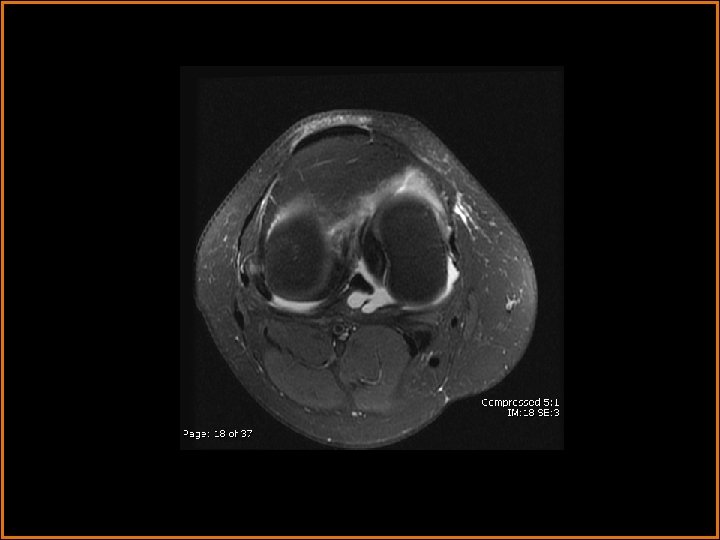
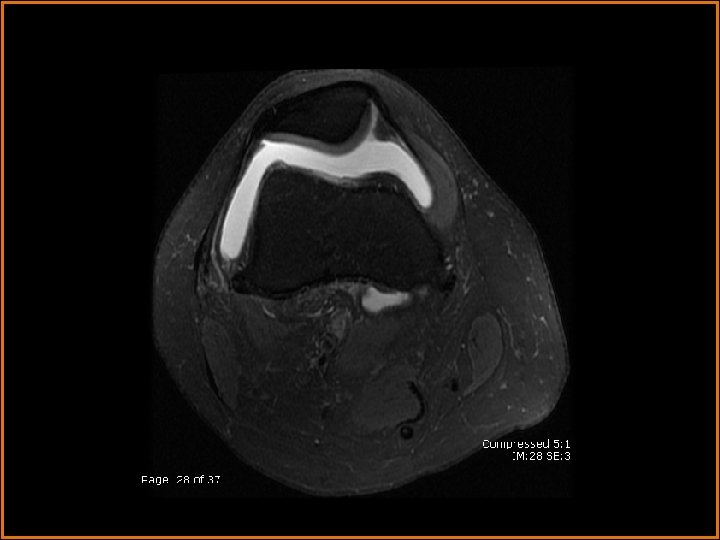
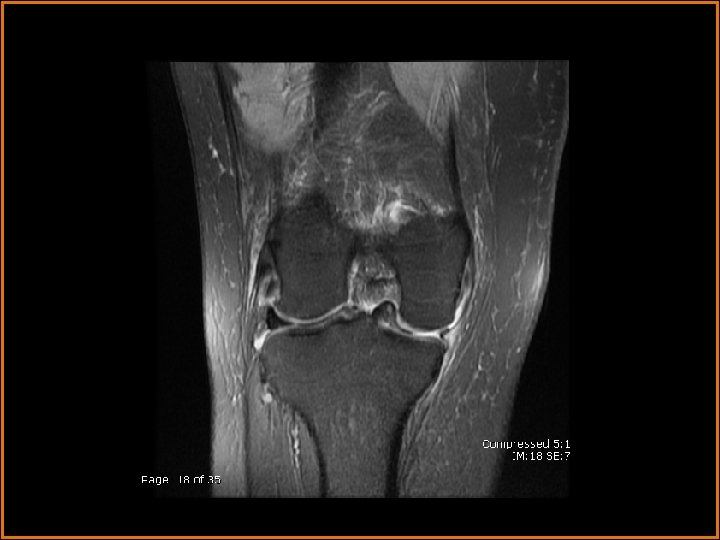
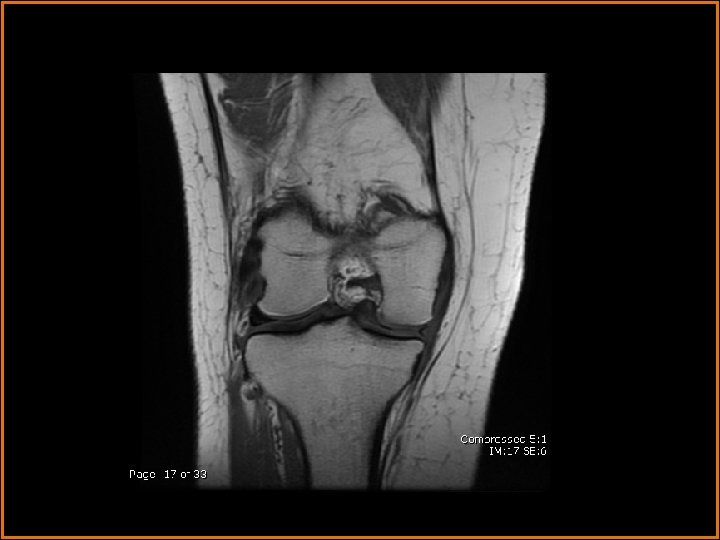
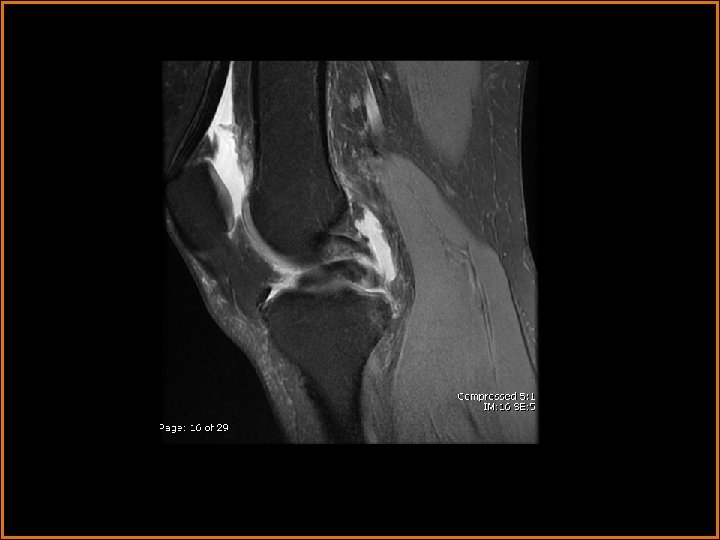
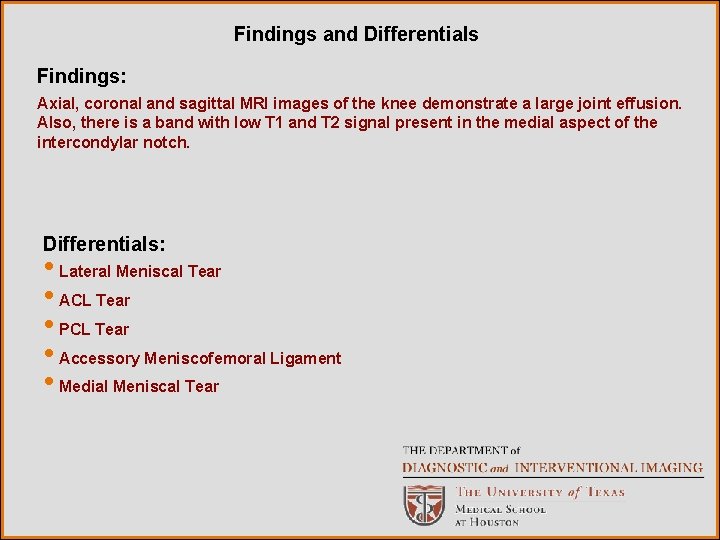
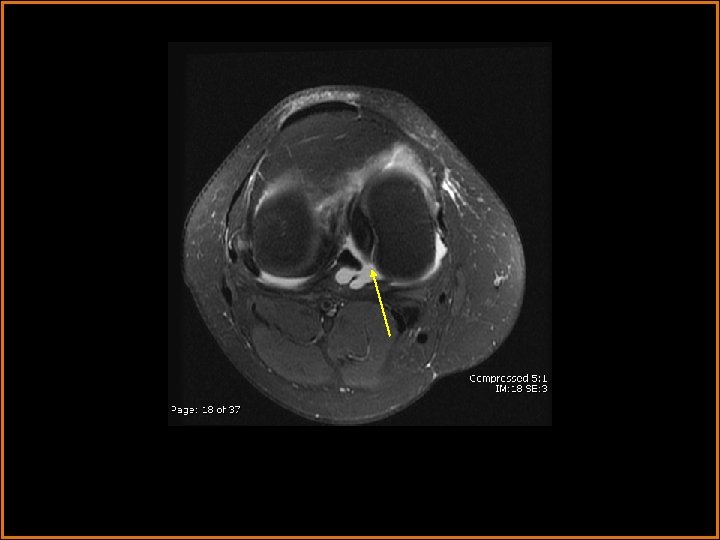
Findings and Differentials Findings: Axial, coronal and sagittal MRI images of the knee demonstrate a large joint effusion. Also, there is a band with low T 1 and T 2 signal present in the medial aspect of the intercondylar notch. Differentials: • Lateral Meniscal Tear • ACL Tear • PCL Tear • Accessory Meniscofemoral Ligament • Medial Meniscal Tear
Discussion • The low signal intensity band in the medial aspect of the intercondylar notch is due to a bucket-handle tear of the medial meniscus called the double PCL sign. • A longitudinal tear of the meniscus results in a displaced but attached meniscal fragment. • The fragment usually lies between the PCL and intercondylar notch with the fragment parallel and anteroinferior to the PCL. • The intact ACL serves as a barrier that prevents the lateral displacement of the fragment.
Radiological Presentations
Double PCL Sign
Discussion Diagnosis: Bucket handle tear of the medial meniscus Meniscal tears range from a spectrum of small, subtle tears to displaced tears. Early identification of complexity of the tear and displacement is crucial because any delay can compromise the chances of repair. These tears can cause substantial symptoms including locking of the knee joint or lack of full extension. Usually the patient refers a history of trauma with persistent symptoms. MRI imaging has been proven valuable for the diagnosis of meniscal tears. The double PCL sign is a highly sensitive indicator for a bucket handle tear. The presence of a normal accessory meniscofemoral ligament, known as the ligament of Humphry, mimics the double PCL sign and is a potential pitfall of the diagnosis. This ligament can be differentiated because is smaller, thinner and is in close proximity to the PCL. Arthroscopy is required to excise or re-attach the displaces fragment.
Diagnosis Bucket handle tear of the Medial Meniscus.
References Anderson MW: MRI of the Knee. AIRP Radiology Pathology Booklet 1 st Edition 2011; Vol 2: 1011 -1015. Weiss KL, Morehouse HT, Levy IM: Sagittal MR images of the knee: a low-signal band parallel to the posterior cruciate ligament caused by a displaced bucket-handle tear. AJR AM J Roentgen 1991 Jan; 156(1): 117 -119. Ruff C, Weingardt JP, Russ PD, Kilicoyne RF: MR imaging patterns of displaced meniscus injuries of the knee. AJR AM J Roentgen 1998 Jan; 170(1): 63 -67.