
PRINCETHORPE COLLEGE Keeping Children Safe and Protective Behaviours
PRINCETHORPE COLLEGE Keeping Children Safe and Protective Behaviours Lisa Challinor Head of House – Benet
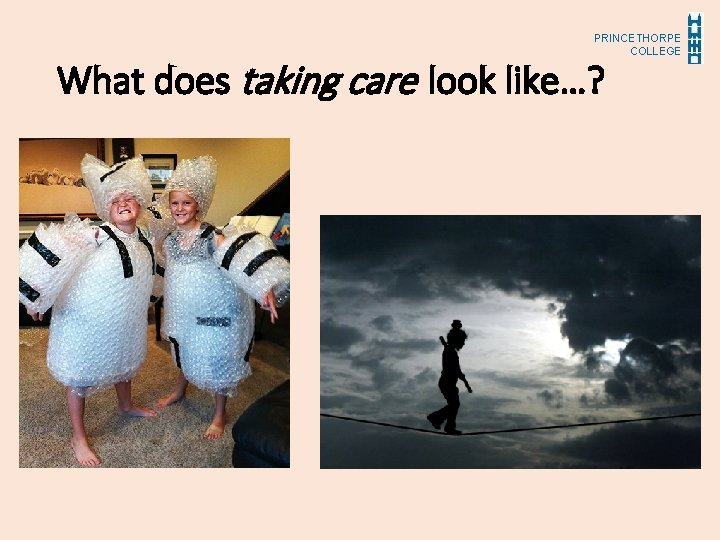
PRINCETHORPE COLLEGE What does taking care look like…?
Keeping children safe PRINCETHORPE COLLEGE • We can’t bubble wrap our children… or more importantly, we shouldn’t. • How do they learn what to do without us beside them? • What is required for them is a culture in which they know when they feel unsafe and have been taught the principles of what to do about that feeling.
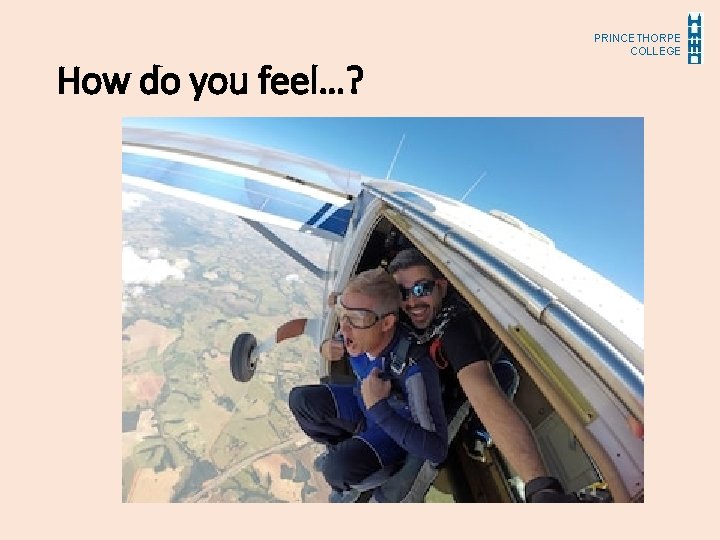
How do you feel…? PRINCETHORPE COLLEGE
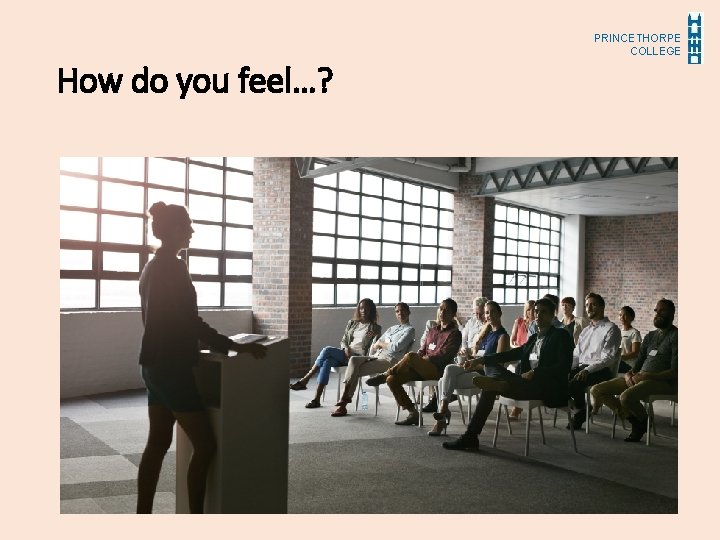
How do you feel…? PRINCETHORPE COLLEGE
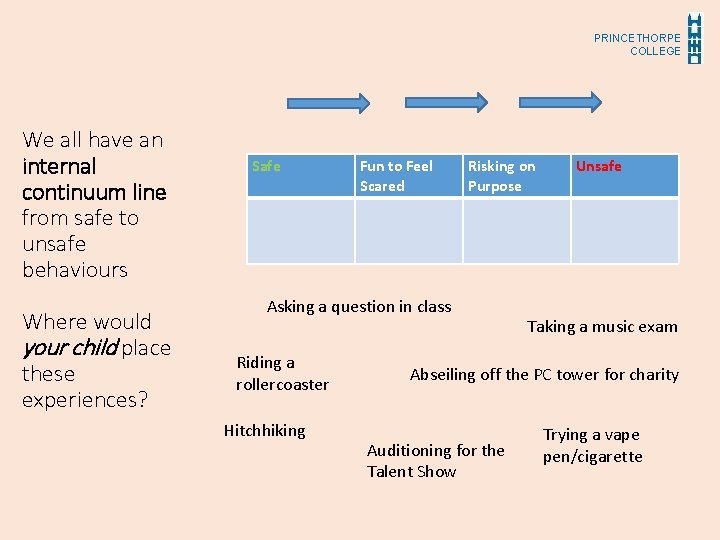
PRINCETHORPE COLLEGE We all have an internal continuum line from safe to unsafe behaviours Where would your child place these experiences? Safe Fun to Feel Scared Risking on Purpose Asking a question in class Riding a rollercoaster Hitchhiking Unsafe Taking a music exam Abseiling off the PC tower for charity Auditioning for the Talent Show Trying a vape pen/cigarette

PRINCETHORPE COLLEGE • Protective Behaviours began in the 1970 s and is now common currency in Warwickshire Primary schools What are • It is a whole-school concept and culture, Protective NOT a REAL time session or a tutor time Behaviours? activity • It is about empowerment – emotional literacy is the foundation of safety: • Feelings • Choices
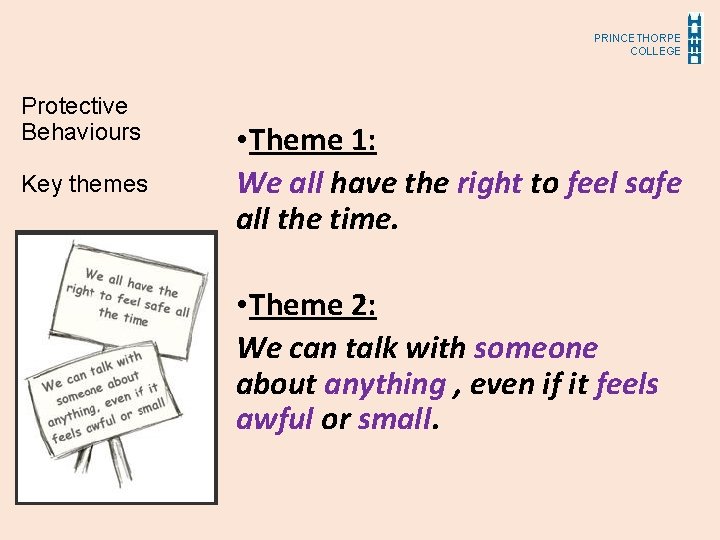
PRINCETHORPE COLLEGE Protective Behaviours Key themes • Theme 1: We all have the right to feel safe all the time. • Theme 2: We can talk with someone about anything , even if it feels awful or small.
PRINCETHORPE COLLEGE Protective Behaviours • The F Word is central • In Protective Behaviours, this is feelings • You have feelings, you are not feelings • I am angry. I feel angry. • No one can make you feel anything • You can’t stop feeling something because someone tells you to – “don’t worry” “calm down”
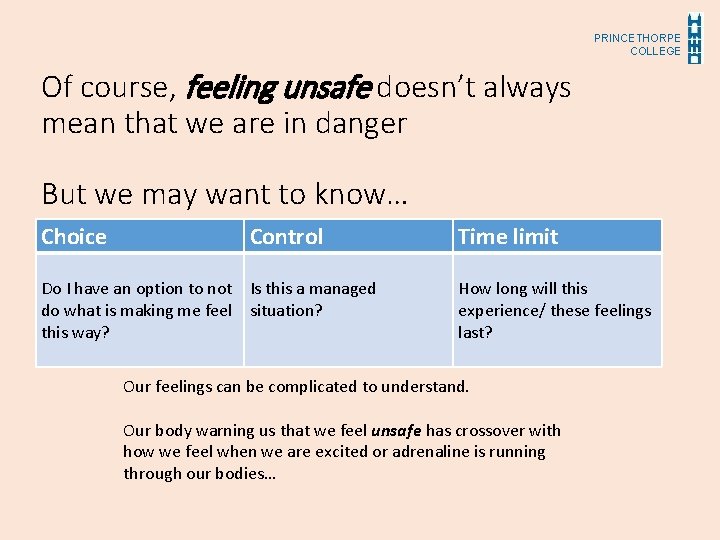
PRINCETHORPE COLLEGE Of course, feeling unsafe doesn’t always mean that we are in danger But we may want to know… Choice Control Do I have an option to not Is this a managed do what is making me feel situation? this way? Time limit How long will this experience/ these feelings last? Our feelings can be complicated to understand. Our body warning us that we feel unsafe has crossover with how we feel when we are excited or adrenaline is running through our bodies…
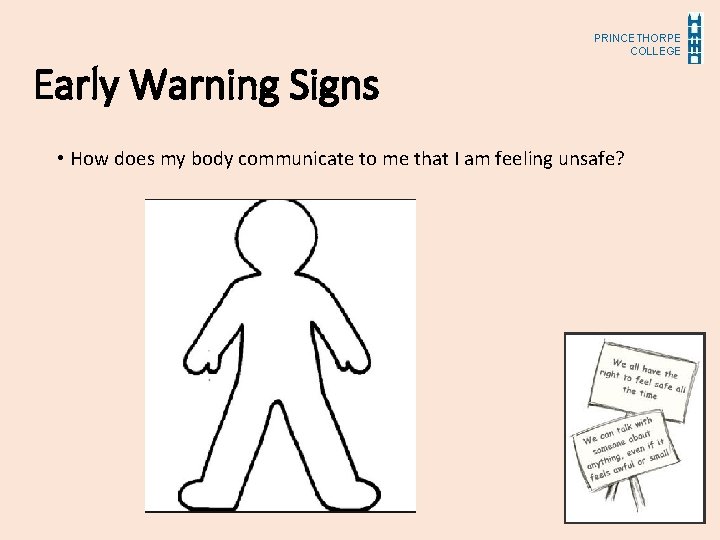
Early Warning Signs PRINCETHORPE COLLEGE • How does my body communicate to me that I am feeling unsafe?
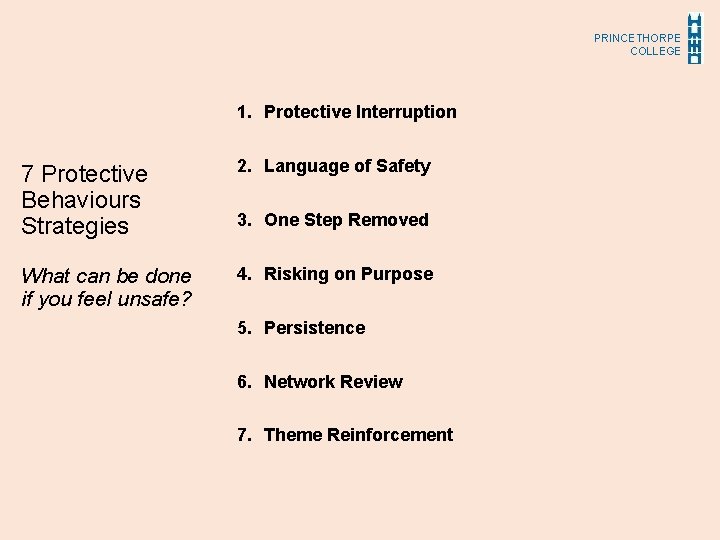
PRINCETHORPE COLLEGE 1. Protective Interruption 7 Protective Behaviours Strategies 2. Language of Safety What can be done if you feel unsafe? 4. Risking on Purpose 3. One Step Removed 5. Persistence 6. Network Review 7. Theme Reinforcement

Protective Interruption PRINCETHORPE COLLEGE • Anything that we do to keep ourselves or others safe from potential or actual harm • Saying “yes” or “no” • “my Mum is calling, I need to take the call” • grabbing a child about to run into the road • talking to someone on your network to help you to feel safer

The language of Safety PRINCETHORPE COLLEGE • The Language of Safety is the glue that holds the Protective Behaviours process together. • Language is a powerful vehicle of meaning even when we don’t want it to be: • “Don’t be silly” • “Man up” • “It’ll be fine” • “Your mother will kill me when she sees this!” • Avoid using judgement language or right/wrong, good/bad, instead focus on safe and unsafe. • What did you gain by shouting it…?

A Personal Network PRINCETHORPE COLLEGE
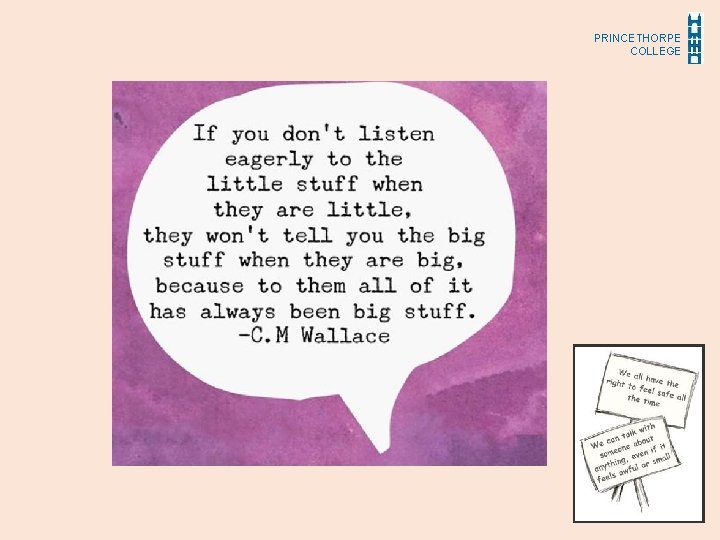
PRINCETHORPE COLLEGE What is required for safeguarding your child? • A culture that notices, listens, believes and responds • Parents/ guardians/ adults around them that communicate, are receptive to when a child needs to talk… and can listen • Self-awareness to know when something isn’t right and what they can do about that unsafe feeling
PRINCETHORPE COLLEGE
- Slides: 17