
PRINCE WILLIAM COUNTY NOVA MANUAL TRAINING ELEVATORESCALATOR Issued
- Slides: 37
PRINCE WILLIAM COUNTY NOVA MANUAL TRAINING ELEVATOR/ESCALATOR Issued June 2008
Background l Have been around since 3 rd Century l “Modern” types powered by water, steam, human or animal since 1800 s l Widespread use in 1853 with safety brake invented by Elisha Graves l His invention would make skyscrapers a practical reality
Overview l An elevator is a platform capable of moving vertically l An escalator is basically a moving stairway l This manual will review features of elevators and escalators
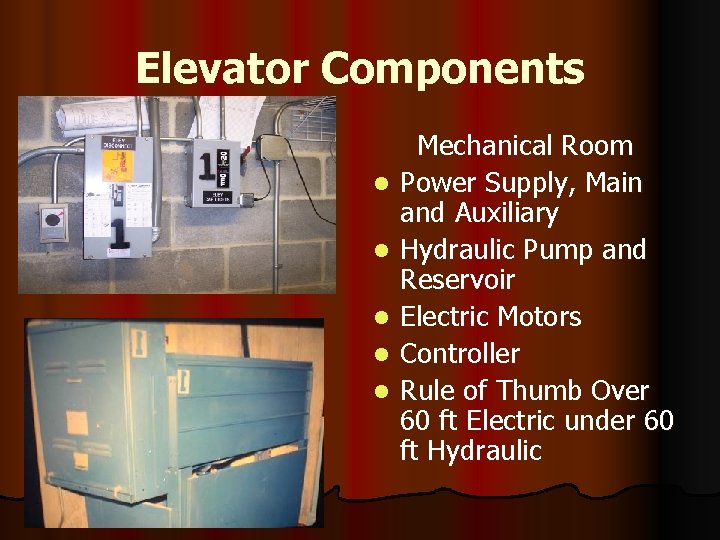
Elevator Components l l l Mechanical Room Power Supply, Main and Auxiliary Hydraulic Pump and Reservoir Electric Motors Controller Rule of Thumb Over 60 ft Electric under 60 ft Hydraulic
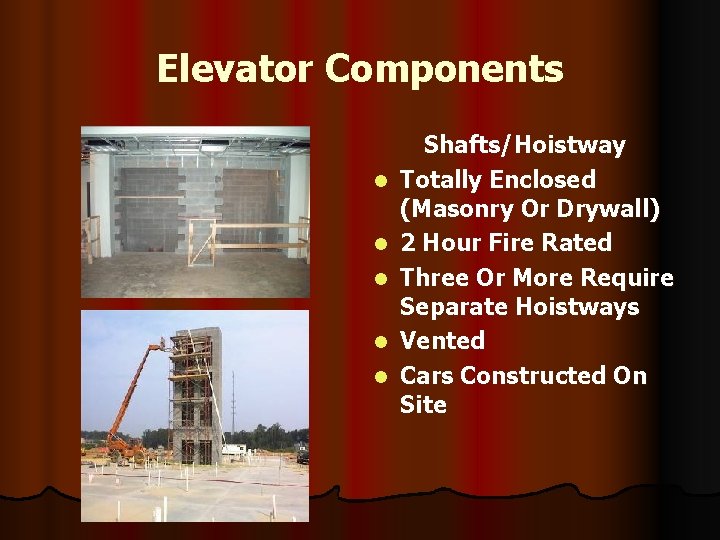
Elevator Components l l l Shafts/Hoistway Totally Enclosed (Masonry Or Drywall) 2 Hour Fire Rated Three Or More Require Separate Hoistways Vented Cars Constructed On Site
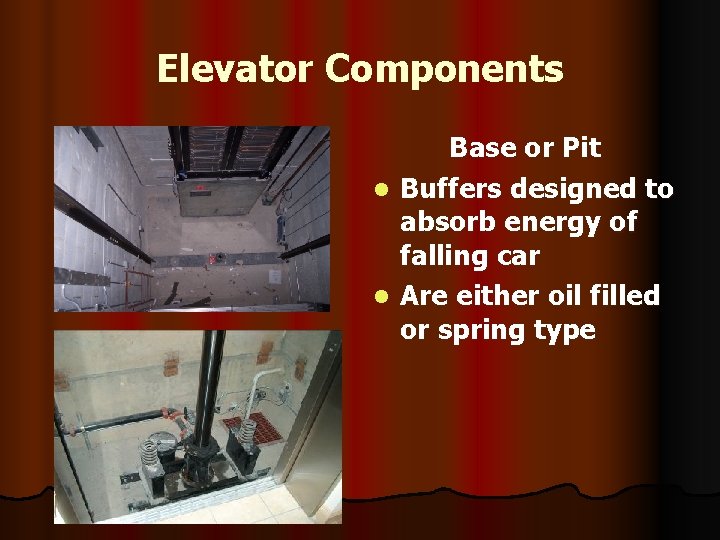
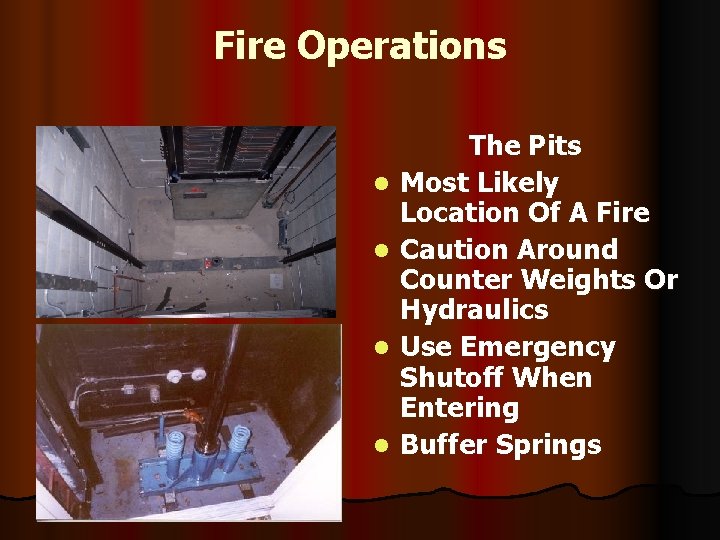
Elevator Components Base or Pit l Buffers designed to absorb energy of falling car l Are either oil filled or spring type
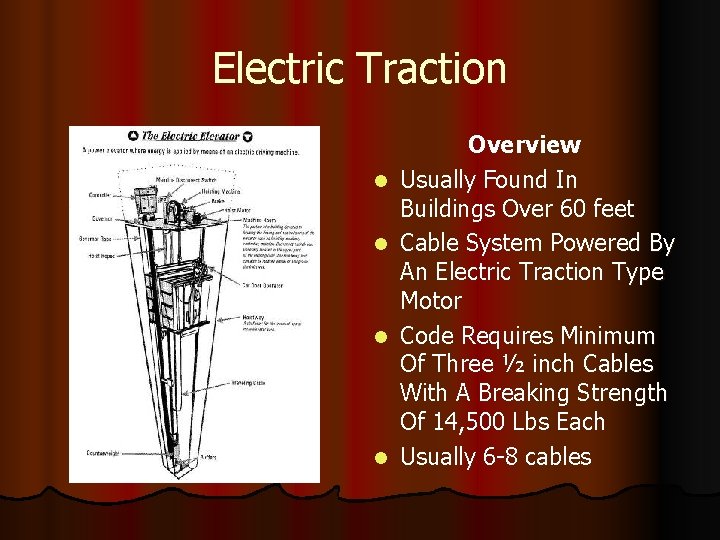
Electric Traction l l Overview Usually Found In Buildings Over 60 feet Cable System Powered By An Electric Traction Type Motor Code Requires Minimum Of Three ½ inch Cables With A Breaking Strength Of 14, 500 Lbs Each Usually 6 -8 cables
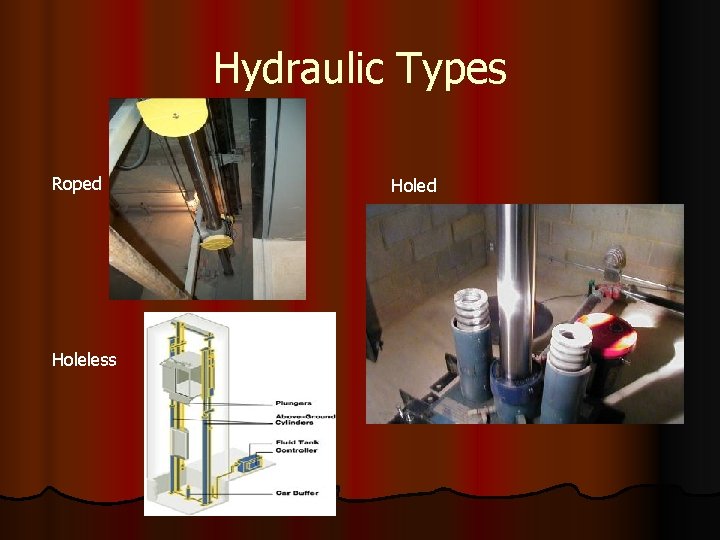
Hydraulic Types Roped Holeless Holed
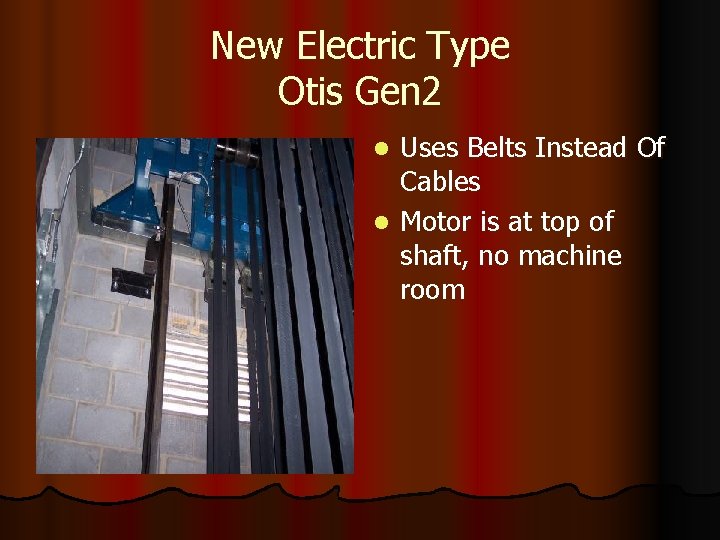
New Electric Type Otis Gen 2 Uses Belts Instead Of Cables l Motor is at top of shaft, no machine room l
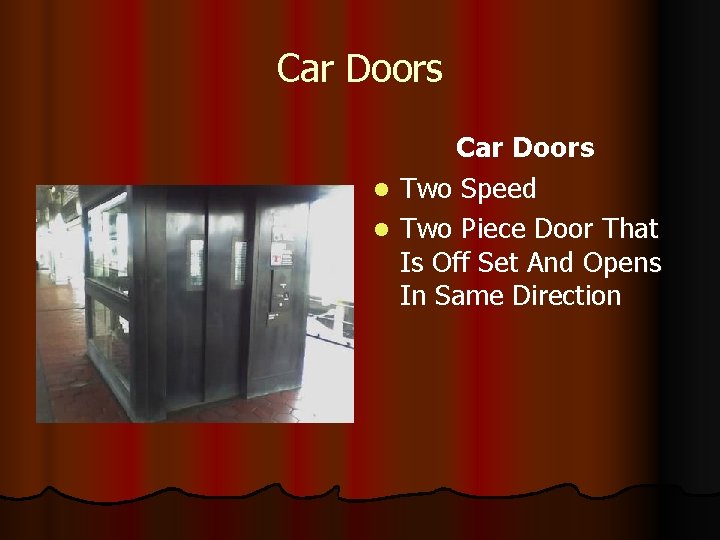
Car Doors l Two Speed l Two Piece Door That Is Off Set And Opens In Same Direction
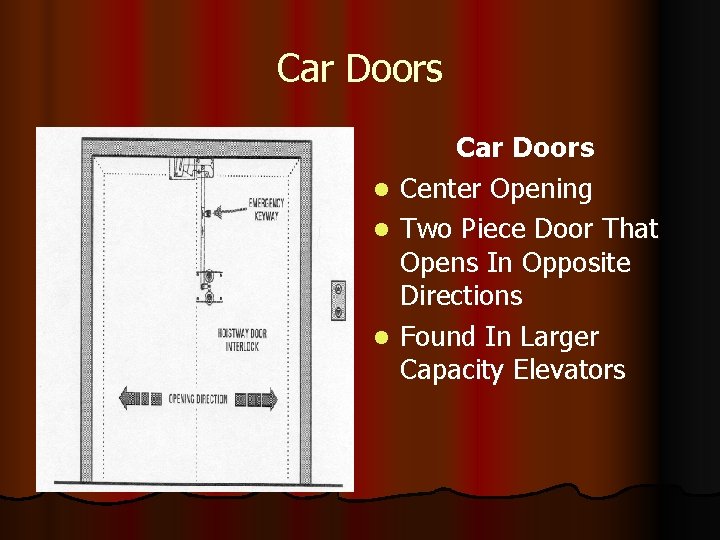
Car Doors l Center Opening l Two Piece Door That Opens In Opposite Directions l Found In Larger Capacity Elevators
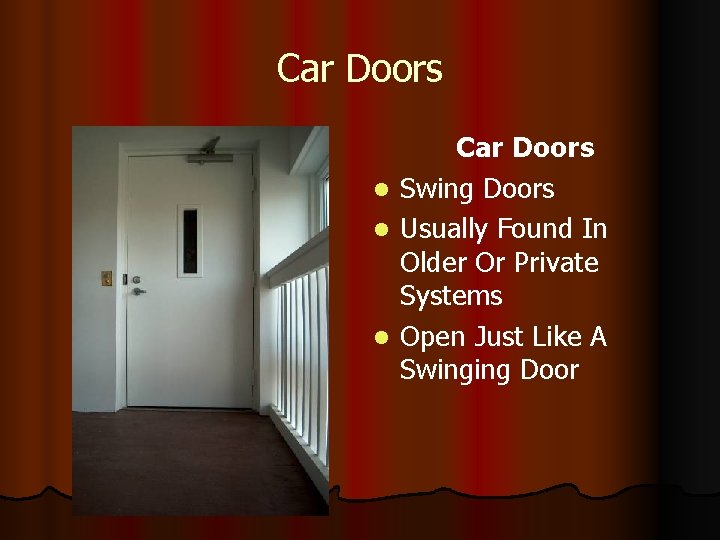
Car Doors l Swing Doors l Usually Found In Older Or Private Systems l Open Just Like A Swinging Door
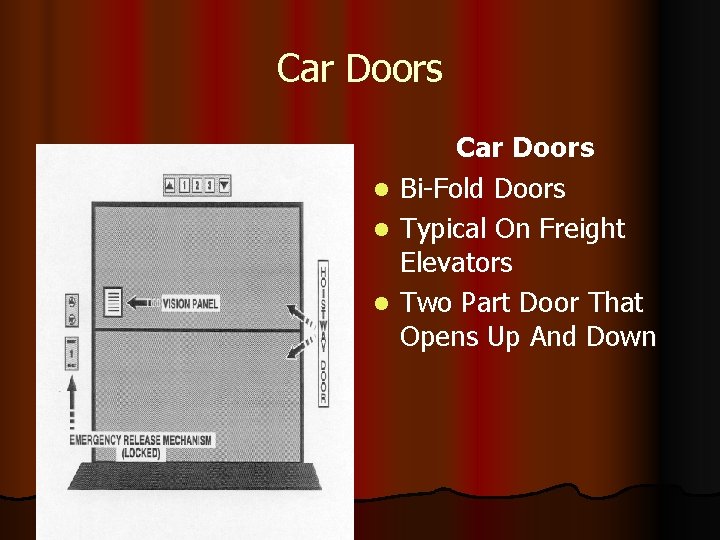
Car Doors l Bi-Fold Doors l Typical On Freight Elevators l Two Part Door That Opens Up And Down
Sequence of actions l l l l l Have Bldg Official Contact Elevator Repair Service Locate stalled car Communicate with occupants Attempt with power on Shut down power Access Hoistway Access Car Assist Occupants Secure Scene, NEVER RESTORE POWER OR REPAIR UNSAFE ELEVATORS
Non-Emergency Locate Car l l l l l Check indicator in lobby Check indicator in fire control room Use communication system to make contact Use adjacent car and stop at each level Start at top and walk down each level calling through hoistway doors Shut down power and open hoistway door Traction look for counter weights Check level of hydraulic fluid Controller in machine room may have indicator
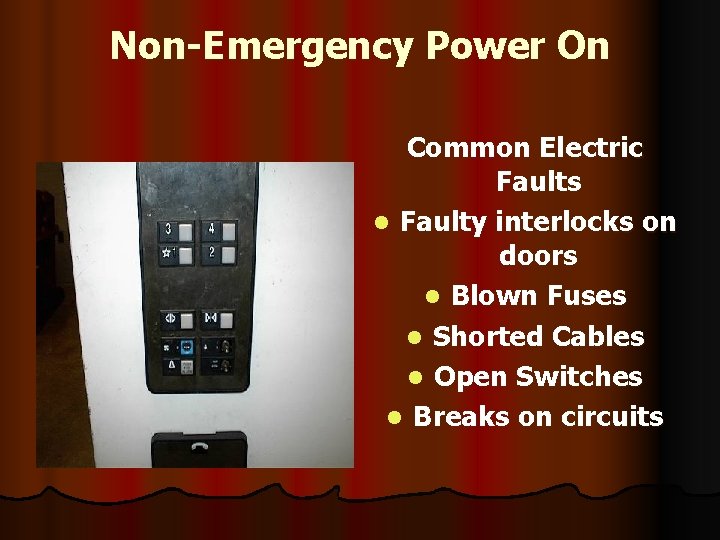
Non-Emergency Power On Common Electric Faults l Faulty interlocks on doors l Blown Fuses l Shorted Cables l Open Switches l Breaks on circuits
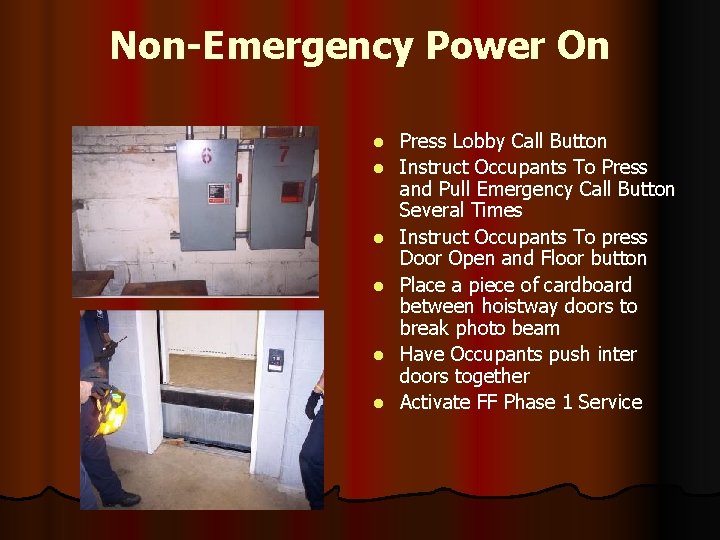
Non-Emergency Power On l l l Press Lobby Call Button Instruct Occupants To Press and Pull Emergency Call Button Several Times Instruct Occupants To press Door Open and Floor button Place a piece of cardboard between hoistway doors to break photo beam Have Occupants push inter doors together Activate FF Phase 1 Service
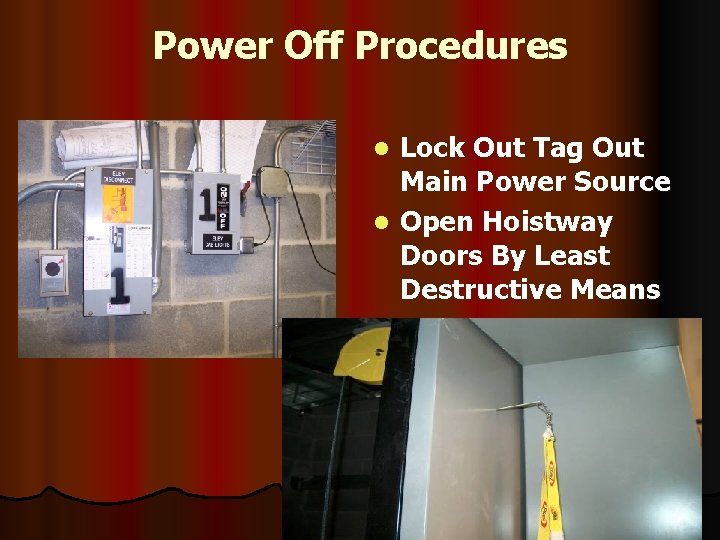
Power Off Procedures Lock Out Tag Out Main Power Source l Open Hoistway Doors By Least Destructive Means l
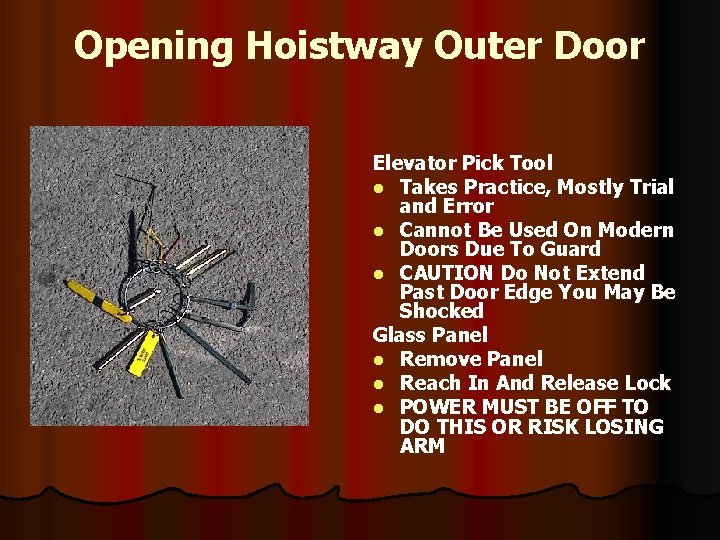
Opening Hoistway Outer Door Elevator Pick Tool l Takes Practice, Mostly Trial and Error l Cannot Be Used On Modern Doors Due To Guard l CAUTION Do Not Extend Past Door Edge You May Be Shocked Glass Panel l Remove Panel l Reach In And Release Lock l POWER MUST BE OFF TO DO THIS OR RISK LOSING ARM
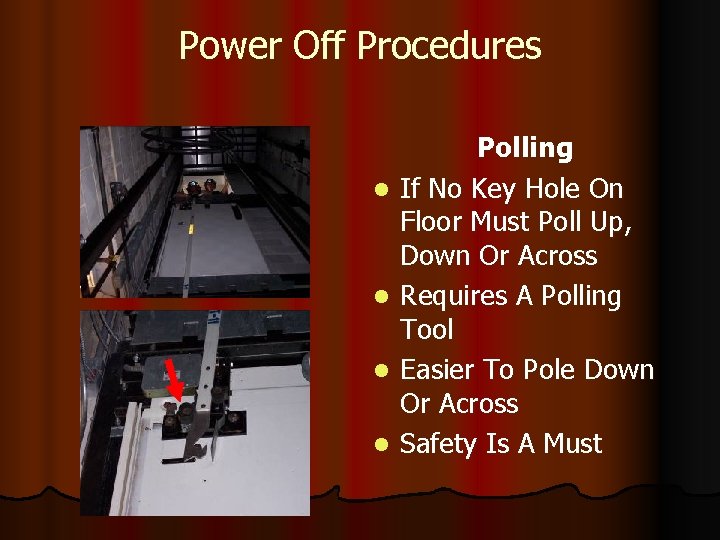
Power Off Procedures l l Polling If No Key Hole On Floor Must Poll Up, Down Or Across Requires A Polling Tool Easier To Pole Down Or Across Safety Is A Must
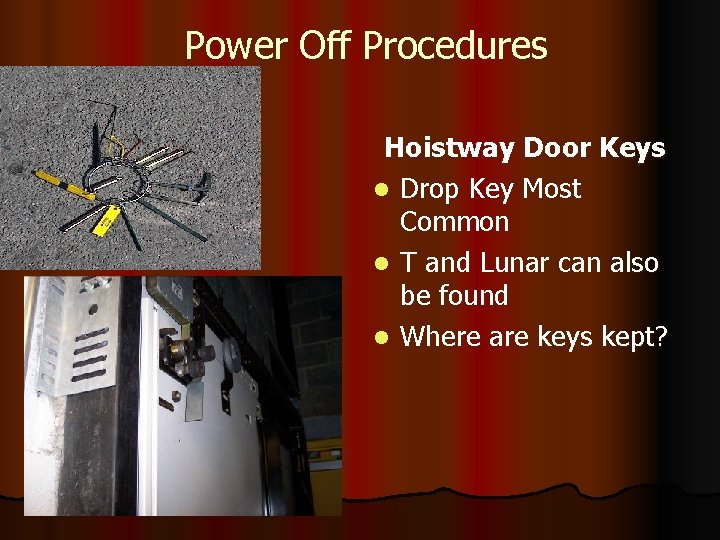
Power Off Procedures Hoistway Door Keys l Drop Key Most Common l T and Lunar can also be found l Where are keys kept?
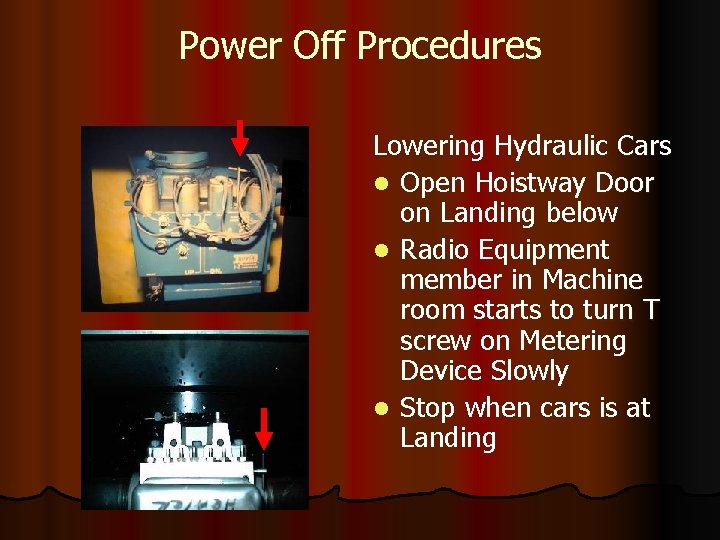
Power Off Procedures Lowering Hydraulic Cars l Open Hoistway Door on Landing below l Radio Equipment member in Machine room starts to turn T screw on Metering Device Slowly l Stop when cars is at Landing
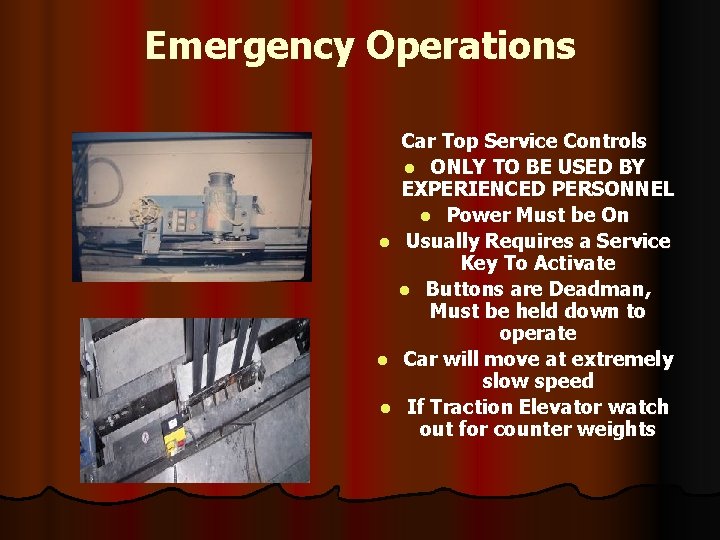
Emergency Operations Car Top Service Controls l ONLY TO BE USED BY EXPERIENCED PERSONNEL l Power Must be On l Usually Requires a Service Key To Activate l Buttons are Deadman, Must be held down to operate l Car will move at extremely slow speed l If Traction Elevator watch out for counter weights
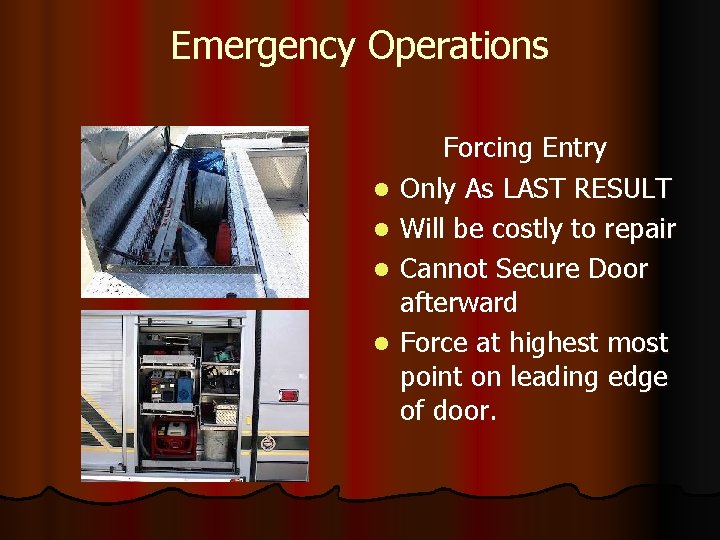
Emergency Operations l l Forcing Entry Only As LAST RESULT Will be costly to repair Cannot Secure Door afterward Force at highest most point on leading edge of door.
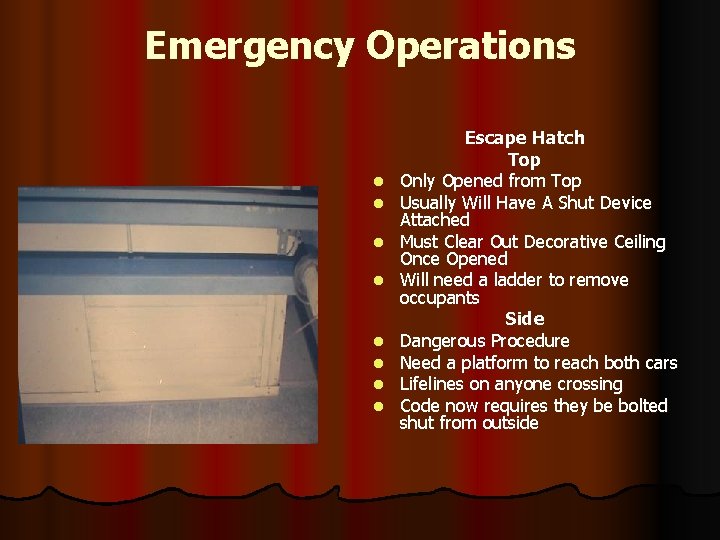
Emergency Operations l l l l Escape Hatch Top Only Opened from Top Usually Will Have A Shut Device Attached Must Clear Out Decorative Ceiling Once Opened Will need a ladder to remove occupants Side Dangerous Procedure Need a platform to reach both cars Lifelines on anyone crossing Code now requires they be bolted shut from outside
Fire Operations l l The Pits Most Likely Location Of A Fire Caution Around Counter Weights Or Hydraulics Use Emergency Shutoff When Entering Buffer Springs
Fire Operations l Fire in car uncommon l Will need to use stairs, caution most stairways are close to elevator shaft l Check all floors for extension l Do not get into car, may be weakened by fire and collapse
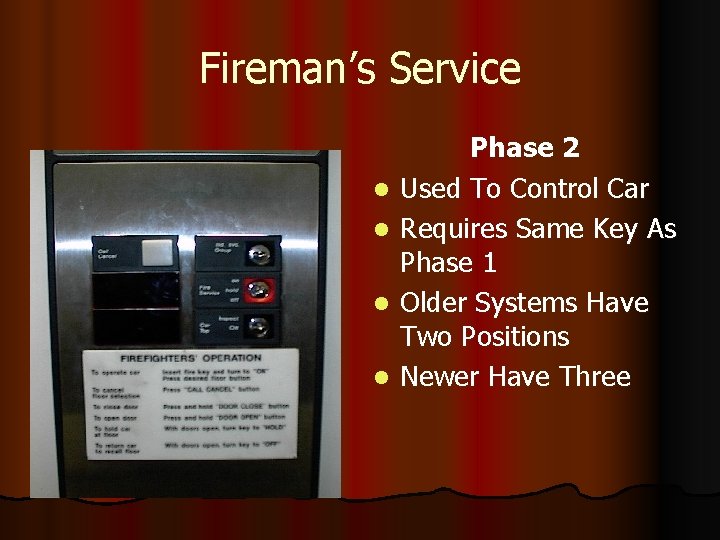
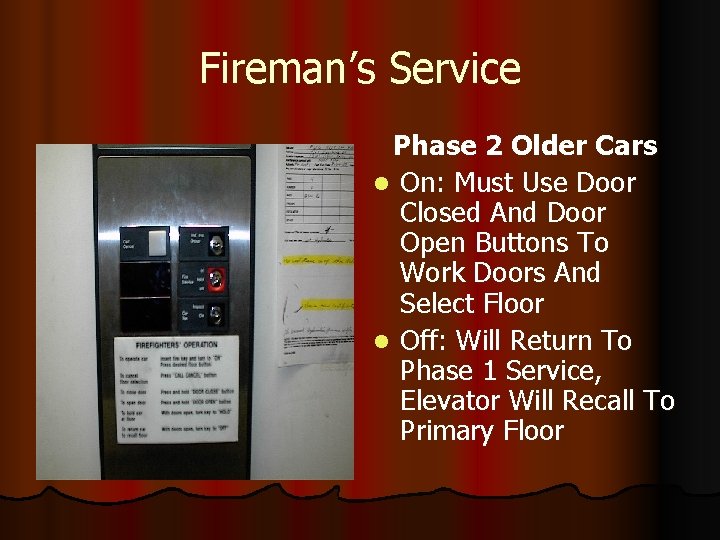
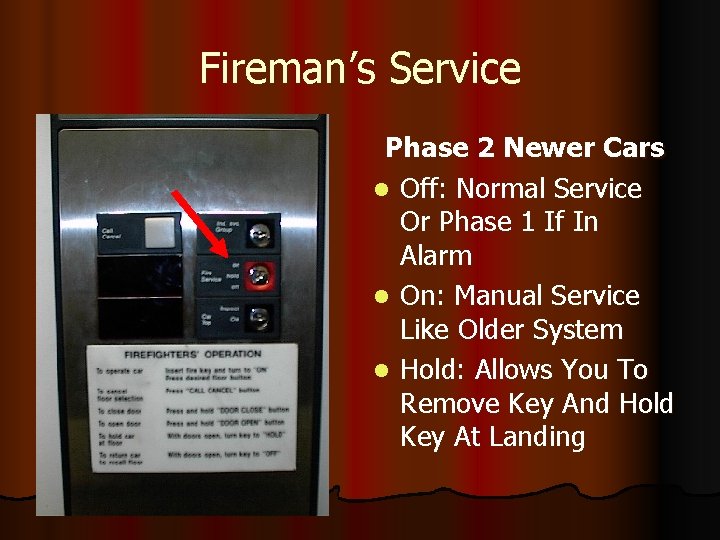
Fireman’s Service l l Phase 2 Used To Control Car Requires Same Key As Phase 1 Older Systems Have Two Positions Newer Have Three
Fireman’s Service Phase 2 Older Cars l On: Must Use Door Closed And Door Open Buttons To Work Doors And Select Floor l Off: Will Return To Phase 1 Service, Elevator Will Recall To Primary Floor
Fireman’s Service Phase 2 Newer Cars l Off: Normal Service Or Phase 1 If In Alarm l On: Manual Service Like Older System l Hold: Allows You To Remove Key And Hold Key At Landing
Fireman’s Service Use During Firefighting Activities l Assign Operator With SCBA , Forcible Entry Tools And Radio l Check Shaftway For Smoke And Water, If Present, Don’t Use l Stop Two Floors Below Fire Floor And Stop Frequently On Way Up To Assure Control
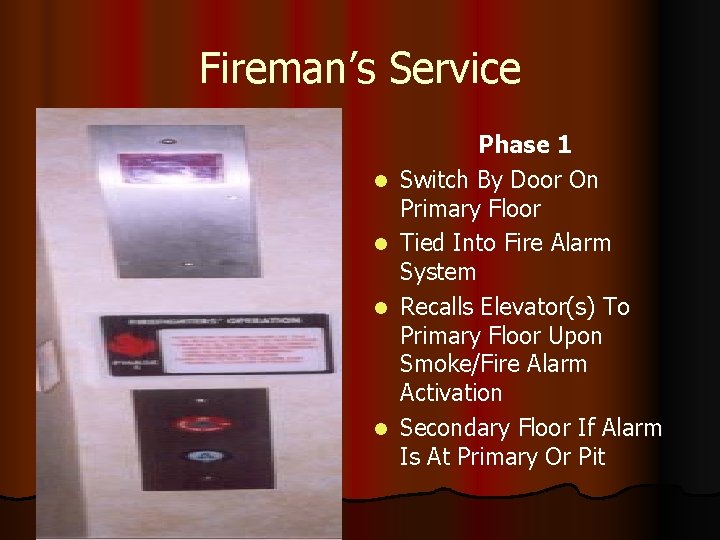
Fireman’s Service l l Phase 1 Switch By Door On Primary Floor Tied Into Fire Alarm System Recalls Elevator(s) To Primary Floor Upon Smoke/Fire Alarm Activation Secondary Floor If Alarm Is At Primary Or Pit
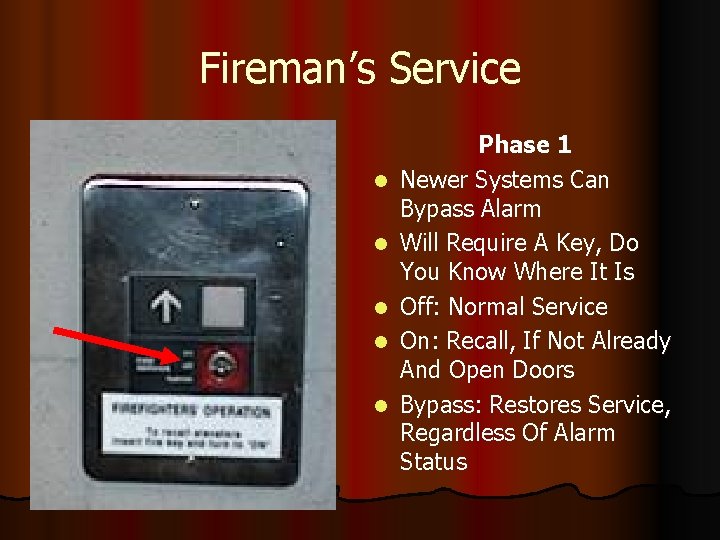
Fireman’s Service l l l Phase 1 Newer Systems Can Bypass Alarm Will Require A Key, Do You Know Where It Is Off: Normal Service On: Recall, If Not Already And Open Doors Bypass: Restores Service, Regardless Of Alarm Status
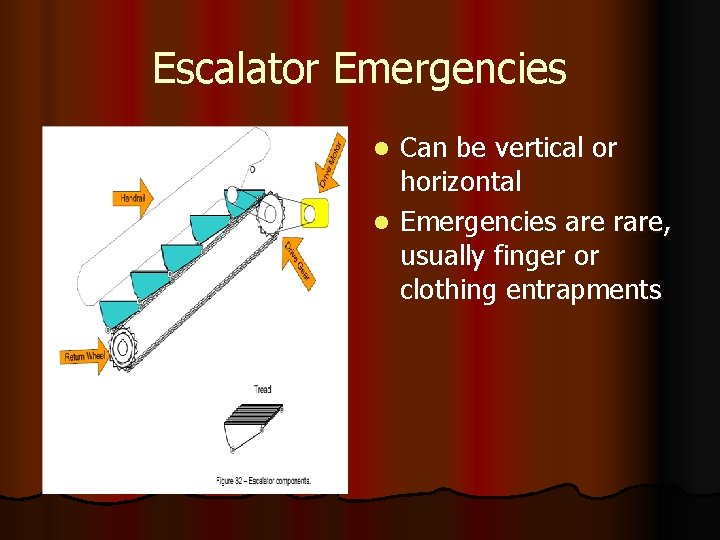
Escalator Emergencies Can be vertical or horizontal l Emergencies are rare, usually finger or clothing entrapments l
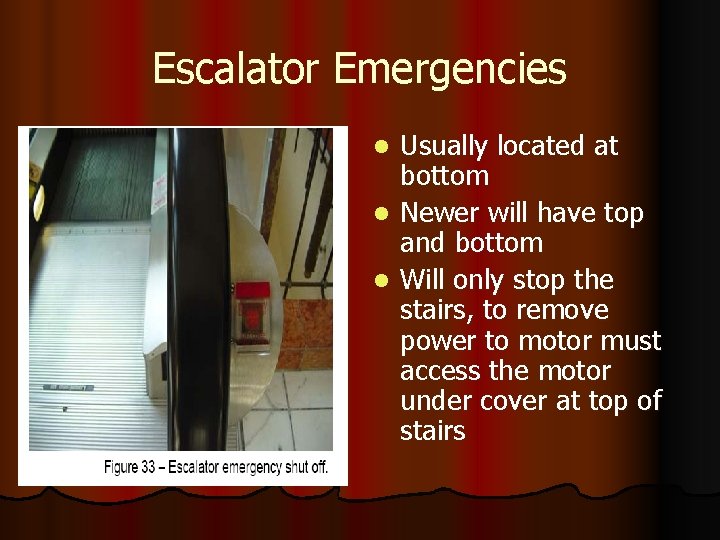
Escalator Emergencies Usually located at bottom l Newer will have top and bottom l Will only stop the stairs, to remove power to motor must access the motor under cover at top of stairs l
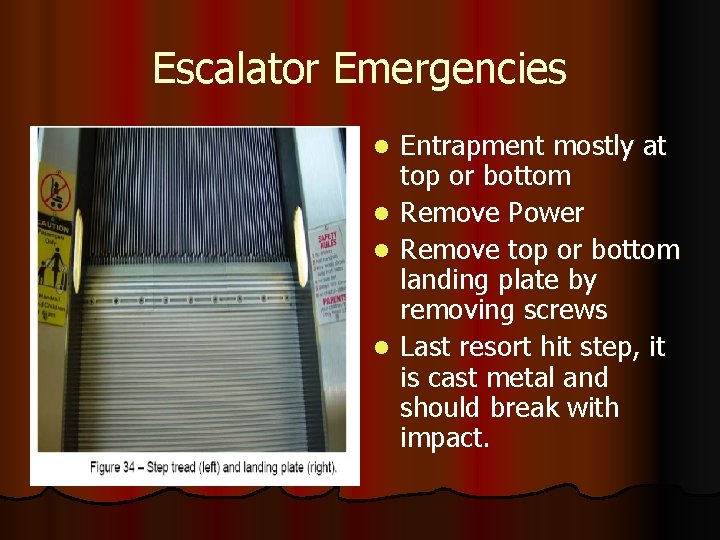
Escalator Emergencies Entrapment mostly at top or bottom l Remove Power l Remove top or bottom landing plate by removing screws l Last resort hit step, it is cast metal and should break with impact. l
Important l Elevators and Escalators are dangerous when rescues are attempted by well meaning personnel. l This presentation is not a substitute for a hands on training class!!! l Call for assistance!!!!!!!!!!!!!!!