
PRIME PRIORITY MEDICINES Liesbeth Hof Managing Senior Consultant
PRIME PRIORITY MEDICINES Liesbeth Hof Managing & Senior Consultant 10 October 2017 1
Aim: to bring promising innovative medicines to patients faster by optimising and supporting medicine development. 2

Agenda • Introduction PRIME – requirements – benefits – application • Experiences • Challenges & considerations – timing – internally – externally 3
PRIME • Since March 2016 • PRIME helps developers of promising new medicines to optimise development plans: – fostering early, coordinated and continuous dialogue with stakeholders to facilitate robust data collection and high quality marketing authorisation applications – speeding up evaluation so that medicines can reach patients earlier – encouraging developers to focus resources on medicines likely to make a real difference to patients’ lives. 4
PRIME: requirements for application Eligibility criteria: • Initial MA and Centralized Procedure • Demonstrate unmet medical need • Show potential to significantly address the unmet medical need • Provide supportive evidence, based on early clinical data. Who can apply? • Non-SME/non-academia - from proof-of-concept stage (i. e. , in principle prior to Phase III/confirmatory clinical studies), based on preliminary clinical evidence • SMEs and academia - from the proof-of-principle stage (i. e. , prior to Phase II/exploratory clinical studies) on the basis of compelling non-clinical data and tolerability data from initial clinical trials 5
PRIME: potential benefits – Early appointment of Rapporteur from CHMP – CHMP meeting following PRIME designation – “Kick-off meeting" with: – the company – EMA – the Rapporteur – a multidisciplinary group of experts from relevant scientific committees and working parties – Assignment of a dedicated contact point at EMA – Confirm potential for accelerated assessment at time of MAA – Scientific advice at key development milestones, involving additional stakeholders such as HTA bodies 6
Eligibility request submission • Submission package, templates available on EMA website: - pre-submission request form - applicant’s justification form (~30 pages) Deadline Start of SAWP CAT CHMP Rapporteur Submission procedure recommendation * adoption assignment (SAWP) Day 0 ~Day +5 ~Day +35 ~Day +42 ~Day +50 ~Day +80 * In case of advanced therapy medicinal products 7
PRIME eligibility outcome published following CHMP meeting Name of the active substance, INN, common name, chemical name or company code. Name NOT mentioned if product is not eligible Substance Therapeutic Type of data Type Area indication supporting request • Chemical E. g. • Nonclinical • Biological oncology, treatment of • Clinical cardiosickle cell exploratory vascular disease • Clinical confirmatory Type of applicant • SME applicants are micro-, small-and medium-sizedenterprises registered with the Agency’s SME office. • Other types of applicants are those not qualifying or not registered as SME or not fulfilling the definition of 8 academic sponsors
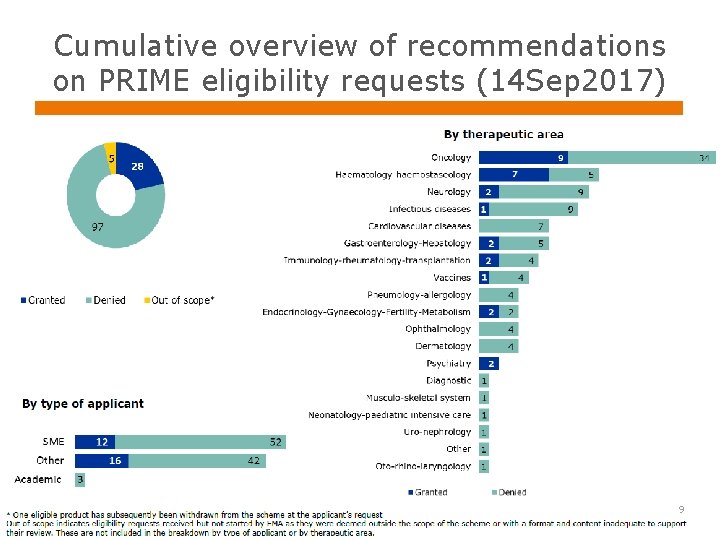
Cumulative overview of recommendations on PRIME eligibility requests (14 Sep 2017) 9
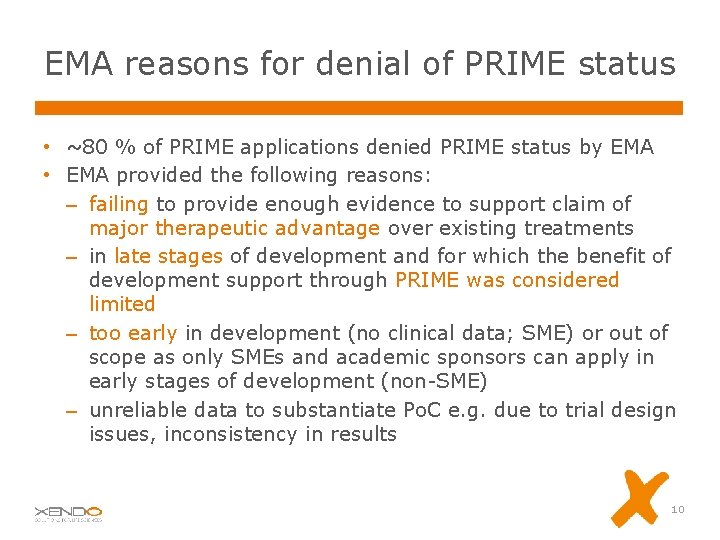
EMA reasons for denial of PRIME status • ~80 % of PRIME applications denied PRIME status by EMA • EMA provided the following reasons: – failing to provide enough evidence to support claim of major therapeutic advantage over existing treatments – in late stages of development and for which the benefit of development support through PRIME was considered limited – too early in development (no clinical data; SME) or out of scope as only SMEs and academic sponsors can apply in early stages of development (non-SME) – unreliable data to substantiate Po. C e. g. due to trial design issues, inconsistency in results 10
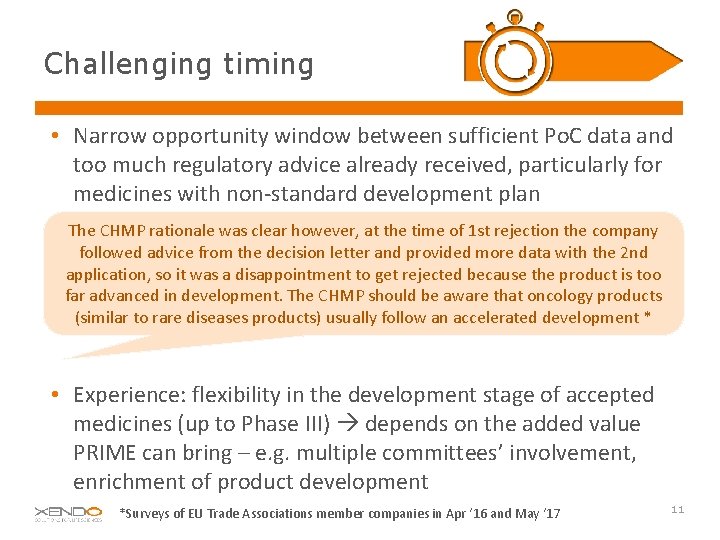
Challenging timing • Narrow opportunity window between sufficient Po. C data and too much regulatory advice already received, particularly for medicines with non-standard development plan The CHMP rationale was clear however, at the time of 1 st rejection the company followed advice from the decision letter and provided more data with the 2 nd application, so it was a disappointment to get rejected because the product is too far advanced in development. The CHMP should be aware that oncology products (similar to rare diseases products) usually follow an accelerated development * • Experience: flexibility in the development stage of accepted medicines (up to Phase III) depends on the added value PRIME can bring – e. g. multiple committees’ involvement, enrichment of product development *Surveys of EU Trade Associations member companies in Apr ‘ 16 and May ‘ 17 11
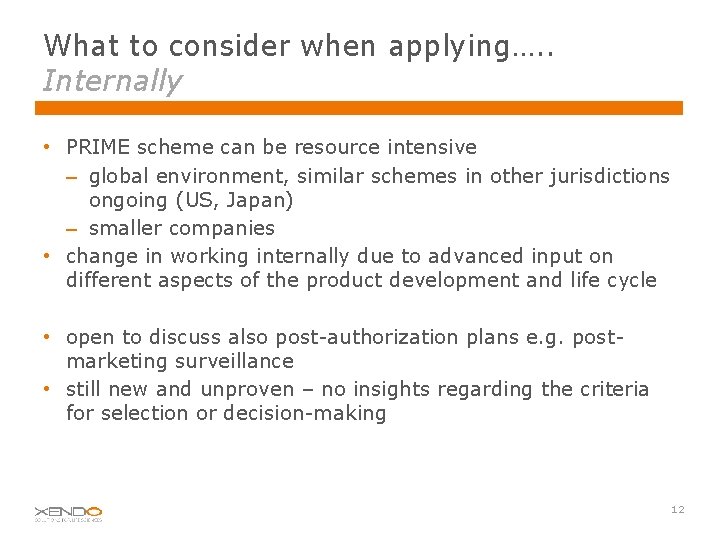
What to consider when applying…. . Internally • PRIME scheme can be resource intensive – global environment, similar schemes in other jurisdictions ongoing (US, Japan) – smaller companies • change in working internally due to advanced input on different aspects of the product development and life cycle • open to discuss also post-authorization plans e. g. postmarketing surveillance • still new and unproven – no insights regarding the criteria for selection or decision-making 12
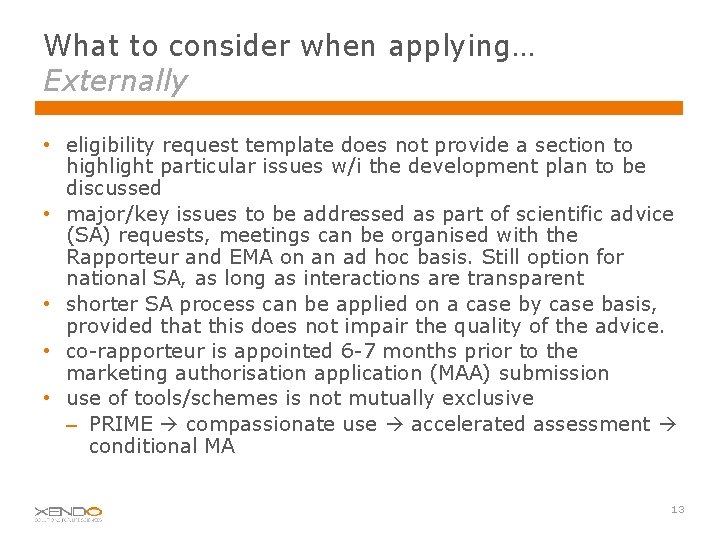
What to consider when applying… Externally • eligibility request template does not provide a section to highlight particular issues w/i the development plan to be discussed • major/key issues to be addressed as part of scientific advice (SA) requests, meetings can be organised with the Rapporteur and EMA on an ad hoc basis. Still option for national SA, as long as interactions are transparent • shorter SA process can be applied on a case by case basis, provided that this does not impair the quality of the advice. • co-rapporteur is appointed 6 -7 months prior to the marketing authorisation application (MAA) submission • use of tools/schemes is not mutually exclusive – PRIME compassionate use accelerated assessment conditional MA 13
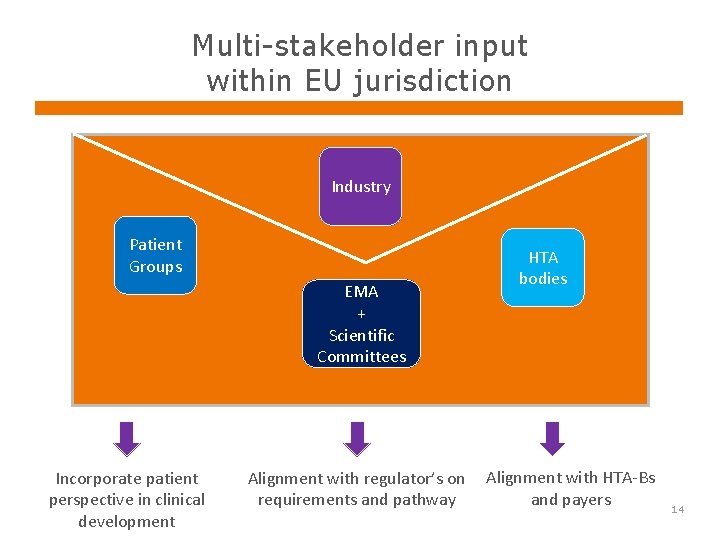
Multi-stakeholder input within EU jurisdiction Industry Patient Groups EMA + Scientific Committees Incorporate patient perspective in clinical development Alignment with regulator’s on requirements and pathway HTA bodies Alignment with HTA-Bs and payers 14

Thanks for your attention! 15
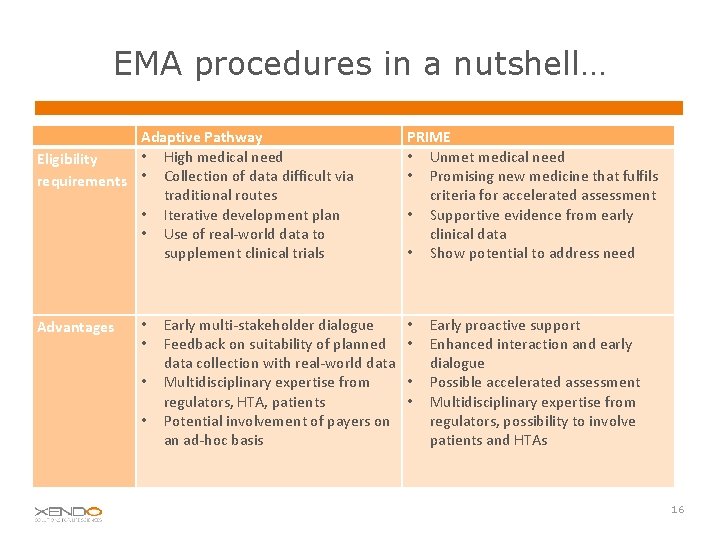
EMA procedures in a nutshell… Adaptive Pathway • High medical need Eligibility requirements • Collection of data difficult via traditional routes • Iterative development plan • Use of real-world data to supplement clinical trials Advantages • • Early multi-stakeholder dialogue Feedback on suitability of planned data collection with real-world data Multidisciplinary expertise from regulators, HTA, patients Potential involvement of payers on an ad-hoc basis PRIME • Unmet medical need • Promising new medicine that fulfils criteria for accelerated assessment • Supportive evidence from early clinical data • Show potential to address need • • Early proactive support Enhanced interaction and early dialogue Possible accelerated assessment Multidisciplinary expertise from regulators, possibility to involve patients and HTAs 16
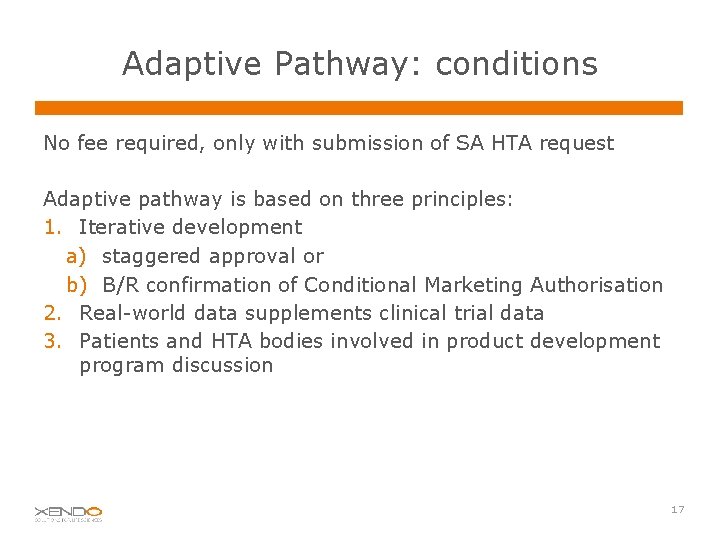
Adaptive Pathway: conditions No fee required, only with submission of SA HTA request Adaptive pathway is based on three principles: 1. Iterative development a) staggered approval or b) B/R confirmation of Conditional Marketing Authorisation 2. Real-world data supplements clinical trial data 3. Patients and HTA bodies involved in product development program discussion 17
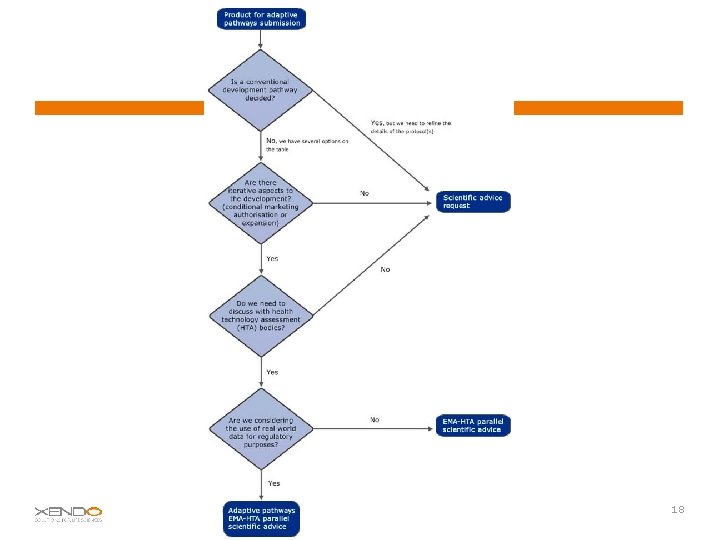
18
Exceptional Circumstances Ø Applicant is unable to provide comprehensive data – Indication so rare that no large phase III trial can be performed – Present state of scientific knowledge prohibits provision of comprehensive information – Ethical concerns Ø MA also subject to specific obligations Ø Annual reassessment of risk-benefit Ø Particular emphasis on safety of product Ø Formal application to be submitted before MAA 19
Conditional approval • Extensive studies/data may not be required in case of: – Seriously debilitating/ life-threatening diseases – Emergency products for Public Health threats – Orphans • Requirements: – – Positive benefit/risk balance Unmet medical need Possibility to provide comprehensive data Benefit to public health outweighs the risks of placing on market without comprehensive studies • Prerequisite: MA subject to specific obligations (to provide comprehensive data) 20
EMA evaluation of adaptive pathway pilot • ~90% of adaptive pathway applications denied adaptive pathway status by EMA (total of 62, only 6 eligible) • Pilot project March 2014 – August 2016. Learning points: – Patients need to be increasingly involved in selection – Clear definition needed of methodologically-sound strategies of real-world evidence to support - Efficacy - Safety - Reimbursement – Key elements of adaptive pathways concept: - Systematic safety monitoring 21
Accelerated assessment • Pre-submission meeting 6 -7 months before submission to prepare for evaluation – Discuss proposal with CHMP, PRAC, CAT if ATMP – Justify major public health interest + therapeutic innovation • 150 days instead of 210 days, 3 rounds – 90 days assessment 1 month clockstop 30 days assessment no clockstop 30 days assessment outcome • For ATMPs: 2 rounds 120+30 days of assessment • Advantage: much quicker • Disadvantage: much less time for response to questions – All relevant departments need to be available – If at day 120 or 150 CHMP or applicant consider accelerated assessment no longer appropriate, assessment may continue under standard timelines 22
- Slides: 22