
Primate Morphological Traits Allometry of Brain and Body
Primate Morphological Traits Allometry of Brain and Body Size
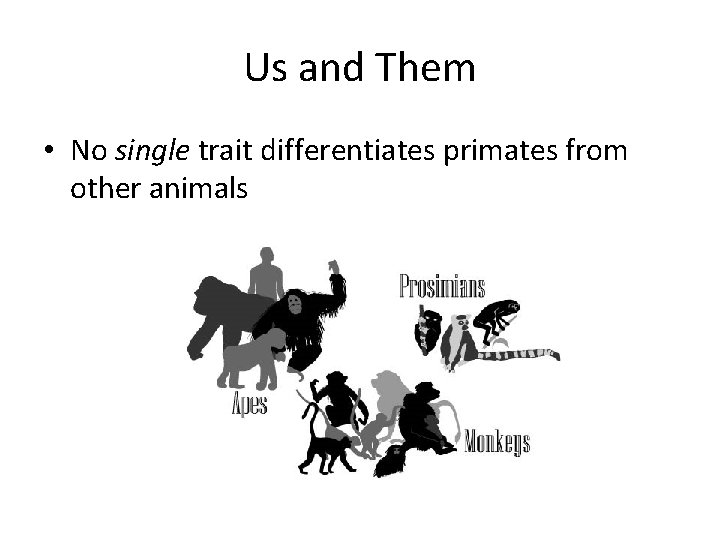
Us and Them • No single trait differentiates primates from other animals

2 Features that Stand Out 1. Larger brains, with variation within 2. Greater dexterity and mobility than other animals, with variation within

Brains • Neocortex is larger – Cognitive abilities – Reasoning – Consciousness – 50 -80% of total brain volume Neocortex in blue, from: http: //www. nibb. ac. jp/bri sh/Gallery/co rtex. E. html
Why develop a bigger brain? • Typically, morphological traits are a function of ecological adaptation, tied to the: – Need for food – Need to mate to reproduce – Need to diminish predation and other threats
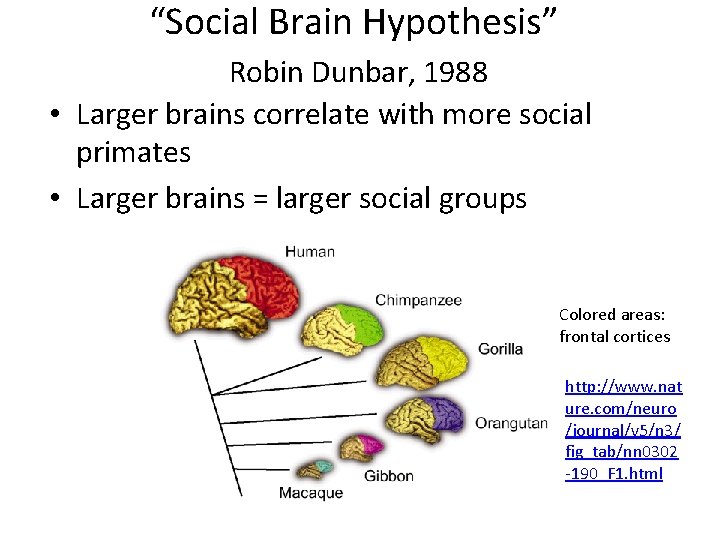
“Social Brain Hypothesis” Robin Dunbar, 1988 • Larger brains correlate with more social primates • Larger brains = larger social groups Colored areas: frontal cortices http: //www. nat ure. com/neuro /journal/v 5/n 3/ fig_tab/nn 0302 -190_F 1. html
Competition or Cooperation • Allies in social groups ensure access to resources and protection… but… • Neocortex size is also correlated with tactical deception
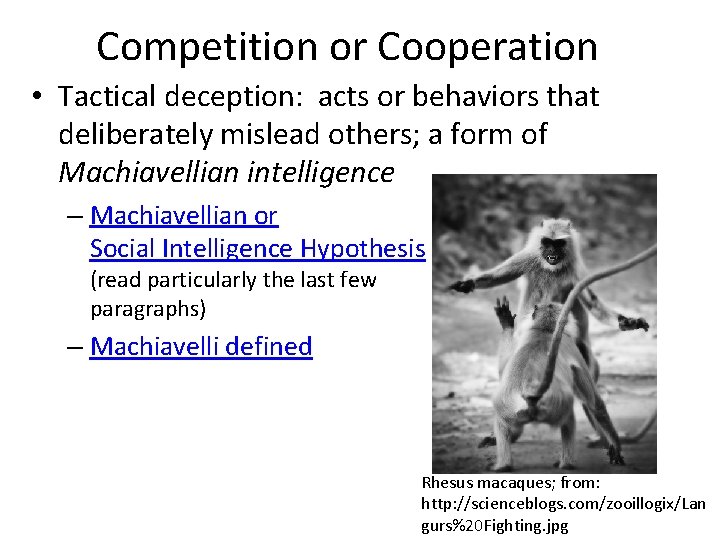
Competition or Cooperation • Tactical deception: acts or behaviors that deliberately mislead others; a form of Machiavellian intelligence – Machiavellian or Social Intelligence Hypothesis (read particularly the last few paragraphs) – Machiavelli defined Rhesus macaques; from: http: //scienceblogs. com/zooillogix/Lan gurs%20 Fighting. jpg
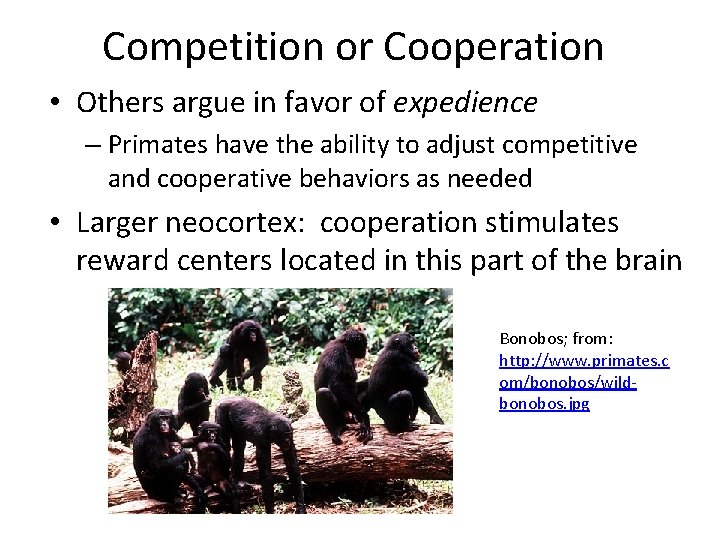
Competition or Cooperation • Others argue in favor of expedience – Primates have the ability to adjust competitive and cooperative behaviors as needed • Larger neocortex: cooperation stimulates reward centers located in this part of the brain Bonobos; from: http: //www. primates. c om/bonobos/wildbonobos. jpg
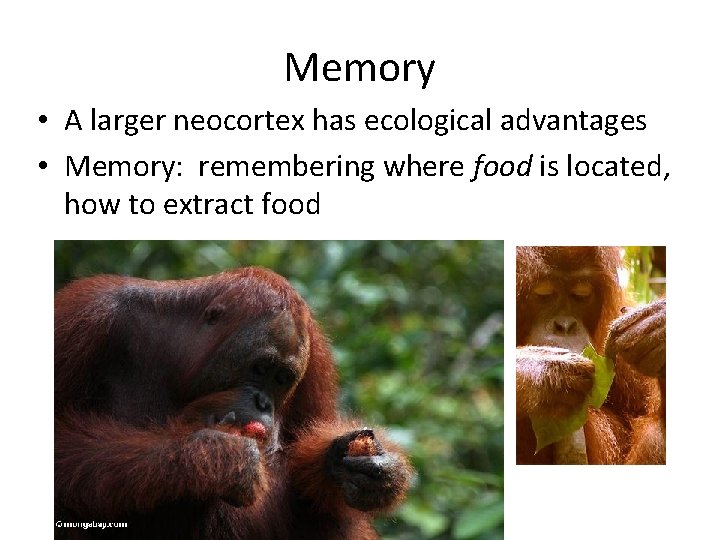
Memory • A larger neocortex has ecological advantages • Memory: remembering where food is located, how to extract food
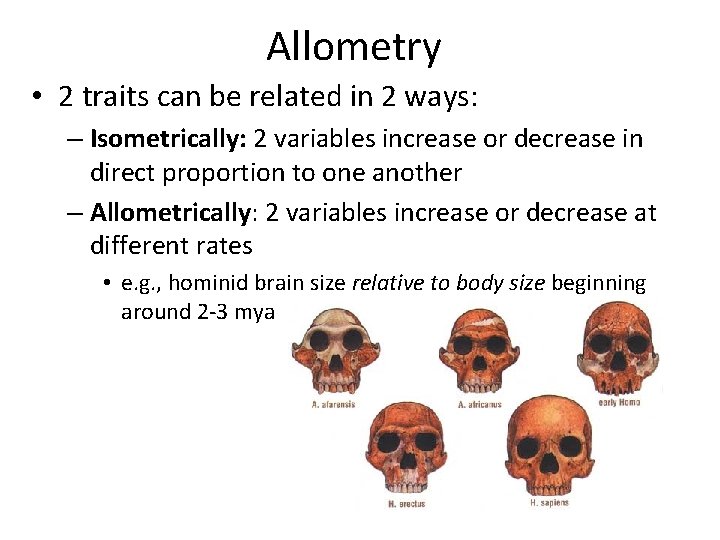
Allometry • 2 traits can be related in 2 ways: – Isometrically: 2 variables increase or decrease in direct proportion to one another – Allometrically: 2 variables increase or decrease at different rates • e. g. , hominid brain size relative to body size beginning around 2 -3 mya
Body Allometry: Diet • Basal Metabolic Rate: BMR – Rate at which energy is used to maintain bodily functions at rest
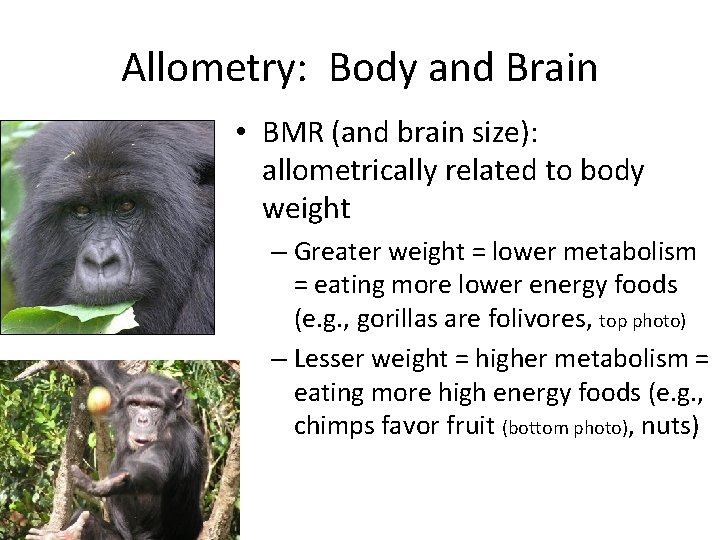
Allometry: Body and Brain • BMR (and brain size): allometrically related to body weight – Greater weight = lower metabolism = eating more lower energy foods (e. g. , gorillas are folivores, top photo) – Lesser weight = higher metabolism = eating more high energy foods (e. g. , chimps favor fruit (bottom photo), nuts)
Allometry: Body and Brain • Gorillas: larger bodied, smaller brain • Chimpanzees: smaller bodied, larger brain • Brains: require high amounts of energy to run – 2% of body weight – 20% of energy to run
Why bigger or smaller brains? • Metabolic rates might constrain brain size Or • Skills needed to find high energy foods might result in selection for bigger brains
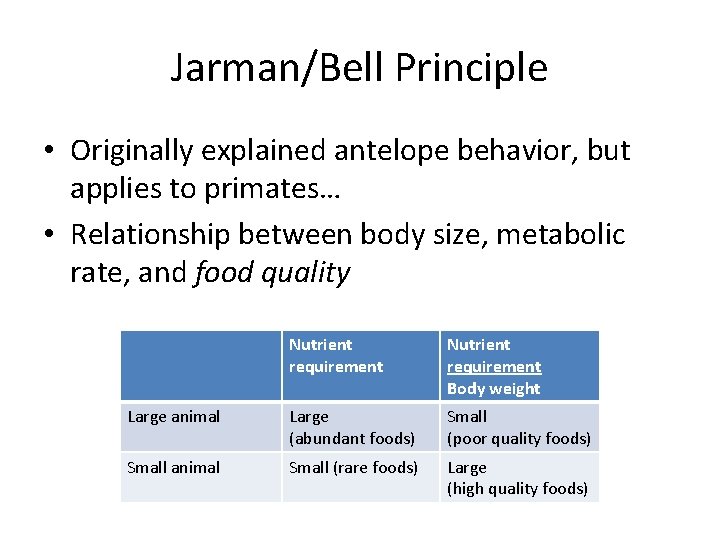
Jarman/Bell Principle • Originally explained antelope behavior, but applies to primates… • Relationship between body size, metabolic rate, and food quality Nutrient requirement Body weight Large animal Large (abundant foods) Small (poor quality foods) Small animal Small (rare foods) Large (high quality foods)
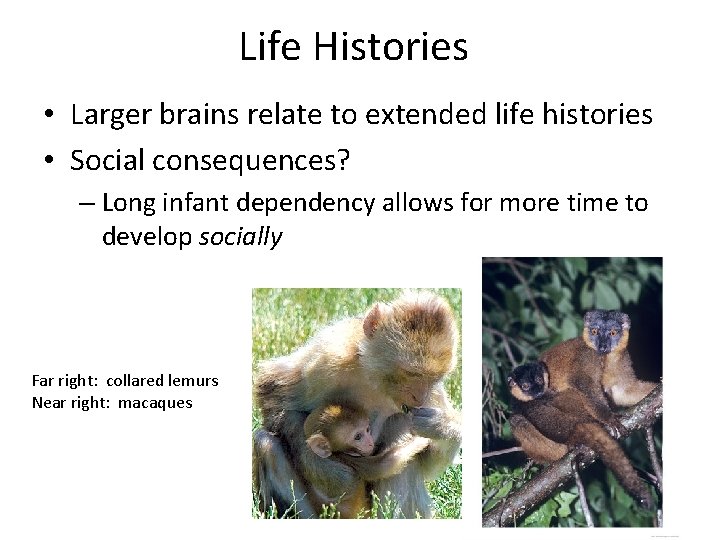
Life Histories • Larger brains relate to extended life histories • Social consequences? – Long infant dependency allows for more time to develop socially Far right: collared lemurs Near right: macaques
Life Histories • Presocial: animals well-developed at birth • Altricial: animals under-developed at birth; long dependency (see Table 2. 1 page 43)
Jarman/Bell Principle and Sexual Dimorphism • Body size and physical differences between the sexes • Within the same species, when compared to females, larger males: – Require more time to develop – Have a greater dietary intake – Spend different amounts of time eating – May eat different types of foods
The End Next topic: More primate morphological traits
- Slides: 20