
Primate Evolution Robert Banks and Jeffrey Kaldahl What

Primate Evolution Robert Banks and Jeffrey Kaldahl
What is a Primate? �Defined as an order of mammals with a large brain and complex feet and hands �Well known primates include monkeys, apes and lemurs

First Primate �First Primate believed to originate 65 m. y. a. in the Tertiary �First fossil records do not come about until near the end of the Tertiary Period in the Eocene �First known primate is the Plesiadapiformes
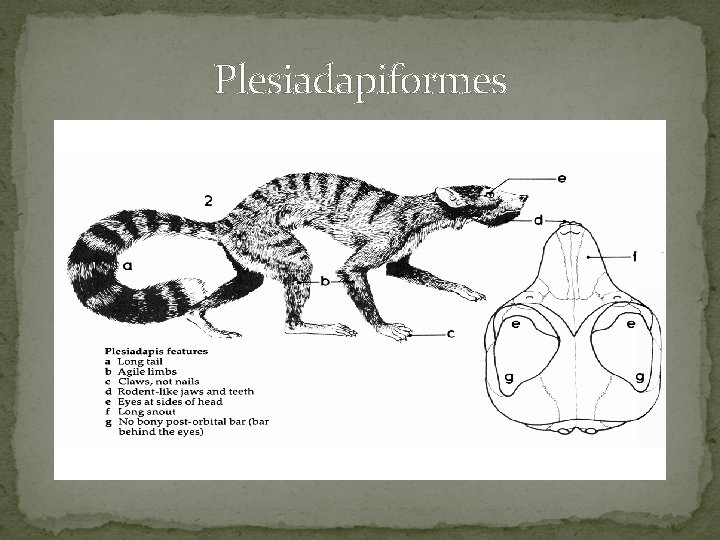
Plesiadapiformes
Plesiadapiformes �Earliest fossil dates them back to the Palaeocene about 65 -54 m. y. a. �Are not classifed as primates of modern aspect, but could be ancestral to the rest of the primate order �Could be a separate branch of Primate not like the current two Prosimii and Anthropoidea

Eocene Primate �More modern like primates �Two main primates both considered to be in the Prosimii � Adapidae �Larger animals �Kind of like a modern lemur � Omomyidae �Smaller animal �Eyes went to front of the skull and they lost the claws and got flattened nails
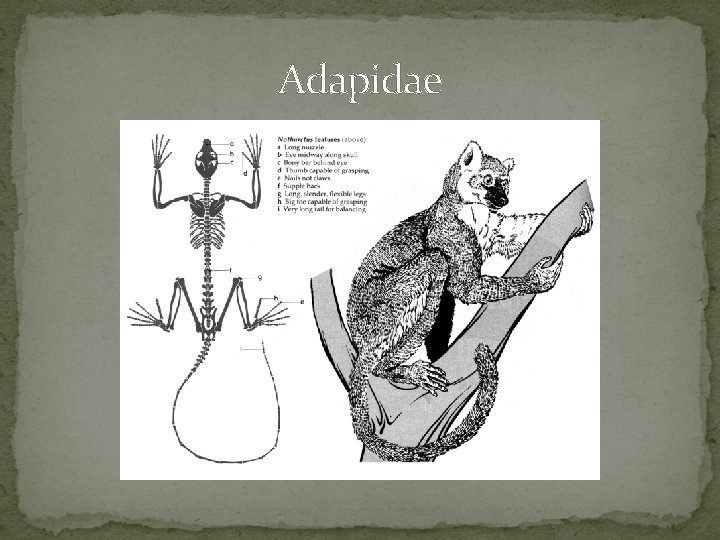
Adapidae
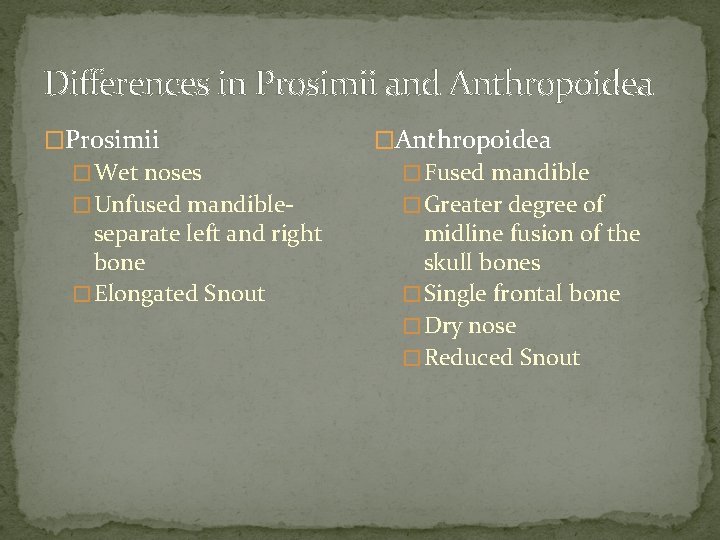
Differences in Prosimii and Anthropoidea �Prosimii �Anthropoidea � Wet noses � Fused mandible � Unfused mandible- � Greater degree of separate left and right bone � Elongated Snout midline fusion of the skull bones � Single frontal bone � Dry nose � Reduced Snout

Prosimii Anthropoidea
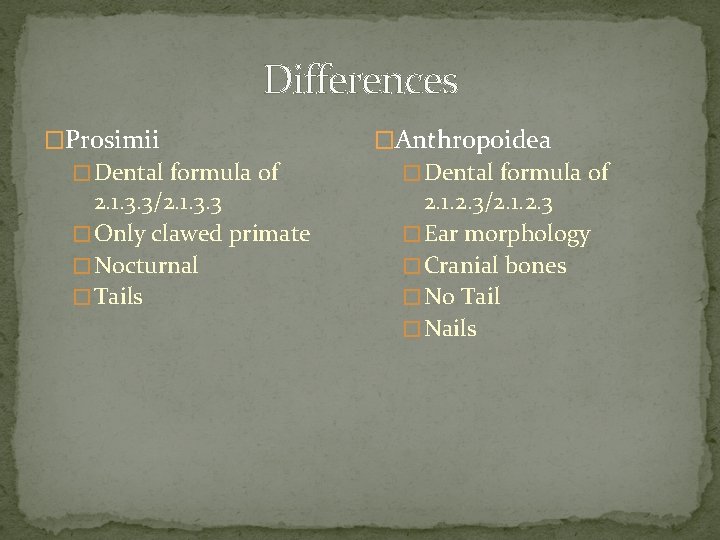
Differences �Prosimii � Dental formula of 2. 1. 3. 3/2. 1. 3. 3 � Only clawed primate � Nocturnal � Tails �Anthropoidea � Dental formula of 2. 1. 2. 3/2. 1. 2. 3 � Ear morphology � Cranial bones � No Tail � Nails
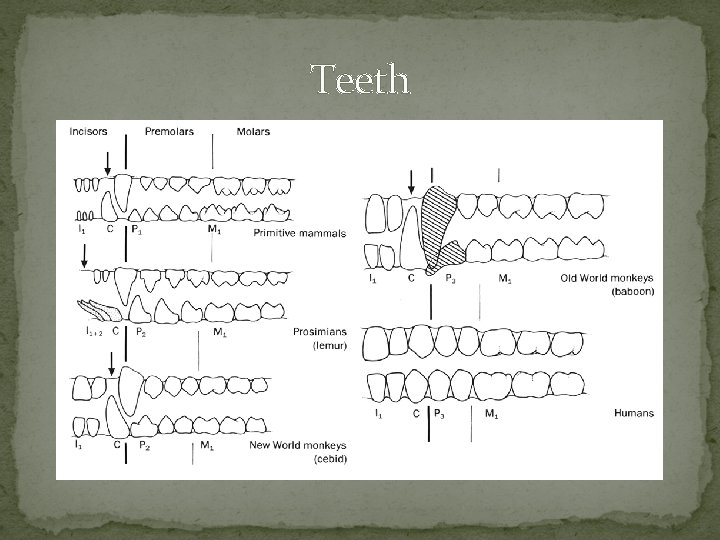
Teeth
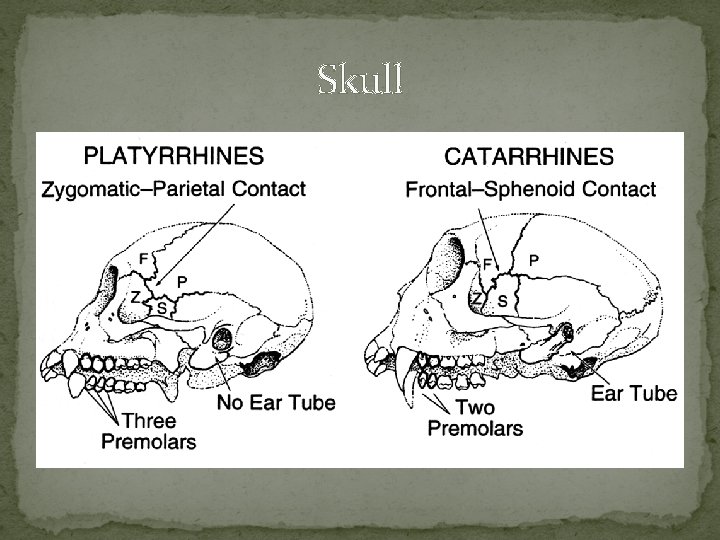
Skull
Miocene Primate � 26 -7 m. y. a �Size increases �No tail �Longer arms �Modern Apes � Gibbons � Orangutan � Gorilla � Chimpanzee
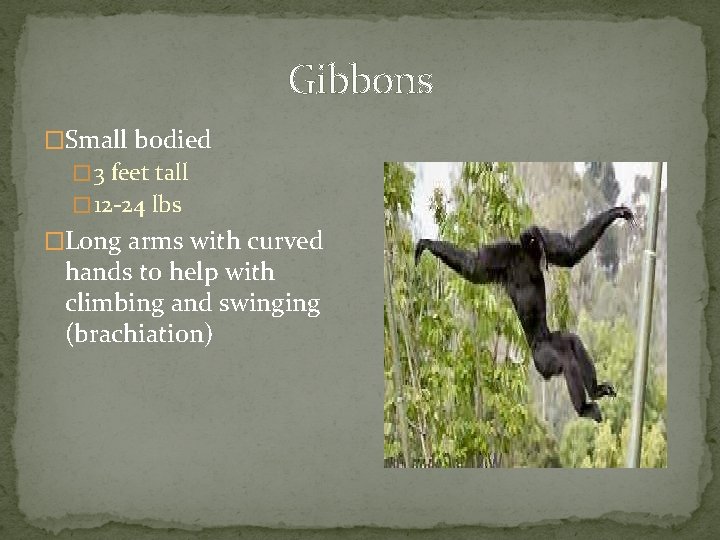
Gibbons �Small bodied � 3 feet tall � 12 -24 lbs �Long arms with curved hands to help with climbing and swinging (brachiation)
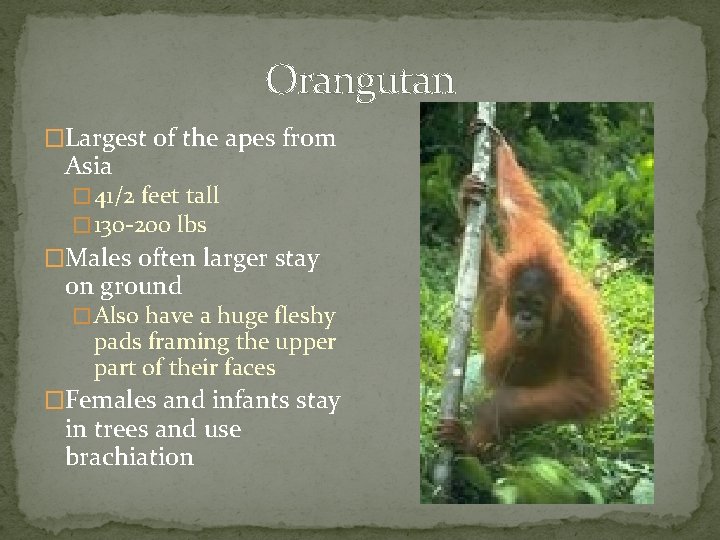
Orangutan �Largest of the apes from Asia � 41/2 feet tall � 130 -200 lbs �Males often larger stay on ground � Also have a huge fleshy pads framing the upper part of their faces �Females and infants stay in trees and use brachiation
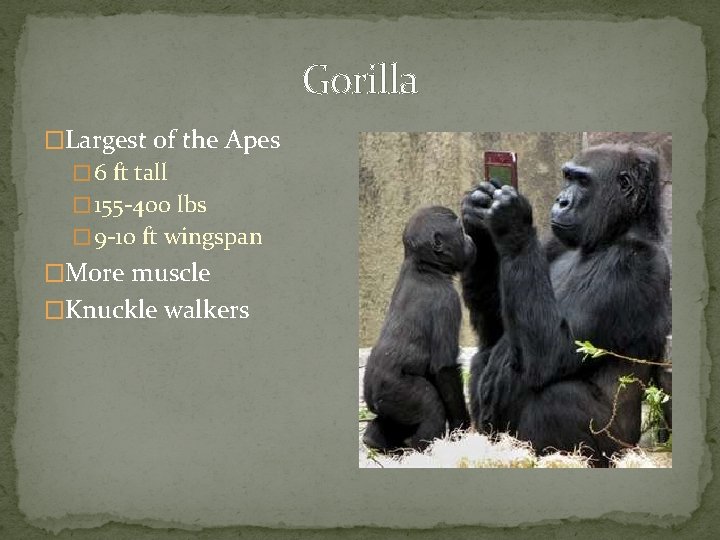
Gorilla �Largest of the Apes � 6 ft tall � 155 -400 lbs � 9 -10 ft wingspan �More muscle �Knuckle walkers
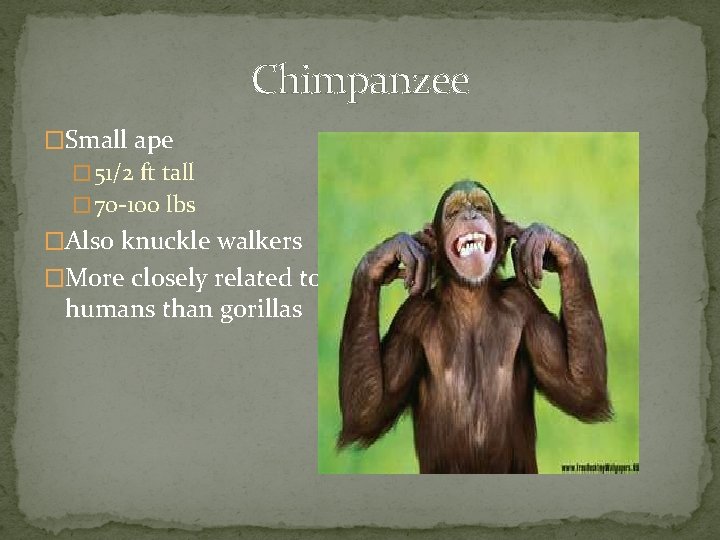
Chimpanzee �Small ape � 51/2 ft tall � 70 -100 lbs �Also knuckle walkers �More closely related to humans than gorillas
References �http: //www. bing. com/images/search? q=chimpanzee& view=detail&id=4 B 40 D 5 C 8 F 5 C 2 A 985 EB 7 BDABBD 2 CC AFA 310 C 38626&first=1&FORM=IDFRIR&qpvt=chimpa nzee �http: //anthro. palomar. edu/primate/prim_7. htm �Ross, C. (1996). Adaptive Explanation for the Origins of the Anthropoidea. American Journal of Primatology 40: 205 -230. �Tattersall, I. (1993). The Human Odyssey Four Million Years of Human Evolution. Pg. 43 -62.
References �Sellers, B. (2000). Primate Evolution. Lecture. Pg. 1 -18. �Gebo, D. L. (2004). A shrew-sized origin for primates. Yearbook of Physical Anthropology, 47: 40 -62.

Question?
- Slides: 21